A Jolting and Thought-Provoking Finale

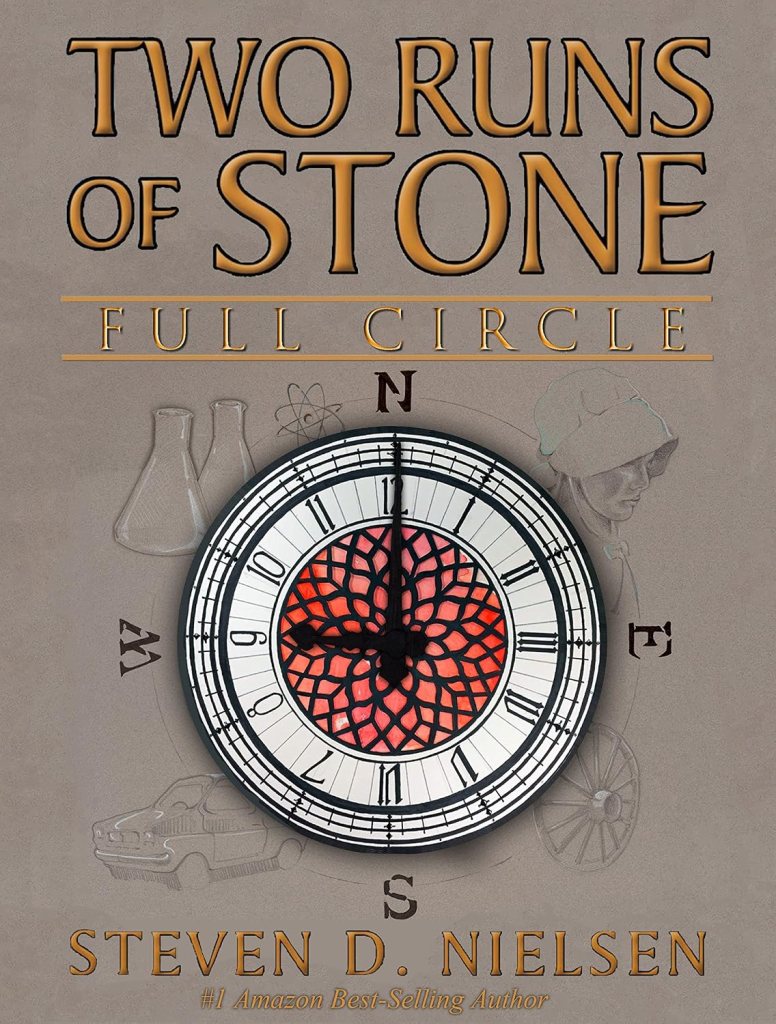
Review of “Two Runs of Stone: Full Circle” (Book 5 of the saga)

By the time I finished the fifth book in this saga I felt as if I’d traveled along with the characters who’d endured a series of remarkable and often traumatic experiences living in the 19th Century. It included history and cultural lessons that had me hooked from the start.

The final chapter of the first section would have been more suitably labeled an epilogue since it summarized several events that followed and segued into the section section. The ending of the 19th Century portion was abrupt as well as shocking. Having read the previous four books, I could see it coming, but I didn’t like it. To explain would constitute spoilers so I’ll leave it at that.

The shift into the 20th Century to descendants of the original characters and the development of Cache Valley, Utah where they settled felt like the culture shock a time-traveler would experience jumping forward in time. Nonetheless, it was an important part to wrap up the saga. Anyone who hasn’t read the previous books would not appreciate it.

It amazed me how familiar I was with story locations, especially Cache Valley, Utah. I lived there from 1973-1988, which included some of the timeline in the story. The fictitious city, Torrent, was undoubtedly Logan. I’ve driven through Sardine Canyon and I remember times it was closed due to snow. Surnames of some of the characters were prominent there, e.g. Bingham and Wangsgaard. I smiled at mention of Strasbourg, France, which is where my grandfather was born and I visited in 2004.

It was almost eerie, how much in these books resonated in one way or another with my own experience.

Our ancestors were real people who are often forgotten. The foundation they built for us is taken for granted, as are the sacrifices they made so our lives would be better. Peter Jensen was the great-grandfather of the modern character. The razing of the house and mill were particularly touching, showing how nothing lasts forever and what constituted the life’s work of someone is easily dismissed generations later.

I am the great-grandmother to 16 children, some of whom I may never meet since they live in other states. Will they have any idea who I am? Know anything about me? Even know my name? Can you name your great-grandparents?  All four sets of them?

The saga left me feeling melancholy towards life and how quickly it passes. It seemed as if the modern-day section dragged a bit. Having read the previous four books, I knew what was likely to happen. Yet it was necessary to explain the descendants’ dire situation in sufficient detail to identify with them and appreciate the dramatic ending.

The author is a gifted storyteller and I loved these books, which had me so engaged that I read all five in under three weeks. I especially enjoyed the “Section Notes” that gave more historical and source information.

That said, I have one overall criticism: They desperately needed a competent editor! There were so many examples of using homonyms incorrectly (example, rein vs. reign; alter vs. altar; whetted vs. wetted, fowl vs. foul, etc. as well as the wrong word, i.e., continence vs. countenance) that I lost count. Dialog was seldom (if ever) punctuated correctly. In a less-gripping story I would have never finished reading a book, much less books, with so many editorial issues.

The typo “blood tasting facilities” vs. “testing” made me laugh out loud. A few characters changed names, which made my head spin. Krista’s daughter was Anna Katrina in the other books and became Anna Sophia while Elizabeth Anne’s son was August Peter Jensen in book 4 and became August Charles in book 5.

I know as an author of a science fiction tetralogy as well as a cross-cultural thriller trilogy that maintaining consistency is a challenge. But such things are often caught by beta readers, proofreaders, and should definitely be corrected by a competent editor.

Since I read the entire series so quickly the 5 books all ran together, which facilitated catching such discrepancies. I understand how such things can happen plus this probably stood out more for me than the average reader. Nonetheless, this wonderful saga deserved better. It’s on a short list of stories that I will remember for a long time and recommend highly, though I feel inclined to apologize for the poor editing.

[NOTE:–Book Four, “Wagons West,” as well as this one had numerous hostile encounters with Indians. I’m acutely aware of the other side of the story having written “The Curse of Dead Horse Canyon” saga with a Northern Cheyenne coauthor. Native Americans had their land stolen and somehow survived an attempt at genocide. Is it any wonder they attacked those taking possession of it?]
Moving Right Along. . .

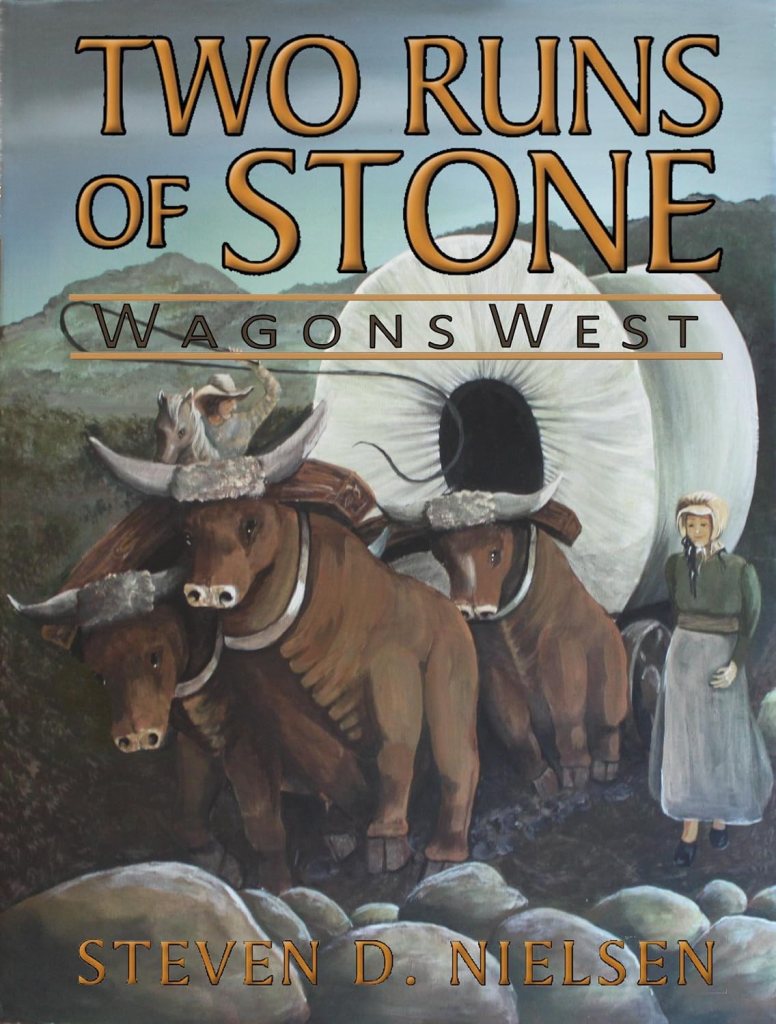
Review of “Two Runs of Stone: Wagons West” (Book 4)

If you haven’t already figured it out, I’m hooked on this series. The realistic details and historical accuracy bring it to a different dimension beyond that of just another novel. The characters are believable and feel like family.

The intensity of the Danish immigrants’ journey continues in this 4th book of the series. As with the previous books, this one offers a detailed and often painful description of the trials, tribulations, hazards, and heartbreaks encountered along the way by those whose ultimate destination was Utah.

Traveling a thousand miles in a covered wagon—or walking, pulling a handcart, no less–is incomprehensible to those of us born in the 20th or 21st century. Since this is part of our nation’s history it’s something we should all understand and appreciate, especially if any of your ancestors participated in this trek to populate the west.

The planning, logistics, and experiences are viewed through the eyes of the characters who populate this gripping series. Having read the previous three books, by this time they felt like family. They are split up in two separate wagon trains as well as another who is on a singular journey. The flavor of the era is captured so accurately it’s as if you are there.

While this book can be read independently of the first three, it has far more meaning and impact if it’s read in order so you understand the characters and what they’ve already been through. As with the other books, it’s historically accurate and further enhanced by the research notes included separately.

If you are LDS you have undoubtedly heard about this great migration to the Great Salt Lake Valley. This book relates the experience from the Mormon point of view, illustrates the organizational structure of leadership for the journey as well as other activities that were unique to this group. The author does an excellent job integrating the wealth of researched detail with the story.

You can get a copy in the format of your choice on Amazon here.

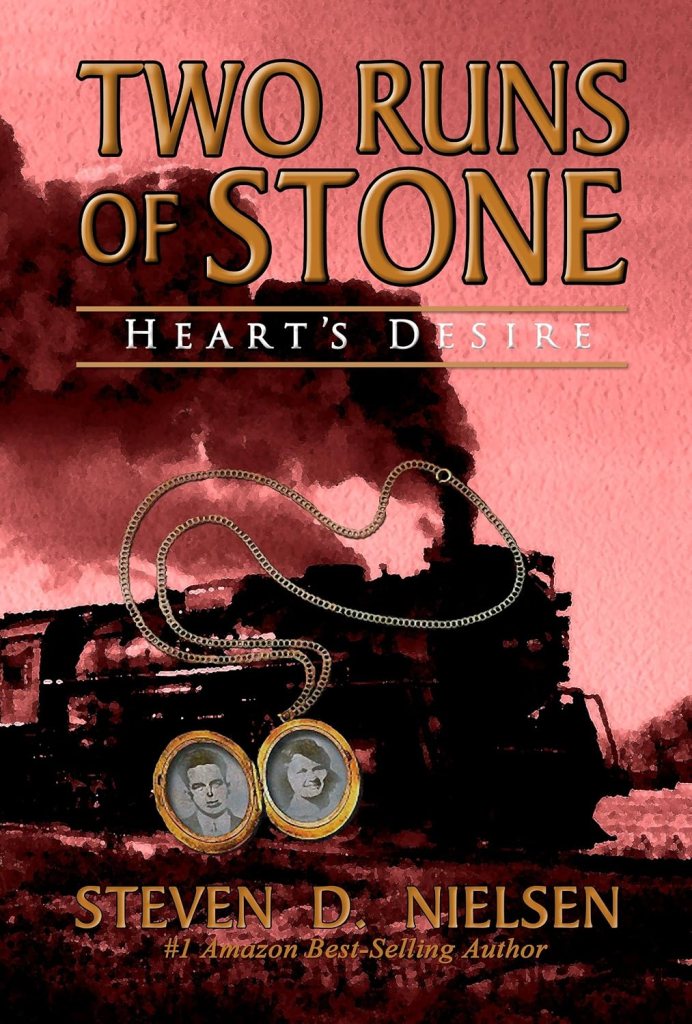
Review of “Two Runs of Stone: Heart’s Desire” by Steven D. Nielsen

A Realistic View of Plural Marriage

As the 3rd book in this saga begins, the main characters are preparing to leave their temporary homes in Wyoming City and head for their final destination in Utah. There are three plot lines that follow the main characters we met in the 1st book, who are on separate journeys in the New World, some of which was covered in the 2nd book.

While they prepare for their long journey via covered wagons and handcarts, the author also provides an intimate look into how members of The Church of Jesus Christ of Latter-Day Saints dealt with the issue of plural marriage. This is probably the main issue that most people have heard about with regard to the Mormon Church, a practice which has since been discontinued.

There were various reasons for instituting this practice, with which most are familiar from the Old Testament. At this time in the mid-19th Century scores of men had died in various ways from attacks and accidents to diseases, leaving a vast number of widows and children who needed protection from the many hazards and brutal life style at that time. The story provides a realistic glimpse into how the people felt about it, which naturally varies with each individual involved in the practice as well as the persecution they endured because of it. As pointed out in the book, immorality is tolerated while a practice that involves commitment and sacrifice on the part of all involved is frowned upon. What’s wrong with this picture?

Their hardships continue as they prepare for this final leg of their journey, again providing fascinating details of life at that time. Readers are immersed in everyday life with the characters that by now feel like their own family.

You can get a copy in the format of your choice here.

The “Two Runs of Stone” Saga Continues

Version 1.0.0

A Harrowing Journey

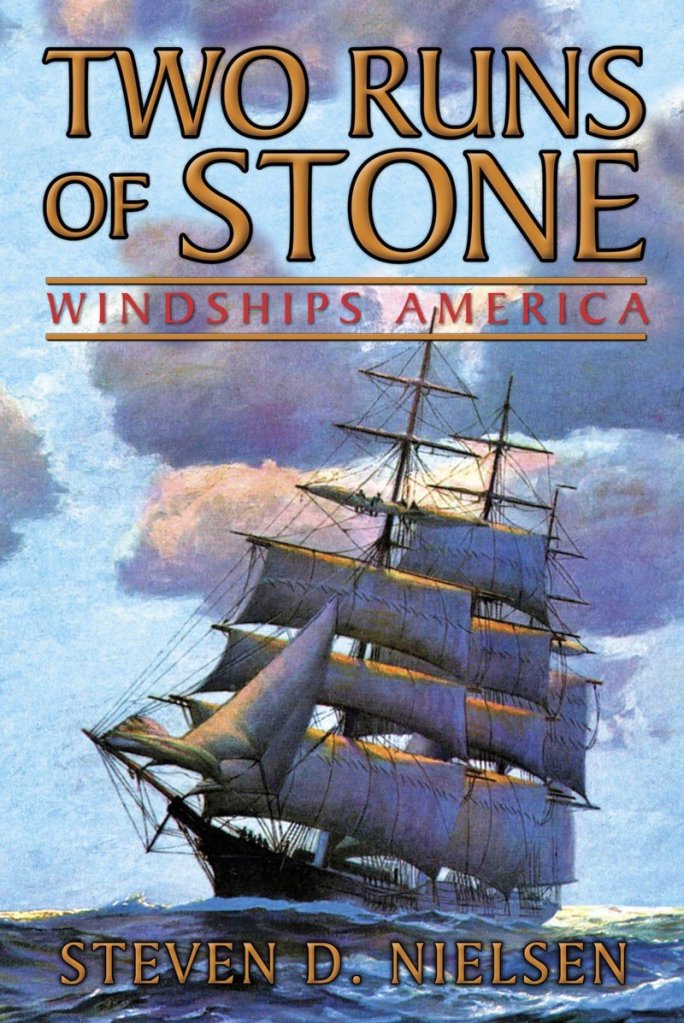
If you have relatives who emigrated to America from Europe in the 19th Century you should read this book. The suffering and sacrifice most endured to come to the New World is tragic and heartbreaking. The story continues from the first volume, where Peter and Maren leave Denmark for America. Their experience onboard a windship as passengers in steerage, crammed together with hundreds of other emigrants, is the stuff of nightmares. As I read, I often thought how well it fit the horror genre, but this was real life in the 1800s. What these brave souls endured is unimaginable. No matter how badly you think you have it, believe me when I say you have no clue.

The motivation for their journey was to gather to Zion with other converts to The Church of Jesus Christ of Latter-day Saints. There’s a lot of bad press and misunderstandings about the Mormons. This incredibly well-researched book presents an accurate picture of faith and determination during that time and what these early Saints went through. However, that is but a part of an intriguing and gripping story with glimpses into Danish culture, 19th Century life, and what it was like when it took months to get from Western Europe to the USA.

While modern life is beset with scams, fraud, and dishonest people, circumstances back in the 19th Century were no better, especially along the frontier when the USA was still in the process of being settled.

Getting a glimpse of what it was like for our ancestors is a lesson in humility and appreciation for what we have. The author of this series is a master at integrating vivid descriptions that not only enhance the imagery but are integral to the story’s substance.

The Section Notes are interesting as well, especially for history buffs, as they back up the various details in the story with research.

When I finished the first book in this series I knew I’d never look at a windmill much less flour the same again. After reading this volume, I’ll never look at life onboard a windship the same again. The complexity and hazards are astounding. He puts you there, using all the senses and details, technical and otherwise, that bring settings as well as characters to life. You love some, you hate some and hope they get what they deserve. These are living, breathing characters that feel like family.

I was talking with one of my grandsons and his girlfriend today about how schools fail to teach history in an enticing manner. When I was in school a long, long time ago, all I remember from history classes is having to memorize events and dates, something I didn’t do well as a visual learner with poor rote memorization skills. There was attempt to provide an accurate taste of the times involved, much less their context other than the dry narratives in the textbook. If a class were to do nothing more than read these “Two Runs of Stone” books during a semester, they’d learn far more that would actually make an impression that will last throughout their lives.

You can get your copy on Amazon here.

A Magnificent Historical Novel

Version 1.0.0

Review of “Two Runs of Stone: A Beckoning Call” by Steven D. Nielsen

I was gifted a copy of this amazing book many years ago and it sat on my shelf until recently when I came across it again. Oddly enough, I’m actually glad that it took me so long to read it. Had I read it when I received it I would not have appreciated it nearly as much as I do now.

Since that time I became an author myself who has written 8 novels and two nonfiction books. Thus, being familiar with the work involved in the creative and publishing process I can admire this magnificent story even more.

The author did an exceptional job crafting living, breathing characters, and placing the reader into 19th Century Denmark. The imagery was astounding and interwoven with the story in such a skillful manner that every scene comes alive. The necklace was a beautiful symbol on so many levels.

The book itself is a work of art. I’m disappointed that there is no mention of who did the gorgeous artwork or designed the cover  on this 2003 hardback, which is a perfect complement to the story within. The notes included for each section enrich the story with historical facts that contribute to the overall context.

This is truly a masterful work. I learned so much about Denmark, its history, people and struggles. Shortly after completing this story I came upon a beautiful flower-studded picture of a windmill. I beheld it for several minutes, having a new appreciation for the structure’s complexity and essential function. I’m also grateful that since I read this book years later that there are now several volumes that continue this gripping saga.

My criteria for an outstanding book is for it to make me laugh, cry, learn something, and see something in a new way. This book checked all the boxes. As an author and editor myself, however, there was one thing I found that kept this novel from absolute perfection. The copy editing was remiss in several areas regarding proper punctuation, especially for dialog, as well as a few minor typos. This spectacular story deserved better.

You can get a copy in any format you prefer on Amazon here.