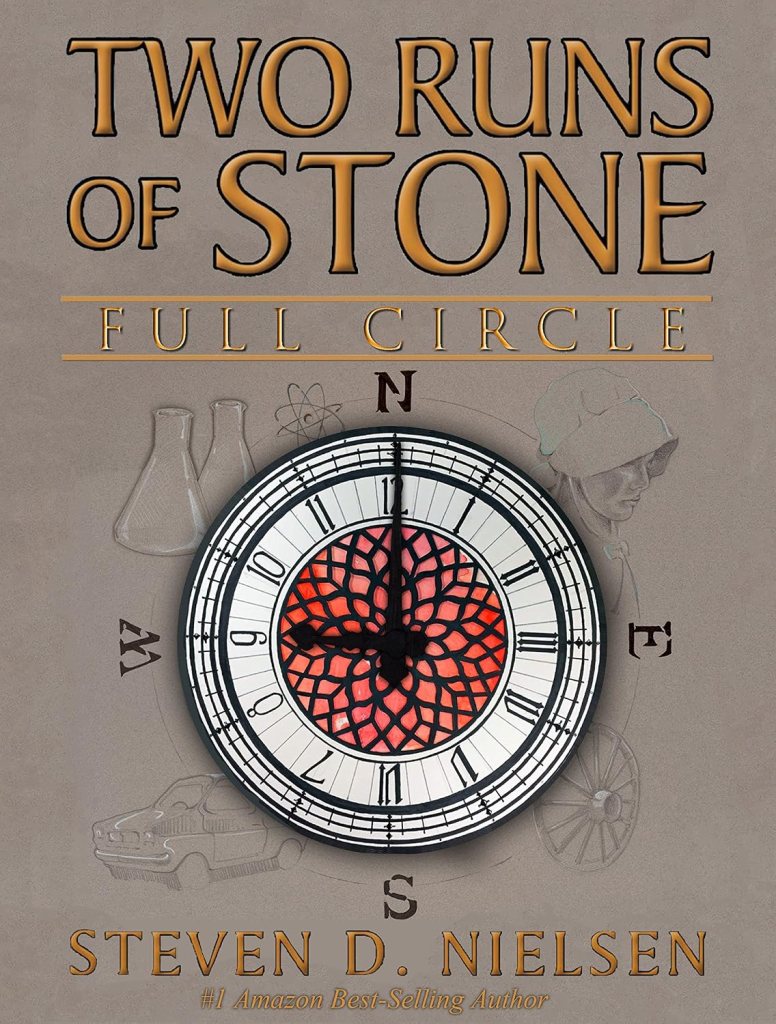
Review of “Two Runs of Stone: Full Circle” (Book 5 of the saga)
By the time I finished the fifth book in this saga I felt as if I’d traveled along with the characters who’d endured a series of remarkable and often traumatic experiences living in the 19th Century. It included history and cultural lessons that had me hooked from the start.
The final chapter of the first section would have been more suitably labeled an epilogue since it summarized several events that followed and segued into the section section. The ending of the 19th Century portion was abrupt as well as shocking. Having read the previous four books, I could see it coming, but I didn’t like it. To explain would constitute spoilers so I’ll leave it at that.
The shift into the 20th Century to descendants of the original characters and the development of Cache Valley, Utah where they settled felt like the culture shock a time-traveler would experience jumping forward in time. Nonetheless, it was an important part to wrap up the saga. Anyone who hasn’t read the previous books would not appreciate it.
It amazed me how familiar I was with story locations, especially Cache Valley, Utah. I lived there from 1973-1988, which included some of the timeline in the story. The fictitious city, Torrent, was undoubtedly Logan. I’ve driven through Sardine Canyon and I remember times it was closed due to snow. Surnames of some of the characters were prominent there, e.g. Bingham and Wangsgaard. I smiled at mention of Strasbourg, France, which is where my grandfather was born and I visited in 2004.
It was almost eerie, how much in these books resonated in one way or another with my own experience.
Our ancestors were real people who are often forgotten. The foundation they built for us is taken for granted, as are the sacrifices they made so our lives would be better. Peter Jensen was the great-grandfather of the modern character. The razing of the house and mill were particularly touching, showing how nothing lasts forever and what constituted the life’s work of someone is easily dismissed generations later.
I am the great-grandmother to 16 children, some of whom I may never meet since they live in other states. Will they have any idea who I am? Know anything about me? Even know my name? Can you name your great-grandparents? All four sets of them?
The saga left me feeling melancholy towards life and how quickly it passes. It seemed as if the modern-day section dragged a bit. Having read the previous four books, I knew what was likely to happen. Yet it was necessary to explain the descendants’ dire situation in sufficient detail to identify with them and appreciate the dramatic ending.
The author is a gifted storyteller and I loved these books, which had me so engaged that I read all five in under three weeks. I especially enjoyed the “Section Notes” that gave more historical and source information.
That said, I have one overall criticism: They desperately needed a competent editor! There were so many examples of using homonyms incorrectly (example, rein vs. reign; alter vs. altar; whetted vs. wetted, fowl vs. foul, etc. as well as the wrong word, i.e., continence vs. countenance) that I lost count. Dialog was seldom (if ever) punctuated correctly. In a less-gripping story I would have never finished reading a book, much less books, with so many editorial issues.
The typo “blood tasting facilities” vs. “testing” made me laugh out loud. A few characters changed names, which made my head spin. Krista’s daughter was Anna Katrina in the other books and became Anna Sophia while Elizabeth Anne’s son was August Peter Jensen in book 4 and became August Charles in book 5.
I know as an author of a science fiction tetralogy as well as a cross-cultural thriller trilogy that maintaining consistency is a challenge. But such things are often caught by beta readers, proofreaders, and should definitely be corrected by a competent editor.
Since I read the entire series so quickly the 5 books all ran together, which facilitated catching such discrepancies. I understand how such things can happen plus this probably stood out more for me than the average reader. Nonetheless, this wonderful saga deserved better. It’s on a short list of stories that I will remember for a long time and recommend highly, though I feel inclined to apologize for the poor editing.
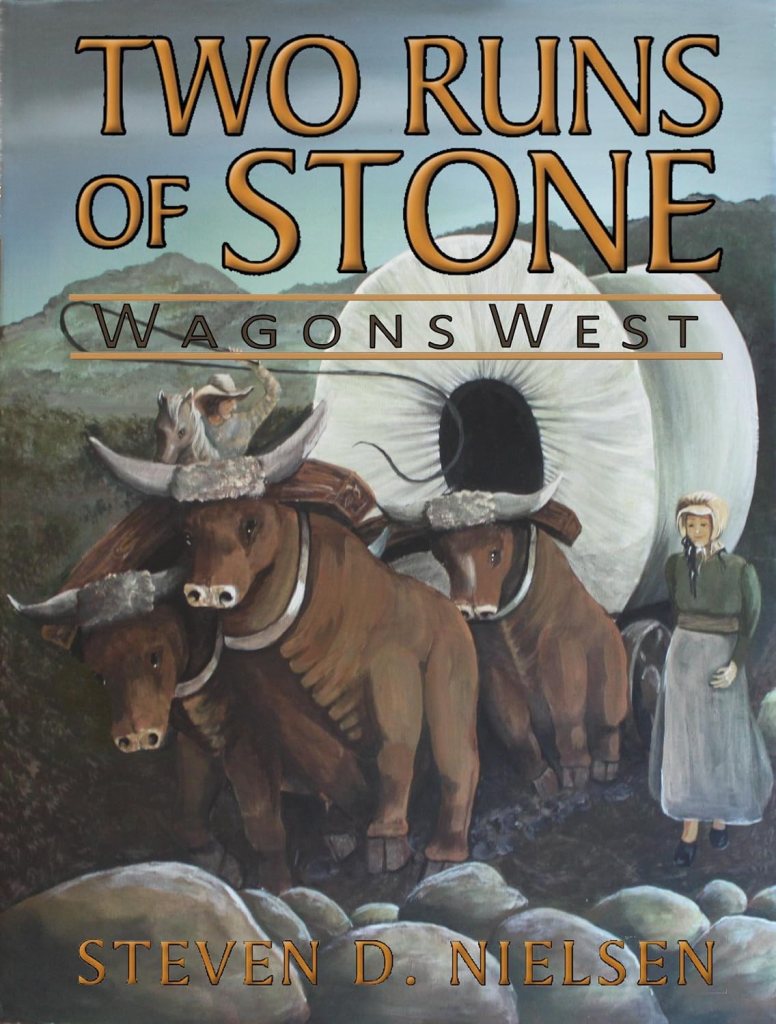
[NOTE:–Book Four, “Wagons West,” as well as this one had numerous hostile encounters with Indians. I’m acutely aware of the other side of the story having written “The Curse of Dead Horse Canyon” saga with a Northern Cheyenne coauthor. Native Americans had their land stolen and somehow survived an attempt at genocide. Is it any wonder they attacked those taking possession of it?]