Writing Tip: Irony

It’s been a while since I posted a writing tip and one came to me the other day that has a bit of history behind it. Many years ago, when I took a “Writing Short Stories” class in college, the professor was giving me A’s but told me repeatedly that they were not, by definition, short stories.

Now that I look back, how negligent was he as the professor for that class not to define what constituted a short story on day one? Duh!

Kind of like how many grammar rules did you actually learn, much less understand, in high school or even college English classes? All I remember is diagramming sentences and making mistakes I didn’t understand. I have no love lost for the English and math teachers I had over the years. Now I’m an award-winning author and a physicist who worked for NASA for 21 years with no thanks to any of them! These were things I eventually figured out myself.

Like “What exactly is irony?” several decades later.

Am I that dense or are teachers seldom capable of teaching a subject? At this point in my life, I’m sure they’ve all passed on so if I were so inclined I’d list their names, but I don’t remember them. Ironic? Maybe. But right there, that tells you how impressed I was. My memories of high school in particular are not complimentary for my teachers, believe me.

So back to the short story class and my point for this “Tip du Jour.” I asked the professor why they weren’t short stories. He said that they were “slices of life” but not short stories because they lacked irony. So, next I asked the $64,000 dollar question: “What is irony?”

He couldn’t define it!

I think he may have referred me to a few classics that had it, but I still didn’t get it. Here I am, many years later when I’ve written 8 novels, accumulated several awards, and I’m just now figuring it out.

Is that more irony?

And I must say, I’ve wondered about it for more years than I care to count until the other day it came to be like a blast out of the blue.

Irony is when something you’ve put a lot of effort into turns out to be very wrong.

More irony that the English professor teaching a short story class couldn’t tell me what irony was. Also ironic is the fact that throughout that class I got an A on every assignment and an A in the class, yet never wrote a short story.

Once I had that epiphany, my memory flooded with examples. The biggest one that came to mind was back in the 70s, when I wanted to buy my aging parents a garage door opener for Christmas. I don’t remember why, but it probably related to them complaining about opening the heavy garage door by hand in freezing Utah winter weather.

We didn’t have much money and had a bunch of kids to buy for, so it was a challenge how to afford it. I saw an ad in the paper that some guy was buying up silver. I had some old sterling silver candlesticks, silverware, and so forth, that no one wanted. Long story short, I cashed it in and got enough for the garage door opener. (Of course, I’d give blood and pay money to have them back at today’s silver spot price which is probably at least ten times more than it was then.)

The irony of the story?

They weren’t happy!

At least my father wasn’t. He didn’t want to go to the trouble of installing it or hiring someone to do it. After all the effort I put into getting it for them and being very excited, thinking they’d love it, that was a real downer I remember to this day.

If I’d understood what irony was, I would have written that up as a short story, which would have actually fit the definition! And if that prof had given me a concise definition I could understand, I probably would have.

So here’s a note to any teachers reading this and probably shaking their head at my ignorance: Not all students can learn by assimilation. A clear definition is essential to understanding! What’s intuitively obvious to you is not to someone learning a subject for the first time! Even Einstein said if you can’t explain something to a kid in kindergarten, then you really don’t understand it yourself!

So now you know what constitutes a “short story.” In many cases, those stories you’re putting together for your memoirs or family history are just “slices of life.”

Does it matter? Absolutely not. Unless you have a professor who isn’t as generous as mine was if your short story doesn’t fit the definition.

P.S. As an astrologer, I’ll add that you’re lining yourself up for some irony if you buy anything electronic or mechanical during Mercury retrograde. Mars retrograde is similar, but in that case, it will probably function properly, but you’ll realize at some point it was a waste of money because you really don’t need it, your regret proportional to how much you paid for it.
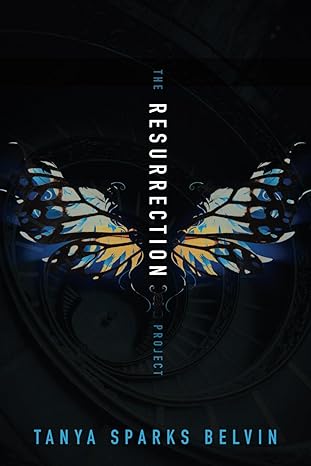
Review of “The Resurrection Project” by Tanya Sparks Belvin

[NOTE:–I tried to post the following review to Amazon and it was rejected. I’m not entirely sure why, but I suspect the first paragraph was verboten, which figures, right? I edited it down significantly and they posted it, but here are my original comments.]

This story stands out as a chilling cautionary tale. While it’s set in 2034, don’t think it’s not already happening. Our reverence for life is seriously compromised as demonstrated by the ongoing abortion issue. At what point does human life begin? Conception? Or with that first breath at birth? What about those laws that have legitimized infanticide? Promote euthanasia? Where is society headed? We are being dehumanized, starting with the most vulnerable members.

It’s difficult to write a review of this story without spoilers. If you’re really paying attention through the first few chapters, it’s possible to figure out what’s going on as people disappear. The story slowly and methodically reveals the horrific truth through the viewpoints of the three main characters.

The premise reminds me of medical thrillers I read years ago by Robin Cook. Suspense author Mary Higgins Clark was another one who worked with such themes. This book lacked that kind of nail-biting suspense. It was written in a very journalistic style that failed to render emotional reactions in the reader. At least that was the case for me. I could tell where it was going, especially after the blatant revelation provided by the android, Daisy, in the middle of the story. If you haven’t figured it out by then, there it is.

This thought-provoking book deserves a lot of attention for its potential to wake people up, if nothing else. Being directed at Christians is somewhat ironic since they aren’t the ones who need to be jolted awake to the evils in the world around them. It would definitely be in the “medical thriller” category if the emotional impact and suspense were ramped up a bit.

Actually, if written to its full emotional potential, this book would be in the horror genre. Since this is the author’s debut novel, I assume she has not yet acquired the writing skills to render an emotional reaction in her readers. (This is normal except for incredibly gifted writers. I didn’t figure it out until around the time I was writing my 6th novel.) This is not a criticism since in this case, it’s a good thing. As it’s written, more people will choose to read it and make it through the book. Rest assured that it does have what can be considered a happy ending, plus incentive to read the sequel.

For what it’s worth, if a book makes me cry and laugh, I’m more impressed. There are a lot of good premises and stories out there that fall short on their emotional impact, which is the element that tends to hook readers and convince me the author knows how to write.

On the editorial side, I think the scriptural quotes were a bit overdone. Not that I don’t agree with them and I understand the underlying Christian message. However, I don’t think their inclusion will convert anyone to Christianity, while conversely, such excessive use could feel “preachy” and be a turnoff for the very people who need to read it. The fellow Christians I’ve been around usually don’t quote the book, chapter and verse, just the content.

The book is beautifully formatted and the cover is great. The editing is well-done regarding misspellings, grammar, typos, etc. Only one thing jumped out that her editor missed: Near the bottom of page 249 of the paperback it says, “There’s no way I’m not going to let that happen.”

Huh?

The way I read it, the double negative conflicted with the statement’s intent. There were a few other things but I may be the only person in a thousand who would notice, so I won’t even mention them all, but if I’d been a beta reader I definitely would have. I guess the biggest one I wondered about as a science fiction author is that I suspect by the year 2034 we won’t be using much paper, but who knows?

I gave this book 4-stars. For a debut novel, she did a pretty good job. It’s worth a read for its very important message of where we might be heading. Heaven help us if it turns out to be prophetic.

You can get a copy on Amazon here.

Thoughts on Occam’s Razor

Stop for a moment and make a list of your daily annoyances. Now give them some thought. Can you talk yourself out of being bothered by them? Is there something you can do to eliminate them? Or are they just a part of life you have to live with?

Since merging households with my youngest daughter, her husband, and their three teens I’ve had a lot of adjustments to make after living on my own for twenty years. Like sharing a bathroom with two teenage girls. Opening a cabinet for a glass or a drawer for a fork or spoon to find them all missing since the kids are allowed to eat in their rooms.

Being a cat person more than a dog fan, their three big dogs (a Doberman, a husky, and a 50+ pound “puppy” that’s a mastiff-pittbull cross) were probably at the top of the list. Especially their propensity to get into the kitchen trash can and scatter garbage all over, taking their best finds into the living room to enjoy on the couch. 🤦‍♀️😖

If you’re not familiar with what Occam’s razor is, here’s what googling it says:

Occam’s Razor is a problem-solving principle that suggests, when presented with competing hypotheses, the one with the fewest assumptions should be selected. It essentially favors simpler explanations over more complex ones, when both explain the same phenomenon equally well. The principle is often summarized as “the simplest solution is usually the best”. 

“Here’s a more detailed explanation:

“Parsimony: Occam’s Razor is also known as the “law of parsimony“. Parsimony, in this context, means being economical or frugal with assumptions.”

Dealing with my various frustrations was generally pretty simple, once I sat down and did some basic problem solving. The bathroom issue “is what it is” and can’t be changed. Solution: Get over it.

The glass and silverware situation won’t go away until the kids move out, which will be awhile. The solution: Keep what I need in my room.

The dogs getting in the trash issue went on for a long time. Our usual solution was to place an empty cardboard box on top between the lid and overhang of the kitchen island. The problem with that was that often the box was not in place, plus one of the dogs (the husky) learned to push it aside.

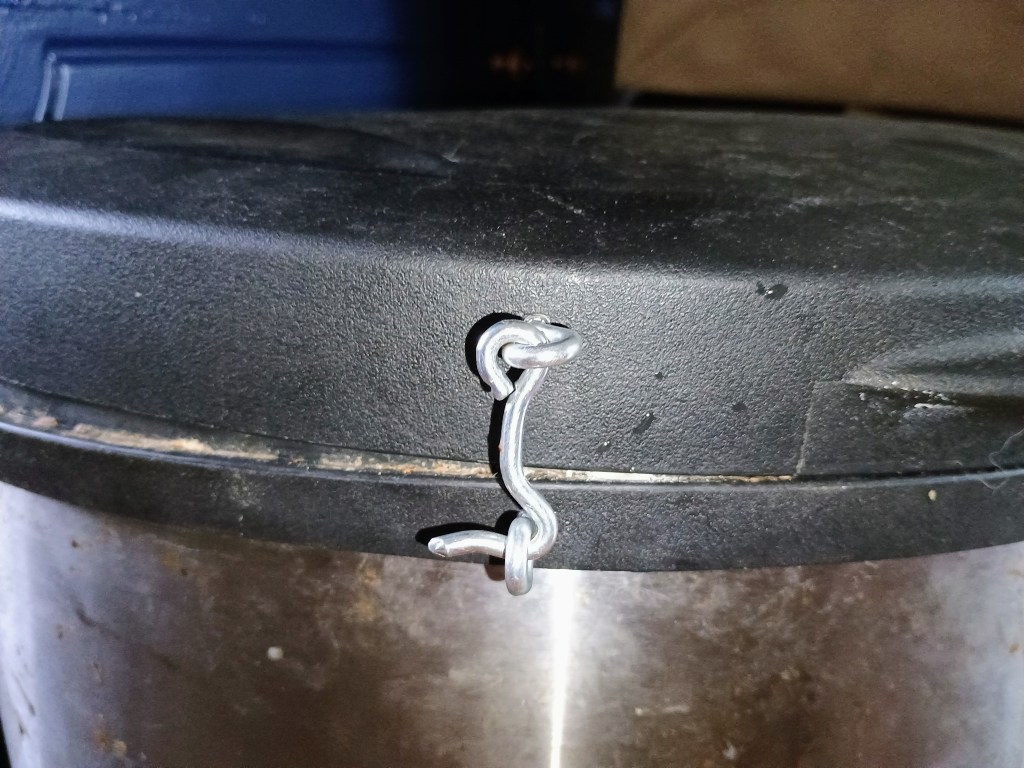
The situation was actually solved by my daughter, who works in a hardware store. For pocket change, she brought home a metal hook and eye and installed it on the trash can.

Problem solved.

So what’s my point?

There is plenty to get spun up about these days. The world is pretty crazy, and as an astrologer, I can see what’s going on out there in the cosmos and that it’s not going to change any time soon. In other words, much of what may get you spun up is entirely out of your control.

How much of what’s going on out there really affects your daily life? Does it really matter?

Even if it does, there isn’t much you can do about it.

Thus, it’s a good idea to take care of those things that you can.

For example, if your daily commute is a nightmare, try listening to music your love, your favorite podcasts, or something else you enjoy to upgrade the value of time spent in a situation you can’t control.

Decide what matters and what doesn’t. Take control of what you can. This crazy planet isn’t going to get better anytime soon.

Namaste.