A Jolting and Thought-Provoking Finale

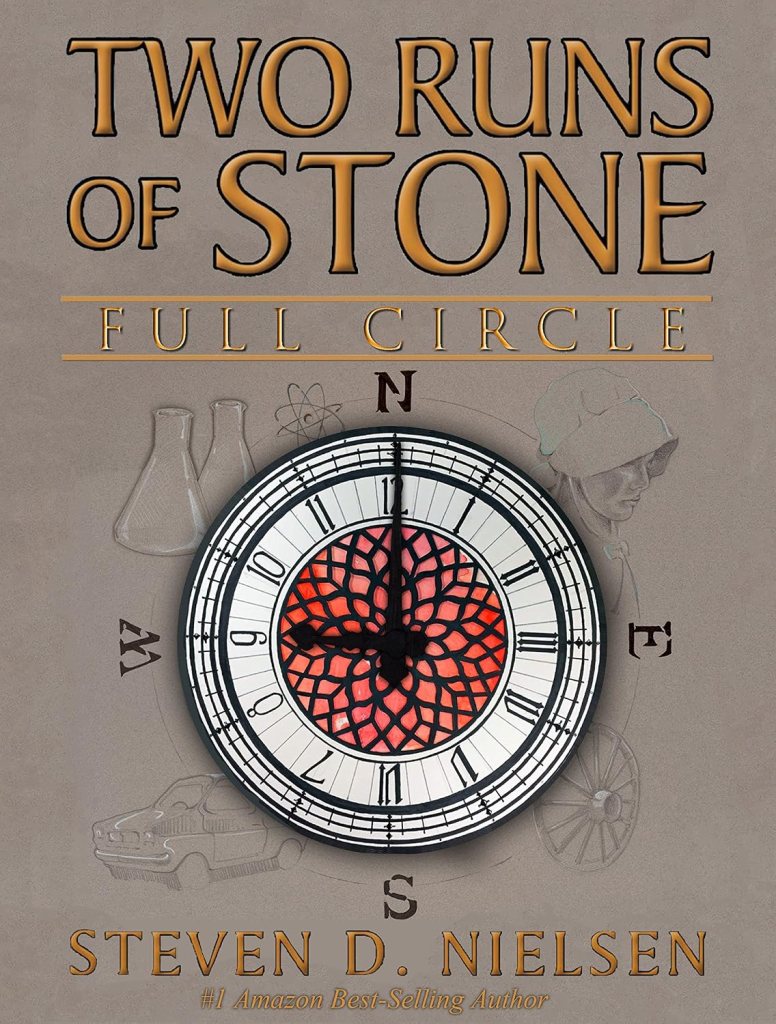
Review of “Two Runs of Stone: Full Circle” (Book 5 of the saga)

By the time I finished the fifth book in this saga I felt as if I’d traveled along with the characters who’d endured a series of remarkable and often traumatic experiences living in the 19th Century. It included history and cultural lessons that had me hooked from the start.

The final chapter of the first section would have been more suitably labeled an epilogue since it summarized several events that followed and segued into the section section. The ending of the 19th Century portion was abrupt as well as shocking. Having read the previous four books, I could see it coming, but I didn’t like it. To explain would constitute spoilers so I’ll leave it at that.

The shift into the 20th Century to descendants of the original characters and the development of Cache Valley, Utah where they settled felt like the culture shock a time-traveler would experience jumping forward in time. Nonetheless, it was an important part to wrap up the saga. Anyone who hasn’t read the previous books would not appreciate it.

It amazed me how familiar I was with story locations, especially Cache Valley, Utah. I lived there from 1973-1988, which included some of the timeline in the story. The fictitious city, Torrent, was undoubtedly Logan. I’ve driven through Sardine Canyon and I remember times it was closed due to snow. Surnames of some of the characters were prominent there, e.g. Bingham and Wangsgaard. I smiled at mention of Strasbourg, France, which is where my grandfather was born and I visited in 2004.

It was almost eerie, how much in these books resonated in one way or another with my own experience.

Our ancestors were real people who are often forgotten. The foundation they built for us is taken for granted, as are the sacrifices they made so our lives would be better. Peter Jensen was the great-grandfather of the modern character. The razing of the house and mill were particularly touching, showing how nothing lasts forever and what constituted the life’s work of someone is easily dismissed generations later.

I am the great-grandmother to 16 children, some of whom I may never meet since they live in other states. Will they have any idea who I am? Know anything about me? Even know my name? Can you name your great-grandparents?  All four sets of them?

The saga left me feeling melancholy towards life and how quickly it passes. It seemed as if the modern-day section dragged a bit. Having read the previous four books, I knew what was likely to happen. Yet it was necessary to explain the descendants’ dire situation in sufficient detail to identify with them and appreciate the dramatic ending.

The author is a gifted storyteller and I loved these books, which had me so engaged that I read all five in under three weeks. I especially enjoyed the “Section Notes” that gave more historical and source information.

That said, I have one overall criticism: They desperately needed a competent editor! There were so many examples of using homonyms incorrectly (example, rein vs. reign; alter vs. altar; whetted vs. wetted, fowl vs. foul, etc. as well as the wrong word, i.e., continence vs. countenance) that I lost count. Dialog was seldom (if ever) punctuated correctly. In a less-gripping story I would have never finished reading a book, much less books, with so many editorial issues.

The typo “blood tasting facilities” vs. “testing” made me laugh out loud. A few characters changed names, which made my head spin. Krista’s daughter was Anna Katrina in the other books and became Anna Sophia while Elizabeth Anne’s son was August Peter Jensen in book 4 and became August Charles in book 5.

I know as an author of a science fiction tetralogy as well as a cross-cultural thriller trilogy that maintaining consistency is a challenge. But such things are often caught by beta readers, proofreaders, and should definitely be corrected by a competent editor.

Since I read the entire series so quickly the 5 books all ran together, which facilitated catching such discrepancies. I understand how such things can happen plus this probably stood out more for me than the average reader. Nonetheless, this wonderful saga deserved better. It’s on a short list of stories that I will remember for a long time and recommend highly, though I feel inclined to apologize for the poor editing.

[NOTE:–Book Four, “Wagons West,” as well as this one had numerous hostile encounters with Indians. I’m acutely aware of the other side of the story having written “The Curse of Dead Horse Canyon” saga with a Northern Cheyenne coauthor. Native Americans had their land stolen and somehow survived an attempt at genocide. Is it any wonder they attacked those taking possession of it?]
Moving Right Along. . .

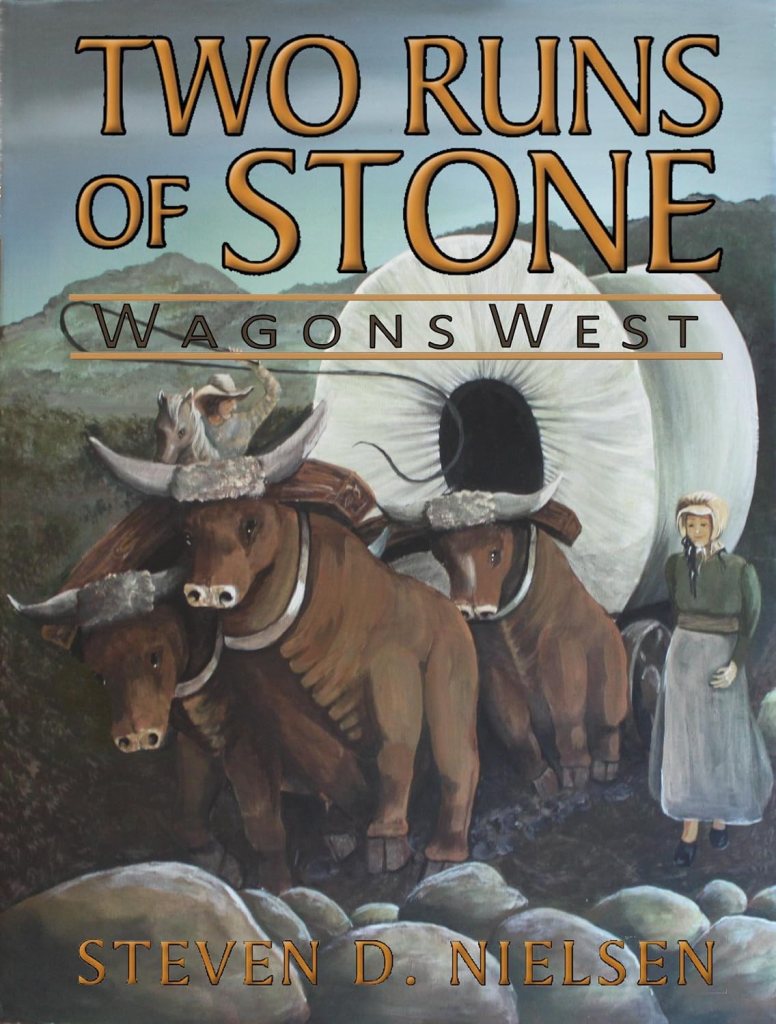
Review of “Two Runs of Stone: Wagons West” (Book 4)

If you haven’t already figured it out, I’m hooked on this series. The realistic details and historical accuracy bring it to a different dimension beyond that of just another novel. The characters are believable and feel like family.

The intensity of the Danish immigrants’ journey continues in this 4th book of the series. As with the previous books, this one offers a detailed and often painful description of the trials, tribulations, hazards, and heartbreaks encountered along the way by those whose ultimate destination was Utah.

Traveling a thousand miles in a covered wagon—or walking, pulling a handcart, no less–is incomprehensible to those of us born in the 20th or 21st century. Since this is part of our nation’s history it’s something we should all understand and appreciate, especially if any of your ancestors participated in this trek to populate the west.

The planning, logistics, and experiences are viewed through the eyes of the characters who populate this gripping series. Having read the previous three books, by this time they felt like family. They are split up in two separate wagon trains as well as another who is on a singular journey. The flavor of the era is captured so accurately it’s as if you are there.

While this book can be read independently of the first three, it has far more meaning and impact if it’s read in order so you understand the characters and what they’ve already been through. As with the other books, it’s historically accurate and further enhanced by the research notes included separately.

If you are LDS you have undoubtedly heard about this great migration to the Great Salt Lake Valley. This book relates the experience from the Mormon point of view, illustrates the organizational structure of leadership for the journey as well as other activities that were unique to this group. The author does an excellent job integrating the wealth of researched detail with the story.

You can get a copy in the format of your choice on Amazon here.

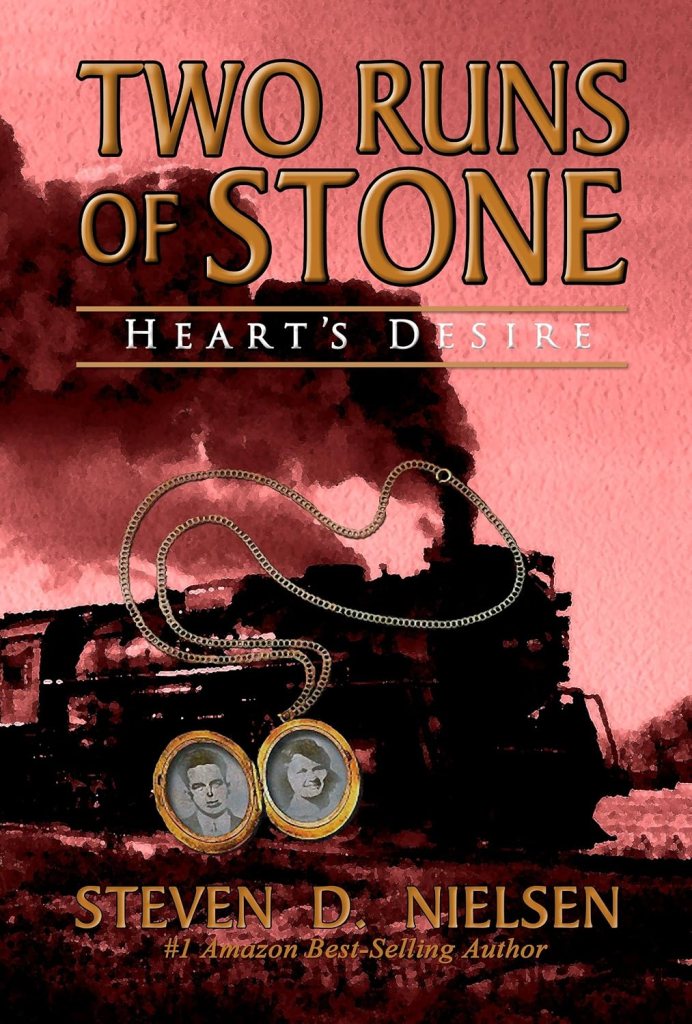
Review of “Two Runs of Stone: Heart’s Desire” by Steven D. Nielsen

A Realistic View of Plural Marriage

As the 3rd book in this saga begins, the main characters are preparing to leave their temporary homes in Wyoming City and head for their final destination in Utah. There are three plot lines that follow the main characters we met in the 1st book, who are on separate journeys in the New World, some of which was covered in the 2nd book.

While they prepare for their long journey via covered wagons and handcarts, the author also provides an intimate look into how members of The Church of Jesus Christ of Latter-Day Saints dealt with the issue of plural marriage. This is probably the main issue that most people have heard about with regard to the Mormon Church, a practice which has since been discontinued.

There were various reasons for instituting this practice, with which most are familiar from the Old Testament. At this time in the mid-19th Century scores of men had died in various ways from attacks and accidents to diseases, leaving a vast number of widows and children who needed protection from the many hazards and brutal life style at that time. The story provides a realistic glimpse into how the people felt about it, which naturally varies with each individual involved in the practice as well as the persecution they endured because of it. As pointed out in the book, immorality is tolerated while a practice that involves commitment and sacrifice on the part of all involved is frowned upon. What’s wrong with this picture?

Their hardships continue as they prepare for this final leg of their journey, again providing fascinating details of life at that time. Readers are immersed in everyday life with the characters that by now feel like their own family.

You can get a copy in the format of your choice here.

The “Two Runs of Stone” Saga Continues

Version 1.0.0

A Harrowing Journey

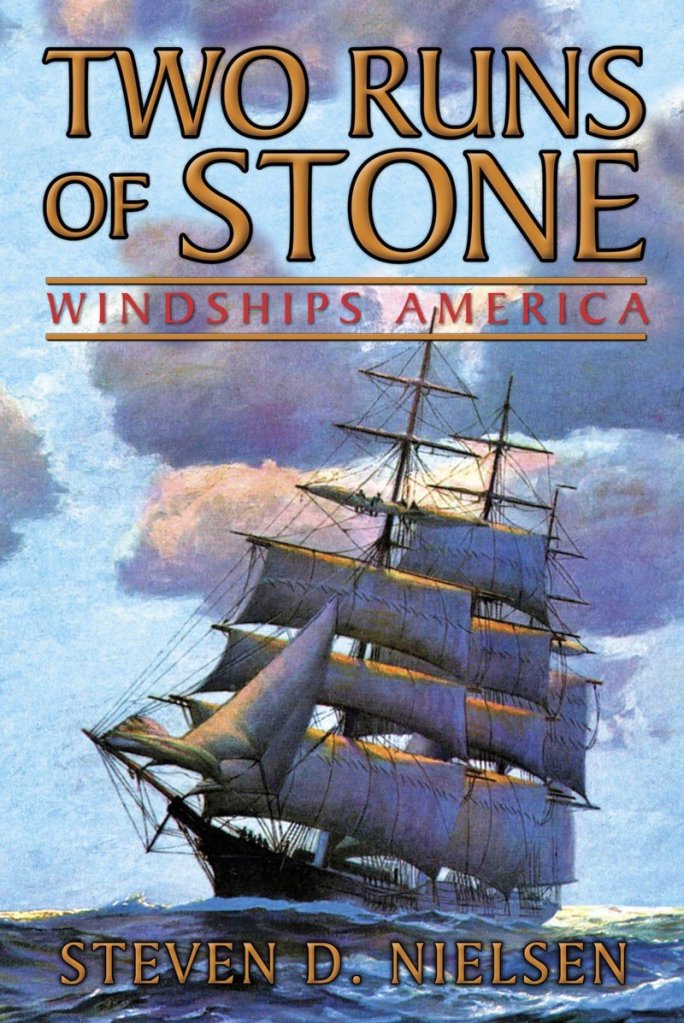
If you have relatives who emigrated to America from Europe in the 19th Century you should read this book. The suffering and sacrifice most endured to come to the New World is tragic and heartbreaking. The story continues from the first volume, where Peter and Maren leave Denmark for America. Their experience onboard a windship as passengers in steerage, crammed together with hundreds of other emigrants, is the stuff of nightmares. As I read, I often thought how well it fit the horror genre, but this was real life in the 1800s. What these brave souls endured is unimaginable. No matter how badly you think you have it, believe me when I say you have no clue.

The motivation for their journey was to gather to Zion with other converts to The Church of Jesus Christ of Latter-day Saints. There’s a lot of bad press and misunderstandings about the Mormons. This incredibly well-researched book presents an accurate picture of faith and determination during that time and what these early Saints went through. However, that is but a part of an intriguing and gripping story with glimpses into Danish culture, 19th Century life, and what it was like when it took months to get from Western Europe to the USA.

While modern life is beset with scams, fraud, and dishonest people, circumstances back in the 19th Century were no better, especially along the frontier when the USA was still in the process of being settled.

Getting a glimpse of what it was like for our ancestors is a lesson in humility and appreciation for what we have. The author of this series is a master at integrating vivid descriptions that not only enhance the imagery but are integral to the story’s substance.

The Section Notes are interesting as well, especially for history buffs, as they back up the various details in the story with research.

When I finished the first book in this series I knew I’d never look at a windmill much less flour the same again. After reading this volume, I’ll never look at life onboard a windship the same again. The complexity and hazards are astounding. He puts you there, using all the senses and details, technical and otherwise, that bring settings as well as characters to life. You love some, you hate some and hope they get what they deserve. These are living, breathing characters that feel like family.

I was talking with one of my grandsons and his girlfriend today about how schools fail to teach history in an enticing manner. When I was in school a long, long time ago, all I remember from history classes is having to memorize events and dates, something I didn’t do well as a visual learner with poor rote memorization skills. There was attempt to provide an accurate taste of the times involved, much less their context other than the dry narratives in the textbook. If a class were to do nothing more than read these “Two Runs of Stone” books during a semester, they’d learn far more that would actually make an impression that will last throughout their lives.

You can get your copy on Amazon here.

Historical Fiction at its Best

Cover of  the book "The Wall Between"

Review of “The Wall Between” by Inger Margaret Foster

My binge marathon on Inger Margaret Foster’s books continues!

The point of historical fiction is to take you to some time in the past and live it. This story definitely does that and more! I’m old enough to remember much of what went on back in the 70s. I also remember when President Ronald Reagan told Gorbachev to tear down the Berlin wall. But never did it have the impact as it did in this amazing tale of a couple separated by it and the horrible policies that were in place when East and West Berlin were separated.

That was the situation at the end of WWII when Communist Russia got East Germany and the allies got West Germany. What it required to cross from one side to the other was solid identification, then being escorted by an armed guard who kept his eye on his watch to make sure the meeting didn’t go longer than it was supposed to.

I’m glad that I read “Elke’s Magic” first, though it’s not required. Nonetheless, it gives you a glimpse of the situation and you get to know the main character. You can also understand why Elke missed her idyllic little cottage back in the States. When she was washing dishes in her humble apartment in West Berlin and remembering the dried herbs hanging above her sink in her little house I could so totally relate! When I lived in Texas I was able to grow a multitude of fresh herbs that I dried in the house, just like that. I hope to be able to do so again, maybe next year, though some won’t survive where I live now in New York State, where it’s so much colder.

I absolutely loved this story and it touched me deeply. I read it in a single sitting, unable to put it down. Highly recommended to understand what the people in Germany went through during those dark and trying years.

You can get your copy on Amazon here, for free if you subscribe to Kindle Unlimited.

A Perfect Story for Native American Heritage Month

morningstar

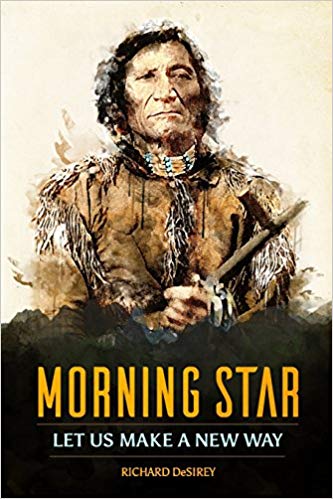
Morning Star: Let Us Make a New Way

by Richard DeSirey


November is Native American Heritage Month and if you want to expand your knowledge of American History there is no better place to start than with this well-written, historically accurate story.


This book chronicles the story of those who came to be known as the Northern Cheyenne. They were driven from their ancestral home in the Black Hills area to Kansas, but promised if they went peacefully, they could return to their sacred ground at a later time. Of course this promise was not honored. Determined to return to the land given to them by the Great Spirit, whom they knew as Maheo, they escaped from the barracks in which over 300 had been imprisoned without food, water or heat in the winter and started the long trek back to Montana.

This band was led by a wise chief and leader whose name was Morning Star. In the historical record, he is usually referred to as Dull Knife, a derogatory nickname given to him by the Sioux (Lakota) because he was a peacemaker and wanted to co-exist with the white man. Clearly this is not what the white man wanted. Promises and treaties were made and consistently broken. Those who signed them on behalf of the United States often didn’t have the authority to enforce them. Treaties had to be ratified by Congress, and when this didn’t happen, the terms of the treaty were not met, though the Native Americans were expected to honor their side of the agreement. The military was especially brutal, leaders often decorated for the cowardly slaughter of peaceful groups that included women, children, and the elderly. Yes, Custer did get what he deserved.

The original explorers of North America treated the Natives Americans horribly, especially the Spanish and English. Believe it or not, the French showed them more respect. When the United States attained their independence, the treatment of the Native Americans got even worse. They were in the way as far as western expansion and “Manifest Destiny” were concerned and treated worse than animals or even slaves because they were in the way and of no value.

It is absolutely shameful and a national embarrassment that it took a court decision to declare them as human! Even the pope had declared it acceptable to slaughter indigenous people. In what universe is this acceptable?

As a baby boomer, my impression of the First Americans was that they were blood-thirsty, uncivilized savages. This came from what I was taught in horrifically biased history classes combined with the TV and movies of time. Nothing could be farther from the truth, yet never was it mentioned the depth and spirituality of the culture that they espoused, especially the Cheyenne tribe. In many respects, they achieved a culture that was far more advanced than our own.

As an author myself I am currently working on a trilogy in which my main character is Cheyenne. This has motivated me to do a significant amount of research to assure its accuracy. I have been shocked, heart-broken and ashamed of my country as I have learned how these people were treated. I am currently working with a full-blooded Cheyenne to further develop this character and he is the one who gifted me with this book. The author worked diligently with the Cheyenne people for decades to gather Morning Star’s story as it had been preserved by oral tradition by his descendants. This book is the real deal.

You owe it to yourself to learn how history really unfolded in this country. With all the controversy these days over immigration, try putting yourself in the moccasins of the First Americans as the white man invaded them from across the Great Waters, then proceeded to systematically steal their land.

Would you fight back if they refused to negotiate? You bet you would.

You can pick up your copy on Amazon here.

“Shadowed by Death” Another Excellent Historical Novel from Mary Adler

shadowedbydeath

Mary Adler has done it again, sweeping me away to another time and place with this second book of her Oliver Wright mystery series. Like the first one, it’s set in the San Francisco Bay Area in the early 40s, while the country was in the throes of WWII. Again I experienced the culture in that locale during that era as well as the prejudice and suspicion that prevailed against immigrants.

Of course the fact we were at war with some of the counties from which these people hailed, to say nothing of all sorts of intrigue in progress due to the convoluted political situation in Europe, nothing was simple. While the majority of these immigrants came to the USA to escape oppression as well as possible annihilation, it’s not surprising that their motives could be questioned. These interactions and the history behind it, most of which few of us know, made the story that started out as a murder mystery all the more interesting.

The characters were engaging and well-drawn, including Oliver’s awesome German Shepherd, Harley. Relationships are believable and convincingly complex, both interpersonal and familial as well as between ethnic group. The plot is gripping, loaded with historical information, and full of suspense and surprises. Mary Adler is one of my favorite authors with her smooth, imagery-rich style, historical value, and authentic cultural context. All in all, an outstanding read.

You can pick up your copy on Amazon here.

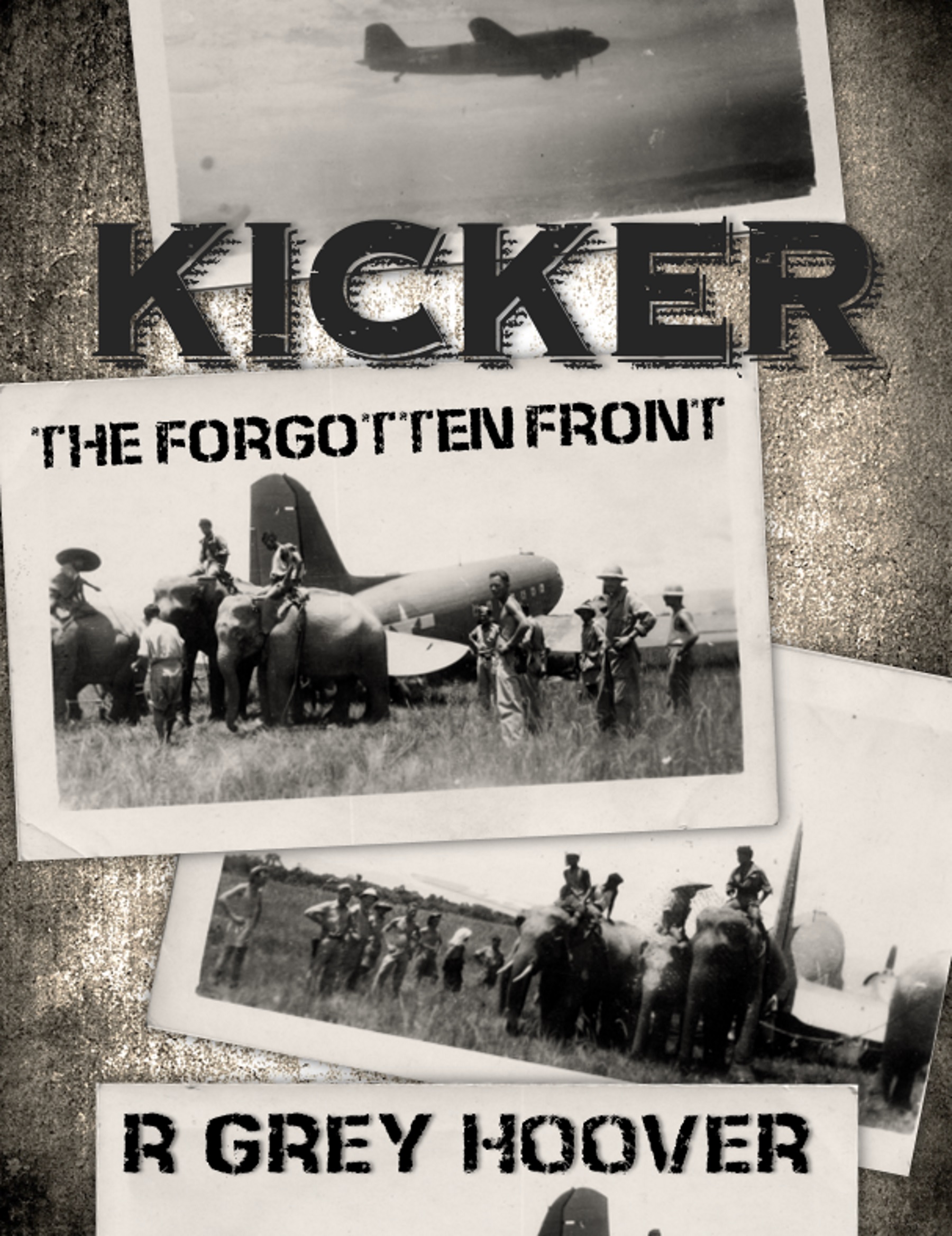
“Kicker” by R. Grey Hoover: The Perfect Read to Celebrate #VeteransDay

Kicker Cover

#FREE on Amazon November 9 – 11! Get your copy today! Amazon Link

World War II is raging. A young father must choose between his family and duty to his country- a decision that could cost him everything.

Based on actual experiences of United States veterans and official military aviation history records from World War II, this is the thrilling story of a family’s journey into war. While his loved ones struggle with shortages and rationing at home, Sam endures relentless Japanese attacks against his unarmed aircraft over the treacherous mountains and torrid jungles of Asia. His job is to drop supplies to Merrill’s Marauders and over 750,000 allied soldiers fighting in the perilous jungles of Burma. If the enemy is not stopped, the American way of life will end.

If you like non-stop action with a touch of humor and romance and the chance to learn about the “forgotten front” of WWII, then this is the book for you. I dare you to read the excerpt below and not absolutely HAVE to read this story!

Amazon Link

EXCERPT

April 4, 1944 – Dinjan Airbase, India

                Sam and Bobby Joe were totally exhausted when they crawled into their charpoys. The harrowing events of the day had taken its toll on them physically and mentally. In spite of the heat and noise of the jungle, Sam felt the blessed relief of sleep approaching soon after his head hit the pillow. However, as he drifted off, a feeling of unease came over him. It was a feeling that something was wrong, not here in India, but at home. He didn’t know if he felt uneasy because he still hadn’t received mail from home or because of some unknown reason, but the feeling stayed with him until he finally succumbed to his exhaustion and slipped into a deep sleep.

Thankfully, his slumber was not disturbed by his recurring nightmare, and he slept soundly until the wee hours of the morning when he suddenly awoke not knowing what had disturbed him. A light rain was falling outside, and except for an occasional flash of distant lightning, the basha was in total darkness. He lay very still, listening to the sounds around him. He strained his hearing, but no sound came except for the steady breathing of the sleeping men around him. After several minutes, he relaxed, thinking his imagination was playing tricks on him. He was almost asleep again when he thought he detected a faint unfamiliar sound coming from somewhere in the basha. Once again, he listened intently, not sure he had heard anything; but then he heard the sound again—only this time it seemed closer, and he was sure it came from within the basha. He couldn’t quite place the sound, but it seemed like something soft brushing against an object. He listened closely, but all was silent. None of the other men in the basha stirred, and after an extended period of silence, he relaxed once again in anticipation of sleep.

He was in that dreamy state just before slumber when he felt the presence of something or someone nearby. Once again, his senses came to full alert, and he made a conscious effort not to move. He listened carefully, bringing all his senses to bear. He could see or hear nothing, and yet he was sure something was there. He was startled when someone at the other end of the room moved, but then all was silent once again. He was lying on his back, so he slowly moved his head to the right and scanned the darkness.

At first he saw nothing, but then attention was drawn to a slight movement at the foot of his bed. He couldn’t make out what it was. It appeared to be an undistinguishable shadow against the darker background of the room. As he watched, the shadow moved, and he held his breath as it silently glided along the side of his bed. There was no sound as it moved, and it slowly drew nearer and stopped near the head of his bed. He could tell that it was something large, but due to the extreme darkness, he was unable to see what it was. His instincts told him this was something dangerous and evil, and the hairs on the nape of his neck stood erect. At that moment, a distant flash of lightning faintly illuminated the scene, and in that instant of light, Sam could see the large form of a tiger standing beside him.

The animal’s head was enormous. Its eyes, momentarily reflecting light from the faraway lightning, gave the beast an evil, devil-like appearance. This was death incarnate staring directly at him.

Sam was frozen with fear, and his heart seemed to stop. His .45-caliber pistol hung on the wall not three feet away, and he cursed himself for not keeping it inside the mosquito netting with him. He knew the tiger could see that he was awake, and he feared any movement would cause it to attack. The animal stepped closer, and Sam could see its dim outline and smell its damp fur and the fetid odor of its breath. The tiger appeared to know its victim was helpless. The great beast took its time as it sniffed the mosquito netting as if testing its strength. Slowly it raised a huge paw and placed it against the puny impediment. The tiger’s claws caught in the netting, and with a mighty swipe, it ripped the flimsy material away from the bed.

ABOUT THE AUTHOR

greyhooverR Grey Hoover is an Air Force veteran with a family tradition of military service that dates back to the American revolution. He wrote his book “Kicker the Forgotten Front” to honor his father and the other veterans of World War II who fought in the China-Burma-India (CBI) theatre.  During the war, the European and Pacific theatres got most of the supplies and media attention leaving the CBI theatre with the leftovers. Even in today’s media coverage of World War II the CBI theatre is never mentioned. The author’s book is an attempt to correct this gross oversight.

R Grey Hoover’s social media links:

Website https://rgreyh.wordpress.com/

Twitter https://twitter.com/rgreyhoover

Facebook https://www.facebook.com/rgrey.hoover

Pinterest https://www.pinterest.com/rgreyhoover/

Blog https://rgreyh.wordpress.com/2018/11/09/2019-tribute-to-veterans/

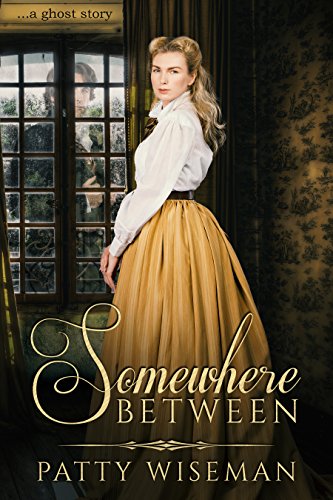
“Somewhere Between” by Patty Wiseman: Historical Novel with a Paranormal Twist

somewherebetween

This historical novel with a paranormal-whodunnit twist was well-written and had numerous fascinating plot entanglements. The characters were well-drawn and vivid with enough suspense in the story action to keep you turning the pages, wondering who did what and how it would turn out.  I loved the gutsy protagonist, Phebe, whose curiosity was insatiable and tended to get her into trouble as she tried to figure out the secrets behind the Powell family, by whom she’d been hired as a governess for their three lively children.

The “ghost in the attic” was great, eerie enough to be convincing as a ghost and duly mysterious as well. The other household staff members–the cook, butler, and ever the stable boy–were key to the story as some tried to protect the family’s many secrets and how Edmund’s ghost fit into it all. I don’t like creepy, scary type books, but this one was a comfortable bedtime read with it’s suspense directed more at the mystery of how the various characters were connected. All families have their share of secrets, and this one had a plethora of them, many of which were scandalous in the time in which the story takes place but less so, perhaps even considered normal, today.

This is a pleasant, easy read and glimpse of a different time. The cover is fabulous and fits the story perfectly.

Pick up your copy on Amazon here.

Meet Author Bette Stevens (2nd RRBC “Treat” Reads Blog Hop, Day 9) #RRBC #RRBCTreatReads

“Greetings!  Welcome to the 2nd RRBC “TREAT” Reads Blog Hop!  These members of RRBC have penned and published some really great reads and we’d like to honor and showcase their talent.  Oddly, all of the listed Winners are RWISA members!  Way to go RWISA!

We ask that you pick up a copy of the title listed, and after reading it, leave a review.  There will be other books on tour for the next few days, so please visit the “HOP’S” main page to follow along.

Also, for every comment that you leave along this tour, including on the “HOP’S” main page, your name will be entered into a drawing for a gift card to be awarded at the end of the tour!”

BETTE STEVENS PIC

Bette is a nature lover and former educator with a sweet outlook on life. As a “Baby Boomer” myself (whose family also missed out on living the “American Dream”) this sounds like a fascinating story I look forward to reading.

Follow Bette on Twitter @BetteAStevens


DOG BONE SOUP

BETTE STEVENS BOOKWhether or not You Grew Up in the 1950s and 60s, you’ll find DOG BONE SOUP (Historical Fiction) to be soup for the soul. In this coming-of-age novel, Shawn Daniels’s father is the town drunk. Shawn and his brother, Willie, are in charge of handling everything that needs to be done around the ramshackle place they call home—lugging in water for cooking and cleaning, splitting and stacking firewood…But when chores are done, these resourceful kids strike out on boundless adventures that don’t cost a dime. DOG BONE SOUP is the poignant tale of a dysfunctional family struggling to survive in America in the 50s and 60s, when others were living The American Dream.