Unknown's avatar

About Marcha's Two-Cents Worth

I'm a science fiction author of the Star Trails Tetralogy, retired after two decades working at NASA, defected from my physics training to become a professional astrologer, and various other acts of rebellion. More recently, I've teamed with Pete Risingsun in writing "The Curse of Dead Horse Canyon: Cheyenne Spirits" which was released in July 2020 with all three books in the trilogy now complete. Check them out at https://dead-horse-canyon.com.

Challenges of Space Exploration: A NASA Insider’s View of “The Martian” (Movie Version)

martiancover

[Spoiler Alert: This constitutes one massive spoiler if you haven’t already seen the movie. I comment on specific situations depicted onscreen based on my experience working as a NASA contractor for over 20 years. So if you’re even slower to see movies than I am, are planning to see it, and prefer to thoroughly enjoy the suspense, then bookmark this blog and read it later.]

First of all, I want to say I thoroughly enjoyed this movie which I finally saw over the holidays while visiting family. My intent here is not to criticize since I believe it was exceptionally well done. It employed a lot of fascinating details, ingenuity and great suspense throughout. Fortunately, Hollywood has come a long, long way depicting NASA-related movies since the movie, Armageddon, which I considered a complete debacle as far as the technical details were concerned.

I suppose being a physicist and geek who worked for NASA as a contractor from 1988 – 2009 are what drive me to pick at technical details, perhaps as a matter of ego to show my knowledge. Whatever it is, I can’t help it, and to me such details are interesting while most normal people would simply enjoy the movie for what it is and give me one of those looks that screams, “What’s your problem, Bozo?” I’ve mellowed on this a bit myself, but I still maintain that a certain level of scientific accuracy is important. But I’m a geek, so what do I know other than it was science fiction that inspired me to become a geek in the first place? Does it really matter if it’s factual? Probably not.
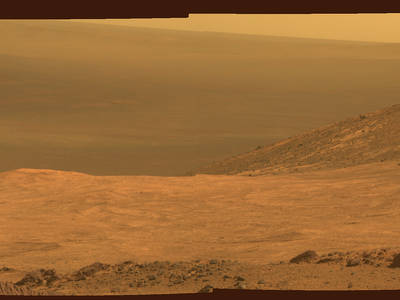
IDL TIFF file

Anyway, “The Martian” is based on the book of the same name by Andy Weir, whom you can learn more about on his Amazon Author page. There’s also an interesting forum on Amazon where various readers have commented on the technical accuracy of the story (or lack thereof), which of course appealed to my inner geek. Having seen and enjoyed the movie, I plan to read the book. I assume that the author did a lot of research putting this story together and can thus take credit for the fact the movie was realistic enough to be credible and even admired by someone like myself. Based on my experience, here are a few comments.

1. My first job with NASA was in the Life Sciences Division at Johnson Space Center in Houston, Texas. Part of their purview was the well-being of the astronauts. The majority of their experiments conducted on the space shuttle and International Space Station were directed primarily at how exposure to microgravity, increased radiation, close quarters and isolation affected an astronaut’s mind and body. Colonization of distant worlds such as Mars has been a topic of NASA research for many years, including what crops would grow and thrive in conditions different from Earth. Needless to say, being self-sufficient is the ultimate goal.

That said, I suspect that if we had an outpost on Mars that by that time we’d know enough about such things as potential crops that there would have been more for the story’s hero, Mark Watney, to work with besides potatoes which were intended to be consumed as food. I’m reasonably sure that part of the mission would entail planting a variety of things, perhaps for the benefit of the next crew.

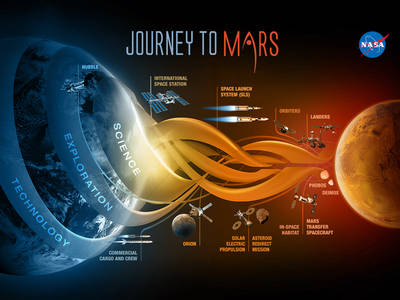
Which brings me to my next comment, the length of the movie’s mission being 60 days.
journey_to_mars

2. It takes a long time to get to Mars, depending on the available propulsion technology, but let’s just say using currently known or at least acknowledged sources, it’s going to be around a year or more. I suppose for the very first mission to the Red Planet that a duration of two months is possible, but I suspect that it would be longer. I also suspect that the habitation module constructed would be one that would be designed to be permanent, part of an elaborate colonization plan and not a primitive throwaway. Given the sophistication of their space vehicle, Hermes, which even had sectors that rotated to create artificial gravity, it’s more likely that part of that spacecraft would have constituted their living quarters and been left behind when their mission ended. This would have lightened the return load as well.

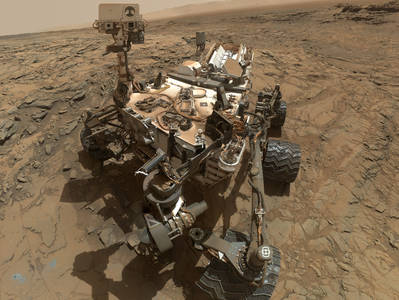
3. I thoroughly enjoyed the connections to previous Mars missions and how they provided resources for Mark to contact NASA. Whether that could actually be achieved I don’t know, but for me it was feasible and clever enough that I had no problem with it.  If you’re not at least partly awed by these previous accomplishments that comprise sending and then actually controlling a vehicle on another planet, then you simply don’t understand what it entails.
marsrover4. NASA has definitely been known to blow up rockets, not only in the early days of the initial space race with Russia to get to the Moon in the late 50s and 60s, but even more recently as many of you may recall with the Space Shuttle Challenger accident on January 28, 1986. Private rocket companies more recently are having a similar problem. Rocket fuel is highly volatile, systems complex, and problems are inevitable. Thus, when the rocket they put together in record time to send supplies blew up it wasn’t much of a stretch. Anyone who didn’t see that one coming hasn’t been paying attention to the space industry and its explosive history (pun intended).

But there’s more to it that that. Having worked in Safety and Mission Assurance for most of my years at JSC, I was privy to quite a few dirty little secrets. NASA makes every effort to identify every possible hazard and document them all in Hazard Reports. These go far beyond acknowledging the problem itself. Some are classified as Critical, i.e., could cause a problem but not a lethal one, while others are classified as Catastrophic, which entail loss of life and/or millions of dollars worth of equipment. Once hazards are identified, it’s mandatory to identify preventative controls. The severity of the consequences of failure determine how many controls need to be in place. Systems that can cause a catastrophic hazard are required to be three-fault tolerant, meaning three things need to fail before the worst case scenario can occur.

InSight in ATLO with back shell

The back shell of the InSight spacecraft is lowered onto the lander in a clean room at Lockheed Martin.

However, there are some systems that defy that level of safety via controls and are thus considered an accepted risk. For example, unless you’re a pilot you probably would never think of a “bird strike” as being in that category, but if a spacecraft on takeoff or landing strikes a bird, it can have dire consequences. Other risks are accepted for a variety of reasons, but it gets complicated so I’ll save further explanation for a future blog, such as some of those “dirty little secrets” that relate to the two space shuttle tragedies. [NOTE:–With the 30th anniversary of the Challenger accident coming up this month, you can watch for one soon.]

Back to the point of the rocket blowing up in the film, besides the inherent danger of propulsion systems in general, bypassed quality assurance inspections or those performed by over-worked technicians would increase the likelihood of problems, making that unfortunate event quite feasible.

5. The next safety-related situation would be the malfunction and subsequent explosion that destroyed Mark’s potato garden. Certainly he did some modifications beyond its original intent, but it’s still unlikely it would have been that fragile. Considering some of the nasty substances that go along on a space mission, explosions are always a possibility. This also refers back to the fact that I doubt their outpost would have been so makeshift in the first place. Mars’ thin atmosphere is not as efficient at destroying meteorites as Earth’s, plus the main asteroid belt lies between Mars and Jupiter, so they’re a bigger problem by proximity as well. I sincerely doubt that NASA would ever erect such a cheesy structure as part of a planetary outpost. This, of course, applies to the matter of the antenna being destroyed as well. Furthermore, as mentioned in the Amazon forum, the force of the Martian wind is lower, given the reduced atmospheric pressure compared to Earth’s.

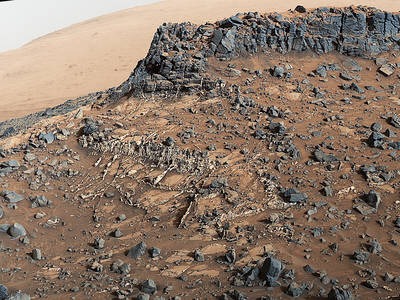
6. Several of the means employed in the movie were theoretically feasible but unlikely, such as ditching the capsule nosecone and replacing it with canvas or blowing the Hermes module for some extra propulsion. A gravity assist is certainly a possibility since that technique is used routinely for interplanetary exploration missions.
mars1

7. Lastly, I’m really skeptical about Mission Control not telling the crew earlier that Mark was alive. That just doesn’t make sense to me. However, NASA employees, no matter what rank they happen to be, are human and subject to bad judgement calls and mistakes, so it’s certainly not impossible. Subsequently, such individuals tend to quietly disappear, probably reassigned to the USA equivalent of Siberia.

In a situation like that in the movie, such a decision would undoubtedly be routed through the Astronaut Office and I suspect that the returning crew would be given that information posthaste. It’s important to know that communications between Mission Control and a manned craft are channeled through  a single source known as the Capcom, short for “capsule communicator”, a vestige derived from the early days of the space program.  This individual is traditionally an astronaut.  This person would undoubtedly be aware of the situation and thus wield considerable influence.

Not distracting the returning crew from their mission simply wasn’t sufficient rationale. Astronauts are human, too, and certainly have emotions which can drive them to do some crazy things in their private lives, but given the story’s circumstances and my experience at NASA, I really believe they’d be treated as the professionals they are and given all available information. They’d be far beyond pissed off to find out they’d been kept out of such an important loop.  Whether they’d go “rogue” or not is a possibility but doubtful without full ground support.  Spacecraft systems are beyond complex with each one having a team of experts who would assist with calculations for possible solutions.

Consider, as stated in the end of the movie credits, that it took 15,000 people to produce that movie.  Far more than that support the space program with each system component typically having a dozen or more engineers that know it inside out.  Astronauts couldn’t possibly have the necessary knowledge to make technical decisions that deviate from their training for a specific mission.

If you’re still with me at this point, thanks for listening. I really loved this movie, technical and operational flaws notwithstanding, because this is exactly the kind of film I love. My hope is that it inspires future generations, the ones who will someday walk on Mars, hopefully with a three-fault tolerant infrastructure as opposed to what astronaut Mark Watney had to deal with in “The Martian”.

You can pick up a DVD of the flick on Amazon here.

Mars Photos courtesy of NASA


Writing and Balancing Social Media

Very helpful article! I know that social media is definitely a problem for me!

10 CHOICES THAT WILL BRING YOU GREAT REGRET IN 2016

Excellent advice for the New Year!

mosvy's avatarMosvy

image

There are 10 choices that will ultimately lead anyone to this phrase of regret, “IF ONLY” unless they do something about them. Here they are:

1. LIVING TO IMPRESS OTHERS. –When you spend too much time concentrating on people’s perception of you, or who everyone wants you to be, you eventually forget who you really are. Stop living to please others.

2. LETTING SOMEONE ELSE CREATE YOUR DREAM. – The greatest challenge in life is discovering who you are. The 2nd greatest is being happy with what you find. A big part of this decision is to stay true to your own goals & walk in your own path.

3. KEEPING NEGATIVE COMPANY.–Everyone can’t be your friend. The wrong person will do 5 things to u.
1.They will provoke your weakness
2.They will weaken your focus
3.They will distract you
4.They will cut you from your strength like Delilah.
5.They…

View original post 355 more words

An Outstanding & Thought-Provoking Time-Travel Tome

talesofelasticlimitcvr

While the premise of going back in time to alter history isn’t new, the author’s skill in its presentation coupled with his unique insights will satisfy science fiction and history buffs as well as anyone with an eclectic taste for literature. Indeed, this story possesses the makings of a classic. It’s highly intelligent, flawlessly edited, and I love the author’s straight-forward yet ethereal style which flows with the essence of timelessness that you’d expect in a book that involves time travel. His skillful writing combined with the fact his name is a pseudonym leaves the impression that he may, indeed, be a time traveler himself. The title is perfect, a thought-provoking glimpse of the nature of time and how far it could be stretched were it breached or controlled, the scope of its content undoubtedly epic.

As this tale begins, time travel has already been achieved and a multi-disciplined committee of academics privy to the technology directs its use to keep humanity’s history on the proper track. Three previous attempts didn’t work out as hoped, but the problems have supposedly been solved by scientist, Lawrence Henry, a.k.a. Hank, whose breakthrough discovery removes the troublesome paradoxes. Thus, Hank and his fiancée, Frances Newton, set out to establish humanity in a New Historical Age.

Those with whom they interact see them only as a very tall, mysterious gentlemen and a red-headed woman who serendipitously slip into their respective eras at historically important times. Each fable is independent and captures a nexus where a decision made by an individual, some famous historical figures, others not, takes the world in a new direction. These included encounters with Thomas Jefferson, Albert Einstein, King Henry VIII, Marcellus and Archimedes. As a reader I was immersed in the flavor of the moment and felt as if I was observing a profound moment in history unfold.

Events prior to those in recorded history were touched on as well, such as the invention of writing and numbers, the wheel, the transition to an agrarian society and even a new look at man’s best friend. The episodes operate on multiple levels which will satisfy casual readers as well as history lovers or those with philosophical tendencies. Each carefully selected situation demonstrated the author’s thorough understanding of history, was well researched, and included some little known facts packaged as a tremendously enjoyable story stylishly written. I haven’t read the preceding volumes in the Elastic Limit series, but this one stood well on its own while nonetheless leaving me with the desire to read the previous volumes, which this one ties together.

Pick up your copy on Amazon here.

Astronomy events, star parties, festivals, workshops | Astronomy Essentials | EarthSky

Here’s some information on some upcoming events for stargazers!  Check ’em out!

———

Plan some astronomy fun for the coming year.

Source: Astronomy events, star parties, festivals, workshops | Astronomy Essentials | EarthSky

Literary Agents: Starting Your Search

Excellent advise if you’re a writer thinking about getting a literary agent.

Hemsley's Editorial Services's avatarThe Writers' Den

Crime books

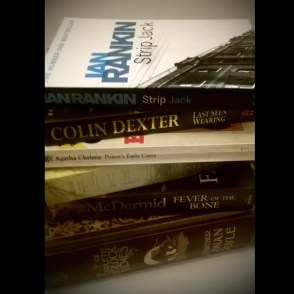
So you’ve finished your novel, and now you’re trying to decide which agents to send it to. Choosing an agent can be really tough, but the time you put into the search will be well worth it when you finally get an agent that’s right for you. Here’s a few things to think about when starting your search.

Your favourite reads

Most of us tend to read what we write, so for example if you write horror you’re likely to read Stephen King’s work. This is great for you, because it probably means you know whose work yours is similar to. Write a list of these authors, then research which agent represents them. Chances are, if an agent likes Stephen King’s work, they’ll like yours too.

Your goals

Do you want to be the next J K Rowling, known worldwide for your success? Or are you more bothered about making…

View original post 405 more words

So all these companies making money off your personal information, do you receive a check?

Outstanding research and information! I know that I’m pretty tired of all the junk emails and junk snail mail I get from people sharing my info!

Paradise Kendra's avatarVirginia NOW History

UnitedStatesPrivacyLaw
The state ofCalifornia is the furthest along in establishing privacy laws for its people. This includes medical privacy, internet privacy, as well as laws that restrict businesses, medical facilities, the internet from using your personal information to make money for themselves. After all, do you receive a check from the profits they make off of you?

California Law – Constitutional Right to Privacy


California Privacy Rights Include:


Public Record Exemption for Sex Offense Victims –California Government Code section 6254 and California Penal Code section 293. These laws prohibit the disclosure of the names and addresses of victims of specific sex-related crimes in documents provided in response to requests for records, including responses provided under the California Public Records Act.
Domestic Violence Victim Privacy – California Civil Code…

View original post 1,153 more words

The #DARPA Connection (Technology and Tragedy) #FindHeatherJasmine

What a sad story! Help this father find his daughter after over 40 years.

“The History of Things to Come”: A Thriller Packed with Suspense and Intrigue

historyofthingstocomecover

This contemporary thriller follows in the footsteps of “The DaVinci Code” but in this case the mystery and intrigue surround the works of Isaac Newton, particularly those that go beyond the scientific prowess with which most of us are most familiar. His interests also included alchemy, religion, and various sacred relics, which allegedly possessed mystical powers.

As a physicist myself, Newton is one of my favorite people, further enhanced by the fact we were both born on Christmas Day, albeit 305 years apart. Well, okay, that’s not entirely accurate since the calendars changed during that time, placing his birthday on January 4. That’s relevant to me, too, since I’m not only a physicist but also a professional astrologer, which Newton was as well, though of course the history books tend to leave out that little detail. Perhaps the author will include that particular angle in a future volume, which could introduce some interesting prophetic angles. There’s plenty of fodder to explore between science, religion and astrology, which I plan to pursue at some point myself. Thus, I was excited to find this book that promised to delve into areas in which I have a strong personal interest; I was not disappointed.

Of course anything that might wield considerable power is going to attract bad guys who want it for all the wrong reasons; think Indiana Jones and “Raiders of the Lost Ark”. In this case, however, rather than Hitler and the Nazis, it’s a single, powerful entity known only as the Drakon, who sends a variety of henchmen to obtain any and all of Newton’s writings and artifacts, which places anyone in possession of such items in mortal danger.

The main character, Vincent Blake, is an experienced detective whose specialty is tracking down stolen art and other antiquities, so he’s quickly pulled into the case as those who get close to anything Newtonian are dropping like flies. Many of Newton’s books and notebooks have already been acquired by The Vatican, which have been studied in detail by Brother Nathan Vittori, Chief Librarian at the Vatican Observatory, as well as his friend, Dr. Carla Sabatini, a former research student. Brother Nathan discovers a fascinating notebook of Newton’s in the archives that contains a considerable amount of new information and the plot thickens.

This story is richly detailed which brings it to life through various historical tidbits, well-developed characters and an intriguing plot that includes a plethora of interesting individuals including a mysterious homeless woman named Mary. In some respects it moves too fast since it’s so detailed that some can easily be missed as you plunge forward reading to find out who’ll survive and how it will end. Thus, it’s one that I would probably read again at some point to savor those elements I blew past initially. The ending was reasonably satisfying, yet left enough unanswered questions to carry over into future volumes.

The writing style is strong and engaging, my only criticism related to awkward viewpoint transitions. Nicely edited otherwise, I’m surprised that no one suggested section breaks to cue the reader when the point of view shifted, often abruptly and in the middle of a scene which was enough of a distraction to pull you out of the story action until you got oriented again. Nonetheless, it was a great read that I enjoyed tremendously and I definitely look forward to any sequels.

You can pick up a copy on Amazon here.

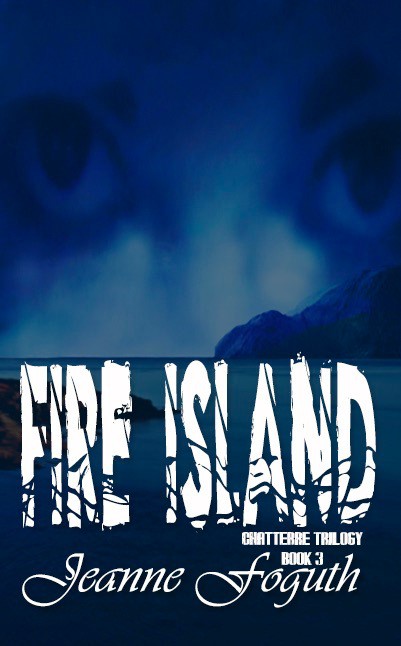
“Fire Island” (Chatterre Trilogy Vol. 3): Sci-Fa at its Best

fireislandcover

This well-written novel is the worthy third book in the Sci-Fa Chatterre Trilogy. The author does an excellent job of melding science fiction and fantasy together in another convincing story of another world. This particular world is similar enough to what ours was a century or two ago to be vaguely familiar then mixed with high technology imported via a spaceship wreck you can learn about in the first book, “Star Bridge.” Having not read the second book, “Thunder Moon,” I was a bit lost on the full context of this one, but the immediate action and suspense were enough to grab my interest without knowing the full story of how Tem Aki got into her precarious situation.

Tem Aki is on a quest to find her brother, Larwin, whom you meet in “Star Bridge.” Her journey is substantially complicated when she finds herself on the other side of the planet via an encounter with a time/space anomaly. Fortunately, there’s a settlement nearby where once again you are treated to Jeanne Foguth’s outstanding ability to depict major culture clashes when Tem Aki meets Cameron, the somewhat reluctant leader of a tribe-like culture. Since she emerged from the ocean, albeit in a spacesuit, he thinks that she’s a goddess who has arrived to help him celebrate an upcoming religious ceremony as well as deal with some troublesome individuals who are losing their religious faith as well as trying to undermine Cameron as their leader.

Cameron’s culture is well-developed as is their traditional belief in the madrox dragons, specifically the great dragon-mother, Shaka-uma. The problem lies in that fact that no one has seen her in a long time so a few troublesome doubters are declaring that they never existed. Meanwhile, Cameron is trying to prepare for their annual pilgrimage to honor Shaka-uma, which his adversaries are trying to sabotage. Tem Aki is thrown into this controversy which is further complicated by the fact that there are no other females around in the immediate environment which can best be compared to a monastery.

The misunderstandings between them are at times hilarious and if nothing else demonstrate how easily such confusion can develop when two cultures collide. Tem Aki’s technology, which includes my favorite android, GEA-4 (whom you can also meet in earlier volumes), of course convinces Cameron of her godhood. His fascination when GEA-4 stares into the sun to recharge is classic. Tem Aki’s revulsion toward the primitive, chauvinistic culture is certainly convincing as is the rationale Cameron maintains that she’s some form of divinity.

Cameron’s challenges alone would make a fascinating read but adding Tem Aki into the mix is the coup de grace for a great story. I don’t want to delve any further into the plot because I don’t want to throw any spoilers out there, but believe me when I say that there are plenty of complications, surprises, believable characters, Kazza is joined by another delightful mystic cat, and a satisfying ending. I recommend reading the books in sequence, though this one can stand on its own if you’ve at least read “Star Bridge.”

Pick up your copy on Amazon here.

jeanne

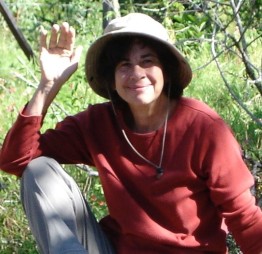
Connect with the author, Jeanne Foguth:

Visit Webhome Jeanne Foguth

Follow on Twitter @JeanneFoguth

Get Pet tips, etc. http://foguth.wordpress.com