
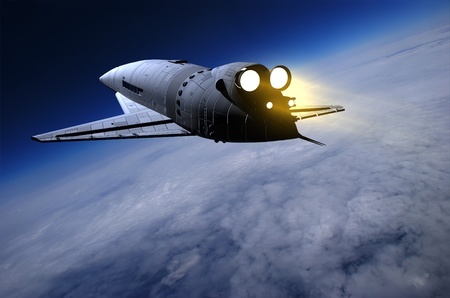
In my recent interview with Book Nerd Paradise I read an excerpt from Beyond the Hidden Sky which illustrated what Creena experienced when the escape pod finally landed on Verdaris. While she’d been instructed by the onboard v-troid, DORAI, to exercise as a regular part of her zones, Creena got frustrated with the equipment malfunctioning and stopped doing so as part of her general rebellion. Exercising was a bore, especially when the marching machine kept jamming or not keeping an accurate record of how much she’d done. Moving about the pod in a weightless environment was effortless and fun! Yet she was initially informed that life in zero-g meant exercise zones. The conversation went like this:
“If I don’t I’ll get what?” Creena asked.
“Orthostatic intolerance,” DORAI replied.
“What’s that?”
“Side effects of zero gravity. It affects your heart, skeletal muscles, bones and balance. Without countermeasures you’ll be dizzy, have trouble standing up, and won’t be strong enough to walk when you return to a gravity field.”
So she’d been warned but conveniently forgot. The results were not pretty.
Why were these exercise routines known as countermeasures necessary? This excerpt from p. 62 of The Star Trails Compendium briefly explains it:
Gravity forces your body to continually compensate for it by building additional strength. Without it muscles weaken, including the heart, also a muscle, which needs to pump blood against it. Orthostatic intolerance is the technical term for not being able to stand up without holding onto something. Astronauts in space exercise to maintain their strength so that when they return to Earth they are not too weak to walk. Some astronauts who have returned from long-duration space flight have not been able to walk without assistance.
Gravity is something we take for granted. For example, pouring a glass of water requires gravity to deliver the liquid to the container. In space the liquid would spill out into the air and float around in a glob. Think about things you do that you can’t do upside down and you will discover various “gravity assisted functions.” Astronauts often suffer from space sickness, similar to motion sickness, because gravity is not helping keep food and liquids in their stomach.
My first job at NASA was in their Life Sciences Division at Johnson Space Center in Houston Texas. Among other things, they studied the effects of zero gravity on the human body. They conducted various experiments and developed exercise equipment for the astronauts to maintain their fitness level. One of the physical problems related to losing calcium from their bones, which obviously would weaken them. They found that resistance exercises were most effective, even though aerobic exercises such as running on a treadmill were still important as well.
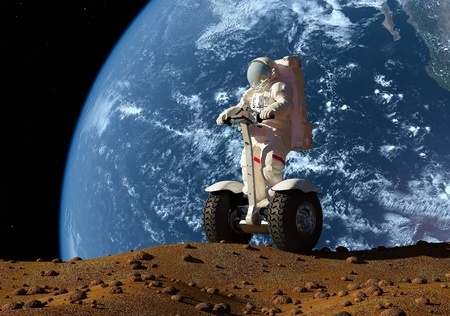
To prepare for long-term space flight such as that required to go to Mars, NASA is currently conducting a year-long study about the effects of micro-gravity in an interesting way. It just so happens that two astronauts, Mark and Scott Kelly, are identical twins. Mark is retired but on March 27, 2015 Scott and Russian cosmonaut, Mikhail Kornienko, blasted off for the International Space Station where Mark will spend a year participating in the study. Mark, who will remain on Earth, will serve as a control during which they will study molecular changes between the two. The study, which comprises numerous separate experiments, will also address how an astronaut’s mental state is affected by these changes.
You can learn more about the study here.
Space travel is not a simple matter. While we have the technology to build an interplanetary spacecraft we still don’t fully understand how it will affect humans at the physical level. This study will provide a few answers.
[NOTE: You can download a free copy of The Star Trails Compendium which contains lesson and discussion ideas of the science in The Star Trails Tetralogy from Smashwords here.]
Image licenses and copyrights via 123rf.com
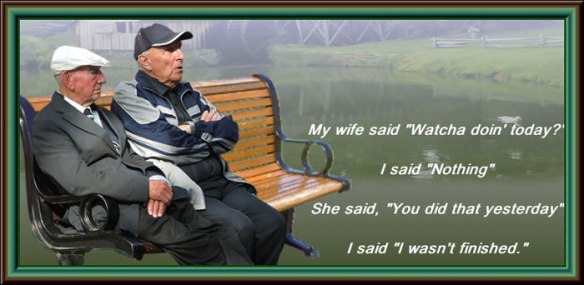

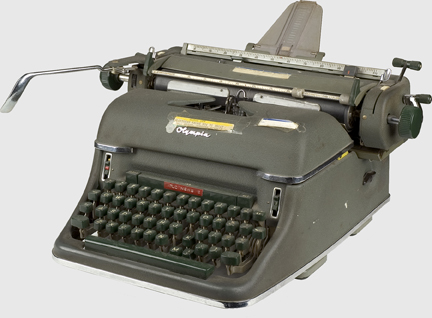 I’m old enough that I grew up without all these electronic gadgets. We babyboomers wrote letters with a pen or possibly a typewriter. My first two novels were written on a typewriter! Phones were landlines, long-distance calls expensive and rarely made except for emergencies. TV reception was via antenna to local stations with network affiliations. I remember when the idea of “pay TV” first came up and how controversial it was. My father refused to own a car with an automatic transmission, power steering or power brakes because they were beyond his skills as a mechanic to repair. Today’s new cars have electronic systems to rival a 747!
 It doesn’t hurt to give it some thought once in a while and put your lifestyle in the proper perspective, especially if you spend a large part of your life on the computer or watching television. If nothing else, it helps you appreciate those everyday luxuries a little bit more. All it would take is a huge solar flare or an EMP (electro-magnetic pulse) courtesy of some hostile country or group and it’s over. Ka-boom! China, North Korea, Russia, ISIS…

![Pageflex Persona [document: PRS0000039_00005]](https://my-2-cents-worth.blog/wp-content/uploads/2015/12/thyronnewfront150ppi.jpg?w=220&h=331)






 Numerous shoppers saw the drama in progress, some trying to help (but didn’t), others voicing our own thoughts of what kind of a horrible person would drop off a kitten in such a hazardous place. There are numerous no-kill shelters in the area making this strategy for getting rid of an unwanted animal entirely unacceptable.
 It didn’t take long before our young heroine stood up triumphantly, kitten in hand. She cuddled it to her bosom and joined us, allowing us finally to pet the little kitty who had caused such a stir. She looked like she was probably about three months old. It was November. The kitten was probably also a Leo. Coincidence? Of course not. There’s no such thing.
 Heike asked her if she would keep it and she assured us she would, that their cat had recently disappeared and her mother would know what to do to take care of it. With heartfelt gratitude we praised her efforts and compassion then at long last headed home, knowing one discarded kitten would have a warm bed that night.