Review of “Alien Affairs” by Scott Skipper

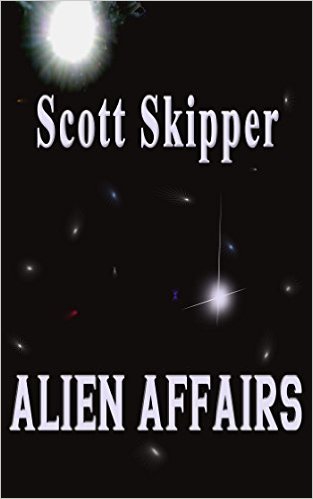
alienaffairscover

This fast-moving tale was one of the most entertaining stories I’ve read in a long time. Not only did I find numerous scenes laugh-out-loud hilarious, but it had enough suspense for me to stay up into the wee hours of the night to see how it ended.

Ironically, one of the reasons I bought this book was because one of its reviewers gave it a poor rating simply because it was politically incorrect.  And they were right, it certainly is.  And therein was where I found most of the humor. The snarky, cynical comments were such an accurate reflection of the state of the world today that you either laugh or cry.  I, for one, prefer to laugh.

The story begins with the Roswell incident back in 1947, with which any UFO nut like myself is duly familiar. The author did an excellent job of recounting the incident and blending those individuals mentioned in the historical record with fictitious characters.  In fact, it’s difficult to tell where the truth (which is undoubtedly out there) ends and speculation begins, placing this story within that popular sci-fi subgenre where fact mingles comfortably with supposition.

This version of the incident begins when a counter-intelligence officer recovers an e-reader the surviving alien was trying to destroy. They discover that it activates when picked up and displays alien writing on its screen, but shuts down a few moments later, leaving the person slightly light-headed. The device eventually winds up in the hands of the CIA where Miles Ashly, a linguist, and Lambert Gray, a cryptographer, are tasked with the translation and soon discover that as they begin to recognize certain words that the device “speaks” the word telepathically, providing the pronunciation, then eventually starts teaching Ashly the language.  When they uncover the aliens’ “Mission Plan” they are horrified to discover that their intent was to exterminate the human race. Once the failure is apparent to those back on Tau Ceti, a new attempt will be made which they expect will occur around 2016.

The author marches through time, taking us to the present while tying in various historical events, such as the race to the Moon as well as other presidential administrations.  Eventually Ashly retires and decides to teach the alien language to his grand-niece, Carrie Player, telling her it’s the language of the Dogon people. Years later, when he’s on his death bed and Carrie is an adult, he tells her the truth and advises her to write the CIA a letter about her special skills when she graduates from college. She does and, as expected, they hire her.  It takes a couple decades but eventually the dreaded day arrives when three UFOs are discovered on a course toward Earth.  Their plan is not to kill everyone overtly, but rather render everyone sterile, so they would die off over time. The reason for this action is because Earthlings are a potentially harmful, belligerent race that poses a potential danger to other civilizations in interstellar space.

Eventually contact is made with the incoming craft and Carrie converses on her cell phone with their leader, a grey, almond-eyed alien named Deshler, and the real fun begins, starting with her assigning the theme from The Twilight Zone as his ring tone.  Her goal, as expected, is to talk him and his crew out of completing their mission to exterminate the human race.  Various remarks about how our government operates as well as conducts international relations definitely were politically incorrect.  For example, Carrie’s question during one conversation where she asked, “We have many parasites who live off the work of others. Could you use your sterilization stuff selectively? There are plenty of people I would like to stop from reproducing.”

The POTUS is not shown in a positive light, either, which would undoubtedly be offensive to some if you projected his identity to an actual person. Frankly, depending on your political persuasion, he could be from either major party, both of which are laughable these days, if you maintain your objectivity and sense of humor. Thus, those of you who can see our current state of affairs for the FUBAR it is will appreciate the satire and what is a rather convincing tale with enough credibility to make you wonder, as good fiction should.

The dialog is convincing but includes quite a few f-bombs, so those who prefer less graphic language may want to look elsewhere. If you’re a UFO fan you’ll recognize numerous familiar stories and names which provide authenticity and credibility as they interact with Skipper’s characters.  Depictions of how the various government agencies would react to the situation’s developments are believable, the characters diverse and engaging, the technology described sufficient to satisfy hard sci-fi fans.  The story would make an excellent mini-series with its outstanding balance of humor, suspense, and UFO lore, somewhat like a cross between The X-Files and Men in Black. I found it sci-fi at its best with any political incorrectness contributing to its authenticity.  I’m actually glad that it’s the first book in a series and look forward to reading the sequels.

You can pick up a copy at Amazon here.  (Affiliate link)
Review of “The Book of Neptune” by Steven Forrest

bookofneptunecover

[NOTE:–To get the most out of this book requires at least a rudimentary knowledge of astrology.  This need not be extensive, but should include knowing Neptune’s sign and house position in your natal chart, any aspects between Neptune and the other planets as well as where he currently resides in sign and house placement by transit.  A transit, for those of you unfamiliar with the term, refers to the current zodiacal location of a planet or other cosmic entity, including any aspects it forms to a planet in your natal or some other astrological chart, of which there are too many to get into here.  You can obtain this information for free from astro.com.  Once you have that, you’re all set to apply the information Forrest has provided in this outstanding book.  If you’d like to learn astrology’s basics, I recommend my own book, “Whobeda’s Guide to Basic Astrology”, which contains what I would have liked to have found when I was first learning about this ancient discipline.]

Even though I’m a professional astrologer myself, I’d been struggling with a Neptune transit for three years as this bad boy aspected first my ascendant, then Mars, then my Moon.  Neptune’s influences are often elusive while contributing to a foggy, lazy, dreamy, ungrounded feeling.  This was entirely foreign to me, though I must say it has certainly lent me a tremendous dose of understanding for those who are programmed that way.

As someone with a Capricorn Sun, Virgo ascendant, and Gemini Moon, everything about it was contrary to my basic cosmic imprint.  For those of you out there who are fellow astrologers, I’ll point out that my progressed Sun has been in Pisces for over a decade, which has been uncomfortable as well, but these Neptune transits have been like weathering a tsunami in a leaky boat whereas before it was simply a matter of being afloat in a swimming pool on an air mattress.

Needless to say, I was very uncomfortable with it, and some of my fellow astrologer friends, who are more familiar with these energies, tried to help, but the main thing they accomplished was only to convince me I wasn’t losing my mind.  Which reminds me, delusions and numerous forms of insanity are in Neptune’s domain along with drugs, alcohol and all forms of escapism.  Fortunately, one of those peers, who is also a close friend, was aware of this book, told me about it and I immediately bought a copy.  It’s a considerable understatement to say that I’m glad that I did.

Prior to Neptune swamping me with other-worldly, space cadet ditziness, I’d been an organized, disciplined, responsible, hardworking person.  Now I couldn’t stay focused to the point that if I hadn’t realized it was Neptune, I would have been deeply concerned that I was developing Alzheimer’s.  I kid you not.  As the cosmic surfactant, Neptune tends to dissolve what he touches, and I believe that includes your brain.  Not surprisingly, the god of the deep is associated with loss, disappearances, deception, psychic phenomena and abilities, spiritual experiences such as enlightenment and so forth.

To sum it up, Neptune left me in a state best described by WTF?  I advise my clients that there’s always a positive side to any transit, no matter how grueling, but I was having serious difficulty finding anything about this one that was useful.  The usual approach with a transit is to identify it, then direct that energy to something productive, yet I had never been less productive, more confused and generally feeling as if I were adrift in the ocean with no land in sight.  I had never felt so lost.

Then I was fortunate enough to get a copy of Forrest’s book and I must say that he nailed it.  He starts out by explaining Neptune’s realm, on the edge of the solar system, beyond which lie Pluto, Eris and possibly other planets or minor planets, the domain of comets and then interstellar space.  It’s an area filled with mystery and the unknown, so it’s no wonder it’s unfamiliar to someone who’s practical, logical and responsible by nature.

In describing Neptune’s effect when connected with the other planets, Forrest provides both the “Light Side” and the “Dark Side.”  This is tremendously helpful because sometimes with Neptune it’s not easy to tell which is which.  For the twelve houses, he provides snapshots which include an overview, significant quote and a sentence or two regarding “Leaking Energy” as a preface to several pages of in-depth explanation.  This is particularly helpful if you’re desperate, as I was, so you can grab the highlights before diving into the book as a whole.  He discusses loss, often experienced during a Neptune transit, as well as navigating those murky waters in a positive way.  He talks about synchronicity, which is typically ramped up during this time, both of a favorable and less favorable nature.  His section on how the zodiac sign Neptune resided in influenced the music for different eras is fascinating, as is his journey through history, recounting key events that occurred when Neptune was previously in his home sign of Pisces, as he is now.

As an astrologer, Forrest’s books have provided me with a much deeper understanding of Neptune’s influence than I had before.  It helped me understand numerous things which have occurred during this period and provided excellent ideas for dealing with them and channeling that energy that will contribute to my personal evolution in a positive way.  I feel as if he has thrown me a life-jacket when I needed it most, the fact this book came into my hands at this time an example of the synchronicity he describes.  It also makes sense that in the past few months I’ve become involved with a local astronomy group that conducts star parties every month where I’ve had the opportunity to look into Neptune’s realm, now understanding why this experience has felt so profound.  Somehow gazing out into space helped me feel more grounded.  Now I understand why.

If you feel as if you’ve lost your footing, are sinking in quicksand or adrift on a large body of water with no land in sight, there’s a good chance that Neptune is involved.  If that’s the case, I can’t recommend this book highly enough.  The price is a far cry less than a psychologist, especially one who doesn’t augment his or her practice with astrology.  It has not only provided me with the answers I was looking for, but made me a better astrologer who can be more helpful to any of my clients going through Neptune’s often dark and mysterious waters.

You can pick up a copy of Steven Forrest’s “The Book of Neptune” on Amazon here.

Review of Jeanne Foguth’s “Vi-purrs”

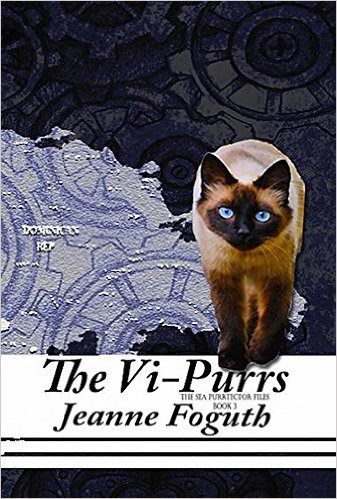
vipurrscoverXander de Hunter fans will be delighted to know that their favorite undercover cat is at it again in this exciting and vividly rendered adventure tale (or tail, as the case may be). If you’ve already read “Purranoia” (and you should, to fully appreciate this sequel) you’ll know that there were many unanswered questions at the end. Furthermore, Xander picked up a lovable sidekick, appropriately named Mischief. Her rebellious and inquisitive yet highly intelligent nature adds another important member to Catamondo. She continually rubs Xander’s fur the wrong way, especially her weird love of water sports, making the Sea Purrtector wonder if choosing to mentor her was really a good idea or not. The tension between these two adds conflict and more suspense, further enriching the story and plot.

The tale gets started when Xander’s buddy, Merlin, reminds him of the many unsolved issues from their Haitian adventure, driving him to follow up on the situation. This takes them to Jimaní in the Dominican Republic’s Independencia Province, where Mischief’s tante, Lucy Fur (be sure to say that aloud to get the implications) resides. They’d never fully determined the objective of Dr. Moreau’s genetic engineering operation. Furthermore, what happened to Damon, Chester, Mingus, Matsu as well as Clade and Allele, the odd cat-snake mix known as the vi-purrs?

An entertaining cast of characters including a rat named Scar, a chameleon named Mars, another cat named Sharkey who loves to quote Native American wisdom, and numerous others join with Xander and Mischief to find the answers. Their efforts are further complicated by a hurricane, adding to the suspense and intrigue. As always, the settings are described in vast detail such as can only be accomplished by an author who’s been there.

The complex world of Catamondo just gets better and better. If you love cats and a good adventure story that would make an excellent animated movie, this series is for you.

Pick up your copy in ebook or print format on Amazon here.

Other Books in the Purrtector Files Series:

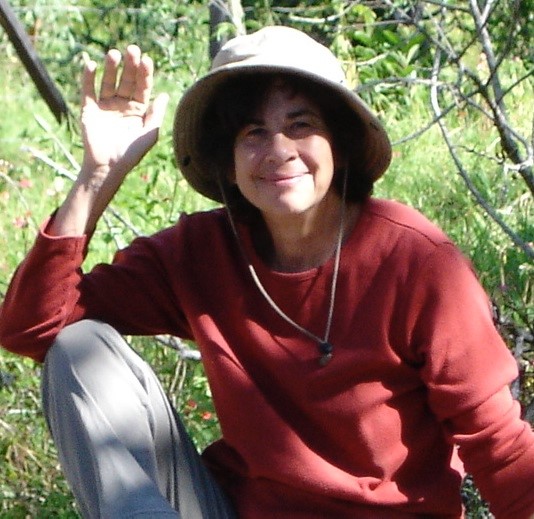
Connect with Author, Jeanne Foguth:

jeanne

Amazon Author Page: http://www.amazon.com/Jeanne-Foguth/e/B00JDW7TC8/

Blog: https://foguth.wordpress.com/

Website: www.jeannefoguth.com

Review of Elle Klass’ “The Vampires Next Door”

VampiresNDCover

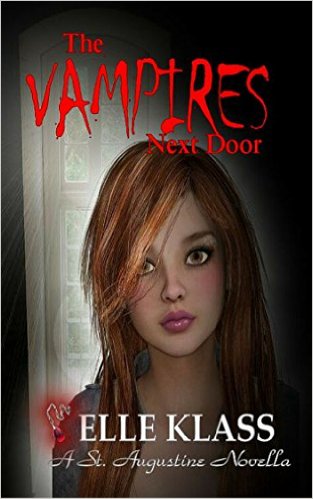
This fast-moving tale is populated with engaging characters whom you feel you know personally as this intriguing story unfolds. Freshly transplanted to St. Augustine, Florida, Alison is a shy teenager with the usual insecurities inherent to her age who lives with her recently divorced mother. The two of them reside in an apartment where Alison engages in some people-watching, particularly Rodham, whom she has the hots for, as well as a bunch of young women who occupy the apartment next door. These particular neighbors are given to loud, boisterous partying into the wee hours of the night while her mother, a shift nurse at a local hospital, is typically gone. Of course the title of this story serves as a spoiler as to who and what those nuisance neighbors actually are.

Much to Alison’s horrified delight, Rodham introduces himself and the pair begin a warm friendship moving toward a cozy romance as they investigate exactly what’s going on with these weird neighbors. A variety of surprises and plot twists quickly ensue, presented in Elle Klass’ outstanding, character-driven style with which she’s developed a unique vampire culture known as Bloodseekers with whom an eternal war wages with their mortal enemy, the Slayers. Skillfully woven into the history of the USA’s oldest European-established, continuously occupied settlement, you’ll find a liberal dose of paranormal phenomena intermingled with magic that will satisfy Harry Potter as well as other fantasy fans. You’ll have to read this exciting tale to find out where the young hero and heroine fit into this fascinating tale, but rest assured you won’t be disappointed.

Even better, since you’re bound to fall in love with Alison and Rodham, this is the first volume of a trilogy which promises further exciting adventures. While this story contains plenty of action and intrigue, it’s well within the PG range and thus suitable for adolescents and teenagers. It gets creepy and a little scary, but not terrifying, just exciting. The author’s former life as a junior high school teacher comes through beautifully in her understanding of teen motivation, behavior and emotions. Nonetheless, the book contains enough substance, character development and plot twists to satisfy readers of all ages. I’m not a big vampire fan myself, yet thoroughly enjoyed this suspense-laden tale by this up and coming multi-genre author.

You can pick up your copy on Amazon here.

Review of Glory on Mars by Kate Rauner

gloryonmarscover

If you’re a fan of hard science fiction, and I mean really HARD, then you will love this book. In fact, I’m inclined to say that it’s only on the borderline of sci-fi, that it’s more what I would call science faction, i.e. so close to being reality that it’s not even that futuristic. Indeed, many people reading this book are likely to live to see a Mars colony in their lifetime. If you loved the movie “The Martian” then this story is a great follow-up to keep your imagination well-grounded on the Red Planet.

The Mars base the author designed is brilliant. She has thought of just about everything imaginable and described it at a technical level detailed enough to make you feel as if you’re there. She has hab modules, jumpships, walkabouts, surface suits and any number of other goodies. At the least, you know she’s not just making this up because her engineering background truly shows. Since I worked as a NASA contractor for over 20 years, I found many familiar things in this story, from the space technological presence in Noordwick, The Netherlands, since I’d been there more than once, and other terminology such as “frangible nuts” used with explosives to release their hold in various spacecraft applications.

By the time you finish this story, you feel as if you’ve completed a tour of duty on Mars. Anyone who may aspire to go there someday can get a very sound idea of what it would be like, from eating worms to the various hazards that abound on a planet that is not fit for human habitation without serious, high-tech intervention. There are radiation issues, maintaining an appropriate pressurized volume with the correct oxygen mixture, psychological challenges, vehicles for getting around on the surface, sometimes at a great distance, and so forth. In this respect it is exceptionally well-done. The author’s knowledge and undoubtedly a whole lot of research is evident and available for readers to enjoy. The side stories were excellent as well, adding additional detail and background which I highly recommend readers take the time to enjoy. They’re not required, but add to its richness. Thus, as an outstanding science fiction novel, I give this book a strong five stars.

However, if you want a bit more than engineering and science in a story, there are a few things I would have recommended be included, had I been a beta reader for this book. I realize that all reviews have a high degree of subjectivity, and the comments that follow are strictly my opinion and may not be shared in the slightest by other readers, especially if all you want is hard sci-fi. Nonetheless, that’s part of the point of a review, to share one’s opinion, and why over all I give this story four stars, so here we go.

While the numerous characters clearly had different personalities, to me they were faceless. Their physical descriptions were lean at best and missing at worst. She did a great job giving them very diverse and memorable names, many of which implied the individuals’ international heritage, but I never was able to “see” them in my mind, other than perhaps Yin and Yang, which were handled in a very clever manner that worked. I like to be able to picture the characters in a story and didn’t feel I had enough description of the others to do so.

The point of view (POV) was limited to one member in particular named Emma, with whom I connected somewhat. One thing to be said about the single POV is that it does lend the feeling that you were Emma and experiencing what she did. Nonetheless, with so many characters, it would have been interesting to get into their heads and viewpoint as well. The first half of the book contained a lot of description about the base and getting things set up along with the challenges involved, which could have been handled through other crew member’s POV so the reader got to know them as well. This would have rounded out the other characters a bit more and provided an opportunity to describe their appearance.

A little more conflict among the crew members would have added a bit more realism as well. This was touched on a little, but it’s highly likely that roughly a dozen people confined as they were under stressful and sometimes life-threatening conditions would have had a few clashes along the way. There was some tension, but people simply aren’t that mature and logical all the time, even if they’re engineers. This I know, given I’ve managed them in my previous life.

Another thing that bothered me was the cat. As a cat owner and lover, I expected the cat to have a more significant role, perhaps along the lines of Pete in Heinlein’s “The Door Into Summer.” I couldn’t believe it that when this kitten was taken onboard as they began their journey that he was not immediately given a name! Maybe I’m just a crazy animal lover, but I can’t imagine that someone in that group wouldn’t have done so. At the least, when they arrived on Mars, someone already there would have done the honors, since it was that group who’d requested the cat in the first place.

The cat could have been worked into the plot more as well. The base’s AI even recognized the cat as a team member! Cats are curious, (Curiosity would have been a great name, in honor of a previous Mars mission) they get bored just like people, and he would have undoubtedly had some interesting experiences in the zero-gravity environment during the journey as well as once they arrived on the base. Mine get into trouble all the time in a regular earthbound house. Owning a pet isn’t simple and it certainly wouldn’t be on Mars. He could have caused any number of problems and conversely, even provided ways to solve others.

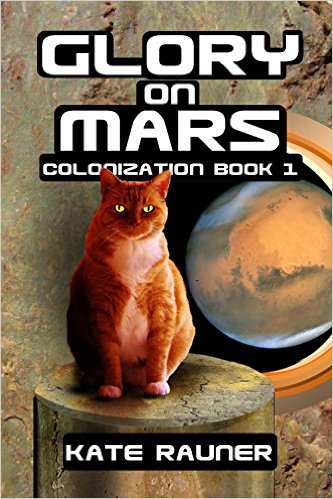
Why did the previous crew request a cat in the first place? Pets add warmth, affection, and a new dimension of “home” to say nothing of comic relief. He could have contributed an additional touch of reality to an unreal situation. I probably wouldn’t harp on the cat issue so much other than the fact the cat is so prominently displayed on the cover. I found this very misleading, since the cat played essentially no role in the story, whatsoever, other than a few cameo appearances, where he could have easily become an endearing and potentially major character.

That precious piece of visual real estate known as a book cover would have been much better used to fill other gaps in the story. It would have been very helpful to have a drawing of the base, for example, with all its modules and such, which was well-described in the text, but not always easy to picture. Any artist would have had a blast with that. It also would have benefited by some people as well, which could have compensated for the lack of description in the text. A newly designed book cover would be a great investment for this story and thus represent its content more accurately. Potential readers for this book include hard sci-fi fans, preppers into self-sufficiency, and cat lovers, based on the cover. The cat on the cover could actually turn off some readers who would enjoy it the most.

Speaking of preppers, a bit more of the self-sufficiency side of growing food, raising fish and so forth would have been great as well. The use of heritage seeds, saving some of the potato harvest to plant for the next generation, or even the use of aquaponics could have further enhanced the story and also fit nicely with switching viewpoints.

In spite of all my grumbling above, I truly did enjoy and appreciate this book and what it took to write it. As a physicist and former “rocket scientist” myself, I found very few things I wondered about on the technical side. There were a few places where I thought about making a few calculations, then reminded myself it was only a novel and to lighten up! It provides a realistic view and excellent vicarious experience of what it would be like to be a space pioneer. For that, I highly recommend it. Just don’t expect much from the cat.

You can pickup your copy on Amazon here.

Teleportation: Science fiction or science fact?

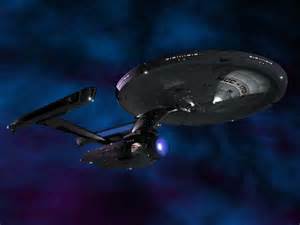
startrekenterprise2

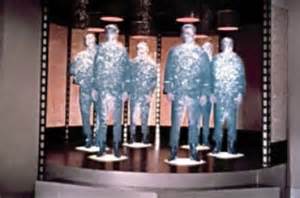
The first time I read Lawrence M. Krauss’ masterpiece, “The Physics of Star Trek”, was in January 1996, which is hard to believe. Time, among other things, definitely does fly, but doesn’t diminish my memory of how much I enjoyed that book. Being a physicist and a life-long science fiction fan, I absolutely devoured it, even though some of his conclusions were disappointing. For example, he virtually discounted the possibility of teleportation. He recounted the basic steps as defined in the Star Trek Next Generation Technical Manual as follows:startrekbeam1

  1. Transporter locks on the target.
  2. Scans the image to be transported.
  3. Dematerializes the item (or person).
  4. Retains the information in a “pattern buffer”
  5. Transmits the “matter stream” in an “annular confinement beam”.
  6. Reassembles it based on data retained in the “pattern buffer.”

Krauss then proceeded to explain in meticulous, often amusing detail, what the requirements would be to create both a matter stream of the atoms comprising the teleportee’s body coupled with an information stream of how to put it back together.

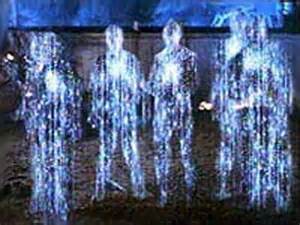
startrekbeam2To wit, considering that a person consists of approximately 10^28 atoms (ten followed by 28 zeros, for those of you who don’t recognize that notation), turning a 50 kilogram person into pure energy according to Einstein’s E=mc^2 would release more energy than that of a thousand 1-megaton hydrogen bombs. To do so would require heating him/her to a temperature a million times the temperature at the center of the Sun. Accelerating the resulting plasma soup to near the speed of light is another feat, to say nothing of also transferring around 10^28 kilobytes of data to the “pattern buffer” to reassemble it. On top of that, there’s Heisenberg’s Uncertainty Principle and various other quantum mechanical difficulties.
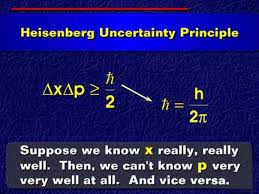
heisenbergprincRemember, however, that this was written back in the 90s and science has made vast advances since then as has our computational capacity. Personally, I would bet it could be done using the principles of quantum entanglement, but Krauss’ points are nonetheless well-taken. After all, he’s a professor of physics in his own right, at Case Western University when he wrote that particular book.
However, in Stephen Hawking’s foreword to said book, this phenomenally brilliant physicist stated, “Today’s science fiction is often tomorrow’s science fact. The physics that underlies Star Trek is surely worth investigating. To confine our attention to terrestrial matters would be to limit the human spirit.”

And apparently someone has done exactly that. At government expense. And much to my delight, quantum entanglement was indeed mentioned.  See?  I’m not as dumb as I look.

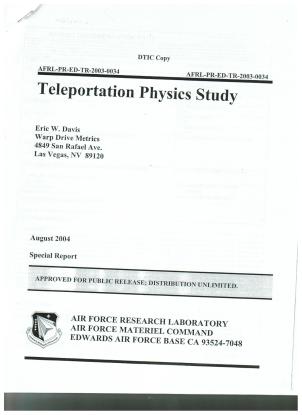
I never know what I’ll turn up when I go on a cleaning frenzy, more often than not, a desperate search for something in that proverbial “safe place” which I suspect lies in some other dimension. This last quest didn’t produce what I was hoping for, but instead I stumbled upon something even better, a paper from the Air Force Research Laboratory, Document AFRL-PR-ED-TR-2003-0034 entitled “Teleportation Physics Study.” This report is 88 pages long and is in front of me as I write.

USAFTeleportSeriously. I swear I’m not making this up.
When I worked at NASA, I came across all sorts of similar goodies and usually kept a copy, either electronic or hardcopy, provided it wasn’t classified, of course. In truth, I never saw anything of that nature, but plenty of stuff that was borderline and certainly not publicized.

This study was conducted by an organization known as Warp Drive Metrics located in Las Vegas for the Air Force Research Laboratory at Edwards Air Force Base. I don’t know about you, but I can’t help but notice that they’re both conveniently located not far from the infamous Area 51.

In the Introduction to this study the author states: “Beginning in the 1980s developments in quantum theory and general relativity physics have succeeded in pushing the envelope in exploring the reality of teleportation. . . . It has been recognized that extending the present research in quantum teleportation and developing alternative forms of teleportation physics would have a high payoff impact on communications and transportation technologies in the civilian and military sectors.”

He names five types of teleportation of which the science fiction version is one, but discounted as not included in the study, or so he says. Sad but true, you never know what jewel one of us sci-fi authors might come up with via our respective muses.

Of the five mentioned, my personal favorite is, as you would expect, the method using quantum entanglement, dubbed q-Teleportation, which he defines as the “disembodied transport of the quantum state of a system and its correlations across space to another system.”

I was particularly amused by Section 3.0, which addresses this particular category. The steps he summarized were as follows:

  1. Object placed inside the teleporter and scanned by a computer-generated and controlled beam.
  2. Scan beam encodes entire quantum information contained within the object into organized bits of information, forming a digital pattern of the object.
  3. The information is stored in a pattern buffer.
  4. The scan beam dematerializes the object into a matter stream.
  5. Teleporter transmits matter/energy stream and quantum information signal in the form of an annular confinement beam to its destination.
  6. The receiving teleporter reconstitutes the matter based on quantum information stored in the pattern buffer.

Hmmmmm. Am I the only one who thinks that sounds an awful lot like what Krauss described from the Star Trek Next Generation Technical Manual?

Section 3.0 goes on to describe many of the same calculations Krauss did.

Bah! Sci-fi discounted, indeed!

In Section 3.2.3 entitled “Recent Developments in Entanglement and q-Teleportation Physics”, he states, “Technical applications of entanglement and q-Teleportation are just becoming conceptualized for the first time, while a small number of basic physics breakthroughs and their related applications are in experimental progress at present.” (Emphasis added.)

You can’t make this stuff up.

Note that this study was conducted between January 2001 and July 2003. No telling what advancements have been made in the past 15 years.

My second favorite, p-Teleportation, is the “conveyance of persons or inanimate objects by psychic means” which he describes in Section 5.0. He goes on to mention psychics Uri Geller and Ray Stanford, who “claimed to have been teleported on several occasions. Most (emphasis added) claimed instances of human teleportation of the body from one place to another have been unwitnessed.”

Really? Ya think?

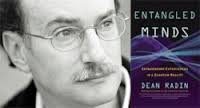
15385125_mlHe goes on to say, “There are also a small number of credible reports of individuals who reported being teleported to/from UFOs during a UFO close encounter, which were scientifically investigated….”   Plus: “There is a wealth of factual scientific research data from around the world attesting to the physical reality of p-Teleportation and related anomalous psi phenomena. The skeptical reader should not be so quick to dismiss the subject matter in this chapter, because one must remain open-minded about this subject and consider p-Teleportation as worthy of further scientific exploration.” He even mentions my favorite psi researcher, Dean Radin, PhD, of whom I’m a tremendous fan.
deanw-book

Dean Radin PhD has done highly respected research on psi phenomena such as telepathy.

e-Teleportation, defined as “exotic”, comprises “the conveyance of persons or inanimate objects by transport through extra space dimensions or parallel universes”. This involves superstring theories, electromagnetic – gravity unification theories, and brane theory.  Don’t mind me, but just because they can do the math doesn’t mean it’s possible, if you know what I mean.

Last but not least, vm-Teleportation involves wormholes and “engineering the spacetime metric” which was supported by numerous pages of mind-bending math including linear algebra, trigonometry and multi-variable calculus equations loaded with enough Greek letters to be its own fraternity.

I don’t know how much money the author received for this study, which took two and a half years, but it could probably be found in the public record using the contract number. I must say that it would be just about any physicist’s dream job. In no way do I mean to dismiss the knowledge and expertise required to put this together. This is a comprehensive, thoroughly investigated study which includes 253 references, most of which were to prestigious journals such as Physics Review Letters, Physics Today, Military Intelligence, Nature, Science, numerous books published by Cambridge and Oxford University presses and various others by esteemed physicist authors. The original document’s distribution list included 54 individuals, 36 of whom were PhDs.

Personally, I don’t have a problem with my tax dollars going for such research, even though it’s undoubtedly hidden in all those “black projects” such as those conducted at Area 51, Dulce Base, Wright-Patterson AFB and probably Dugway Proving Grounds. Better spent there than numerous others I can think of but won’t name so as to remain politically correct in today’s volatile environment.

Nonetheless, the truth is out there.  Possibly more than we could begin to imagine.  Including me, as a science fiction writer.

You can pick up a copy of Krauss’ book on Amazon here. For a copy of the “Teleportation Physics Study” contact the Air Force Research Laboratory, Air Force Materiel Command, Edwards Air Force Base, CA 93524-7048 and ask for Report AFRL-PR-ED-TR-2003-0034. By now it might even be available online since it was released for “unlimited distribution.”

Sci-Fa Epic Adventure: Review of “Thunder Moon” by Jeanne Foguth

thundermooncover

The second volume in Jeanne Foguth’s Chatterre Trilogy, “Thunder Moon”, picks up where “Star Bridge” ends. As someone who’s read all three volumes, but not in order, I highly recommend that they be read in sequence so that the complex plots and character relationships are easier to follow. Each builds upon the other, weaving a fascinating and intricate Sci-fa saga.

In this episode, Nimri’s brother, Thunder Cartwright, is worried the madrox will invade his world unless the star bridge is closed. He borrows his brother-in-law, Larwin’s, environmental suit, and sets out to do so with the assistance of GEA-4, Larwin’s androtic assistant. Meanwhile, Larwin’s sister, Tem-Aki, is looking for her brother, who’s been missing from his world long enough that she’s concerned that he’s dead. (Background on Larwin’s arrival on Chatterre can be found in volume I, “Star Bridge”.)

As you’d expect from any misbehaving and unstable Star Bridge/wormhole, Thunder winds up on yet another world, Kalamar, which is covered with what he fears most–water. Furthermore, he’s severely injured, but fortunately, rescued by Raine, a dragon shepherd, who’s on patrol in her ship, Nambaba, trying to recover a rogue dragon calf.

And thus the fun begins.

As always, the science fiction/fantasy elements of these stories are masterfully integrated as simple matters of planetary diversity. Dragons, a.k.a. madrox, are Chatterre’s mortal enemy, threatening to reduce it to ashes. However, on Raine’s planet, Kalamar, they’re carefully managed, a seeming paradox that further drives the story’s plot and suspense.

Mistaken identities, culture clashes, alien creatures, and a variety of interpersonal conflicts, including sibling rivalry and political intrigue, ultimately explode in this fast-moving, complex tale. The world building is exceptional, particularly with regard to how a human culture would operate on a world comprised mostly of water. Not only are the mundane details addressed, but other intelligent species introduced as well as a convincing and convoluted political structure.

If you like an intricate plot, lots of action and continual suspense with all sorts of surprises you can get your teeth into, then this trilogy is for you. But don’t forget to read “Star Bridge” first and then this one before move on to the satisfying conclusion in “Fire Island.” (Note that all three volumes are “clean reads” suitable for all ages.)

You can pick up a copy on Amazon here.

Review of “An Extended Journey” by Paul Sherman

extendedjourneycover2

This exceptionally well-written and flawlessly edited story has everything a good time travel story demands. Note, however, that it’s more fantasy than science fiction since the means of delivery to the past is in the realms of the paranormal. Thus, don’t expect some exotic high tech means to remove the characters from the present time. This detail, indeed, is but a moot point given the tremendous message of this meticulously researched historical novel, but I wanted to throw it out there just in case you’re expecting sci-fi.

More often than not, time travel stories have more of a philosophical theme as they tread the line between fantasy, history and “what if” speculations. I recommend this story to those interested in American History, particularly the period around the Revolutionary War. The author’s research is apparent in the convincing details that take the reader back to another but not necessarily simpler time.

This story features David Dearns and his family which comprises his wife, Monica, and two young daughters, Jane and Katelyn, who are unexpectedly transported from modern times back to Colonial Williamsburg in 1781. The transition is great, given they’re visiting that location in modern times and thus surrounded by numerous individuals dressed in period costumes and buildings that date back to the time of the American Revolution, which is in progress. You can sense their confusion, particularly when they suddenly realize not only where but when they are.

This event was not simply coincidence, however, but clearly a matter of being chosen to accomplish a specific mission at the behest of a mysterious black woman they know only as Aunt Harriet. Their task is to intervene with Thomas Jefferson in a manner that convinces him to end slavery as part of the yet-to-be-written American Constitution. Since I want to avoid spoilers, that’s all I’ll say about plot details so future readers can fully enjoy the story as it unfolds.

There were some areas where the story seemed to drag, but it was so well-written that the slow pace was forgivable. It also served a purpose in establishing the time, place and mood of the times as this 21st Century family gradually acclimates to life in the late 1700s. If you’re a history buff, you’re likely to thoroughly enjoy it. A bit more culture shock would have added to the realism and perhaps picked up the pace in those pages capturing the details of life at that time. The plot action definitely accelerated toward the middle and took off from there with well-sustained suspense.

Historical details were plentiful and expertly integrated. The matter of changing history and the various paradoxes introduced by the family’s presence were addressed in a clever and sometimes unexpected manner, such as the premature albeit inadvertent introduction of modern technology. There were numerous places where I laughed out loud at some of the main character’s witticisms and sarcastic thoughts though his propensity for profanity was a bit troubling and could turn off certain potential readers. Many religious folks have a keen interest in American History and are often more forgiving of an expletive here and there, which is all too common today, than profanity. It wasn’t excessive by any means, and was mainly in the first part of the book, but would have earned a few cringes from various folks I know who would otherwise love the story.

Matters of free choice were suitably addressed and demonstrated the “butterfly effect”, i.e., where one small event institutes major change. On a personal as well as collective level, I’m sure all of us could point to various decisions that could have been made in a more constructive manner given 20:20 hindsight. The decisions of those who run countries certainly affect thousands and even millions and the consequences of bad ones splash on all concerned, many of whom suffer far more than the perpetrator.

As physicist Michio Kaku and various others have noted, parallel dimensions are a possibility included in quantum theory. Some have even speculated that every possible outcome of every decision ever made is represented somewhere, which I frankly don’t buy into. Nonetheless, starting a new track as a solution to time travel stories, e.g., Spielberg’s “Back to the Future” trilogy, works here for the sake of reader satisfaction. I’m not a big fan of historical novels, but the author’s strong writing skills kept me immersed in the story. More often than not, I find my inner editor slipping out while reading which, to his credit, did not occur. Such exceptional writing alone makes this book worth reading.

You can pick up your copy at Amazon here.

Comma, give me a break!

booksinbox

I think we all realize that whether or not a person likes a book is highly subjective. I’ve read (or tried to read) books with numerous five-star reviews that I didn’t like and couldn’t get through. Some were well-written, just boring or populated with unappealing characters, while others were poorly written and/or edited. I’m a bit of a grammar/typo Nazi myself so I hide my head in shame that someone put one of my books in that category.

I’ve heard that no literary agent or publisher takes an indie book seriously until it has a few three-star reviews. Thus, when I got my first one as an untimely present for my Christmas birthday, I had mixed feelings. I now had the obligatory mediocre review and, to be perfectly honest, the reason had been noted by a previous reviewer, i.e. the lack of commas. I acknowledge this as a valid complaint and have it on my to-do list to rectify. Sadly, at one point I’d actually taken several of them out because they seemed to slow the story down! How ironic is that?

Okay, you may have already guessed that I have a couple confessions to make. First of all, I edited my own books, which I realize is a major no-no, but let me explain. First of all, there were various times when this particular book, which was admittedly my first novel, was set aside for years. When I would get back to it, I could read it like it wasn’t my own and, for the most part, edit effectively. Like I said, I’ve been accused of being a grammar Nazi with other people’s work, and I definitely fixed a lot over time.

Another factor was finding an editor I could trust to do the job. I mean, really do the job. I’ve seen too many acknowledgements in various novels where authors extol and thank their editor while I, nonetheless, find a plethora of things they missed when I read the work in question. Call it pride, if you must, but it was hard not to feel I could do as good or better of a job than some of the supposed pros out there.

And the coup de grace was that I was on a budget. While I don’t mind paying for services that are done correctly, cost combined with not being sure I could find a competent editor resulted in doing it myself. Oh, well, my bad.

The second one is that, even though I have a minor in English, I am not that well-versed in grammar. Seriously. Most of what I know has been learned through my mother correcting me as a child, reading, and, heaven forbid, intuition. I’ve been an avid reader all my life and been writing since I could hold a pencil, yet never liked English classes or understood some of the rules. Diagramming sentences to me was worse than algebra, which made more sense. I really don’t like to point fingers, but in this case I’m going to point one at a prof I had in college who taught the obligatory grammar class for those majoring or minoring in English. That class was, like we say here in Texas, as useless as teats on a boar hog.

The prof, who is probably now dead and gone, couldn’t find a textbook that he liked so we had none. He would lecture, but with no logical order or continuity that I could recognize. All we did the entire term was–you guessed it–diagram sentences. Punctuation was rarely mentioned. One thing I remember him (or perhaps someone else) saying was that English, unlike Latin, was a living language that evolved, that such things as punctuation styles changed over time, and things like comma usage was becoming somewhat optional. You can bet I jumped on that like a duck on a June bug!

judgeongrammar

But for purists who were more astute at learning the rules than I was, it was a major faux pas. And apparently the person who left this three-star lambasting was one of them.  I must say that the reviewer was generous in giving it three-stars since s/he didn’t even finish reading it.

Back to the subjectivity of what we like, science fiction is certainly one of those genres that everyone doesn’t care for. (Oops, ended that sentence with a preposition! OMG! Let’s correct that to “one of those genres for which everyone does not care.” Right? Right.) Even with proper punctuation it’s likely s/he wouldn’t have liked it. That I understand. And I do admit s/he has a point and I will fix the problem because, believe it or not, I really am a bit of a perfectionist, but that doesn’t mean that I know everything by a long shot. I’m teachable but, as noted earlier, I never had a decent English teacher or at least one I could follow. Math is much simpler to me with its concrete, easy to follow rules and black and white answers. Equations make a lot more sense.

pageheart

So what have I learned that I can pass on to other writers? If I had this to do over, it would be to do a beta reader exchange with someone who has equal editing skills to my own. Fortunately, for subsequent books I was able to find such individuals. And that is what saddens me the most, the other books in the series are in much better shape. I’ve actually received compliments on the editing of at least one of the others. This was my first book and I’ve heard it said that everyone’s first novel should go in the trash bin labeled “tuition.” My problem was that it was the start of a series with so much more to tell! The characters evolved and so did the plot to the point that it took four full-length novels to complete the story. I’m a much better writer now, as all of us become, the more we write.

So, bottom line, I’ll go back eventually and correct the comma situation. I don’t know all the rules, but at this point I’m reasonably confident that I’ll be able to do so in a competent manner. The worst part, as most indie authors know, is that there are so many different formats to deal with, i.e., both print and electronic versions, which complicates the process considerably. Nonetheless, I’ll have the satisfaction of debunking that uncomplimentary review when it’s corrected, unless, of course, those who would appreciate a properly copy edited work are turned off by that seething diatribe, which is actually so excessive that it’s downright amusing. Fortunately, most geeks and nerds, who are my primary audience, anyway, aren’t quite so concerned, though there are exceptions, of course, many of whom I met at NASA.

<Sigh.>

Rant over.

Thanks for listening.

P.S. If you’d like an ecopy of the book in question, “Beyond the Hidden Sky,” for free, join my mailing list, which qualifies you for a free download. You can do so here.

An Outstanding & Thought-Provoking Time-Travel Tome

talesofelasticlimitcvr

While the premise of going back in time to alter history isn’t new, the author’s skill in its presentation coupled with his unique insights will satisfy science fiction and history buffs as well as anyone with an eclectic taste for literature. Indeed, this story possesses the makings of a classic. It’s highly intelligent, flawlessly edited, and I love the author’s straight-forward yet ethereal style which flows with the essence of timelessness that you’d expect in a book that involves time travel. His skillful writing combined with the fact his name is a pseudonym leaves the impression that he may, indeed, be a time traveler himself. The title is perfect, a thought-provoking glimpse of the nature of time and how far it could be stretched were it breached or controlled, the scope of its content undoubtedly epic.

As this tale begins, time travel has already been achieved and a multi-disciplined committee of academics privy to the technology directs its use to keep humanity’s history on the proper track. Three previous attempts didn’t work out as hoped, but the problems have supposedly been solved by scientist, Lawrence Henry, a.k.a. Hank, whose breakthrough discovery removes the troublesome paradoxes. Thus, Hank and his fiancée, Frances Newton, set out to establish humanity in a New Historical Age.

Those with whom they interact see them only as a very tall, mysterious gentlemen and a red-headed woman who serendipitously slip into their respective eras at historically important times. Each fable is independent and captures a nexus where a decision made by an individual, some famous historical figures, others not, takes the world in a new direction. These included encounters with Thomas Jefferson, Albert Einstein, King Henry VIII, Marcellus and Archimedes. As a reader I was immersed in the flavor of the moment and felt as if I was observing a profound moment in history unfold.

Events prior to those in recorded history were touched on as well, such as the invention of writing and numbers, the wheel, the transition to an agrarian society and even a new look at man’s best friend. The episodes operate on multiple levels which will satisfy casual readers as well as history lovers or those with philosophical tendencies. Each carefully selected situation demonstrated the author’s thorough understanding of history, was well researched, and included some little known facts packaged as a tremendously enjoyable story stylishly written. I haven’t read the preceding volumes in the Elastic Limit series, but this one stood well on its own while nonetheless leaving me with the desire to read the previous volumes, which this one ties together.

Pick up your copy on Amazon here.