5 MORE TIPS FOR INDIE WRITERS: Perfecting Your Craft

insultproperly

  1. Avoid adverbs and adjectives whenever possible. For example, rather than saying, He walked slowly say, He strolled or He dragged his feet. Using exactly the right word brings clarity and moves the story along more quickly. Verbs are powerful; use them properly and they strengthen your writing. This contributes to the Show, don’t tell admonition which allows the reader to experience the story as opposed to simply observing it. For example, which of the following is more effective?
    1. “I can’t believe you didn’t tell me that before,” Sally said sadly.
    2. Sally’s eyes filled with tears and her chin quivered with emotion. “I can’t believe you didn’t tell me that before,” she whispered.
  2. Use active voice and subjective case. In other words, say, He threw the ball as opposed to the ball was thrown by him.
  3. Avoid using the same word more than once in a paragraph. This is something my senior lit teacher told us in high school. Of course there are exceptions, but often when you need to repeat a word it’s a signal that you could reword the sentence in a more concise way. For example:
    1. Sharon saw the pantry was empty so she went to the store to get some groceries. When she got to the store she bought bread, eggs, milk and sauerkraut.
    2. Seeing the pantry was empty, Sharon went to the store to buy bread, eggs, milk and sauerkraut.
  4. Flashbacks are often a source of confusion for the writer as well as the reader. The convention is to begin a flashback with past perfect tense, e. We had started that day with the usual cup of coffee. If you want you can use it for the next sentence as well, particularly if it’s going to be a fairly long sequence. Then when the flashback ends, you close it again with past perfect, i.e. I had thought at the time that it was a good idea, but time had shown otherwise. You can also include a simple statement such as He returned to the present….
  5. There are numerous words out there that sound the same but have different meanings and are spelled differently which are called homonyms. Examples include here and hear; whole and hole; where and wear; your and you’re; you’ll and yule; there, they’re, and their and a host of others.

In the past few weeks I have seen the word shudder used incorrectly in two different books. The meaning of this word is to shake or vibrate; it is not the word for those planks designed to cover or sometimes decorate windows; that word is shutter like in shut. Another one I’ve seen misused in an otherwise excellent book is the word reign. This word relates to authority, such as “the queen’s reign.” To restrain or limit is the word rein, like the straps used with a bit to control a horse. The most common seem to be your (possessive) and you’re (contraction for you are) and they’re (contraction for they are), there (a place) and their (plural possessive.)

judgeongrammar

Conclusion

Nothing shows your ignorance as a writer faster than getting these different words mixed up. Many readers won’t know the different, I’m sure, but it’s really our responsibility as writers to provide correct usage and set the example for what appears to be an increasingly semi-literate world.

Of course now that we have autocorrect messing with our best intentions sometimes it’s not entirely your fault if they show up. Furthermore, if your keyboarding skills are advanced your fingers may tend to spell incorrectly from time to time. I have that problem where I know (not no) better but when I really get on a roll (not role) they often turn up (not turnip). That said, you’re (not your) going to have to pay attention and do your (not you’re) best to at least know (not no) the difference between them so you can correct them when you see (not sea) them. If you tend to read over your own mistakes then please, by all means, hire a good editor. Readers who know the difference will appreciate it.

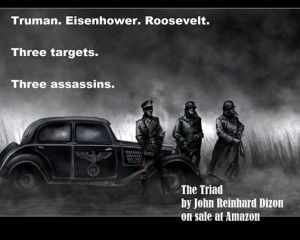
Will “Triad” take John Reinhard Dizon to the Best Seller List?

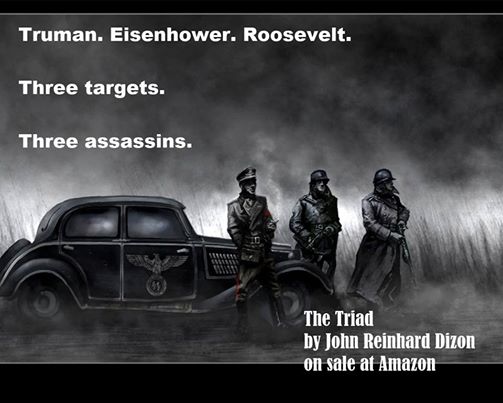
triadpromopix

  1. Rumor has it that your current work is an historical piece that addresses the pre-WW II era. It seems as if this time period is often eclipsed by WWII such that most of us are mostly unaware of the events leading up to it. Does your novel fill in some of the blanks?

What the novel does is try to help readers understand the mindset. Just as Millennials have great-grandparents who remember WWII, teens in the pre-WWII era had great-grandparents who saw the Civil War. Radio was like the Internet back then, it was a phenomenon. There’s an episode in the novel that reflects how people thought we were being invaded by aliens when The War of the Worlds was broadcast. People were extremely vulnerable to propaganda, which is how the dictators took over most of Eurasia. Governments played on that, and it is remarkable how easily people gave up their civil liberties in exchange for having their leaders tell them everything was all right.

  1. Historical fiction is typically populated by a mix of fictitious characters intermingled with historical figures. Are your characters purely fictitious or based on actual people?

It’s a mix, which is something I try to do as much as possible. I use the actual people to help readers understand the historical figures, while creating characters to help bring them into perspective. Chess Power is based on someone I know. He lived through the Pendergast Era, and I turned him into an FBI agent trying to earn a paycheck while serving his country. Alvin Karpis is my favorite gangster, and I thought I could do more to bring him to life in this novel than writing a biography about him. Some of the protagonists are entirely tongue-in-cheek, like Cat the Bounty Hunter. Alternately, J. Edgar Hoover and Heinrich Himmler are who they are, they create their own stereotype that no one can change.

  1. Historical fiction has a sub-genre, speculative history, which examines what could have happened had past events played out in a different way, for example, if Hitler had won WWII. Is there anything of that nature in Triad?

Not really. In my opinion, authors who do that are dead in the water. You’re asking for too much of a suspension of disbelief. What this novel is doing is asking, suppose we got from Point A to Point B by taking this route? All roads lead to Rome, but some take paths you wouldn’t imagine. In this novel, we have gangsters helping thwart assassins trying to murder some of our great leaders. In reality, Lucky Luciano made a deal with the Government to put Mafia associates at the waterfront in NYC on alert to catch Nazi saboteurs. After the war, the US Army recruited hundreds of Nazi war criminals to help win the Cold War. Many say the ends justify the means, and this novel calls that into question.

One thing I’d like to point out is that most publishers and agents loathe postmodernist literature. It breaks all of their traditional industry rules. It takes your head out of The Box and tosses it into the street. It took over eighteen months for me to find an indie publisher for The Bat, one of my first works which was also a postmodernist novel. It is unique among art forms in that it brings the reader out of the audience and sits him alongside the author. Anyone who’s read Slaughterhouse Five by Kurt Vonnegut can relate. You realize you’re being jerked around, and you ask, what’s this guy doing? Where is he going with this? It’s actually a classical concept, the deus ex machina, but postmodernists like myself take it places you’ve never seen before.

  1. What particular event or situation inherent to that historical period, if any, inspired you to set a novel at that time?

Again, it was all about Karpis. I find it amazing that he is the least known of all the 1930s gangsters, though by far the most successful. He is probably the only man in history to have personally known Al Capone, Bonnie and Clyde, and Charles Manson. He was a criminal genius, though surrounded by Ozark hillbillies whose IQs ranged in the eighties. This is what provides us the angle where his partners suspect his mind is controlled by either the Government or aliens. It also supports the storyline that technology is changing the world faster than people can absorb it, and Karpis becomes their lifeline in helping them cope. He is also the only one smart enough to figure out what the Nazis are up to.

  1. Writing an historical novel involves a significant amount of research. Do you have any particular method for gathering the information you need?

German society and culture has also been another area of expertise for me. I try to write about subjects I know a lot about. People have no idea how closely America is tied with Germany. If not for a few votes, our national language would have been German. People in Texas can tell you how many cities and towns have German names. It was an act of God that Roosevelt and Hitler dragged us into WWII. After the war, we helped rebuild Germany into the economic power it is today. Hitler envisioned a world ruled by the Third Reich and the USA. When the Germans declared war against us, it was an ultimate betrayal. I think the novel takes a lot of that into account.

  1. Do you generally travel or vacation at locations used as settings for your novels, use past experience, or simply research them from home? Has a particular location ever inspired a novel in and of itself?

Living in Kansas City really helped me channel the Gangster Era of the Thirties. I’m a short driving distance from Union Station where the Kansas City Massacre occurred. UMKC is a short distance from the neighborhoods where the Karpis-Barker Gang used to recruit their gang members. Alvin Karpis had a luxury apartment at the Plaza where I hang out all the time. It’s not much different from my life in South Brooklyn where I grew up. My parents knew lots of associates from the Colombo Mob, which is where I got the background for my crime novel, The Break. I clearly remember Crazy Joe Gallo, who took on Joseph Colombo in a war that changed the face of the New York Mafia. It’s safe to say that I’ve a lifetime of experiences that inspires lots of these novels.

  1. When you mention the “Five Families in NYC” do they include Rockefeller, Carnegie, and J. P. Morgan or are they purely fictitious?

I love it! That’s the five Mafia families who controlled the underworld of the 20th century. There was the Gambino Family, the Genovese Family, the Colombo Family, the Bonanno Family and the Lucchese Family. In the timeframe of the novel, Albert “the Mad Hatter” Anastasia was the boss of his family after killing the Don, Vincent Mangano. Anastasia was then murdered by Carlo Gambino, whose son-in-law and heir Paul Castellano was knocked off by John Gotti. The FBI’s annihilation of the Gotti Mob heralded the demise of the New York Mafia. That makes your question perfectly logical. There’s almost nothing left of the Mafia in comparison to what it was in the last century. Top guys who get elected Godfather are thinking, “Oh, please, not me!” They usually wind up doing life in Federal penitentiaries.

  1. They say that those who fail to learn from history are doomed to repeat it. Is there something to be learned from this period of history that’s relevant to today?

It’s all about civil rights, and how governments manipulate them to ensure their power and authority. When you deny criminals their rights, it then becomes a question of how you define a criminal. The FBI shredded the Constitution to win the War or Crime in the Thirties. They next used their authority to eradicate enemies of the State, much like the Nazis and the Communists did. It wasn’t until the McCarthy Era did we realize we had gone too far. Islam caused us to repeat history with the Patriot Act after 9/11. There are always those who will feel that law enforcement keeps us safe, while others will feel that they will be taken next.

  1. The intermingling of the FBI, mafia, politics and “Big Money” typically result in considerable corruption. Do you think things of that nature have gotten better or worse since the pre-WWII era?

Power corrupts, and absolute power corrupts absolutely. The Great Depression nearly destroyed the middle class, which is what spawned the Gangster Era of the Thirties. We’ve been seeing the steady erosion of the middle class since the end of the 20th century, and it’s resulted in the War on Drugs and our current Gangsta Culture. Desperate people turn to crime as a last resort, and when governments crack down and rich people refuse to share the wealth, history will repeat itself again and again.

  1. I sounds as if this novel has a plethora of subplots as well as something for everyone, e. history, intrigue, conspiracy, a touch or romance and perhaps a touch of the occult which broadens its appeal to just about every reader. Such broad appeal is often the stuff of New York Times Best Sellers. Do you think this might be the one?

Hitting the best-seller list is like hitting lightning in a bottle. The odds are phenomenal, but it happens. I personally think pigeons will be shitting on my statue in cities across America long after I’m dead. If there’s any justice in the world, maybe this’ll be The One. There’s also great unknowns like Elle Klass, Pamela Winn, Chris Birdy, Susanne Leist and Marcha Fox who also deserve their day in the sun. We’re all starving indie authors who are writing great novels and just waiting for our day to come.

http://www.amazon.com/dp/1500878642
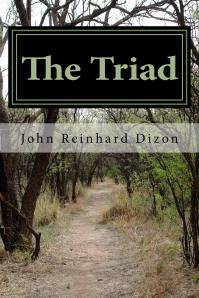
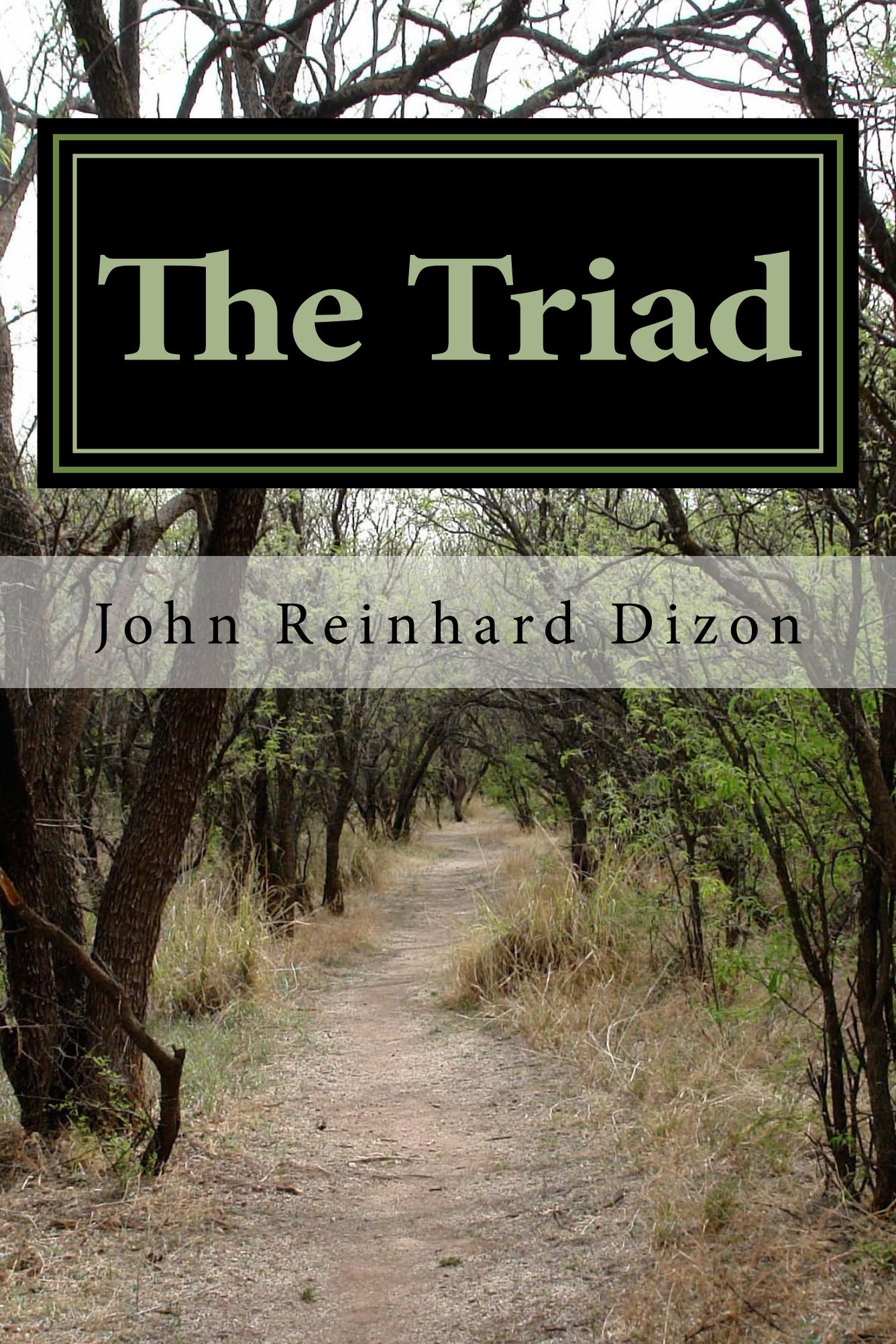
The_Triad_Cover_for_Kindle

SYNOPSIS

The Triad is a postmodernist historical fiction novel centering on the pre-WWII United States of America and its difficulties in maintaining its neutrality in a world on the brink of war. Amidst rumors of a conspiracy by the Axis powers to diminish America’s capacity to engage in hostilities, the FBI is called into action. Special Agent Chess Power is empowered by Deputy Director Melvin Purvis to put together a plan to thwart the efforts of a mysterious team known as the Triad. Powers heads out to Alcatraz Island and enlists the aid of criminal genius Alvin Karpis in return for his parole. Karpis agrees on condition that his partners, Fred and Doc Barker, and Harry Campbell are included in the deal. Power agrees, and the game of cat-and-mouse soon begins.

                It is announced that Karpis and his gang escape during transport to a military base for medical observation, and the criminals are considered fugitives though the FBI dragnet is non-existent. Karpis returns to one of his main hideouts in Kansas City where he reestablishes contact with his Mafia connections. During that time he learns of activity by the Triad in the Missouri area and immediately begins working on leads provided by both the FBI and the Mafia. He discovers a plot to assassinate Vice President Harry Truman, and moves in to thwart the Triad near Truman’s home in Independence.

                Karpis’ FBI and Mafia informants next lead him to Philadelphia where the Triad agents have been sighted. During this time, one of Karpis’ gun molls, Carole Robbins, finds out where the gang is hiding out and rejoins her long-lost lover. She provides a romantic comedy angle to the action-packed story as the laser-focused Karpis is repeatedly distracted by her antics. She also becomes his weak spot as the Triad learns of her existence and seeks to use her against Karpis. Yet the lovely girl is not without her own devices, and she remains one step ahead of the Triad as they fail to abduct her time and again.                                                                  

                In Philadelphia, both the FBI and the Mob learn of the Triad’s plan to murder Army General Dwight Eisenhower as he and his wife are looking at property in the Gettysburg area of York County. Once again Karpis is able to use his criminal genius to determine the Triad’s course of action and uncover their sniper nest near the hallowed battlefield area. 

                In the climactic episode, Karpis learns of the Triad relocating to the New York City area in time for a Presidential speech by Franklin D. Roosevelt scheduled at Madison Square Garden. Unknown to Karpis, one of the Triad members is connected to the Sicilian Mafia, and they have made arrangements with the Five Families in NYC to coordinate the assassination. The Karpis-Barker Gang manage to save the day in stopping the Triad and bringing the killers to justice.

        The postmodernist techniques are evident with the use of non-linear narrative, metafictional technique, elliptical structure and classical irony. Of particular note are the dream sequences in which Karpis seems to be transported through time to modern-day Harlem where the gang’s bank robbery is pre-empted by a botched attempt by a street posse. Upon waking, he finds himself in the ‘dream house’ on the Plaza in Kansas City where he begins to suspect Freddie Barker of being a spectre. There is also a sequence where J. Edgar Hoover meets with Heinrich Himmler at an INTERPOL convention where they discuss objectives in destroying world Communism and eliminating crime in the USA and Germany. These are but a couple of scenes that may define this work as a postmodern classic.

                This is a rollicking action/adventure tale with plenty of thrills, chills and tension-breaking comedic episodes that make The Triad a barn-burner that readers will long remember.

l

John’s Amazon Author Page: http://www.amazon.com/John-Reinhard-Dizon/e/B00DU9JNUQ/

John’s Facebook Fan Page: https://www.facebook.com/johnreinharddizonUSA

John’s Twitter: https://twitter.com/JohnRDizon

John’s Blog: https://centerstagejrd.wordpress.com/

OTHER TITLES

Tiara: http://www.amazon.com/Tiara-10th-Anniversary-John-Dizon-ebook/dp/B00IPS7R64/

The Kingdom: http://www.amazon.com/Kingdom-John-Dizon-ebook/dp/B00L2LLCY4/

Generations: http://www.amazon.com/Generations-John-Reinhard-Dizon-ebook/dp/B00K5DQYSY/

Generations II: http://www.amazon.com/Generations-II-John-Dizon-ebook/dp/B00JG56C2U/

Transplant: http://www.amazon.com/Transplant-John-Reinhard-Dizon-ebook/dp/B00JQRH1J6/

Destroyer: http://www.amazon.com/Destroyer-Abaddon-John-Reinhard-Dizon-ebook/dp/B00FDWB7KC/

Nightcrawler: http://www.amazon.com/Nightcrawler-John-Reinhard-Dizon-ebook/dp/B00I0K9QEI/

Nightcrawler 2: http://www.amazon.com/Nightcrawler-II-Tryzub-John-Dizon-ebook/dp/B00L8653CU/

Wolf Man: http://www.amazon.com/Wolf-Man-John-Reinhard-Dizon-ebook/dp/B00H4HWDAC/

Vampir: http://www.amazon.com/Vampir-John-Dizon-ebook/dp/B00IPPI7FC/

King of the Hoboes: http://www.amazon.com/King-Hoboes-John-Dizon-ebook/dp/B00HXQ4YKQ/

The Break: http://www.amazon.com/Break-John-Dizon-ebook/dp/B00IPPI3ME/

Strange Tales: http://www.amazon.com/Strange-Tales-John-Dizon-ebook/dp/B00JAHX8OO/

Hezbollah: http://www.amazon.com/Hezbollah-John-Dizon-ebook/dp/B00IZMV4D2/

The Fury: http://www.amazon.com/Fury-John-Reinhard-Dizon-ebook/dp/B00FK3UTE4/

The Test: http://www.amazon.com/Test-John-Reinhard-Dizon-ebook/dp/B00IVB9EA2/

Stxeamtown: http://www.amazon.com/Stxeamtown-John-Reinhard-Dizon-ebook/dp/B00GSTZK5W/

The Standard I: http://www.amazon.com/The-Standard-John-Reinhard-Dizon-ebook/dp/B00E1TL5LO/

The Standard II (The Citadel): http://www.amazon.com/Standard-II-Citadel-John-Dizon-ebook/dp/B00KP2B40I/
KYRA DUNE, Prolific Fantasy Author Whose Books are Sure to Please

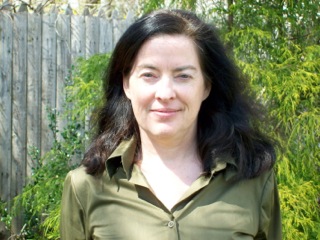
kryadune
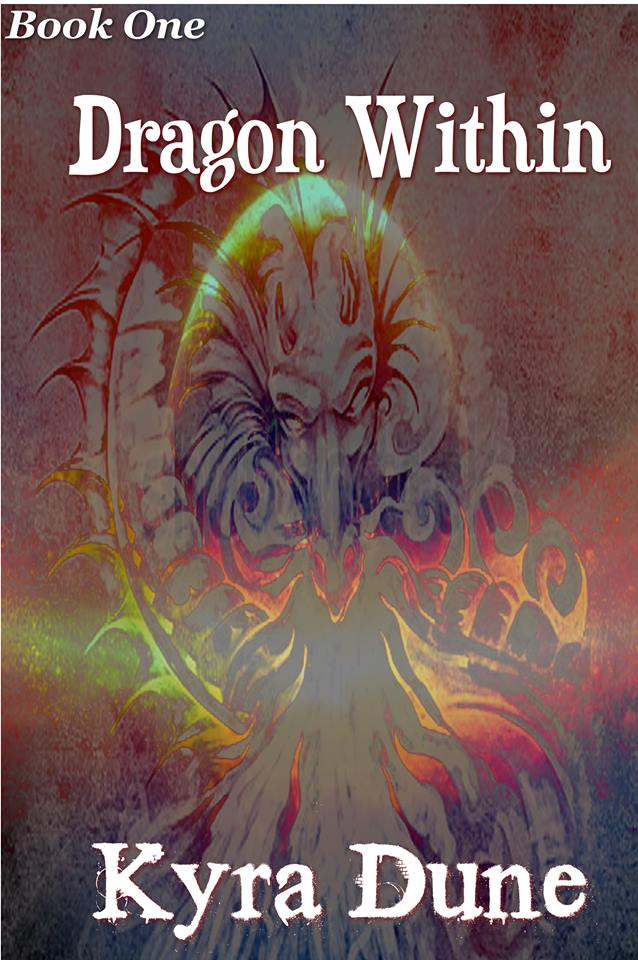
Kyra Dune never lost the imagination she had as a child, perhaps because that is when she started writing. Her focus is on fantasy, some for adults and some for young adults. I just finished reading “Web of Light” and found it entirely delightful. Her mix of races include flyers, blood witches, humans and the Gari-Za which are all distinct, well-developed and credible, their world’s tenuous peace hanging on by a thread that depends on the next generation to sustain. Her writing style is strong, smooth and saturated with suspense. These are books you’ll want to finish in one sitting and be sure to have the next one handy if it’s part of a series. Kyra has just released her latest novel, “The Dragon Within” which is now available at the links at the bottom of the interview.
dragonwithin

MF: To say that you’re a prolific writer is certainly an understatement and I assume you started when you were quite young. How old were you when you decided that you wanted to be an author?
KD: I was nine years old. I wrote my first book in school, in-between class assignments.

MF: Your Amazon author profile mentions that you traveled a lot with your family. What were some of the places you visited and which of those was your favorite?
KD: We traveled the entire lower half of the United States, from Arizona to Florida all the way up to Kansas. We lived on the road, kind of like gypsies I guess you could say. My favorite place is Gulf Shores Alabama. I love the beach there in the winter time when there’s no one around but the seagulls. When there’s a storm rolling in over the water and everything is gray and cool and all you can hear is the crash of the waves, it’s like being in another world.

MF: What impact did extensive travel have on your writing?
KD: It’s amazing how many real world places make excellent backgrounds for fantasy novels. Travelling so much, getting a chance to see how diverse this country can be, has definitely influenced my writing. Inspiration can strike in the strangest of places.

MF: Was there any particular book or author whom you feel had the most influence on your work?
KD: Margaret Weis and Tracy Hickman were the authors of the original books in the Dragonlance Series. When I first read their books I’d already been writing for awhile, but they really drew me into writing in the fantasy genre and fanned the flames of my fascination with dragons.

MF: What do you love the most about writing for Young Adults?
KD: The characters. Somehow, writing from a teen’s perspective flows more naturally to me than an adult’s.

MF: Which part of the creative process is your favorite? Least favorite?
KD: That first spark, when an idea appears out of nowhere and demands you write it down. It’s so fun to discover new characters and watch to see how they’ll twist and turn the story. That’s the best feeling. Rewriting is much harder, because, for me at least, the first draft just kind of rolls out. It’s messy and sometimes contradicts itself. Cleaning it up and turning it into a cohesive story often involves deleting scenes I enjoyed writing and sometimes even getting rid of characters. Nothing is harder than having to completely abandon a character after you’ve gotten to know them.

MF: How long does it usually take you to write one of your stories from when you get the idea to when it’s finished?
KD: I get a lot of ideas and each one goes into my file folder until I’m ready to start a new book, so it can vary. I have ideas in my folder that have been there for years, but have yet to really call out to me that their story is ready to be told. But from when I first start a story I average about ten months to complete it.

MF: I know that most authors love all their characters but which of your many “children” is your favorite and why?
KD: Zazere from my Firebrand Trilogy is my favorite. He’s a dark and mysterious mage who can read minds and has a bit of a sarcastic side. His character was heavily influenced by my favorite character of all time, Raistlin Majere from The Dragonlance Series.

MF: Do you ever plan to branch out into other genres other than young adult fantasy?
KD: Actually, some of my novels are adult fantasy. Flight Of Dragons, Time of Shadows Series, and Crossfire Duology are all adult. I have a few science fiction and horror ideas in my folder, but for the time being fantasy is what calls to me most strongly.

MF: How do you feel your writing has evolved since your first novel?
KD: I’ve gotten braver with my writing, especially in the area of romance. Though none of my books contain anything explicit, I find myself more at ease with writing kissing scenes and scenes where it’s obvious the characters are going to make love. But I always pull the curtain down before things get heated. All my work is PG 13, at least in that area. Cursing also used to be a problem for me, but I recently wrote two novels which required stronger language than I normally use. I’m learning to stop listening to fear so my stories can speak true.

CONNECT WITH KYRA
AMAZON AUTHOR PAGE: http://www.amazon.com/Kyra-Dune/e/B00A5WOHGQ/
GOODREADS: https://www.goodreads.com/kyradune
WEBSITE: http://kyradune.weebly.com/
TWITTER: @kyradune
FACEBOOK: https://www.facebook.com/pages/Kyra-Dune/136273741952?ref=hl&ref_type=bookmark
BLOG: http://theshadowportal.blogspot.com/
GOOGLE+: https://plus.google.com/u/0/115323878447248304389

BOOK LINKS
Crossfire (Crossfire Duology Book one) (Adult Fantasy)

Firestorm (Crossfire Duology Book Two) (Adult Fantasy)

Firebrand (Firebrand Trilogy Book One) (YA Fantasy)

Ten Kingdoms (Firebrand Trilogy Book Two) (YA Fantasy)

Dragons of War (Firebrand Trilogy Book Three) (YA Fantasy)

Dragonstar (DragonStar Duology Book One) (YA Fantasy)

The Black Mountain (DragonStar Duology Book Two) (YA Fantasy)

Flight of Dragons (Adult Fantasy)

Web of Light (Web of Light Duology Book One) (YA Fantasy)

Dark Light (Web of Light Duology Book Two) (YA Fantasy)

Elfblood (Elfblood Trilogy Book One) (YA Fantasy)

The Silver Catacombs (Elfblood Trilogy Book 2) (YA Fantasy)

City of Magic (Elfblood Trilogy Book 3) (YA Fantasy)

Ten Weird Tales of Magic and Wonder (YA Fantasy)

Shadow of the Dragon (YA Fantasy)

Shadow Born (Time of Shadows Book One) (Adult Fantasy)

Shadow Prince (Time of Shadows Book Two) (Adult Fantasy)

Shadow King (Time of Shadows Book Three) (Adult Fantasy)

The Dragon Within (NEW) (YA Fantasy)

6 MORE TIPS FOR INDIE WRITERS: Handling Thoughts and Dialog

raventype

Even though you’ve read dozens or even hundreds of novels, when you sit down to start writing one yourself you’ll occasionally hit a wall and wonder how it’s done. Here are a few common areas related to capturing thoughts and dialog that writers may not find intuitively obvious:

  1. When a character speaks long enough for it to occupy more than one paragraph without any sort of interruption, including he said, the beginning of the statement has a quotation mark but it doesn’t end with one until the speech ends. This shows the reader that it’s the same person continuing to speak. When he’s done, then you close it out with a quotation mark.
  2. A spoken sentence contained within quotes ends with a comma, not a period, provided you’re going to add he or she said at the end; otherwise use a period. If it’s a question you obviously use a question mark but there is no need to capitalize the he or she when you designate who asked. It’s possible that some word processors in their infinite wisdom may capitalize it for you but this is incorrect.
  3. When a character is thinking something it is usually italicized. However, don’t go on and on with pages of italicized text. This is where viewpoint comes into play in the narrative. For example:
    1. Steve can be such an idiot, Jack thought.
    2. Jack shook his head and rolled his eyes, thinking Steve should shut up and quit acting like such an idiot.
  4. Speaking of italics, they also come in handy for emphasis, such as exclamations you want to give a little extra punch. Don’t use them too often, however, or they lose their effect. Same goes for exclamation points! Use them sparingly, please! Even if a conversation is clearly intense you don’t need to end every sentence with one! It really gets annoying to the reader! See what I mean? It’s better to use narrative and detail so the reader is well aware of the mood in the given scene and therefore knows the tone and emphasis the characters would employ in such a conversation. It’s also seldom justifiable to use more than one!!!!!! Capische?
  5. It is a good idea to remind the reader who’s speaking occasionally, even if it’s a soliloquy by the main character unless there is absolutely no one else in the story. If it’s a dialog it applies, also, unless it’s obvious from the context. This can also be done by inserting names into the dialog itself, such as, “Come on, Jerry, it’s time to go.” Conversely, don’t insult the reader’s intelligence by including it too often. Strive for balance.
  6. Don’t over-use the various synonyms for said; use them sparingly and with deliberate intent to help convey the emotional content and avoid adverbs. For example saying “he shouted” is much more effective than “he said loudly.”  The worst thing you can do is distract from the story by trying too hard to be clever and impress the reader, a practice known as overwriting. If it contributes to the mood such as yelled, whispered, grumbled, explained, muttered, etc. then it is probably okay but go easy on the others. Said, stated, replied, commented, acknowledged, agreed, argued, asserted, opined, and numerous others all have a place but don’t feel you have to use them all within a given conversation. Set the mood then let the characters do the rest with what they actually say.

Interview with Children’s Author/Illustrator, Donna McGarry

me

Donna McGarry is the author of several, brightly illustrated children’s books known as the “Zodiacts” series. It’s hard to say which is more charming, the delightfully original artwork, the poetic prose or the messages behind these clever stories. Her characters are whimsical with distinct personalities which children can relate to. The illustrations nearly jump off the pages with their dazzling colors presented in an original style guaranteed to make you smile and hold any child’s attention.

As you may expect, these stories all have an astrological theme. Whether or not you’re a fan of astrology the messages in these stories are applicable to life. Each astrological sign relates to a theme or archetype which Donna takes down to a child’s level with an entertaining story that illustrates an upbeat and insightful lesson. Each is not only enjoyable at face value but also useful for further discussion between a parent and child. Early education professionals and daycare providers could also find these books useful teaching tools.

* * *

 MF: Your Zodiacts series of children’s books is unique in numerous ways. The stylistic artwork is highly innovative, most of the characters are shaped like stars while still maintaining different personalities, and your themes derive from astrology. How did you originally come up with this unique combination?

DM: When I was little I had those gorgeous Prismacolor pencils. I was always doodling dancing star characters with little hats, heels and sparkling eyes as well as flying fish type creatures. I became fascinated with astrology as a pre-teen. I used to sneak into the pharmacy and furtively read the Dell Horoscope magazine. My friends were interested, but didn’t care to learn more than their own or maybe a boyfriend’s Sun sign. They thought it was too complicated. Most of my twenties were spent studying acting. Later when I got into sewing, I was inspired to create star characters based on the zodiac signs. I thought if I could create memorable characters who embody the essence of a sign, or act out those qualities, Zodiacts- it might facilitate understanding.


MF: As is the case with most children’s books, your illustrations add another dimension to the stories in and of themselves. Your bright colors and stylistic artwork remind me of the psychedelic designs popular in the 1960s. Did you receive any formal art training or inspiration for your unique methods of blending your whimsical characters with realistic photographic accents?

DM: No formal training. I always loved museums, art and color. As a kid, I was a big Dr. Seuss fan and thought Peter Max and Saul Steinberg were very groovy.


MF: Is your artwork strictly digital or do you also employ more conventional methods?

DM: I started the books with my own cartoon drawings years ago but something was missing. Namely talent! When a friend suggested I make a fabric book I was befuddled. Then I realized I could use the plush dolls my friends and I had created as astro characters. It wasn’t until I accepted the computer (kicking and screaming during a Uranus transit) and Photoshop into my life that things started to fall into place and the Zodiacts were born.


MF: Your stories draw their themes from astrology. As an astrologer myself I recognize the great lessons inherent in the zodiac and its archetypes. Are you a practicing astrologer or simply knowledgeable in that ancient art?

DM: I’m a level one graduate of Steven Forrest’s Evolutionary Astrology Apprenticeship Program. I do love interpreting charts, and enjoying astro banter with my pals, but since I started these books back in 2007, illuminating the Moon’s antics through the signs has become my primary passion. I’m hoping to bring Moon signs into the mainstream.


MF: Would you mind sharing your own sun sign? Any comments on how your natal chart contributes to your work as an artist and writer?

DM: I’m a Cancer with four planets in the 9th house. As you know, the 9th is the house related to higher learning, philosophy and publishing. Leo, which represents children, hobbies and creativity is the sign on that house cusp. The sign Cancer is ruled by the Moon. I have always been mesmerized by the Moon, and feel more affinity with my Moon sign, Aquarius, than I do with Cancer. One of my compulsions is to encourage people who are not that familiar with astrology to learn more about their charts. That they have a Moon and Venus sign etc., as well as a Sun sign. My Aquarius Moon is in the 3rd house which, I feel, bodes well for writing quirky children’s books. I think my Cancer Sun has to do with creating my own family of stars.


MF: What advantages do you see for children learning about astrology at a young age?

DM: To my way of thinking, astrology is the study of the cosmos and human nature. I believe it fosters compassion, empathy and a sheer delight in the eccentricities of behavior. Is any age too young to appreciate and start a dialogue about the nuances of personality? Plus, it’s just plain fun!


MF: Are your characters based on people you know who belong to the different sun signs or are they strictly composites? Or would you rather plead the 5th Amendment?

DM: I jokingly stated in my 1st book that all resemblance to persons living, dead etc. were purely coincidental except in the case of Penelope Pisces who was the celestial incarnation of my sister Madeline! I love people and their fun, wacky quirks and yes, the characters are based on, and/or are composites of my favorite people.


MF: The majority of children’s book have both an author and an illustrator yet you have been able to fill both roles. Which talent do you feel predominates, writing or artistic? In other words, do you see yourself more as one or the other or simply a comfortable combination of both?

DM: I don’t feel particularly adept at either. Just hard-headed and determined. I have a lot of squares in my chart! People tell me that I’m an artist and I love to create so I’ll pick that.


MF: Which part of the creative process do you enjoy the most?

DM: Sometimes I fear that I won’t get any ideas or that the light will go off, so any time I get a spark it’s good! I also love getting an expression on a character’s face just right. So far I have turned two of the books into iPad apps and loved the process of animating the characters. Hearing people laugh and enjoy my work is great.


MF: Which part of your work is the most challenging?

DM: Rhyming! Finding the words with astrological connotations and then finding another one to match it can be challenging. Plus the nitty gritty of the book set-up. I don’t think I would have been able to do it if progressed Venus hadn’t stationed in Virgo. (An astro phenomena I deeply resented as a teen, hurling my Table of Houses across the porch!)


MF: There are numerous individuals out there who have negative feelings toward astrology and thus object to exposing children to its teachings. Is there anything you’d like to comment about that?

DM: As I’ve said before, to my way of thinking astrology is the study of people and human nature. Different signs have different energies. Of course we all encompass all the signs in our charts, but if a person has a preponderance of gentle Pisces energy, that person might not get along so well with someone who’s got a lot of Martian or Scorpio energy. With all the bullying and coercion the kids have to deal with these days, I think the sooner they start to identify different personality signatures the better off they’ll be.

I believe the stigma against astrology is beginning to erode and more people are starting to appreciate it for the self-knowledge tool that it really is.

* * *

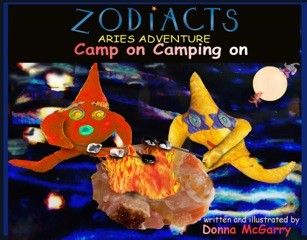
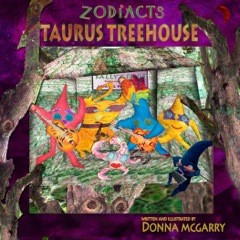
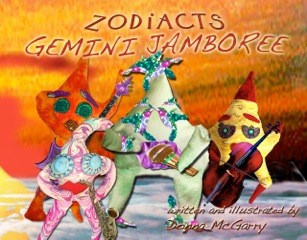
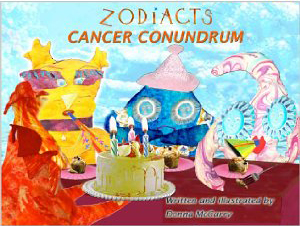
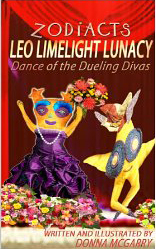
I absolutely love these books and have left reviews for all of them on Amazon and Goodreads. “Aries Adventure: Camp on Camping On” shows that different people enjoy different activities which reinforces an understanding of individuality along with the important concept of “me.” The lovable characters in “Taurus Treehouse” encounter difficulties which could help a child depersonalize his or her own unpleasant situation and alleviate feelings of isolation, self-pity or rejection that often accompany time wrought with trouble. “Gemini Jamboree” is saturated with Mercurial wit, joy of learning, and even a hint of the Trickster which will delight children of all ages. “Cancer Conundrum” can help children learn about their own emotions as well as how their moods can affect others. “Leo Limelight Lunacy” shows the need for balance as well as the benefits of working with others to achieve your goals. Her most recent episode, “Vinnie d’Virgo and his Veggie Vittles” addresses healthy eating in an amusing yet honest way.

CONNECT WITH DONNA

Donna’s Amazon Author Page: http://www.amazon.com/Donna-McGarry/e/B00CMCDHWC/

Website: http://www.zodiacts.com

Twitter: @ariesadventure

Facebook: https://www.facebook.com/pages/Zodiacts/152746712177

YouTube: https://www.youtube.com/watch?v=G8IZtSao_a0


BOOK LINKS

zodiacts

Zodiacts: A Whimsical Introduction to Celestial Beings

Kindle: http://www.amazon.com/Zodiacts-Whimsical-Introduction-Celestial-Beings-ebook/dp/B00EXDKE7O/

 ariesadv

Aries Adventure: Camp on Camping On!

Kindle Version: http://www.amazon.com/Zodiacts-Aries-Adventure-Camp-Camping-ebook/dp/B00IRMN3X4/

Paperback: http://www.amazon.com/Zodiacts-Aries-Adventure-Camp-Camping/dp/0982082738/

 zodiacttau

Taurus Treehouse

Kindle: http://www.amazon.com/Zodiacts-Taurus-TreeHouse-Donna-McGarry/dp/1449928056/

Paperback: http://www.amazon.com/Zodiacts-Taurus-TreeHouse-Donna-McGarry/dp/1449928056/

 geminijambouree

Gemini Jamboree

Kindle: http://www.amazon.com/Zodiacts-Gemini-Jamboree-Donna-McGarry-ebook/dp/B00IN452DA/

Paperback: http://www.amazon.com/Zodiacts-Gemini-Jamboree-Donna-McGarry/dp/0982082711/

 cancerconundrum

Cancer Conundrum

Kindle: http://www.amazon.com/Zodiacts-Cancer-Conundrum-Donna-McGarry-ebook/dp/B00J3HEEBM/

Paperback: http://www.amazon.com/Zodiacts-Cancer-Conundrum-Volume-1/dp/0982082746/

 leolimelight

Leo Limelight Lunacy: Dance of the Dueling Divas

Kindle: http://www.amazon.com/Zodiacts-Limelight-Lunacy-Donna-McGarry-ebook/dp/B00E2ZSZ5G/

Paperback: http://www.amazon.com/Zodiacts-Limelight-Lunacy-Dance-Dueling/dp/0982082754/

vinnievirgo 

Vinnie d’Virgo and his Veggie Vittles

Kindle: http://www.amazon.com/Zodiacts-Vinny-dVirgo-Veggie-Vittles-ebook/dp/B00M0942JY/

Paperback: http://www.amazon.com/Zodiacts-Vinny-dVirgo-Veggie-Vittles/dp/0982082789/

Review of Martha Fawcett’s “Dance of the Warrior and the Witch” — A Sci-fi/Fantasy/New Age Trip through Space and Time

danceofwarrior

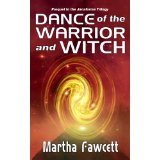
Martha Fawcett is a literary gourmet chef who specializes in bibliophilic ambrosia. Her style is so rich with description and metaphor that it can be almost euphoric to read. This story is an unusual tale that treads across science fiction, fantasy and new age genres. Her characters are convincing and easy to relate to as well as the alien Gathosian culture and various planets she created. The juxtaposition of the two main male characters, Elan and Stellium, where one was a human born on Earth who relocated offworld with his parents as a child, while the other was a Gathosian raised on Earth, created an interesting balance and means for contrasting the two cultures and finding where and how they intersected. Much you could relate to as an earthling, yet there was enough that was alien about it to transport you to another time and place.

The first part of the book, which was my favorite, takes place at a school that trains warriors in a variety of disciplines and techniques which include not only spiritual development, survival, and martial arts but jumping time dimensions. Elan’s mentor, Kyron, is another important player. I felt his name was well-chosen as a subtle reference to Chiron, the mythological centaur and “wounded healer” who astrologically symbolizes the hurts and disappointments we experience that often never heal; indeed, if there were one theme I would attribute to this story it would be that of healing. All the protagonists were convincing but my favorite character in this story was actually Cerebow, a “dulcerary panther” with telepathic abilities.

I was so entirely immersed in this Shardasko Warrior school environment that it felt as if I was there as well. This made it all the more entertaining when Elan went to visit his human sister who continued to live in an earthlike culture. At that point the school seemed so familiar and normal I could totally relate to how foreign “normal” had become. His sister’s sarcastic remarks were hilarious and exactly what you’d expect to occur between siblings when one chooses an avant-guard lifestyle.

The relationship between the three protagonists when the Trinity witch, Iosobell, entered the scene was an interesting study of the different roles individuals play across multiple lifetimes. I must say when these two men and a woman were involved in what can best be described as some sort of tantric three-way conducted in a retro-gravity device that I was a bit startled. Nonetheless, it was done in a tasteful and metaphorical manner that emphasized the love and spiritual bonds between them making it sensual while avoiding the clumsy, graphic prose typical of erotica.

Much of the remainder of this story explored the karmic path of deeds and events as they ripple through time and fate in both directions. Soul groups travel together through time and space yet individuals play a multitude of different roles and incarnate in both genders. Trying to heal or, better yet, prevent catastrophes caused by mistakes born of ignorance, foolishness or immaturity becomes a thought-provoking consideration as the three protagonists strive to do just that amid the challenges presented by “free radicals” or what could best be described as tortured souls or devils.

My least favorite part of this book was one of the middle chapters where a lengthy narrative attempted to map out the chain of events the protagonists were trying to untangle. To me it oscillated between confusing and boring but I persisted in the hope that ultimately the story would return to its former grace and lucidity, which it did, and ultimately provided a satisfying ending.

It would have been handy for the book to contain a glossary of the various Gathosian words. I also would have enjoyed this book more if I had read the print version instead of electronic because a physical book makes it so much easier to flip back to other parts to refresh your memory, check the meaning of an alien word, etc. This story was quite complex and unless you have a memory like a steel trap there will be parts that can be confusing. It’s a story that would undoubtedly be enjoyed more on the second read.

This is not a book for someone who wants to enjoy a simple, straight-line plot that’s easy to follow. It challenges the reader and truly transports you to another alien world and culture, a task that was executed beautifully by this skilled, imaginative and very talented author. When a book can make me laugh, cry, and even gasp a few times while I luxuriate in a writing style best described as Nirvana, I will definitely give it five stars, only because I cannot give it more.

5 Quick Tips for Indie Writers: Formatting

KONICA MINOLTA DIGITAL CAMERA

One complaint I’ve heard about Indie novels is lack of proper formatting. While this is usually one of the services provided by a publisher, when you’re an Indie you’re on your own unless you want to hire someone to do it for you.  Otherwise such oversights, ignorance or perhaps laziness contribute to a poor reputation which hurts everyone. Here are a few simple formatting tips which will help your work shine:

  1. The first paragraph of a new chapter typically begins with a letter that is larger than the others and called a “dropped cap.” This gives it a more professional appearance. This does not necessarily work for some formats, however, where this larger letter will increase the leading (e. spacing) between the lines. For print format, however, this is the convention.
  2. The first paragraph of a chapter is flush with the left margin; it is NOT indented. This is also true for each new section and provides a stronger visual clue than doubled spacing, which is sometimes inadvertently introduced into ebooks by a page break in the original file that doesn’t necessarily indicate a new scene or viewpoint has begun.
  3. Along these same lines, it’s easier on the reader if you demarcate the end of a section with some sort of indicator whether it’s a few asterisks or some other design.
  4. Speaking of section breaks, when you change viewpoint from one character to another or start a new scene you should start a new section unless the entire book is written in omniscient point of view that switches from one person to the next continually. Remember, however, that you don’t necessarily have to get into everyone’s head to know what they’re thinking. Describing a character’s expression or body language can convey what they’re thinking or feeling just like it does in real life. Clearly is you’re writing in first person you can’t read another person’s thoughts directly and would use visual clues.
  5. Book design refers to the fonts used for chapter headings and text, your paragraph indentation style, line spacing, page number and heading placement, and so forth. Paying attention to these details gives your book a more professional appearance. For ebooks these details don’t show up but if you’re publishing in a print copy they make a tremendous difference as far as presenting your work as that of a professional.

What’s Behind the Science in Science Fiction Part 5: The Matter – Consciousness Interface

Now we’re getting to the good stuff and I hope you can see why I gave you all that background information leading up to it. In order to fully appreciate something, whether it’s good music or literature, you need a foundation, no matter how rudimentary it may be. And believe me, it was, even though your eyes may have glazed over. My previous posts were a whirlwind tour of physics for dummies but you are now much better informed than most people out there, assuming you read it. Congratulate yourself! I will try to reward your efforts by building on that information so that anyone who skipped it will be entirely lost and need to go back and suffer through it like the rest of you.

Quantum theory was mind-blowing because it introduced the possibility that an observer could influence how light and even matter behaved. This, of course, was only proven on a very small scale, yet the influence was there. Suddenly the world of physics and metaphysics were starting to overlap.

150px-feynman3 150px-feynman-stamp     

One of my heroes in the physics world is Richard Feinman because he demonstrated an interest in so many things besides physics. I believe he was as brilliant as he was to the point of winning a Nobel Prize was because he was so open-minded and had the courage to see things differently. That is how breakthroughs come about.  I’ll be forever grateful to him for his “Lectures on Physics” which helped tremendously when the textbooks fell short.

heisenequationheisenbergcop

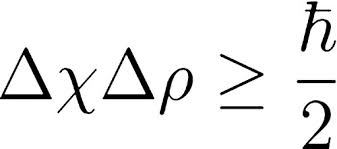
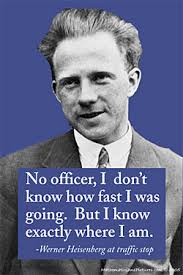
Another great physicist who seemed to grok the concept that there was more to life than one’s own very specific discipline was Werner Heisenberg, also a Nobel Prize winning physicist with an actual phenomena named after him that relates to quantum theory, i.e. the Heisenberg Uncertainty Principle. He stated, “It is probably true quite generally that in the history of human thinking the most fruitful developments frequently take place at those points where two different lines of thought meet. These lines may have their roots in quite different parts of human cultures, in different times or different cultural environments or different religious traditions: hence if they actually meet, that is, if they are at least so much related to each other that a real interaction can take place, then one may hope that new and interesting developments may follow.”

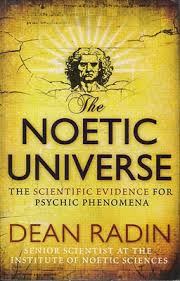
deanw-bookradinbook

Hello? Ya think that maybe quantum theory would be a good one for collaboration with other disciplines? Scientists need to talk to one another! Here we have physicists scratching their heads over whether consciousness and matter interact while we have psychologists such as Dean Radin researching psi phenomena which may well be the mechanism that causes that interaction between consciousness and matter. Rather than treating these researchers with about the same respect at Dr. Venkman (played by Bill Murray) in Ghostbusters, maybe they should get together over a pitcher of margaritas and see what they come up with.

Quantum entanglement is the term used to describe two particles which become tied up with each other enough, kind of like atomic soulmates, that even when they are separated by long distances, if something happens to change the state of one, the other reacts also. This happens instantaneously, i.e. the communication occurs faster than the speed of light, a barrier that was never supposed to be breached. Psi is also instantaneous. Does this imply that we become entangled with others at the quantum level? This is especially enticing when you think of the stories of identical twins who originated with the same genetic material and are also connected at the psychic level.

Along similar lines is the concept known as NLP or neuro-linguistic programming. It has also been called “the power of positive thinking,” and described in a movie called “The Secret” and promoted by a plethora of motivational speakers who declare that you can create your future by visualizing what you want on an consistent basis such that you will eventually draw that situation to you from the Universe at large. If psi has the power to manipulate matter and create not only matter but circumstances, doesn’t that sound as if it has something to do with quantum theory?

Weird, you bet. But it works. We can, indeed, draw circumstances to us in this manner. Which bring me to favorite quote of mine from science fiction author, Arthur C. Clarke: “Technology sufficiently far advanced is indistinguishable from magic.” What would Isaac Newton think of your smartphone?

However, there was one rather large problem that comes down to one, little three-letter word: EGO.

Scientists tend to have tunnel vision when it comes to their own field of study. I remember hearing once that as a person comes closer to a PhD that their IQ actually goes down. This does not mean that they are losing brain cells from overwork and losing intelligence. The typical IQ test assesses how much a person knows about a broad spectrum of knowledge and as a person narrows their interests down to the level required to pursue a PhD they get in the realm where they know a lot about a little which actually jeopardizes their IQ. This also means that they start blocking out anything that doesn’t relate to their chosen subject. They can become arrogant as they become experts and sabotage their colleagues who are seen as competitors for needed research funding. There is also the status issue. If you’re proven wrong you are probably through. After all that work getting to that pinnacle, the last thing you want is some upstart to push you off.

headstoneraven

Breaching this obstacle is likely to require what has been described as “progress by funerals.” In other words, as the old farts die off and those new upstarts take over, things will move along much faster.

At least until the upstarts scale that pinnacle and replicate the cycle.

(c) Copyright 2014 by Marcha Fox All Rights Reserved

Interview with Author Marcha Fox

I very much appreciate T.L. Chester conducting this interview with me and the thought provoking questions she came up with. I feel as if I should take a bow after her many compliments!

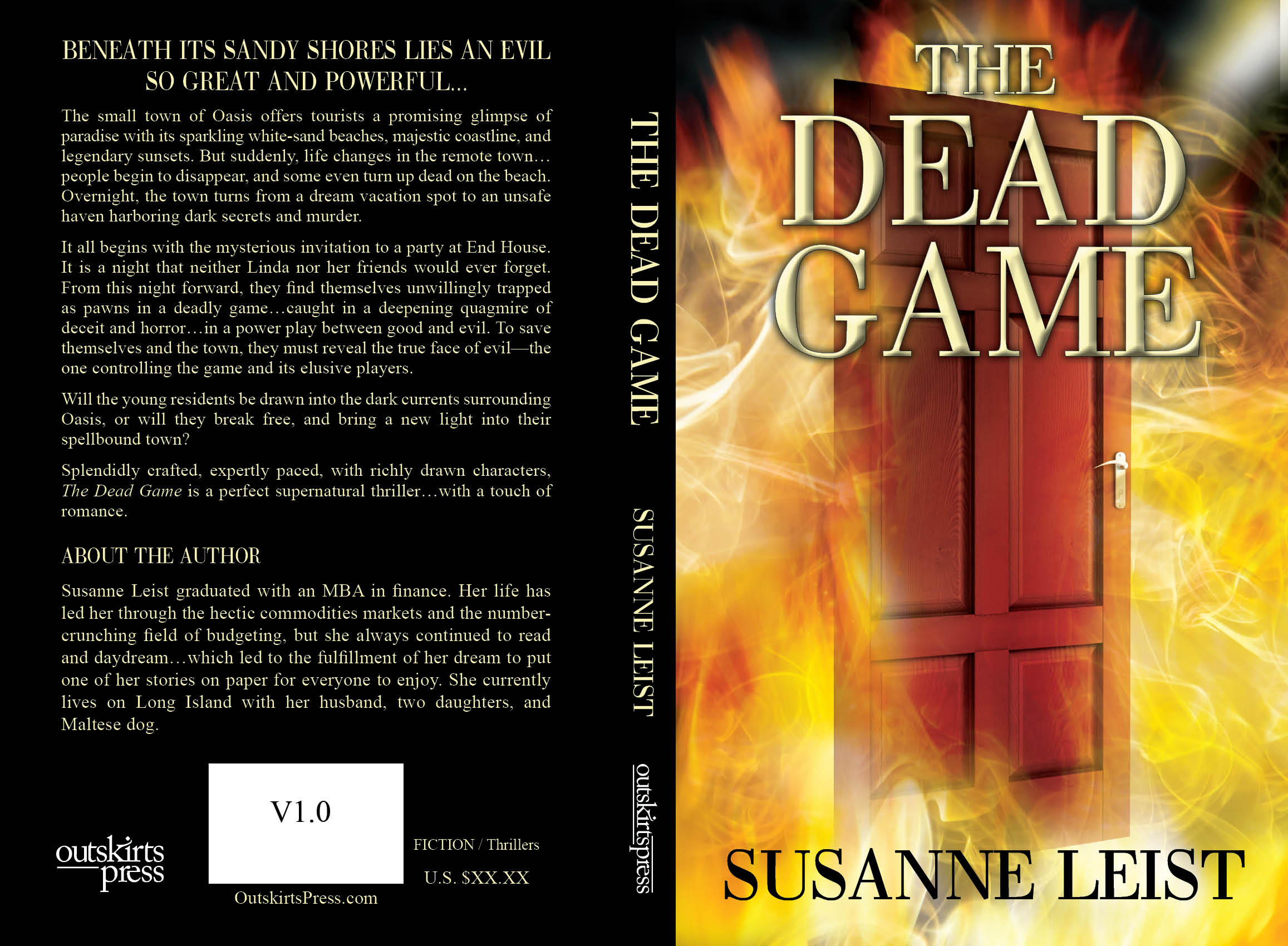
Review of Susanne Leist’s “The Dead Game”

ENTERTAINING & SUSPENSEFUL WITH GOOD CHARACTER DEVELOPMENT

By the time you finish this suspenseful tale you feel as if you know the streets of the resort town called Oasis as well as all the people who live there. The one thing you don’t know, however, is who is what they claim to be and who’s not, whether they are good or bad, and what will happen next. There is an excellent mix of reality and paranormal which lends more credibility to the story. It gives you a lot to think about, particularly if you live by an old, seemingly abandoned house with a spooky reputation. If you enjoy moderately scary stories populated with a variety of characters you will enjoy this book. I particularly liked Mike’s sarcastic remarks which had me laughing out loud more than once.

Final cover