Cat Tales

“Now cracks a noble heart. —Good night, sweet prince, and flights of angels sing thee to thy rest!”

–Horatio in “Hamlet” by William Shakespeare

hammiekitchenwindowI’ve had a cat in my life since the day I was born. The one I grew up with, Snopsie, was a member of the family before I was. As I was growing up I often suspected that my parents loved that cat more than they did me. Now that I’m a mother, grandmother, and great-grandmother, I know with absolute certainty that such was true. Studies have shown that people have more empathy for animals than they do for other humans. I believe it. More often than not, I am one of them.

Of course the status a pet carries in a household Bengals Boxing 001varies significantly. Sometimes they’re a pet and sometimes they’re a fur-baby. The years when I was raising a family and had a houseful of kids, the cats were pets. I cared about them, enjoyed having them sit on my lap, and did the best I could to take care of them, but they didn’t own my heart. Once I retired, however, and the kids were gone, it was another story.

ophcabinetCLCI adopted Hamlet and Ophelia in December 2006 as a Christmas/Birthday present to myself. I’d heard that Bengals were unique, lively, and entertaining and were supposed to live as long as twenty years. One eighth of their genetic material is Asian Leopard, which accounts for their distinct markings and strong personalities. They’re intelligent, curious, agile, and adventurous which, as expected, leads to lots of mischief. Over the years, property damage and veterinarian bills have amounted to literally thousands of dollars, mostly credited to Ophelia.

Mine was not their first home. Originally a young couple hammiefishtankCLCwho lived in an apartment with a preschool age son and a baby were the ones who adopted them from a cattery. It didn’t take long to realize that that was not the ideal environment for these active felines. Luckily for me, they realized this about the time I decided to get a cat.

My daughter sent me a picture of these two from her company newsletter, mentioning how adorable they were. I immediately recognized them as Bengals and knew they were supposed to be mine. They were half-siblings sharing the same father but different mothers and born a day apart at a local cattery. Soon they were racing up and down the stairs of my Houston townhome, sitting on top of cabinets and bookcases, and scrutinizing the potential meals lurking in the fish tanks.IMG_0001

couchcuddle4When I retired in October 2009 we all moved to my lake house. It was half the size with no stairs. They were clearly bored, but we all made the best of it. There was one high perch that became Hamlet’s favorite, though he also liked the top of the refrigerator or the pie safe. I’m sure they would have loved to go outside, but they’d always been indoor cats and I worried about them in the rural environment. Hammie actually got outside one time, but freaked out almost as much as I did.

windowwatchX3I never thought he would leave so soon. Ophelia was the one who nearly died a couple times, usually from eating something she shouldn’t, like a leather shoe lace and a hair tie, the latter of which required surgery. He was supposed to live to a ripe old age as an indoor cat, then gradually fade away and die a peaceful death. Instead, in what should have still been his prime, he slipped away within a relatively short time. He’d been losing weight, which wasn’t unheard of for a fourteen year-old cat. It seemed to get worse about the time the COVID-19 pandemic locked everything down.

When I finally got him to the vet, the procedures were far different. Instead of going inside the examining room with your pet, you waited in your car.

sunroomvigilJune2020

An assistant came to get him and deliver him inside, then the vet would talk to you on the phone. Hamlet hadn’t been to the vet very much and hated the car. Then we sat there for over an hour in the hot afternoon sun before they took him inside. Upon talking to the vet, I decided to leave him there overnight for them to gather the samples they needed to make a diagnosis.

Big mistake.

In the morning he was frantic, his wild blood turning him into a snarling, spitting, angry kitty who undoubtedly felt horribly abandoned. I took him home. The next day or so I noticed that his pupils were not the same size. I called the vet, took him in again. He had a detached retina, which could be caused by high blood pressure or a blow to the head. Which I later deduced occurred when he’d been left there overnight and gotten so upset. He got through that exam better, but the tests weren’t conclusive. The doctor suspected cancer, but his symptoms fit kidney failure or possibly pancreatitis.

detachedretinaJune2020

Different sized pupils = detached retina

I took him home and watched day after day as he sat in the sunroom, staring out the window. No doubt he was now half blind, which broke my heart. For a while he still ate and drank and used the litter box. In the evening he would  usually come into the living room and sit on the couch with me, his sister, and step-sister. If he didn’t join us, I would go get him.

eveningcouchconfig

The usual evening couch configuration.

deathwatch07052020

His sister and step-sister knew something was wrong.

He continued to fail, losing weight and strength such that he was very wobbly on his feet. Before long he no longer had any interest in looking out the window. He sat on a cushion in my office, half asleep. He’d drink water, but was unable to get into the litter box. When he wet, he would move away from the puddle. I knew it was time, but it was 4th of July weekend. I couldn’t take him in to be put out of his misery until Monday.

I agonized at the thought of taking him in. He hated the car and would yowl the entire 20 miles. Whether I could be with him was in question due to the COVID-19 procedures. He might even die on the way from fear, given his weakened state. Not exactly a peaceful, humane demise.

Fortunately that drive wasn’t necessary. He passed away Sunday night around ten o’clock on the couch beside me where he’d spent every evening for the past ten years. Ophelia watched, instincts telling her what was happening. It was heartbreaking and intense but only took a few minutes and he was gone. At least it had been in a safe, familiar place with me doing all I could to comfort him.ophiehonorguard

I called my wonderful neighbor, Heike, who’s a fellow cat lover. She came over to help me wrap him in a blanket. We laid him on the futon in the sunroom where he’d always loved to sleep until the next morning when we would dig a grave to bury him. In the morning when I got up and checked on him I found his sister sleeping next to him for the last time. Talk about a tearjerker. But she knew he was gone. If I’d taken him to the vet she never would have known or understood in the same way. One of Heike’s cats typically shunned her for a while after making that dreaded trip to the vet, apparently blaming her for the feline family member who never returned.

grave07062020Heike and I, two women in our 70s, dug a hole in the rocky, Central Texas ground and laid him to rest by my shed in the shade of one of my oak trees. I’m still deciding what to plant on his grave. The rocks you see around it all came out of the hole itself. We got as deep as we could until the rocks were too big to remove. In the next few days I’ll make it prettier and a decent memorial to an awesome cat.

catblanketThe house feels so empty. Up until the past few months his presence was always known. He was very vocal and his climbing antics legendary. I’m so glad I took so many pictures over the years. Like they say, photos may not seem important until they are all you have left. Ophie has been in my lap much more than usual. Hammie was never much of a lap sitter. Actually, he was too big to get comfortable. If I had a blanket on my lap he would get under it and become the “undercover cat.”

One thing that touched me deeply was the response I received on Facebook. The post of his death got 152 likes and 96 comments and the post of Ophie beside his blanket-wrapped body got 59 likes and 124 comments. I’ve never had a response like that to anything before. Pet owners share an important bond, that of loving our fur babies like family. Their compassion and support meant so much, even though most of them are otherwise strangers.

In closing this memorial to my sweet Hamlet, here are some parody lyrics dedicated to all pet lovers for those difficult times when you say goodbye. Sing it to the tune of “All the Girls I Loved Before”, either the Julio Iglesias or Willy Nelson version, your choice.

hammysnooze3To all the cats I’ve loved before
Who traveled in and out my door
I’m so glad they came along
To them I dedicate this song
To all the cats I’ve loved beforemoochinghand


To all the cats who shared my bed
And never did a thing I said
I love and miss you, oh, so much
And miss your fur beneath my touch

windowseat


The Rainbow Bridge you may have crossed
But in my heart you’re never lost
Your sweet spirit lingers on
And will never be completely gone.

RIP Hamlet

March 17, 2006 – July 5, 2020

“Now cracks a noble heart. —Good night, sweet prince, and flights of angels sing thee to thy rest!”

–Horatio in “Hamlet” by William Shakespeare

Epilogue

Due to the brutal heat of a Texas summer, it took me a while to fix up Hamlet’s grave site, which didn’t happen until a cool day on 25 October. Here is the result. I still miss him very much and I know Ophelia does, too. Often she stares at places where he loved to hang out as if wondering where he went. He will always be remembered.

A Perfect Story for Native American Heritage Month

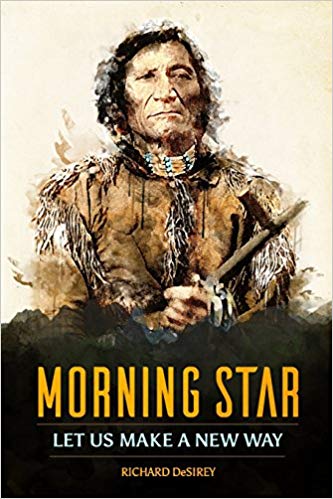
morningstar

Morning Star: Let Us Make a New Way

by Richard DeSirey


November is Native American Heritage Month and if you want to expand your knowledge of American History there is no better place to start than with this well-written, historically accurate story.


This book chronicles the story of those who came to be known as the Northern Cheyenne. They were driven from their ancestral home in the Black Hills area to Kansas, but promised if they went peacefully, they could return to their sacred ground at a later time. Of course this promise was not honored. Determined to return to the land given to them by the Great Spirit, whom they knew as Maheo, they escaped from the barracks in which over 300 had been imprisoned without food, water or heat in the winter and started the long trek back to Montana.

This band was led by a wise chief and leader whose name was Morning Star. In the historical record, he is usually referred to as Dull Knife, a derogatory nickname given to him by the Sioux (Lakota) because he was a peacemaker and wanted to co-exist with the white man. Clearly this is not what the white man wanted. Promises and treaties were made and consistently broken. Those who signed them on behalf of the United States often didn’t have the authority to enforce them. Treaties had to be ratified by Congress, and when this didn’t happen, the terms of the treaty were not met, though the Native Americans were expected to honor their side of the agreement. The military was especially brutal, leaders often decorated for the cowardly slaughter of peaceful groups that included women, children, and the elderly. Yes, Custer did get what he deserved.

The original explorers of North America treated the Natives Americans horribly, especially the Spanish and English. Believe it or not, the French showed them more respect. When the United States attained their independence, the treatment of the Native Americans got even worse. They were in the way as far as western expansion and “Manifest Destiny” were concerned and treated worse than animals or even slaves because they were in the way and of no value.

It is absolutely shameful and a national embarrassment that it took a court decision to declare them as human! Even the pope had declared it acceptable to slaughter indigenous people. In what universe is this acceptable?

As a baby boomer, my impression of the First Americans was that they were blood-thirsty, uncivilized savages. This came from what I was taught in horrifically biased history classes combined with the TV and movies of time. Nothing could be farther from the truth, yet never was it mentioned the depth and spirituality of the culture that they espoused, especially the Cheyenne tribe. In many respects, they achieved a culture that was far more advanced than our own.

As an author myself I am currently working on a trilogy in which my main character is Cheyenne. This has motivated me to do a significant amount of research to assure its accuracy. I have been shocked, heart-broken and ashamed of my country as I have learned how these people were treated. I am currently working with a full-blooded Cheyenne to further develop this character and he is the one who gifted me with this book. The author worked diligently with the Cheyenne people for decades to gather Morning Star’s story as it had been preserved by oral tradition by his descendants. This book is the real deal.

You owe it to yourself to learn how history really unfolded in this country. With all the controversy these days over immigration, try putting yourself in the moccasins of the First Americans as the white man invaded them from across the Great Waters, then proceeded to systematically steal their land.

Would you fight back if they refused to negotiate? You bet you would.

You can pick up your copy on Amazon here.

“The Making of a Healer” by Russell FourEagles

makingofhealer

5stars

I hardly know where to start expressing my impressions of this book. Let’s just say that it is clearly in my list of the Top Ten Most Influential Books I’ve ever read. I was actually sad when I finished it, yet know this is one of the few books that I will read many times.

Probably the most powerful message I received was the highly spiritual nature of indigenous American teachings. Interestingly enough, it comprised everything included in my own beliefs, which I’ve collected from various sources. These include organized religions, my own experiences, scientific research, meditation, as well as the teachings of various yogis and motivational speakers. It was clearly a revelation to find my own belief system, which I’ve assembled over a lifetime, expressed in a single book.

The philosophies expressed are nothing short of profound and beautiful. The respect for Mother Earth and all her creatures, including those of other cultures, is such a powerful concept that has been blatantly ignored by western cultures. Living in harmony is essential to our health and well-being. The concept of the “heart box” where we store and build up the various hurts, disappointments, and traumas of our lifetime rang true. The Oneida Fire Ceremony used to clear those issues is one I’d heard variations of before and it works.

Bottom line, we must live with an attitude of love, not fear. The author’s personal experiences illustrate these principles in a humble and powerful way, from being taught these things by his grandmother, to being a soldier in Vietnam, to becoming an inspired healer.

If you’re looking for some genuine inspiration that dates back hundreds, possibly thousands of years, then read this book. If you need to know what actions you can take to rid yourself of old issues lurking in your subconscious that you want to release, then read this book. If you want a touch of wisdom that has been lost, yet is exactly what the world needs today, then read this book.

I can’t praise it highly enough. If you’re looking for answers, it’s highly likely you will find them here.

You can pick up your copy on Amazon here.


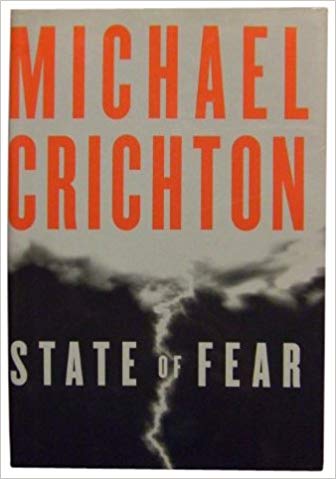
“State of Fear” by Michael Crichton

StateofFear

I always enjoy a good Michael Crichton book. While this one wasn’t my favorite, considering some of his other titles such as Jurassic Park or Timeline, it was nonetheless excellent. This hardback had been sitting on my shelf for literally years; given the book’s copyright is 2004, no telling how many. I live in a house that was once my family’s vacation home, so I have no idea who may have left it here. One day recently, its dust-covered binding caught my eye from its position on the bottom shelf and I decided to read it.

It’s rather amazing how the story and premise really haven’t gone out of date in fifteen years. Essentially, it’s an exposé of the science (or lack thereof) of global warming. We’re still obviously hearing about this today. It has changed names a few times, now currently referred to as “climate change”, but it’s one and the same. Clearly, Crichton was expressing strong, well-substantiated opinions regarding how science and politics are a very bad combination, which he presents in the form of a gripping, conspiracy techno-thriller.

One thing that really irritates me as a reader is when an author doesn’t do his or her homework as far as research is concerned. When I encounter scientific inaccuracies in a story they are a major turnoff. They throw me out of the story immediately and scream “amateur” on the part of the author, who clearly didn’t respect his readers enough to do the research. No one can ever accuse Crichton of this faux pas. This book took three years to research and, believe it or not, has twenty pages worth of bibliographic material as well as footnotes to scientific journals throughout that are real. I’m afraid that few readers appreciate that as much as I do, which is a shame.

Even though this book has been around for a decade and a half, it’s still worth reading. I suspect that little has changed scientifically. It should be read with an open mind, considering all sides. Crichton’s opinions regarding the volatile mix of science and politics are definitely worth noting; nothing has changed there, either. I, for one, have grown weary of everything being about money and corporate profits.

I want to point out that I am not “Red” or “Blue” in a political sense, but rather some shade of purple; there are elements of both platforms with which I agree. I don’t believe in blatant handouts at the expense of hardworking people, but I also believe in treating Mother Earth and all her creatures with respect. I also believe people’s health and well-being are more important than greedy corporate giants who place whomever they want in political office with their campaign contributions to assure maximum profits.

I love a novel that not only entertains, but informs and educates the reader, something Crichton did in spades. I am so sorry he is no longer with us, turning out these well-written, well-researched page-turners. I suppose in some ways this story is overshadowed by the issues it exposes, making some conversations a bit pedantic. However, 20 pages of bibliography deserves considerable respect. This is a very thought-provoking story that highlights an issue that is as relevant today as it was in 2004. Whichever side of the argument you may espouse, you should read it. The bibliographic material–count it, 20 pages worth–speaks for itself.

A Sad Commentary on American History

greatspeeches

Anyone who thinks they know American history needs to read this book. Those who don’t understand why the white men are hated also need to read it. In a nutshell, it’s a testimonial of exploitation, lies, and aggression, which has been the norm on the part of supposed “civilized” nations for millennia. Seeing indigenous people as inferior, savages, and uncivilized based on their lifestyle and thus treating them no better than animals has a sordid and long history.

This book chronicles the treatment of the Indigenous Americans from the first contact by the Pilgrims in the 1600s through the 20th century. The lies and aggression are nothing short of shameful and an embarrassment to any honest person. Those of us who grew up playing “cowboys and Indians” and watching similar TV shows were not seeing things as they really are.

In most cases, the Indigenous Americans only wanted peace. Some had the foresight to see the problems that were coming. They saw the land as sacred, given to them by The Great Spirit, and they treated Mother Earth with respect and gratitude. They may not have had the white man’s technology, but their societal norms were often far more advanced than “civilized” nations. The wholesale slaughter and exploitation of these people in the name of Christianity is a national disgrace.

Besides the actual slaughters, their children were often taken away, essentially kidnapped, and sent to boarding schools where their native culture was derided while they were indoctrinated with supposedly white civilization’s values. Their women were often sterilized without their knowledge. There is no doubt the intent was genocide.

If you think things have changed today, think again. Power and control by those with selfish and evil intent still prevails. Corporate power subdues the rights of individuals. Nothing has changed.

I cried more reading this book than any novel. It’s a very sad commentary on the foundation of the United States. These Native Americans were highly intelligent, moral individuals. In the vast majority of cases, they were only aggressive when they’d had enough of being lied to and could see the government’s intent was their annihilation.

Read it. More people need their eyes opened to the truth that is our history and how it relates to what’s going on today.

Welcome to the WATCH “#RWISA” WRITE Showcase Tour! #RRBC #RRBCWRW

Blog Tour Banners

Welcome to our tour! Each day this month I’ll feature a writing sample from some of the incredible authors who are members of this elite writing group. To learn more about them and their work, follow the link at the bottom of the page. Today’s featured author is Beem Weeks!  Beem is a dedicated member of RWISA and RRBC who excels at creating vivid imagery and memorable characters.


Beem Weeks


Nightly Traipsing

by Beem Weeks

There might’ve been a dream. Or maybe not. Violet Glass really couldn’t recall. Probably, though. A dream concerning some stupid boy—or even a girl.

Whatever.

Can’t control what creeps through your sleep.

Her body stirred awake as the blackest part of night splashed its inky resolve across that part of Alabama.

Violet stared at the ceiling, tried like the dickens to recall a face, perhaps a voice—anything belonging to the one responsible for this latest agitation.

Nothing came through, though.

Even dead of night did little to lay low that sticky heat. Old-timers in town swore oaths affirming this, the summer of 1910, to be more oppressive than any other summer since before the war between the states.

Violet eased her body from her bed; the soles of her feet found cool the touch of creaking floorboards.

There’d be nobody to catch her—not at this hour.

Nobody, but Ruthie.

And Ruthie Sender?—she’d never let on of these doings.

Violet scampered through the kitchen, flung her blue-eyed gaze against the darkened parlor. Only shadows and silence bore witness to her planned escape, a girl’s nightly traipsing.

The back door gave up with only minor provocation.

Dripping moonlight splashed the yard with a silvery sheen; promising secrets lingered among the gathered glow.

Around the rear of the house she skulked, careful to hold close to the shadows, to remain hidden from the ones who’d blab, those others who’d hold it over her head for gain.

Back behind the barn she found her crouching spot, fell low to the ground, fixed sight on the direction of Ruthie Sender’s place a few hundred yards away. Traipsing just didn’t hold its fun without Ruthie tagging along.

Violet rushed her granddad’s cotton field without that hesitation she’d known only a summer earlier.

Shadows stirred and wiggled in the distance. Figures formed, made shapes around a low-burning fire. Even at the center of all that cotton, Violet could pick out words of songs sung by the coloreds, those kin to Ruthie Sender.

They sang about standing on wood, an old slave’s saying, drawing up recollections of a time they themselves belonged to someone else.

Belonged to Violet’s kin.

Wood smoke fogged the night air.

Violet hunched low, skirted the yard where those coloreds took up with their fire and song and whiskey. Friendly sorts, all of them. Always first with a kind word, an interest in Violet’s family, how the girl’s folks were getting on—even if that interest leaned toward pretend. But that’s the nature of the matter. It’s Violet’s great-granddad who’d once owned all those souls that gave creation to the very ones now singing and drinking.

She broke through shadows collected beneath an ancient willow tree, found respite behind the Sender family’s privy, and waited for the girl to either show or not show.

The colored girl’s legs appeared first, dangling from the pantry window, bare feet scrabbling at the air, searching for a solid thing to set down upon. The thud of her sudden drop wouldn’t wake anybody.

A dingy gray nightshirt clung to Ruthie’s body. Her dark-eyed gaze landed out where she knew to find Violet. If the girl offered a smile, it couldn’t be seen—not from this distance.

“Go out back of Tussel’s, maybe?” Ruthie asked, finding space in Violet’s shadow.

“Catch a strap across my butt, I get found by that saloon again,” Violet promised. “Daddy don’t say things twice.”

Ruthie said, “Chicken liver.”

Violet backed down a notch, weighed her options. “Who’s gonna be there?”

“Fella named Ferdinand something. Plays piano.” Ruthie tossed a nod toward those others out by the fire. “They won’t share us no whiskey.”

“Won’t share up to Tussel’s, neither—unless you got some money.”

*      *      *

They were born the same night, Violet and Ruthie, back during spring of 1895. Only a few measly hours managed to wedge in between them, separated the girls from being twins of a sort.

Close enough, though.

Ruthie came first—if her folks were to be believed.

“Where we going?” Violet asked, following after Ruthie’s lead.

“Lena Canu’s place,” said Ruthie.

“How come?”

“She got stuff to drink, mostly.”

Droplets of sweat ran relays along Violet’s spine, leaving the girl’s skin wet, clammy. “Awful hot, it is.”

“She a conjure woman,” Ruthie announced, laying her tone low, protected. “—Lena Canu, I mean.”

Midnight’s high ceiling lent sparse light to the path splitting the two properties. Violet’s kin, they’d once owned the entire lot. Her great-granddad, he’s the one took notion to make things right, gave half of his land to the slaves he turned loose after the war.

Ruthie’s kin, mostly.

Senders and Canus.

Couldn’t ever really make a thing like that right, though.

A small cabin squatted in the brush; the orange glow of a lamp shined in the window. Used to be a slave’s shack, this one here.

Moonlight dripped on the colored girl’s face, showed it round and smooth, lips full and perfect, eyes alive with life and mischief. “Gonna see does she have any drink.”

Violet leaned closer, her bare arms feeling the other girl’s heat. She asked, “Can she tell fortunes?”

“Like reading a book.”

That dark door yawned wide; Lena Canu peered into the night. “I’ll tell your fortune, white girl,” she said.

Ruthie gave a nudge, guided Violet up the walk and into the shack.

A table and four chairs congregated at the center of the bare space. Kerosene fed a flame dancing like the devil atop the glass lamp. A pallet in a corner threw in its lot with the scene.

Lena Canu tossed a nod toward her rickety table. “Have you a seat, now,” she ordered, “—both of you.”

Violet sat first. Ruthie found perch across from her friend. Beneath the table naked feet bumped and rubbed, each girl assuring the other this would be a good turn.

“You one of them Glass girls, ain’t you?” Lena asked, dropping onto a chair of her own.

Violet said, “Yes, ma’am.”

Lena waved her off. “Ain’t no ma’am. Call me Lena, is all. You the one runs wild.” A pronouncement rather than a question.

Ruthie asked, “You got any liquor?”

A clear pint bottle came into the moment; its bitter amber liquid promised that sort of burn a person won’t mind.

Each girl drew off a long pull, let the heat mingle with their blood. Neither girl had ever gone full-on drunk; only a swig or two is all they ever dared.

Lena Canu, conjuring woman, spread a pile of bones over the table and commenced to ciphering future happenings a girl might need to know.

Things about boys and marriage didn’t come up. Neither did mention of babies and such. All Violet heard portended mainly to trouble.

“Quit you runnin’ wild,” Lena proclaimed, “and you be just fine.” She took up her narrow gaze again, aimed to settle matters. “But you keep doin’ what you been doin’, things gonna go bad.”

The suddenness of gunfire echoed through that sticky air. Three quick shots chased by a lazy fourth that staggered along a moment later.

Lena jumped first, ran for the door. Ruthie followed after, peering into the dark, no doubt expecting to put a face to the one pulled that trigger.

Violet remained stuck to her chair, attentions tugging between the matters outside and those sayings left to her by that conjuring woman. Did she really believe in such things, or was it all just a mess of nonsense?

“What am I gonna do to make things go bad?” she asked, supposing it wouldn’t hurt to know—just in case.

But Lena had other notions to work over. “Sounds like they come from over to your place,” she said to Ruthie.

Ruthie tipped a nod, said, “Could be they gettin’ liquored up too much, huh?”

“Might could,” answered Lena.

It happens that way, boys and their whiskey, wandering along crooked paths of discontent, blabbing things not really meant for harm—just boasting, is all.

But boasting to a drunken fella is as good as a punch on his nose.

“Gonna go see,” said Ruthie, pushing past the threshold, pressing on toward home.

Violet held her ground, let the colored girl disappear in the night. Attentions ceased their tugging, settled on the one making proclamations concerning bad manners and trouble to come.

Lena came loose of her thoughts, brought one to words, said, “Go on home now, white girl. Nighttime belongs to devils.”

*      *      *

Clouds laid a brief smudge against the moon, stripped its shine right off the night, left Violet to wonder if it really might be footsteps stumbling along behind her, following that same narrow path toward home.

“Fool boys,” she muttered, tossing nervous glances over either shoulder.

Footfalls fell heavy—like boots hammering the earth. An eager thing born of desperation.

Violet bolted left, squatted low behind a pile of brush that had the makings of a snake shelter. She held her breath and waited for the one at her back to pass on by.

A piece of tree limb came to her hand, a long and heavy thing, able to put a soul right should he come at her with wrong intentions.

That smudged moon went shiny again, dripped light across the path, showed off the shape of a man loping toward home. Tall and thin, this one; he moved quick with purpose.

Going the wrong way, though, Violet thought, waiting for the man to pass.

She gained her feet, charged his retreat, swung that heavy piece of wood and caught that interloper straight between his shoulders.

“Jay-zus!” the man hollered, hitting the ground like a sack of potatoes.

“This is private property!” Violet informed him, fixing up for a second swing.

The fella pulled up on his knees, tried to reach for that spot on his back no doubt gone swollen. He said, “It’s private property only ’cause I say so.”

Foolishness seeped into the girl. She squinted against the dark, drew recollection of his face. “Granddad?” she said, hoping her recollections proved wrong.

“What the hell are you doing out here?” he demanded, giving his legs a try.

“Came out to use the privy,” she fibbed. “Heard gunshots, came to see, is all.”

“Liar!” the old man spat. “You been gallivanting again, ain’t you?” He moved closer to the girl, sized her up, made a big fuss over her running around in only a nightshirt and nothing else. “Your daddy’s gonna hit ya where the good Lord split ya—then he’s gonna move you to your sister’s room upstairs. Won’t be no sneaking out from there.”

Her gaze caught that glint at his waistband, a familiar hunk of blued steel. “Don’t matter,” she said. “Daddy’s gonna put you in the county home.”

“On account of what?”

“On account of you’re going senile, traipsing off, bothering colored folks again with that pistol of yours.” Violet leaned closer, continued her spiel. “Heard him and Mama talking just last week, saying how you’re a danger to yourself just as much as to others.”

The old man’s jaw fell open and slammed shut; intended words went lost to the night. He couldn’t tell on her now—not without personal risk.

Defeat fogged his eyes. “I won’t tell your business if you don’t tell mine.”

Violet seized the moment with both hands. “That depends,” she informed him.

“On what?”

“Who’d you shoot tonight?”

“Nobody. Just meant to scare, is all.”

“Gonna kill somebody one day—if you ain’t already.”

“Ain’t in my blood, killin’.”

“Don’t have to mean it to do it.”

The old man pulled back, let frustration have its way. “We got a deal or don’t we?”

“You gonna leave Ruthie’s people be?”

“Just want what’s mine,” he complained.

“But it’s their land, Granddad—been so for forty-five years. A hundred guns ain’t gonna make it not so.”

He never did wear misery well.

Violet’s arms went easily around the man. She pulled close to him, breathed in that familiar odor of sweat and tobacco.

He said, “I won’t bother them no more.”

“Then we have us a deal.”


Thank you for supporting this author along the WATCH “RWISA” WRITE Showcase Tour today!  We ask that if you have enjoyed this member’s writing, please visit their Author Page on the RWISA site, where you can find more of their writing, along with their contact and social media links, if they’ve turned you into a fan.

We ask that you also check out their books in the RWISA or RRBC catalogs.  Thanks, again for your support and we hope that you will follow each member along this amazing tour of talent!  Don’t forget to click the link below to learn more about this author:

Beem Weeks’s RWISA Author Page


How would you like to become a RWISA Member so that you’re able to receive this same awesome FREE support? Simply click HERE to make application!


Welcome to the WATCH “#RWISA” WRITE Showcase Tour! #RRBC #RRBCWRW

Blog Tour Banners

Welcome to our tour! Each day this month I’ll feature a writing sample from some of the incredible authors who are members of this elite writing group. To learn more about them and their work, follow the link at the bottom of the page. Today’s featured author is Gwen Plano!

Gwen is an outstanding author who has a variety of works from memoirs of dealing with abuse to a thriller coauthored with fellow RWISA member, John Howell. You can see her skills dealing with emotions in the short piece below.


GWENDOLYN PLANO PIC


MOM’S FINAL WORDS

By Gwen M. Plano

Worn out by time, mom lay motionless on the sheets. Life lingered but imperceptibly. At ninety-one, she had experienced the full range of life’s challenges. And, now, she rested her aged shell of a body and waited.

A farmer’s daughter and wife, her life was marked by practicalities and hard work. Always up before daybreak, she prepared the meals, washed the clothes and hung them on the clothesline, and otherwise attended to the needs of the household.

Her garden was a cornucopia of tomatoes and corn, of squash and lettuces. And the refrigerator always had freshly gathered eggs and newly churned butter.

Mom rarely paused, to catch her breath, to offer a hug, or to sit calmly. Time is not to be wasted, she taught. And so, she was always busy.

Over the years, there were multiple times that she almost died. But, with each surgery or ailment, she emerged from death’s clutches more determined than before – to surmount her difficulties, to forge a path, to care for her family. “Life is a gift,” she would say to us.

Mom knew poverty and uncertainty. Ration coupons from the war lay on her dresser, a reminder of harsh realities. Nothing ever went to waste in our household, not food, not water, not clothing. “Many have less than us,” she claimed. She would then insist we be conservative and share.

She knew sorrow well, having lost her parents when she was young, and then two of her nine children. As the years passed, she also lost her sisters and many of her friends.

Mom was a woman of faith. Throughout the day, you could hear her quiet entreaties. Prayer was always on her lips. When mom walked from one room to the next, she prayed – for this person or that friend or for our country. She’d stand at the sink washing dishes and invoke help, from the angels, from Mary the mother of our God, and from the Holy Spirit. “Pray always,” she’d remind us.

This busy mother fought death to the end, but when the doctor finally said that nothing more could be done, she simply responded, “I am ready.”

It was then that she met with each of her seven children. Barely managing each breath, she whispered her I love you and offered a few words of guidance.

When I was at mom’s bedside, she told me she loved me, mentioned a few family concerns, and then in a barely audible voice she said, “I don’t know what to expect.”

This precious little woman, who had spent her life busy with raising a family and helping with the farm, now was unsure of what would happen next. I was surprised by the words.

She taught me to pray when I was quite tiny. “Get on your knees,” she would instruct. “Offer up your pain for the poor souls in purgatory,” she’d suggest. Then, she’d lead us in the Lord’s Prayer. Mom had us pray for family and friends, for anyone suffering, and always for our country. She’d share stories of angels and saints, of miracles and wonders, of midnight visitations and afternoon impressions. This fragile diminutive woman had instructed my siblings and me of the invisible eternal. And, I lived with those images as a child until they became as real to me as the world we see.

Yes, I was surprised by mom’s words to me. “I don’t know what to expect.” But then I wondered, did she know? Did she know that I had studied near-death experiences? That I had written of the dying process? Had I ever told her?

I don’t know what to expect. Simple words, but a storm of thoughts followed. I held back my tears and took her hands in mine.

“Mom, I will tell you what friends have said and what the research has shown. The angels are coming soon, mom. You will see them in the light. Just follow their lead. Your sisters will join you, as will your mom and dad and your babies. Your whole family is waiting for you. It will be a wonderful reunion. There will be much joy.”

Her breaths grew slower.

I told her of Charles, a friend I met in my prayer group. He had died twice and because of that, he had no fear of his final death. Through his experiences, he saw that life continues. He spoke of celestial beings, of extraordinary love, of boundless joy. And, he told the prayer group that he looked forward to death.

I shared these things and more. And, as I spoke, her eyes closed, and her breathing slowed. She had fallen back to sleep, to the middle ground between this world and the next. And I wondered, did she really need to know what to expect or did she want me to remember that life never ends?


Thank you for supporting this author along the WATCH “RWISA” WRITE Showcase Tour today!  We ask that if you have enjoyed this member’s writing, please visit their Author Page on the RWISA site, where you can find more of their writing, along with their contact and social media links, if they’ve turned you into a fan.

We ask that you also check out their books in the RWISA or RRBC catalogs.  Thanks, again for your support and we hope that you will follow each member along this amazing tour of talent!  Don’t forget to click the link below to learn more about this author:

Gwen Plano’s RWISA Author Page


How would you like to become a RWISA Member so that you’re able to receive this same awesome FREE support? Simply click HERE to make application!


Today’s Writing Tip

laptop-4 copy

Here’s another cure for writer’s block: Design some memes to use on social media to promote your work, whether for existing books or your WIP. Sometimes the visual stimulation coupled with creating matching phrases can be the boost to your imagination you need to get back to writing.

If nothing else, go to Pixabay or wherever you get your graphics, and download a few that work well with your story. The visual stimulation never hurts, whether you’re looking for landscapes that represent your settings or people who look like your characters. Often when you figure out what to say on each one it helps you get back to writing your story.

Today’s Writing Tip

nobody-copy

One of the most frequent criticisms for a book is lack of challenge. One way to avoid this is to make sure that every time your protagonist is within reach of what he or she wants  that something gets in the way to prevent it. This builds suspense as well as character engagement. You want your readers rooting for him or her and they’ll be a lot more sympathetic if it’s not easy.

I don’t know about you, but I tend to baby my favorite characters and don’t like for them to suffer or be discouraged. However, that is not how life really is. If the plot proceeds too smoothly, it will make readers roll their eyes and maybe even throw the book across the room (not advisable with an ereader). While a satisfying ending may ultimately see them getting what they want, they should work for it, the harder the better. In good rule to follow is if things are going too well, stop and figure out what could go wrong. Then throw that obstacle in their way.

Welcome to the WATCH “#RWISA” WRITE Showcase Tour! #RRBC #RRBCWRW


Welcome to our tour! Each day this month I’ll feature a writing sample from some of the incredible authors who are members of this elite writing group. To learn more about them and their work, follow the link at the bottom of the page. Today’s featured author is Harriet Hodgson!

Harriet’s work particularly targets caregivers, an activity with which she has had much personal and professional experience. I am awed by all that she has done and what an outstanding, caring person and citizen she is. We need more Harriets in the world!


harriethodgson2014-websize-square


Look Out World: A Loving Grandma is on Duty

By Harriet Hodgson

Recently I read some blog posts by grandmas. Though a few posts were positive, most were negative. The grandmas couldn’t seem to find anything positive to say about aging or the wisdom they had acquired. My reaction to aging is different. Because I’m a grandma, I’m saying and doing things I’ve never done before. Maybe I need a badge that says GRANDMA ON DUTY!

I’m on marriage duty.

My husband’s aorta dissected in 2013 and he had three emergency operations. During the third one he suffered a spinal cord injury that paralyzed his legs. Since I drove him to the hospital emergency department I’ve been his caregiver and advocate. Although we have a less mobile life these days, we have a good life, and are more in love than ever. Each day is a blessing and we savor the days we have together.

I’m on GRG duty.

After my twin grandchildren’s parents died from the injuries they received in separate car crashes, the court appointed my husband and me as their guardians. (My daughter was, and always will be, the twins’ mother.) The court appointed my husband and me as the twins’ guardians and we became GRGs—grandparents raising grandchildren. According to the US Census Bureau, 10% of all grandparents in the nation are raising their grandkids. Raising the twins for seven years was a responsibility and a joy. Though the twins are adults now, I’m still a GRG when called upon.

I’m on safe driving duty.

When I noticed drivers weren’t stopping at stop signs—just slowing down and proceeding forward—I became upset. The police call this practice a “rolling stop” and it’s dangerous. What if a car hit a walking child or a child on a bike? I wrote a letter to the editor of the newspaper and asked drivers to follow the law and come to a full stop at stop signs.

I’m on political duty.

Contentious as politics has become, I always vote and stay informed on issues. A friend of mine asked me to write for her political campaign, and I agreed to do it because of her teaching background and focus on children’s issues. My tasks included proofreading letters, writing new letters, helping with promotional materials, and delivering literature to homes. I was delighted when my candidate won re-election.

I’m on anti-theft duty.

We live in a townhome on a private street. It’s a safe neighborhood so I was surprised when a porch pirate stole my husband’s asthma medication. I reported the theft to the police and a detective came to our home. According to the detective, thieves look for neighborhoods that have connected mailboxes, such as four linked together, because it saves them time. I also reported the theft to the neighborhood association and it is pursuing the idea of locked mail boxes.

I’m on learning duty.

My family didn’t get a television set until I was a senior in high school. Instead of watching television, my brother and I went to the library and took out as many books as we could carry home. I still love to read. The day doesn’t seem right and is a bit “off” if I don’t learn anything that day. Learning is good modeling for grandchildren. The twins know I love to read and love to learn.

I’m on writing duty.

To keep my skills sharp, I write every day, everything from articles for websites, magazine articles, handouts to support the talks I give, and writing books. My 37th book is in production now and comes out in the fall of 2019. It’s a book about being a grandmother and I’m excited about it. I’m excited about the cover too. Waiting for the release date is going to be difficult.

I’m on giving duty.

Giving to others helps them and makes me feel good inside. I give free talks to community groups, talk to school kids about writing, and donate to the food bank in memory of my daughter. One of the best gifts I give is the gift of listening. A grandchild can feel like nobody is listening. That’s why I practice active listening. I make eye contact, nod to show I’m listening, and refrain from interrupting. Active listening takes more energy than passive listening and it’s worth the energy.

Grandmas have special skills to share with families. They are also keepers of history. “A house needs a grandma in it,” Louisa May Alcott once said, and I think she was right.

I’m just one grandma, trying to make a difference. There are millions of grandmas like me. Working alone and together, we are loving, protecting, and nurturing grandchildren around the world. Some grandmas are activists, others are advocates, and others are both. Instead of sitting around and waiting for things to change, grandmas are initiating change.

Be on the lookout for the loving grandmothers in your community. Join their efforts. If you can’t join in, support their efforts verbally and financially. The loving grandmas of the world are on duty, and always will be. Hug a grandma today!


Thank you for supporting this author along the WATCH “RWISA” WRITE Showcase Tour today!  We ask that if you have enjoyed this member’s writing, please visit their Author Page on the RWISA site, where you can find more of their writing, along with their contact and social media links, if they’ve turned you into a fan.

We ask that you also check out their books in the RWISA or RRBC catalogs.  Thanks, again for your support and we hope that you will follow each member along this amazing tour of talent!  Don’t forget to click the link below to learn more about this author:

Harriet Hodgson’s RWISA Author Page


How would you like to become a RWISA Member so that you’re able to receive this same awesome FREE support? Simply click HERE to make application!