
Or maybe, for clarity’s sake, I should say “Writers of Serials”. A “serial writer” could simply be someone who can’t stop writing, regardless of what it is, which fits more authors than I could begin to name. The folks I’m addressing are those of us who love our characters so much and get so enmeshed in our plot that it goes on and on, far beyond the binding of a single book. I admit to this freely, since my supposed single novel quickly evolved into at least a trilogy and ultimately a four volume tetralogy. An argument could be made that this is sheer laziness or ego, but for me there was just so much more story that needed to be told.
Just for the record, there’s a difference between a serial and a series. A serial is one where the basic plot line and story continues, often preceded by a cliffhanger in the previous book. Trilogies are often a serial, as is my Star Trails Tetralogy. Think of them as an epic story told in installments.
A series, on the other hand, may include the same characters, but not necessarily. Each will depict an independent plot or story line, such as the Nancy Drew series. Some series may even be thematic in nature, revolving around similar plots such as romance, romantic suspense, mystery or just about any other imaginable genre, but featuring an entirely different cast.

Now that we have that out of the way, let’s talk about writing a serial.
If your novel refuses to end because more plot twists, back stories and characters bombard you relentlessly, then you may as well recognize that you’re destined to be a serial writer. Be warned, however, that once you indulge yourself in that manner, you’ll probably never be able to produce a stand-alone story again. This is certainly not a bad thing, but there are a few things that are useful to know coming right out of the gate with that first book. So here are some tips I’ve developed from my own writing as well as numerous others I’ve read.
1. Don’t assume your readers are already familiar with your plot and characters. As an author it’s easy to just plunge forward with your story line, but there’s no guarantee that all readers will be familiar with what has transpired so far. Even if they read the previous book or books, time and numerous other stories may have separated them from yours, so a few quick reminders are always in order. This includes key plot elements leading up to the current problem as well as details such as what your characters look like. You may have them permanently ingrained in your head, but more than likely your readers won’t. In fact, it never hurts to have an occasional reminder throughout any book regarding their appearance. It’s always helpful to give them a certain habit you can throw in here and there that triggers an image as well as makes them more real.
Past events don’t require a long, boring summary. They can usually be worked in easily through character dialog such as a “Remember when?” conversation or short reference to something that occurred in a previous volume. These references can be humorous as well. Readers who remember that particular scene will enjoy the “inside joke” and new readers will feel as if they missed something good and be enticed to go back and read it. It adds depth and life to the characters and their relationships. How often do you reminisce with friends or relatives about important events? Allow your characters the same experience.
If you have an extremely complex plot it can be more difficult to bring new readers up to speed. I have jumped into a serial midstream before and had no problem figuring out what was happening while in others I was entirely lost and never made it through the book. In rare cases, if I was truly hooked, I’d go back and read the initial volumes, but I usually just quit reading and moved on to something else. Others, I read out of order but know I would have enjoyed it more in sequence.
This problem is particularly applicable to fantasy and science fiction stories where a new world or culture is involved. The more complicated the story’s context, the more important it is to fill in the reader and continue to remind them. Again, recaps don’t have to be long and distracting, only sufficient to make what’s going on make sense. Balance is required, of course. Too many reminders or redundancy are frustrating, too. This is where it’s great to have input from beta readers, including some who have not read the initial volumes.
2. “First the worst, second the same, last the best of any game.” I remember my kids chanting that little ditty as rebuttal when they would come in last in a competition, but ironically it can apply to serial writers. All skills improve with practice, which certainly includes everything we put into words, whether it’s another book, a blog, an article, website content or even something as dry as technical writing. The craft of assembling words together continually evolves. Thus, there’s a good chance that subsequent books will demonstrate your improved skills.
This is all well and good, but doesn’t mean that your first one shouldn’t be the best possible product. If it’s not, readers are less likely to continue on with the story. If you’re a new writer, this requires extra effort to make sure that first tome is in the best possible shape. This is likely to involve some investment on your part in a good editor as well as a professional book interior and cover designer. In some cases, you may even want to go back to that first one at some point and refine it, using your improved skills. I will be doing that for the first book in my tetralogy which has garnered a couple bad reviews due to missing commas. I felt a whole lot better about this when a friend and fellow author admitted she was also re-editing volume one of her series.
3. Avoid over-populating your story with extraneous characters. If they don’t move the plot along, then they don’t belong and usually shouldn’t be named. Too many people milling around in a book can be as confusing as going to a party where you don’t know anyone and are trying to learn plus remember everyone’s name much less what they do for a living. Red herrings may require a few people who pass quietly into oblivion, which is an entirely different situation. If you’re going to have a cast of thousands, then at least introduce them gradually and give the reader a chance to connect with each one individually before bringing in too many others. Once they’re all established, then it’s okay to have a massive group scene or discussion.
Which reminds me of another thing to avoid, names that sound or appear too similar, such as starting with the same letter of the alphabet and/or having the same number of letters. You want names that are distinctly different as well as fit the character, which is a subject in and of itself. Being visually distinct applies particularly to making life easier for speed readers. For example, don’t have one person named Horace and another named Hector. Names that are unique also make your character more memorable.
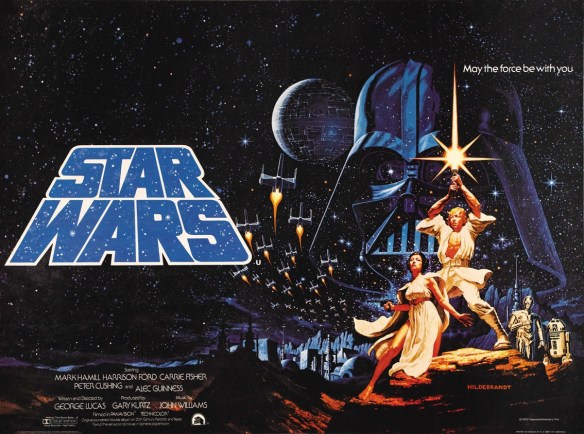
 4. Don’t forsake minor characters from the previous work. Many times the hero or heroine is not the one a reader favors most. Thus, they may be disappointed or downright angry when a subsequent volume excludes him, her or even it. The character may have less emphasis that in the previous episode, but at least allow him/her/it a cameo appearance from time to time or explain their absence. For example, consider R2D2 and C3PO from Star Wars. They were part of the team and you expected them to hang around. In some cases, minor characters can provide a bridge to new major characters as well.
5. Cliffhangers: Pros and Cons. The ideal cliffhanger will make your reader want desperately to know what happens next and thus immediately buy the next book. On the other hand, they might be annoyed, feel cheated, and move on to more self-contained novels. Readers’ tastes vary tremendously, not only with regard to genre, but length. Some may be too ADHD to make it through a full length novel much less trilogy while others thrive on something they can get their teeth into. If you’re writing a serial, then you can always hope for fans like those who loved Harry Potter so much they’d stand in long lines at book stores awaiting the release of the next episode.
A cliffhanger that leaves one or more characters in dire straits with no obvious way out can be particularly annoying, especially if the sequel isn’t written yet! If the reader has to wait for months or longer for the sequel, you run a huge risk of losing them along the way. No matter how much they loved your story, once that time has passed there’s a good chance they will have all but forgotten it. Of course this is why you want to engage your readers, get them on your mailing list, tease them with excerpts on your Facebook page and so forth. If you have a great following, this may not be that much of a problem, but if you’re a new author it could be.
 However, for reader satisfaction, it’s often a good idea to at least provide some semblance of closure for the book at hand while leaving enough unanswered questions to entice them to continue on. Don’t drop them like a bad habit in the middle of an adrenaline rush. Put yourself in the reader’s place for a moment and consider how you react to such an ending. I think doing so may be fun for the author but painful for the reader. Maybe evoking an emotional reaction will make your book more memorable, but if it’s anger they may not come back. I always rank a book that can make me laugh or cry higher than those that don’t elicit a reaction. Emotional reactions stay in your heart (literally) as opposed to your head and thus will make your story more memorable, but it’s better to do this via lovable characters than irritating endings. I can still remember books I read decades ago that made me cry or laugh.
I’ve read the first volume of numerous stories, yet never made it to the sequel for several. Sometimes it’s simply a matter of time. As an author I do a lot of reading, editing and beta-reading for my peers which means I often don’t have the time to read something just because I want to know what happens. I have time for very little of what I would call “recreational reading.” How much I care about the characters is a big driver on whether I make it back for a sequel, but I have to admit if the plot is intriguing enough, I’ll want to know what happens even if I’m not thoroughly attached to the people involved. Another factor is length. If the episodes are more in the novella range as opposed to making “Gone With the Wind” look like a beach read, I’m more likely to make the time to read on.
6. When your serial is complete, consider making it a box set. Once my tetralogy was complete, I made it into a box set for both the print and electronic versions. This can have grand appeal to those who favor lengthy stories and of course minimizes the cliffhanger dilemma. It also gives you another opportunity for a big release party! I’ve been more than pleased with how well Star Trails has done as a set compared to the individual books.
In conclusion, I must say there’s tremendous satisfaction in writing a serial. Your characters continue to flesh out and assume a life of their own, often to the point where they virtually write the story for you. Mine got themselves into a variety of fixes, many of which I had no idea how they could possibly be resolved, until my characters themselves came up with the answers on their own. I must say that wrapping it all up was bitter-sweet, yet satisfying.
 If you’re headed in the serial direction, or even just starting your first story, I highly recommend being a beta reader for other authors, which has taught me so much. We’re often blind to our own weaknesses until they glare at us from another’s work. I can’t begin to count how many times something has jumped out at me in someone else’s story, only to realize that I was guilty of the same faux pas.
Authors tend to be voracious readers, which is highly advised since it provides a wealth of information, if you but tune into it. This may take some of the enjoyment out of reading, but the writing lessons are worth it. One of my favorite sayings, No life is never wasted, you can always serve as a bad example, also applies to numerous works of fiction we’ve all encountered, especially in the Indie world where competent editing may be lacking. Needless to say, you don’t want your baby to be in that category. Ironically, there’s more to be learned from bad writing than that which is so well-written you’re entirely immersed in the story. Nonetheless, when you find yourself enjoying a book to that level, study it afterwards to determine why it worked so well.
I hope these tips garnered from my experience writing as well as reading the works of others will make your journey as a serial writer a little smoother.
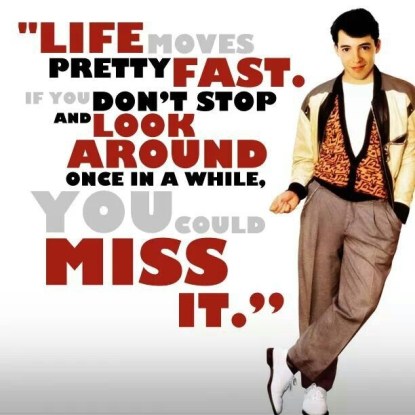 Perhaps Ferris Bueller said it best when he declared “Time moves pretty fast. If you don’t stop and look around once in a while, you could miss it.” That was in 1986, a mere 30 years ago. Matthew Broderick is no spring chicken these days, either.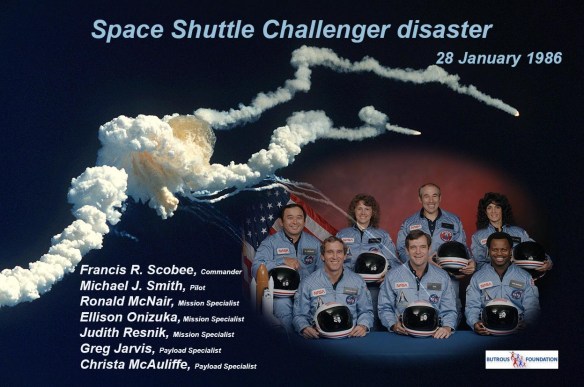
 As anyone who’s actually familiar with the accident knows, its official cause related to the o-rings in the solid rocket booster which didn’t seal, allowing hot gasses to strike and penetrate the external fuel tank, which resulted in a deadly explosion. A major contributor to o-ring failure was the fact the launch took place when the temperature at Cape Canaveral in Florida was a mere 28 degrees F. This had never before been attempted, Floridian temperatures usually far above that range, even in January. This factor was illustrated dramatically by physicist Richard P. Feynman, a member of the investigation committee, by dropping an o-ring in a glass of ice water to demonstrate how they became brittle and incapable of performing their function at low temperatures.
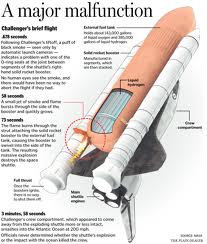 O-ring failure was a catastrophic hazard and documented as such. That the design was faulty was likewise known. Engineers had seen leakage on previous flights. Let that sink in for a moment. O-ring failure had happened before. However, earlier instances had not caused an accident. This resulted in a very dangerous and ultimately fatal thought pattern that led them to believe that perhaps it wasn’t as serious as they thought. Previous failures had been investigated, the leakage referred to as “blow-by” and eventually accepted as not a safety issue.
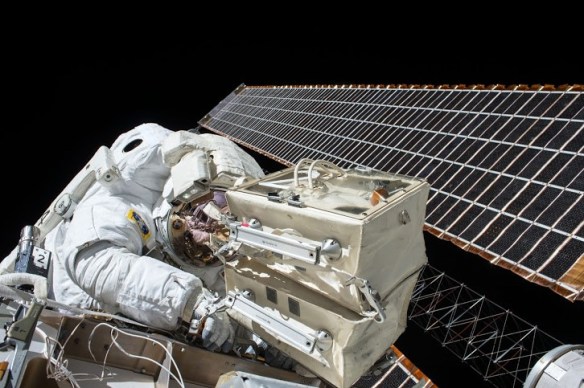



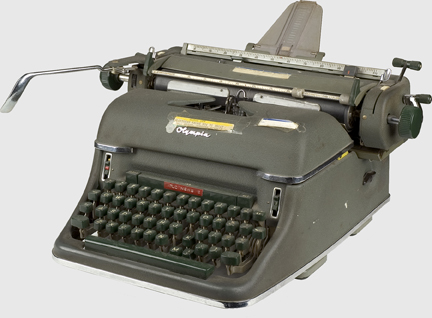 I’m old enough that I grew up without all these electronic gadgets. We babyboomers wrote letters with a pen or possibly a typewriter. My first two novels were written on a typewriter! Phones were landlines, long-distance calls expensive and rarely made except for emergencies. TV reception was via antenna to local stations with network affiliations. I remember when the idea of “pay TV” first came up and how controversial it was. My father refused to own a car with an automatic transmission, power steering or power brakes because they were beyond his skills as a mechanic to repair. Today’s new cars have electronic systems to rival a 747!
 It doesn’t hurt to give it some thought once in a while and put your lifestyle in the proper perspective, especially if you spend a large part of your life on the computer or watching television. If nothing else, it helps you appreciate those everyday luxuries a little bit more. All it would take is a huge solar flare or an EMP (electro-magnetic pulse) courtesy of some hostile country or group and it’s over. Ka-boom! China, North Korea, Russia, ISIS…

![Pageflex Persona [document: PRS0000039_00005]](https://my-2-cents-worth.blog/wp-content/uploads/2015/12/thyronnewfront150ppi.jpg?w=220&h=331)

 Numerous shoppers saw the drama in progress, some trying to help (but didn’t), others voicing our own thoughts of what kind of a horrible person would drop off a kitten in such a hazardous place. There are numerous no-kill shelters in the area making this strategy for getting rid of an unwanted animal entirely unacceptable.
 It didn’t take long before our young heroine stood up triumphantly, kitten in hand. She cuddled it to her bosom and joined us, allowing us finally to pet the little kitty who had caused such a stir. She looked like she was probably about three months old. It was November. The kitten was probably also a Leo. Coincidence? Of course not. There’s no such thing.
 Heike asked her if she would keep it and she assured us she would, that their cat had recently disappeared and her mother would know what to do to take care of it. With heartfelt gratitude we praised her efforts and compassion then at long last headed home, knowing one discarded kitten would have a warm bed that night.
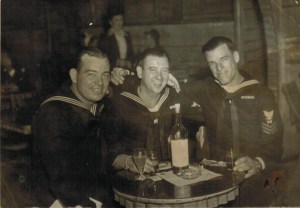 Oakland, California on February 8, 1944.
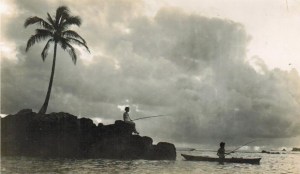 impacted by the war with Japan. Islands populated by those embracing a primitive life style who probably had no comprehension of why their peaceful lives were suddenly disrupted by the U.S. military. The little boy with the pig, the children with the old woman holding a baby, all tell a story.
 My father came home from the war alive and in one piece, which was more than thousands could say. I don’t know which island the cemetery below happens to be but it, too, tells a story. How anonymous all those white crosses seem, yet each represents a son, husband and/or father who never made it home.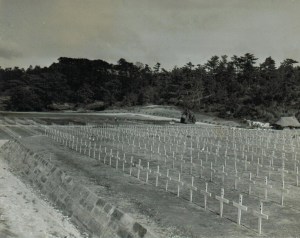
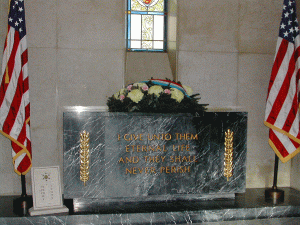
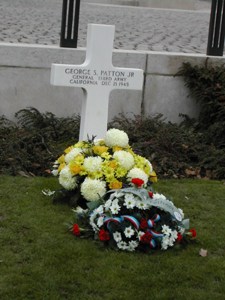 It was touching to see how much the Europeans appreciated our service. Every year on Veteran’s Day the government of Luxembourg honors General George S. Patton by placing flowers on his grave. There were several monuments of thanks erected to the U.S. Military as well, such as the one shown below, also in Luxembourg.
 WWII, nothing about Korea, even as we were stepping into the Vietnam conflict. No wonder everyone thought history was boring. It had no relevance to our lives. No wonder Baby Boomers rebelled.
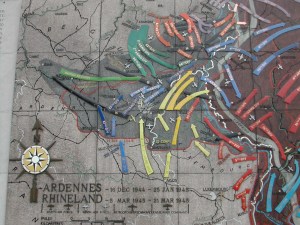 world needs to be imposed on others. In some cases resources or land plays a part, another symptom of greed that demonstrates a total lack of regard or respect for others. People will obviously fight for what they believe in or if someone else wants to take something away that they value. No one wants to be forced to believe something with which they don’t agree. And I must admit that though I like to consider myself a pacifist, if
  someone suggested eliminating all those who want to take away my freedom, property or anything else, I’d be cheering them on. Like Bill Pullman said so eloquently in the movie Independence Day, “Nuke the bastards!” I believe we should live and let live, but ironically that only applies to those who share that belief. So I suppose I’m not that much different than anyone else.
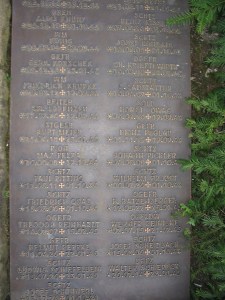 and destruction. On that Veterans’ Day in 2004 that I spent in Europe we also visited German cemeteries.
  Hitler’s obsession didn’t only kill those he murdered in concentration camps. Untold numbers of his own people also died. Soldiers fighting for what they were forced to believe in or die as well. Were they any less victims of a tyrant?
 I suppose my generation’s war was Vietnam. There have been several since, mostly in the Middle East. While both World Wars focused on political ideologies, too many since have born shades of President Dwight D. Eisenhower’s warning regarding the military-industrial complex. Wars are expensive which means they’re profitable to certain industries. Bullets, rifles, uniforms, airplanes, tanks and so forth cost money. Big money, which benefits those who have no regard for their fellow citizens, particularly the upcoming generation who are inducted into the military and sacrificed on the altar of greed. Fighting to defend one’s freedom is one thing; getting involved in a foreign war to make money for a chosen few is quite another.
