Unknown's avatar

About Marcha's Two-Cents Worth

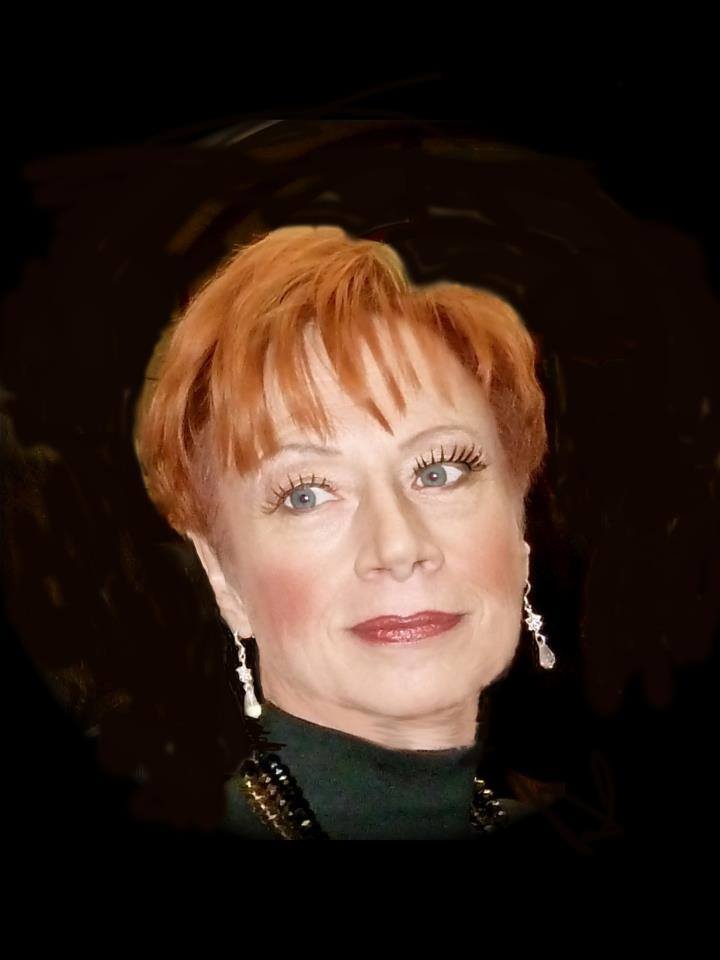
I'm a science fiction author of the Star Trails Tetralogy, retired after two decades working at NASA, defected from my physics training to become a professional astrologer, and various other acts of rebellion. More recently, I've teamed with Pete Risingsun in writing "The Curse of Dead Horse Canyon: Cheyenne Spirits" which was released in July 2020 with all three books in the trilogy now complete. Check them out at https://dead-horse-canyon.com.

SciFi Author Marcha Fox – Interview on The Dawn of Shades Radio Show

Many thanks to Ceri for the awesome review and plug for my interview!

Ceri London's avatarCeri London's Blog, Science Fiction Author

Marcha Fox, science fiction author of the Star Trails Tetralogy and former NASA engineer based at Johnson Space Center in Houston, Texas, not only knows her science, she writes a beautiful story.

I have been Marcha 5cropcaptivated by Marcha’s book Beyond The Hidden Sky, the first volume in her wonderful Star Trails series, and my review follows below.

Even better, you can hear all about Marcha’s work from the author herself as she is being interviewed tonight by Gia Scott on the radio show The Dawn Of Shades.

The show goes out 8.00 pm to 10.00 pm Central Daylight Time on the 30th September 2014. If you can’t catch it live, the show is available FREE through its archives. Marcha is a wonderful author with a fascinating life story and hearing her talk live will be a treat for all those sci-fi fans who love their hard science.

My Review of: Beyond the…

View original post 301 more words

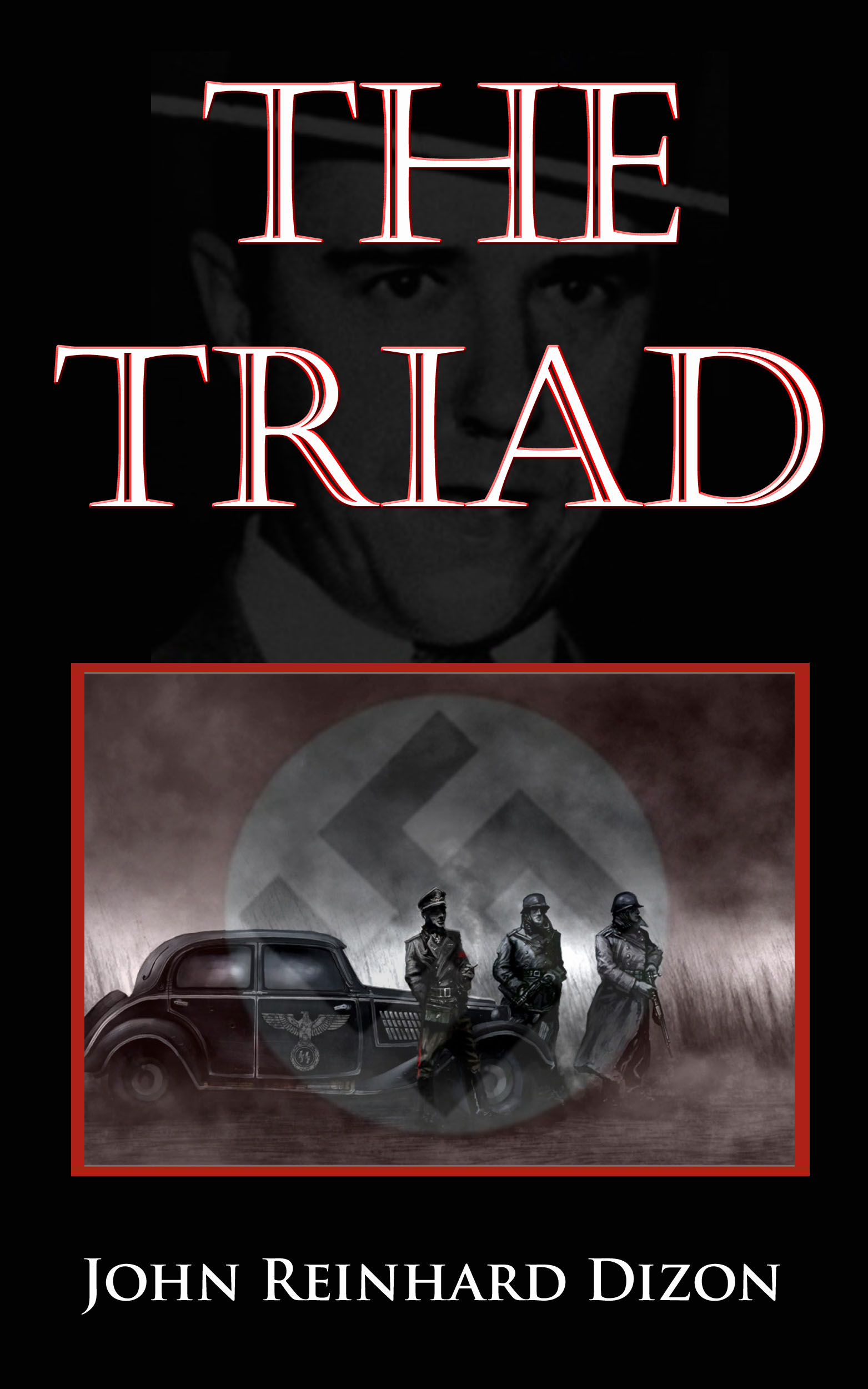
THE TRIAD: An Action-Packed Slice of Pre-WWII History

TheTriadCover1 copy

The period leading up to the USA’s involvement in WWII is often overshadowed by the war itself and its explosive ending. Wars don’t suddenly erupt, however, but evolve gradually as various events transpire that lead in that direction. This exciting story is based on covert plans by the Axis powers to weaken USA leadership by assassinating key individuals and thus lessen the chance of US involvement which would hinder their likelihood of success. Their assassination squad dubbed “The Triad” has targeted Harry Truman, Dwight Eisenhower and Franklin Roosevelt. Aware of the threat, the FBI brings in Alvin Karpis, a mobster stashed away for the long-haul on Alcatraz, to assist in return for his parole. He insists on some cronies enjoying a similar benefit, which is agreed upon, and the chase begins.

Author John Reinhard Dizon’s action-packed story illustrates the connections mobsters maintain and their ability to orchestrate elaborate plans. Its fast pace never lets up, assuring a breathless dash from coast to coast as Karpis et al accomplish their mission, leaving you wondering at the conclusion just how sane Karpis really was given the fine line between genius and insanity.

BUY LINK TO AMAZON

CONNECT WITH AUTHOR JOHN REINHARD DIZON

Facebook: https://www.facebook.com/johnreinharddizonUSA

Amazon Author Page: http://www.amazon.com/John-Reinhard-Dizon/e/B00DU9JNUQ/

Twitter: https://twitter.com/JohnRDizon

INDIE WRITING TIPS: The Final Edit – How are your IDEAS presented?

rules4writers

Most writers have a propensity toward one particular element of fiction writing more than others. Some can spew action and dialog effortlessly, others render amazing descriptions which create vivid, memorable mental pictures, while others possess a narrative style as smooth as silk. What comes naturally and easily, however, is not necessarily enough to round out your story. What you want to achieve for the best possible impact and reader satisfaction is balance.
I’m one of those who finds action and dialog the easiest to write. If I can get my characters talking they will often take over the story and leave me as the observer, essentially taking dictation. Piece of cake. But talk alone does not a novel make. While I don’t want to interrupt the flow when I’m on a roll (or perhaps in this case, role) at some point I need to go back and fill in the blanks, sometimes multiple times, as I review each chapter for the proper balance. What do I look for? I remember them with the acronym IDEAS.

I = Imagery
D = Dialog
E = Emotion
A = Action
S = Suspense

IMAGERY

Stories don’t take place in a vacuum. They need to be grounded with a sense of place whether it’s the distant past, present, faraway future or any geographical location you can think of. Furthermore, modern culture is visually oriented, making this a critical element. Drawing in your readers so they can see the story in their mind is essential.

Descriptions don’t need to be long; you don’t want to run the risk of being verbose and, heaven forbid, boring. If your story is set in a familiar place like a well-known city, mentioning specific landmarks is an easy way to create a sense of place. Historical novels require enough description to take the reader back in time. Include plenty of reminders to differentiate life then to now. For example, your character from 1840 can’t text via i-phone, it will need to go via Pony Express or private messenger which could take weeks or months to arrive. Emphasizing challenges we no longer face in modern times helps convey the reader to that time and place.

Remember that imagery includes all the senses, not just vision. Sounds, scents, touch and taste all bring strong impressions as well. Think of things which are familiar to most readers such as the sound or smell of rain, colors and smell of autumn leaves, the crisp chill of the first frost, the sounds of summer whether kids playing in a pool or cicadas, or even the din of city traffic. The more senses you can call upon the more memorable and vivid your description will be.

DIALOG

Dialog moves a story along quickly as long as the conversation is relevant. This applies to not only the story’s plot but character development as well. You can often fit other descriptions into your dialog such as the character’s expression, body language and so forth, even things like the color of their hair or eyes.

Straight dialog with no break can get tedious as well unless it’s an extremely intense conversation and even then some description can make it even stronger. Tone of voice, e.g. angry, sad, cheerful, etc., or how you would describe the actual sound of their voice contribute to your means of character development. A simple statement like “his voice cracked with emotion” sends auditory as well as emotional input.

EMOTION

If you don’t grab your readers emotionally they are less likely to remember your story. Like they say, people won’t remember what you say but they’ll remember how you make them feel. Without it your story is essentially lifeless. Life is all about emotions and if there aren’t any in your story then you may not have a story, at least not one that anyone will connect to and remember. You may have felt it when you wrote it but will your reader?

Of course you don’t want to get all sappy, sticky and sentimental, either. This is where showing as opposed to telling comes in. “She felt sad” is pretty shallow compared to “her heart ached with loneliness.” Think of the physical symptoms typical of the feeling you want to describe and start there. The heart is the center of emotion and is a good place to start. Memories are stored in the heart as well as your brain which has been proven through the experience of heart transplant patients who suddenly acquire habits and other characteristics of the donor, such as their favorite food. This further shows why making your readers feel something is important. Laughing and crying represent two reactions which will make you and your story memorable. As a reader myself if a book can make me do both it’s a definite winner. I remember books I read years ago because they made me laugh or cry, even if I can’t remember exactly why.

This can be something that’s not as easy to include as action and dialog. As you’re writing you’re no doubt thinking of the relevant emotion but don’t take it for granted your readers will feel it unless it’s pointed out, preferably in a smooth, integrated way that is informative but not distracting. Clearly if someone is yelling and saying harsh words then anger is obvious but throwing in a few physical effects drives it home.

If this is difficult for you I suggest you take each of your characters and list the emotions that he or she will experience during the course of your story. Then, one by one, make a few notes of how you can bring them to life.

ACTION

Action can occur on various levels. It can be physical, mental, psychological, or emotional. It’s what moves your story along its intended plot line(s) and keeps your readers engaged and turning the pages. What are your characters doing? What is going on around them causing them to make decisions and take action? Something needs to be happening. Similar to emotion, the more types of action you include the better. Some genres will emphasize one more than others but including the entire spectrum gives your story more layers and complexity. What are they doing, thinking and feeling?

Physical action sequences shouldn’t be interrupted with long periods of internal dialog. If your hero is in the middle of fighting the antagonist or a dragon the description of the battle itself is of prime importance but this includes what your character is experiencing such as straining muscles, the impact of a punch, fatigue, fury, fear, etc. Don’t forget to throw in the other senses as well for added emphasis, e.g. the smell of blood and sweat.

SUSPENSE

Some authors have a natural flair for suspense which is often the single most important factor in writing a real page-turner. If your readers don’t wonder much less care what’s going to happen next then they’ll probably never finish your story. You want to keep them wondering how your character is going to get out of his current dilemma.

Even stories which aren’t technically in the suspense genre need it. The type simply differs depending on whether it’s a romance novel, a psychological thriller, murder mystery or any other fiction genre you care to name. There needs to be some sort of danger hanging over your character’s head which could drop at any time.

Don’t keep your readers in the dark and spring something on them out of the blue. You can actually build more suspense by telling them more about the looming threat versus not enough. Sprinkle a generous portion of clues and red herrings throughout to keep them guessing, regardless of genre. Your goal should be to master the art of writing a book your readers can’t stand to put down.

CONCLUSION

The purpose of this blog is not to tell you how but rather provide a simple checklist for when you do that dreaded final edit. While every chapter may not include all of these elements, the more you can fit in the better. Improving your craft requires stretching beyond what comes naturally and polishing it to perfection.

[NOTE:– If you have a favorite author who does a particularly outstanding job in any of these categories feel free to mention them as well as their books as examples for us all to learn from.]

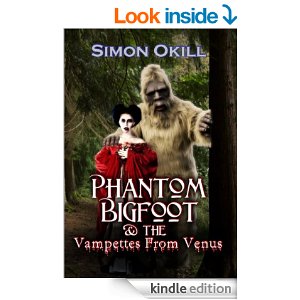
PHANTOM BIGFOOT & THE VAMPETTES FROM VENUS: Another Raunchy, Ridiculous Uproarious Ride Thru Big Beaver

vampettescover

In the worthy tradition of the first book of the Phantom Bigfoot series, this one did an excellent job sustaining the action and tacky humor. Not that I have anything against tacky humor because I certainly enjoyed it and laughed as much as before. It was as if the author was just getting warmed up in the first episode. One thing I do want to mention, however, is that before you read this or any subsequent ones you should start with “Phantom Bigfoot Strikes Again.” What makes these stories so endearing is the array of characters which populate them, making it more enjoyable if you start at the beginning and thus have all the context. Otherwise some of the jokes and references won’t make as much sense and you’ll miss out on some of the humor and innuendos which become inside jokes for Phantom Bigfoot fans.

The author does an admirable job developing real and convincing characters which make you feel as if you’re a part of this crazy little California town called Big Beaver. Their personalities are well drawn such that I can now see and hear (and in some cases smell) them in my mind. You would think that outrageous bathroom humor would not include excellent character development yet it does, adding significantly to the story. Consider how much the personality of the characters in various funny movies is inherently tied to the situations whether it’s Dr. Venkman in “Ghostbusters,” Otto in “A Fish Called Wanda,” Frank the Tank in “Old School” or Alan in “The Hangover.” Humor most often results from human action and reaction which is driven by personality, making those involved essential to the story’s delivery. In this, Okill succeeds and therefore gets a “high five.”

There were some parts which actually got a little serious. Not horribly or tragically so, but rather enough to induce a bit of worry that one of the main characters may have lost some of his “edge.” Fortunately, this spell did not last long and by the horrendously disgusting and suitably hilarious grand finale I must say that this sequel matched and possibly exceeded the Funny Factor of the first, a major accomplishment in itself.

If you enjoy old Indian wisdom that declares “man who depends on watch will be late for the rest of his life;” descriptions such as “the Bigfoot had large swinging boobs indicating she was a female”; or bits of scientific truth such as “the human fart is pure methane gas” then you’ll enjoy this book. Indeed the final chapter is a piece of work beyond description that had me laughing so hard my cats left the room, apparently thinking I’d lost my mind. I’d love to share some excerpts which have the potential to become classics but don’t want to be accused of being a spoiler. If you’ve made it through this review without being grossed out then you should read this book. Laughter is truly the best medicine.

PHANTOM BIGFOOT STRIKES AGAIN: Silly, stupid, sophomoric and outrageously hilarious

If you’re looking for an intelligent read, rest assured this ain’t it, though the cover should provide adequate warning. I would place this story in the same genre as “Dumb and Dumber” and (for those of you old enough to remember) “Wayne’s World” or perhaps various National Lampoon stories. It could also be considered an R-rated Scooby-Doo. And this is a compliment.

This story definitely appeals to your inner adolescent. It’s loaded with bathroom humor, sex innuendos, and a sprinkling of bad language which is actually no worse than a typical day on Facebook. The action takes place in a small town in the Pacific Northwest called Big Beaver. As an example of what to expect, this illustrious location has a hair salon called Colette’s Head Job and a female heavy metal band known as the Crap Suzettes. A typical practical joke consists of altering the town’s welcome sign to read, “Welcome to Big Shaved Beaver.”

As typical of such towns, it’s loaded with an assortment of characters. The main character, Duane, is a wealthy yet scruffy hippie type who lives with his father in a cabin deep in the forest. To quote the book, “…not that Duane gave two flying fartolas what anyone thought about his appearance.” The local Native American known as Chief Mocking Bird and nicknamed MB spews Indian wisdom including gems such as, “Man who does a lot of guessing usually guesses wrong” and “Man who always knows what’s around the next corner is one dull dude.” Another character, Walt Bruger, claims to have been abducted by aliens from the planet Abba who were “Swedish-like” in appearance and “modeled the rooms of their spaceship from an IKEA catalogue.” Walt is the town plumber who dresses in a “…professional-looking, dark brown jumpsuit with ‘No dump is too big for a Bruger’ emblazoned on his back in luminous lime green.”

I warned you that it wasn’t intelligent.

The town is being bothered by a rash of incidents perpetrated by a “Phantom Bigfoot Bather” who goes into various residents’ homes and supposedly takes a shower, leaving behind a significant quantity of unidentifiable hair, a horrific stink and typically a donut or other pastry on the toilet seat, which the local sheriff is trying to solve. As if this isn’t enough trouble for female Sheriff Lou, Beau Bruger, son of the illustrious plumber, disappears and the FBI is eventually called in, a duo which comprises none other than her high school sweetheart, the “heartless bastard” who left without saying goodbye. Of course there are some genuine Bigfoot characters involved as well, particularly Zola, a young specimen who’s hopelessly in “wuv” with a human, a definite no-no and of course there is the obligatory paranormal twist. There are subplots galore which bring this story to its full potential of hilarity.

I honestly can’t remember when I’ve laughed out loud more reading a novel; the last book that made me laugh even close to this much was “Bimbos of the Death Sun.”  I thoroughly enjoyed it as a great break from more serious works depicting murder, mayhem, vampires and various other sad or tense situations. If you enjoy this type of humor I highly recommend it. Furthermore, if you know a teenager who’s not interested in anything other than video games and you want to get him (or her) to try reading for a change this would be a great place to start.  While it’s dubbed as Young Adult anyone who’s young at heart and doesn’t take life too seriously should enjoy it.

Fortunately, this hilarious story is a series with numerous other episodes to come which I look forward to reading. It had a very favorable effect on my blood pressure, at least more than anything besides reading that I can mention here.

phantonbigfootcover

http://www.amazon.com/Phantom-Bigfoot-Strikes-Again-Book-ebook/dp/B00H5Y2AWU/

Tips for Indie Writers: Creating Star Characters

10101220_ml

Character development can be a challenge. No one wants to be accused of having “cardboard characters” in their story but if you’re a writer who is oriented toward action and dialog you run that risk more than others. If you’re writing a screenplay then of course the actor will add the personality factor but as a novelist you aren’t that lucky; it’s up to you. As one of those action/dialog types myself, oddly enough I discovered this technique somewhat by accident.

I was writing a science fiction novel with a physicist protagonist (of course) and wanted to make his ex-wife as annoying as possible so I made her obsessed with astrology. At the time I didn’t believe in it myself so needed to do some research in order to develop the character. I found a copy of Linda Goodman’s Sun Signs in a used bookstore for 25c and the rest is history.

Why? Because I discovered that astrology works, a revelation that ultimately led to me defying my physics training by becoming a professional astrologer. But I digress.

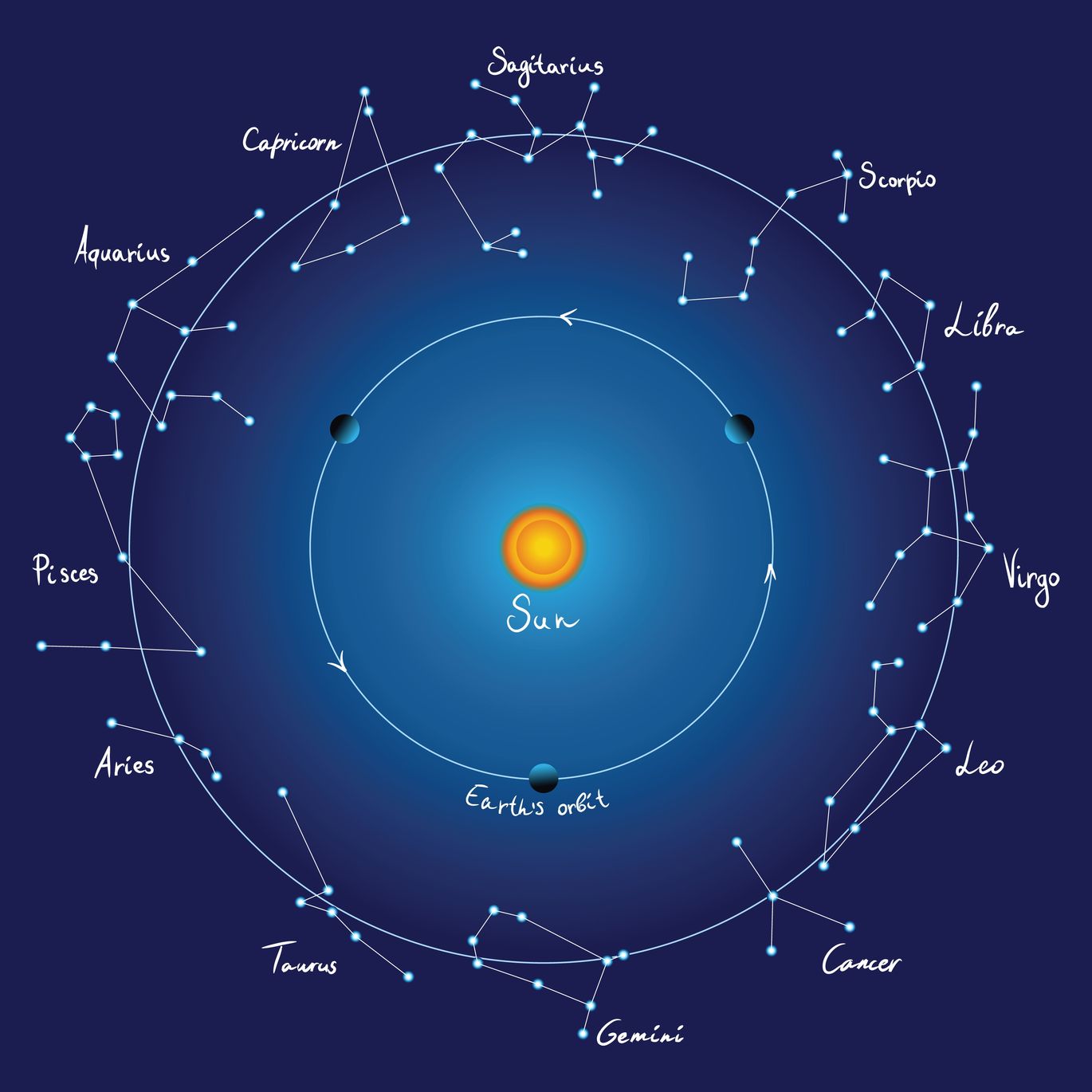
Astrology works for developing characters because it provides a template for twelve different personality types. You can break them down into various other categories as well which might make it easier to narrow down the sign you want. Before I forget, do pick up a copy of Linda Goodman’s Sun Signs if you can. There were literally millions in print so they’re still out there. Another resource is my website, www.valkyrieastrology.com, where you can find a short description of the signs as well. But if you’re new to astrology (other that possibly knowing your own), you can start with the elements, Fire, Earth, Air and Water.

The Elements

Fire

Fire signs are just that, fiery, and tend to draw attention to themselves, sometimes purposely, sometimes not. They represent the creative life force, have lots of energy, tend to be outgoing and be fully engaged in life. Fire signs include Aries, Leo and Sagittarius.

Earth

Earth signs are just that as well, down to Earth. They are realists, practical and responsible with a fair dose of common sense which can make them a bit judgmental and opinionated. Earth signs include Taurus, Virgo and Capricorn.

Air

Air signs are, you guessed it, full of air. These are the talkers. They’re excellent communicators and excel at conveying information. They’re mentally active and process data quickly. They’re likely to tell it like it is. Air signs include Gemini, Libra and Aquarius.

Water

Water signs are the most emotional. They feel things deeply, have long memories, and may ebb and flow according to what they’re feeling at the time. Water signs include Cancer, Scorpio and Pisces.

While with signs in the same element tend to get along, some elements are more compatible than others. Bear this in mind with character development if you want to factor in conflict. This is easy to remember because it no doubt originated as an analogy to nature.

Fire can’t burn without air; Fire and Air signs tend to get along. Earth stabilizes water and water nourishes the Earth. Conversely, Fire and Water aren’t a very good combination while Earth and Air isn’t, either. You might enjoy the section of my website where I had some fun in a figurative sense with these elemental interactions. You can find it here: http://www.valkyrieastrology.com/Makeover/Compatibility/elementalinteractions/figurativeelementalinteraction.htm

If you write romances then compatibility is particularly important. If you want a real short description of how two characters will interact at the most fundamental level you can check that out on my Compatibility Central page here: http://www.valkyrieastrology.com/Makeover/Compatibility/CompatibilityMain.htm

Just because signs are not compatible with one another at the elemental level does not mean they can’t fall in love! Quite the contrary! It gets far too complicated for me to go into here but as you’ve probably noticed attraction is not necessarily related to whether people naturally get along. And yes, opposites definitely can attract. If you already have a basic character profile for your hero or heroine and decide which Sun Sign he or she should be, they you could purposely choose one that is not compatible for the other to build the conflict any good story requires.

The Modalities

Another astrological division lies with whether a sign is considered Cardinal, Fixed or Mutable. Each of these categories will have a sign from each of the four elements. Cardinal signs are inclined to take action, the movers and shakers, though each sign has its own style. Fixed signs, as you can guess, don’t like change and are often opinionated; what you see is what you get. Mutable signs are more likely to accept change though it will probably be the Cardinal signs that initiate it. Cardinal signs, however, may not finish things up once they get them kicked off; leave it to a Fixed sign to secure it in place while a Mutable sign will tweak it, sometimes to the point that it starts the cycle all over again.

While like elements tend to get along, the modalities do not; they are more likely to either butt heads or perhaps be indecisive and all over the proverbial map. Thus, this is another means for building conflict. This is probably most familiar as two strong-willed people with two different styles but both want to be in charge and/or don’t want to be told what to do.

Here’s the sign breakdown of the modalities:

Cardinal: Aries, Cancer, Libra and Capricorn

Fixed: Taurus, Leo, Scorpio and Aquarius

Mutable: Gemini, Virgo, Sagittarius and Pisces

Sun Signs

Once you decide upon the basic traits, then you can refine it by taking it down to the Sun Sign level. Here’s a very brief description of each one. You can find a more detailed somewhat tongue-in-cheek description here: http://www.valkyrieastrology.com/Makeover/signsalutes/zodiacsigns.htm

ARIES (Cardinal Fire)

~March 21 – April 20

Impatient, loves new activities, aggressive, impulsive, often poor money managers. Temper, reddish cast to hair. Quick to start projects but unlikely to complete them, needs excitement, warrior, hero.

TAURUS (Fixed Earth)

~April 21 – May 21

Steadfast, material security, determined, follows through, like land, plants, gardening & nature. Opinionated, love food, often great chefs, value money and fine things. Can be frugal to the point of being stingy, can be stubborn.

GEMINI (Mutable Air)

~May 22 – June 21

Quick minded, tend to have two diverse ideas/drives in life. Many faceted or bored with life, good communicators, talkers, data gatherers. Love to learn and do so easily.

CANCER (Cardinal Water)

~June 22 – July 23

Sensitive, need emotional security, home is important, moody, need diversifications, creative.

LEO (Fixed Fire)

~July 24 – August 23

Promoters of the world; outgoing, generous, proud of families, home is often their base of operation. Need feedback, praise and attention, particularly enjoy applause; can be dramatic. Natural leaders. Temper, can be vicious if provoked.

VIRGO (Mutable Earth)

~August 24 – September 23

Perfectionists, detail and service-oriented, often go into a healthcare field. Color coordinators, worriers, clean, organized, nit-picky, often into health foods, vitamins, etc.

LIBRA (Cardinal Air)

~September 24 – October 23

Peacemakers, require fairness and justice, weigh both sides of an issue. They are drawn to beauty and harmony such as art and music. Don’t like to be alone; rather be in a bad relationship than none at all. Can be indecisive, change their mind, yet are generally logical.

SCORPIO (Fixed Water)

~October 24 – November 22

Intense, determined, need relaxation. Discriminating, jealous, magnetic, passionate, discerning, fascination with mysteries of life. No strong sense of morals unless instilled at an early age. Need strong direction; may soar or crawl in life. (Note: This sign rules sex, death obsession, power and control.)

SAGITTARIUS (Mutable Fire)

~November 23 – December 21

Happy, energetic, enthusiastic, limited goals. Tell it like it is, funny, non-conformists. Often philosophers, interested in education and religion, love foreign cultures and travel.

CAPRICORN (Cardinal Earth)

~December 22 – January 20

Serious about life, realistic, money managers/need financial security. Organizers, goal and status oriented, get things done. Traditional, conventional, can appear cold and hide emotions.

AQUARIUS (Fixed Air)

~January 21 – February 18

No mold, want to be different and usual are. Transmits ideas, often work in media. Can be impersonal, love world but no individuals. Often become politicians, ideas may be too soon for time, often don’t fit into family as the Bohemian type.

PISCES (Mutable Water)

~February 19 – March 20

Sensitive, artistic (dancers, musicians). Impressed with life, yet often seek to escape through transcending reality. Can fall into savior/martyr scenario. Strong imagination and intuition, may be a victim or victor in life. Dreamers, visionaries, live in another dimension. Can be prone to drug and alcohol as an escape mechanism as well as intense activities such as extreme sports. Living in the real world can be a challenge.

If your character is a combination then consider that besides a Sun Sign everyone also has a Moon Sign and what is called the ascendant which is the sign on the eastern horizon when they were born. The Sun represents your core; the Moon your emotional nature and the Ascendant the way you’re seen by others including your outward personality. Thus, these “big three” are the primary drivers within any individual. Thus, if a single sign doesn’t fill the bill you can go for three and create a more complex, realistic character, one who may have significant inner conflict as these influences war against one another.

Conclusion

This should give you something to work with if you ever get stuck defining a character. There are numerous templates out there where you fill in the person’s general likes and dislikes which often doesn’t round the character out sufficiently, particularly with regard to their motivation (or lack thereof). However, using what you have at that point can help you find their Sun Sign which will then provide a vast array of traits you can work with and exploit in your story. You can also take well-developed characters and figure out which combination they might be as practice. I have found this to be a valuable tool in character definition as well as an interesting and enjoyable profession.

In the context of this blog, yes, I have always had two careers which are currently writer and astrologer. I have to love what I do and feel it makes a difference. Where did that come from? My Moon Sign is Gemini. I have an eagle eye for editing (Virgo ascendant) and am goal-oriented (Capricorn Sun).

Content copyright © 2014 by Marcha Fox

Graphic Copyright: <a href=’http://www.123rf.com/profile_shooarts’>shooarts / 123RF Stock Photo</a>

Tips for Indie Writers: How to Create Your Own Book Trailer with Power Point

booksinboxBook trailers have become a popular means to draw attention to your book. The main advantage they have over other types of promotional material is their ability to include sound, specifically music. As I’m sure you’re aware, music can set a mood quicker than anything else and reaching a person at the emotional level helps prepare them to receive and accept your message. You can hire a professional to create a trailer for you or you can put one together yourself. If you have Microsoft Office then you should have Power Point which is the only software you need to create a simple but effective video trailer. Besides that you only need three things:

  1. Background picture
  2. Music
  3. Catchy phrase, quote or other hook

Yes, it really is that simple to get started. Don’t worry, I’m going to take you through the process, step by step.

Background Picture

This should be something that relates to your book. It shouldn’t be too busy, though, because that might distract from your written message. I would in most cases avoid people unless the focus is on that character alone. For your first one, keep it simple. If you try to get too fancy on your first try you’ll probably get frustrated and perhaps give up.

Using the background from your book cover is one option or even a generic photograph that relates to it in some way. For example, if your book is set in a specific city like New York, San Francisco, Chicago, St. Louis, Paris or some other easily recognizable skyline that will work. If it’s set in the country, a nice country landscape; near a beach, a nice oceanscape, etc. This is your first step toward creating a mood that fits the setting of your story. It should be a bit muted, however, so there is adequate contrast between it and your writing. Don’t worry if it’s not, however, because Power Point can help tone it down.

Music

For me this is the fun part. You’re probably thinking this would be a difficult, lengthy, daunting and potentially expensive task. WRONG! There is a website out there that is so perfect for this you’ll probably be as amazed as I was. Go to http://incompetech.com/music/ and click on the tab that says “Royalty Free Music.” Yes, it’s free! And it gets better. Click on the option “Full Search.“ What you find will blow your mind. On this page you can tell it exactly what you’re looking for by genre or even by “feel.” Make your choices, click “search” and it brings up a variety of choices which you can listen to there and download with a single click. If you like it, even if it doesn’t exactly fit the project you have in mind, save it for future use. I found so many I liked that it was actually difficult to choose which one to use.

If you love music like I do you may find yourself spending a whole lot of time on this page. Bear in mind the mood you want to set for your book and stick to that so you don’t get too overwhelmed. I would choose no more than a half dozen pieces to start with.

After you’ve downloaded your selections take the time to listen to them, start to finish. Take some notes on the timing of the song’s dynamics such as when it’s slow and quiet or loud and booming. More than likely the song is longer than your video is going to be so you’ll want to select the portion that drives your message home. Don’t worry about transitions, Power Point gives you options to fade in and out which I’ll get to later.

If you don’t feel like listening to it and taking notes that’s okay because there’s another option. When you get the song into Power Point you get a visual that gives you an idea what the music is doing. This little strip that looks like a graph gives you an idea where the quiet and loud places are so it can be used, too. And Power Point will also allow you to select a specific portion. You probably want to keep your video to around a minute long, not only due to people’s short attention spans but also to keep the file size under control.

Catchy Phrase, Quote or Other Hook

This could be the easiest or most difficult part. Some authors can spew out titles that have no story behind them while others can’t figure one out for their thousand page manuscript. As an author I have the most trouble with book blurbs. You know, those two or three paragraph descriptions you put out on Amazon describing your book. Some people are better at writing them than their novel, which may not meet the expectations set up in their blurb. Others are the opposite and can write a great book but a lousy blurb. Coming up with these zingers will thus be easier for some than others.

One place to start is the basic theme of your book. If you Tweet about your book many of those catch phrases are perfect! If you’re lost go to the Goodreads website which contains various little ads and trailers for ideas. If you’re an author then you’re creative by nature and these should provide enough fodder to get your creative juices flowing. Don’t worry if what you come up with sounds a little boring. When you combine it with the right music it will work!

Another thought to bear in mind is that, like poetry, you can leave words out for effect. Your message will be presented slowly with the help of all those other marvelous effects which allow the viewer to fill in the blanks. You don’t want it to be wordy. This is another case where less is more.

Putting it All Together

Okay, now you’re ready to roll and get to the fun part. I’m going to talk you through the process step by step so you don’t experience a learning curve akin to climbing Mount Everest.

1.  Open Power Point and select the first option, “Blank Presentation.”

2.  Go to the “Layout” drop arrow in the second box from the left and select “Blank.” I find it is easier to add a text box than mess with their standard layouts but you can use them if you like. Note that in that same little box with the “Layout” arrow is an option called “New Slide.” Remember that because that is how you add pages.

3.  Now click on the “Design” tab and go all the way to the right where it says “Format Background.” From the options that come up choose “Picture or Texture Fill.” You’ll see an option to choose a file. Go and find your background picture and add it. If it needs to be muted you can use the “Transparency” option on that same screen to tone it down. When you’re happy with it click the “Apply to All” button at the bottom, assuming you want the same background for the entire video. If not you will simply go through this same process to add the background to each slide.

4.  Click on the “Insert” tab in the menu bar and then the “Text Box” over toward the right. This is a click and drag feature to create a box where you will put, you guessed it, your text.

5.  Select your font next. Fonts are important and part of the “feel” of your video! Take some time to try out several until one simply grabs you. Avoid the fancy ones that distract from the message. This is another dimension of your message. If it’s bold and forceful, then choose an appropriate font. If it’s a soft and sweet message then use an appropriate font, perhaps one of the scripts. If it’s a horror or mystery story, see which one fits. Seriously, the font is important. It adds punch to your message. All of these elements combine to give the viewer more than information; you want it to be an experience! Choose the color just as carefully. Colors send messages as well with red forceful and aggressive, green a more relaxed impression, yellow demands attention and so forth. With a slightly dark background even white can be effective.

6.  Add your text. Don’t put too many words on each page. You want the words to sink in while the font and music further emphasize it. Make sure the font is big enough to read easily. In most cases the video is probably going to be viewed on Facebook or Goodreads which is not full screen so you need the letters to be big enough to still be readable when the video is shrunk down to a size not much bigger than a post-it note. There is probably some way to set a default font but I have not been able to find it. Thus, unless you can solve this mystery you’ll have to choose the font and size with each slide. If you figure this out I would love to hear back how to do it!

7.  A general guide for what to include is to say your piece, flash a picture of your book up there with the title, add another zinger, then conclude with where your book is available. If they remember your title they’ll be able to find it if you just mention Amazon, Barnes & Noble, Smashwords, CreateSpace or wherever. Links won’t work in a trailer.

8.  Now it’s time for the fun part, adding your music! To do that go back to your first slide, bring up the “Insert” box, then find where it says “Audio” all the way over to the right. Choose “Audio from my PC” in the dropdown and select your music file.

9.  Go to the top menu bar and select “Play in Background.” If you don’t you won’t be able to hear it.

10.  Select the “Fade Duration” menu box and add some time for the music to fade in and out. Start with around 5 seconds; you can always adjust it later.

11.  Estimate around 4 or 5 seconds for each slide to start, multiply that times your number of slides and figure out about how long your music clip needs to be. It’s good to start slowly and then speed it up as you get a better feel for the process.

12.  Now hit the “Trim Audio” button and that graph I mentioned earlier that represents the song’s dynamics will appear. You can now select where you want the music to begin and end. This is where your notes can come in handy but you can also adjust it by simply listening to it. If you like particular section that you want to loop and repeat it will do that. In fact, if your clip isn’t long enough for the timing to setup then the music will loop back to the beginning. Sometimes it takes quite a bit of practice to end the slideshow exactly when the music ends.

13.  Select “Slide Show” and then “Rehearse Timing.” Your slideshow will come up on the screen and you advance the slides with a click of the mouse. Try to click with the meter of the music. The stronger beat it has, the easier this is to accomplish. When you get to the end it will tell you how long the slideshow lasted and ask if you want to save it. If you do you can play it back with the button on the far left that says “From Beginning.” This will give you a feel for where you are so far. If you know you didn’t like it you can just go back to “Rehearse Timing” and do it again. You can start out slow as you get the hang of it but don’t want it to be so slow in the final version that it allows the viewer’s mind to wander. Right around a minute usually works.

14.  To go back and adjust the music, find the “Audio Tools” box highlighted along the top of the screen toward the right. “Playback” brings back the screen where you can adjust your fade in and out time as well as the clip itself with the “Trim” option. You want to time the crescendos with the statements you want to emphasize. The words need to bear some resemblance to the rhythm of the music. If the timbre of the music fits the words as if they are lyrics all the better. Don’t be surprised if this takes a substantial amount of tweaking until you’re satisfied. You may want to start out with a slow piece until you get the hang of things.  If the “Audio Tools” box at the top ever disappears you can bring it back by going to the first slide and clicking on the speaker icon.

15.  If you don’t like the audio and want to try another clip you need to delete the first one by highlighting and deleting the speaker icon with the “delete” key. Bear in mind you can add multiple soundtracks on top of each other if you want but that is once you become an expert. My point is if you don’t delete this one then both of them will play and it will sound weird to say the least. When you add another track you need to select “Play in Background” again. If you don’t hear anything, you forgot. During this stage you may come up with some editing ideas for your text as well. Note that after a heavy soundtrack silence is powerful as well for your ending. I suggest playing it back with a few different soundtracks and note how it changes the impact. Music with a good mixture of quiet and loud passages works well when you time them to add emphasis to key parts of the presentation. For example, when you show your book cover a big crescendo gives it extra punch.

16.  By this point you should have a very basic slide show. Now you get to have even more fun by adding special effects such as fading in the words and various other fun things. You can add multiple ones but they can also get confusing and mess up your timing when you rehearse since each effect will require a click of the mouse. Go to the first slide, highlight the words, and click “Animations.” Ignore all those symbols that pop up and go instead to the little box toward the right that says “Add Animation.” A big box will come up that shows all those cute symbols but now you can choose how the words come in, present, and leave. Toward the right on the menu bar you can decide how long each one should last. The one coming in will show in green and the exit effect will show in red. While you’re in editing mode the effects you add will show on the slides numbered in the order they occur. If you click on those little boxes it takes you to the screen where you can adjust the timing or change the effect.

17.  After you’ve added the effects you want for each statement, go back to “Slideshow” and rehearse your timing again. Note that you must click the mouse for each effect! For example, you will click to fade in, fade out and advance to the next slide, then click to initiate the first effect, etc. Be sure to allow each effect to finish before clicking. You may need to adjust the timing accordingly.

18.  During the slideshow rehearsal phase note the timer in the upper left-hand corner of the screen which tells you how long that slide has been up as well as the total time. Once you are happy with the timing you can use the total time to fine tune your music clip.

19.  I hope you’re familiar enough with working on a computer to realize you should have been saving along the way. Once it’s finished to your satisfaction you will not only save the final slideshow but you will also do a “Save As” which will convert it to a video. You can save it in either mp4 or wmv format. I do both since some applications prefer one or the other. It will ask you about embedding the music when you save it as a video. Be sure to do this or your sound won’t be there.

20.  Posting to Facebook is as simple as posting the YouTube link. To include your masterpiece on your Goodreads author site you first need to post it to YouTube. After you’ve accomplished that, you will click the “share” button, then the “Embed” option (check the box for the old code) and use that on Goodreads. YouTube will also give you a URL link to your video which you can use wherever you like. For your website you can either link directly to the file you created so it can be viewed there or link to YouTube. Browsers differ in their ability to display them so it’s a good idea to do both. YouTube allows you to choose which slide to show as the thumbnail. If you’re good at html programming or have a professional webmaster they can probably spiff it up.

Here are links to some of the ones I’ve created. I’m still learning as well and look forward to checking out the various other effects Power Point offers. As I get more experienced I’ll probably redo these but these will give you the idea.  I find this creative outlet a lot of fun as a break from writing and another wonderful way to showcase your work to the world. Since most of the authors I know are on a budget it can also save you a few promotional bucks to use somewhere else.

(These links were updated March 2017)

Beyond the Hidden Sky: https://youtu.be/zt7qgTWZFW4

A Dark of Endless Days: https://youtu.be/2xcJrWrJ_nU

A Psilent Place Below: https://youtu.be/-t4NYVBe6FM

Refractions of Frozen Time: https://youtu.be/DMuT0JZu7Os

Entire Tetralogy: https://youtu.be/MsTrKf_66ak

(Coming Spring 2017) The Terra Debacle: Prisoners at Area 51: https://youtu.be/Ti4l88V7Y58

Dizon’s “Stxeamtown” Elevates Steampunk to its Best Satirical Potential

“Stxeamtown” by John Reinhold Dizon was my introduction to the “steampunk” genre which I didn’t even realize existed at the time.  I saw it as a hilarious satire, which apparently is the intent of the genre generally.  This particular book operates on so many levels that it can only be compared to such works as “The Wizard of Oz,” “Alice in Wonderland” and Orwell’s “Animal Farm.”  Readers of all ages can enjoy its genius though if you choose to read it as a bedtime story your young children may not understand why you laugh uproariously from time to time.

This brilliant satire creates a vivid post-apocalyptic world in which the few survivors following the “Big Bang” form a variety of societies.  The teenage protagonist is Trip Nortel, short for Amitriptylene, his name credited to the custom of finding baby’s names in pre-Big Bang formulary volumes.  Trip is an Abovegrounder, a subculture that lives on the rooftops unbeknownst to the Grounders below due to a perpetual cloud of water vapor that obscures visibility; steam is the primary power source, having been rediscovered following the Big Bang.  Abovegrounders are held to strict rules, including the need to be obsequious toward tyrannical “young-uns” by meeting their every demand.  Those who don’t follow the rules are “crossed-out,” i.e. given a lobotomy, and sent to the ground below.  Those who don’t make trouble don’t fare much better since upon reaching the ripe old age of 30 they, too, are banished.  The rules are enforced by Big Boys who maintain limited contact with Traders below.

Trip falls in love with Lyrica, another Abovegrounder who lives on a different rooftop.  She’s not only beautiful but wears stitched clothing rather than the wraps worn by most of the others. The two exchange Morse code messages in which they express their affection and finally the day comes that Trip finds his way to Lyrica and the pair makes a precarious escape to the ground, some rooftop friends subsequently joining them.

Once amongst the Grounders, Trip immediately connects with influential people who advise, “He who moves the most paper is the one who goes farthest ahead.”  He’s quickly dressed in stitched clothing like the others in styles reminiscent of Dr. Seuss’ world of fantasy.  Eager to learn, he soon finds himself elevated to the upper echelons of society.  The hero and his girl are instrumental in instituting numerous changes, including starting a school system to educate the Idiots, i.e. those “crossed-out” and cast from the rooftops, so they can reach their full potential.  Things get more complicated as their Abovegrounder friends lament receiving unequal benefit from Trip’s influence and stir up trouble by associating with the Traders Guild and the Society of Black Beards who enjoy strong drink. The complications of the culture clash that follows are ultimately solved and of course everyone lives happily ever after.

While this tale is presented in a style similar to the best of fairy tales, more sophisticated readers will be greatly entertained by recognizing the allegorical themes running throughout the surprisingly intricate plot, colorful characters and their societal predicaments.  Dizon’s dry wit is only matched by his genius in creating this must-read allegorical tale that bears a striking resemblance to the world in which we live.

“As Snow Falls” by Elle Klass — A Simply Beautiful Story with a Deeply Profound Message

new cover 2

First of all, this is an excellent model for anyone who would aspire to write a personal history. The story’s easy and sometimes random flow of reminiscing demonstrates the simple memories and events which make a person come alive. It’s the daily routine from which we evolve even though the unusual experiences often change the course of our lives. As far as I recall, the woman whose life is recounted never gives her name, yet oddly enough this anonymity served to personalize it even more.

This story’s rendering is as unique as its enigmatic cover, which fits perfectly as you journey through the memoirs of a woman who has experienced the kind of life most of us would want; one with loving parents, kind siblings, faithful spouses and children who honor their parents. On the surface this could be considered too idealistic and even be a put-off to readers who have experienced divorce, abuse or perhaps harbor bitterness toward past events as well as anyone who sees it solely on the superficial level. On another more spiritual level it’s an effective allegory for what each of us may experience when the time comes as viewed through one woman’s life as it parades before her while she lingers at death’s door. Of course the season is winter, so often used as an analogy for the declining years and end of life, an archetype which operates at the subconscious level and makes the message more powerful.

I suppose this book hit home for me not only because I am now a retiree looking back on my life but also as someone who was raised in a family which gave even the Bunkers and Bundys some level of appeal. My upbringing was far from ideal and I likewise raised a family with a less than illustrious history regarding interpersonal relationships. Nonetheless this sweet story helped me remember the good times even while grieving for that which never was. Its pages chronicle the life so many aspire to yet never achieve, one of intergenerational love and dedication accompanied by an easy flow of income that precludes the stress and trials of financial woes. Unrealistic? Of course. Idealistic? Ditto. A person lacking depth could see this story as schmaltzy and sentimental. Yet without an ideal before us how can perfection be visualized much less attained? The question we should ask is not do such families exist but rather why not?

Another element this story captures at the soul level is that of meaning, that there are connections between us all. There are no coincidences. Everything happens for a reason and there’s a lesson in every experience. Beyond all else it begs the question, “Until we can each get along and perfect our families how can there possibly be hope for the world?” Its message will stay with me for a long time, a book I’ll never forget.

messup

Connect with Elle:

Facebook: https://www.facebook.com/ElleKlass

Website: http://elleklass.weebly.com

Twitter:  https://twitter.com/ElleKlass @elleklass

Blog: http://thetroubledoyster.blogspot.com

Amazon Link:

http://www.amazon.com/As-Snow-Falls-Elle-Klass/dp/1482779706/


Earthly Tips for Indie Writers (and Editors, too)

20110912_002

If you’re familiar with my blogs you already know that I’m a details freak. I believe that getting them right can make or break a story because as soon as something doesn’t ring true the spell you’re trying to cast is broken. When I see the same mistake in two different books by two different authors it sends up an alarm which implies that particular bit of knowledge may be missing at a more pervasive level than a simple oversight by one uninformed or possibly distracted author.

As I think about it, it’s very possible that the subject of my rant du jour was never specifically taught past grade school, if then, considering the current state of education. Ironically, most of these facts surround you on a daily basis if you’re paying attention. If you weren’t before, I hope this will motivate you to take note whether you’re an author or an editor. Maybe an author caught up in an inspired run of prose dictated by his or her personal muse can be excused for missing a few mundane details. Editors who let such things slip by should be ashamed of themselves.

Sunrise, Sunset

Most novels incorporate the magic of at least one sunrise or sunset. Not only is it something everyone can relate to and thus draw them into the story, it also operates at the subconscious level as an archetype for a new beginning or ending, respectively. If I’m reading your story and you’re describing watching a sunset over the Atlantic Ocean I sincerely hope that your protagonist is viewing it from Bermuda, perhaps somewhere in Europe or the west coast of Africa. Conversely, if he’s watching the sun rise over the Pacific, I truly hope he’s in Hawaii, a South Sea Island, Japan, Australia, etc.

Why?

Because for those of you who haven’t noticed, perhaps due to living in a city or mountainous region where the horizon is obstructed, the Sun rises in the East and sets in the West. Seriously. Every day, with some seasonal variations I’ll get into later. Thus, unless you do some serious geographic gymnastics with your setting (no pun intended) they are not going to be watching both a sunrise and a sunset over the same body of water, at least from the same location. People on an island could of course see both as well as those onboard a ship at sea but they would have to change locations, or at least the direction they’re facing. Get the picture?

Seasons

Seasons are another archetype used to emphasize a sense of timing or even a phase of life. Most locales have seasons which bring some weather variation (unless they’re along the equator) though many don’t conform to the stereotyped four, i.e., spring, summer, fall and winter. (As a baby-boomer I learned the names of the seasons from watching Howdy Doody which had a female Native American character named Princess Summer-Fall-Winter-Spring.)

I have only lived in one place in my life that actually had four which was the southern part of New York State; most have had three, at least judging by the weather. For example, in Utah I called what was considered spring on the calendar as winter simply because it was still snowing, sometimes as late as the end of May. In Central Texas where I currently live there really isn’t a winter, more like a protracted autumn, yet in many areas the stereotype display of autumn color is missing; the leaves turn brown and fall off without any eye-pleasing fanfare.  What’s my point? Make sure the weather in your story’s locale conforms to reality. You can use it to enhance your sense of place, an important story element, and also emphasize plot action or the passing of time. You should describe your setting with the same care with which you do your characters and that includes the season and perhaps even the weather.

I’m sure you know what I mean about using weather to set a mood, like in the classic opening, “It was a dark and stormy night.” In some cases the weather itself can be the major antagonist in the story. It can provide a backdrop that provides additional depth and feeling. Just get it right. A rainy day has entirely different implications in New England versus New Mexico. Rain is not “normal” in numerous places except at certain times of year. If you don’t know and have never lived there then look it up. Wikipedia probably has all the information you need and it will take you five or ten minutes of research to enhance your story’s credibility, particularly for any readers who live there. Readers rolling their eyes at your ignorance are less likely to become fans.

Seasons are marked by four events which relate to the relationship between the Earth and the Sun. These are known as the Vernal or Spring Equinox, Summer Solstice, Autumnal or Fall Equinox and Winter Solstice. The equinoxes mark the day when night and day are of equal length. The Summer Solstice is the longest day of the year and conversely, the Winter Solstice is the shortest. Winter and summer are reversed in different places on the planet, depending on whether you’re in the Northern or Southern Hemisphere. When it is summer in the USA and Europe, it is winter in South American, South Africa, Australia and New Zealand.

This variation in the length of days in the different seasons is because the path of the Sun across the sky, known as the ecliptic, changes. If you really want to get a handle on this find a place where you can note how the Sun’s location changes with time. This is most easily done from a place where you can watch an actual sunrise or sunset at the horizon, such as over a large body of water, a flat plain, or perhaps even an upper floor in a building, anywhere you can note how the Sun’s setting or rising location changes with time. Literally. You won’t be able to make this observation at the same time every day because, in case you haven’t noticed, that varies by a minute or so each day as well.

At the least try to do so at the equinoxes and the solstices. Take note that where the Sun rises and sets on the equinoxes is true East and West, respectively. The solstices will mark the extremes in the other directions, toward the northwest in summer and southwest in winter. During the winter the path of the Sun is shortened which is why the days are shorter. Conversely, in the summer, the path is longer, placing the Sun in the sky for more hours which lengthens the days and brings about the use of Daylight Savings Time. Speaking of which, if you have a difficult time remembering which is earlier, Eastern or Pacific Time, just remember the Sun rises in the East, thus hitting the East Coast first. Easy.

Accuracy in such details adds life to your story. Your readers will feel as if they’re there and may even learn something along the way. Authors are usually looked up to as amongst the upper echelons of society and expected to be smarter than the populace as a whole. Living up to those expectations begins with knowing your stuff. Now repeat after me: The Sun rises in the East and sets in the West. The Sun rises in the East and sets in the West. The Sun….

(Picture taken by the author on September 12, 2011 over Lake Buchanan in the Texas Hill Country.)