I’m delighted to participate in this blog tour for L.R.W. Lee’s latest episode in the Andy Smithson fantasy series for Middle Grade readers! I had the pleasure of sharing a booth with her at the Austin Book Festival last October and thoroughly enjoyed getting to know this intelligent and fascinating person. Learn more about the fifth book in the series, get to know more about the author and then be sure to grab a copy from the buy links at the end.
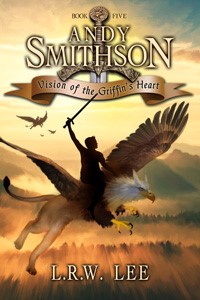
Four years ago, Andy Smithson discovered he is the Chosen one to break a 500-yr-old curse plaguing the land of Oomaldee when he unexpectedly and mysteriously found himself there. To do so, he must collect ingredients for a magical potion. Thus far he has gathered the scale of a red dragon, venom from a giant serpent, a unicorn’s horn, and the tail feather of a phoenix. Now he must ask a griffin for one of its talons. There’s just one problem…humans have poached griffin treasure, causing these mythical creatures to attack on sight.
Complicating matters, the evil Abaddon, sovereign of Oomaldee’s northern neighbor, is turning more and more citizens into zolt in his ongoing campaign of terror as he sets in motion the final steps of his plan to conquer the land. Things really start to heat up in book five!
If you loved Harry Potter, you’ll love the Andy Smithson series chalk full of mythical creatures, newly invented animals like zolt, herewolves, and therewolves, a complex plot with evolving characters, and positive themes including responsibility, diligence, dignity, friendship and more.
Purchase Kindle and Paperback
THE BUZZ
5 Stars! – “A marvelous book in a great series!” – Erik Weibel (Age 14) This Kid Reviews Books Blog
“Readers of this series have come to anticipate a host of challenges, intense battles, and on an epic scale. In Vision of the Griffin’s Heart, you won’t be disappointed. For lovers of fantasy, I consider it a must read.” – Richard Weatherly, Author
“One of the admirable qualities I like about the entire series is seeing Andy’s growth from a self-absorbed kid to a more thoughtful teen as he learns how to deal with the various crises which face him, all the while knowing that the future may hold unpleasant consequences. The watchword for Vision of the Griffin’s Heart is “courage.” – Wayne Walker, Home School Book Review
THE DEPTH OF THE ANDY SMITHSON SERIES
If you’re an adult looking for a clean series you can sink your teeth into, Andy Smithson is definitely it! In it I develop four layers simultaneously: 1) Andy Smithson in Lakehills, TX 2) Andy in Oomaldee 3) the Afterlife 4) a meaning layer. A few examples to demonstrate the depth…
Symbolism is used extensively (a couple examples):
- The fog of the curse symbolizes blindness and oppression.
- The magic key unlocks doors, brings stone statues to life, as well as revives. Put another way, it symbolizes bringing forth, opening up, and revealing (aka taking responsibility).
- Methuselah is not only a weapon and helper, but also represents justice as it divides good and evil. Consistent with life, justice requires diligence to uphold.
Names are also important in this series (a few examples):
- Andy means brave or courageous.
- Alden means helper.
- Hannah means favor or grace.
- Imogenia means blameless.
Alchemy used throughout the series (a few examples):
- Alchemy played a significant role in the development of modern science. Alchemists sought to transformbase metals into the gold or silver and/or develop an elixir of life which would confer youth and longevity and even immortality.
- In the series, the first instance of alchemy begins with the gold weavers, Max, Oscar, and Henry, spinning straw into gold to manufacture the wealth of the kingdom.
- The four elementals: air, earth, fire, and water are then seen on Methuselah’s hilt.
The titles of the books manifest yet another layer of meaning and reveal Imogenia’s evolution.
- Beginning with Blast of the Dragon’s Fury, Imogenia is furious at what has happened to her and she fuels her emotional hurt.
- In Venom of the Serpent’s Cunning, Imogenia turns venomous (or spiteful) and cunning in seeking ways to continually punish her brother.
- Disgrace of the Unicorn’s Honor has Imogenia act in a manner disgraceful to the honor of royalty.
- In Resurrection of the Phoenix’s Grace we see Imogenia’s grace reborn as she begins to reflect.
In Vision of the Griffin’s Heart, Imogenia realizes she is gripped by hatred and distrust she has harbored for so long. Unlike griffins who choose to trust others, Imogenia cannot yet make that leap when it comes to her brother.
ABOUT THE AUTHOR

R. W. Lee credits her love of fantasy with her introduction to C. S. Lewis’ Chronicles of Narnia. Later on, she enjoyed the complex world of Middle Earth brought to life by J. R. R. Tolkien in Lord of the Rings and The Hobbit. The multiple dimensions of the worlds mixed with a layer of meaning, captivated her and made her desire to invent Young Adult Fantasy and Epic Fantasy worlds others could get lost in, but also take meaning away from. More recently, L. R. W. Lee has found inspiration from J. K. Rowling and her Harry Potter series as well as Brandon Mull and his best selling Fablehaven, Beyonders and Five Kingdoms series.
R. W. Lee writes to teach her readers principles that can transform their lives – overcoming frustration, impatience, fear and more. She also shows why responsibility, diligence and dignity are the keys to true success in life. She lives in scenic Austin, TX with her husband. Their daughter is a Computer Engineer for Microsoft and their son serves in the Air Force.
Website | Facebook | Twitter | Goodreads | Amazon | Email
L.R.W. LEE INTERVIEW
- How did you come up with your main character, Andy Smithson? Did he just pop into your imagination or did you specifically develop him?
Andy is patterned after my son. After our first child who was what I would call compliant and seemed to need little to no correction, our son arrived on the scene. As with most 2nd children, he was polar opposite and provided much fodder for an engaging main character.
- How did your experience with building a business help with your writing?
It has been invaluable for I understand that writing is only 50% of the writer’s success equation. Unlike Field of Dreams, with so many good books available today, just launching it, even on a well trafficked platform like Amazon, does not get recognition. Because of my corporate background, from day one I began working to build a platform – Twitter and Facebook primarily and now also Book Nerd Paradise. As well, I understand the importance of the author community, for no author can succeed these days without the support of fellow authors. My background has also helped in understanding the need to optimize my books to rank well on the variety of sites they are listed on. There’s much more, but those are the biggest helps I would say.
- Was there any particular book or author whom you feel had the most influence on your work?
I have to say JK Rowling. The imagination she revealed, the strength of her characters, the world building, the depth of plot over multiple books…she definitely shaped how I think about writing.
- What do you love the most about writing for young people?
Young people are moldable. My passion for writing is to share with readers principles that from my experience can help them live more peaceful lives. A few of these principles include overcoming fear, frustration and impatience as well as understanding that true success in life is not from riches, fame or power, but rather responsibility, diligence and dignity. If they can finish any of my books closer to understanding these principles, I feel very fulfilled.
- Which part of the creative process is your favorite? Least favorite?
Designing the story arc is my favorite part of the creative process for you can take a story anywhere your imagination can go. My least favorite part is editing/revising. Even though I know the narrative gets much stronger as a result, it’s still my least favorite part.
- How long does it usually take you to write one of your stories from when you get the idea to when it’s finished?
Usually about 6 months.
- I know that most authors love all their characters but which of your many “children” is your favorite (besides Andy) and why?
I have to say Mermin, the kindly old wizard who speaks with a lisp. I love him most after Andy because he’s so warm, humble and approachable. He’s fallible and he knows it, which is why he doesn’t apologize for his mistakes, rather he is comfortable in his own skin.
- Do you ever plan to branch out into other genres besides middle grade/young adult fantasy?
Funny you should ask. Yes, I’m actually noodling with a story arc of a YA Sci Fi story.
- How do you feel your writing has evolved since your first novel?
I can see how much I’ve changed and improved in showing rather than telling my readers what’s happening. I want them to engage and to show – providing sight, sounds, touch, smell, and taste cues is a big part of that. I was particularly thrilled when my editor came back a full week sooner than expected with this current book because I had improved so much between book three and four. My pocketbook also appreciated that J
OTHER BOOKS IN THE ANDY SMITHSON SERIES:
Blast of the Dragon’s Fury (Andy Smithson, Book One) ebook is FREE. Download a copy at Amazon, Smashwords, Kobo, Google, B&N.
Listen to the FREE podcast of Book 1 by L. R. W. Lee on Podiobooks.
Book one is also available in paperback.
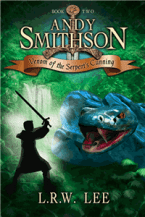
Venom of the Serpent’s Cunning (Andy Smithson, Book Two) is available in Kindle and Paperback.
Download the professionally recorded audiobook at Amazon
It’s only $1.99 if you download the eBook first…Savings of $16!
Disgrace of the Unicorn’s Honor (Andy Smithson, Book Three) is available in Kindle and Paperback.
Resurrection of the Phoenix’s Grace (Andy Smithson, Book Four) is available in Kindle and Paperback.
Power of the Heir’s Passion (Andy Smithson, Prequel Novella) ebook is FREE. Pick up a copy at Amazon, Google, B&N, Smashwords. It’s also available in paperback.
Download the professionally recorded audiobook at Amazon
It’s only $1.99 if you download the eBook for $.99 first…Savings of $1!


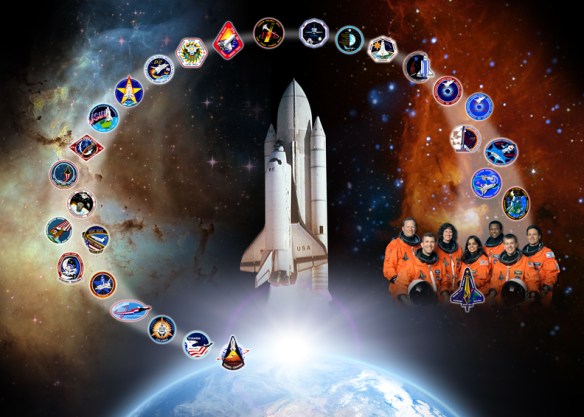 It was Saturday and I was home in the midst of a cleaning frenzy. Since it was my grandson’s tenth birthday, my plans for the day included joining family members to celebrate that occasion. I was wearing ratty workout clothes, planning to get on my stair-stepper after I finished vacuuming. Periodically, I’d pause to look out my north-facing French doors that led to my patio to check for Columbia’s plasma trail, which was supposed to be visible from where I lived in Houston. I’d seen entry emissions from previous shuttle flights which were truly spectacular, contrails on steroids, that split the sky and sparkled in the Sun.
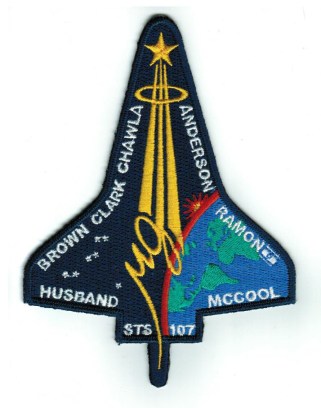
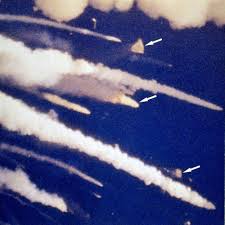 I managed the Payload Safety Section at NASA’s Johnson Space Center. Our responsibilities included making sure that anything that flew onboard the shuttle didn’t present a safety hazard, mostly through the institution of various controls. Whatever had caused the accident, we were reasonably sure that it wasn’t one of our payloads. It was a Spacehab flight, a module secured in the cargo bay that was a habitable area where astronauts conducted entire suites of life science experiments. That meant there were no satellites onboard with potentially dangerous inertial upper stages, a.k.a. booster rockets to take them to their proper orbit, which could have possibly been the problem.
 Not everyone came in, some simply called in to make sure they weren’t needed, but I’ll always remember those who did. These were the ones whose hearts were in their jobs and dedicated to their place in the space program. It wasn’t just a job, it was their life. I was a contractor as were the engineers who worked for me, but there were a few who were actual NASA civil service employees who reported to a NASA lead, to whom I also reported. This particular individual, who professed to be an expert on NASA history and lived only a few miles away, didn’t bother to come in that day. He was home painting a room inside his house, which he apparently deemed more important. I called him several times, reporting our actions, appalled at his flippant attitude as well as his absence. How could someone who was supposedly a history aficionado stay away on such an occasion? I wonder how he feels about that decision today.
 One of the chemicals used to create the foam insulation had recently been banned by the EPA. While NASA could have applied for a waiver, they wanted to be compliant, which is certainly honorable enough. However, they couldn’t find a substitute that resulted in the same integrity of the material. Thus, the new formula resulted in losing chunks of foam. This substance was light, yet needed to be extremely durable. While you may wonder how being hit by something even lighter than the memory foam most of us now enjoy in one form or another, when it was going at launch ascent speeds of approximately 500 mph, the impact was considerable and enough to damage the wing’s composite structure.
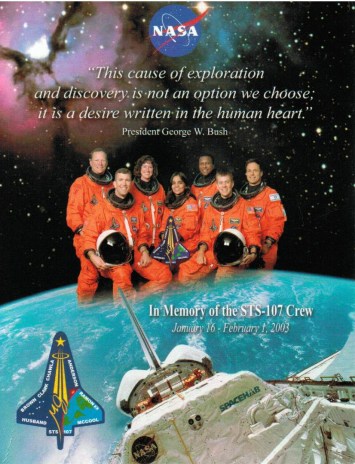 WTF? We were appalled. I suppose he wanted to show optimism and faith in NASA’s ability to recover. But for those of us at NASA, who were already stressed enough trying to fix the shuttle program and maintain the International Space Station (ISS), which was now totally dependent on our Russian and European partners for transportation, this was the last thing we needed. Then, of course, years later came an administration change and Moon/Mars was zapped, much as Reagan’s Space Station Freedom was initially cancelled by Bill Clinton, only to be resurrected some years later as the ISS. Some things never change. Most of us remember John F. Kennedy’s declaration to go to the Moon. Clearly subsequent presidents wanted a similar legacy. At this point, Reagan’s is the Challenger and Bush’s, Columbia. No wonder Reagan wanted Space Station Freedom and Bush wanted Mars!
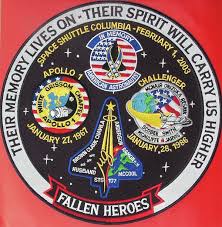 There are no easy answers. A plethora of international political implications exist for space exploration, many of which relate to countries and individuals we can’t even trust to share our neighborhoods, much less our planet or low earth orbit. Space weapons have an incredible advantage with tremendous destructive capability. This implies government involvement coupled with diplomacy are indeed necessary. Budgets and safety will inevitably clash. “Rocket science” technology based on propulsion remains quite primitive, something that’s been around for thousands of years. Whether or not you believe in UFOs, there simply has to be a better way. Seriously. Yet, on the other hand, Earth herself is vulnerable to attack from a rogue asteroid or comet. Space weapons could offer protection from cosmic annihilation as well as threats from our fellow humans.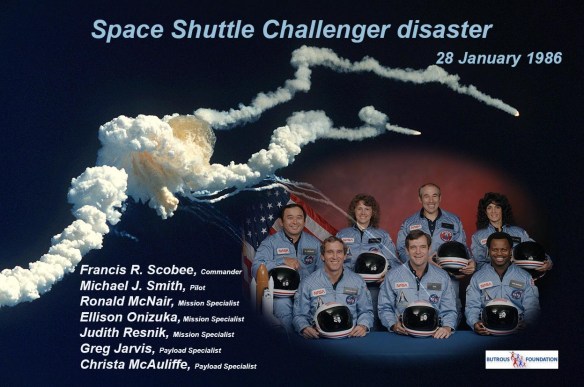
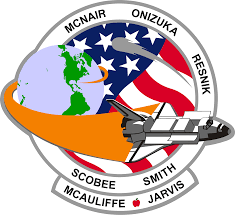
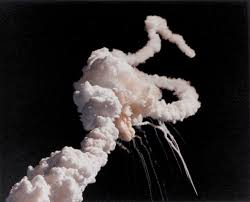 As anyone who’s actually familiar with the accident knows, its official cause related to the o-rings in the solid rocket booster which didn’t seal, allowing hot gasses to strike and penetrate the external fuel tank, which resulted in a deadly explosion. A major contributor to o-ring failure was the fact the launch took place when the temperature at Cape Canaveral in Florida was a mere 28 degrees F. This had never before been attempted, Floridian temperatures usually far above that range, even in January. This factor was illustrated dramatically by physicist Richard P. Feynman, a member of the investigation committee, by dropping an o-ring in a glass of ice water to demonstrate how they became brittle and incapable of performing their function at low temperatures.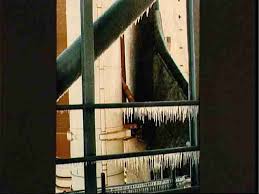
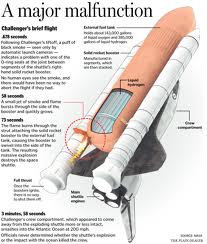 O-ring failure was a catastrophic hazard and documented as such. That the design was faulty was likewise known. Engineers had seen leakage on previous flights. Let that sink in for a moment. O-ring failure had happened before. However, earlier instances had not caused an accident. This resulted in a very dangerous and ultimately fatal thought pattern that led them to believe that perhaps it wasn’t as serious as they thought. Previous failures had been investigated, the leakage referred to as “blow-by” and eventually accepted as not a safety issue.