
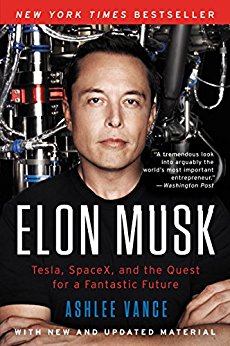
I’ve been fascinated by Musk for quite a while. I even entertained thoughts he might be some sort of space alien hybrid, helping us develop new technologies. I wondered where this guy came from and where he got all that money. I wondered why his new technologies, which are a threat to industries which have been known to resort to rather nasty tactics to suppress such competition, seemed to have no power to do so in his case. This book certainly answered all my questions and then some. I had no idea he was one of those dot-com millionaires, starting with his connection with PayPal. Explaining where his money came from certainly clarified quite a lot. His personality explained the rest.
As someone who worked as a NASA contractor for over twenty years, I can especially appreciate what he has done with Space-X. While some accuse him, and rightfully so, of being a obsessive workaholic and expecting the same from his employees, you have to admit that his system of finding the best and brightest and luring them to work for him works. Musk doesn’t suffer fools. You disagree with him or goof up and you’re gone. In today’s world of tolerance and dumbing down the general population via our pathetic education system, this certainly goes against the grain. But it gets things done.
I saw so much mediocrity at NASA it was pathetic. But it was only part of the problem as far as technological advances were concerned. I remember seeing an invoice one time for small a metal plate with a part number on it costing thousands of dollars. I mean, really. How ridiculous is that? But that’s how government contracting works. Musk, on the other hand, emphasized efficiency. It was his money, so he pushed for keeping costs down. Rather than buy from a manufacturer on the other side of the world, he would develop the needed facilities and make it himself. He demanded perfection and refused to give up.
One philosophy I always liked and employed as a manager myself was “If you’re not part of the solution, you’re part of the problem.” Clearly he had the same attitude. His employees knew better than to simply complain about something being an obstacle. They needed to contribute to a solution or get slam-dunked.
There was so much about his management style that I admired. In most cases in today’s world, his tactics will either get you sued for harassment and/or fired. Which explains a lot. But if you want something considered impossible done correctly, that’s what it takes. The results of Musk’s methods speak for themselves. He does what he says he’ll do and is a force to be reckoned with. He’s not been suppressed by existing industries since he has the money to proceed on his own, unlike most inventors who depend on selling their patents. In that case, they’re typically bought up by competitors, their ideas left to rot somewhere in a file cabinet to assure the status quo.
Along those lines, Tesla is another awesome success story, a venture that was more than once on the brink of failure. But Musk persevered, his vision and intentions a testimony to those who promote such tactics for manifesting what you want. I loved the part where Tesla acquired a former GM plant in Fremont, California (not too far from where I lived many years ago) virtually for free. Tesla is driving conventional car makers crazy. The cars are kicking butt in all areas from safety to speed to virtually “free” fuel as he builds recharging stations. He’s out to change the world and making steady progress doing so, specifically in previously troubled industries collapsing under their own weight.
His personal life was certainly interesting as well. Did you realize he has 5 boys, i.e. a set of twins and a set of triplets from his first wife, Justine? Or that as a child he was bullied, in some cases brutally enough to land him in the hospital. His photographic memory has served him well, his intelligence and scientific understanding off the scale. If someone tells him something can’t be done, he usually fires them and does it himself. I find that inspiring, not obnoxious.
The author did a great job of providing a glimpse of what this guy is like, not only as a slave-driving manager, but as a person. I admire much of what he stands for and stands up for. I loved the author’s candid writing style, often imbued with humor that had me laughing out loud. I don’t doubt that I will eventually read this book again. It’s inspirational to see what one determined man can accomplish when he sets his mind to what needs to be done, then commandeers the help and talent he needs to get there, leaving naysayers in the dust. His self-imposed mission is to save the world from itself and so far it looks as if he might do just that. It won’t surprise me one bit if he’s the one who gets us to Mars. If you have any doubts, then you should read this book. It made a believer out of me and restored my faith in old-fashioned hard work and ingenuity, which has somehow gotten lost in our crazy world.
This book convinced me, more than ever, that it’s people like Musk who should be considered heroes in today’s world. Not obnoxious sports figures, crooked politicians, and those who want to be taken care of at others’ expense. It’s time that we return a strong work ethic and intelligence to the status it deserves for making this a better world.
You can pick up a copy on Amazon here. I recommend it highly. I will warn you that it contains a multitude of f-bombs. If you want to share this awesome story with your kids, which I also recommend, there’s a cleaned up version you can get here.
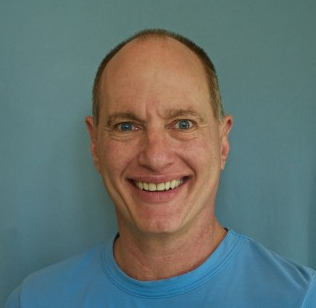 Ted Weimann is obsessed with science and shares what he learns generously in his recent book, Paradox: Fascinating Anomalies of Science from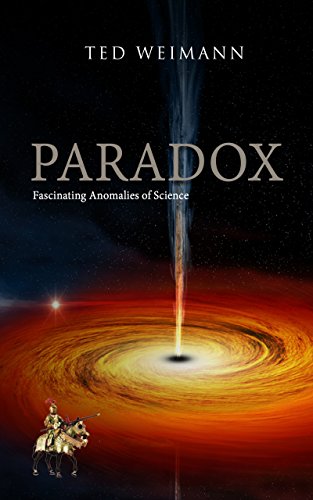
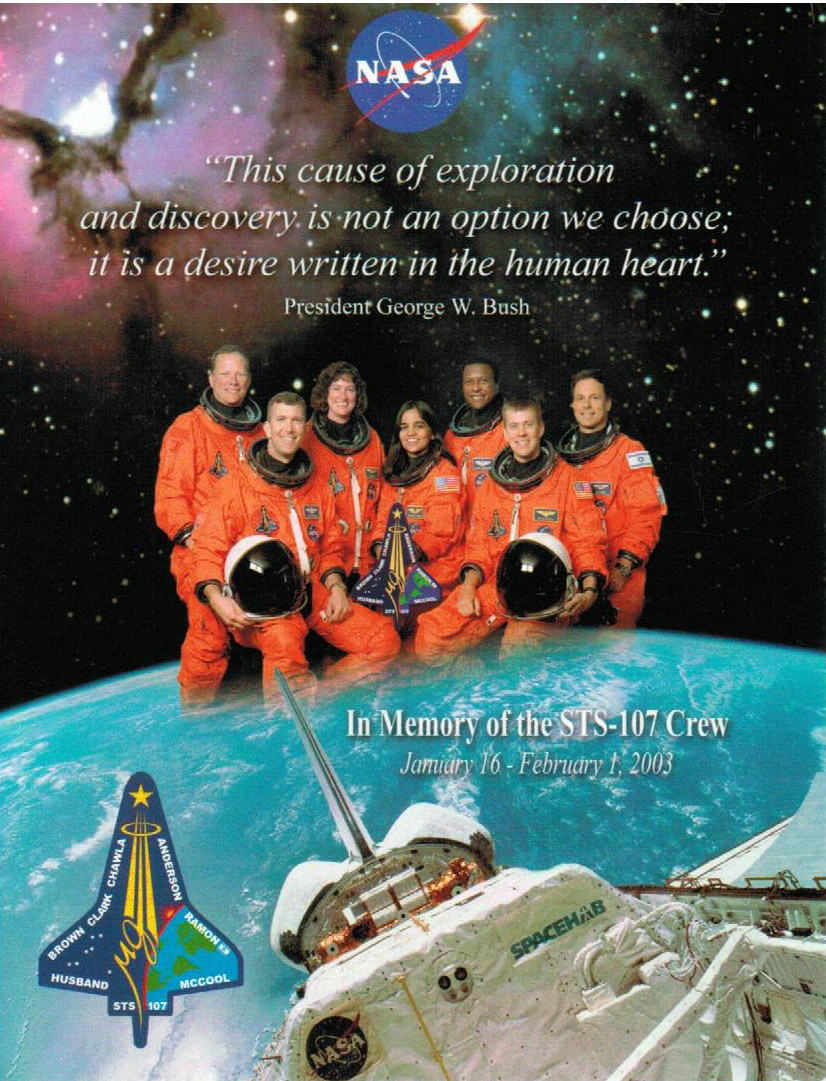
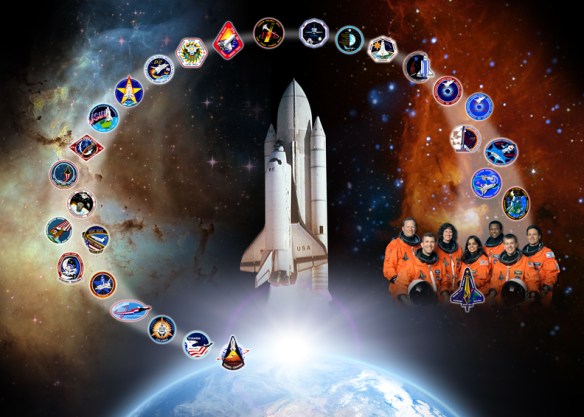 It was Saturday and I was home in the midst of a cleaning frenzy. Since it was my grandson’s tenth birthday, my plans for the day included joining family members to celebrate that occasion. I was wearing ratty workout clothes, planning to get on my stair-stepper after I finished vacuuming. Periodically, I’d pause to look out my north-facing French doors that led to my patio to check for Columbia’s plasma trail, which was supposed to be visible from where I lived in Houston. I’d seen entry emissions from previous shuttle flights which were truly spectacular, contrails on steroids, that split the sky and sparkled in the Sun.
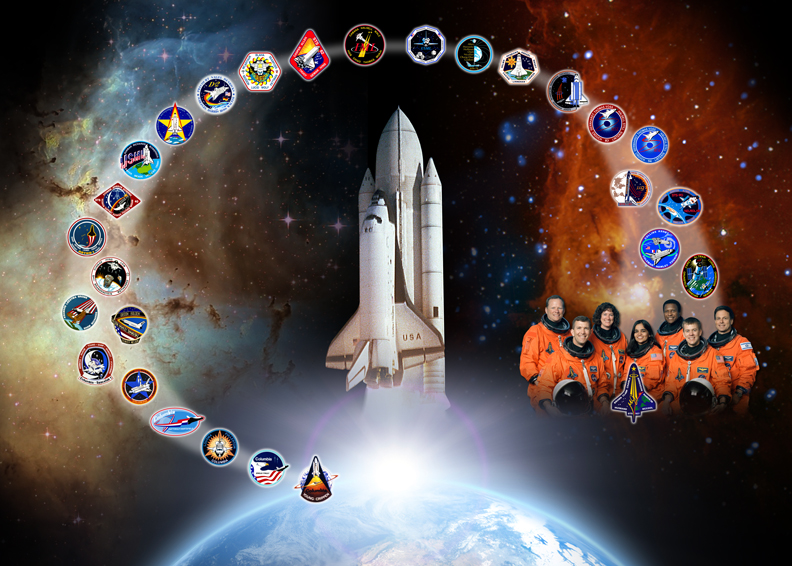
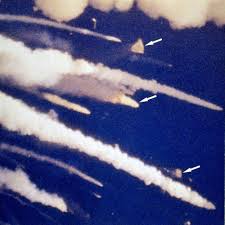 I managed the Payload Safety Section at NASA’s Johnson Space Center. Our responsibilities included making sure that anything that flew onboard the shuttle didn’t present a safety hazard, mostly through the institution of various controls. Whatever had caused the accident, we were reasonably sure that it wasn’t one of our payloads. It was a Spacehab flight, a module secured in the cargo bay that was a habitable area where astronauts conducted entire suites of life science experiments. That meant there were no satellites onboard with potentially dangerous inertial upper stages, a.k.a. booster rockets to take them to their proper orbit, which could have possibly been the problem.
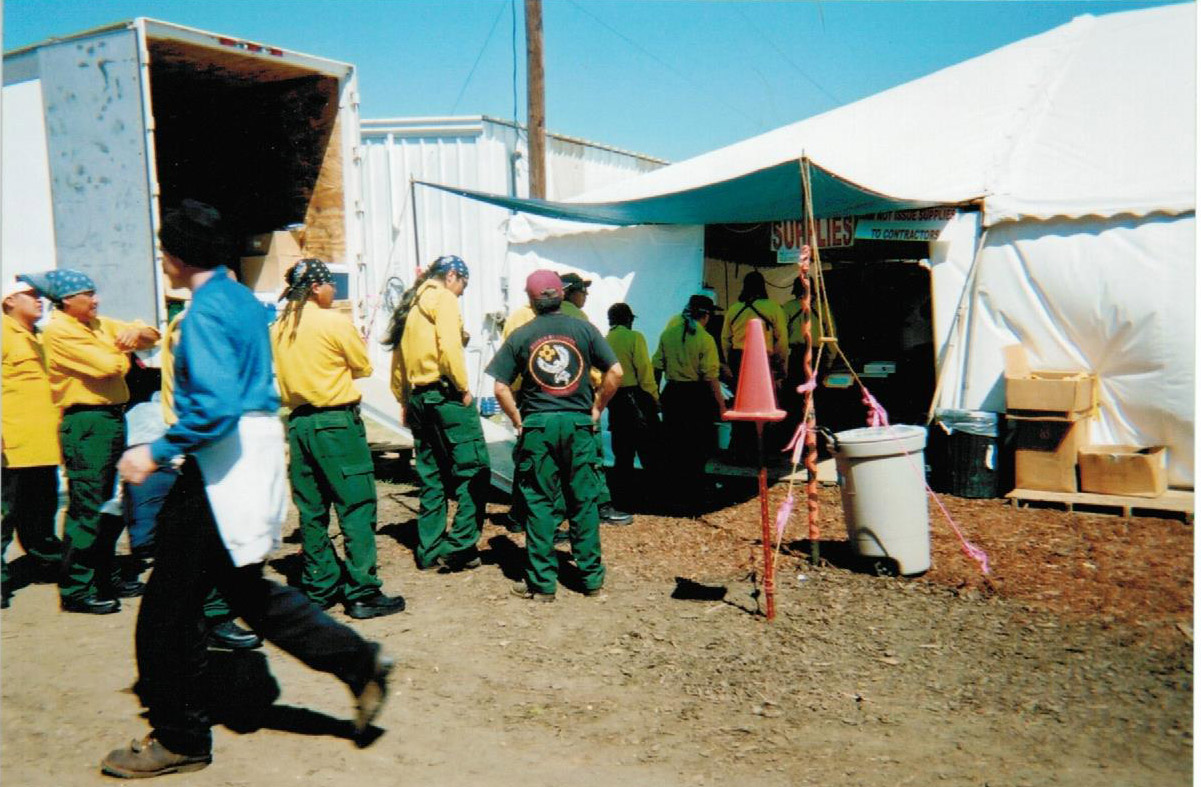
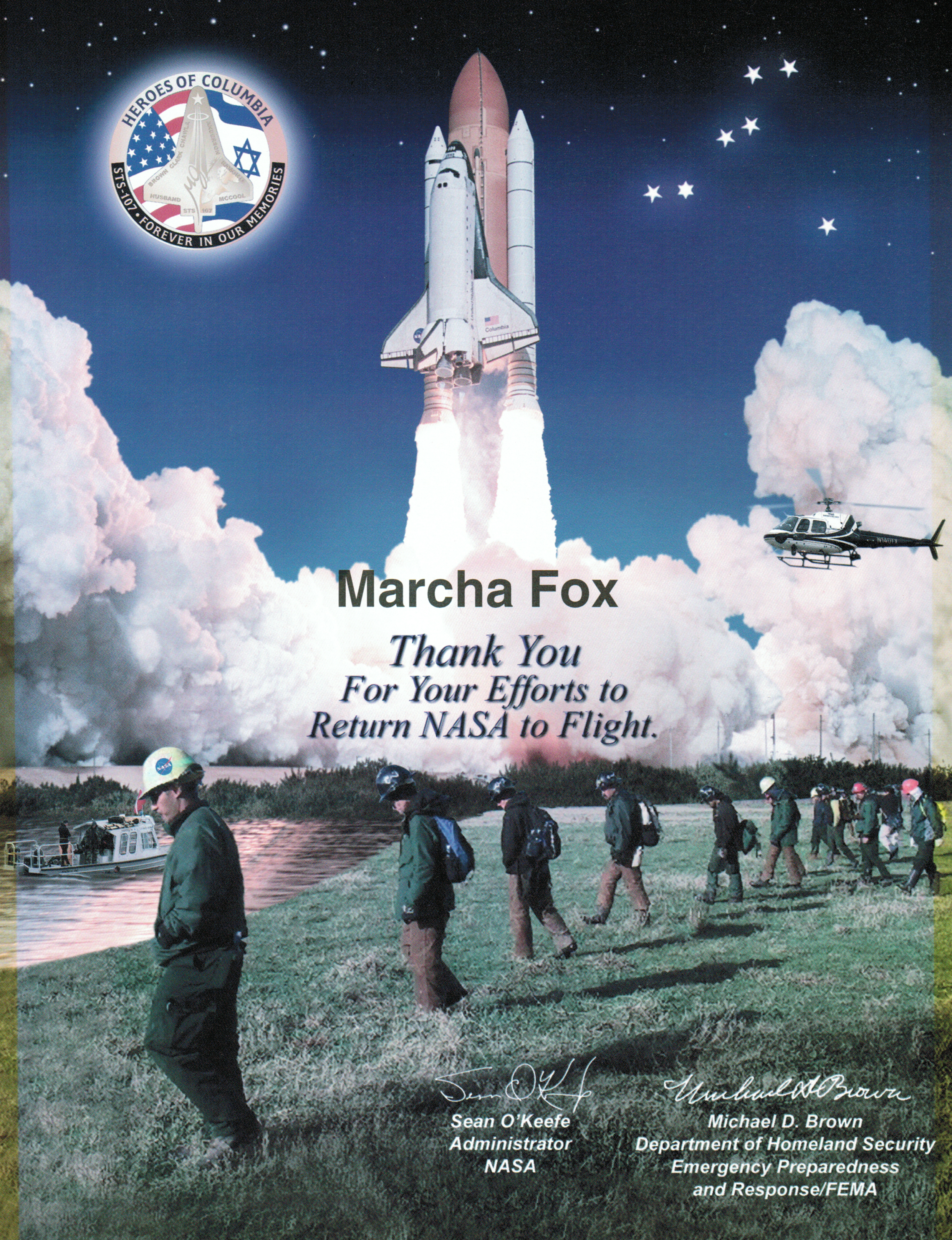
 Not everyone came in, some simply called in to make sure they weren’t needed, but I’ll always remember those who did. These were the ones whose hearts were in their jobs and dedicated to their place in the space program. It wasn’t just a job, it was their life. I was a contractor as were the engineers who worked for me, but there were a few who were actual NASA civil service employees who reported to a NASA lead, to whom I also reported. This particular individual, who professed to be an expert on NASA history and lived only a few miles away, didn’t bother to come in that day. He was home painting a room inside his house, which he apparently deemed more important. I called him several times, reporting our actions, appalled at his flippant attitude as well as his absence. How could someone who was supposedly a history aficionado stay away on such an occasion? I wonder how he feels about that decision today.
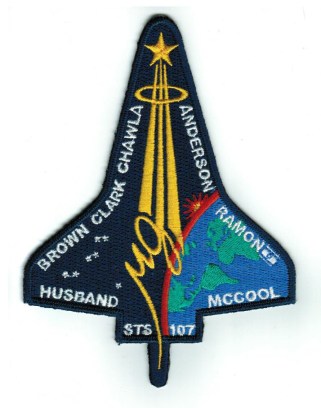 One of the chemicals used to create the foam insulation had recently been banned by the EPA. While NASA could have applied for a waiver, they wanted to be compliant, which is certainly honorable enough. However, they couldn’t find a substitute that resulted in the same integrity of the material. Thus, the new formula resulted in losing chunks of foam. This substance was light, yet needed to be extremely durable. While you may wonder how being hit by something even lighter than the memory foam most of us now enjoy in one form or another, when it was going at launch ascent speeds of approximately 500 mph, the impact was considerable and enough to damage the wing’s composite structure.
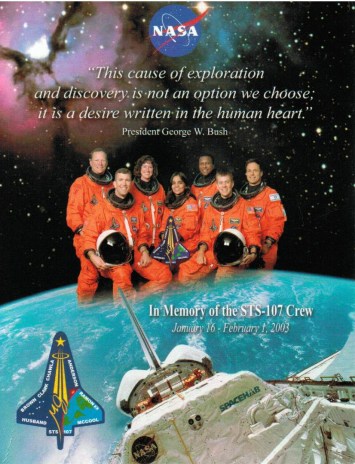 WTF? We were appalled. I suppose he wanted to show optimism and faith in NASA’s ability to recover. But for those of us at NASA, who were already stressed enough trying to fix the shuttle program and maintain the International Space Station (ISS), which was now totally dependent on our Russian and European partners for transportation, this was the last thing we needed. Then, of course, years later came an administration change and Moon/Mars was zapped, much as Reagan’s Space Station Freedom was initially cancelled by Bill Clinton, only to be resurrected some years later as the ISS. Some things never change. Most of us remember John F. Kennedy’s declaration to go to the Moon. Clearly subsequent presidents wanted a similar legacy. At this point, Reagan’s is the Challenger and Bush’s, Columbia. No wonder Reagan wanted Space Station Freedom and Bush wanted Mars!
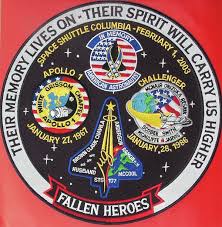 There are no easy answers. A plethora of international political implications exist for space exploration, many of which relate to countries and individuals we can’t even trust to share our neighborhoods, much less our planet or low earth orbit. Space weapons have an incredible advantage with tremendous destructive capability. This implies government involvement coupled with diplomacy are indeed necessary. Budgets and safety will inevitably clash. “Rocket science” technology based on propulsion remains quite primitive, something that’s been around for thousands of years. Whether or not you believe in UFOs, there simply has to be a better way. Seriously. Yet, on the other hand, Earth herself is vulnerable to attack from a rogue asteroid or comet. Space weapons could offer protection from cosmic annihilation as well as threats from our fellow humans.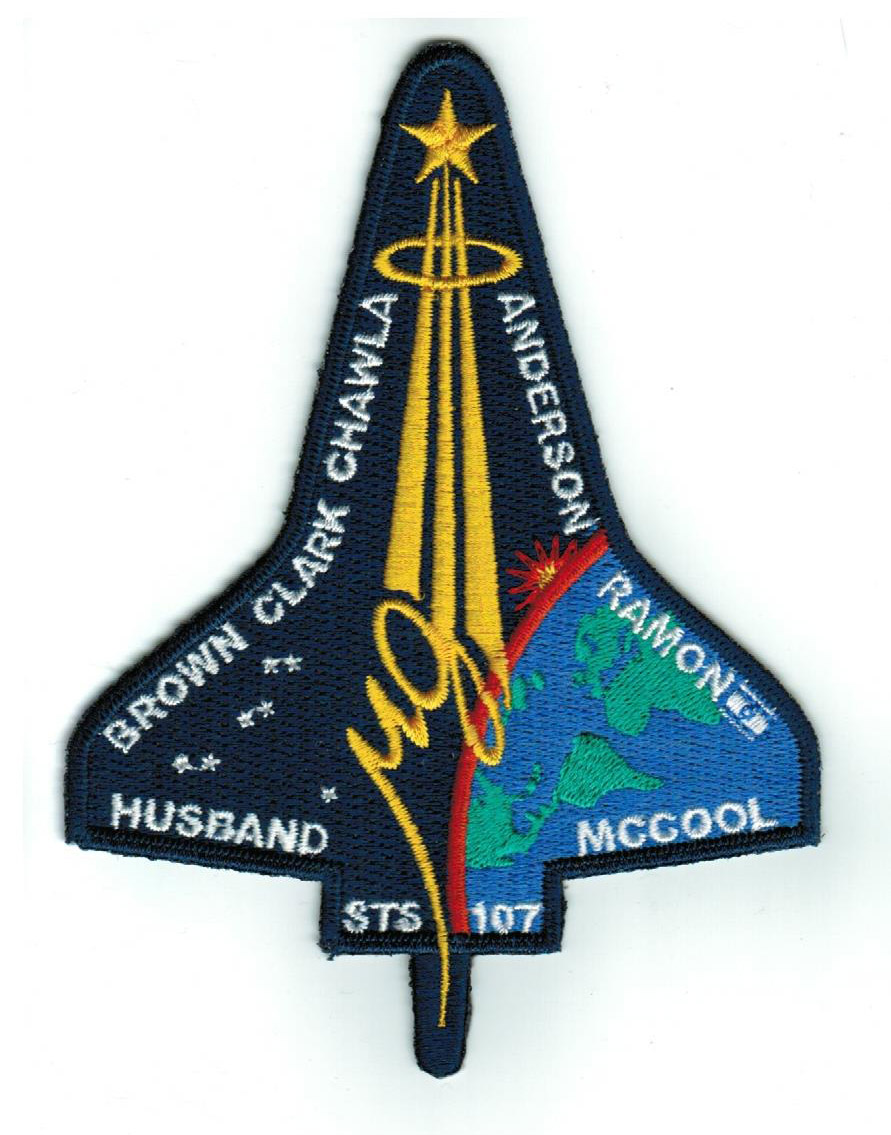

 Marcha's Two-Cents Worth