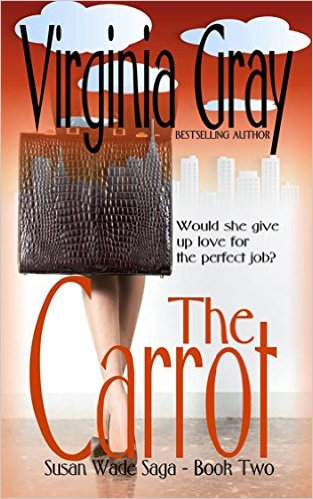
Review of “The Carrot” by Virginia Gray

thecarrotcover

Quite frankly, I never dreamed that I would eventually give this book a five-star rating. I started reading it almost two years ago, 21 months, to be exact. It took me that long for a couple reasons, mainly because at first I couldn’t stand the protagonist, Susan Wade, whom I found horrifically irritating. I thought she was a dysfunctional, self-centered, obsessive, hot mess. Her warped views of the world made me want to slap her upside the head. She hated her roots, the small town where she’d grown up, and was willing to do anything to get ahead in the world. Her priorities were horrible. The plot moved very slowly at first, also, which tried my patience as well. I would set it aside, read something else (or two or three), yet inevitably pick it up again between other reads.

Why?

Because it was so exceptionally well written. The fact the author had developed a character so completely that she got on my last nerve made me feel I owed it to her to keep reading, to see where it was going. Her prose was fantastic, at times poetic, the imagery beautifully drawn. It was a pleasure to read, pure ambrosia, even if Susan was messed up and the plot crawling at glacial speed.

At this point I need to mention that, unlike other reviewers, I try to maintain a sense of objectivity. Not liking a story or its characters is not enough for me to give a book a bad rating if the story is well-crafted. I also care about grammar, typos, and formatting, which I find distracting. Editing, in all its varieties, is important to me. If a story is clever and otherwise interesting, I might forgive some of those things, but in general, I expect a professional product when I buy a book. If a book is loaded with such annoyances I’m likely to never finish it because it’s such a chore to read. There were very few such flaws in this story, certainly not enough to put me off. Rather, I was a bit surprised that they slipped past, based on the quality otherwise. One that really had me scratching my head was how one beautiful sunset painted the eastern sky. Huh? Possible, but not likely. Actually, I wrote a blog about that kind of stuff you can find here.

As I plodded through, page by page, gradually things started to make sense. I began to appreciate the fact that the slow pace was allowing me to get drawn deeply into the story and its characters. The sense of place was amazing. I love it when a book takes you someplace new; by the time I finished, I felt as if I’d spent several months in coastal North Carolina.

When it started to come out why the protagonist was the way she was, I began to be more sympathetic. Maybe Susan put me off at first because there were things about her that reminded me of myself. As her motives and life experiences became more clear, it was easier to care about her, then eventually start cheering her on. Some people are slow to come around such that it takes numerous hard knocks before they learn.

As a professional astrologer I’m a student of human nature and tend to try and place a particular sun sign on characters as I watch them unfold. Fixed signs (Taurus, Scorpio, Leo, Aquarius) rarely change, or it takes great pain and suffering from life’s lessons to do so. The implications of when her birthday was in the book made me think she was a Scorpio. When it said near the end that Pete’s birthday was March 15, making him a Pisces, that made sense, too. It made me laugh, since on my website I have a compatibility section where I say this love match concerns me a lot since I have often seen Piscean men injured horribly by Scorpio women, though there is often a strong attraction between them, both being emotionally driven water signs. Ditto, for this couple.  BTW, astrology works amazingly well for fiction. Just ask Elle Klass.

But I digress.

From about halfway in, the story started to move, and by the time I was 75% through, it was hard to put down. It was touching and I really connected with the characters. The corporate gymnastics and dog-eat-dog environment were well-characterized as well. Having spent over 20 years in the world of NASA contracting, I could definitely relate to some of the games people play.

Probably the underlying theme of this story is “Be careful what you wish for.” Another candidate would be “What you’re trying to escape is exactly where you belong.”

This was an outstanding story that was beautifully written. It has numerous life lessons within that astute readers can learn vicariously. It takes a while to get moving, but all that background is essential and what draws you in until you’re hopelessly hooked. I have two rather minor criticisms. One is the title. Those who aren’t familiar with the tale of the donkey and the carrot may not get it, which could turn away potential readers who would love the story. The new cover helped tremendously; I’ve had the book long enough it has the old cover, which featured–a carrot.

The other criticism is that it wrapped up rather quickly and was a bit confusing at the end. I don’t want to get into spoiler territory, so won’t say more, but I’ll just say I had to go back and reread a few parts to figure out who was doing what. Considering how slowly and patiently the story unfolded, it could have wound down at a less frantic pace so as not to lose track of what was going on.

That said, it was still a great read. If you love well-developed characters, outstanding imagery, and a rather common situation regarding the balance of career with relationships, I can’t recommend it highly enough.

Pick up your copy on Amazon here.

P.S. As I got ready to post this review I discovered that there is now a prequel to “The Carrot” called “The Interview.” So you might want to start with that. You can find it here.
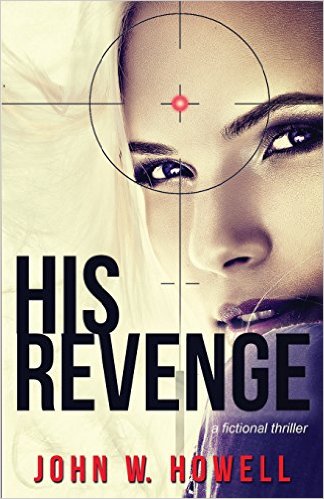
Review of “His Revenge” by John W. Howell

hisrevengecover

This fast-moving, well-written and nicely edited thriller keeps you turning the pages as you wonder how hero, John Cannon, is going to get out of his current dilemma. In the first book in this trilogy (My GRL), Cannon foiled a sophisticated group of terrorist’s insidious plan. Needless to say, they’re out for revenge and manage to capture him after which they force him to be part of another devious plot aimed at destroying the economic viability of the west. The suspense is well-sustained, dialog gripping, and characters convincing. The action level was breathtaking. Having not read “My GRL” it was nonetheless relatively easy to follow what had transpired previously. Descriptions of Cannon’s recovery from injuries sustained in the previous book were extremely well done.

However, there were various gaps typical of a serial where the author doesn’t remind a previous reader (or enlighten a new one) with regard to details such as what the characters look like. For example, while it was implied in this volume that the terrorists were of the Middle Eastern variety, their names were not indicative of that heritage. Rather, they had names that suggested European or even American origin. There was also no physical description with regard to their appearance, so they were a faceless enigma. This left me scratching my head throughout the story, wondering “Who exactly are these people?”

I can definitely understand this tendency myself since I’ve written a serial. In the author’s mind it’s one, continuous story and easy to forget to include details that seem redundant, yet they’re essential. I’ve covered some of the things I’ve learned in previous blogs for serial writers such as this one and its follow-up. I’m sure my readers can find similar oversights in my books, so I mention this in all humility.

The motivation for their heinous acts was touched on, but not demonstrated in their personal behavior. While I would expect lethal passion resulting from intense anger, hatred, and a visceral need for revenge, the antagonists behaved more like corporate executives out to annihilate a competitor to keep their stockholders satisfied. They were definitely cold-hearted, but the expected fury at Cannon’s previous actions didn’t come through.

Maybe this was covered in the first book, but evoking the emotional drive behind their acts could have added considerable intensity and additional suspense. If the bad guys were true terrorists, you’d expect that pissing them off further would result in chopping Cannon’s (or a loved one’s) head off on YouTube, but that type of potential didn’t come through. Emotional connection is what really grabs a reader. They need to love the hero and hate the antagonist, or at least fear him/her. This is what makes a story real and comprises a gripping tale.

I hate to get on the soapbox again, but I find it helpful to to assess a book during the content editing process using the acronym IDEAS where I stands for Imagery; D stands for Dialog; E stands for Emotion; A stands for Action and S stands for Suspense. Depending on the genre, a certain balance is required of these elements. Action and dialog often come easily for thriller writers, so going back to include the others is often required. Of course you don’t want to slow the story down, so it needs to be done with finesse, not long, drawn-out descriptions that cause the reader’s eyes to glaze over.

While in this story the terrorists used the fate of loved ones to drive their captives’ cooperation, it seemed that the good guys may have gotten around it a bit too easily, if these terrorists were as smart or well-connected as implied. Especially if the antagonists had as much clout and the ability to infiltrate so many organizations to effect Cannon’s capture, which was not explained, either. Including such things increases a story’s credibility.

Perhaps this was covered in the first book, which would make it required reading to fully appreciate this one. The author has an excellent writing style with a talent for developing a fast moving story with convincing dialog and viable characters. By filling in some of these gaps, kicking up the emotional drive a notch, and a bit more imagery, Howell could easily approach the level of Tom Clancy or John Grisham. I see tremendous potential in his writing that could go from great to outstanding with a bit more attention to detail, though many readers may not care and simply enjoy the fast action. I, personally, like to know the how and wherefore, which is what can drive a great story up a notch to the best seller list.

Last Day! Star Trails Tetralogy Box Set 99c!

STTclassicsale

Today is your last chance to get your ecopy of the entire Star Trails Tetralogy for only 99c! The box set includes “Beyond the Hidden Sky,” “A Dark of Endless Days,” “A Psilent Place Below,” and “Refractions of Frozen Time” as well as “The Star Trails Compendium.” Descriptions of the individual books can be found below as well as at the series’ website, www.StarTrailsSaga.com.

STAR TRAILS TETRALOGY DESCRIPTION

Close families share everything.  Including consequences.  When one of the HIO’s premier terralogists refuses a job offer from a wannabe despot the chain of suspicious circumstances which quickly follow scatter his family across the galaxy.  Torn apart by space and time, will each survive long enough to be united ever again? 

VIDEO

Volume I: BEYOND THE HIDDEN SKY

A move to another planet that goes horribly wrong.  A power hungry man’s obsession with another’s abilities.  Suspicious circumstances that scatter a family across the galaxy.  Will rescue efforts succeed or make the situation even worse?

VIDEO

When the Brightstar family leaves fog-shrouded and predictable Mira III for Cyraria they have no idea their comfortable lifestyle is about to end forever.  Even before the starcruiser arrives, shocking events transpire that comprise a parent’s worst nightmare.  Not only is their fourteen year old daughter, Creena, missing but it’s clear her father’s ruthless and power-hungry nemesis plans to exploit the situation to promote his own selfish ambitions. Formidable and lethal challenges await as increasingly suspicious circumstances scatter them across the galaxy.  Will they survive long enough to be together again?

“Sneek Peeks” on Bublish:

REVIEW SAMPLES

“The story begins at warp speed as space travel and its theory weaves throughout the tale of a family separated by mishap and kept apart by intent.” – Editorial Review

“The author’s colorful and animated word sketches give the reader the feel of actually watching or being right in the mix of the story. She brings personality and quirks to the characters as they develop through expressive descriptions and dialogue.” – Amazon Reviewer

“I am an author as well as having taught junior high science for a number of years and think this read would be a fabulous addition to classroom libraries as well as “the hungry for sci-fi lovers” personal bookshelf.” – Amazon Reviewer

“Although geared for the YA market, it is suited for sci-fi audiences for all ages who will thoroughly enjoy the talented professional writing of Marcha Fox’s wonderful expeditions.” – Amazon Reviewer

“All her characters, even creatures on the planets, are outstanding examples of a writer totally in touch with the depths of the subconscious mind, all interacting with their roles of good and evil with hidden spiritual messages as one experiences their own individual growth of consciousness.” – Amazon Reviewer

 ALL AMAZON REVIEWS OF BEYOND THE HIDDEN SKY

BEYOND THE HIDDEN SKY on GOODREADS

Volume II: A DARK OF ENDLESS DAYS

Opposition’s lethal temperatures are more than a simple ballome can’t withstand.  Designing and building a heat-exchanger is the only way they’ll survive.  Obtaining the needed components, however, is another story.

VIDEO

On a hostile planet like Cyraria terralogists are in high demand and Laren Brightstar is one of the best.  Regional governors compete for positions at the territorial level based on their economic achievements, allowing those with terraforming skills to demand a high price.  Refusing to work for those with devious intent, however, has an even higher price.  Thus the Brightstar family discovers when they’re plunged into a web of political intrigue on a planet cursed with lethal weather where survival can never be taken for granted.  Will their missing daughter return with help or will she remain trapped forever on an alien world?

“Sneek Peeks” on Bublish:


REVIEW SAMPLES

“Young people can identify with the children in the family, but this series is for people of all ages. Marcha does transport you to outer space, way into the future, and you will believe you are there with the Brightstar family.” – Amazon Reviewer

“In the vein of old science fiction literature this story could end up as another classic. Its original, with all the components, technology, other world and races, and a contact with Earth.” – Amazon Reviewer

“Written in a technically proficient yet engaging style this book is sure to captivate science fiction lovers of all ages!” – Amazon Reviewer

“Fox once again does an exceptional job building character and making her created universe a reality. I can’t turn a page without picturing the story in my mind and visualizing each character.” – Amazon Reviewer

 ALL AMAZON REVIEWS OF A DARK OF ENDLESS DAYS

A DARK OF ENDLESS DAYS on GOODREADS

Volume III: A PSILENT PLACE BELOW

Taking refuge in the Caverns is like a dream come true.  But the dreams generated by their mysterious depths promise death or worse.  Is forewarned really forearmed?  Or another lure into the Integrator’s grasp?

VIDEO

Going underground to escape Cyraria’s harsh climate brings more than a few surprises besides the hospitality of an indigenous race known as the bnolar.  The caverns feel strangely like home, but shortly after their arrival prophetic visions in the form of veridical dreams alert them to upcoming danger.  Incarcerated in a territorial prison, Laren Brightstar is about to receive and refuse Augustus Troy’s final offer, after which he’ll be exiled permanently to a place from which there is no return.  Will Dirck and Win’s rescue succeed?

“Sneek Peeks” on Bublish:


REVIEW SAMPLES

“The specific and very detailed description of the places and of the characters say so much about the author’s capacity to depict all of it with words, making your imagination start running freely in the process.” – Amazon Reviewer

“[The author] has created an entire world and its inhabitants along with various languages and races that each have unique abilities and qualities. Her extensive knowledge in science is evident in the explanations that are utterly believable.” – Amazon Reviewer

“A highly intelligent and prolific read, you really get a feel for the authors experience given she had a career at NASA. Speaks to the insight and depth of the book, well thought out and concise.” – Amazon Reviewer

ALL AMAZON REVIEWS OF A PSILENT PLACE BELOW

A PSILENT PLACE BELOW on GOODREADS

Volume IV: REFRACTIONS OF FROZEN TIME

A discovery that links two dimensions of time.  A prison ship’s dirty little secret.  Esheron has answers but can they access them before it’s too late? 

VIDEO

The discovery of a mineral that manipulates space and time provides the potential to reunite the Brightstar family at last.  Controlling it, however, is another matter.  With the Integrator closing in on the ability to destroy anyone for whom they have a mindprint, finding the secret of manipulating the two dimensions of time becomes a matter of life and death.  But is time their ally or another enemy?

“Sneak Peeks” on Bublish

REVIEW SAMPLES

“Author Marcha Fox has a gift for explaining the science. The detailed world she creates in the Star Trails Tetralogy is genius, so well thought out and crafted. As the Brightstar youngsters observe and understand their surroundings, their conclusions can be coloured by their Miran schooling, but when they break old habits and open their minds in order to survive this hostile planet they now call home, these children achieve the incredible. Quite Beautiful.” – Amazon Reviewer

“What sets this apart from run-of-the-mill ” space operas is Fox’s experience during her tenure at NASA. She draws upon her technical expertise and enhances it with fact-based theory that gives this as much of a ‘what-if’ perspective as you can expect within the genre. The moral and philosophical questions also give us much to reflect upon.” – Amazon Reviewer

“[The author’s] creativity and imagination never fall short but always leave me wanting more. Each character has been carefully crafted and developed. I enjoyed watching the children develop and grow from bickering teens to collaborative young adults. The final climax had me shivering as the forces of dark and light came hurtling together into an unexpected and shocking end.” – Amazon Reviewer

ALL AMAZON REVIEWS of REFRACTIONS OF FROZEN TIME

REFRACTIONS OF FROZEN TIME on GOODREADS

BOX SET BUY LINKS

Amazon: http://amzn.to/1kAJxRn

Smashwords:  https://www.smashwords.com/books/view/550675

Kobo: https://store.kobobooks.com/en-US/ebook/star-trails-tetralogy-box-set

iTunes:  https://itunes.apple.com/us/book/star-trails-tetralogy-box-set/id1007498996

Barnes & Noble: http://www.barnesandnoble.com/w/star-trails-tetralogy-box-set-marcha-fox/1122157702

Stock Photo Copyright: kjpargeter / 123RF Stock Photo

BLOG HOP: “MIRROR OF OUR LIVES: Voices of Four Igbo Women”

Book Cover

In Mirror of Our Lives, four Nigerian women share the compelling tales of their troubled lives and failed marriages, revealing how each managed to not only survive, but triumph under difficult and repressive circumstances.

Njide, Nneka, Miss Nelly, and Oby relive their stories of passion, deceit, heartaches, and strength as they push through life—each on a unique journey to attain happiness, self-respect, and inner peace. But none of the women’s journeys is without misjudgments and missteps.

Njide falls in love at first sight, marries Tunji too quickly, and is dismayed when Tunji shows his true colors. Nneka once thought that she and Oji were the perfect couple—until Oji traveled to the United States. Miss Nelly is a kind and good natured woman who allows everyone to take advantage of her—even her husband, whom she married only for his name. But everyone wonders why Oby and Mat even married at all, for their marriage was a battle from the very beginning.

The tales in Mirror of Our Lives: Voices of Four Igbo Women will inspire women around the world to never give up, to discover a sense of worth, and most of all, to learn to love themselves above everything else.

Background To The Story:

It is important to give a brief background information on the history of this book. In my culture, it is a great luxury for a woman to be educated. This situation is still prevalent in certain parts of Nigeria, especially in the North, where the people are Muslims. In the South, women education has made a very deep inroad. It was a battle that the women themselves fought and won. Today, in our Universities, the population of the women is more than those of men. But there was a time, when, even in the South, the choice to educate the kids in a family, fell on the male children. The male child was always chosen over the female child, and the female child was bundled off into an early marriage. Mirror of Our Lives: Voices of Four Igbo Women, is the story of the victory that education has given to four Igbo women. It is also the story of what education can do for women, especially , women in the Muslim areas of Nigeria where education is still tabu for the women to attain happiness, self-respect and inner peace. But none of the women’s journeys is without misjudgments and missteps. You can also read the reviews on the book on Amazon.om and on Barnes & Noble.

An Interview with Adebowale On Mirror of Our Lives

(1) Your debut novel, Mirror of Our Lives, focuses on four Nigerian women who went through hardship but triumphed under such difficult and repressive circumstances. Is it right, therefore, to say that you are a female rights campaigner, or a feminist?

JLB: Thank you Adewale for your interest in my book, Mirror of Our Lives. Right now, I am writing you from California, where I am performing the “Omugwo” for my daughter who recently had a baby. When I sent you a complimentary copy of my book last April, 2012, I sent copies also to as many Nigerian newspapers and magazines, as I could find. Since then you are the second newspaper to show interest. Thank you very much for this. To answer your question, I do not like to be hedged into any type of category. I am for justice for all, for each person to be treated humanely, and for the disadvantaged to be given the opportunity to excel.

(2) One of the characters in the book is Njide. How much of your real self is reflected in Njide’s life?

JLB: One thing I learnt in my writing class is that no writer writes from a vacuum. You write from what you know, from personal experience, and then go from there to create a world, or in this case a situation that does not only reflect your personal experience, but all other experiences similar to yours. I am not totally Njide, but Njide lived a lot of my personal experiences, as well as the experiences of other women I have come to know.

(3) If Njide’s life is part of your story, then the other three characters — Nneka, Miss Nelly and Oby — must also have a link with you; can you share this with us?

JLB: Just as I said in my answer to your second question, after writing about Njide, I found it easy to fictionalize the experiences of other women I know. The names I used are not the names of the women whose stories I told, and the stories I told did not reflect the experiences of any particular woman. I wanted any woman who read the story to relate to it, and many women whom I know who read the story have called to tell me that the story of one of the women or the other is the story of their lives. This is what I wanted, to tell a universal story.

(4) In your opinion, do you think the average woman is getting her credit in her contribution to societal good?

JLB: In my opinion, women are doing better today than they did in the past, but that is not to say that they are getting the credit they deserve. I would like to see very hard working women given recognition based on their work. We see a lot of women today, especially in our society getting on based on who they know, and not on their contribution in their areas of specialization. God fatherism in whatever shade or colour, to whom ever uses it, male or female, should not be condoned in public service. We see a lot of this happening in our country.

(5) Mirror of Our Lives is an interesting read. When next is the public reading another story from you?

JLB: I am working on it.

(6) The book is actually published by a foreign publisher; was there a reason why you didn’t approach our local publishers?

JLB: There were two main reasons why the book was not published by a local publisher; first, I wrote the book while I was still living and working in the United States, so I was more familiar with the publishing scene of the US. Secondly, if you notice, the book is a self-published book. I did not want to suffer any rejection on this book as I did in my other attempts to publish. I believed so much in this book that I wanted it out by all means, and iUniverse provided me the opportunity  to self-publish.

Author Pic

Joy Nwosu Lo-Bamijoko

Joy’s Bio

Joy Nwosu was born in Enugu, Anambra State of south-eastern Nigeria. Her parents were Charles Belonwu and Deborah Nwosu. She is the fifth in rank of the seven children of her parents. Joy was born into a music family.

Joy, now retired, was a music teacher, trained in Santa Cecilia, Rome, and obtained her Ph.D. in Music Education from the University of Michigan, USA.

She has written and published extensively on national and international scholarly journals, magazines, and newspapers.

Her short story I Come from Utopia was published in African Voices, Spring/Summer, 2007, pg. 18, and her first English novel; Mirror of Our Lives: Voices of Four Igbo Women was published in 2011, and was shortlisted for the Commonwealth Book Contest in 2012. She has also two books published in the Italian language.

Joy is a trained musician, and taught music for 35 years.  She writes, performs, and record folk songs.

Her new book: The Legend of the Walking Dead: Igbo Mythologies, which has just been released, is a journey into the mysteries of life and death of the Igbos of Nigeria.  She loves reading romances and mystery stories.

Websites:      http://sbpra.com/joylobamijoko/  Mirror of Our Lives …..

                         http://sbprabooks.com/JoyNwosuLoBamijoko/ Legend of the Walking…

Buy Mirror of Our Lives…Amazon Link:

http://www.amazon.com/Mirror-Our-Lives-Women/dp/1450278965

Barnes & Noble Link

http://www.barnesandnoble.com/w/mirror-of-our-lives-joy-nwosu-lo-bamijoko/1102630079?ean=9781450278966

Link to my Blog:       jinlobify.Com

Face BookLink: https://www.facebook.com/joy.lobamijoko

Link to my LinkedIn Book Add

http://goo.gl/fT1P2O

Trailer: Mirror of Our Lives: Voices of Four Igbo Women

https://youtu.be/UhSyMaUz0Uk

Twitter Handle:         @Jinlobify

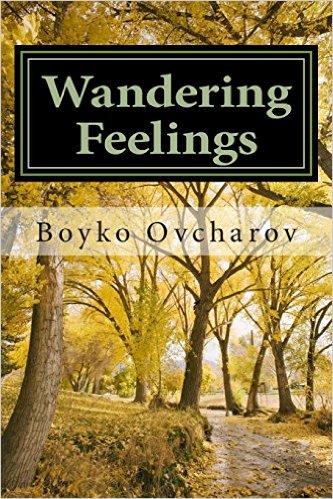
“Wandering Feelings” by Boyko Ovcharov: A Glimpse into the World of Those Driven by Emotion

wanderingfeelingscvr

Much of the prose in this story was poetic and beautifully rendered, such that it did an excellent job of capturing feelings, which can be elusive and difficult to describe with words. The descriptions of various places provide excellent imagery and added to the dreamy, flowing nature of the story. The style is definitely unique and doesn’t conform to formula writing. There is no plot in the usual sense most readers expect and the characters are nameless. In other words, it breaks plenty of rules, yet in its own way, as a chronolog of feelings, it “works.”

As an astrologer, this story struck me as a great example of getting inside the head of someone driven by emotion, such as those born under a Water Sign (Cancer, Scorpio and Pisces). If you’re not a deeply emotional person, you’re likely to see the characters in this book as illogical and possibly even dysfunctional in their inability to dismiss their unloving, materialistic upbringing and get on with their lives. However, for someone ruled by emotion, this is not easily done.

And for those driven by logic, not easily understood.  In fact, this latter group will probably be unable to understand the emotions expressed in this story. They may feel uncomfortable and perhaps even disgusted with the characters, who simply can’t seem to “get over it.” This is something that can cause great divides in relationships when people can’t understand how others are programmed. We’re all egocentric to some degree, especially when we’re younger, and think everyone sees the world as we do, or at least should.

Thus, if you fully relate to this book and become blissfully immersed in its beautiful prose and deeply felt emotions, you’re probably an emotional person yourself. Those who roll their eyes, keep waiting for something to happen worth noting or for the characters to get a grip and quit whining are probably logical by nature.

The richest part of life is often that which is felt. Those who have never fallen deeply in love, felt overwhelming joy or even its antithesis of debilitating emotional pain, are missing something. I believe this book is most important for those who don’t understand how deeply emotions can operate because it introduces them to a world with which they are entirely unfamiliar. Emotions are not always positive, e.g. love, but can be viciously destructive as well. Understanding that brings new insights into human nature, of which no one can ever have too much.

Rather than dismissing or criticizing the book or the characters, learn from it. Yes, there are people out there who are that tied to their emotions. If you’re not one of them, this is an example of what you’re missing, for good or ill.

You can find it on Amazon here.

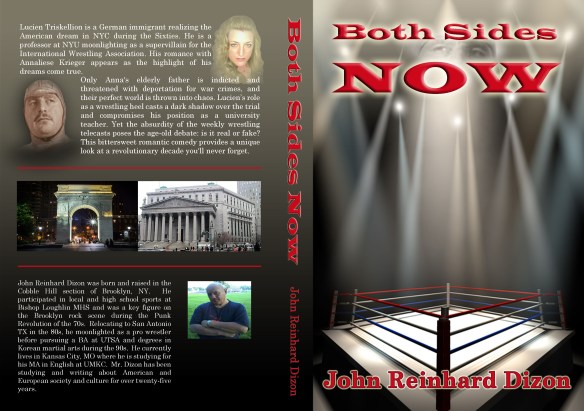
Review of “Both Sides Now” by John Reinhard Dizon

bothsidesnowcover6

This unique story entirely sucked me in. It has so much substance I scarcely know where to begin. The characters are incredibly real, not only the protagonist, but the supporting ones as well. It feels like real life because there are so many others involved with their own agendas. In this sense, it reads more like a biography as opposed to a novel. The plot is likewise incredibly complex and convincing while it skillfully portrays a slice of history representative of the 60s era.

Lucien Triskellion obtains his PhD in Germany and accepts a teaching job at New York University teaching German. Lucien is a big guy who was a champion amateur wrestler during his college years. It doesn’t take long for someone to notice the fact he can press 500 pounds and lure him into the professional wrestling circuit. If you’re not a wrestling fan, don’t let this stop you from reading this book. I, personally, couldn’t care less about this pseudo-sport, yet I enjoyed this story tremendously because it went so far beyond that. Wrestling comprises numerous settings, but the story was so character-driven that it was comparable to meeting someone really interesting and listening to their life’s story. For example, the dichotomy of Lucien’s life as a university professor versus that of a pro-wrestler, in which he was cast as a bad guy, is gripping in and of itself. If you’re a wrestling fan, then you’ll undoubtedly love it even more as it brings the human element alive with the conflict behind the scenes.

Of course with a young, hot protagonist like Lucien, there’s going to be a romantic angle. This involves Anneliese Krieger, another German immigrant, who lives with her father. As if Lucien doesn’t already have enough going on in his life, Anneliese’s father is falsely accused of Nazi war crimes incident to WWII which results in a gripping trial which is loaded with additional suspense.

The details of all elements of this novel are so vivid and convincing it was easy to get lost in it and forget that it wasn’t real. The author has the masterful ability to include just the right amount of detail to build strong imagery, clear sense of place, as well as character appearance and development. Whether it’s an address in New York City, a famous restaurant, Madison Square Garden, or legal terminology or courtroom protocol, you feel as if you’re there. Needless to say, this book would make an incredible movie.

They say an author should write what he knows, and clearly Dizon knows wrestling, which shows in how he immerses the reader in this crazy world. He’s footnoted some of the unusual terminology and slang, which helps if you’re unfamiliar with it. The business and politics of this sport are explored and exposed as well as the various complications this adds to Lucien’s life and even reflect on the trial of Anneliese’s father. While some of the detail regarding the players in the wrestling business was somewhat overwhelming, possibly a bit overdone, it nonetheless added to the story’s amazing credibility.

I don’t often find myself in a position where I’ll actually miss the characters of a book, but I felt as if Lucien and Anneliese were personal friends by the time it ended. If you enjoy a meaty novel with a different setting, strong, well-developed characters, and a breathless ride through the 60s, you’ll thoroughly enjoy this book. I absolutely give it 5-stars.

You can pick up a copy on Amazon here.

The Importance of Formatting

26572416_s

Typos, grammar and such are an amazingly common complaint in reviews, something which many indy authors encounter at some point. However, there’s another issue that can get you a bad rapp (or rep, as the case may be) that you may not even be aware of–formatting.

The guidelines for a printed book with an interior that looks professionally done are substantially different than those for an ebook. Considering how there’s a good chance most of your readers are going to opt for the electronic version, it’s in your best interest to make sure that it looks professional as well, not like an afterthought.

I suspect that numerous indy authors, after getting their book set up on Create Space, simply hit that button on the last screen to publish their book in Kindle format. This is all well and good, but don’t trust that automated process to produce an electronic version that looks anything like the printed one. At the very least, check it yourself, especially if your printed version has dropped caps at the beginning of each chapter.

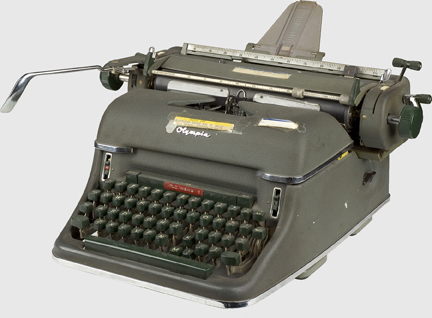
The first thing you need to do is save a second copy of your book to use for the electronic version prior to formatting it for print. Then you can add headers, footers, chapter headings, dropped caps and so forth to the printed version without introducing potential corruption into the electronic version. If you’ve already done the formatting, then obviously when you save that second copy it will be to remove such things. typewriterEither way, it’s a lot easier than the old days, when authors wrote on a device like the one shown to the right. Those of you who haven’t had that experience don’t even want to know what it was like handling simple revisions that changed the pagination. Gives me a panic attack just thinking about it.
If you want to produce a professionally formatted ebook, the best guide for doing so is the Smashwords Style Guide, which you can download for free from their website here.

Even if you don’t use Smashwords’ service (perhaps because you’ve opted into Kindle Unlimited, which requires giving Amazon exclusive rights to sell your work), the instructions will enable you to format a clean version that won’t aggravate readers enough to blast you with a bad review. It takes a little extra work, but it’s worth it.

Writing a book entails a lot of hard work, but that’s just the beginning. If you want it to be well-received by readers, it also needs to provide a comfortable reading experience. It’s not difficult to do and will be worth it. If it’s not something you care to tackle, then check into some of the services that will do so for a reasonable price, such as Fiverr.com.

Showing respect and appreciation to your audience starts with clean copy. Getting yanked out of a story by errors of any type, whether they’re typos, incorrect spelling, punctuation problems or formatting in nature, is not only distracting, but annoying. Some readers are more forgiving than others in overlooking such things, but sure as death and taxes, sooner or later, a reviewer will say so.

After all the time, sweat and blood you’ve put into your story, don’t let its message be diluted or even lost due to careless formatting. Take care of your readers and they’ll take care of you.

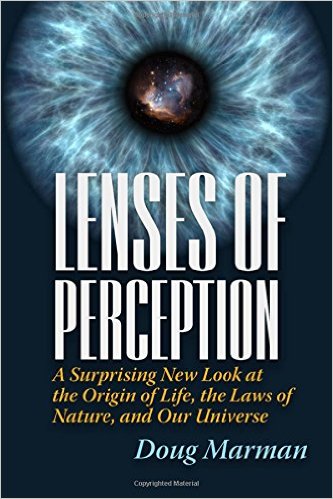
“Lenses of Perception” by Doug Marman: An Interesting Summer Read for Science Aficionados

lensesofperceptioncover

Let me start out by saying that this book has 359 references that comprise eleven pages of endnotes. If you’re not impressed by that, then this is probably not the book for you. However, if you love science and appreciate revolutionary ideas supported by considerable research that relate to an enigma no one, including Einstein, Feynman or Hawking, has been able to solve, then you would probably enjoy this book.

As a physicist and science fiction writer myself, I was fascinated by the book’s precepts. When I really get into such a tome, I become a librarian’s worst nightmare: highlighting key passages, scribbling notes in the margin and, heaven forbid, dog-earing pages. For what it’s worth, my copy sports 46 pages in that condition as well as more marginal notes and highlights than I care to count.

The premise of this fascinating book has been touched on ever since the double-slit experiment suggested some mysterious interaction existed between consciousness and physical matter. Rather than argue this, the author makes an a priori assumption that such a relationship exists. That in and of itself is not particularly remarkable, since it has been the stance of various other authors for decades. Marman, however, does not stop there. It’s not simply a matter of human consciousness influencing subatomic particles. He systematically builds a credible case for the tiniest subatomic particles possessing consciousness as well.

The author is an engineer and inventor who holds various patents and is thus experienced on the technical side, but is not a PhD physicist. This is a good thing. Stepping beyond the bounds of conventional science tends to be a career-limiting experience. Some have referred to scientific progression as occurring only via funerals, e.g., German physicist, Max Planck, who stated, “A new scientific truth does not triumph by convincing its opponents and making them see the light, but rather because its opponents eventually die, and a new generation grows up that is familiar with it.”

Marman’s theory is imaginative to the point of resembling one of Einstein’s thought experiments. While he doesn’t do the math, it goes beyond philosophizing, conjecture or excursions of fantasy. As indicated in the first sentence of this review, this book is well documented. The author states his theory then backs it up with existing scientific research.

The concept that there’s a link between quantum mechanics and consciousness has been argued by many. “The Tao of Physics”, published in 1976 by Fritjof Capra, took on this challenge, opening with Werner Heisenberg’s statement, “It is probably true quite generally that in the history of human thinking the most fruitful developments frequently take place at those points where two different lines of thought meet.  These lines may have their roots in quite different parts of human culture, in different times or different cultural environments or different religious traditions: hence if they actually meet, that is, if they are at least so much related to each other that a real interaction can take place, then one may hope that new and interesting developments may follow.”

In this case, Marman has synthesized his theory using particle physics, biology, evolution, psychology and various other disciplines. Typically, research in any of these areas is conducted strictly within the bounds of that discipline’s accepted facts, limiting the conclusions. Allowing these areas to overlap brings new possibilities as they’re viewed with, as the title suggests, new “lenses of perception.”

This typically creates an uproar from those violated by the unwelcome intrusion into their supposed domain. I’m reminded of the Alvarez Theory from back in the 80s, when it was first proposed that an asteroid collision caused the extinction of the dinosaurs. The paleontologists protested, claiming they’d died off from diseases incident to migration. Then NASA found the crater in the Gulf of Mexico, forcing paleontologists to accept it, like it or not. Professional jealousy is especially fierce when someone outside a specific field of study figures something out the oldtimers have been battling for years. Is this the case with Marman’s work? Time, as always, will tell.

The bulk of his ideas are expressed using analogies. Analogies are effective teaching tools employed by the world’s greatest teachers and philosophers. Using something a student understands as a basis, the concept can be expanded to facilitate comprehension of something new. The author leverages this approach by employing grammatical principles of first, second and third person viewpoints. For example, first person is “I”; second person brings in a relationship with another person, “you”; and third person adds others at a slightly less personal level, “they.” There are concepts individuals grasp which are expanded upon when shared with another, then ultimately coalesce when a group shares a link that binds several beings together.

A subatomic particle is assumed to have a level of consciousness which is defined as first person. It’s aware of itself and its existence. Stepping it up to the second person involves quantum entanglement, a phenomenon that’s been demonstrated, but not fully understood. In a nutshell:

  • Two subatomic particles interact and become linked through an unknown process.
  • When you measure one particle it instantaneously determines what behavior to expect in the other particle.
  • Quantum state of partner particle will be identical.
  • Whatever you impose on one partner particle the other will do the opposite.
  • Theoretically, they can be separated by billions of light years but when you dictate spin of one it will instantaneously affect the other.

If you’ve ever had a psychic connection with someone, you should understand this concept. Research by various scientists, including Dean Radin, PhD, who specializes in psychic phenomena, has indicated that these connections are instantaneous, defying the speed of light as the supposed limit of information transfer.

Getting into the third person, he discusses the relationships between groups that can be related to molecular bonding and steps into the life sciences speaking of “all for one” bonds, where certain entities will self-sacrifice for the good or even the life of the system. A plethora of explanations, examples and extrapolations build from these concepts, backed up by various references.

Marman concludes the book with an addendum that tackles the five unsolved problems of physics as they relate to his theory. I must admit that at this point I got a little lost. I only have a bachelor’s degree in physics, which was insufficient to fully grasp all the implications of some of his conclusions. By this point my brain was fried, anyway, due to the vast array of information provided on so many different levels. There was so much to absorb that it took me far longer than usual to finish reading. At times it was laborious, even painful. Perhaps if you have a PhD in physics you could blow through this book in a few days, but that was definitely not the case for me. With so many topics under discussion to establish their relationship, brevity is difficult to achieve.

This book provides interesting fodder to those with an open mind who are seeking new ideas and insights to the mystery presented by quantum mechanics. It’s unconventional, potentially groundbreaking, and defies many existing speculations. It proposes a paradigm shift to discover answers, which have so far been elusive. Just because a theory is popular doesn’t mean it’s correct. Many fade quietly into the past, unannounced. Even Einstein wasn’t correct all the time. What’s popular one year could be debunked the next. If it’s wrong, it will simply fade away, save any tidbits hanging on in old, out-dated textbooks.

Conversely, as German philosopher, Arthur Schopenhauer suggested, “All truth passes through three stages. First it is ridiculed.  Second it is violently opposed. Third it is accepted as self evident.”

The author explores history, philosophy, physics (of course), biology and various other subjects. If you’re into metaphysics, there are connections there as well. Expect to see a few things differently than you did before. If you’re a science aficionado like myself, it would make an interesting summer read. Take your time. Digest each new idea on its own merits. The title says it all. Be prepared to see the world through an entirely different lens than you did before.

You can pick up your copy on Amazon here.

[I was provided a copy of this book in exchange for a fair and unbiased review.]

* * *

For those of you who love this topic as much as I do, here are some of my favorite quotes related to physics, consciousness and the unknown:

“One is unlikely to discover what one is certain cannot possibly exist…. Whatever the field of inquiry, attempting to access a phenomenon with a methodology that is based on the firm underlying assumption that the phenomenon does not exist has proved itself to be a singularly inadequate strategy, at once self-fulfilling and self-limiting.”

–Richard Tarnas in “Cosmos & Psyche” (p. 108)

“Probing inside the atom and investigating its structure, science transcended the limits of our sensory imagination.  From this point on, it could no longer rely with absolute certainty of logic and common sense…Like the mystics, physicists were now dealing with a non-sensory experience of reality…”

–Fritjof Capra in “The Tao of Physics”

“Physics tends to be dictated by fad and fashion. There are the gurus who dictate the direction in which new ideas grow.”

–Michael Duff, Physicist (University of Michigan)

Some scientists (Stephen Hawking and the late Carl Sagan come to mind) insist that a “theory of everything” is just around the corner, and then we’ll essentially know it all—any day now.  It hasn’t happened and it won’t happen.  The reason is not for lack of effort or intelligence.  It’s that the very underlying worldview is flawed…We have ignored a critical component of the cosmos, shunted it out of the way because we didn’t know what to do with it.  This component is consciousness.

Robert Lanza, M.D. in “Biocentricism” (pp 8 – 9)

“You ask whether parapsychology lies within the bounds of physical law.  My feeling is that to some extent it does, but physical law itself may have to be redefined.  It may be that some effects in parapsychology are ordered-state effects of a kind not yet encompassed by physical theory.”

–Brian Josephson, Physicist, Nobel Laureate

“Space and time exist only as constructs of the mind, as tools of perception.  Experiments in which the observer influences the outcome are easily explainable by the inter-relatedness of consciousness and the physical universe.”

–Robert Lanza, M.D. in “Biocentrism” (p. 159)

“…psi may require an explicit bridge between the physical and the psychological worlds. This is why an adequate theory of psi will be … cross-disciplinary…”

–Dean Radin, PhD

“In psychology, physiology, and medicine, wherever a debate between the mystics and the scientifics has been once for all decided, it is the mystics who have usually proved to be right about the facts, while the scientifics had the better of it in respect to the theories.”

— William James in “The Roots of Consciousness: Science, Evaluating Psi Research”

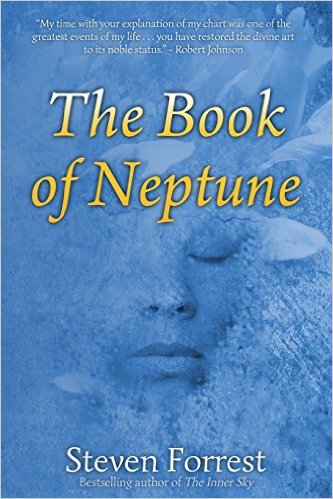
Review of “The Book of Neptune” by Steven Forrest

bookofneptunecover

[NOTE:–To get the most out of this book requires at least a rudimentary knowledge of astrology.  This need not be extensive, but should include knowing Neptune’s sign and house position in your natal chart, any aspects between Neptune and the other planets as well as where he currently resides in sign and house placement by transit.  A transit, for those of you unfamiliar with the term, refers to the current zodiacal location of a planet or other cosmic entity, including any aspects it forms to a planet in your natal or some other astrological chart, of which there are too many to get into here.  You can obtain this information for free from astro.com.  Once you have that, you’re all set to apply the information Forrest has provided in this outstanding book.  If you’d like to learn astrology’s basics, I recommend my own book, “Whobeda’s Guide to Basic Astrology”, which contains what I would have liked to have found when I was first learning about this ancient discipline.]

Even though I’m a professional astrologer myself, I’d been struggling with a Neptune transit for three years as this bad boy aspected first my ascendant, then Mars, then my Moon.  Neptune’s influences are often elusive while contributing to a foggy, lazy, dreamy, ungrounded feeling.  This was entirely foreign to me, though I must say it has certainly lent me a tremendous dose of understanding for those who are programmed that way.

As someone with a Capricorn Sun, Virgo ascendant, and Gemini Moon, everything about it was contrary to my basic cosmic imprint.  For those of you out there who are fellow astrologers, I’ll point out that my progressed Sun has been in Pisces for over a decade, which has been uncomfortable as well, but these Neptune transits have been like weathering a tsunami in a leaky boat whereas before it was simply a matter of being afloat in a swimming pool on an air mattress.

Needless to say, I was very uncomfortable with it, and some of my fellow astrologer friends, who are more familiar with these energies, tried to help, but the main thing they accomplished was only to convince me I wasn’t losing my mind.  Which reminds me, delusions and numerous forms of insanity are in Neptune’s domain along with drugs, alcohol and all forms of escapism.  Fortunately, one of those peers, who is also a close friend, was aware of this book, told me about it and I immediately bought a copy.  It’s a considerable understatement to say that I’m glad that I did.

Prior to Neptune swamping me with other-worldly, space cadet ditziness, I’d been an organized, disciplined, responsible, hardworking person.  Now I couldn’t stay focused to the point that if I hadn’t realized it was Neptune, I would have been deeply concerned that I was developing Alzheimer’s.  I kid you not.  As the cosmic surfactant, Neptune tends to dissolve what he touches, and I believe that includes your brain.  Not surprisingly, the god of the deep is associated with loss, disappearances, deception, psychic phenomena and abilities, spiritual experiences such as enlightenment and so forth.

To sum it up, Neptune left me in a state best described by WTF?  I advise my clients that there’s always a positive side to any transit, no matter how grueling, but I was having serious difficulty finding anything about this one that was useful.  The usual approach with a transit is to identify it, then direct that energy to something productive, yet I had never been less productive, more confused and generally feeling as if I were adrift in the ocean with no land in sight.  I had never felt so lost.

Then I was fortunate enough to get a copy of Forrest’s book and I must say that he nailed it.  He starts out by explaining Neptune’s realm, on the edge of the solar system, beyond which lie Pluto, Eris and possibly other planets or minor planets, the domain of comets and then interstellar space.  It’s an area filled with mystery and the unknown, so it’s no wonder it’s unfamiliar to someone who’s practical, logical and responsible by nature.

In describing Neptune’s effect when connected with the other planets, Forrest provides both the “Light Side” and the “Dark Side.”  This is tremendously helpful because sometimes with Neptune it’s not easy to tell which is which.  For the twelve houses, he provides snapshots which include an overview, significant quote and a sentence or two regarding “Leaking Energy” as a preface to several pages of in-depth explanation.  This is particularly helpful if you’re desperate, as I was, so you can grab the highlights before diving into the book as a whole.  He discusses loss, often experienced during a Neptune transit, as well as navigating those murky waters in a positive way.  He talks about synchronicity, which is typically ramped up during this time, both of a favorable and less favorable nature.  His section on how the zodiac sign Neptune resided in influenced the music for different eras is fascinating, as is his journey through history, recounting key events that occurred when Neptune was previously in his home sign of Pisces, as he is now.

As an astrologer, Forrest’s books have provided me with a much deeper understanding of Neptune’s influence than I had before.  It helped me understand numerous things which have occurred during this period and provided excellent ideas for dealing with them and channeling that energy that will contribute to my personal evolution in a positive way.  I feel as if he has thrown me a life-jacket when I needed it most, the fact this book came into my hands at this time an example of the synchronicity he describes.  It also makes sense that in the past few months I’ve become involved with a local astronomy group that conducts star parties every month where I’ve had the opportunity to look into Neptune’s realm, now understanding why this experience has felt so profound.  Somehow gazing out into space helped me feel more grounded.  Now I understand why.

If you feel as if you’ve lost your footing, are sinking in quicksand or adrift on a large body of water with no land in sight, there’s a good chance that Neptune is involved.  If that’s the case, I can’t recommend this book highly enough.  The price is a far cry less than a psychologist, especially one who doesn’t augment his or her practice with astrology.  It has not only provided me with the answers I was looking for, but made me a better astrologer who can be more helpful to any of my clients going through Neptune’s often dark and mysterious waters.

You can pick up a copy of Steven Forrest’s “The Book of Neptune” on Amazon here.

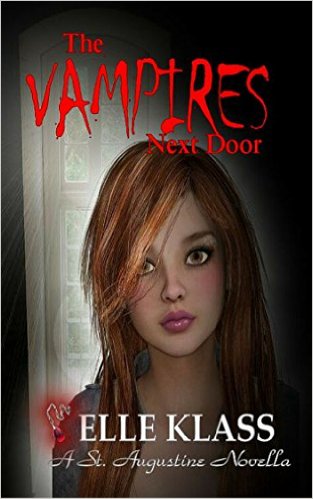
Review of Elle Klass’ “The Vampires Next Door”

VampiresNDCover

This fast-moving tale is populated with engaging characters whom you feel you know personally as this intriguing story unfolds. Freshly transplanted to St. Augustine, Florida, Alison is a shy teenager with the usual insecurities inherent to her age who lives with her recently divorced mother. The two of them reside in an apartment where Alison engages in some people-watching, particularly Rodham, whom she has the hots for, as well as a bunch of young women who occupy the apartment next door. These particular neighbors are given to loud, boisterous partying into the wee hours of the night while her mother, a shift nurse at a local hospital, is typically gone. Of course the title of this story serves as a spoiler as to who and what those nuisance neighbors actually are.

Much to Alison’s horrified delight, Rodham introduces himself and the pair begin a warm friendship moving toward a cozy romance as they investigate exactly what’s going on with these weird neighbors. A variety of surprises and plot twists quickly ensue, presented in Elle Klass’ outstanding, character-driven style with which she’s developed a unique vampire culture known as Bloodseekers with whom an eternal war wages with their mortal enemy, the Slayers. Skillfully woven into the history of the USA’s oldest European-established, continuously occupied settlement, you’ll find a liberal dose of paranormal phenomena intermingled with magic that will satisfy Harry Potter as well as other fantasy fans. You’ll have to read this exciting tale to find out where the young hero and heroine fit into this fascinating tale, but rest assured you won’t be disappointed.

Even better, since you’re bound to fall in love with Alison and Rodham, this is the first volume of a trilogy which promises further exciting adventures. While this story contains plenty of action and intrigue, it’s well within the PG range and thus suitable for adolescents and teenagers. It gets creepy and a little scary, but not terrifying, just exciting. The author’s former life as a junior high school teacher comes through beautifully in her understanding of teen motivation, behavior and emotions. Nonetheless, the book contains enough substance, character development and plot twists to satisfy readers of all ages. I’m not a big vampire fan myself, yet thoroughly enjoyed this suspense-laden tale by this up and coming multi-genre author.

You can pick up your copy on Amazon here.