Review of Glory on Mars by Kate Rauner

gloryonmarscover

If you’re a fan of hard science fiction, and I mean really HARD, then you will love this book. In fact, I’m inclined to say that it’s only on the borderline of sci-fi, that it’s more what I would call science faction, i.e. so close to being reality that it’s not even that futuristic. Indeed, many people reading this book are likely to live to see a Mars colony in their lifetime. If you loved the movie “The Martian” then this story is a great follow-up to keep your imagination well-grounded on the Red Planet.

The Mars base the author designed is brilliant. She has thought of just about everything imaginable and described it at a technical level detailed enough to make you feel as if you’re there. She has hab modules, jumpships, walkabouts, surface suits and any number of other goodies. At the least, you know she’s not just making this up because her engineering background truly shows. Since I worked as a NASA contractor for over 20 years, I found many familiar things in this story, from the space technological presence in Noordwick, The Netherlands, since I’d been there more than once, and other terminology such as “frangible nuts” used with explosives to release their hold in various spacecraft applications.

By the time you finish this story, you feel as if you’ve completed a tour of duty on Mars. Anyone who may aspire to go there someday can get a very sound idea of what it would be like, from eating worms to the various hazards that abound on a planet that is not fit for human habitation without serious, high-tech intervention. There are radiation issues, maintaining an appropriate pressurized volume with the correct oxygen mixture, psychological challenges, vehicles for getting around on the surface, sometimes at a great distance, and so forth. In this respect it is exceptionally well-done. The author’s knowledge and undoubtedly a whole lot of research is evident and available for readers to enjoy. The side stories were excellent as well, adding additional detail and background which I highly recommend readers take the time to enjoy. They’re not required, but add to its richness. Thus, as an outstanding science fiction novel, I give this book a strong five stars.

However, if you want a bit more than engineering and science in a story, there are a few things I would have recommended be included, had I been a beta reader for this book. I realize that all reviews have a high degree of subjectivity, and the comments that follow are strictly my opinion and may not be shared in the slightest by other readers, especially if all you want is hard sci-fi. Nonetheless, that’s part of the point of a review, to share one’s opinion, and why over all I give this story four stars, so here we go.

While the numerous characters clearly had different personalities, to me they were faceless. Their physical descriptions were lean at best and missing at worst. She did a great job giving them very diverse and memorable names, many of which implied the individuals’ international heritage, but I never was able to “see” them in my mind, other than perhaps Yin and Yang, which were handled in a very clever manner that worked. I like to be able to picture the characters in a story and didn’t feel I had enough description of the others to do so.

The point of view (POV) was limited to one member in particular named Emma, with whom I connected somewhat. One thing to be said about the single POV is that it does lend the feeling that you were Emma and experiencing what she did. Nonetheless, with so many characters, it would have been interesting to get into their heads and viewpoint as well. The first half of the book contained a lot of description about the base and getting things set up along with the challenges involved, which could have been handled through other crew member’s POV so the reader got to know them as well. This would have rounded out the other characters a bit more and provided an opportunity to describe their appearance.

A little more conflict among the crew members would have added a bit more realism as well. This was touched on a little, but it’s highly likely that roughly a dozen people confined as they were under stressful and sometimes life-threatening conditions would have had a few clashes along the way. There was some tension, but people simply aren’t that mature and logical all the time, even if they’re engineers. This I know, given I’ve managed them in my previous life.

Another thing that bothered me was the cat. As a cat owner and lover, I expected the cat to have a more significant role, perhaps along the lines of Pete in Heinlein’s “The Door Into Summer.” I couldn’t believe it that when this kitten was taken onboard as they began their journey that he was not immediately given a name! Maybe I’m just a crazy animal lover, but I can’t imagine that someone in that group wouldn’t have done so. At the least, when they arrived on Mars, someone already there would have done the honors, since it was that group who’d requested the cat in the first place.

The cat could have been worked into the plot more as well. The base’s AI even recognized the cat as a team member! Cats are curious, (Curiosity would have been a great name, in honor of a previous Mars mission) they get bored just like people, and he would have undoubtedly had some interesting experiences in the zero-gravity environment during the journey as well as once they arrived on the base. Mine get into trouble all the time in a regular earthbound house. Owning a pet isn’t simple and it certainly wouldn’t be on Mars. He could have caused any number of problems and conversely, even provided ways to solve others.

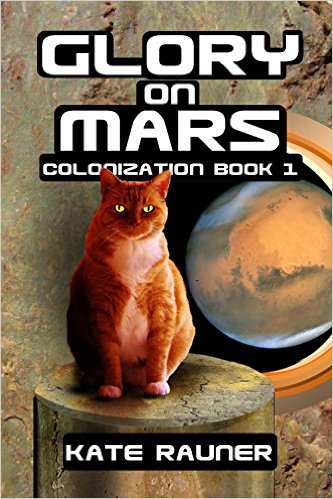
Why did the previous crew request a cat in the first place? Pets add warmth, affection, and a new dimension of “home” to say nothing of comic relief. He could have contributed an additional touch of reality to an unreal situation. I probably wouldn’t harp on the cat issue so much other than the fact the cat is so prominently displayed on the cover. I found this very misleading, since the cat played essentially no role in the story, whatsoever, other than a few cameo appearances, where he could have easily become an endearing and potentially major character.

That precious piece of visual real estate known as a book cover would have been much better used to fill other gaps in the story. It would have been very helpful to have a drawing of the base, for example, with all its modules and such, which was well-described in the text, but not always easy to picture. Any artist would have had a blast with that. It also would have benefited by some people as well, which could have compensated for the lack of description in the text. A newly designed book cover would be a great investment for this story and thus represent its content more accurately. Potential readers for this book include hard sci-fi fans, preppers into self-sufficiency, and cat lovers, based on the cover. The cat on the cover could actually turn off some readers who would enjoy it the most.

Speaking of preppers, a bit more of the self-sufficiency side of growing food, raising fish and so forth would have been great as well. The use of heritage seeds, saving some of the potato harvest to plant for the next generation, or even the use of aquaponics could have further enhanced the story and also fit nicely with switching viewpoints.

In spite of all my grumbling above, I truly did enjoy and appreciate this book and what it took to write it. As a physicist and former “rocket scientist” myself, I found very few things I wondered about on the technical side. There were a few places where I thought about making a few calculations, then reminded myself it was only a novel and to lighten up! It provides a realistic view and excellent vicarious experience of what it would be like to be a space pioneer. For that, I highly recommend it. Just don’t expect much from the cat.

You can pickup your copy on Amazon here.
Sci-Fa Epic Adventure: Review of “Thunder Moon” by Jeanne Foguth

thundermooncover

The second volume in Jeanne Foguth’s Chatterre Trilogy, “Thunder Moon”, picks up where “Star Bridge” ends. As someone who’s read all three volumes, but not in order, I highly recommend that they be read in sequence so that the complex plots and character relationships are easier to follow. Each builds upon the other, weaving a fascinating and intricate Sci-fa saga.

In this episode, Nimri’s brother, Thunder Cartwright, is worried the madrox will invade his world unless the star bridge is closed. He borrows his brother-in-law, Larwin’s, environmental suit, and sets out to do so with the assistance of GEA-4, Larwin’s androtic assistant. Meanwhile, Larwin’s sister, Tem-Aki, is looking for her brother, who’s been missing from his world long enough that she’s concerned that he’s dead. (Background on Larwin’s arrival on Chatterre can be found in volume I, “Star Bridge”.)

As you’d expect from any misbehaving and unstable Star Bridge/wormhole, Thunder winds up on yet another world, Kalamar, which is covered with what he fears most–water. Furthermore, he’s severely injured, but fortunately, rescued by Raine, a dragon shepherd, who’s on patrol in her ship, Nambaba, trying to recover a rogue dragon calf.

And thus the fun begins.

As always, the science fiction/fantasy elements of these stories are masterfully integrated as simple matters of planetary diversity. Dragons, a.k.a. madrox, are Chatterre’s mortal enemy, threatening to reduce it to ashes. However, on Raine’s planet, Kalamar, they’re carefully managed, a seeming paradox that further drives the story’s plot and suspense.

Mistaken identities, culture clashes, alien creatures, and a variety of interpersonal conflicts, including sibling rivalry and political intrigue, ultimately explode in this fast-moving, complex tale. The world building is exceptional, particularly with regard to how a human culture would operate on a world comprised mostly of water. Not only are the mundane details addressed, but other intelligent species introduced as well as a convincing and convoluted political structure.

If you like an intricate plot, lots of action and continual suspense with all sorts of surprises you can get your teeth into, then this trilogy is for you. But don’t forget to read “Star Bridge” first and then this one before move on to the satisfying conclusion in “Fire Island.” (Note that all three volumes are “clean reads” suitable for all ages.)

You can pick up a copy on Amazon here.

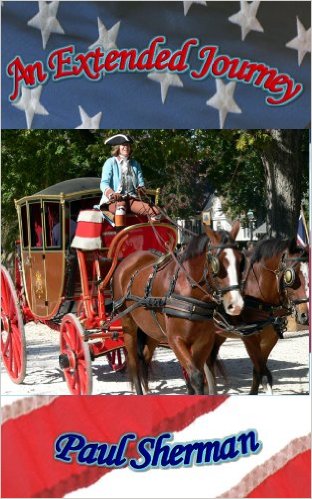
Review of “An Extended Journey” by Paul Sherman

extendedjourneycover2

This exceptionally well-written and flawlessly edited story has everything a good time travel story demands. Note, however, that it’s more fantasy than science fiction since the means of delivery to the past is in the realms of the paranormal. Thus, don’t expect some exotic high tech means to remove the characters from the present time. This detail, indeed, is but a moot point given the tremendous message of this meticulously researched historical novel, but I wanted to throw it out there just in case you’re expecting sci-fi.

More often than not, time travel stories have more of a philosophical theme as they tread the line between fantasy, history and “what if” speculations. I recommend this story to those interested in American History, particularly the period around the Revolutionary War. The author’s research is apparent in the convincing details that take the reader back to another but not necessarily simpler time.

This story features David Dearns and his family which comprises his wife, Monica, and two young daughters, Jane and Katelyn, who are unexpectedly transported from modern times back to Colonial Williamsburg in 1781. The transition is great, given they’re visiting that location in modern times and thus surrounded by numerous individuals dressed in period costumes and buildings that date back to the time of the American Revolution, which is in progress. You can sense their confusion, particularly when they suddenly realize not only where but when they are.

This event was not simply coincidence, however, but clearly a matter of being chosen to accomplish a specific mission at the behest of a mysterious black woman they know only as Aunt Harriet. Their task is to intervene with Thomas Jefferson in a manner that convinces him to end slavery as part of the yet-to-be-written American Constitution. Since I want to avoid spoilers, that’s all I’ll say about plot details so future readers can fully enjoy the story as it unfolds.

There were some areas where the story seemed to drag, but it was so well-written that the slow pace was forgivable. It also served a purpose in establishing the time, place and mood of the times as this 21st Century family gradually acclimates to life in the late 1700s. If you’re a history buff, you’re likely to thoroughly enjoy it. A bit more culture shock would have added to the realism and perhaps picked up the pace in those pages capturing the details of life at that time. The plot action definitely accelerated toward the middle and took off from there with well-sustained suspense.

Historical details were plentiful and expertly integrated. The matter of changing history and the various paradoxes introduced by the family’s presence were addressed in a clever and sometimes unexpected manner, such as the premature albeit inadvertent introduction of modern technology. There were numerous places where I laughed out loud at some of the main character’s witticisms and sarcastic thoughts though his propensity for profanity was a bit troubling and could turn off certain potential readers. Many religious folks have a keen interest in American History and are often more forgiving of an expletive here and there, which is all too common today, than profanity. It wasn’t excessive by any means, and was mainly in the first part of the book, but would have earned a few cringes from various folks I know who would otherwise love the story.

Matters of free choice were suitably addressed and demonstrated the “butterfly effect”, i.e., where one small event institutes major change. On a personal as well as collective level, I’m sure all of us could point to various decisions that could have been made in a more constructive manner given 20:20 hindsight. The decisions of those who run countries certainly affect thousands and even millions and the consequences of bad ones splash on all concerned, many of whom suffer far more than the perpetrator.

As physicist Michio Kaku and various others have noted, parallel dimensions are a possibility included in quantum theory. Some have even speculated that every possible outcome of every decision ever made is represented somewhere, which I frankly don’t buy into. Nonetheless, starting a new track as a solution to time travel stories, e.g., Spielberg’s “Back to the Future” trilogy, works here for the sake of reader satisfaction. I’m not a big fan of historical novels, but the author’s strong writing skills kept me immersed in the story. More often than not, I find my inner editor slipping out while reading which, to his credit, did not occur. Such exceptional writing alone makes this book worth reading.

You can pick up your copy at Amazon here.

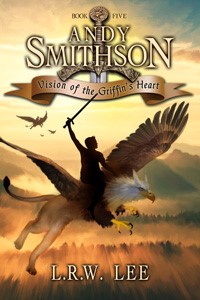
JUST RELEASED! Vision of the Griffin’s Heart, Andy Smithson, Book 5

Book5cover

I’m delighted to participate in this blog tour for L.R.W. Lee’s latest episode in the Andy Smithson fantasy series for Middle Grade readers!  I had the pleasure of sharing a booth with her at the Austin Book Festival last October and thoroughly enjoyed getting to know this intelligent and fascinating person. Learn more about the fifth book in the series, get to know more about the author and then be sure to grab a copy from the buy links at the end.

Four years ago, Andy Smithson discovered he is the Chosen one to break a 500-yr-old curse plaguing the land of Oomaldee when he unexpectedly and mysteriously found himself there. To do so, he must collect ingredients for a magical potion. Thus far he has gathered the scale of a red dragon, venom from a giant serpent, a unicorn’s horn, and the tail feather of a phoenix. Now he must ask a griffin for one of its talons. There’s just one problem…humans have poached griffin treasure, causing these mythical creatures to attack on sight.

Complicating matters, the evil Abaddon, sovereign of Oomaldee’s northern neighbor, is turning more and more citizens into zolt in his ongoing campaign of terror as he sets in motion the final steps of his plan to conquer the land. Things really start to heat up in book five!

If you loved Harry Potter, you’ll love the Andy Smithson series chalk full of mythical creatures, newly invented animals like zolt, herewolves, and therewolves, a complex plot with evolving characters, and positive themes including responsibility, diligence, dignity, friendship and more.

Purchase Kindle and Paperback

 THE BUZZ

5 Stars! – “A marvelous book in a great series!” – Erik Weibel (Age 14) This Kid Reviews Books Blog

“Readers of this series have come to anticipate a host of challenges, intense battles, and on an epic scale. In Vision of the Griffin’s Heart, you won’t be disappointed. For lovers of fantasy, I consider it a must read.” – Richard Weatherly, Author

“One of the admirable qualities I like about the entire series is seeing Andy’s growth from a self-absorbed kid to a more thoughtful teen as he learns how to deal with the various crises which face him, all the while knowing that the future may hold unpleasant consequences.  The watchword for Vision of the Griffin’s Heart is “courage.” – Wayne Walker, Home School Book Review

THE DEPTH OF THE ANDY SMITHSON SERIES

If you’re an adult looking for a clean series you can sink your teeth into, Andy Smithson is definitely it! In it I develop four layers simultaneously: 1) Andy Smithson in Lakehills, TX 2) Andy in Oomaldee 3) the Afterlife 4) a meaning layer. A few examples to demonstrate the depth…

Symbolism is used extensively (a couple examples):

  • The fog of the curse symbolizes blindness and oppression.
  • The magic key unlocks doors, brings stone statues to life, as well as revives. Put another way, it symbolizes bringing forth, opening up, and revealing (aka taking responsibility).
  • Methuselah is not only a weapon and helper, but also represents justice as it divides good and evil. Consistent with life, justice requires diligence to uphold.

Names are also important in this series (a few examples):

  • Andy means brave or courageous.
  • Alden means helper.
  • Hannah means favor or grace.
  • Imogenia means blameless.

Alchemy used throughout the series (a few examples):

  • Alchemy played a significant role in the development of modern science. Alchemists sought to transformbase metals into the gold or silver and/or develop an elixir of life which would confer youth and longevity and even immortality.
  • In the series, the first instance of alchemy begins with the gold weavers, Max, Oscar, and Henry, spinning straw into gold to manufacture the wealth of the kingdom.
  • The four elementals: air, earth, fire, and water are then seen on Methuselah’s hilt.

 The titles of the books manifest yet another layer of meaning and reveal Imogenia’s evolution.

  • Beginning with Blast of the Dragon’s Fury, Imogenia is furious at what has happened to her and she fuels her emotional hurt.
  • In Venom of the Serpent’s Cunning, Imogenia turns venomous (or spiteful) and cunning in seeking ways to continually punish her brother.
  • Disgrace of the Unicorn’s Honor has Imogenia act in a manner disgraceful to the honor of royalty.
  • In Resurrection of the Phoenix’s Grace we see Imogenia’s grace reborn as she begins to reflect.

In Vision of the Griffin’s Heart, Imogenia realizes she is gripped by hatred and distrust she has harbored for so long. Unlike griffins who choose to trust others, Imogenia cannot yet make that leap when it comes to her brother.

ABOUT THE AUTHOR

lindanewpix

R. W. Lee credits her love of fantasy with her introduction to C. S. Lewis’ Chronicles of Narnia. Later on, she enjoyed the complex world of Middle Earth brought to life by J. R. R. Tolkien in Lord of the Rings and The Hobbit. The multiple dimensions of the worlds mixed with a layer of meaning, captivated her and made her desire to invent Young Adult Fantasy and Epic Fantasy worlds others could get lost in, but also take meaning away from. More recently, L. R. W. Lee has found inspiration from J. K. Rowling and her Harry Potter series as well as Brandon Mull and his best selling Fablehaven, Beyonders and Five Kingdoms series.
R. W. Lee writes to teach her readers principles that can transform their lives – overcoming frustration, impatience, fear and more. She also shows why responsibility, diligence and dignity are the keys to true success in life. She lives in scenic Austin, TX with her husband. Their daughter is a Computer Engineer for Microsoft and their son serves in the Air Force.

Website | Facebook | Twitter | Goodreads | Amazon | Email

L.R.W. LEE INTERVIEW

  1. How did you come up with your main character, Andy Smithson? Did he just pop into your imagination or did you specifically develop him?

Andy is patterned after my son. After our first child who was what I would call compliant and seemed to need little to no correction, our son arrived on the scene. As with most 2nd children, he was polar opposite and provided much fodder for an engaging main character.

  1. How did your experience with building a business help with your writing?

It has been invaluable for I understand that writing is only 50% of the writer’s success equation. Unlike Field of Dreams, with so many good books available today, just launching it, even on a well trafficked platform like Amazon, does not get recognition. Because of my corporate background, from day one I began working to build a platform – Twitter and Facebook primarily and now also Book Nerd Paradise. As well, I understand the importance of the author community, for no author can succeed these days without the support of fellow authors. My background has also helped in understanding the need to optimize my books to rank well on the variety of sites they are listed on. There’s much more, but those are the biggest helps I would say.

  1. Was there any particular book or author whom you feel had the most influence on your work?

I have to say JK Rowling. The imagination she revealed, the strength of her characters, the world building, the depth of plot over multiple books…she definitely shaped how I think about writing.

  1. What do you love the most about writing for young people?

Young people are moldable. My passion for writing is to share with readers principles that from my experience can help them live more peaceful lives. A few of these principles include overcoming fear, frustration and impatience as well as understanding that true success in life is not from riches, fame or power, but rather responsibility, diligence and dignity. If they can finish any of my books closer to understanding these principles, I feel very fulfilled.

  1. Which part of the creative process is your favorite? Least favorite?

Designing the story arc is my favorite part of the creative process for you can take a story anywhere your imagination can go. My least favorite part is editing/revising. Even though I know the narrative gets much stronger as a result, it’s still my least favorite part.

  1. How long does it usually take you to write one of your stories from when you get the idea to when it’s finished?

Usually about 6 months.

  1. I know that most authors love all their characters but which of your many “children” is your favorite (besides Andy) and why?

I have to say Mermin, the kindly old wizard who speaks with a lisp. I love him most after Andy because he’s so warm, humble and approachable. He’s fallible and he knows it, which is why he doesn’t apologize for his mistakes, rather he is comfortable in his own skin.

  1. Do you ever plan to branch out into other genres besides middle grade/young adult fantasy?

Funny you should ask. Yes, I’m actually noodling with a story arc of a YA Sci Fi story.

  1. How do you feel your writing has evolved since your first novel?

I can see how much I’ve changed and improved in showing rather than telling my readers what’s happening. I want them to engage and to show – providing sight, sounds, touch, smell, and taste cues is a big part of that. I was particularly thrilled when my editor came back a full week sooner than expected with this current book because I had improved so much between book three and four. My pocketbook also appreciated that J

OTHER BOOKS IN THE ANDY SMITHSON SERIES:

book1cover

Blast of the Dragon’s Fury (Andy Smithson, Book One) ebook is FREE. Download a copy at Amazon, Smashwords, Kobo, Google, B&N.

Listen to the FREE podcast of Book 1 by L. R. W. Lee on Podiobooks.

Book one is also available in paperback.

book2cover

Venom of the Serpent’s Cunning (Andy Smithson, Book Two) is available in Kindle and Paperback.

Download the professionally recorded audiobook at Amazon

It’s only $1.99 if you download the eBook first…Savings of $16!

book3cover

Disgrace of the Unicorn’s Honor (Andy Smithson, Book Three) is available in Kindle and Paperback.

book4cover

Resurrection of the Phoenix’s Grace (Andy Smithson, Book Four) is available in Kindle and Paperback.

prequelcover

Power of the Heir’s Passion (Andy Smithson, Prequel Novella) ebook is FREE. Pick up a copy at Amazon, Google, B&N, Smashwords. It’s also available in paperback.

Download the professionally recorded audiobook at Amazon

It’s only $1.99 if you download the eBook for $.99 first…Savings of $1!

Comma, give me a break!

booksinbox

I think we all realize that whether or not a person likes a book is highly subjective. I’ve read (or tried to read) books with numerous five-star reviews that I didn’t like and couldn’t get through. Some were well-written, just boring or populated with unappealing characters, while others were poorly written and/or edited. I’m a bit of a grammar/typo Nazi myself so I hide my head in shame that someone put one of my books in that category.

I’ve heard that no literary agent or publisher takes an indie book seriously until it has a few three-star reviews. Thus, when I got my first one as an untimely present for my Christmas birthday, I had mixed feelings. I now had the obligatory mediocre review and, to be perfectly honest, the reason had been noted by a previous reviewer, i.e. the lack of commas. I acknowledge this as a valid complaint and have it on my to-do list to rectify. Sadly, at one point I’d actually taken several of them out because they seemed to slow the story down! How ironic is that?

Okay, you may have already guessed that I have a couple confessions to make. First of all, I edited my own books, which I realize is a major no-no, but let me explain. First of all, there were various times when this particular book, which was admittedly my first novel, was set aside for years. When I would get back to it, I could read it like it wasn’t my own and, for the most part, edit effectively. Like I said, I’ve been accused of being a grammar Nazi with other people’s work, and I definitely fixed a lot over time.

Another factor was finding an editor I could trust to do the job. I mean, really do the job. I’ve seen too many acknowledgements in various novels where authors extol and thank their editor while I, nonetheless, find a plethora of things they missed when I read the work in question. Call it pride, if you must, but it was hard not to feel I could do as good or better of a job than some of the supposed pros out there.

And the coup de grace was that I was on a budget. While I don’t mind paying for services that are done correctly, cost combined with not being sure I could find a competent editor resulted in doing it myself. Oh, well, my bad.

The second one is that, even though I have a minor in English, I am not that well-versed in grammar. Seriously. Most of what I know has been learned through my mother correcting me as a child, reading, and, heaven forbid, intuition. I’ve been an avid reader all my life and been writing since I could hold a pencil, yet never liked English classes or understood some of the rules. Diagramming sentences to me was worse than algebra, which made more sense. I really don’t like to point fingers, but in this case I’m going to point one at a prof I had in college who taught the obligatory grammar class for those majoring or minoring in English. That class was, like we say here in Texas, as useless as teats on a boar hog.

The prof, who is probably now dead and gone, couldn’t find a textbook that he liked so we had none. He would lecture, but with no logical order or continuity that I could recognize. All we did the entire term was–you guessed it–diagram sentences. Punctuation was rarely mentioned. One thing I remember him (or perhaps someone else) saying was that English, unlike Latin, was a living language that evolved, that such things as punctuation styles changed over time, and things like comma usage was becoming somewhat optional. You can bet I jumped on that like a duck on a June bug!

judgeongrammar

But for purists who were more astute at learning the rules than I was, it was a major faux pas. And apparently the person who left this three-star lambasting was one of them.  I must say that the reviewer was generous in giving it three-stars since s/he didn’t even finish reading it.

Back to the subjectivity of what we like, science fiction is certainly one of those genres that everyone doesn’t care for. (Oops, ended that sentence with a preposition! OMG! Let’s correct that to “one of those genres for which everyone does not care.” Right? Right.) Even with proper punctuation it’s likely s/he wouldn’t have liked it. That I understand. And I do admit s/he has a point and I will fix the problem because, believe it or not, I really am a bit of a perfectionist, but that doesn’t mean that I know everything by a long shot. I’m teachable but, as noted earlier, I never had a decent English teacher or at least one I could follow. Math is much simpler to me with its concrete, easy to follow rules and black and white answers. Equations make a lot more sense.

pageheart

So what have I learned that I can pass on to other writers? If I had this to do over, it would be to do a beta reader exchange with someone who has equal editing skills to my own. Fortunately, for subsequent books I was able to find such individuals. And that is what saddens me the most, the other books in the series are in much better shape. I’ve actually received compliments on the editing of at least one of the others. This was my first book and I’ve heard it said that everyone’s first novel should go in the trash bin labeled “tuition.” My problem was that it was the start of a series with so much more to tell! The characters evolved and so did the plot to the point that it took four full-length novels to complete the story. I’m a much better writer now, as all of us become, the more we write.

So, bottom line, I’ll go back eventually and correct the comma situation. I don’t know all the rules, but at this point I’m reasonably confident that I’ll be able to do so in a competent manner. The worst part, as most indie authors know, is that there are so many different formats to deal with, i.e., both print and electronic versions, which complicates the process considerably. Nonetheless, I’ll have the satisfaction of debunking that uncomplimentary review when it’s corrected, unless, of course, those who would appreciate a properly copy edited work are turned off by that seething diatribe, which is actually so excessive that it’s downright amusing. Fortunately, most geeks and nerds, who are my primary audience, anyway, aren’t quite so concerned, though there are exceptions, of course, many of whom I met at NASA.

<Sigh.>

Rant over.

Thanks for listening.

P.S. If you’d like an ecopy of the book in question, “Beyond the Hidden Sky,” for free, join my mailing list, which qualifies you for a free download. You can do so here.

An Outstanding & Thought-Provoking Time-Travel Tome

talesofelasticlimitcvr

While the premise of going back in time to alter history isn’t new, the author’s skill in its presentation coupled with his unique insights will satisfy science fiction and history buffs as well as anyone with an eclectic taste for literature. Indeed, this story possesses the makings of a classic. It’s highly intelligent, flawlessly edited, and I love the author’s straight-forward yet ethereal style which flows with the essence of timelessness that you’d expect in a book that involves time travel. His skillful writing combined with the fact his name is a pseudonym leaves the impression that he may, indeed, be a time traveler himself. The title is perfect, a thought-provoking glimpse of the nature of time and how far it could be stretched were it breached or controlled, the scope of its content undoubtedly epic.

As this tale begins, time travel has already been achieved and a multi-disciplined committee of academics privy to the technology directs its use to keep humanity’s history on the proper track. Three previous attempts didn’t work out as hoped, but the problems have supposedly been solved by scientist, Lawrence Henry, a.k.a. Hank, whose breakthrough discovery removes the troublesome paradoxes. Thus, Hank and his fiancée, Frances Newton, set out to establish humanity in a New Historical Age.

Those with whom they interact see them only as a very tall, mysterious gentlemen and a red-headed woman who serendipitously slip into their respective eras at historically important times. Each fable is independent and captures a nexus where a decision made by an individual, some famous historical figures, others not, takes the world in a new direction. These included encounters with Thomas Jefferson, Albert Einstein, King Henry VIII, Marcellus and Archimedes. As a reader I was immersed in the flavor of the moment and felt as if I was observing a profound moment in history unfold.

Events prior to those in recorded history were touched on as well, such as the invention of writing and numbers, the wheel, the transition to an agrarian society and even a new look at man’s best friend. The episodes operate on multiple levels which will satisfy casual readers as well as history lovers or those with philosophical tendencies. Each carefully selected situation demonstrated the author’s thorough understanding of history, was well researched, and included some little known facts packaged as a tremendously enjoyable story stylishly written. I haven’t read the preceding volumes in the Elastic Limit series, but this one stood well on its own while nonetheless leaving me with the desire to read the previous volumes, which this one ties together.

Pick up your copy on Amazon here.

“The History of Things to Come”: A Thriller Packed with Suspense and Intrigue

historyofthingstocomecover

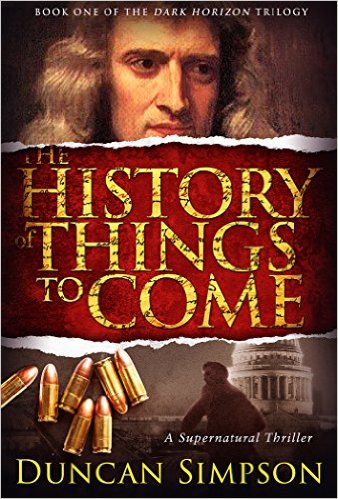
This contemporary thriller follows in the footsteps of “The DaVinci Code” but in this case the mystery and intrigue surround the works of Isaac Newton, particularly those that go beyond the scientific prowess with which most of us are most familiar. His interests also included alchemy, religion, and various sacred relics, which allegedly possessed mystical powers.

As a physicist myself, Newton is one of my favorite people, further enhanced by the fact we were both born on Christmas Day, albeit 305 years apart. Well, okay, that’s not entirely accurate since the calendars changed during that time, placing his birthday on January 4. That’s relevant to me, too, since I’m not only a physicist but also a professional astrologer, which Newton was as well, though of course the history books tend to leave out that little detail. Perhaps the author will include that particular angle in a future volume, which could introduce some interesting prophetic angles. There’s plenty of fodder to explore between science, religion and astrology, which I plan to pursue at some point myself. Thus, I was excited to find this book that promised to delve into areas in which I have a strong personal interest; I was not disappointed.

Of course anything that might wield considerable power is going to attract bad guys who want it for all the wrong reasons; think Indiana Jones and “Raiders of the Lost Ark”. In this case, however, rather than Hitler and the Nazis, it’s a single, powerful entity known only as the Drakon, who sends a variety of henchmen to obtain any and all of Newton’s writings and artifacts, which places anyone in possession of such items in mortal danger.

The main character, Vincent Blake, is an experienced detective whose specialty is tracking down stolen art and other antiquities, so he’s quickly pulled into the case as those who get close to anything Newtonian are dropping like flies. Many of Newton’s books and notebooks have already been acquired by The Vatican, which have been studied in detail by Brother Nathan Vittori, Chief Librarian at the Vatican Observatory, as well as his friend, Dr. Carla Sabatini, a former research student. Brother Nathan discovers a fascinating notebook of Newton’s in the archives that contains a considerable amount of new information and the plot thickens.

This story is richly detailed which brings it to life through various historical tidbits, well-developed characters and an intriguing plot that includes a plethora of interesting individuals including a mysterious homeless woman named Mary. In some respects it moves too fast since it’s so detailed that some can easily be missed as you plunge forward reading to find out who’ll survive and how it will end. Thus, it’s one that I would probably read again at some point to savor those elements I blew past initially. The ending was reasonably satisfying, yet left enough unanswered questions to carry over into future volumes.

The writing style is strong and engaging, my only criticism related to awkward viewpoint transitions. Nicely edited otherwise, I’m surprised that no one suggested section breaks to cue the reader when the point of view shifted, often abruptly and in the middle of a scene which was enough of a distraction to pull you out of the story action until you got oriented again. Nonetheless, it was a great read that I enjoyed tremendously and I definitely look forward to any sequels.

You can pick up a copy on Amazon here.

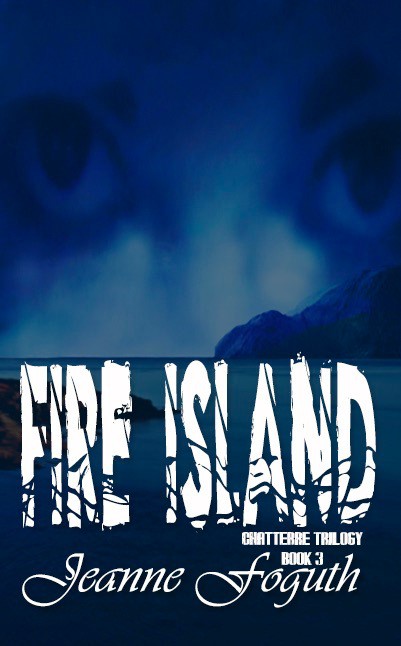
“Fire Island” (Chatterre Trilogy Vol. 3): Sci-Fa at its Best

fireislandcover

This well-written novel is the worthy third book in the Sci-Fa Chatterre Trilogy. The author does an excellent job of melding science fiction and fantasy together in another convincing story of another world. This particular world is similar enough to what ours was a century or two ago to be vaguely familiar then mixed with high technology imported via a spaceship wreck you can learn about in the first book, “Star Bridge.” Having not read the second book, “Thunder Moon,” I was a bit lost on the full context of this one, but the immediate action and suspense were enough to grab my interest without knowing the full story of how Tem Aki got into her precarious situation.

Tem Aki is on a quest to find her brother, Larwin, whom you meet in “Star Bridge.” Her journey is substantially complicated when she finds herself on the other side of the planet via an encounter with a time/space anomaly. Fortunately, there’s a settlement nearby where once again you are treated to Jeanne Foguth’s outstanding ability to depict major culture clashes when Tem Aki meets Cameron, the somewhat reluctant leader of a tribe-like culture. Since she emerged from the ocean, albeit in a spacesuit, he thinks that she’s a goddess who has arrived to help him celebrate an upcoming religious ceremony as well as deal with some troublesome individuals who are losing their religious faith as well as trying to undermine Cameron as their leader.

Cameron’s culture is well-developed as is their traditional belief in the madrox dragons, specifically the great dragon-mother, Shaka-uma. The problem lies in that fact that no one has seen her in a long time so a few troublesome doubters are declaring that they never existed. Meanwhile, Cameron is trying to prepare for their annual pilgrimage to honor Shaka-uma, which his adversaries are trying to sabotage. Tem Aki is thrown into this controversy which is further complicated by the fact that there are no other females around in the immediate environment which can best be compared to a monastery.

The misunderstandings between them are at times hilarious and if nothing else demonstrate how easily such confusion can develop when two cultures collide. Tem Aki’s technology, which includes my favorite android, GEA-4 (whom you can also meet in earlier volumes), of course convinces Cameron of her godhood. His fascination when GEA-4 stares into the sun to recharge is classic. Tem Aki’s revulsion toward the primitive, chauvinistic culture is certainly convincing as is the rationale Cameron maintains that she’s some form of divinity.

Cameron’s challenges alone would make a fascinating read but adding Tem Aki into the mix is the coup de grace for a great story. I don’t want to delve any further into the plot because I don’t want to throw any spoilers out there, but believe me when I say that there are plenty of complications, surprises, believable characters, Kazza is joined by another delightful mystic cat, and a satisfying ending. I recommend reading the books in sequence, though this one can stand on its own if you’ve at least read “Star Bridge.”

Pick up your copy on Amazon here.

jeanne

Connect with the author, Jeanne Foguth:

Visit Webhome Jeanne Foguth

Follow on Twitter @JeanneFoguth

Get Pet tips, etc. http://foguth.wordpress.com

Another One Bites the Dust

2015over copy

Year, that is.

I suppose that title gives some clue to my age, at least to those who remember its context. They go by faster and faster. I’ve always liked the analogy comparing life to a roll of toilet paper, i.e. it goes faster toward the end. Scary but true.

Every December I always look back at the list of goals I made the previous year to see how I did. I usually achieve most of them, which is a testimony for writing them down so you don’t forget what they are. Of course that works both ways. If you don’t record it then you may forget to pursue it in the first place but on the other hand, if you finished something without listing it then it could slip into the past unnoticed, meaning you don’t take credit for it. I don’t know about you, but sometimes I need all the credit I can get.

Fortunately, I have tangible proof of at least some of the things I accomplished. Some have been hanging over my head for years. For example, finishing up my science fiction series, the Star Trails Tetralogy. I think I originally said the final volume would be coming out back in 2013. Hahahaha! That sure didn’t happen. But this year it finally did. Refractions of Frozen Time came out in March, about the same time my contractor, Tracy, finished up remodeling my sunroom into a guest room. I could have quit right there and taken pride in my achievements, with due credit to Tracy, of course. Both those goals had been on my list for years so those were biggies.

But once all four books were complete, then I set to work putting together the box set I’d envisioned ever since I realized my story would require more than one book to complete. I had some extra incentive to get that one accomplished when I agreed to share a book fair booth with three other authors. It took a lot more work than expected, but somehow I finished that one, too. Yay!

Then I had a couple nonfiction ebooks I wanted to get in print. Particularly Whobeda’s Guide to Basic Astrology and The Family History Fun Factor. Done! I still have one more to go but plan to get that out by the first of 2016.

So I’m celebrating and invite you to join me.

GIVEAWAYS!

GRGivestars copy

I’m giving away 3 copies of the Star Trails Tetralogy Deluxe Box Set here.  All books are autographed by yours truly and it includes a fun swag pack of goodies, too.

WGTA-userfriendly

If you’re interested in astrology, sign up to win one of three autographed copies of Whobeda’s Guide to Basic Astrology here.

Both giveaways end December 13 which will hopefully allow enough time for the winners to receive them by Christmas. (Sorry, USA only)


Here are some other deals you might like. If you have any sci-fi fans on your holiday gift list, remember you can always “gift” them a copy.

Pageflex Persona [document: PRS0000039_00005]


THE SAPPHIRAN AGENDA

The Sapphiran Agenda, backstory of Thyron, the telepathic walking plant everyone loves in Star Trails, is now FREE on Smashwords here.

bthsreallydoneit copy

BEYOND THE HIDDEN SKY

Star Trails Volume 1, Beyond the Hidden Sky, is free if you join my Preferred Readers here.

STTtiredofwait150ppi copy

STAR TRAILS TETRALOGY EBOOK BOX SET

Get the entire Star Trails Tetralogy box set electronically for half-price on Smashwords here.

Promotional price: $2.99
Use Coupon Code: VP22Z
Expires: January 5, 2016

WGTAFrontCoverHC150ppi


WHOBEDA’S GUIDE TO BASIC ASTROLOGY

Get Whobeda’s Guide ebook for 75% off here.

Promotional price: $0.99
Use Coupon Code: QD49E
Expires: January 5, 2016

If you’d like a paperback copy you can get one for 20% off at Create Space here.   Use Discount Code 4KCHSKEW

Merry Christmas, Happy Holidays and may you have a prosperous New Year!  Meanwhile, I’m going to go back and work on that list for 2016.  After I take a nap.  I’m pretty tired after realizing how much I actually got done this year…


Hard Sci-Fi in Western Disguise

idyllcover

I must say that this story started out a bit slow and even got to the point I consider monotonous. However, the fact it was so well written, nicely edited and rich with beautifully rendered descriptions coupled with enough suspense to make me wonder what was going on, I kept reading and was not disappointed.

The author did an excellent job of creating a new world to which Earthlings are immigrating to escape their own as it loses viability. The colonists have agreed to live a simpler lifestyle, similar to that of the pioneers who settled the American West in the 19th century. Settling a new planet is not a simple, matter, however, with a variety of new hazards including byproducts of terraforming including a marginally sentient species known as owylls, which are predatory yet seem to act at the command of a tall, mysterious bearded man. Colonists are being afflicted by an epidemic of a malady known as “The Lullaby” which renders its victims comatose while muttering a mantra that spreads the disease to anyone who hears or perceives it, e.g. in writing.

The characters aren’t particularly endearing and I thought any emotional or romantic development between them fell flat. Nonetheless, they were interesting enough that I’d like to know more about them and why they’re the way they are. The main protagonists comprise two brothers, Walter and Samuel Starboard, who are transporting their Lullaby-afflicted mother, Alma, to Marathon, the site where their transport ship is located. Rumor has it that a cure is available there plus they also hope to find their missing father. Bear in mind that this journey is essentially a trail ride through dangerous unknown and uncharted territory which involves horses for transportation, tethered mules, and a wagon carrying Alma.

Along the way they encounter the Bridge sisters, Virginia and Miriam, who join them. There’s a considerable amount of tension between them, particularly from Miriam who is clearly a bitter, angry woman with a reputation for using men. She does prove useful helping Walt care for his comatose mother, however. Hopefully in the next volume the author will reveal more about her, whom I suspect is a very wounded soul with an interesting past beyond what was revealed in this volume. The part that really bogged down the first half of this book was their tedious journey which provided graphic descriptions of the planet and a strong sense of place yet in my opinion dragged on longer than necessary; some readers may not make it to the best part.

But once things started to move, then move they did. I don’t want to get into spoiler territory so won’t go into it other than to say all the questions that arose during the story to that point were answered and the plot, premise and details of the society of which the characters are a part was exceptionally well-developed, intriguing and enough to make me want to read the next volume of this trilogy. The irony of the title comes through amid numerous clever twists and turns, cool technology, most of which is environmentally friendly, and all sorts of other technological and societal goodies hard sci-fi fans like myself want and expect in a good read. As a former rocket scientist I’m always critical of the feasibility of the science in such novels and there was only one thing in there that seemed a bit of a stretch, so the author did well on that score as well.

World building is not an easy feat and getting all the details in place presents a challenge for any author. Derry has done an outstanding job doing so, established an interesting world with a variety of fascinating possibilities reminiscent of other sci-fi classics in print as well as film I wish I could mention but they would undoubtedly constitute spoilers.

If you like sci-fi adventure stories populated by ordinary people in an evolving off-world environment backed up by great imagery and detail, you will probably enjoy this story. It moves slowly at first (thus I only gave it 4 stars) but I admit that I stayed up way past my usual bedtime to finish it once it started to roll.

You can pick up your copy at Amazon here.