BLOG HOP: “MIRROR OF OUR LIVES: Voices of Four Igbo Women”

Book Cover

In Mirror of Our Lives, four Nigerian women share the compelling tales of their troubled lives and failed marriages, revealing how each managed to not only survive, but triumph under difficult and repressive circumstances.

Njide, Nneka, Miss Nelly, and Oby relive their stories of passion, deceit, heartaches, and strength as they push through life—each on a unique journey to attain happiness, self-respect, and inner peace. But none of the women’s journeys is without misjudgments and missteps.

Njide falls in love at first sight, marries Tunji too quickly, and is dismayed when Tunji shows his true colors. Nneka once thought that she and Oji were the perfect couple—until Oji traveled to the United States. Miss Nelly is a kind and good natured woman who allows everyone to take advantage of her—even her husband, whom she married only for his name. But everyone wonders why Oby and Mat even married at all, for their marriage was a battle from the very beginning.

The tales in Mirror of Our Lives: Voices of Four Igbo Women will inspire women around the world to never give up, to discover a sense of worth, and most of all, to learn to love themselves above everything else.

Background To The Story:

It is important to give a brief background information on the history of this book. In my culture, it is a great luxury for a woman to be educated. This situation is still prevalent in certain parts of Nigeria, especially in the North, where the people are Muslims. In the South, women education has made a very deep inroad. It was a battle that the women themselves fought and won. Today, in our Universities, the population of the women is more than those of men. But there was a time, when, even in the South, the choice to educate the kids in a family, fell on the male children. The male child was always chosen over the female child, and the female child was bundled off into an early marriage. Mirror of Our Lives: Voices of Four Igbo Women, is the story of the victory that education has given to four Igbo women. It is also the story of what education can do for women, especially , women in the Muslim areas of Nigeria where education is still tabu for the women to attain happiness, self-respect and inner peace. But none of the women’s journeys is without misjudgments and missteps. You can also read the reviews on the book on Amazon.om and on Barnes & Noble.

An Interview with Adebowale On Mirror of Our Lives

(1) Your debut novel, Mirror of Our Lives, focuses on four Nigerian women who went through hardship but triumphed under such difficult and repressive circumstances. Is it right, therefore, to say that you are a female rights campaigner, or a feminist?

JLB: Thank you Adewale for your interest in my book, Mirror of Our Lives. Right now, I am writing you from California, where I am performing the “Omugwo” for my daughter who recently had a baby. When I sent you a complimentary copy of my book last April, 2012, I sent copies also to as many Nigerian newspapers and magazines, as I could find. Since then you are the second newspaper to show interest. Thank you very much for this. To answer your question, I do not like to be hedged into any type of category. I am for justice for all, for each person to be treated humanely, and for the disadvantaged to be given the opportunity to excel.

(2) One of the characters in the book is Njide. How much of your real self is reflected in Njide’s life?

JLB: One thing I learnt in my writing class is that no writer writes from a vacuum. You write from what you know, from personal experience, and then go from there to create a world, or in this case a situation that does not only reflect your personal experience, but all other experiences similar to yours. I am not totally Njide, but Njide lived a lot of my personal experiences, as well as the experiences of other women I have come to know.

(3) If Njide’s life is part of your story, then the other three characters — Nneka, Miss Nelly and Oby — must also have a link with you; can you share this with us?

JLB: Just as I said in my answer to your second question, after writing about Njide, I found it easy to fictionalize the experiences of other women I know. The names I used are not the names of the women whose stories I told, and the stories I told did not reflect the experiences of any particular woman. I wanted any woman who read the story to relate to it, and many women whom I know who read the story have called to tell me that the story of one of the women or the other is the story of their lives. This is what I wanted, to tell a universal story.

(4) In your opinion, do you think the average woman is getting her credit in her contribution to societal good?

JLB: In my opinion, women are doing better today than they did in the past, but that is not to say that they are getting the credit they deserve. I would like to see very hard working women given recognition based on their work. We see a lot of women today, especially in our society getting on based on who they know, and not on their contribution in their areas of specialization. God fatherism in whatever shade or colour, to whom ever uses it, male or female, should not be condoned in public service. We see a lot of this happening in our country.

(5) Mirror of Our Lives is an interesting read. When next is the public reading another story from you?

JLB: I am working on it.

(6) The book is actually published by a foreign publisher; was there a reason why you didn’t approach our local publishers?

JLB: There were two main reasons why the book was not published by a local publisher; first, I wrote the book while I was still living and working in the United States, so I was more familiar with the publishing scene of the US. Secondly, if you notice, the book is a self-published book. I did not want to suffer any rejection on this book as I did in my other attempts to publish. I believed so much in this book that I wanted it out by all means, and iUniverse provided me the opportunity  to self-publish.
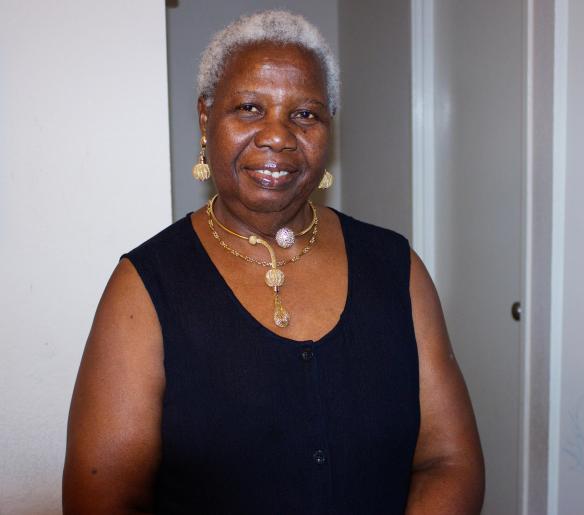
Author Pic

Joy Nwosu Lo-Bamijoko

Joy’s Bio

Joy Nwosu was born in Enugu, Anambra State of south-eastern Nigeria. Her parents were Charles Belonwu and Deborah Nwosu. She is the fifth in rank of the seven children of her parents. Joy was born into a music family.

Joy, now retired, was a music teacher, trained in Santa Cecilia, Rome, and obtained her Ph.D. in Music Education from the University of Michigan, USA.

She has written and published extensively on national and international scholarly journals, magazines, and newspapers.

Her short story I Come from Utopia was published in African Voices, Spring/Summer, 2007, pg. 18, and her first English novel; Mirror of Our Lives: Voices of Four Igbo Women was published in 2011, and was shortlisted for the Commonwealth Book Contest in 2012. She has also two books published in the Italian language.

Joy is a trained musician, and taught music for 35 years.  She writes, performs, and record folk songs.

Her new book: The Legend of the Walking Dead: Igbo Mythologies, which has just been released, is a journey into the mysteries of life and death of the Igbos of Nigeria.  She loves reading romances and mystery stories.

Websites:      http://sbpra.com/joylobamijoko/  Mirror of Our Lives …..

                         http://sbprabooks.com/JoyNwosuLoBamijoko/ Legend of the Walking…

Buy Mirror of Our Lives…Amazon Link:

http://www.amazon.com/Mirror-Our-Lives-Women/dp/1450278965

Barnes & Noble Link

http://www.barnesandnoble.com/w/mirror-of-our-lives-joy-nwosu-lo-bamijoko/1102630079?ean=9781450278966

Link to my Blog:       jinlobify.Com

Face BookLink: https://www.facebook.com/joy.lobamijoko

Link to my LinkedIn Book Add

http://goo.gl/fT1P2O

Trailer: Mirror of Our Lives: Voices of Four Igbo Women

https://youtu.be/UhSyMaUz0Uk

Twitter Handle:         @Jinlobify

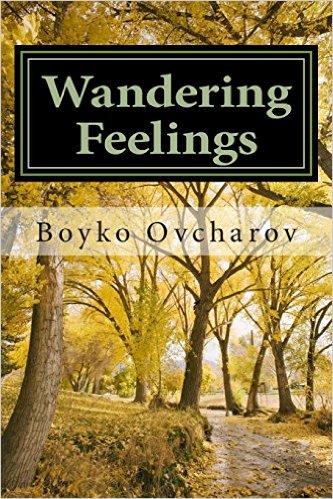
“Wandering Feelings” by Boyko Ovcharov: A Glimpse into the World of Those Driven by Emotion

wanderingfeelingscvr

Much of the prose in this story was poetic and beautifully rendered, such that it did an excellent job of capturing feelings, which can be elusive and difficult to describe with words. The descriptions of various places provide excellent imagery and added to the dreamy, flowing nature of the story. The style is definitely unique and doesn’t conform to formula writing. There is no plot in the usual sense most readers expect and the characters are nameless. In other words, it breaks plenty of rules, yet in its own way, as a chronolog of feelings, it “works.”

As an astrologer, this story struck me as a great example of getting inside the head of someone driven by emotion, such as those born under a Water Sign (Cancer, Scorpio and Pisces). If you’re not a deeply emotional person, you’re likely to see the characters in this book as illogical and possibly even dysfunctional in their inability to dismiss their unloving, materialistic upbringing and get on with their lives. However, for someone ruled by emotion, this is not easily done.

And for those driven by logic, not easily understood.  In fact, this latter group will probably be unable to understand the emotions expressed in this story. They may feel uncomfortable and perhaps even disgusted with the characters, who simply can’t seem to “get over it.” This is something that can cause great divides in relationships when people can’t understand how others are programmed. We’re all egocentric to some degree, especially when we’re younger, and think everyone sees the world as we do, or at least should.

Thus, if you fully relate to this book and become blissfully immersed in its beautiful prose and deeply felt emotions, you’re probably an emotional person yourself. Those who roll their eyes, keep waiting for something to happen worth noting or for the characters to get a grip and quit whining are probably logical by nature.

The richest part of life is often that which is felt. Those who have never fallen deeply in love, felt overwhelming joy or even its antithesis of debilitating emotional pain, are missing something. I believe this book is most important for those who don’t understand how deeply emotions can operate because it introduces them to a world with which they are entirely unfamiliar. Emotions are not always positive, e.g. love, but can be viciously destructive as well. Understanding that brings new insights into human nature, of which no one can ever have too much.

Rather than dismissing or criticizing the book or the characters, learn from it. Yes, there are people out there who are that tied to their emotions. If you’re not one of them, this is an example of what you’re missing, for good or ill.

You can find it on Amazon here.

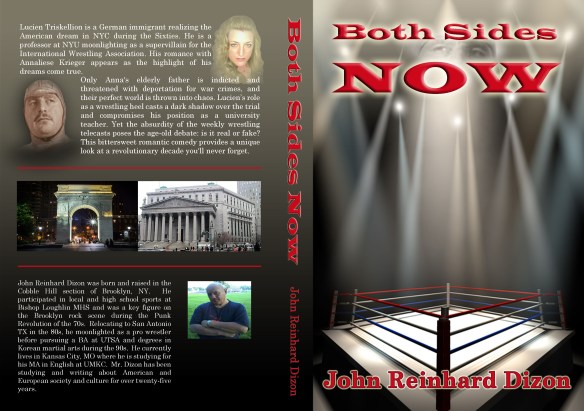
Review of “Both Sides Now” by John Reinhard Dizon

bothsidesnowcover6

This unique story entirely sucked me in. It has so much substance I scarcely know where to begin. The characters are incredibly real, not only the protagonist, but the supporting ones as well. It feels like real life because there are so many others involved with their own agendas. In this sense, it reads more like a biography as opposed to a novel. The plot is likewise incredibly complex and convincing while it skillfully portrays a slice of history representative of the 60s era.

Lucien Triskellion obtains his PhD in Germany and accepts a teaching job at New York University teaching German. Lucien is a big guy who was a champion amateur wrestler during his college years. It doesn’t take long for someone to notice the fact he can press 500 pounds and lure him into the professional wrestling circuit. If you’re not a wrestling fan, don’t let this stop you from reading this book. I, personally, couldn’t care less about this pseudo-sport, yet I enjoyed this story tremendously because it went so far beyond that. Wrestling comprises numerous settings, but the story was so character-driven that it was comparable to meeting someone really interesting and listening to their life’s story. For example, the dichotomy of Lucien’s life as a university professor versus that of a pro-wrestler, in which he was cast as a bad guy, is gripping in and of itself. If you’re a wrestling fan, then you’ll undoubtedly love it even more as it brings the human element alive with the conflict behind the scenes.

Of course with a young, hot protagonist like Lucien, there’s going to be a romantic angle. This involves Anneliese Krieger, another German immigrant, who lives with her father. As if Lucien doesn’t already have enough going on in his life, Anneliese’s father is falsely accused of Nazi war crimes incident to WWII which results in a gripping trial which is loaded with additional suspense.

The details of all elements of this novel are so vivid and convincing it was easy to get lost in it and forget that it wasn’t real. The author has the masterful ability to include just the right amount of detail to build strong imagery, clear sense of place, as well as character appearance and development. Whether it’s an address in New York City, a famous restaurant, Madison Square Garden, or legal terminology or courtroom protocol, you feel as if you’re there. Needless to say, this book would make an incredible movie.

They say an author should write what he knows, and clearly Dizon knows wrestling, which shows in how he immerses the reader in this crazy world. He’s footnoted some of the unusual terminology and slang, which helps if you’re unfamiliar with it. The business and politics of this sport are explored and exposed as well as the various complications this adds to Lucien’s life and even reflect on the trial of Anneliese’s father. While some of the detail regarding the players in the wrestling business was somewhat overwhelming, possibly a bit overdone, it nonetheless added to the story’s amazing credibility.

I don’t often find myself in a position where I’ll actually miss the characters of a book, but I felt as if Lucien and Anneliese were personal friends by the time it ended. If you enjoy a meaty novel with a different setting, strong, well-developed characters, and a breathless ride through the 60s, you’ll thoroughly enjoy this book. I absolutely give it 5-stars.

You can pick up a copy on Amazon here.

The Importance of Formatting

26572416_s

Typos, grammar and such are an amazingly common complaint in reviews, something which many indy authors encounter at some point. However, there’s another issue that can get you a bad rapp (or rep, as the case may be) that you may not even be aware of–formatting.

The guidelines for a printed book with an interior that looks professionally done are substantially different than those for an ebook. Considering how there’s a good chance most of your readers are going to opt for the electronic version, it’s in your best interest to make sure that it looks professional as well, not like an afterthought.

I suspect that numerous indy authors, after getting their book set up on Create Space, simply hit that button on the last screen to publish their book in Kindle format. This is all well and good, but don’t trust that automated process to produce an electronic version that looks anything like the printed one. At the very least, check it yourself, especially if your printed version has dropped caps at the beginning of each chapter.

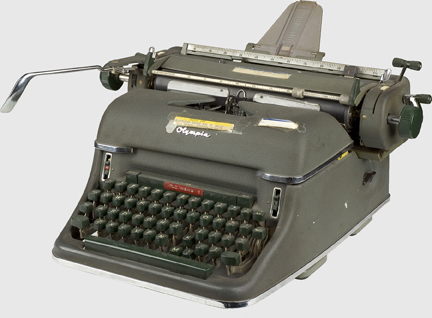
The first thing you need to do is save a second copy of your book to use for the electronic version prior to formatting it for print. Then you can add headers, footers, chapter headings, dropped caps and so forth to the printed version without introducing potential corruption into the electronic version. If you’ve already done the formatting, then obviously when you save that second copy it will be to remove such things. typewriterEither way, it’s a lot easier than the old days, when authors wrote on a device like the one shown to the right. Those of you who haven’t had that experience don’t even want to know what it was like handling simple revisions that changed the pagination. Gives me a panic attack just thinking about it.
If you want to produce a professionally formatted ebook, the best guide for doing so is the Smashwords Style Guide, which you can download for free from their website here.

Even if you don’t use Smashwords’ service (perhaps because you’ve opted into Kindle Unlimited, which requires giving Amazon exclusive rights to sell your work), the instructions will enable you to format a clean version that won’t aggravate readers enough to blast you with a bad review. It takes a little extra work, but it’s worth it.

Writing a book entails a lot of hard work, but that’s just the beginning. If you want it to be well-received by readers, it also needs to provide a comfortable reading experience. It’s not difficult to do and will be worth it. If it’s not something you care to tackle, then check into some of the services that will do so for a reasonable price, such as Fiverr.com.

Showing respect and appreciation to your audience starts with clean copy. Getting yanked out of a story by errors of any type, whether they’re typos, incorrect spelling, punctuation problems or formatting in nature, is not only distracting, but annoying. Some readers are more forgiving than others in overlooking such things, but sure as death and taxes, sooner or later, a reviewer will say so.

After all the time, sweat and blood you’ve put into your story, don’t let its message be diluted or even lost due to careless formatting. Take care of your readers and they’ll take care of you.

“Lenses of Perception” by Doug Marman: An Interesting Summer Read for Science Aficionados

lensesofperceptioncover

Let me start out by saying that this book has 359 references that comprise eleven pages of endnotes. If you’re not impressed by that, then this is probably not the book for you. However, if you love science and appreciate revolutionary ideas supported by considerable research that relate to an enigma no one, including Einstein, Feynman or Hawking, has been able to solve, then you would probably enjoy this book.

As a physicist and science fiction writer myself, I was fascinated by the book’s precepts. When I really get into such a tome, I become a librarian’s worst nightmare: highlighting key passages, scribbling notes in the margin and, heaven forbid, dog-earing pages. For what it’s worth, my copy sports 46 pages in that condition as well as more marginal notes and highlights than I care to count.

The premise of this fascinating book has been touched on ever since the double-slit experiment suggested some mysterious interaction existed between consciousness and physical matter. Rather than argue this, the author makes an a priori assumption that such a relationship exists. That in and of itself is not particularly remarkable, since it has been the stance of various other authors for decades. Marman, however, does not stop there. It’s not simply a matter of human consciousness influencing subatomic particles. He systematically builds a credible case for the tiniest subatomic particles possessing consciousness as well.

The author is an engineer and inventor who holds various patents and is thus experienced on the technical side, but is not a PhD physicist. This is a good thing. Stepping beyond the bounds of conventional science tends to be a career-limiting experience. Some have referred to scientific progression as occurring only via funerals, e.g., German physicist, Max Planck, who stated, “A new scientific truth does not triumph by convincing its opponents and making them see the light, but rather because its opponents eventually die, and a new generation grows up that is familiar with it.”

Marman’s theory is imaginative to the point of resembling one of Einstein’s thought experiments. While he doesn’t do the math, it goes beyond philosophizing, conjecture or excursions of fantasy. As indicated in the first sentence of this review, this book is well documented. The author states his theory then backs it up with existing scientific research.

The concept that there’s a link between quantum mechanics and consciousness has been argued by many. “The Tao of Physics”, published in 1976 by Fritjof Capra, took on this challenge, opening with Werner Heisenberg’s statement, “It is probably true quite generally that in the history of human thinking the most fruitful developments frequently take place at those points where two different lines of thought meet.  These lines may have their roots in quite different parts of human culture, in different times or different cultural environments or different religious traditions: hence if they actually meet, that is, if they are at least so much related to each other that a real interaction can take place, then one may hope that new and interesting developments may follow.”

In this case, Marman has synthesized his theory using particle physics, biology, evolution, psychology and various other disciplines. Typically, research in any of these areas is conducted strictly within the bounds of that discipline’s accepted facts, limiting the conclusions. Allowing these areas to overlap brings new possibilities as they’re viewed with, as the title suggests, new “lenses of perception.”

This typically creates an uproar from those violated by the unwelcome intrusion into their supposed domain. I’m reminded of the Alvarez Theory from back in the 80s, when it was first proposed that an asteroid collision caused the extinction of the dinosaurs. The paleontologists protested, claiming they’d died off from diseases incident to migration. Then NASA found the crater in the Gulf of Mexico, forcing paleontologists to accept it, like it or not. Professional jealousy is especially fierce when someone outside a specific field of study figures something out the oldtimers have been battling for years. Is this the case with Marman’s work? Time, as always, will tell.

The bulk of his ideas are expressed using analogies. Analogies are effective teaching tools employed by the world’s greatest teachers and philosophers. Using something a student understands as a basis, the concept can be expanded to facilitate comprehension of something new. The author leverages this approach by employing grammatical principles of first, second and third person viewpoints. For example, first person is “I”; second person brings in a relationship with another person, “you”; and third person adds others at a slightly less personal level, “they.” There are concepts individuals grasp which are expanded upon when shared with another, then ultimately coalesce when a group shares a link that binds several beings together.

A subatomic particle is assumed to have a level of consciousness which is defined as first person. It’s aware of itself and its existence. Stepping it up to the second person involves quantum entanglement, a phenomenon that’s been demonstrated, but not fully understood. In a nutshell:

  • Two subatomic particles interact and become linked through an unknown process.
  • When you measure one particle it instantaneously determines what behavior to expect in the other particle.
  • Quantum state of partner particle will be identical.
  • Whatever you impose on one partner particle the other will do the opposite.
  • Theoretically, they can be separated by billions of light years but when you dictate spin of one it will instantaneously affect the other.

If you’ve ever had a psychic connection with someone, you should understand this concept. Research by various scientists, including Dean Radin, PhD, who specializes in psychic phenomena, has indicated that these connections are instantaneous, defying the speed of light as the supposed limit of information transfer.

Getting into the third person, he discusses the relationships between groups that can be related to molecular bonding and steps into the life sciences speaking of “all for one” bonds, where certain entities will self-sacrifice for the good or even the life of the system. A plethora of explanations, examples and extrapolations build from these concepts, backed up by various references.

Marman concludes the book with an addendum that tackles the five unsolved problems of physics as they relate to his theory. I must admit that at this point I got a little lost. I only have a bachelor’s degree in physics, which was insufficient to fully grasp all the implications of some of his conclusions. By this point my brain was fried, anyway, due to the vast array of information provided on so many different levels. There was so much to absorb that it took me far longer than usual to finish reading. At times it was laborious, even painful. Perhaps if you have a PhD in physics you could blow through this book in a few days, but that was definitely not the case for me. With so many topics under discussion to establish their relationship, brevity is difficult to achieve.

This book provides interesting fodder to those with an open mind who are seeking new ideas and insights to the mystery presented by quantum mechanics. It’s unconventional, potentially groundbreaking, and defies many existing speculations. It proposes a paradigm shift to discover answers, which have so far been elusive. Just because a theory is popular doesn’t mean it’s correct. Many fade quietly into the past, unannounced. Even Einstein wasn’t correct all the time. What’s popular one year could be debunked the next. If it’s wrong, it will simply fade away, save any tidbits hanging on in old, out-dated textbooks.

Conversely, as German philosopher, Arthur Schopenhauer suggested, “All truth passes through three stages. First it is ridiculed.  Second it is violently opposed. Third it is accepted as self evident.”

The author explores history, philosophy, physics (of course), biology and various other subjects. If you’re into metaphysics, there are connections there as well. Expect to see a few things differently than you did before. If you’re a science aficionado like myself, it would make an interesting summer read. Take your time. Digest each new idea on its own merits. The title says it all. Be prepared to see the world through an entirely different lens than you did before.

You can pick up your copy on Amazon here.

[I was provided a copy of this book in exchange for a fair and unbiased review.]

* * *

For those of you who love this topic as much as I do, here are some of my favorite quotes related to physics, consciousness and the unknown:

“One is unlikely to discover what one is certain cannot possibly exist…. Whatever the field of inquiry, attempting to access a phenomenon with a methodology that is based on the firm underlying assumption that the phenomenon does not exist has proved itself to be a singularly inadequate strategy, at once self-fulfilling and self-limiting.”

–Richard Tarnas in “Cosmos & Psyche” (p. 108)

“Probing inside the atom and investigating its structure, science transcended the limits of our sensory imagination.  From this point on, it could no longer rely with absolute certainty of logic and common sense…Like the mystics, physicists were now dealing with a non-sensory experience of reality…”

–Fritjof Capra in “The Tao of Physics”

“Physics tends to be dictated by fad and fashion. There are the gurus who dictate the direction in which new ideas grow.”

–Michael Duff, Physicist (University of Michigan)

Some scientists (Stephen Hawking and the late Carl Sagan come to mind) insist that a “theory of everything” is just around the corner, and then we’ll essentially know it all—any day now.  It hasn’t happened and it won’t happen.  The reason is not for lack of effort or intelligence.  It’s that the very underlying worldview is flawed…We have ignored a critical component of the cosmos, shunted it out of the way because we didn’t know what to do with it.  This component is consciousness.

Robert Lanza, M.D. in “Biocentricism” (pp 8 – 9)

“You ask whether parapsychology lies within the bounds of physical law.  My feeling is that to some extent it does, but physical law itself may have to be redefined.  It may be that some effects in parapsychology are ordered-state effects of a kind not yet encompassed by physical theory.”

–Brian Josephson, Physicist, Nobel Laureate

“Space and time exist only as constructs of the mind, as tools of perception.  Experiments in which the observer influences the outcome are easily explainable by the inter-relatedness of consciousness and the physical universe.”

–Robert Lanza, M.D. in “Biocentrism” (p. 159)

“…psi may require an explicit bridge between the physical and the psychological worlds. This is why an adequate theory of psi will be … cross-disciplinary…”

–Dean Radin, PhD

“In psychology, physiology, and medicine, wherever a debate between the mystics and the scientifics has been once for all decided, it is the mystics who have usually proved to be right about the facts, while the scientifics had the better of it in respect to the theories.”

— William James in “The Roots of Consciousness: Science, Evaluating Psi Research”

Spotlight Author Blog Tour: Meet Kim Cox!

I’m excited to be a part of RRBC’s Spotlight Author Blog Tour! This week’s featured author is Kim Cox, who writes in several genres, one or more of which is likely to be on your list of favorites. If you’re a fan of the TV series, “The Ghost Whisperer”, then her Lana Malloy series is just what you’ve been waiting for! Keep reading to learn more about Kim and this intriguing series.

Lana Malloy Paranormal Mystery Series

In the LANA MALLOY PARANORMAL MYSTERY SERIES, Lana Malloy is a psychic, private investigator who is on a mission to help the dearly departed even when they don’t realize they need help. With each book, Lana’s psychic abilities grow. As she’s pushed to new limits, she learns she’s capable of much more than she knew.

In book one, HAUNTED HEARTS, Lana sets out to solve her first case—the twenty-year old cold-case and double murder of her great aunt and her great aunt’s fiancé. If she succeeds, they’ll spend eternity together; if she can’t, they’ll be stuck as Haunted Hearts. With the help of the ghosts and a new love interest, she is able to find the murderer.

In book two, GET OUT OR DIE, the success of Lana’s first case has spread throughout the local Charleston area and her business is booming. At one pro-bono job, Lana helps a widow communicate with her late husband where she learns of a frightening new ability—an ability that could give the next spirit, an angry ghost, the upper hand if she’s not careful.

In book three, THE WEDDING CRASHER, Lana is on her honeymoon in Gatlinburg, Tennessee when she learns that a recurring vision about an abducted woman took place in nearby Knoxville. This case takes her hiking up mountainsides and trekking through rough terrain to find a madman before he can harm this young woman.

In the fourth book, CHRISTMAS CRUISE, Lana boards a cruise ship haunted by dead women who were brutally murdered. While aboard the ship Lana has an experience that mentally injures her. Once she recovers, she’s more determined than ever to find the murderer.

Coming up next, book five, HAUNTED BY HER PAST: Lana is faced with the task of helping, Jena, a domestic abuse victim escape the ghost of her dead, abusive, ex-boyfriend.

Other Books Coming In This Series

In book six, DEMI’S SERIAL CASE, the town of Charleston has a serial killer and Demi requires Lana’s assistance. Demi is Lana’s best friend and a police detective. Lana helps Demi profile the killer who is believed to be a copy-cat killer (copying another serial killer’s modus operandi) of the man who has been in jail for about five years.

In book seven, DEATH COMES CALLING, Derek, Tony’s brother has moved back to Charleston after living in the middle east and Africa, treating serious injuries while associated with the organization, Doctors Without Borders. A ghost that died in his care begins to haunt him.

Book eight is of yet untitled, but the idea is that shortly after Demi is promoted to Police Captain, she will be involved in a shootout that leads to her being charged with murder. Lana will need to find the truth in order to save her friend. The problem, the dead spirit isn’t talking and he’s the only one that knows what truly happened.

Also Available at the following book sites:

HAUNTED HEARTS – Book 1 – Available now in print and ebook through Amazon KindleAmazon Print24Symbols, Barnes & Noble, iTunes, Kobo, and Page Foundry.

GET OUT OR DIE – Book 2 – Available now in ebook through Amazon Kindle24Symbols, Barnes & Noble, iTunes, Kobo, and Page Foundry.

LANA MALLOY PARANORMAL MYSTERY (Box Set 1)  2-Book Set – Available now in ebook through Amazon Kindle24SymbolsBarnes & Noble, iTunes, Kobo, and Page Foundry. Save $2 by purchasing the box set.

THE WEDDING CRASHER – Book 3 – Available now in ebook through Amazon24SymbolsBarnes & NobleKoboiTunesPage Foundry, and Scribd.

LANA MALLOY PARANORMAL MYSTERY (Box Set 2) 3-Book Set – Available now in ebook through Amazon24SymbolsBarnes & NobleKobo, and Page Foundry. Save $3 by purchasing the box set.

CHRISTMAS CRUISE – Book 4 – Available now in ebook through Amazon24SymbolsBarnes & NobleKoboiTunesPage Foundry, and Scribd.

Read more . . .

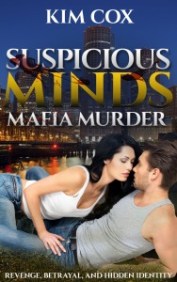
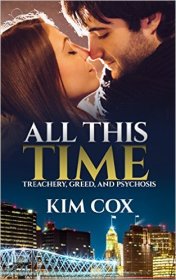
SM - Book CoverallthistimeKCcoverIf you like romantic suspense, be sure to also check out “Suspicious Minds” on Amazon here and “All this Time” on Amazon with this link.
About The Author

KC - Author Photo

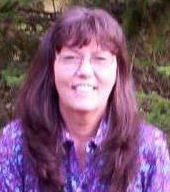
Kim Cox is an author of Paranormal, Mystery, Suspense and Romance. She lives in the Blue Ridge Mountains of North Carolina with her chain saw artist husband, their West Highland White Terriers–Scooter and Harley, and a Yorkie mix, Candi. Kim is published in novels, short stories and articles.

Sign up for Kim’s Readers List for exclusive information, new releases, contests, giveaways, and free books.

Visit her at the following sites:

Author’s Website: http://www.kimcoxauthor.com

Blogs: Kim’s Musings, Kim’s Author Support Page

Amazon Author Page: http://amazon.com/author/kimcox

Social Media locations:

Facebook: https://www.facebook.com/kimcoxauthor

Twitter: https://twitter.com/KimCoxAuthor

Google: https://plus.google.com/+KimCoxAuthor/posts

Goodreads: https://www.goodreads.com/kimcox

Pinterest: https://www.pinterest.com/kimwrtr/

LinkedIn: https://www.linkedin.com/in/kimwrtr


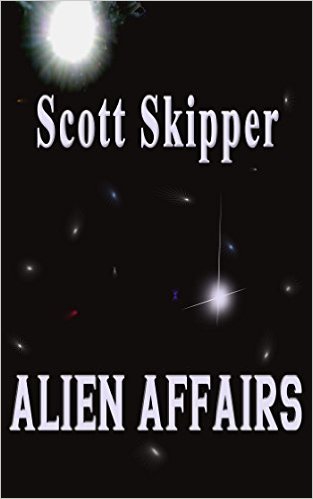
Review of “Alien Affairs” by Scott Skipper

alienaffairscover

This fast-moving tale was one of the most entertaining stories I’ve read in a long time. Not only did I find numerous scenes laugh-out-loud hilarious, but it had enough suspense for me to stay up into the wee hours of the night to see how it ended.

Ironically, one of the reasons I bought this book was because one of its reviewers gave it a poor rating simply because it was politically incorrect.  And they were right, it certainly is.  And therein was where I found most of the humor. The snarky, cynical comments were such an accurate reflection of the state of the world today that you either laugh or cry.  I, for one, prefer to laugh.

The story begins with the Roswell incident back in 1947, with which any UFO nut like myself is duly familiar. The author did an excellent job of recounting the incident and blending those individuals mentioned in the historical record with fictitious characters.  In fact, it’s difficult to tell where the truth (which is undoubtedly out there) ends and speculation begins, placing this story within that popular sci-fi subgenre where fact mingles comfortably with supposition.

This version of the incident begins when a counter-intelligence officer recovers an e-reader the surviving alien was trying to destroy. They discover that it activates when picked up and displays alien writing on its screen, but shuts down a few moments later, leaving the person slightly light-headed. The device eventually winds up in the hands of the CIA where Miles Ashly, a linguist, and Lambert Gray, a cryptographer, are tasked with the translation and soon discover that as they begin to recognize certain words that the device “speaks” the word telepathically, providing the pronunciation, then eventually starts teaching Ashly the language.  When they uncover the aliens’ “Mission Plan” they are horrified to discover that their intent was to exterminate the human race. Once the failure is apparent to those back on Tau Ceti, a new attempt will be made which they expect will occur around 2016.

The author marches through time, taking us to the present while tying in various historical events, such as the race to the Moon as well as other presidential administrations.  Eventually Ashly retires and decides to teach the alien language to his grand-niece, Carrie Player, telling her it’s the language of the Dogon people. Years later, when he’s on his death bed and Carrie is an adult, he tells her the truth and advises her to write the CIA a letter about her special skills when she graduates from college. She does and, as expected, they hire her.  It takes a couple decades but eventually the dreaded day arrives when three UFOs are discovered on a course toward Earth.  Their plan is not to kill everyone overtly, but rather render everyone sterile, so they would die off over time. The reason for this action is because Earthlings are a potentially harmful, belligerent race that poses a potential danger to other civilizations in interstellar space.

Eventually contact is made with the incoming craft and Carrie converses on her cell phone with their leader, a grey, almond-eyed alien named Deshler, and the real fun begins, starting with her assigning the theme from The Twilight Zone as his ring tone.  Her goal, as expected, is to talk him and his crew out of completing their mission to exterminate the human race.  Various remarks about how our government operates as well as conducts international relations definitely were politically incorrect.  For example, Carrie’s question during one conversation where she asked, “We have many parasites who live off the work of others. Could you use your sterilization stuff selectively? There are plenty of people I would like to stop from reproducing.”

The POTUS is not shown in a positive light, either, which would undoubtedly be offensive to some if you projected his identity to an actual person. Frankly, depending on your political persuasion, he could be from either major party, both of which are laughable these days, if you maintain your objectivity and sense of humor. Thus, those of you who can see our current state of affairs for the FUBAR it is will appreciate the satire and what is a rather convincing tale with enough credibility to make you wonder, as good fiction should.

The dialog is convincing but includes quite a few f-bombs, so those who prefer less graphic language may want to look elsewhere. If you’re a UFO fan you’ll recognize numerous familiar stories and names which provide authenticity and credibility as they interact with Skipper’s characters.  Depictions of how the various government agencies would react to the situation’s developments are believable, the characters diverse and engaging, the technology described sufficient to satisfy hard sci-fi fans.  The story would make an excellent mini-series with its outstanding balance of humor, suspense, and UFO lore, somewhat like a cross between The X-Files and Men in Black. I found it sci-fi at its best with any political incorrectness contributing to its authenticity.  I’m actually glad that it’s the first book in a series and look forward to reading the sequels.

You can pick up a copy at Amazon here.  (Affiliate link)

Interview with Multi-genre Author John Reinhard Dizon

smokyring3 copy

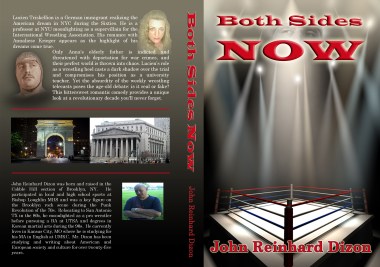
John Reinhard Dizon is one of my favorite authors and definitely one of the most versatile. His literary repertoire includes thrillers, family sagas, historical settings, steampunk, sports, suspense and techno-horror to name a few.  His latest release, Both Sides Now, is a romantic comedy, and I must say that I have a bit of a personal interest in this book since I designed both the interior and the cover plus my daughter is the model on the back. While formatting the interior, I gleaned enough of the story’s basics that I’m looking forward to reading it properly in the near future.

I interviewed John a few years back, but in view of this new release, I thought it was time for a rerun with some specific questions directed at him about this latest work. While he dubs it a romantic comedy, it struck me as much more substantial, especially with its unique setting and situations. So let’s see what he has to say.

MF:  The protagonist in your latest novel, “Both Sides Now”, is an intellectual wrestler. You are a highly intelligent person and were a wrestler in a “previous life”, which explains the authentic feel and terminology of the sport. How much of this story is autobiographical?

JRD: Actually it’s far more biographical. Hans “The Great” Mortier was one of my mortierWorld Wide Wrestling Federation childhood favorites. There was a major roster change when Vince Mc Mahon bought the Company from his father at the end of the Sixties, and the stars from the old regime were swept under the rug. Mortier was not a German professor, so that is all ‘what-if’. However, a large portion of the story is going to be instantly recognizable to fans of the era. The novel is as much a testament to the era as it is to Hans Mortier.
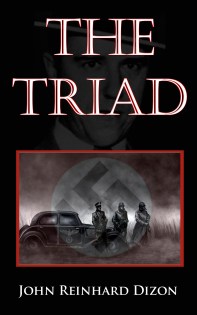
MF: Ray Karpis, quite a shady character from the early 20th Century, has made an appearance in two of your books, this latest one as well as “The Triad.” What do you find most appealing about him?  Did you ever meet him?

TheTriadCover1 copyJRD: As a criminologist, I have to say that Alvin Karpis is my favorite gangster. He was the last of the Public Enemies but was so elusive and shadowy that hardly anyone knows of him. I wrote Both Sides Now before The Triad and paid homage to Karpis by naming the Lou Thesz-based character after him. Outside of his autobiography and the Public Enemies biography and movie, there is almost nothing out there about Karpis. Hence The Triad. I think I did a good job of bringing his personage to life. He was considered a genius, loyal and generous to a fault, and very much in touch with the modern world and technical developments. Like most of the great gangsters, he would have been a tremendous success in society and the real world had he not gone the wrong way.
MF:  You do a great job of capturing the flavor of other eras as well as places.  You’ve lived through quite a few yourself, but when you get beyond your experience, what’s your favorite research method for your stories?

bothsidesnowcover6.jpgJRD:  The Internet usually helps you find the resources you need to make your story work. Only in this case, as you mentioned, I lived through most of this. Ergo, it was mostly a matter of documenting my recollections. I spent a lot of time in the NYU neighborhood, Soho and Greenwich Village, so most of what I did was pull up addresses. I read hundreds of wrestling magazines so was familiar with the old-time arenas. I was also a paralegal, so that helped me make the courtroom drama all the more realistic.

MF:  You’ve certainly held a wide variety of jobs, which undoubtedly contributes to your writing. Authenticity is important if you want to be taken seriously as an author and when you can say, “Been there, done that, got the t-shirt” the details bring the story alive. As far as the plot itself, do your stories reveal themselves as you write or do you know what’s going to happen, start to finish, when you first sit down to write them?

JRD:  Many times the characters end up helping write the stories, as Sabrina Brooks does in the Nightcrawler series. She just makes things happen around her. In this story, Ray Karpis greatly influenced the conflict in the storyline (pun somewhat intended). He becomes the voice of reason, letting Lucien clearly see all the possibilities if he chose that direction in life along the road to wrestling superstardom. I think it also lets the reader see ‘both sides now’ and will stimulate discussion as to whether or not Lucien makes the right choice.

MF: Ethical dilemmas make great material because the reader is forced to think.  You have a huge list of published work. How long does it take you, on average, to finish one of your novels?

courthouse1JRD:  It varies, considering how complex the story is. The action/adventure stories move along pretty quickly as there’s the adrenaline rush that keeps you writing. Historical fiction such as this takes a bit longer because you have to authenticate your work. Getting names, places and events wrong will leave your story dead in the water. The courtroom storyline in this novel took almost as much research as all the wrestling background. It probably took the better part of a year to put it all together.
MF: Wow! That’s so true, though, if you want to be taken seriously as an author. When a reader stops to roll his or her eyes because something is inaccurate it pulls them out of the story, which is the last thing an author wants to do. Of the numerous books you’ve written, do you have one particular character who’s your favorite? Why?

JRD:  I’m having to go with Sabrina Brooks, aka the Nightcrawler. Every one of her novels is an adventure in itself. She’s a beautiful woman who moonlights as a crimefighter, who seems to target the Russian Mob. She’s the CEO of a chemical company, which means she doesn’t have to do this but does anyway. She’s very compassionate and is a churchgoer, which makes her all the more unique. Her personal relationships suffer greatly as she gets beat up, and the Nightcrawler’s successes come at the expense of her personal life. I enjoy writing her story as much as people love reading it.

MF:  Multi-dimensional characters are essential to a good story.  So what’s your favorite part of the writing process? Which part is the most difficult?

JRD: It’s the dialogue. It may be my strong point as a writer, and it helps me develop the characters and give the reader the best insight as to the speaker’s personality and motivation. The reason why reality TV shows get over is because people want to see their heroes behind the scenes. In literature, the author allows readers to listen to the characters giving up their innermost hopes and fears. The most difficult part is bringing it all together, making the story plausible. You do your homework, you authenticate your background, you flesh out your characters, but your audience has to buy your story. That’s the make or break part, and I think I make that happen every time.

MF:  Yes, you certainly do! When did you decide you wanted to be an author?

JRD: I was writing dialogue for my stick-figure cartoons when I was six. I was fascinated by TV and the movies and wanted to tell my own stories. Many people will say my entire life was about turning my fantasies into reality.

MF: So obviously you were born to write, which isn’t surprising considering how prolific you are.  You’ve worn a variety of hats over the years in a wide variety of jobs and places. What can we expect from you in the future? At what stage is your next novel and when do you expect it to be out?

JRD:  The Blight is about a decorated fire team of Navy SEAL commandos working as an elite unit for the St. Louis PD. They are taking on a mass murderer intent on destroying the ‘social blight’ plaguing the city. Kirsten Streicher is a typical JRD bad-ass female protagonist. Only her team is heavily impacted by the madman known as X, and the writing is on the wall as their group is slowly disbanding. Kirsten is forced to move forward with a whirlwind romance beckoning, though she feels compelled to bring the killer to justice before her career comes to an end. As usual, there’s lots of social issues and moral conundrums discussed, and the standard JRD reflections of current-day controversies. I’m hoping to release it by Summer 2016.

MF:  Sounds like another winner! Is there any particular author or authors who have inspired you the most?

JRD:  Shakespeare, Ian Fleming and Robert E. Howard. The Bard for his conciseness and verbal dynamism, Fleming for his ability to take the reader to a myriad of locations, societies and situations, and Howard for his gift of lurid description and breathtaking action. I hope my readers see my work in a favorable light in comparison.

MF: From what I’ve read, I believe you can rest assured that they will.

You can pick up a copy of Both Sides Now on Amazon here.

Connect with John Reinhard Dizon:

Facebook:  https://www.facebook.com/johnreinharddizonUSA

Amazon Author Page:  http://www.amazon.com/John-Reinhard-Dizon/e/B00DU9JNUQ/

Twitter:  https://twitter.com/JohnRDizon


Review of “The Book of Neptune” by Steven Forrest

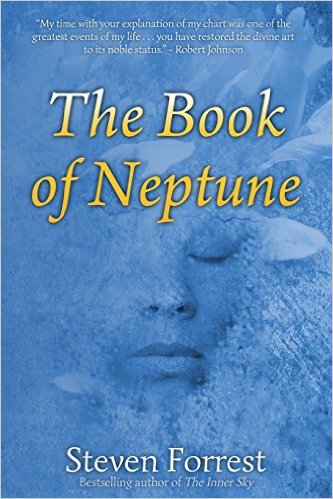
bookofneptunecover

[NOTE:–To get the most out of this book requires at least a rudimentary knowledge of astrology.  This need not be extensive, but should include knowing Neptune’s sign and house position in your natal chart, any aspects between Neptune and the other planets as well as where he currently resides in sign and house placement by transit.  A transit, for those of you unfamiliar with the term, refers to the current zodiacal location of a planet or other cosmic entity, including any aspects it forms to a planet in your natal or some other astrological chart, of which there are too many to get into here.  You can obtain this information for free from astro.com.  Once you have that, you’re all set to apply the information Forrest has provided in this outstanding book.  If you’d like to learn astrology’s basics, I recommend my own book, “Whobeda’s Guide to Basic Astrology”, which contains what I would have liked to have found when I was first learning about this ancient discipline.]

Even though I’m a professional astrologer myself, I’d been struggling with a Neptune transit for three years as this bad boy aspected first my ascendant, then Mars, then my Moon.  Neptune’s influences are often elusive while contributing to a foggy, lazy, dreamy, ungrounded feeling.  This was entirely foreign to me, though I must say it has certainly lent me a tremendous dose of understanding for those who are programmed that way.

As someone with a Capricorn Sun, Virgo ascendant, and Gemini Moon, everything about it was contrary to my basic cosmic imprint.  For those of you out there who are fellow astrologers, I’ll point out that my progressed Sun has been in Pisces for over a decade, which has been uncomfortable as well, but these Neptune transits have been like weathering a tsunami in a leaky boat whereas before it was simply a matter of being afloat in a swimming pool on an air mattress.

Needless to say, I was very uncomfortable with it, and some of my fellow astrologer friends, who are more familiar with these energies, tried to help, but the main thing they accomplished was only to convince me I wasn’t losing my mind.  Which reminds me, delusions and numerous forms of insanity are in Neptune’s domain along with drugs, alcohol and all forms of escapism.  Fortunately, one of those peers, who is also a close friend, was aware of this book, told me about it and I immediately bought a copy.  It’s a considerable understatement to say that I’m glad that I did.

Prior to Neptune swamping me with other-worldly, space cadet ditziness, I’d been an organized, disciplined, responsible, hardworking person.  Now I couldn’t stay focused to the point that if I hadn’t realized it was Neptune, I would have been deeply concerned that I was developing Alzheimer’s.  I kid you not.  As the cosmic surfactant, Neptune tends to dissolve what he touches, and I believe that includes your brain.  Not surprisingly, the god of the deep is associated with loss, disappearances, deception, psychic phenomena and abilities, spiritual experiences such as enlightenment and so forth.

To sum it up, Neptune left me in a state best described by WTF?  I advise my clients that there’s always a positive side to any transit, no matter how grueling, but I was having serious difficulty finding anything about this one that was useful.  The usual approach with a transit is to identify it, then direct that energy to something productive, yet I had never been less productive, more confused and generally feeling as if I were adrift in the ocean with no land in sight.  I had never felt so lost.

Then I was fortunate enough to get a copy of Forrest’s book and I must say that he nailed it.  He starts out by explaining Neptune’s realm, on the edge of the solar system, beyond which lie Pluto, Eris and possibly other planets or minor planets, the domain of comets and then interstellar space.  It’s an area filled with mystery and the unknown, so it’s no wonder it’s unfamiliar to someone who’s practical, logical and responsible by nature.

In describing Neptune’s effect when connected with the other planets, Forrest provides both the “Light Side” and the “Dark Side.”  This is tremendously helpful because sometimes with Neptune it’s not easy to tell which is which.  For the twelve houses, he provides snapshots which include an overview, significant quote and a sentence or two regarding “Leaking Energy” as a preface to several pages of in-depth explanation.  This is particularly helpful if you’re desperate, as I was, so you can grab the highlights before diving into the book as a whole.  He discusses loss, often experienced during a Neptune transit, as well as navigating those murky waters in a positive way.  He talks about synchronicity, which is typically ramped up during this time, both of a favorable and less favorable nature.  His section on how the zodiac sign Neptune resided in influenced the music for different eras is fascinating, as is his journey through history, recounting key events that occurred when Neptune was previously in his home sign of Pisces, as he is now.

As an astrologer, Forrest’s books have provided me with a much deeper understanding of Neptune’s influence than I had before.  It helped me understand numerous things which have occurred during this period and provided excellent ideas for dealing with them and channeling that energy that will contribute to my personal evolution in a positive way.  I feel as if he has thrown me a life-jacket when I needed it most, the fact this book came into my hands at this time an example of the synchronicity he describes.  It also makes sense that in the past few months I’ve become involved with a local astronomy group that conducts star parties every month where I’ve had the opportunity to look into Neptune’s realm, now understanding why this experience has felt so profound.  Somehow gazing out into space helped me feel more grounded.  Now I understand why.

If you feel as if you’ve lost your footing, are sinking in quicksand or adrift on a large body of water with no land in sight, there’s a good chance that Neptune is involved.  If that’s the case, I can’t recommend this book highly enough.  The price is a far cry less than a psychologist, especially one who doesn’t augment his or her practice with astrology.  It has not only provided me with the answers I was looking for, but made me a better astrologer who can be more helpful to any of my clients going through Neptune’s often dark and mysterious waters.

You can pick up a copy of Steven Forrest’s “The Book of Neptune” on Amazon here.

Review of Elle Klass’ “The Vampires Next Door”

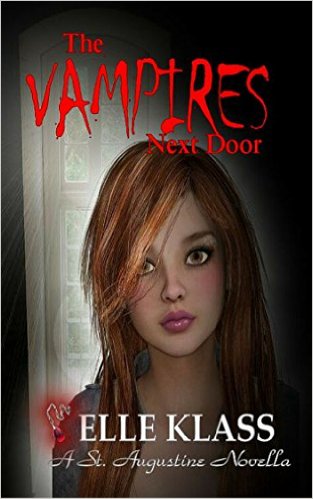
VampiresNDCover

This fast-moving tale is populated with engaging characters whom you feel you know personally as this intriguing story unfolds. Freshly transplanted to St. Augustine, Florida, Alison is a shy teenager with the usual insecurities inherent to her age who lives with her recently divorced mother. The two of them reside in an apartment where Alison engages in some people-watching, particularly Rodham, whom she has the hots for, as well as a bunch of young women who occupy the apartment next door. These particular neighbors are given to loud, boisterous partying into the wee hours of the night while her mother, a shift nurse at a local hospital, is typically gone. Of course the title of this story serves as a spoiler as to who and what those nuisance neighbors actually are.

Much to Alison’s horrified delight, Rodham introduces himself and the pair begin a warm friendship moving toward a cozy romance as they investigate exactly what’s going on with these weird neighbors. A variety of surprises and plot twists quickly ensue, presented in Elle Klass’ outstanding, character-driven style with which she’s developed a unique vampire culture known as Bloodseekers with whom an eternal war wages with their mortal enemy, the Slayers. Skillfully woven into the history of the USA’s oldest European-established, continuously occupied settlement, you’ll find a liberal dose of paranormal phenomena intermingled with magic that will satisfy Harry Potter as well as other fantasy fans. You’ll have to read this exciting tale to find out where the young hero and heroine fit into this fascinating tale, but rest assured you won’t be disappointed.

Even better, since you’re bound to fall in love with Alison and Rodham, this is the first volume of a trilogy which promises further exciting adventures. While this story contains plenty of action and intrigue, it’s well within the PG range and thus suitable for adolescents and teenagers. It gets creepy and a little scary, but not terrifying, just exciting. The author’s former life as a junior high school teacher comes through beautifully in her understanding of teen motivation, behavior and emotions. Nonetheless, the book contains enough substance, character development and plot twists to satisfy readers of all ages. I’m not a big vampire fan myself, yet thoroughly enjoyed this suspense-laden tale by this up and coming multi-genre author.

You can pick up your copy on Amazon here.