The Next Step for the “Dead Horse Canyon Trilogy”

For those of you not familiar with The Curse of Dead Horse Canyon Trilogy, my latest books written with my Cheyenne co-author, Pete Risingsun, here’s an update I wanted to share. If you’re not subscribed to the books’ website, I encourage you to do so if you want to keep up with the latest developments which will hopefully lead to the books becoming a TV series along the lines of Longmire, Dark Winds, and Yellowstone.

You can also learn more about the stories, watch book trailer videos, and read the 5-star reviews each book received from Readers’ Favorite and see the other awards the saga has earned. I have numerous blogs on that site, too, which relate to Native Americans and other subjects that tie in with that series. This site is primarily for reviewing the books I read to relax along with an occasional rant.

The past few months have been busy as well as exciting. Back in October I seized upon an opportunity to pitch the Dead Horse Canyon Saga to producer, Lisa Bellomo. Lisa is a Creative Producer and Senior Production Executive based in Los Angeles who’s experienced in developing and producing critically acclaimed independent and studio feature films. Look her up in IMDB.

Bryan Reynolds

My meeting with her went very well. She was receptive, asked targeted questions, and offered the following comments on the story:

“The project’s blend of government conspiracy, murder mystery, and supernatural suspense gives it commercial appeal. The thriller aspects–high-stakes intrigue, a cover-up, and a protagonist caught between two worlds–make it attractive to financiers and audiences alike. The story’s pacing, tension, and sense of danger position it well within a proven genre that performs well across both streaming and theatrical markets.

“The story features two emotionally rich, complex, and heroic lead roles: Charlie Littlewolf, a 30-something Native American protagonist on a spiritual and moral journey of revenge and reclamation; and Sara Reynolds, a strong, resourceful woman grappling with trauma and lost memory while seeking justice for her husband’s murder. These roles offer depth and range–ideal for attracting talented actors–and allow for meaningful representation of Indigenous characters in a contemporary thriller setting….”
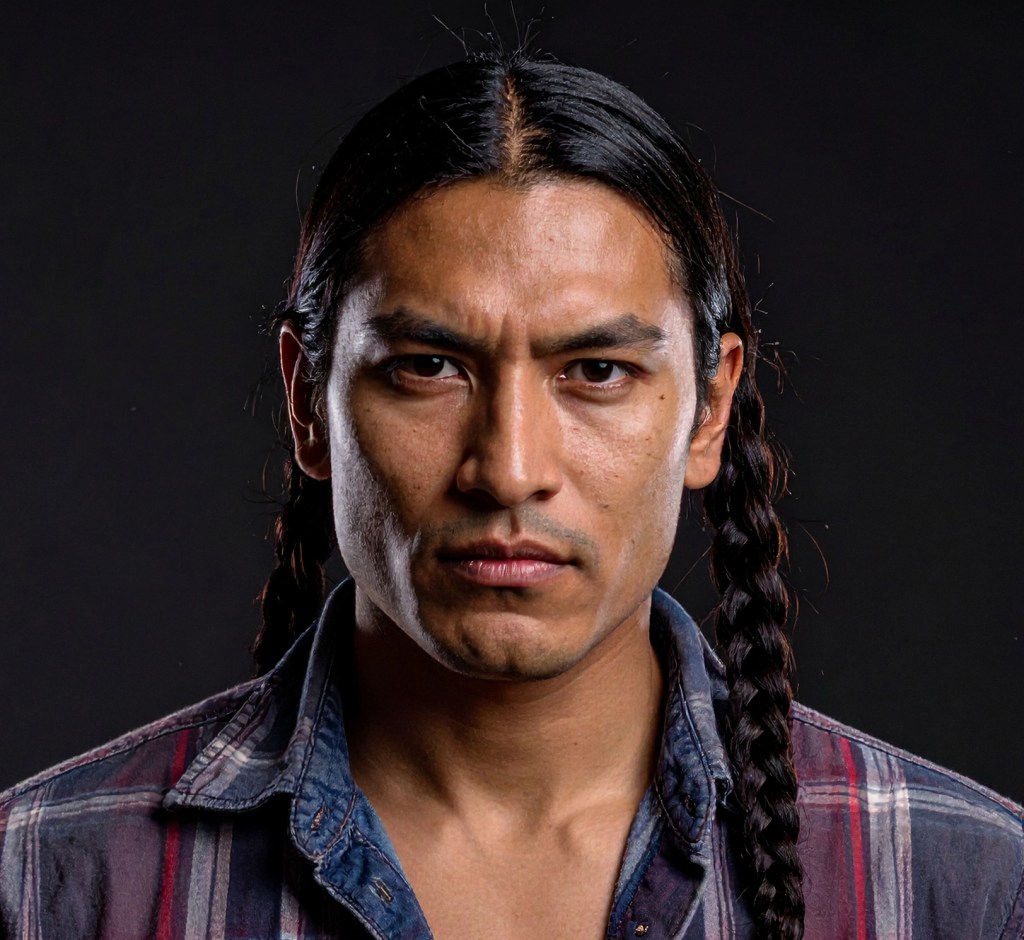
Charlie Littlewolf

Lisa provided a “road map” on how to proceed toward becoming a limited series. That is what I have been working on since our meeting. I have written what is known in the film and TV industry as a “treatment” that describes various elements of the story including a breakdown of episodes. I have also put together a synopsis and written the script for the pilot.

After these documents go through various review and feedback loops, then it’s time to find key creative collaborators, such as a director, lead actors, and producing partners. Needless to say, including at least one Native American filmmaker or writer will be essential for ensuring the retention of authenticity and cultural accuracy that Pete and I worked so hard to achieve in the novels.

Sara Reynolds

It has been quite a revelation switching from novelist to a screenwriter. The format for scripts is very different and well-defined with it not a simple matter of cutting and pasting the dialog from the book. Scenes need to be described, but not too much, since the producers and directors will have their own ideas, plus there may be budget considerations as well. While an author can describe what a character is thinking and feeling, in a script it’s far more succinct and left up to the actor to portray.

It has been an amazing adventure so far and I look forward to the next steps as the material makes it through the various hoops. I’m working with Voyage, an organization that helps individuals make the contacts they need for their work to be developed into a feature film or for TV.

I look forward to what the new year will bring as we move forward with the next exciting step for our multi-award winning trilogy! Stay tuned and wish us luck!

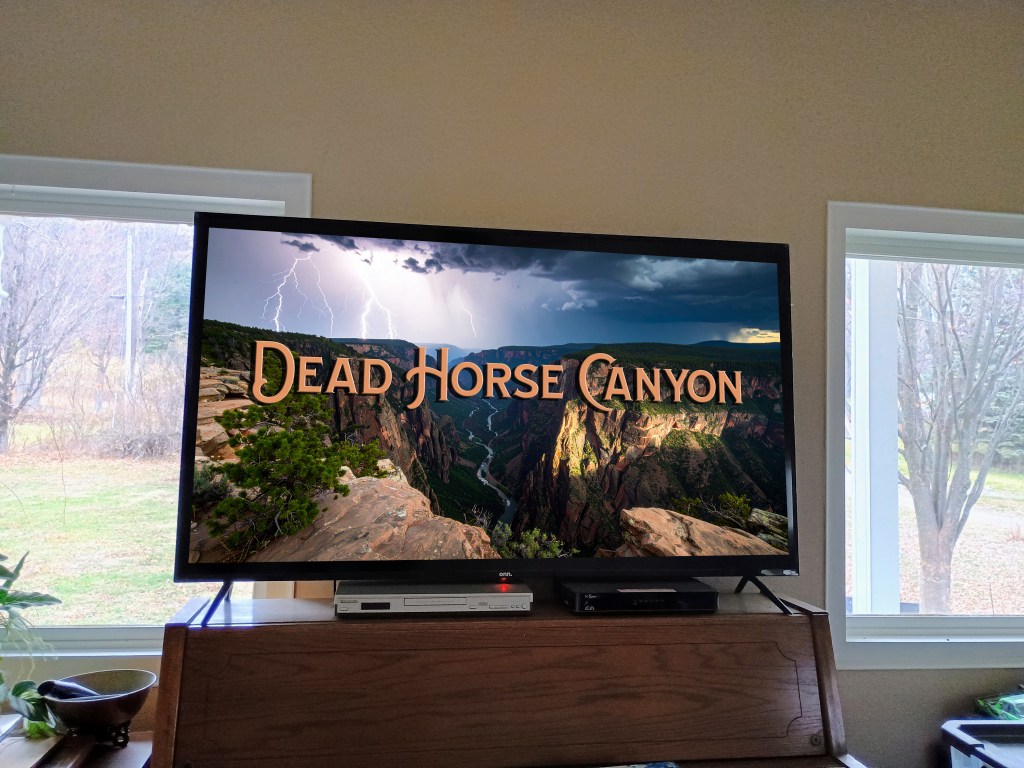
P.S. I used Photoshop to create the picture of our TV with the pilot’s opening screen for my vision board. I just couldn’t resist. Pictures of the main characters in the story are courtesy of Adobe Firefly. 🙂
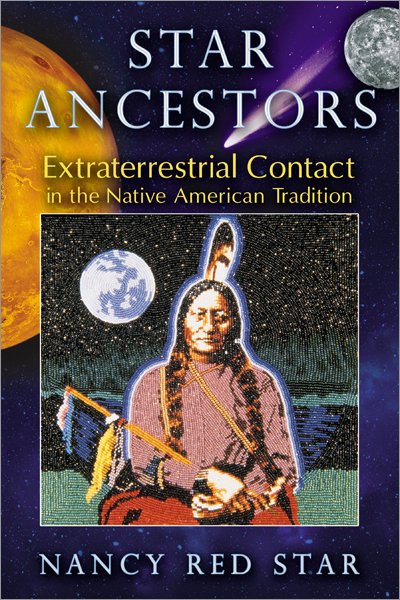
Review of Nancy Red Star’s “Star Ancestors: Extraterrestrial Contact in the Native American Tradition”

This book is a masterful work of art in addition to containing a collection of personal experiences from members of several different tribes. These include Navajo, Mi’kmaq, Abenaki, Seneca, Cherokee, Tarahumara, Maya, Olmec, Yaqui, Creek, and Choctaw.

Though testimonials about UFO encounters are included, the majority of the book is on a more spiritual level, dealing with other types of connections with the Star People. These include the importance of ceremony, previous lost civilizations from millennia ago, high technology in the distant past, the origin of indigenous people, and prophecies of the future, which is upon us now.

The book has been around a while, the original copyright in 2000, then renewed in 2012. In today’s world that’s a long time and many things prophesied that may not yet have occurred by either of those dates have by now.

I think my favorite section was “We Wander This World with a Purpose” by Mali Keating. She spoke of the Hopi, where they came from, and their numerous prophecies. Here’s an excerpt of one section that explained so much about our modern world.

“The Anasazi were a people left over from the migration. The people were told they must never stop and build cities, but of course some did…. Cities make people crazy, as we all know. People become greedy and lose the ability to work together.”

Here’s another, that may not have been as apparent when this book was first released as it is now:

“The Hopi said that they would know that the end is coming when roads crisscrossed this continent like the web of a spider–those are the vapor trails of airplanes. You can see vapor trails like the webs of spiders in the sky.”

Actually, roads on which we drive crisscross the continent, too. Those trails in the sky,  however, are not vapor trails, they are called chemtrails. Vapor trails are condensation from normal airplanes whereas chemtrails are chemicals such as barium and aluminum being deliberately sprayed in the atmosphere to supposedly combat climate change. This, like so much else out there today, is a lie. If anything, they are causing the climate to go crazy by facilitating weather manipulation.

There are numerous photos of indigenous art and the layout of the book itself is genius, between Nancy Red Star’s commentaries before each entry to her free verse poetry at the conclusion. Reading these stories is not just informative, it’s an experience of another realm beyond what meets the eyes.

A realm that Native Americans and all indigenous people understand.

May we all learn from their ancient wisdom before it’s too late.

5-stars, Highly Recommended

Available from Amazon and InnerTraditions

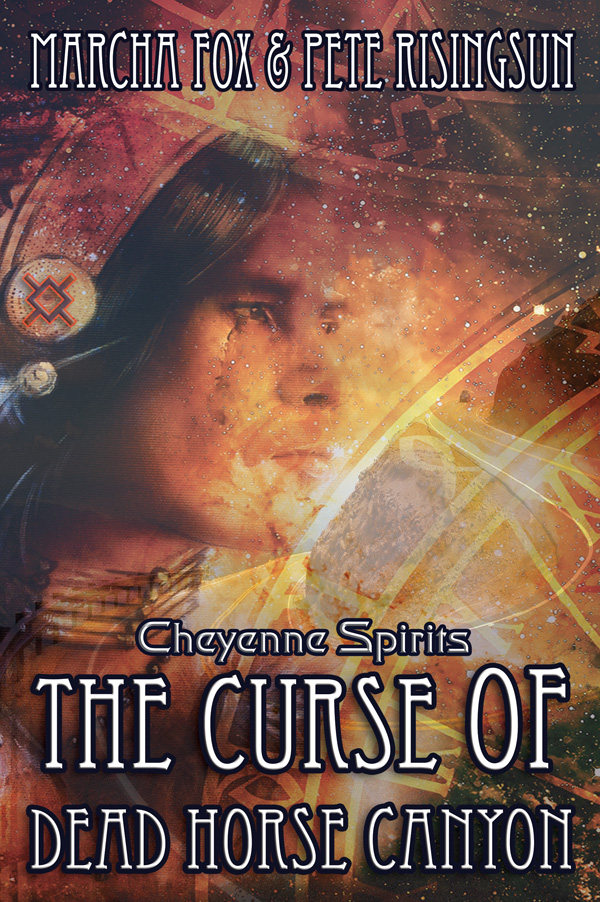
“The Curse of Dead Horse Canyon” A cross-cultural epic saga begins . . .

front-hi-res-rgb-tiny

Government corruption ignites a 19th century Cheyenne curse….

In 1879 a drunken hoard of silver miners raided a Cheyenne village while the tribe’s warriors hunted buffalo. A small band of young braves, not yet old enough to join the hunt, escaped and rode for help. Their efforts failed when they were discovered by the raiders, who ran them over a cliff along with all the tribe’s horses that had been left behind.

When the warriors returned and found the devastation, the tribe’s medicine man, Black Cloud, placed a curse on the site.

A century and a half later, a scandalous Top Secret project is under construction in the same Colorado wilderness. Bryan Reynolds discovers that its roots lie in the same greed, corruption, and exploitation of the Earth that precipitated the curse. But before he can expose what he’s found, he’s killed in a suspicious accident that his wife, Sara, miraculously survives. Her memory of where they were or what they’d discovered, however, is gone.

Neither Sara nor Bryan’s life-long Cheyenne friend, Charlie Littlewolf, will rest until they find out what Bryan discovered that resulted in his death.

Charlie is acutely aware that the only way to solve the mystery is through connecting with the grandfather spirits. To do so he must return to his roots and the teachings of his medicine man grandfather, Eaglefeathers. His journey back to the Cheyenne way includes ancient rituals and ceremonies that guide him and Sara to the answers they seek.

As a descendant of Black Cloud, his destiny is deeply embedded in the fulfillment of the original curse, which was triggered by the scandalous government project Bryan discovered and his subsequent death. Charlie’s quest has only just begun.


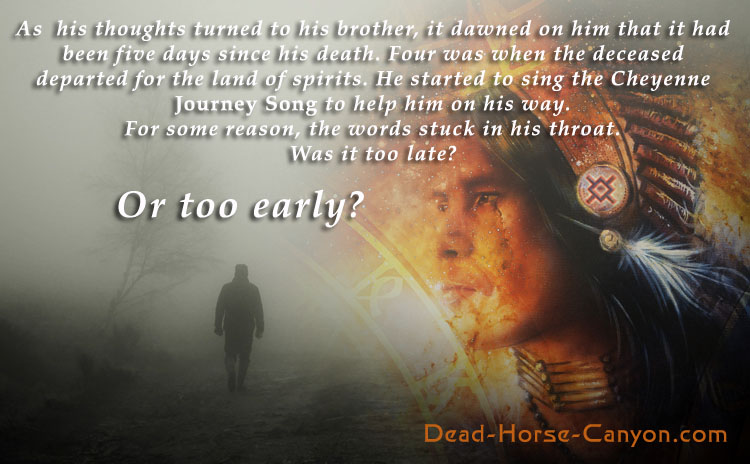
toolateortooearly copy


It took me far longer to write this story than I ever imagined. Believe it or not, my original intent was to write a cozy mystery which I planned to finish in a few weeks. Once I got into it, however, and started doing some research (my fatal flaw as a write), it morphed into a not-so-cozy murder mystery with a sharp conspiratorial edge. It took nearly two years from when it was conceived to releasing volume 1 of a trilogy.

Part of the delay was when I decided I needed a Native American to give my work a sanity check. I didn’t want it to be inaccurate or offensive. I did a lot of research, but recognized that is often insufficient. Through a rather serendipitous chain of events I found Pete Risingsun, a Cheyenne who lives on the Northern Cheyenne reservation in Montana. It didn’t take long for Pete to connect with the story to such a degree that he became the story’s coauthor. The Cheyenne portions of this story are accurate. You can read Pete’s biography as well as mine on the book’s website here.

A government conspiracy lies at the core, though this first volume concentrates on Sara and Charlie discovering what Bryan knew that got him killed. It’s character driven like my other novels with them riding a freight train of research that captured me in their iron grip. Every time I turned around I discovered something else that fit the story and situation too closely to ignore.

Modern man’s colonialism coupled with a blatant disregard for the environment conflicts with Native American philosophies of animism and the necessity to honor the Earth. These ideologies have clashed for centuries. Informed individuals already know about the downside of fracking. Past pollution caused by 19th century mining and the EPA Superfunds charged with cleaning them up, however, are not as well-known.  Put them together and there’s a subplot just waiting to hatch.

Various paranormal and supernatural elements including detailed descriptions of Cheyenne rituals and ceremonies are included. You’ll learn about the sacred red pipe, ceremonial fasting, and the sweat lodge. The Cheyenne’s name for the Great Spirit is Maheo, who is referred to throughout. There are numerous other-worldly situations included. While the story is fictitious, these depictions are authentic.

Modern technology plays a significant role in juxtaposition to traditional Native American elements. Astronomy and the ancient art and science of western astrology play roles as well in helping Sara and Charlie find the answers they need.

These complexities are what expanded this story into a trilogy. Charlie’s journey back to his roots and the consequences Sara pays for fulfilling Bryan’s dying request play out in the next two volumes. They are already drafted and awaiting collaboration with Pete and then the usual rounds of editing. Native American history is touched upon, but will be covered in greater detail in subsequent volumes.

I hope you’ll join me in this incredible journey and enjoy it as much as I have putting it together with the assistance of my awesome coauthor.

Pick up an electronic copy on Amazon or Google Play until July 31, 2020 for only 99c!

More vendors are on the way. The print version will be out in about a month. COVID19 has slowed down the conventional indie publishing process to glacial speed, but it is on the way.

Check out the series website for more information about the sequels and an excerpt from this one.

The saga has barely begun….

A Perfect Story for Native American Heritage Month

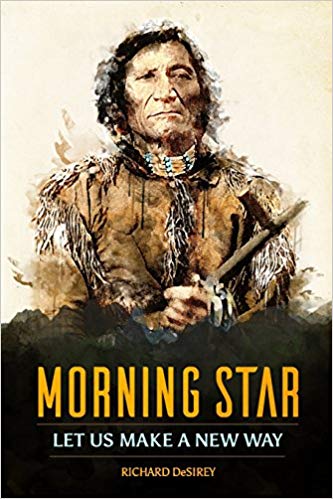
morningstar

Morning Star: Let Us Make a New Way

by Richard DeSirey


November is Native American Heritage Month and if you want to expand your knowledge of American History there is no better place to start than with this well-written, historically accurate story.


This book chronicles the story of those who came to be known as the Northern Cheyenne. They were driven from their ancestral home in the Black Hills area to Kansas, but promised if they went peacefully, they could return to their sacred ground at a later time. Of course this promise was not honored. Determined to return to the land given to them by the Great Spirit, whom they knew as Maheo, they escaped from the barracks in which over 300 had been imprisoned without food, water or heat in the winter and started the long trek back to Montana.

This band was led by a wise chief and leader whose name was Morning Star. In the historical record, he is usually referred to as Dull Knife, a derogatory nickname given to him by the Sioux (Lakota) because he was a peacemaker and wanted to co-exist with the white man. Clearly this is not what the white man wanted. Promises and treaties were made and consistently broken. Those who signed them on behalf of the United States often didn’t have the authority to enforce them. Treaties had to be ratified by Congress, and when this didn’t happen, the terms of the treaty were not met, though the Native Americans were expected to honor their side of the agreement. The military was especially brutal, leaders often decorated for the cowardly slaughter of peaceful groups that included women, children, and the elderly. Yes, Custer did get what he deserved.

The original explorers of North America treated the Natives Americans horribly, especially the Spanish and English. Believe it or not, the French showed them more respect. When the United States attained their independence, the treatment of the Native Americans got even worse. They were in the way as far as western expansion and “Manifest Destiny” were concerned and treated worse than animals or even slaves because they were in the way and of no value.

It is absolutely shameful and a national embarrassment that it took a court decision to declare them as human! Even the pope had declared it acceptable to slaughter indigenous people. In what universe is this acceptable?

As a baby boomer, my impression of the First Americans was that they were blood-thirsty, uncivilized savages. This came from what I was taught in horrifically biased history classes combined with the TV and movies of time. Nothing could be farther from the truth, yet never was it mentioned the depth and spirituality of the culture that they espoused, especially the Cheyenne tribe. In many respects, they achieved a culture that was far more advanced than our own.

As an author myself I am currently working on a trilogy in which my main character is Cheyenne. This has motivated me to do a significant amount of research to assure its accuracy. I have been shocked, heart-broken and ashamed of my country as I have learned how these people were treated. I am currently working with a full-blooded Cheyenne to further develop this character and he is the one who gifted me with this book. The author worked diligently with the Cheyenne people for decades to gather Morning Star’s story as it had been preserved by oral tradition by his descendants. This book is the real deal.

You owe it to yourself to learn how history really unfolded in this country. With all the controversy these days over immigration, try putting yourself in the moccasins of the First Americans as the white man invaded them from across the Great Waters, then proceeded to systematically steal their land.

Would you fight back if they refused to negotiate? You bet you would.

You can pick up your copy on Amazon here.

What is Your “Spirit Animal”?

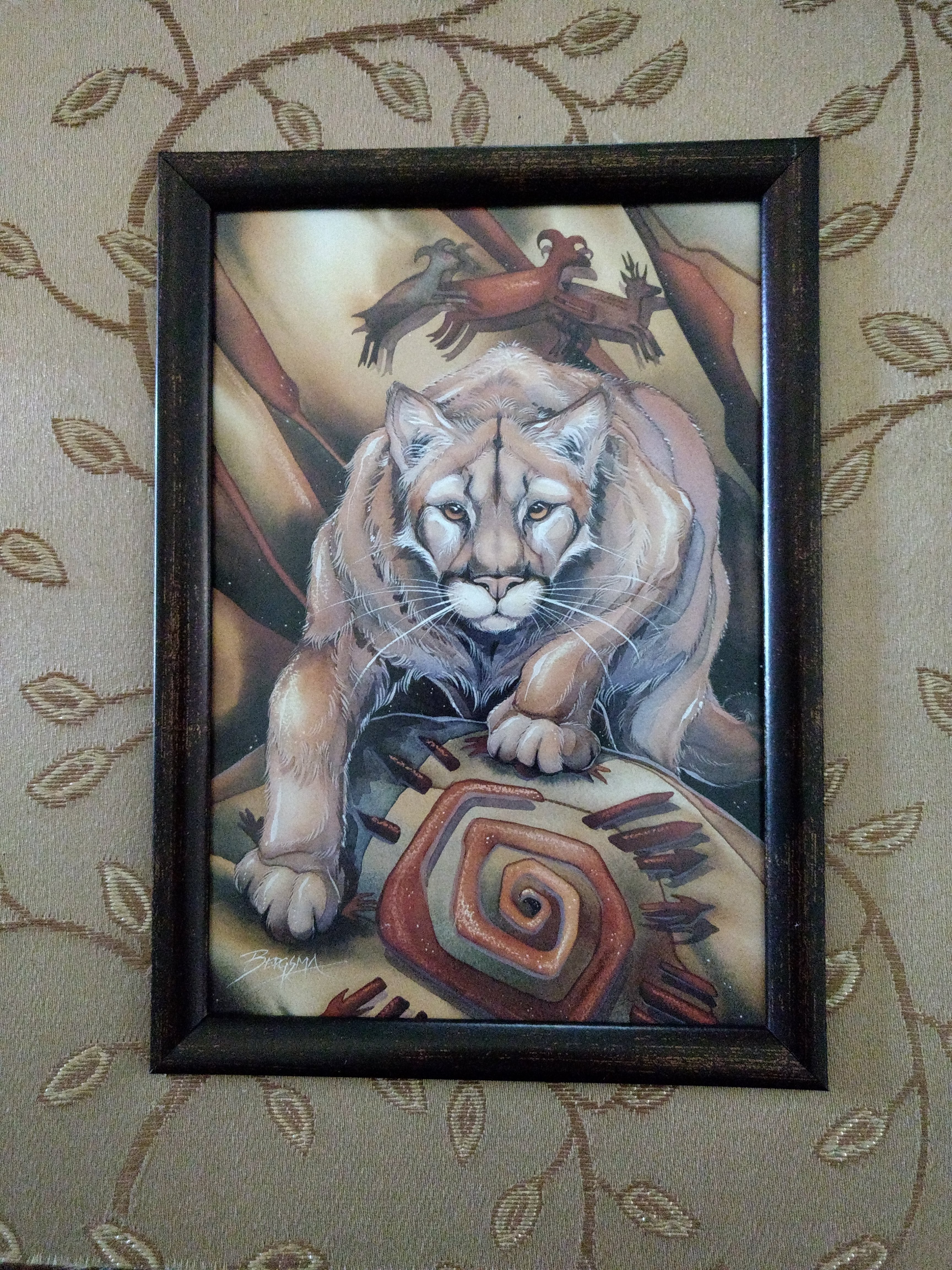
cougarpicture

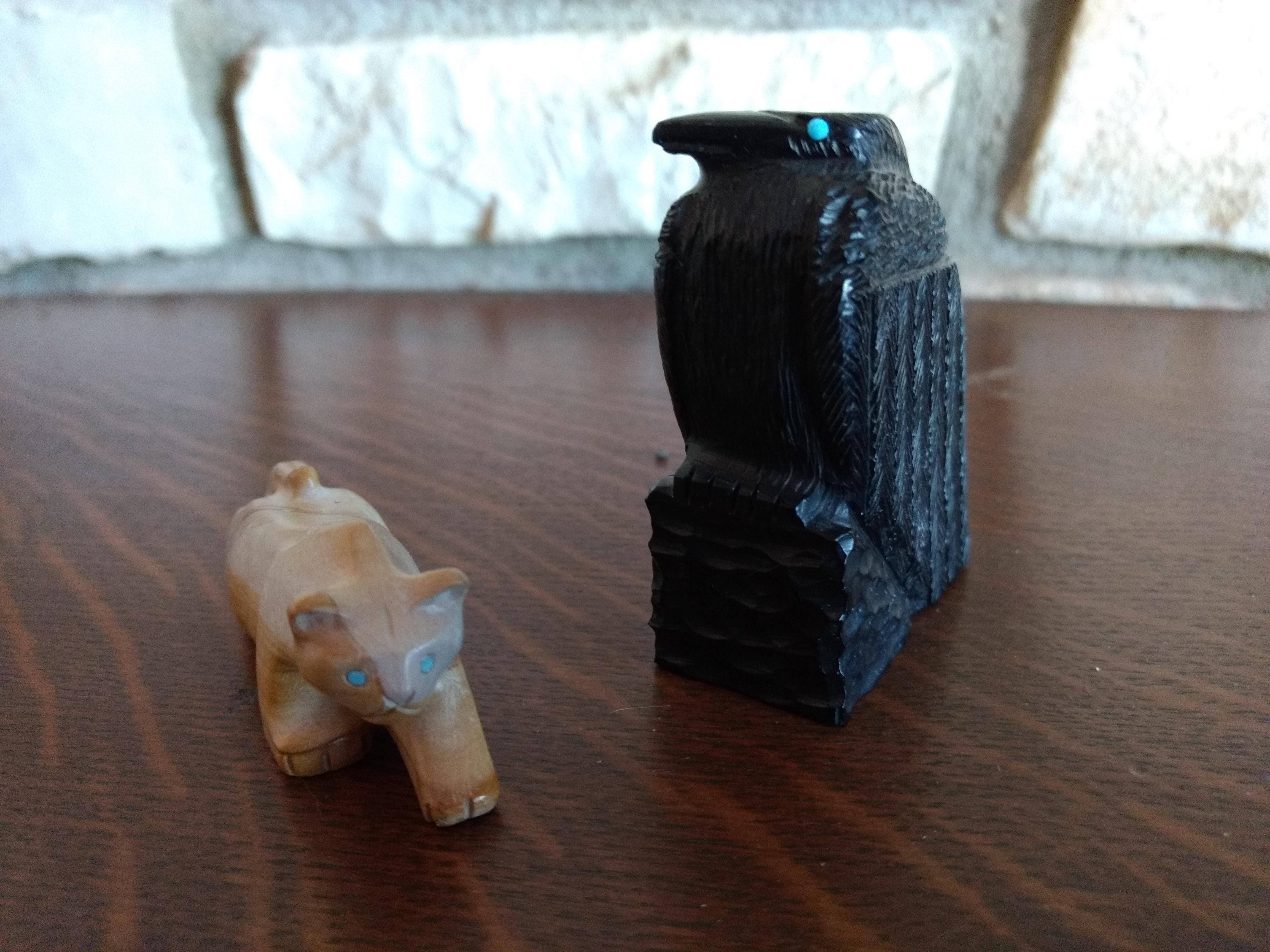
I first learned about spirit animals while in Santa Fe, New Mexico for an astrology workshop a few years back. While we were there, a friend who was also a fellow attendee wanted to check out this little shop that sold Zuni fetishes. If you’re not familiar with fetishes, they are small, stone carvings of different animals that are then typically blessed by the tribe’s shaman. The shop was a pretty amazing place with a surprisingly reverent feel. To be honest, I’ve been in churches that felt less holy. Patrons within were examining these amazing works of art, seeking those with which they felt a spiritual connection.

I guess you could call this the original “self-help” program, where you identify the animal that has the characteristics that reflect your situation, then meditate on that animal so you can acquire (or in some cases release) the traits represented, thus making that animal your “spirit animal”.  You won’t necessarily have the same spirit animal throughout your life, but rather turn to the one most relevant for your situation at the time.

cougarandravenI wound up buying two that I was drawn to, a cougar and a raven. Oddly enough, I already had a picture of a cougar on my wall (shown above) that I’d had for years. It was a notecard sent by a dear friend that I liked so much I framed it and put up in my office. I’d nearly forgotten about it until I got home and noticed how much my newly acquired fetish looked like the picture. Later, when I read about the fetishes’s meaning, they were spot-on.
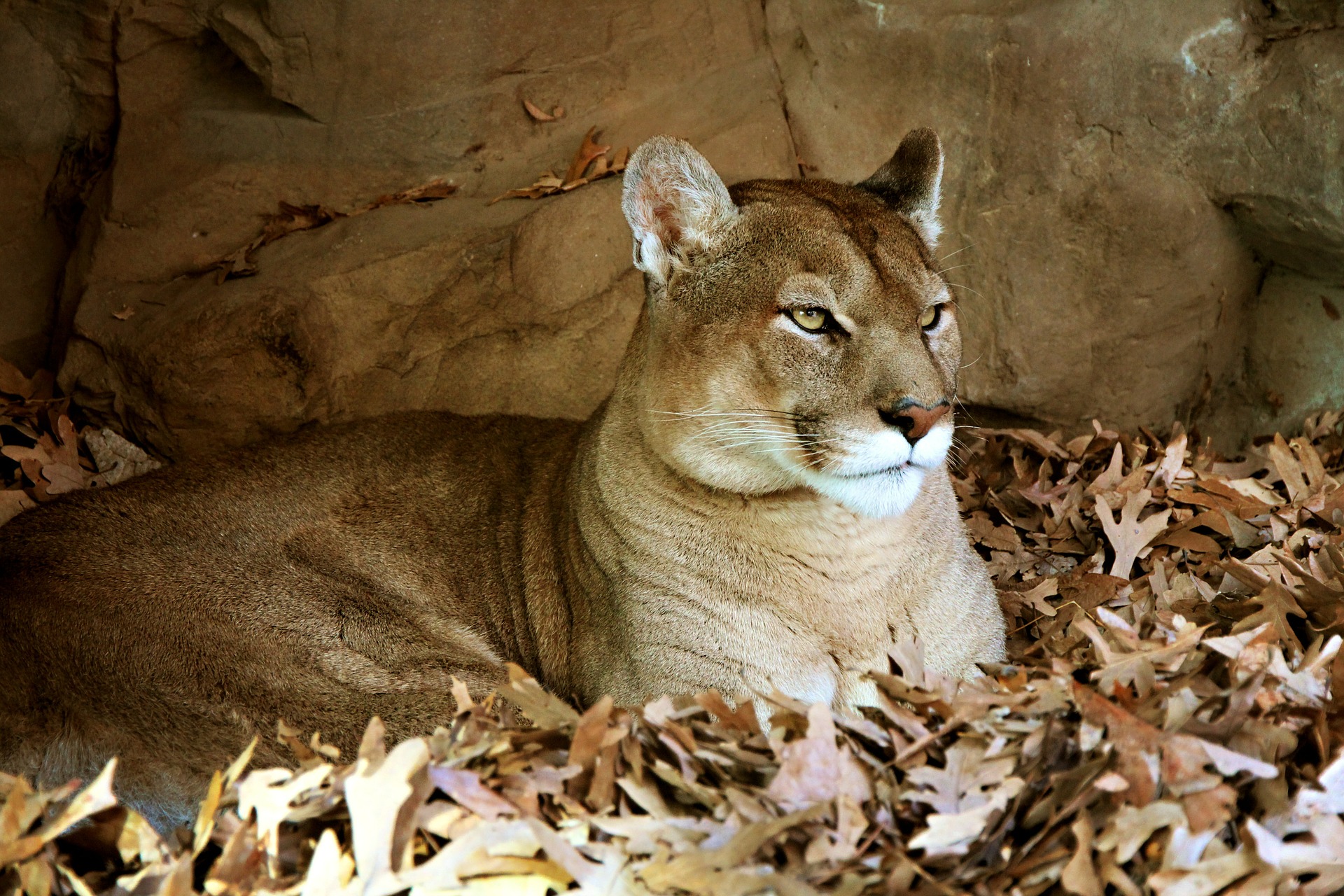
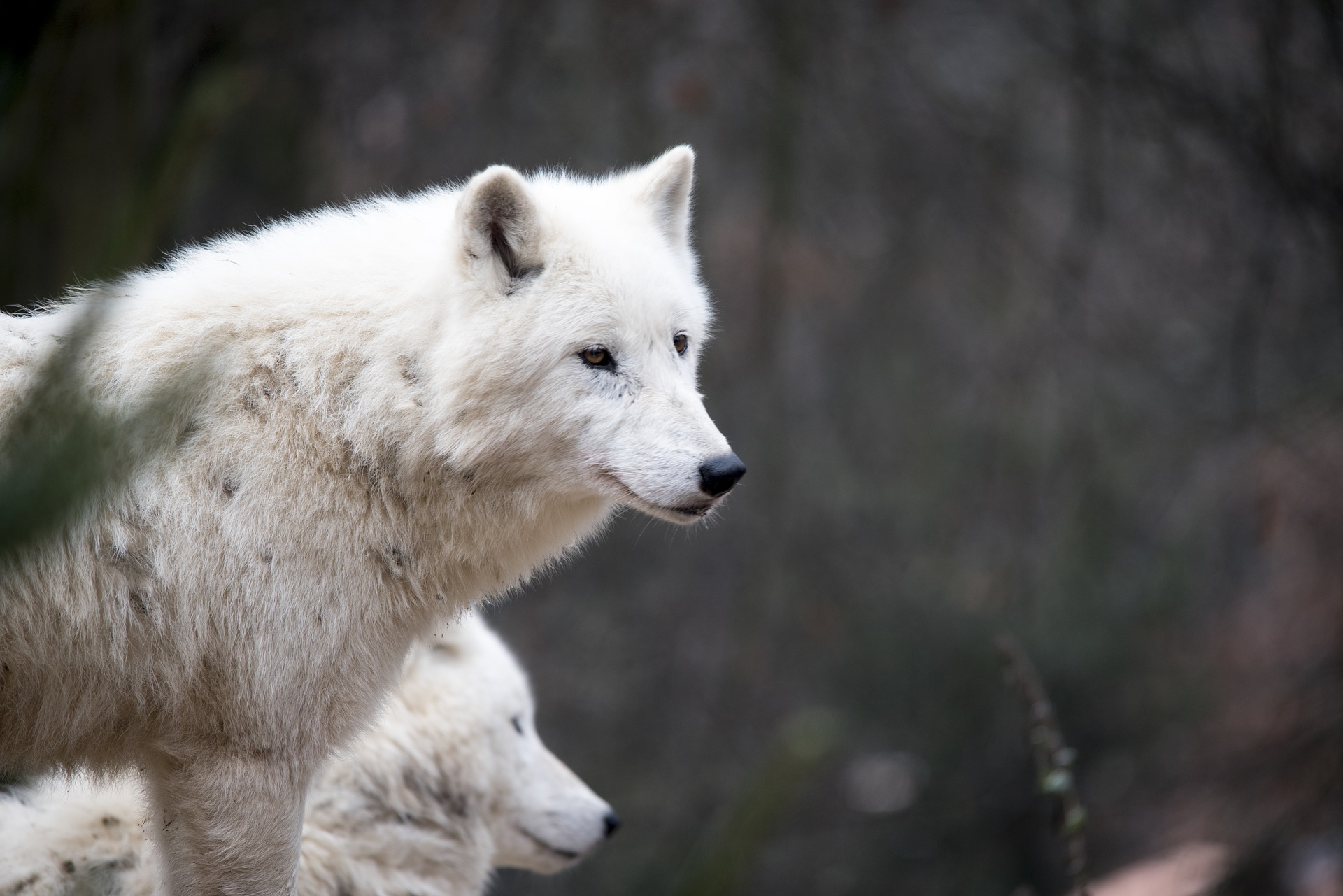
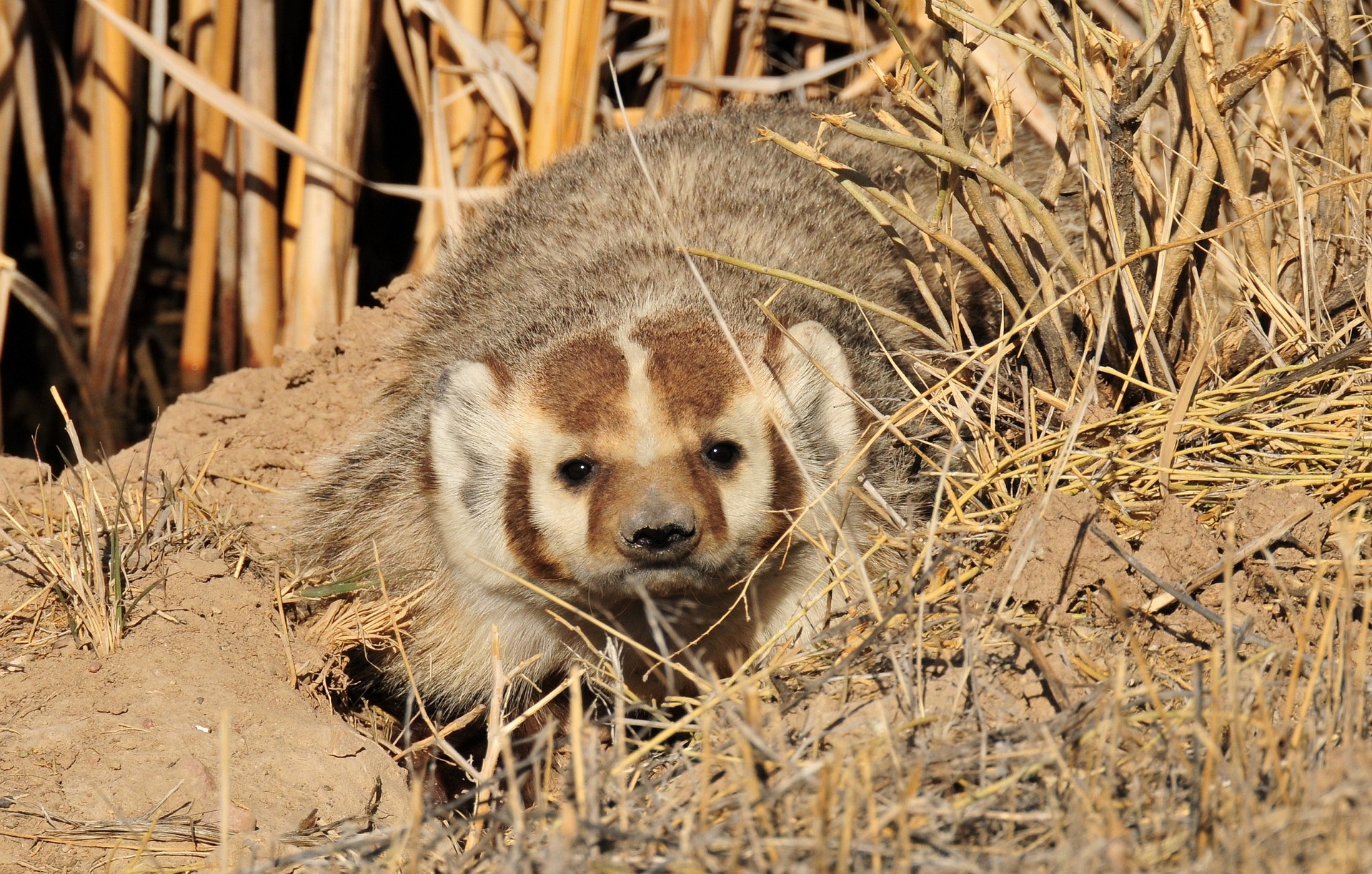
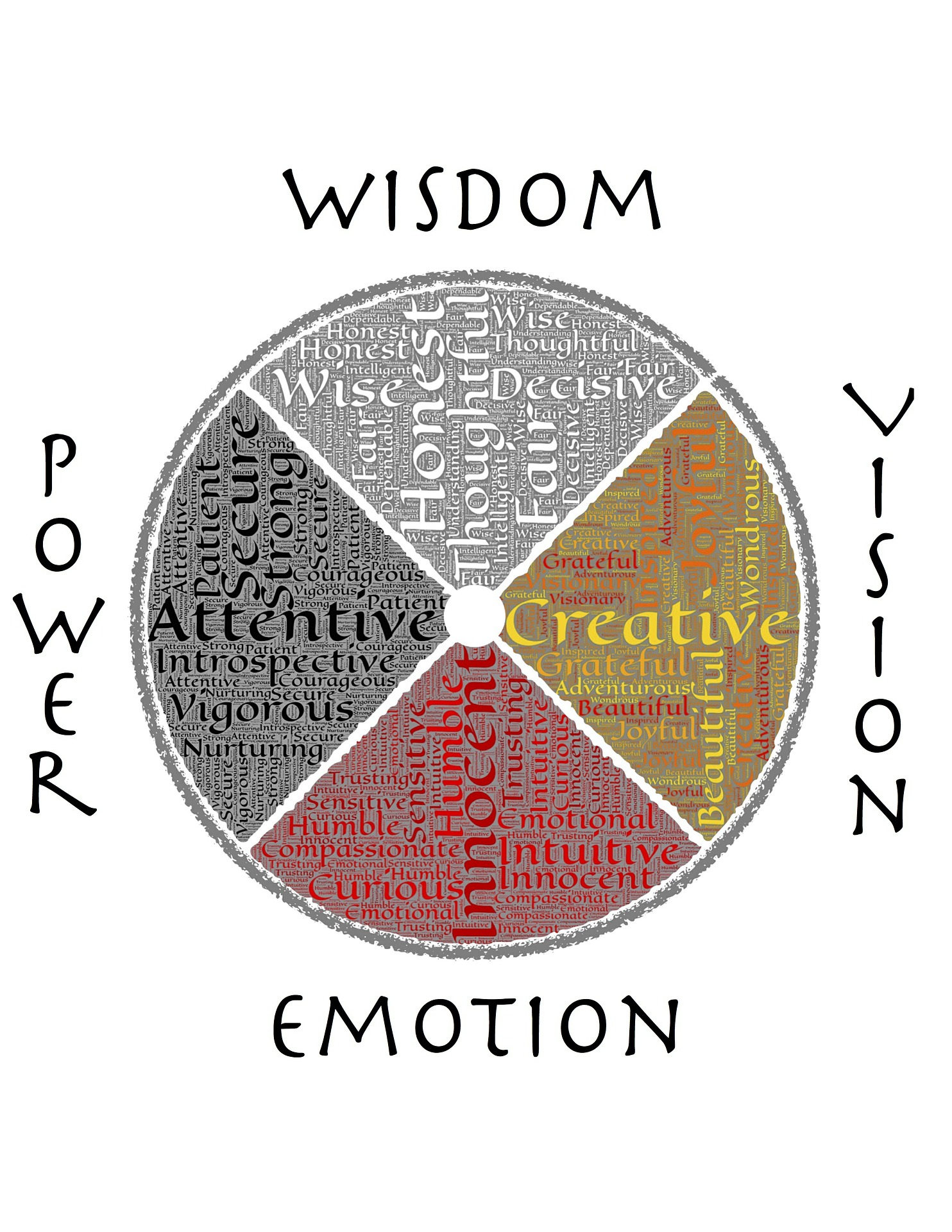
Spirit animals are associated with the Native American Medicine Wheel, which includes the mountain lion (cougar), black bear, badger, white wolf, eagle and mole, which represent each of the six directions (four cardinal, i.e. north, south, east, and west, plus up and down). The meaning of each animal is based on the characteristics it displays.

The Mountain Lion or Cougar is Guardian of the North. She represents wisdom that comes from experience, our successes and failures, the recognition of life’s cycles and forces greater than ourselves.animal-276002_1920

The White Wolf is Guardian of the East. He represents our quest for higher knowledge. The East, where the Sun rises each day, is the place of new beginnings, and the direction from which great teachers arrive.white-wolf-1903107_1920

The Badger is Guardian of the South.  I remember seeing a documentary on badgers and being surprised at how aggressive they are. They represent the needs of the ego and physical body and how we may destroy or injure others as we pursue what we want when we’re obsessed with our basic human needs.badger-940509_1920

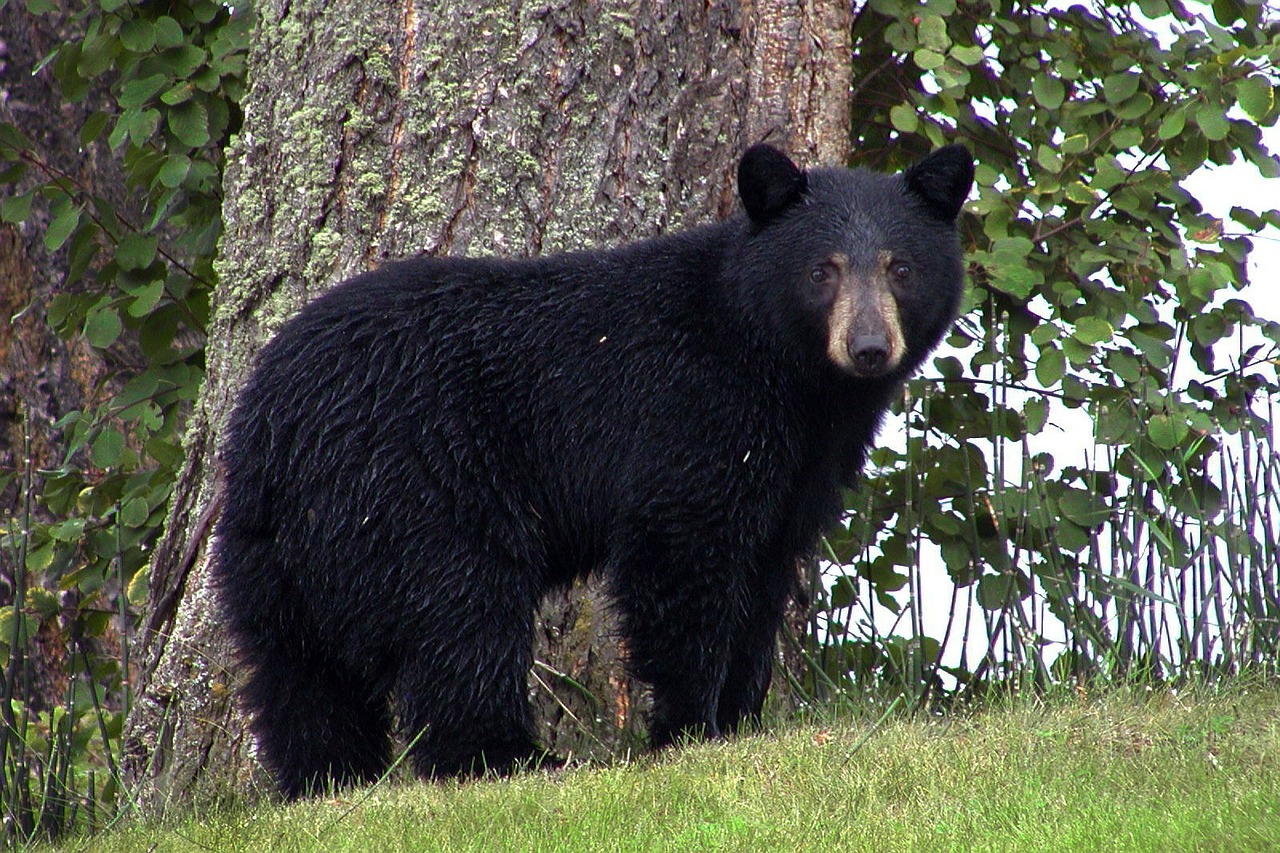
The Black Bear is Guardian of the West. She signifies personal strength and introspection that will lead to wisdom through spiritual understanding.black-bear-50293_1280

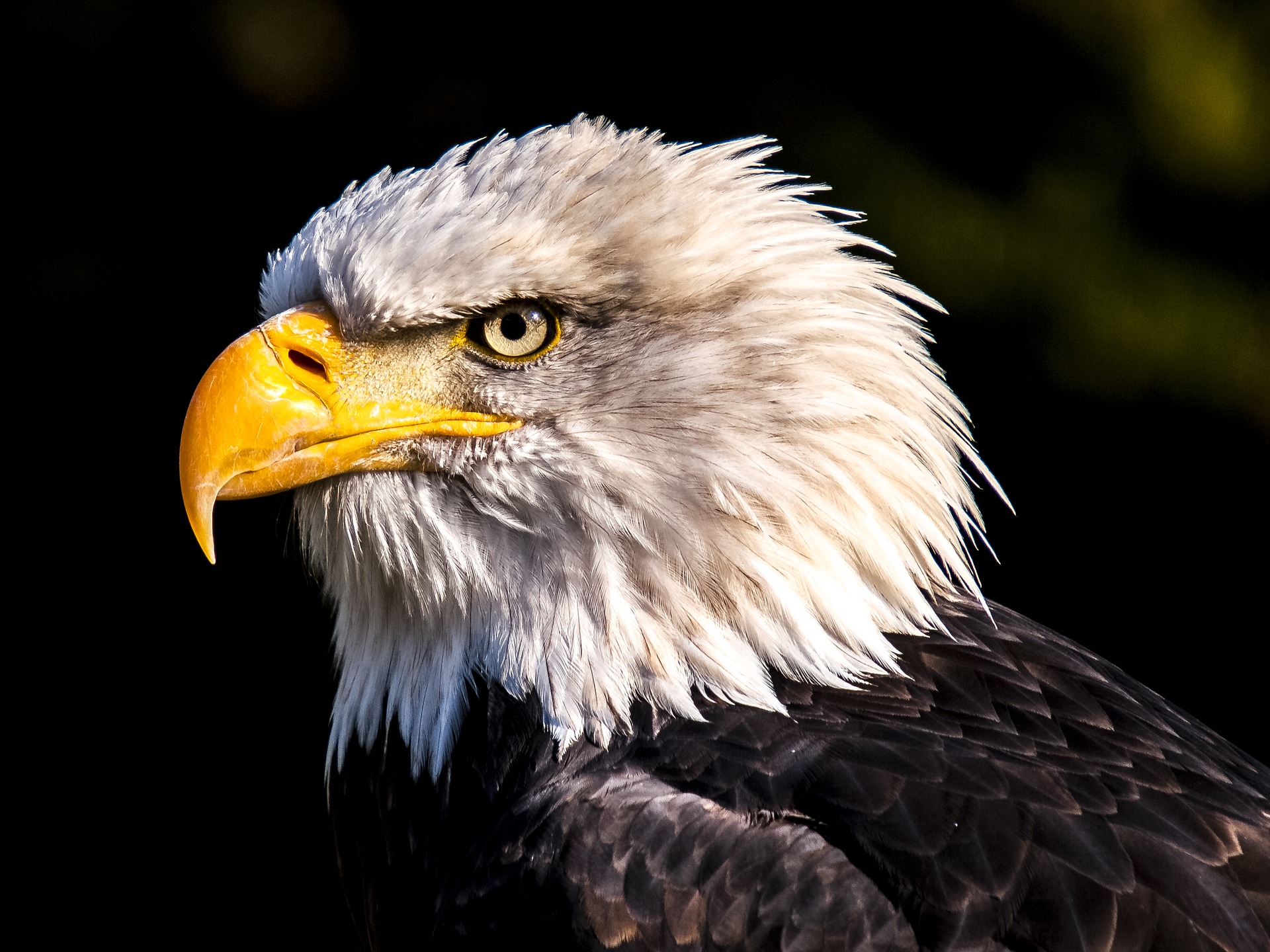
The Eagle, Guardian of the Upper Regions, represents pursuing the heights. This is taking time to view the big picture, forget the moment, no matter how difficult, and absorb the greatness around us.adler-2386314_1920

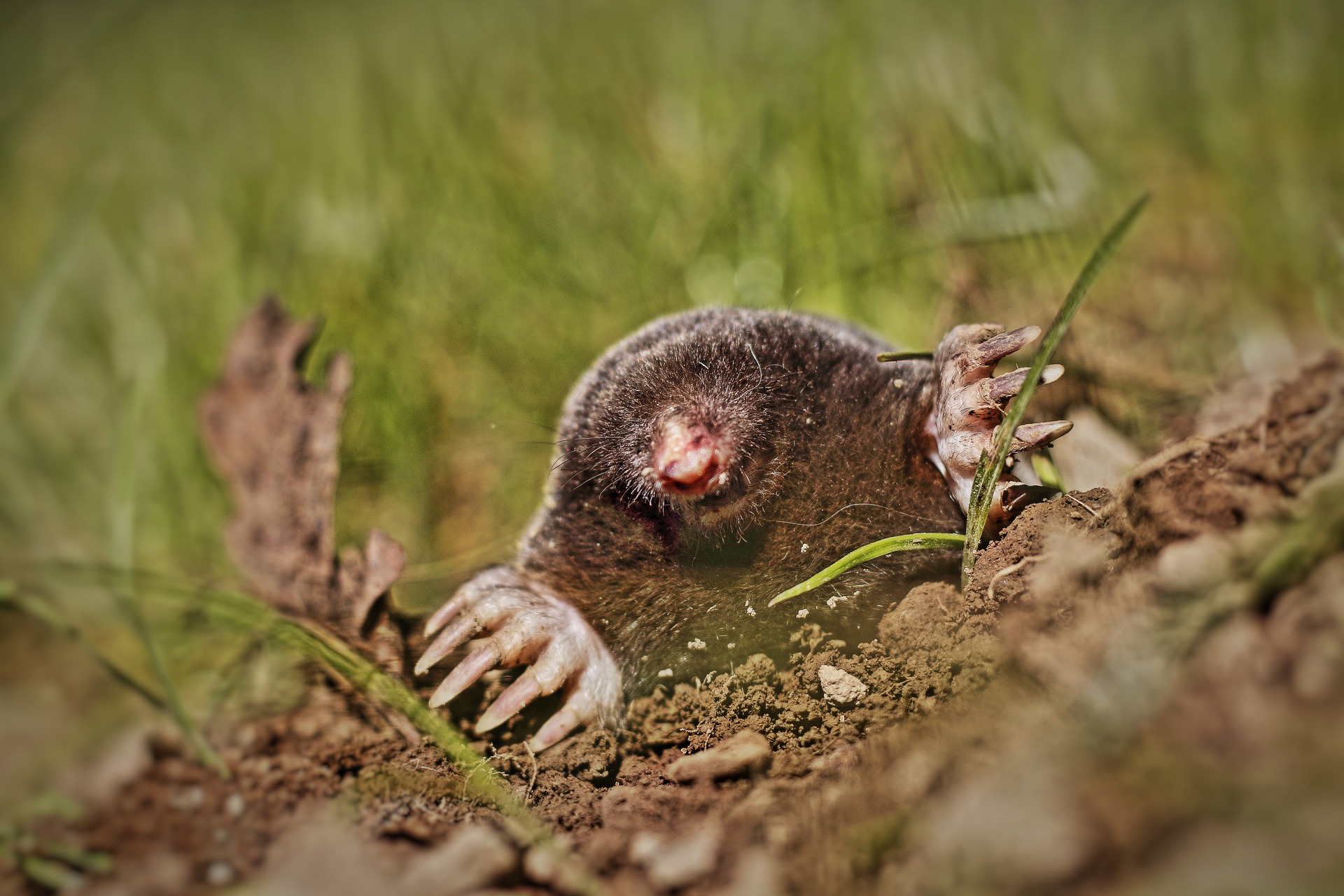
The Mole, Guardian of the Lower Regions, burrows within. Blind to all other than the perception of stark dark and light, the mole gathers information through the other senses–vibrations, smell, taste, sounds, touch. These heighten awareness of the Earth itself, plant life that nourishes us, aquifers, minerals.animal-1347755_1920

Ideally, you would have a fetish representing each of these animals and you would arrange them all in their respective directions in a circle, all facing inward to represent the proper integration of these principles. You could use a picture instead so as to have the visual image, though having the fetish, which you can hold and feel its energy, is more effective.

Ponder each of the above pictures individually and see if you react to any at a visceral level. If not, don’t worry, there are other options. Any animal that comes to mind can function as your spirit animal provided you understand its message for you.

medicine-wheel-444550_1920You can have more than one spirit animal and add them as needed. You don’t have to have an actual fetish carving to do so, but they serve as a visual aid or talisman. There’s a bit of a ritual that goes along with it, where you “feed” the fetish, usually consisting of ground blue corn, which they will give you when you buy a fetish. Each day you’re supposed to do so, which of course is a reminder to ponder the animal and whatever characteristic you wish to emulate from its example.
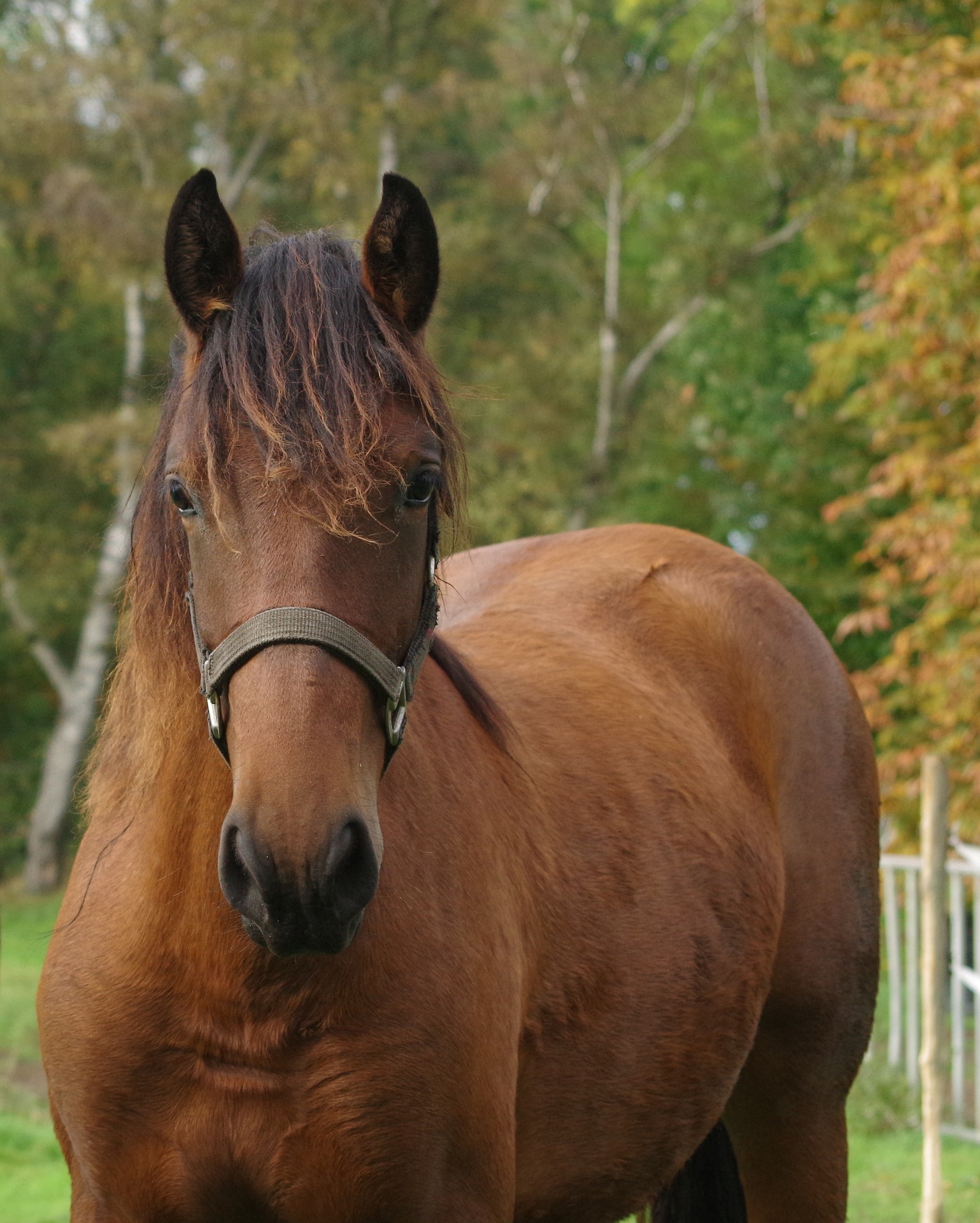
Other animals include the coyote, snake, raven, falcon, owl, rabbit, fox, armadillo, turtle, frog, deer (also bison), and horse. You can add these to the wheel as your intuition dictates. In my case, the raven represented a time of transformation. I had recently retired and was letting go of my previous life to start a new one. Transformations are a death of sorts. As an astrologer, this concept is represented by the planet Pluto and, at that time, I was in the midst of a “Pluto transit” as well.horse-2324584_1920

It seems no one is trouble-free these days. Even the Earth herself is unhappy, reflecting through this insidious heatwave and volcanic action the collective anger and abused power all around us. This is clearly a time when this Native American wisdom can benefit each of us and hopefully return our planet to peace and sanity.

The Southwest Indian Foundation has some fetishes for sale in their catalog. If you want to know more about spirit animals and use of the medicine wheel, a really good book on the subject is “Zuni Fetishes: Using Native American Objects for Meditation, Reflection, and Insight” by Hal Zina Bennett. Last I checked, they have it on Amazon.

[Animal pictures courtesy of Pixabay.]