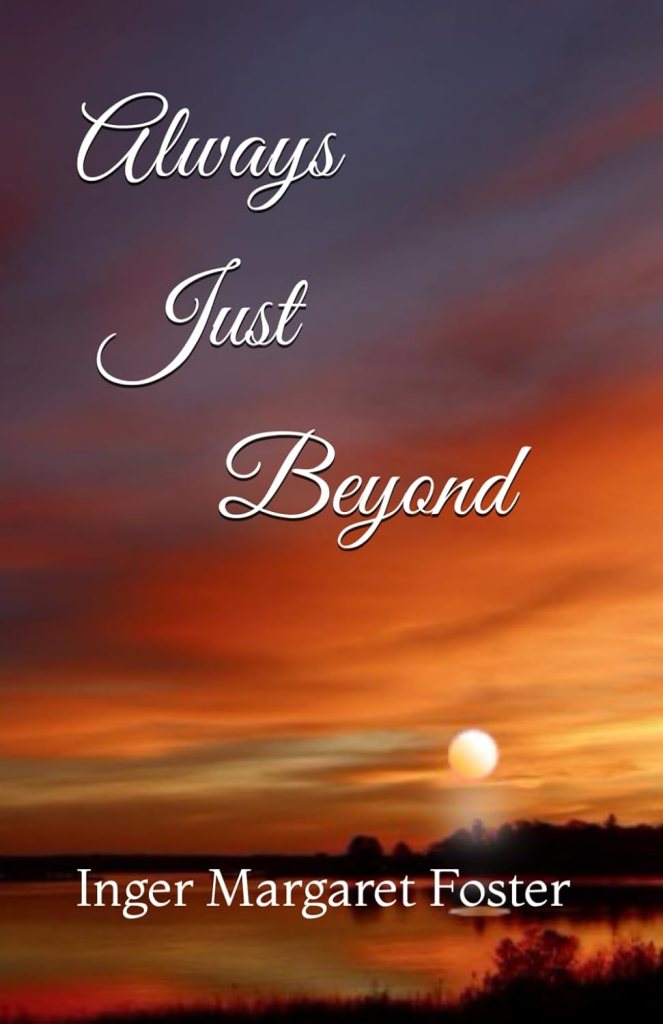
There’s no better time for a ghost story than October and this sweet paranormal cozy mystery/romance is perfect. I thoroughly enjoyed this sweet story with its unique plot and engaging characters. I read it in a single sitting because I couldn’t put it down.
Jo and Philip Briton fall in love with this old house on the waterfront in Connecticut because it just feels like home. They walk out to the water to check the wonderful view and both see an apparition, a beautiful young woman gazing out across the sea. Then she vanishes.
They buy the house anyway and a friendly but somewhat odd neighbor gives them clues relative to its history, including who the ghostly woman was. An old steamer truck in the attic contains more information about the house’s history as well as a small book written a century before that includes more of the story.
The twists and turns are great as the story unfolds, one of which gave me goosebumps. Surprises right up to the very end, which then makes so much sense. I loved the characters, all unique and well-developed. By the end of the story I had one question unanswered that would be a spoiler to include. Perhaps it could be covered by a possible sequel, which would be great.
I’m sure at some point I will reread this touching story, knowing all its little secrets. I loved it and highly recommend it as a wonderful break into another dimension that is closer than we think. I’ll definitely be reading more from this author. I connected with the story even more since some of my ancestors lived in that very part of the country. It was interesting to learn more of the history of the area as well as the mention of familiar places.
[NOTE:–I tried to post the following review to Amazon and it was rejected. I’m not entirely sure why, but I suspect the first paragraph was verboten, which figures, right? I edited it down significantly and they posted it, but here are my original comments.]
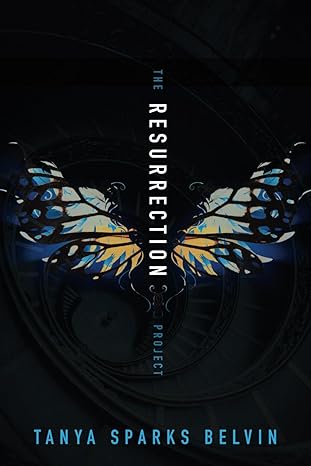
This story stands out as a chilling cautionary tale. While it’s set in 2034, don’t think it’s not already happening. Our reverence for life is seriously compromised as demonstrated by the ongoing abortion issue. At what point does human life begin? Conception? Or with that first breath at birth? What about those laws that have legitimized infanticide? Promote euthanasia? Where is society headed? We are being dehumanized, starting with the most vulnerable members.
It’s difficult to write a review of this story without spoilers. If you’re really paying attention through the first few chapters, it’s possible to figure out what’s going on as people disappear. The story slowly and methodically reveals the horrific truth through the viewpoints of the three main characters.
The premise reminds me of medical thrillers I read years ago by Robin Cook. Suspense author Mary Higgins Clark was another one who worked with such themes. This book lacked that kind of nail-biting suspense. It was written in a very journalistic style that failed to render emotional reactions in the reader. At least that was the case for me. I could tell where it was going, especially after the blatant revelation provided by the android, Daisy, in the middle of the story. If you haven’t figured it out by then, there it is.
This thought-provoking book deserves a lot of attention for its potential to wake people up, if nothing else. Being directed at Christians is somewhat ironic since they aren’t the ones who need to be jolted awake to the evils in the world around them. It would definitely be in the “medical thriller” category if the emotional impact and suspense were ramped up a bit.
Actually, if written to its full emotional potential, this book would be in the horror genre. Since this is the author’s debut novel, I assume she has not yet acquired the writing skills to render an emotional reaction in her readers. (This is normal except for incredibly gifted writers. I didn’t figure it out until around the time I was writing my 6th novel.) This is not a criticism since in this case, it’s a good thing. As it’s written, more people will choose to read it and make it through the book. Rest assured that it does have what can be considered a happy ending, plus incentive to read the sequel.
For what it’s worth, if a book makes me cry and laugh, I’m more impressed. There are a lot of good premises and stories out there that fall short on their emotional impact, which is the element that tends to hook readers and convince me the author knows how to write.
On the editorial side, I think the scriptural quotes were a bit overdone. Not that I don’t agree with them and I understand the underlying Christian message. However, I don’t think their inclusion will convert anyone to Christianity, while conversely, such excessive use could feel “preachy” and be a turnoff for the very people who need to read it. The fellow Christians I’ve been around usually don’t quote the book, chapter and verse, just the content.
The book is beautifully formatted and the cover is great. The editing is well-done regarding misspellings, grammar, typos, etc. Only one thing jumped out that her editor missed: Near the bottom of page 249 of the paperback it says, “There’s no way I’m not going to let that happen.”
Huh?
The way I read it, the double negative conflicted with the statement’s intent. There were a few other things but I may be the only person in a thousand who would notice, so I won’t even mention them all, but if I’d been a beta reader I definitely would have. I guess the biggest one I wondered about as a science fiction author is that I suspect by the year 2034 we won’t be using much paper, but who knows?
I gave this book 4-stars. For a debut novel, she did a pretty good job. It’s worth a read for its very important message of where we might be heading. Heaven help us if it turns out to be prophetic.
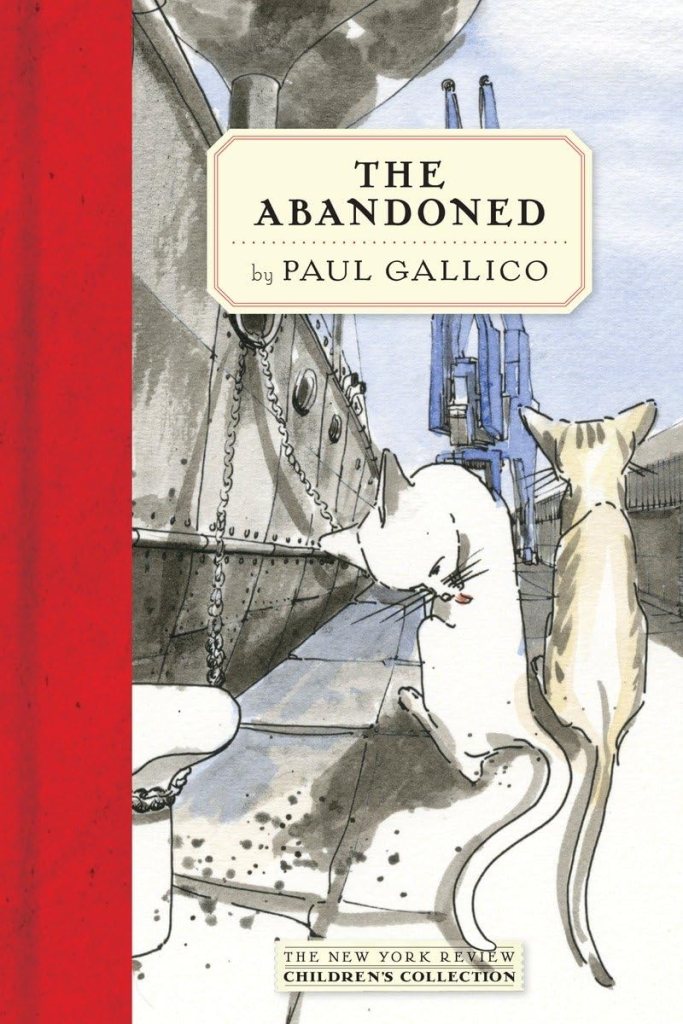
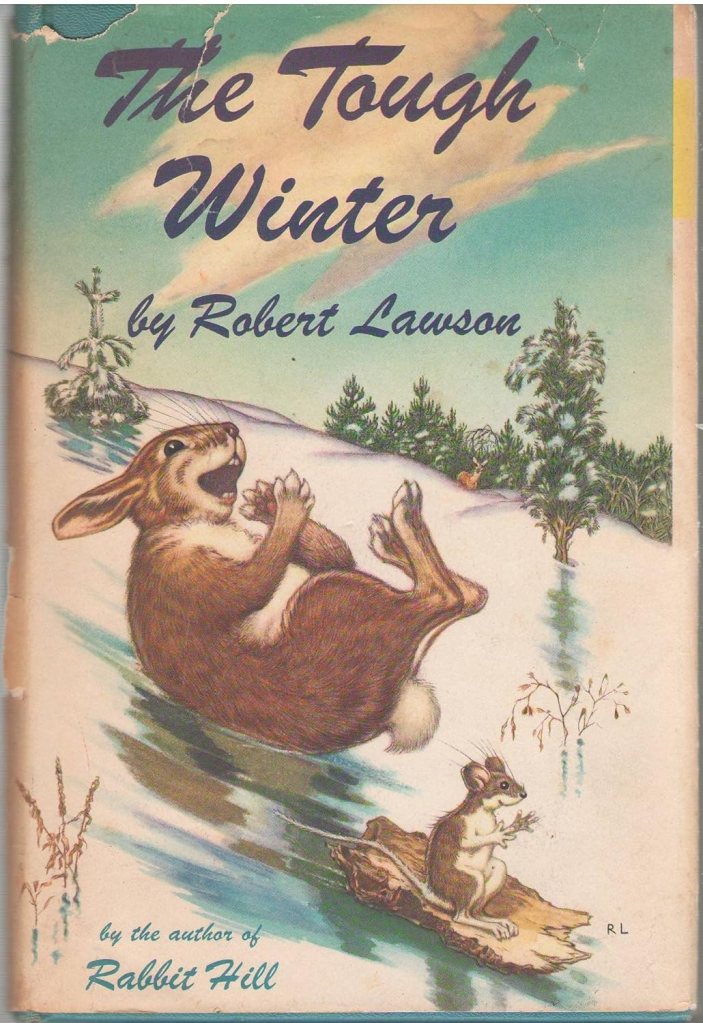
As an only child, books were important. Fortunately, my mother read to me as a young child such that I could read by the time I went to school. I was reading chapter books by 3rd grade, maybe sooner. My early favorites were animal stories by authors like Paul Gallico, who wrote “The Abandoned,” my favorite book for many years, perhaps for all time. Robert Lawson, author of “The Tough Winter” was another favorite.
I remember going to the Peekskill New York Public Library in my home town and coming home with a huge stack of books, especially in the summer.
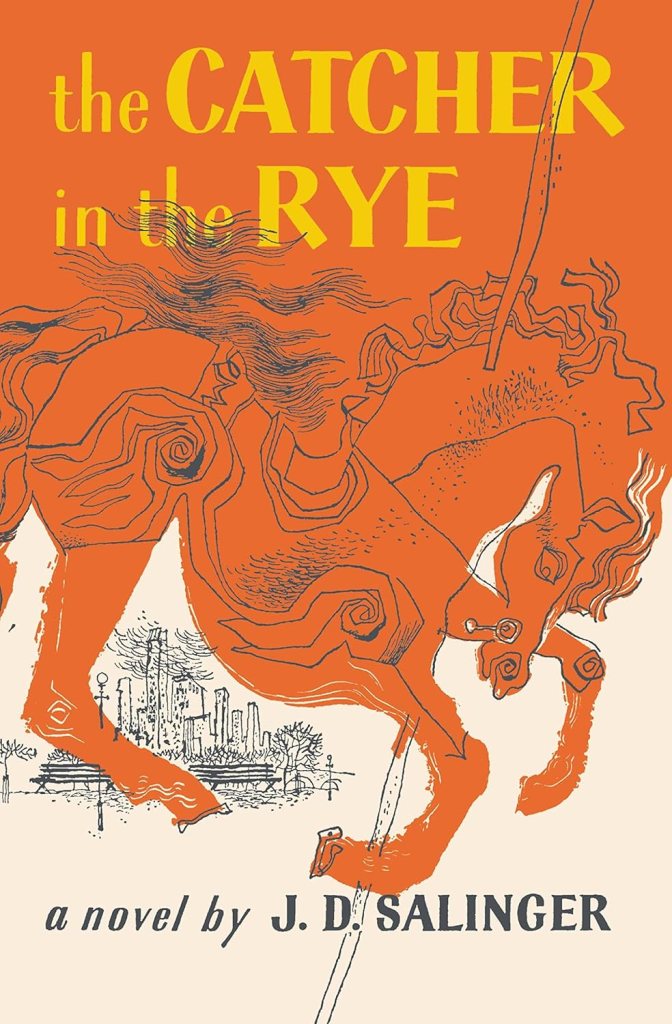
While still in elementary school I discovered Nancy Drew Mysteries. I would save my allowance to buy the latest release and had them all, which were usually read more than once. As a teen my favorite was “The Catcher in the Rye” by J.D. Salinger. I remember reading on a city bus and coming to a part that made me laugh out loud, earning odd looks from my fellow passengers.
As a working adult, I had to give up certain authors because they kept me up all night: Michael Crichton, Tom Clancy, John Grisham, to name a few.
Home at Last!
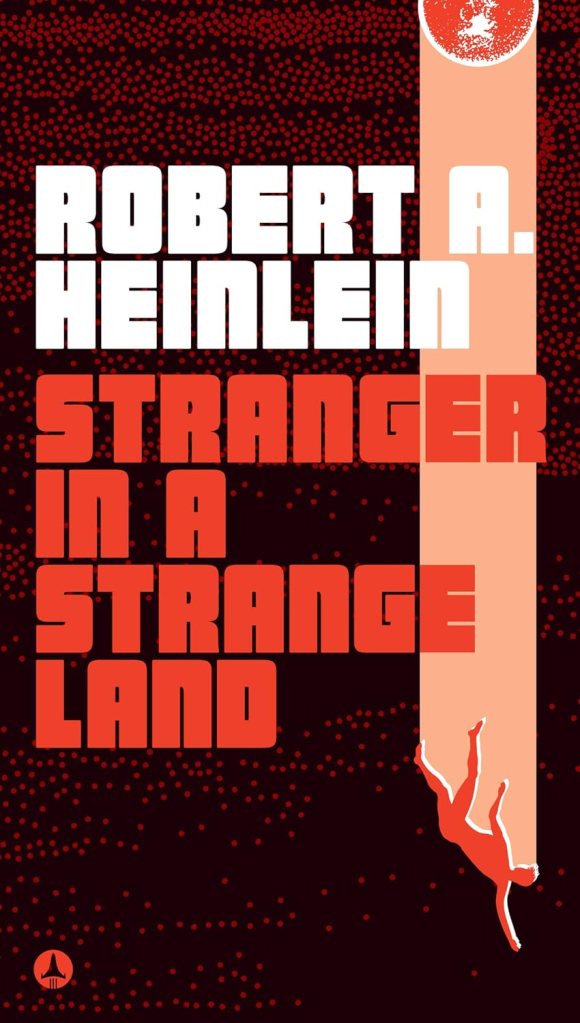
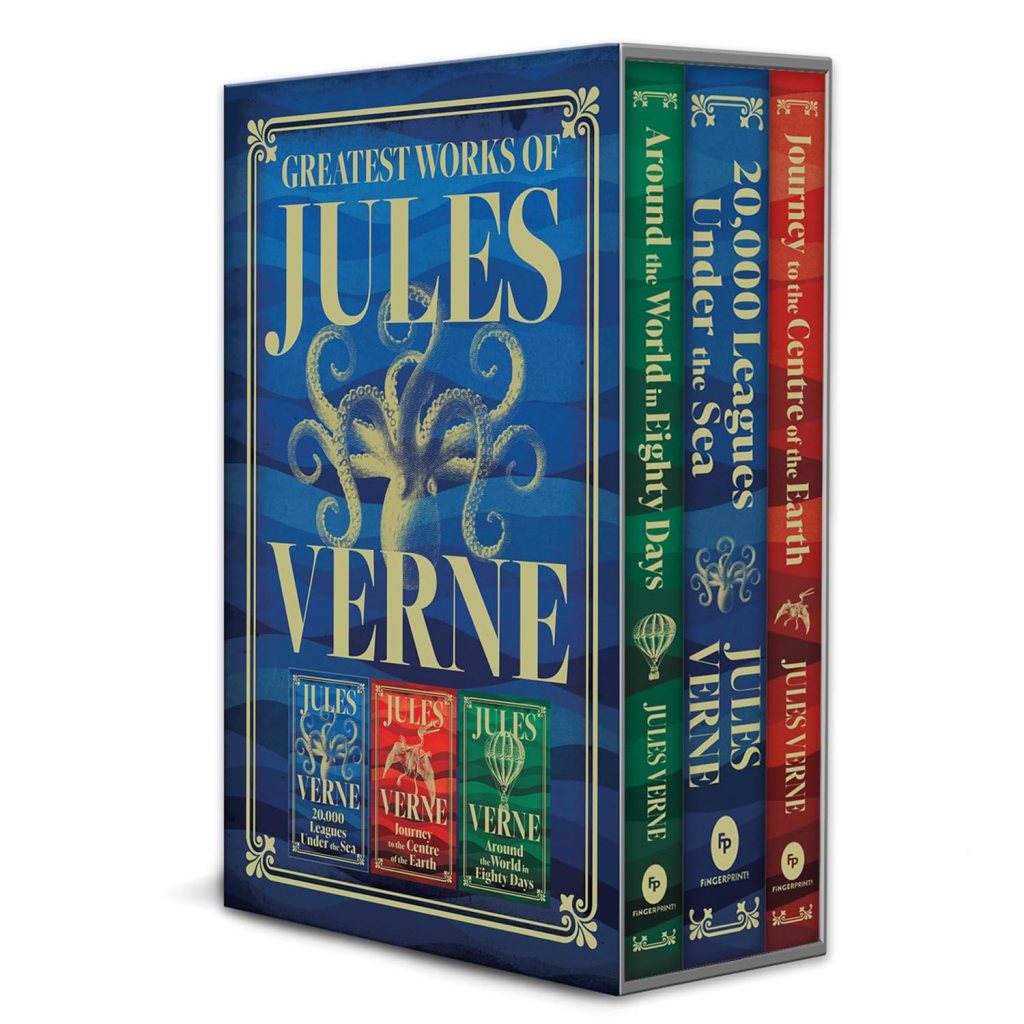
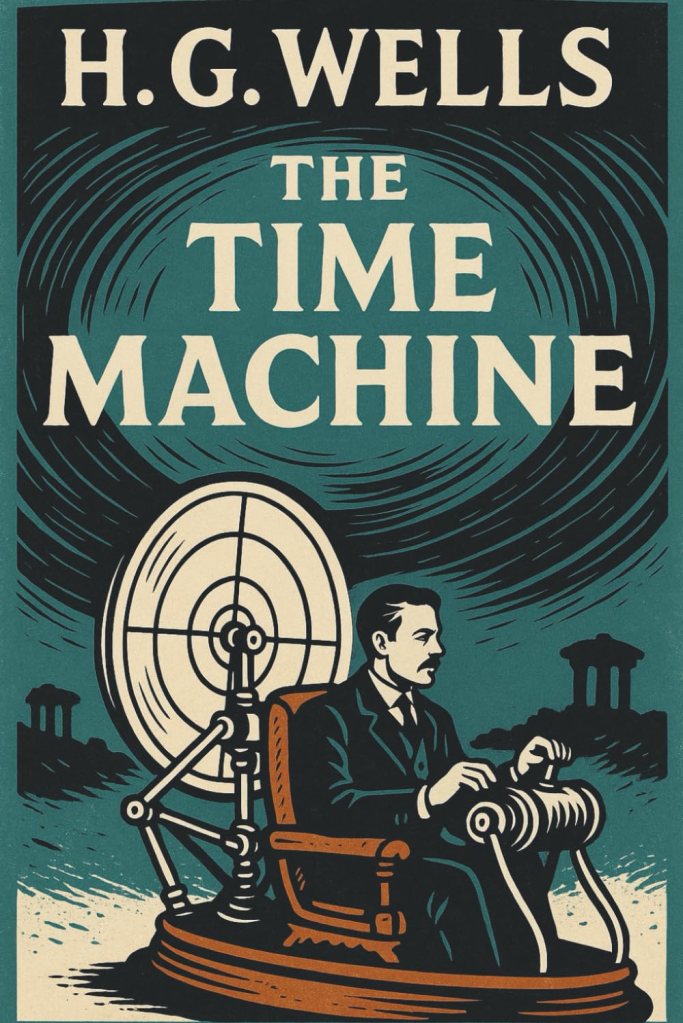
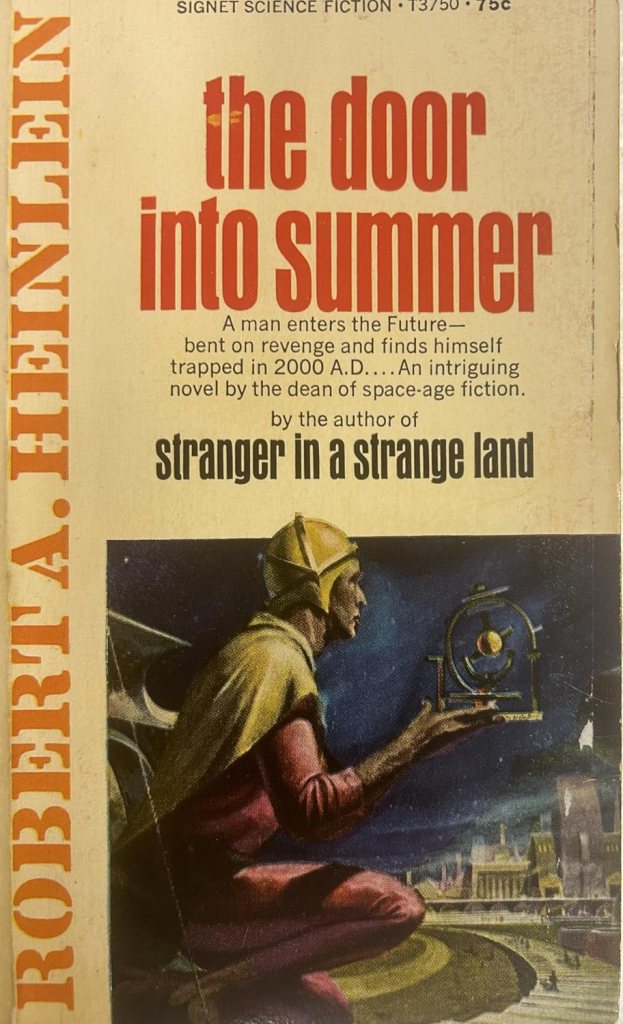
Somewhere along the line I discovered science fiction. The classics by Jules Verne such as “Journey to the Center of the Earth” and H.G. Wells’ “The Time Machine” were my first discovery, followed by Isaac Asimov and Robert A. Heinlein, the latter my all-time favorite, especially “The Door Into Summer” and “A Stranger in a Strange Land,” where the word “grok” originated, for those of you who didn’t know.
I scratched out my first science fiction story in 6th grade on yellow lined paper about the planet our teacher hailed from. Not much of a plot, but my classmates found it entertaining. Not surprisingly, an avid reader like myself aspired to be an author when I grew up, more specifically a science fiction author.
One thing that always frustrated me was that science fiction books had very little actual science in them, probably why I favored Heinlein, who was an aeronautical engineer whose fiction started the “hard science fiction” sub-genre.
As a perfectionist, I wanted to learn more about science so that when I wrote my stories they would contain the scientific explanations I craved as a youth. Thus, at 35 I returned to school to earn a bachelor’s degree in physics from Utah State University, followed by a 21 year career at NASA’s Johnson Space Center in Houston, Texas.
We’re told to “Write what you know,” right?
If you’re a fan of “The Big Bang Theory” that might look familiar. 😉
My first science fiction novel, “The Capture of Phaethon,” about an asteroid collision with Earth was written while I was in college. It won me a scholarship as well as First Place Honor in a state competition. Maybe someday I’ll get it published. For now, the manuscript is in a box in the basement. Writing Phaethon was when I discovered the mysterious serendipity associated with creating fiction.
That’s all it is, right? Fiction? Something made up in your head?
My fictitious asteroid was named Phaethon, after the son of Apollo who crashed his father’s chariot into the Sun. Imagine my shock when doing research in the USU library’s NASA section that I found an asteroid by that name had recently been discovered! OMG! Later I discovered its usefulness in astrology, where it often indicates a “crash and burn” situation, figuratively or literally.
Heaven on Earth
The first time I set foot inside a library it felt like I was in Heaven. How it feels within the walls of a building lined with thousands upon thousands of books is as unique as it is indescribable. Every cell senses the knowledge and secrets that await, stirring my soul.
That could be why I often spend as much time researching a book as I do writing it, sometimes more. As much as I love my Kindle, for research it has to be a print book. I dog-ear pages, highlight, and leave sticky-notes galore. When I encounter a used book like that, it tells me someone was really into its content, which is what any author hopes for.
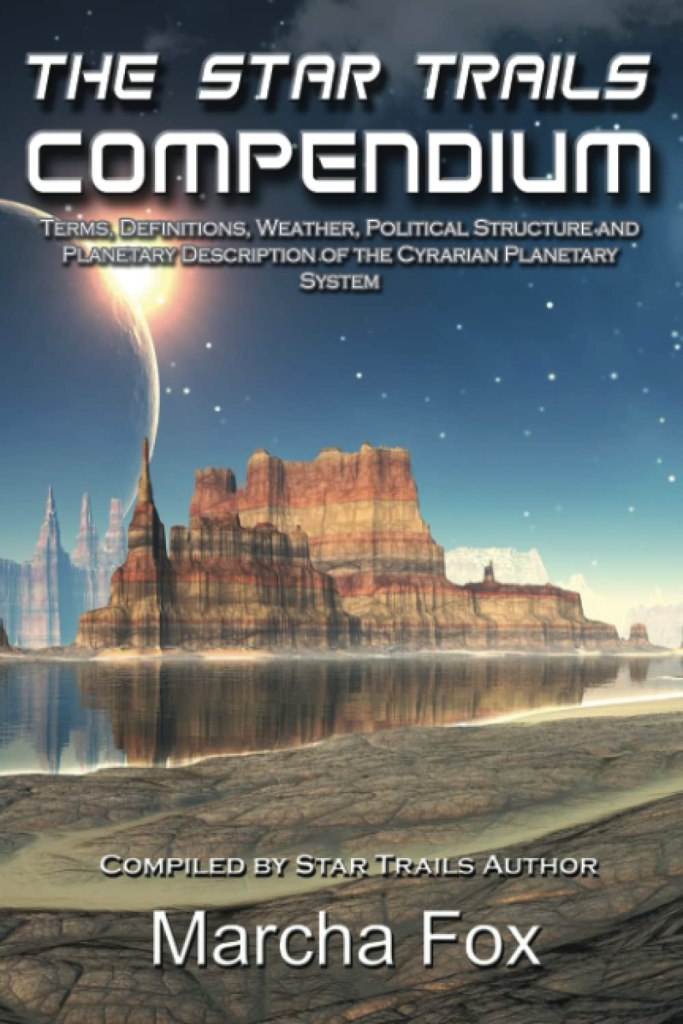
When I wrote the Star Trails Tetralogy I incorporated science and technology problems into the plot. These were books I wanted to read as a youth but couldn’t find. I even created a Compendium with additional information for readers, teachers, and home-schoolers.
Star Trails books were popular in a charter school in Utah among young nerds like I was. I had the privilege of talking to those students a few years ago, which was so much fun. I know of at least one middle school science teacher in Florida who has my books in her classroom for extra credit reading.
My favorite review for these books is the one where my writing was compared to Robert A. Heinlein. Imagine that! I have no idea how many children may have been inspired by them, but it’s good to know of at least a few.
Shifting Genres
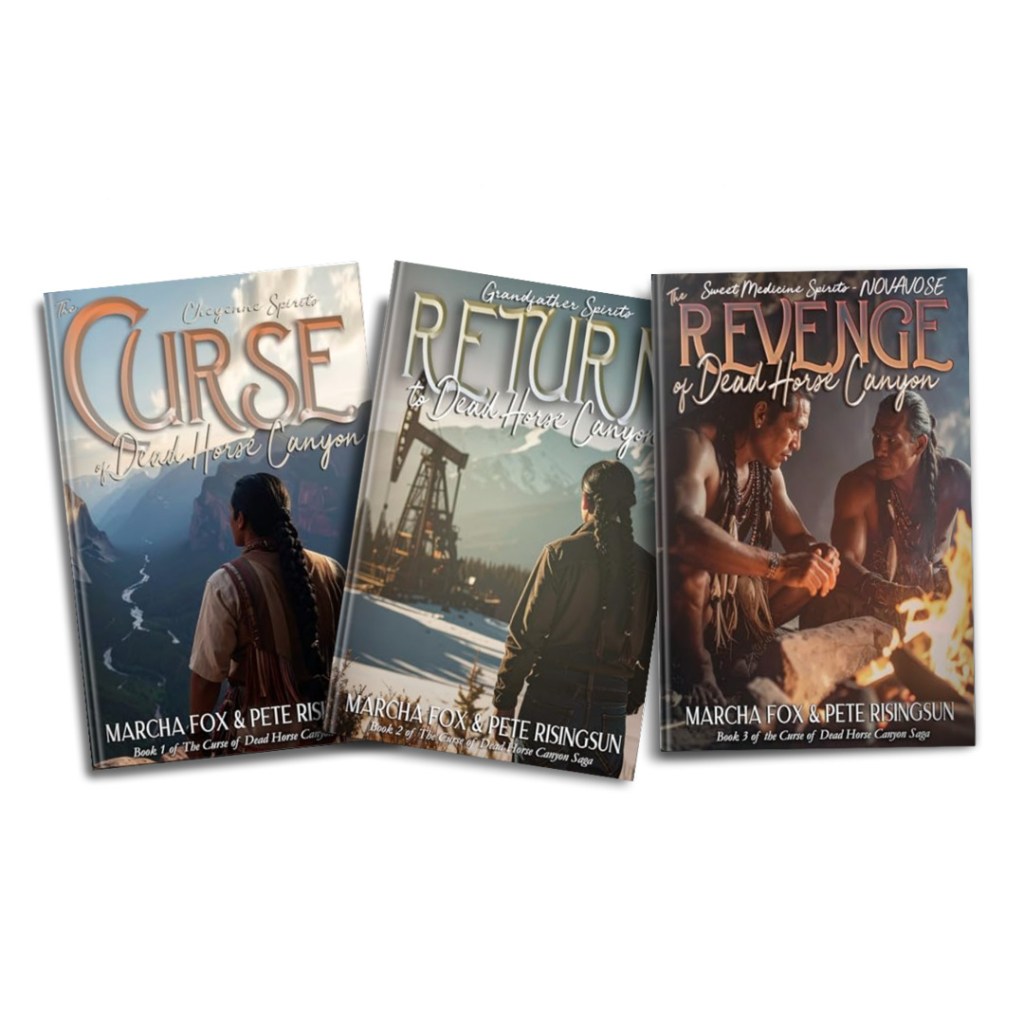
“The Curse of Dead Horse Canyon” saga started as a cozy mystery, but my propensity for research quickly led to a far deeper and darker story. My characters got out of hand, as usual, and suddenly I had a main character who was Cheyenne, a culture about which I knew nothing. My encounters with Native Americans was limited, and primarily with the Navajo. Research and serendipity delivered coauthor, Pete Risingsun, who kept the cultural elements on target, to say nothing of the story itself and additional research we did together.
The Reader’s Favorite review for the second book, “Return to Dead Horse Canyon: Grandfather Spirits” noted, to our delight, that “The depth of ethnology packed into both novels is meticulously researched and beautifully detailed. Fox and Risingsun are a dream team with this saga.”
Serendipity was alive and well writing that saga, especially how beautifully ancient ceremonies dove-tailed with the plot as if I’d known about them all along.
What will be lost?
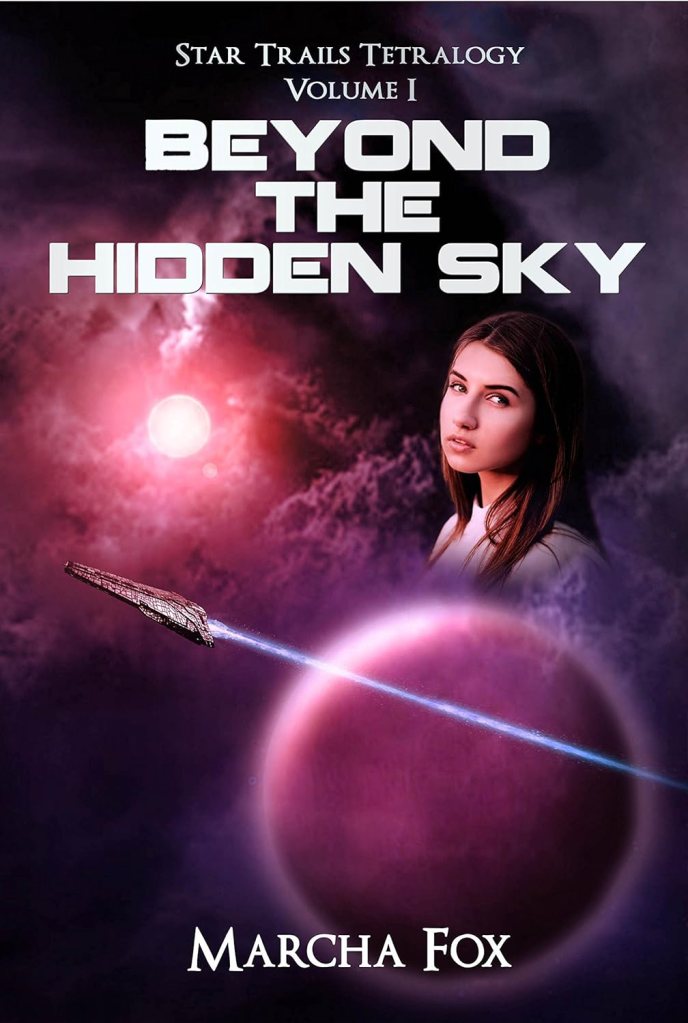
Besides a book’s creative or intellectual content, to me it’s a physical thing. I love how they feel and smell, whether it’s fresh ink newly off the press or a musty antique over a hundred years old. Ebooks just didn’t feel that satisfying. I was grateful when self-publishing a paperback was an option, making it possible to hold my first print book, “Beyond the Hidden Sky,” in my hands and flip through the pages.
However, to me, a real book is a cloth-bound hardback with a dust jacket.
And this past June that dream was finally realized when all three books of the “Dead Horse Canyon” saga were released as hardbacks, laminated covers on Amazon, and real books with a cloth cover and dust jacket available through Ingram which can be found on Barnes and Noble, Books-A-Million (BAM), and numerous other booksellers’ websites.
Everything is being digitized, which is convenient, but I shudder to think that my generation of Baby Boomers may be the last to embrace physical, print books. The expense and storage involved versus the option of digitizing everything leaves no other choice.
Given that, how many will grow up without the joy of holding a brand new release from their favorite author in their hands, much less an autographed copy? Or never know the awe and expectation amid the imposed silence found within a massive library? While the words may be the same, there’s an essence found only from a tome in tangible form. When they’re my age will they miss their first smart phone the way I treasure the memory of those beloved books?
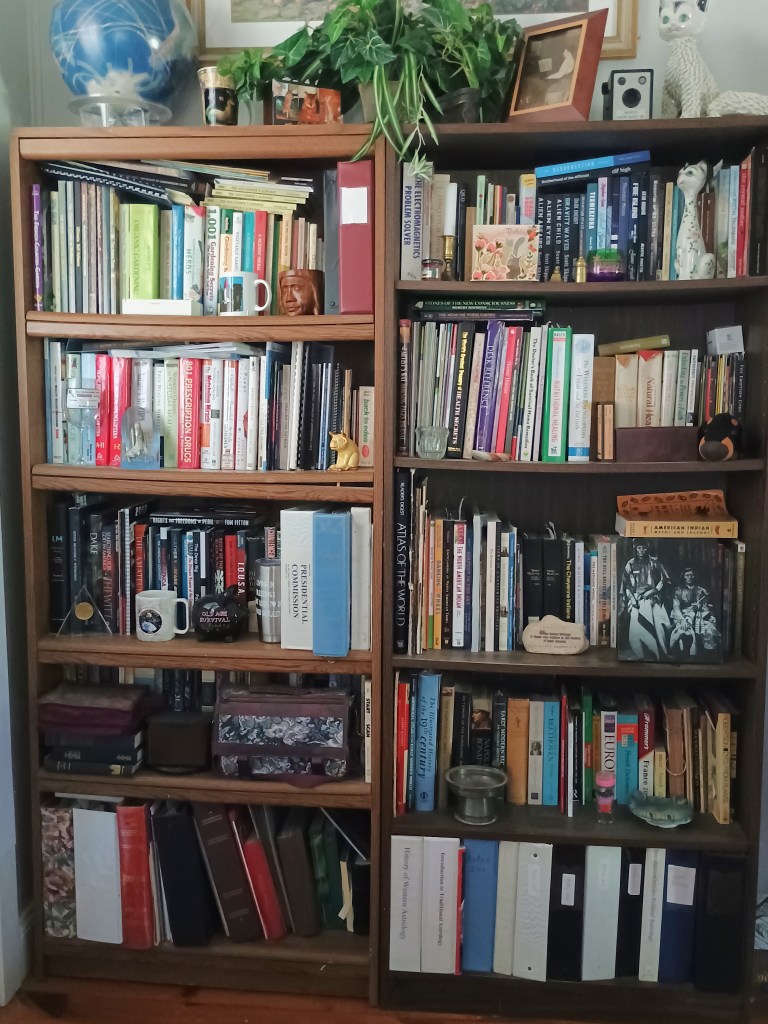
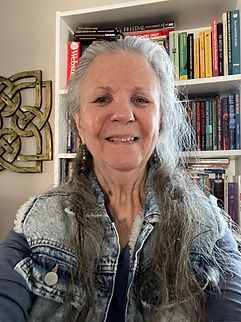
Or maybe that’s just me, an admitted bibliophile, who loves the print medium as much for its physical presence as what lies within. Digital formats that could disappear with a power surge or a few key strokes just aren’t the same. (Probably a thought my children will express loudly when I die and they have to deal with my many bookshelves full, only one of which you see at the top of the page.)
And how much easier might it be to pull the plug on books with content found offensive or declared “wrong” by someone in authority? Where would we be as a civilization without old tablets, scrolls, and other records?
To a bonafide bibliophile like myself digitizing books reeks of sacrilege. If you agree, be sure to buy a physical book once in awhile. Preferably a new one, so the author sees even a few dollars of benefit from it.
Epilogue
When I saw “The Abandoned” and “The Tough Winter“ were still available on Amazon I
literally cried. The book cover for “The Tough Winter” looks exactly like the book I had as a child. I ordered “The Abandoned,” planning to read it again, then leave it as my favorite book from my childhood to whomever wants such an anachronism when I die.
This trip down memory lane led me to discover my reading list for the remainder of this year. Revisiting those favorites from the perspective of a septuagenarian should be interesting.
What books did you love from the time you could read? What made them special? Would you like to hold them again as you would hug a dear friend you hadn’t seen for years?
And that, no doubt, is why I simply had to order a physical copy of “The Abandoned.”
It arrived a few days later and I cried again, as well as numerous places throughout this sweet story. I wasn’t sure why it hit me so hard until a few days later, as I nursed my way through the worst “Book Hangover” I’d ever had.
Then I stumbled upon a statement on the back cover that I could have written myself: “When I was 9 years old I plucked The Abandoned from my school library’s dusty shelves and fell in love with literature. The adventures that unfolded, reminiscent of The Wind in the Willows and Peter Pan, captured me so thoroughly I knew writing was part of my destiny.” — Naomi Serviss, Newsday
That was it!
This was no ordinary book! It was the very one that made me decide to be a writer! I’d never quite thought of it as my “destiny,” yet it hit me like never before. I don’t know who or what I’d be without those books I’ve had a hand in bringing into the world.
Have they affected any readers out there like The Abandoned did me? I’ll probably never know. But for whatever reason, I suspect I was supposed to put them out there.
Are you a writer? When did you realize it was your calling? Or was it just something that came along at some point in your life when you had something to say? Fiction or nonfiction? Leave your answer in the comments below.
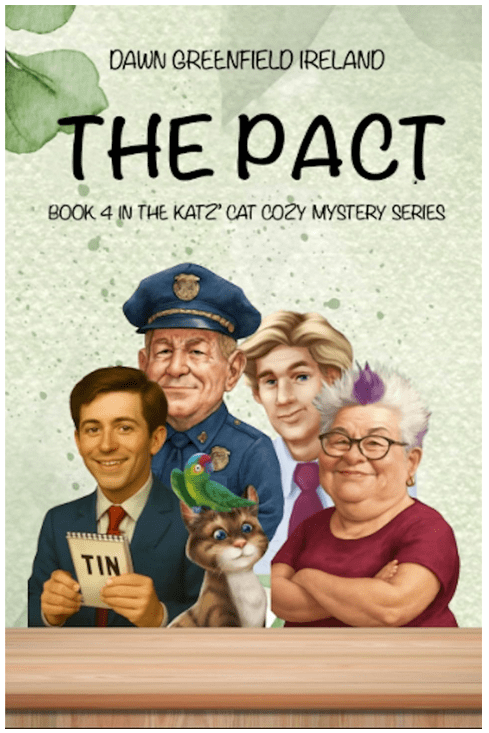
Review of The Pact (Katz’s Cat Twinkle Texas Cozy Mystery Series, Book 4)
by Dawn Greenfield Ireland
If you’re looking for a book to chill out with when everything else about this insane planet is just too much, I highly recommend this latest book in the Katz’s Cat Twinkle Texas Cozy Mystery Series. It doesn’t take long to get hooked on these charming characters and feel as if you live in the little town of Twinkle.
Actually, I live outside a town that’s even smaller than Twinkle, one that is so small that it doesn’t even have a traffic light, so I can relate to this small fictitious setting away from everything other than the full range of human behavior. As a pet lover, of course I enjoy the animals and their special talents, which include not only intelligence, but the ability to communicate using technology.
The series is now on book 4 where the folks in Twinkle, Texas are at it again. I love how the author has developed this setting with its own common expressions, such as referring to the grocery store as “the foo” since the sign is broken, and various other touches that make it seem real and that you’re a part of it. In this episode, Mrs. Potts’ boarding house burns down! Thus, Jimmy, Brian, Mrs. Potts, and of course, Maddie and Guppy, move in with Betty in the mansion. Of necessity, the folks who know about the animals’ special talents expands, especially as various threats manifest.
There are a few pretty serious parts as well as plenty of good information about having a plan to secure your property in case of a catastrophe. Other useful information includes the steps in building a house from the ground up and a few other things to think about, such as how much stuff you own and what a chore it would be to replace it.
There were plenty of scenes where I laughed out loud, some of the characters’ names alone worth a good chuckle. Turns out Guppy is showing some psychic abilities, which are likely to be developed further in future escapades. As with most series, it’s advisable to start with the first book since characters and situations from previous stories tend to show up. It’s easy to feel as if you’re a resident of this tiny Texas town as the host of characters come to life and interact, leaving you wondering what will happen next and longing for the next book in the series!
You can pick up a copy on Amazon here and read more about the author on a previous blog here.
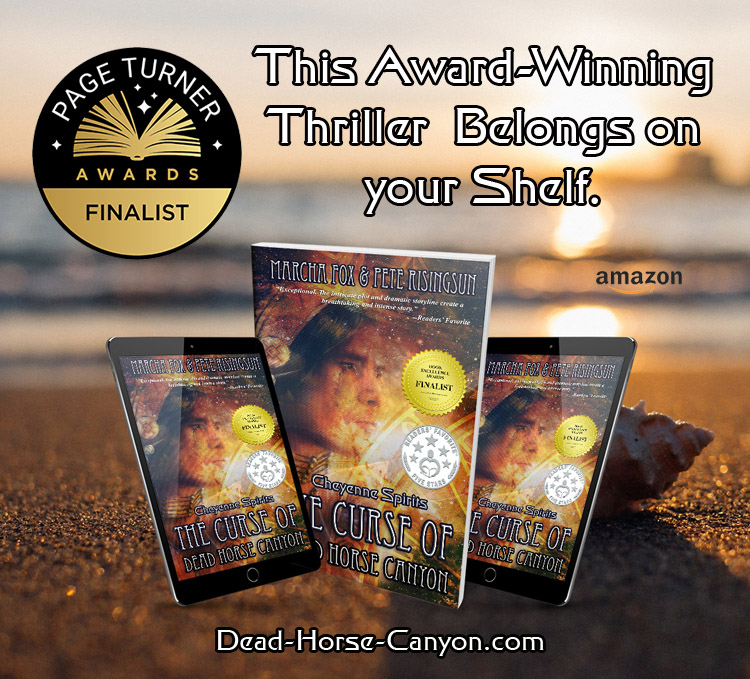
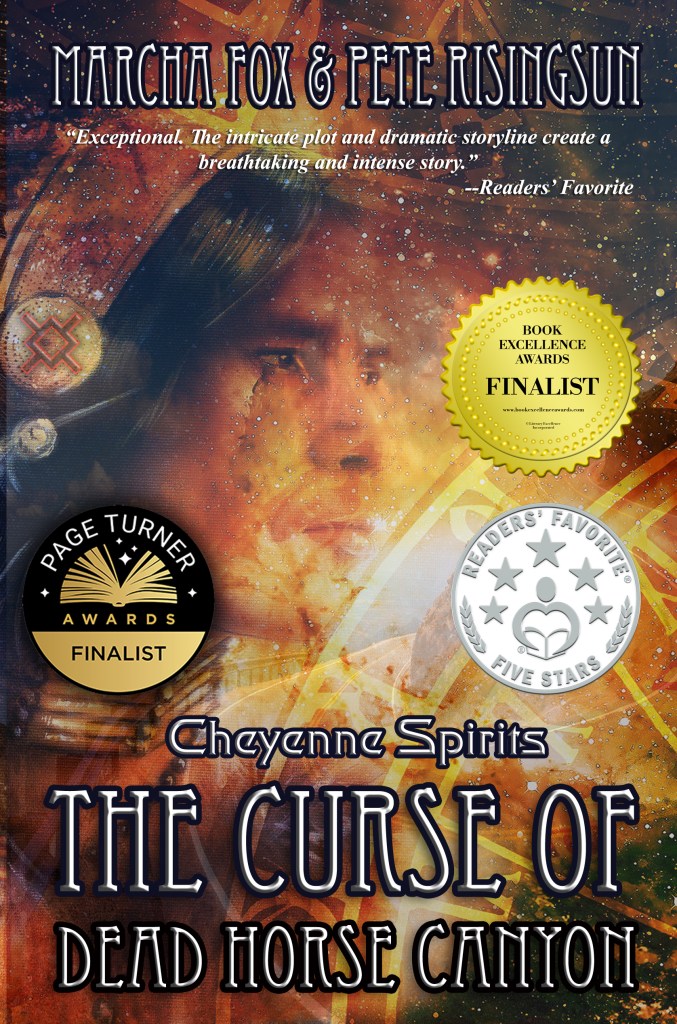
This week I was excited to find out that “The Curse of Dead Horse Canyon: Cheyenne Spirits” is a finalist in another award contest!
So why is that a problem?
I’m running out of space on the cover to add another badge! Then I have to upload new covers to the many places where the book is sold.
I know, “Boo hoo.”
Like I said, a good problem to have.
Getting a little crowded there….
You can read the excerpt I submitted for the contest here. Feel free to leave a comment!
And I have more good news! I’m on the home stretch editing the sequel, “Return to Dead Horse Canyon: Grandfather Spirits.” If you’d like a sneak peak at that, you can find one on the series website here.
I ran into a major problem that required a lot of rewriting when a friend pointed out that one of my major plot elements was not only inaccurate but not feasible, at least in the known universe. It was a lot of work to fix but I learned an important lesson: No matter how much research you do, the are often elusive details that you’ll miss that will bite you if someone knowledgeable in that discipline reads it, at which time your credibility implodes.
I have always been quite critical of movies that are scientifically incorrect, but now I get it. I LIKED my old, implausible plot and how its many tentacles wove through the story. A few readers would have had some rolling on the floor (yes, it was that bad), but it hurt to trash it. Which made me understand why movie producers may let those inaccuracies pass, even though anyone who knows better will forever remember the movie for being woefully inaccurate versus it’s story or entertainment value. (For me, one of those movies is “Armageddon.” If you’re interested, you can read my opinion here.)
I suppose you’re wondering what that goof was. Sorry, it’s too embarrassing. I take pride in the accuracy of my stories and I’ll be forever grateful to the person who gave me the information I needed to recognize it had to go.
And the good news is that the rewrite is actually a lot more suspenseful as well as credible! Stay tuned for a release date.
If you have any doubt regarding what life is all about, then you need to read this beautiful story, which will explain it to you. The ultimate love story, I definitely fell in love with most of the characters in this book. They were so real, you felt as if you knew them, that they were your own friends and neighbors, making their way through life and its struggles, including sometimes the painful loss of a loved one. It was an utterly convincing slice of life, where people work hard for what they have, interact with neighbors and loved ones, and most importantly, help one another when the need arises. It was about priorities, caring, and doing the right thing, but not in a flamboyant way. It was about the passage of time, how things change, including people, and the importance of friends.
A light paranormal touch permeated the story, a reminder that what we see is but a small part of what we know as reality. There are some things that simply can’t be explained. Anyone who has ever lost a loved one, yet felt their presence or heard them speaking inside their mind, will relate. Who and what are we? What about those with whom we share our lives, loves, and ambitions? Is it all random? Do certain people come into our lives by chance or design? What is the essence of life? Love? Our very existence?
Don’t expect specific answers to any of these questions because you won’t find them. Rather, there is plenty to ponder. On the one hand, it’s easy to note that those characters who made mistakes were beyond fortunate to find someone to stand behind them and help them get past their troubles. Finances were not a problem for the main characters, who generously shared their substance to help others. Most who fall upon hard times are not so lucky. Those who have had to dig their way out of a bad situation on their own could even feel a touch of bitterness. Yes, this story reflects the ideal, which life seldom is. However, I don’t believe it’s those in sorry circumstances to whom this story applies the most. Rather it would have the most powerful impact on those with the means to help others by expounding the deep satisfaction, friendship, and rewards that come from helping your fellow man.
The characters in this book were familiar in many respects; archetypes, if you will. No doubt you will relate to some more than others, recognize several, and with luck, even see yourself. There are parts that are heart-rending, yet that is a fact of life. Learning to deal with death and grief is part of living. Learning not to take anything for granted, to appreciate each and every day, realizing that in a flash everything could change, is what enriches our existence. Years pass a day at a time, yet in what can feel like an instant, they evaporate, leaving you in awe of their passing. Of course the older you are, the more obvious this is.
This cast who populated this story touched my heart in so many ways. In some respects, it was like a soap opera, as diverse individuals entangled with one another through heredity or circumstance went about their lives, some days normal and predictable, others milestones, or marred by sudden tragedy. In many ways, stories like this are a measure of the reader’s capacity to love. If you don’t fall in love with these characters, feel as if you know them, and even wish you had some of them as friends or neighbors, perhaps you’ve lost touch with your own humanity and need for others in your life.
Author Stephen Geez renders characters you’ll never forget, who’ll live on within your heart forever. If you could use a few new book-friends or book-neighbors, to say nothing of a nice dose of inspiration, then introduce yourself to these adorable souls over in Tarpon Springs. You’ll be glad you did.
Quite frankly, I never dreamed that I would eventually give this book a five-star rating. I started reading it almost two years ago, 21 months, to be exact. It took me that long for a couple reasons, mainly because at first I couldn’t stand the protagonist, Susan Wade, whom I found horrifically irritating. I thought she was a dysfunctional, self-centered, obsessive, hot mess. Her warped views of the world made me want to slap her upside the head. She hated her roots, the small town where she’d grown up, and was willing to do anything to get ahead in the world. Her priorities were horrible. The plot moved very slowly at first, also, which tried my patience as well. I would set it aside, read something else (or two or three), yet inevitably pick it up again between other reads.
Why?
Because it was so exceptionally well written. The fact the author had developed a character so completely that she got on my last nerve made me feel I owed it to her to keep reading, to see where it was going. Her prose was fantastic, at times poetic, the imagery beautifully drawn. It was a pleasure to read, pure ambrosia, even if Susan was messed up and the plot crawling at glacial speed.
At this point I need to mention that, unlike other reviewers, I try to maintain a sense of objectivity. Not liking a story or its characters is not enough for me to give a book a bad rating if the story is well-crafted. I also care about grammar, typos, and formatting, which I find distracting. Editing, in all its varieties, is important to me. If a story is clever and otherwise interesting, I might forgive some of those things, but in general, I expect a professional product when I buy a book. If a book is loaded with such annoyances I’m likely to never finish it because it’s such a chore to read. There were very few such flaws in this story, certainly not enough to put me off. Rather, I was a bit surprised that they slipped past, based on the quality otherwise. One that really had me scratching my head was how one beautiful sunset painted the eastern sky. Huh? Possible, but not likely. Actually, I wrote a blog about that kind of stuff you can find here.
As I plodded through, page by page, gradually things started to make sense. I began to appreciate the fact that the slow pace was allowing me to get drawn deeply into the story and its characters. The sense of place was amazing. I love it when a book takes you someplace new; by the time I finished, I felt as if I’d spent several months in coastal North Carolina.
When it started to come out why the protagonist was the way she was, I began to be more sympathetic. Maybe Susan put me off at first because there were things about her that reminded me of myself. As her motives and life experiences became more clear, it was easier to care about her, then eventually start cheering her on. Some people are slow to come around such that it takes numerous hard knocks before they learn.
As a professional astrologer I’m a student of human nature and tend to try and place a particular sun sign on characters as I watch them unfold. Fixed signs (Taurus, Scorpio, Leo, Aquarius) rarely change, or it takes great pain and suffering from life’s lessons to do so. The implications of when her birthday was in the book made me think she was a Scorpio. When it said near the end that Pete’s birthday was March 15, making him a Pisces, that made sense, too. It made me laugh, since on my website I have a compatibility section where I say this love match concerns me a lot since I have often seen Piscean men injured horribly by Scorpio women, though there is often a strong attraction between them, both being emotionally driven water signs. Ditto, for this couple. BTW, astrology works amazingly well for fiction. Just ask Elle Klass.
But I digress.
From about halfway in, the story started to move, and by the time I was 75% through, it was hard to put down. It was touching and I really connected with the characters. The corporate gymnastics and dog-eat-dog environment were well-characterized as well. Having spent over 20 years in the world of NASA contracting, I could definitely relate to some of the games people play.
Probably the underlying theme of this story is “Be careful what you wish for.” Another candidate would be “What you’re trying to escape is exactly where you belong.”
This was an outstanding story that was beautifully written. It has numerous life lessons within that astute readers can learn vicariously. It takes a while to get moving, but all that background is essential and what draws you in until you’re hopelessly hooked. I have two rather minor criticisms. One is the title. Those who aren’t familiar with the tale of the donkey and the carrot may not get it, which could turn away potential readers who would love the story. The new cover helped tremendously; I’ve had the book long enough it has the old cover, which featured–a carrot.
The other criticism is that it wrapped up rather quickly and was a bit confusing at the end. I don’t want to get into spoiler territory, so won’t say more, but I’ll just say I had to go back and reread a few parts to figure out who was doing what. Considering how slowly and patiently the story unfolded, it could have wound down at a less frantic pace so as not to lose track of what was going on.
That said, it was still a great read. If you love well-developed characters, outstanding imagery, and a rather common situation regarding the balance of career with relationships, I can’t recommend it highly enough.
P.S. As I got ready to post this review I discovered that there is now a prequel to “The Carrot” called “The Interview.” So you might want to start with that. You can find it here.
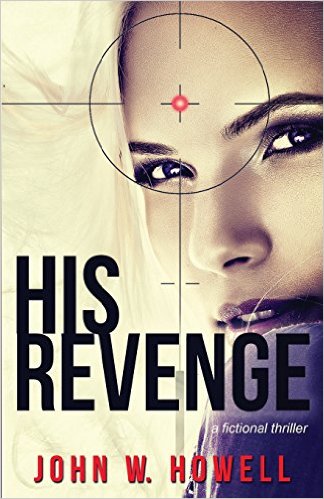
This fast-moving, well-written and nicely edited thriller keeps you turning the pages as you wonder how hero, John Cannon, is going to get out of his current dilemma. In the first book in this trilogy (My GRL), Cannon foiled a sophisticated group of terrorist’s insidious plan. Needless to say, they’re out for revenge and manage to capture him after which they force him to be part of another devious plot aimed at destroying the economic viability of the west. The suspense is well-sustained, dialog gripping, and characters convincing. The action level was breathtaking. Having not read “My GRL” it was nonetheless relatively easy to follow what had transpired previously. Descriptions of Cannon’s recovery from injuries sustained in the previous book were extremely well done.
However, there were various gaps typical of a serial where the author doesn’t remind a previous reader (or enlighten a new one) with regard to details such as what the characters look like. For example, while it was implied in this volume that the terrorists were of the Middle Eastern variety, their names were not indicative of that heritage. Rather, they had names that suggested European or even American origin. There was also no physical description with regard to their appearance, so they were a faceless enigma. This left me scratching my head throughout the story, wondering “Who exactly are these people?”
I can definitely understand this tendency myself since I’ve written a serial. In the author’s mind it’s one, continuous story and easy to forget to include details that seem redundant, yet they’re essential. I’ve covered some of the things I’ve learned in previous blogs for serial writers such as this one and its follow-up. I’m sure my readers can find similar oversights in my books, so I mention this in all humility.
The motivation for their heinous acts was touched on, but not demonstrated in their personal behavior. While I would expect lethal passion resulting from intense anger, hatred, and a visceral need for revenge, the antagonists behaved more like corporate executives out to annihilate a competitor to keep their stockholders satisfied. They were definitely cold-hearted, but the expected fury at Cannon’s previous actions didn’t come through.
Maybe this was covered in the first book, but evoking the emotional drive behind their acts could have added considerable intensity and additional suspense. If the bad guys were true terrorists, you’d expect that pissing them off further would result in chopping Cannon’s (or a loved one’s) head off on YouTube, but that type of potential didn’t come through. Emotional connection is what really grabs a reader. They need to love the hero and hate the antagonist, or at least fear him/her. This is what makes a story real and comprises a gripping tale.
I hate to get on the soapbox again, but I find it helpful to to assess a book during the content editing process using the acronym IDEAS where I stands for Imagery; D stands for Dialog; E stands for Emotion; A stands for Action and S stands for Suspense. Depending on the genre, a certain balance is required of these elements. Action and dialog often come easily for thriller writers, so going back to include the others is often required. Of course you don’t want to slow the story down, so it needs to be done with finesse, not long, drawn-out descriptions that cause the reader’s eyes to glaze over.
While in this story the terrorists used the fate of loved ones to drive their captives’ cooperation, it seemed that the good guys may have gotten around it a bit too easily, if these terrorists were as smart or well-connected as implied. Especially if the antagonists had as much clout and the ability to infiltrate so many organizations to effect Cannon’s capture, which was not explained, either. Including such things increases a story’s credibility.
Perhaps this was covered in the first book, which would make it required reading to fully appreciate this one. The author has an excellent writing style with a talent for developing a fast moving story with convincing dialog and viable characters. By filling in some of these gaps, kicking up the emotional drive a notch, and a bit more imagery, Howell could easily approach the level of Tom Clancy or John Grisham. I see tremendous potential in his writing that could go from great to outstanding with a bit more attention to detail, though many readers may not care and simply enjoy the fast action. I, personally, like to know the how and wherefore, which is what can drive a great story up a notch to the best seller list.
I’ve always loved that quote, which illustrates one of the many absurdities in the English language. And speaking of time flying, I can’t believe that on July 3 it’ll be a year since the Star Trails Tetralogy Box Set was released! Seeing the series as a box set was my goal as soon as I realized the Brightstar’s story wasn’t finished with the first volume, but had only begun. Considering it ultimately took four books that comprised 1500 pages, there was definitely a lot more to tell! So, I’m celebrating the first anniversary of this life milestone by selling the entire tetralogy this weekend for only $0.99 USD.
I started working on “Beyond the Hidden Sky” so long ago I hate to admit it. There were definitely a few life obstacles in the way between the late 70s and now. During that time I finished having my children, got a physics degree, moved from Utah to Texas, became a grandmother (and now a great-grandmother) and fulfilled my dream of working for NASA. Believe it or not, the degree and NASA gig were specifically to prepare me to be a better science fiction writer. I kid you not. I took “write what you know” to heart and I hope it shows!
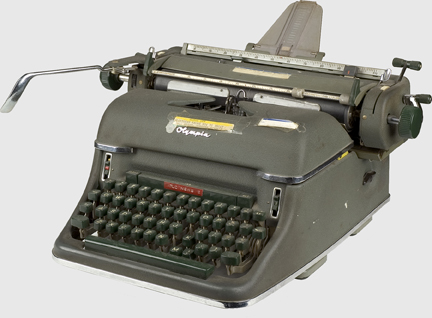
The first book was revised more times than I can begin to count. It was initially written on an archaic device known as a typewriter and then went through at least three different word processors, (Word Star, Word Perfect and Microsoft Word). In fact, artifacts from those earlier electronic versions brought some pretty mysterious characters into the first few electronic and even print versions, until I figured out how to get them out.
Much of what was science fiction at the time, such as my rendition of the internet, Craig’s List and a Bitcoin lookalike, became science fact during this lull between writing and publishing. Needless to say, this required upgrading the technology numerous times. Now, at the rate things are advancing, it won’t be long before the entire series is in the realm of science fact, except, perhaps, for cristobalite or devenite crystals. But you never know, given they’re busily creating new elements these days as well as making new discoveries in quantum physics.
Thus, to celebrate the box set’s birthday on July 3, I’m marking it down to $0.99 USD for the USA’s Independence Day weekend ONLY (July 2 – 4 for those outside the USA). So, if you’ve been waiting for a super-giant sale to get your copy, this is it! If you’re unfamiliar with the series, you can learn more about it and see the reviews at the series website, www.StarTrailsSaga.com.
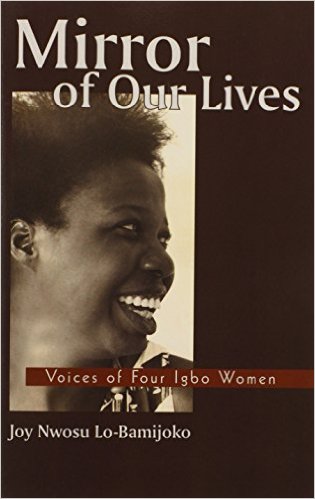
In Mirror of Our Lives, four Nigerian women share the compelling tales of their troubled lives and failed marriages, revealing how each managed to not only survive, but triumph under difficult and repressive circumstances.
Njide, Nneka, Miss Nelly, and Oby relive their stories of passion, deceit, heartaches, and strength as they push through life—each on a unique journey to attain happiness, self-respect, and inner peace. But none of the women’s journeys is without misjudgments and missteps.
Njide falls in love at first sight, marries Tunji too quickly, and is dismayed when Tunji shows his true colors. Nneka once thought that she and Oji were the perfect couple—until Oji traveled to the United States. Miss Nelly is a kind and good natured woman who allows everyone to take advantage of her—even her husband, whom she married only for his name. But everyone wonders why Oby and Mat even married at all, for their marriage was a battle from the very beginning.
The tales in Mirror of Our Lives: Voices of Four Igbo Women will inspire women around the world to never give up, to discover a sense of worth, and most of all, to learn to love themselves above everything else.
Background To The Story:
It is important to give a brief background information on the history of this book. In my culture, it is a great luxury for a woman to be educated. This situation is still prevalent in certain parts of Nigeria, especially in the North, where the people are Muslims. In the South, women education has made a very deep inroad. It was a battle that the women themselves fought and won. Today, in our Universities, the population of the women is more than those of men. But there was a time, when, even in the South, the choice to educate the kids in a family, fell on the male children. The male child was always chosen over the female child, and the female child was bundled off into an early marriage. Mirror of Our Lives: Voices of Four Igbo Women, is the story of the victory that education has given to four Igbo women. It is also the story of what education can do for women, especially , women in the Muslim areas of Nigeria where education is still tabu for the women to attain happiness, self-respect and inner peace. But none of the women’s journeys is without misjudgments and missteps. You can also read the reviews on the book on Amazon.om and on Barnes & Noble.
An Interview with Adebowale On Mirror of Our Lives
(1) Your debut novel, Mirror of Our Lives, focuses on four Nigerian women who went through hardship but triumphed under such difficult and repressive circumstances. Is it right, therefore, to say that you are a female rights campaigner, or a feminist?
JLB: Thank you Adewale for your interest in my book, Mirror of Our Lives. Right now, I am writing you from California, where I am performing the “Omugwo” for my daughter who recently had a baby. When I sent you a complimentary copy of my book last April, 2012, I sent copies also to as many Nigerian newspapers and magazines, as I could find. Since then you are the second newspaper to show interest. Thank you very much for this. To answer your question, I do not like to be hedged into any type of category. I am for justice for all, for each person to be treated humanely, and for the disadvantaged to be given the opportunity to excel.
(2) One of the characters in the book is Njide. How much of your real self is reflected in Njide’s life?
JLB: One thing I learnt in my writing class is that no writer writes from a vacuum. You write from what you know, from personal experience, and then go from there to create a world, or in this case a situation that does not only reflect your personal experience, but all other experiences similar to yours. I am not totally Njide, but Njide lived a lot of my personal experiences, as well as the experiences of other women I have come to know.
(3) If Njide’s life is part of your story, then the other three characters — Nneka, Miss Nelly and Oby — must also have a link with you; can you share this with us?
JLB: Just as I said in my answer to your second question, after writing about Njide, I found it easy to fictionalize the experiences of other women I know. The names I used are not the names of the women whose stories I told, and the stories I told did not reflect the experiences of any particular woman. I wanted any woman who read the story to relate to it, and many women whom I know who read the story have called to tell me that the story of one of the women or the other is the story of their lives. This is what I wanted, to tell a universal story.
(4) In your opinion, do you think the average woman is getting her credit in her contribution to societal good?
JLB: In my opinion, women are doing better today than they did in the past, but that is not to say that they are getting the credit they deserve. I would like to see very hard working women given recognition based on their work. We see a lot of women today, especially in our society getting on based on who they know, and not on their contribution in their areas of specialization. God fatherism in whatever shade or colour, to whom ever uses it, male or female, should not be condoned in public service. We see a lot of this happening in our country.
(5)Mirror of Our Lives is an interesting read. When next is the public reading another story from you?
JLB: I am working on it.
(6) The book is actually published by a foreign publisher; was there a reason why you didn’t approach our local publishers?
JLB: There were two main reasons why the book was not published by a local publisher; first, I wrote the book while I was still living and working in the United States, so I was more familiar with the publishing scene of the US. Secondly, if you notice, the book is a self-published book. I did not want to suffer any rejection on this book as I did in my other attempts to publish. I believed so much in this book that I wanted it out by all means, and iUniverse provided me the opportunity to self-publish.
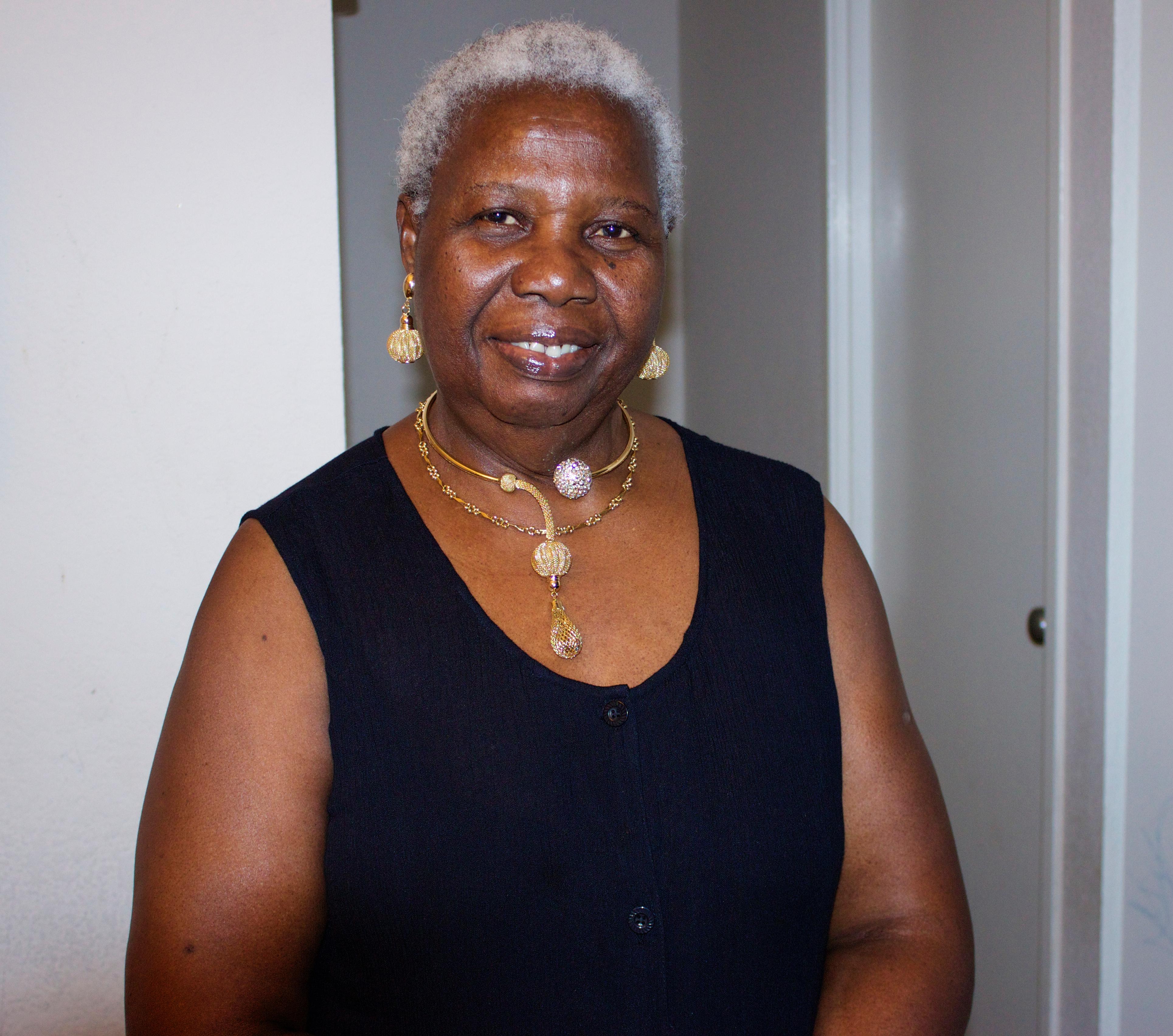
Joy Nwosu Lo-Bamijoko
Joy’s Bio
Joy Nwosu was born in Enugu, Anambra State of south-eastern Nigeria. Her parents were Charles Belonwu and Deborah Nwosu. She is the fifth in rank of the seven children of her parents. Joy was born into a music family.
Joy, now retired, was a music teacher, trained in Santa Cecilia, Rome, and obtained her Ph.D. in Music Education from the University of Michigan, USA.
She has written and published extensively on national and international scholarly journals, magazines, and newspapers.
Her short story I Come from Utopia was published in African Voices, Spring/Summer, 2007, pg. 18, and her first English novel; Mirror of Our Lives: Voices of Four Igbo Women was published in 2011, and was shortlisted for the Commonwealth Book Contest in 2012. She has also two books published in the Italian language.
Joy is a trained musician, and taught music for 35 years. She writes, performs, and record folk songs.
Her new book: The Legend of the Walking Dead: Igbo Mythologies, which has just been released, is a journey into the mysteries of life and death of the Igbos of Nigeria. She loves reading romances and mystery stories.