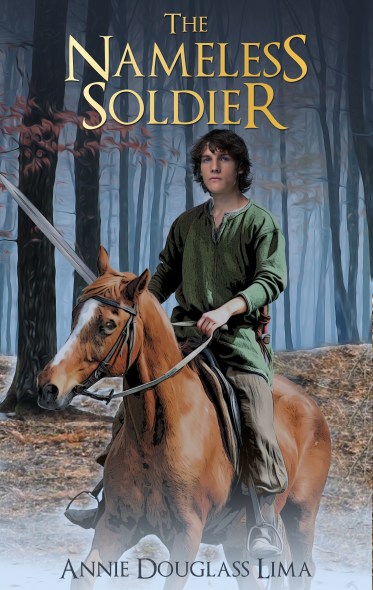
The Nameless Soldier is book 4 in the Annals of Alasia young adult fantasy series. Haven’t read all (or any) of the others? That’s okay! The books can be read in any order, and each one can stand on its own.
Description:
What do you do when you’re the only survivor?
Nineteen-year-old Tarvic bears the name of a mighty hero from Alasia’s past. However, the young soldier feels anything but heroic when he regains consciousness to find himself the lone survivor of a brutal attack by invaders from the neighboring kingdom.
Forced to leave his identity behind, Tarvic is thrust into civilian life in the role of protector to three war orphans. When the four of them encounter a mysterious stranger, he must choose between keeping the young girls safe and taking on a mission that could help free his kingdom. Can Tarvic live up to his noble name and find a way to balance his duty and his dreams?
Where to Get a Copy:
Click here to buy the ebook or paperback from Amazon. (The ebook is $2.99 just $0.99 through June 6th!)
Not sure if you’ll like the story or not? Take a look at the first chapter and see!
The Nameless Soldier
Chapter One
Tarvic woke to the sound of a distant yell, abruptly silenced. He pushed his blankets aside and sat up, puzzled, but heard only the light patter of rain on the canvas. “What was that?”
Drevel, his roommate in the barracks and tentmate out on campaigns like this, stirred and rolled over. “What?”
“I heard something. Someone shouting.”
“It’s probably just another drill.” But Drevel sat up too, shoving his own blankets away, as Tarvic crawled over and untied the tent flap.
A blast of wintry air and raindrops greeted him as he leaned out, peering across the tent-studded hillside. Clouds hid the moon and stars, and on every side the thick dark of the forest leaned in from the edges of the large clearing. But the telltale flickering light of distant torches sent shadows leaping over tents and across the open spaces between them. Why would someone be using torches out here? Any soldier in camp had easy access to lanterns among the supplies.
Something was wrong. Very wrong. Tarvic pulled back into the tent and yanked on his breeches and jacket.
They both heard the next yell, closer this time, and then the unmistakable clash of swords. Both men snatched up their own swords, jamming their feet into their boots and fumbling for shields. From all around them, shouts of alarm erupted as men in their company woke up.
And then the enemy was upon them. Horses exploded through the camp, trampling tents and the soldiers just crawling out of them. Riders leaned low off their mounts’ backs, swinging swords and waving torches.
Halfway out of his tent, Tarvic threw himself flat on his face to avoid a slash that would probably have decapitated him. He scrambled to his feet, only to be knocked off them again by a blow that he barely caught on his shield.
Light, shadows, horses, blades, rain. Chaos raged through the clearing to the sound of crashing metal, pounding hooves, shouts of challenge and desperation. Tarvic regained his feet and fought as best he could from the ground while enemy riders thundered around him. Dodging and ducking, he aimed for the men’s legs and tried to keep out from under their horses’ hooves. With no idea who he was fighting or why, his only goal to stay alive for the next heartbeat, he dodged and darted through the tumult looking for spots where horses and enemy swords weren’t. All around him, men fought and ran and crumpled to lie as limply as the trampled tents.
Slipping and stumbling in the mud, Tarvic felt a surge of satisfaction as his sword met flesh and an enemy yelled in pain. And then the man wheeled his horse and charged back toward him, and Tarvic turned to flee.
He tripped on something soft that groaned. Pain shot through Tarvic’s wrist as he caught his fall, and only a quick roll saved him from being trampled as the man’s horse cantered over him.
Its rider wheeled again, and Tarvic rose to his knees, barely raising his shield in time to protect his face. The force of the blow threw him backward, jarring his already sore wrist.
Another horse leaped over him, and Tarvic cried out in pain as a hoof struck him on the shoulder. He stumbled to his feet, ducking low to present as small a target as possible, and ran through the melee.
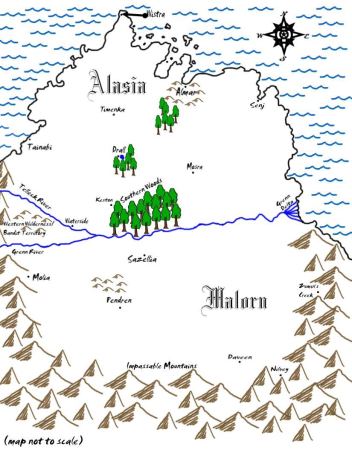 He saw fewer people on foot now, more obstacles in the mud. Was it cowardly to flee from a battle you couldn’t win? Nothing in Tarvic’s eight months in the military had prepared him for this. Not counting occasional minor border skirmishes, the kingdom of Alasia hadn’t seen an actual war in six generations. Besides routine patrols, city peacekeeping, and the frequent drills and training, the military’s primary duties involved escorting merchant wagons through robber-frequented stretches of rural highway and keeping an eye on the sections of coastline where seafaring raiders were known to attack. Tarvic had never fought in a battle that involved more than a handful of opponents at a time, and none of those opponents had been anywhere near this organized — or this deadly.
If we escape, we can regroup somewhere safer and — A hard blow to the back knocked him to the ground again as another horse pounded over him. Giving up all pretense of courage, Tarvic scrambled to his feet once more and fled for the edge of the clearing and the relative safety of the trees beyond. I can’t do anything here. They’re going to slaughter us all!
He was practically there when another rider appeared in front of him, leaning low with sword outstretched. Tarvic almost impaled himself on the blade, raising his shield just in time. He fought back frantically as the man slashed, swinging his weapon again and again. I need my horse! Military training had included nothing about how to fight a mounted enemy from the ground. But Lightning was tethered in the row of makeshift stalls on the far side of the camp, probably prancing restlessly under his blanket and wondering why his rider didn’t come to spur him into battle.
Tarvic didn’t even see the blow that almost killed him. His ears barely registered the thudding of more galloping hooves from behind, nearly drowned out by the rain and the sounds of battle. But the world exploded in light and pain as something struck the back of his head harder than anything had ever hit him before.
He lurched forward, feeling his sword drop from limp fingers. Managing two steps before his legs buckled, he was just conscious enough to recognize the urgent need to crawl. Don’t stop. Don’t stop. Don’t stop. Or they’ll kill you out here. That was the only thought left in his mind as he pulled himself toward the concealing shadows behind the line of tree trunks. And then even that faded, giving way to darkness.
Want to know what happens to Tarvic? Click here to purchase the book and find out!
 About the Author:
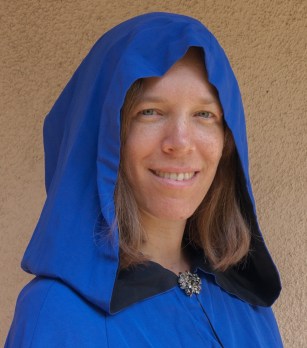
Annie Douglass Lima spent most of her childhood in Kenya and later graduated from Biola University in Southern California. She and her husband Floyd currently live in Taiwan, where she teaches fifth grade at Morrison Academy. She has been writing poetry, short stories, and novels since her childhood, and to date has published seventeen books (four YA action and adventure novels, five fantasies, a puppet script, six anthologies of her students’ poetry, and a Bible verse coloring and activity book). Besides writing, her hobbies include reading (especially fantasy and science fiction), scrapbooking, and international travel.
Connect with Annie:
Email: AnnieDouglassLima@gmail.com
Blog: http://anniedouglasslima.blogspot.com
Facebook: https://www.facebook.com/AnnieDouglassLimaAuthor
Twitter: https://twitter.com/princeofalasia
Goodreads: http://bit.ly/ADLimaOnGoodreads
Google+: http://bit.ly/ADLimaOnGooglePlus
Amazon Author Page: http://bit.ly/AnnieDouglassLimaOnAmazon
LinkedIn: http://bit.ly/ADLimaOnLinkedIn









 Marcha's Two-Cents Worth