I first learned about spirit animals while in Santa Fe, New Mexico for an astrology workshop a few years back. While we were there, a friend who was also a fellow attendee wanted to check out this little shop that sold Zuni fetishes. If you’re not familiar with fetishes, they are small, stone carvings of different animals that are then typically blessed by the tribe’s shaman. The shop was a pretty amazing place with a surprisingly reverent feel. To be honest, I’ve been in churches that felt less holy. Patrons within were examining these amazing works of art, seeking those with which they felt a spiritual connection.
I guess you could call this the original “self-help” program, where you identify the animal that has the characteristics that reflect your situation, then meditate on that animal so you can acquire (or in some cases release) the traits represented, thus making that animal your “spirit animal”. You won’t necessarily have the same spirit animal throughout your life, but rather turn to the one most relevant for your situation at the time.
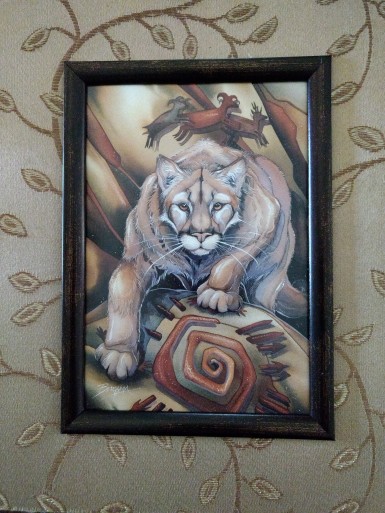
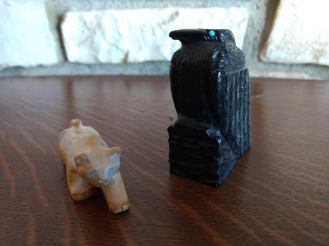 I wound up buying two that I was drawn to, a cougar and a raven. Oddly enough, I already had a picture of a cougar on my wall (shown above) that I’d had for years. It was a notecard sent by a dear friend that I liked so much I framed it and put up in my office. I’d nearly forgotten about it until I got home and noticed how much my newly acquired fetish looked like the picture. Later, when I read about the fetishes’s meaning, they were spot-on.
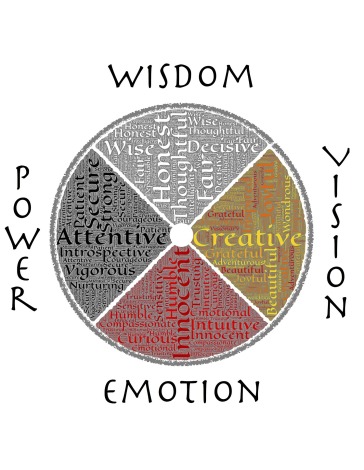
Spirit animals are associated with the Native American Medicine Wheel, which includes the mountain lion (cougar), black bear, badger, white wolf, eagle and mole, which represent each of the six directions (four cardinal, i.e. north, south, east, and west, plus up and down). The meaning of each animal is based on the characteristics it displays.
The Mountain Lion or Cougar is Guardian of the North. She represents wisdom that comes from experience, our successes and failures, the recognition of life’s cycles and forces greater than ourselves.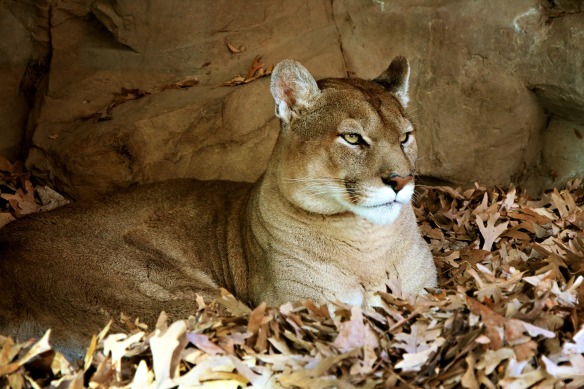
The White Wolf is Guardian of the East. He represents our quest for higher knowledge. The East, where the Sun rises each day, is the place of new beginnings, and the direction from which great teachers arrive.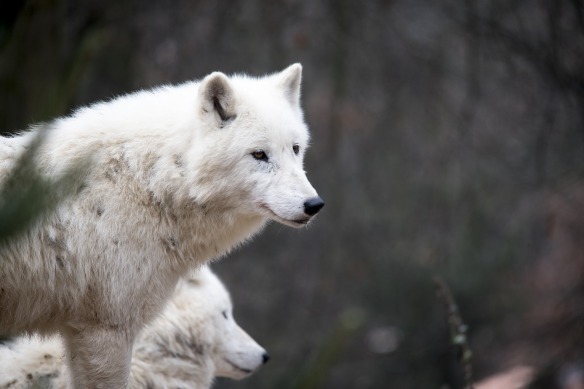
The Badger is Guardian of the South. I remember seeing a documentary on badgers and being surprised at how aggressive they are. They represent the needs of the ego and physical body and how we may destroy or injure others as we pursue what we want when we’re obsessed with our basic human needs.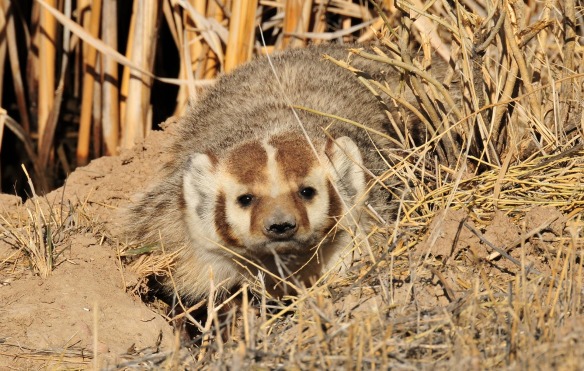
The Black Bear is Guardian of the West. She signifies personal strength and introspection that will lead to wisdom through spiritual understanding.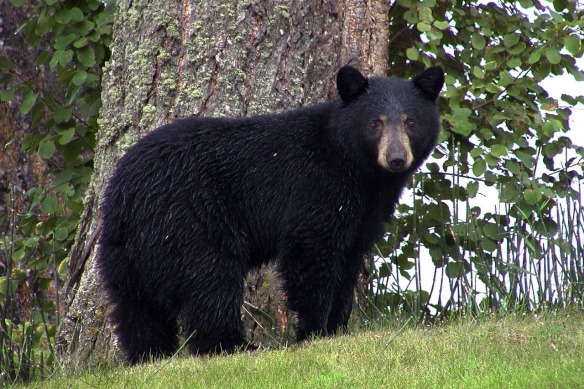
The Eagle, Guardian of the Upper Regions, represents pursuing the heights. This is taking time to view the big picture, forget the moment, no matter how difficult, and absorb the greatness around us.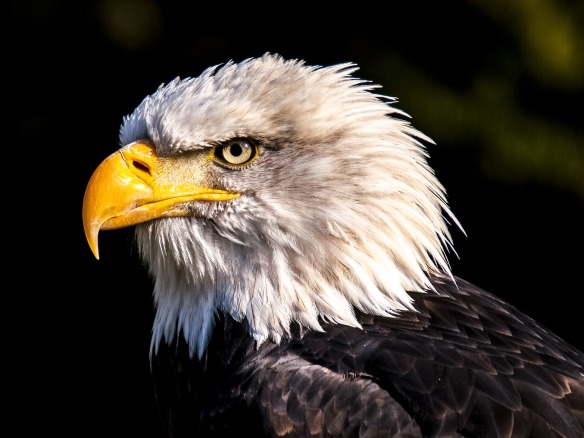
The Mole, Guardian of the Lower Regions, burrows within. Blind to all other than the perception of stark dark and light, the mole gathers information through the other senses–vibrations, smell, taste, sounds, touch. These heighten awareness of the Earth itself, plant life that nourishes us, aquifers, minerals.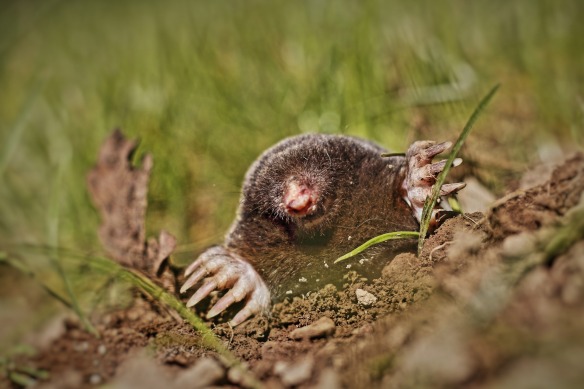
Ideally, you would have a fetish representing each of these animals and you would arrange them all in their respective directions in a circle, all facing inward to represent the proper integration of these principles. You could use a picture instead so as to have the visual image, though having the fetish, which you can hold and feel its energy, is more effective.
Ponder each of the above pictures individually and see if you react to any at a visceral level. If not, don’t worry, there are other options. Any animal that comes to mind can function as your spirit animal provided you understand its message for you.
 You can have more than one spirit animal and add them as needed. You don’t have to have an actual fetish carving to do so, but they serve as a visual aid or talisman. There’s a bit of a ritual that goes along with it, where you “feed” the fetish, usually consisting of ground blue corn, which they will give you when you buy a fetish. Each day you’re supposed to do so, which of course is a reminder to ponder the animal and whatever characteristic you wish to emulate from its example.
Other animals include the coyote, snake, raven, falcon, owl, rabbit, fox, armadillo, turtle, frog, deer (also bison), and horse. You can add these to the wheel as your intuition dictates. In my case, the raven represented a time of transformation. I had recently retired and was letting go of my previous life to start a new one. Transformations are a death of sorts. As an astrologer, this concept is represented by the planet Pluto and, at that time, I was in the midst of a “Pluto transit” as well.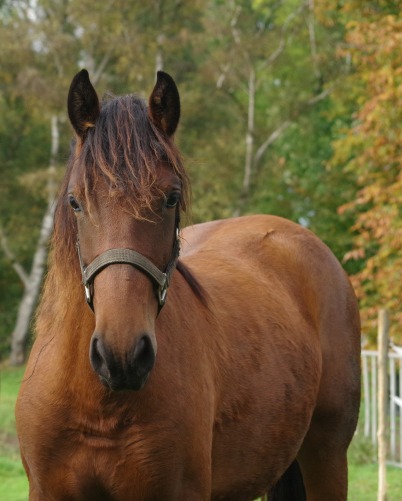
It seems no one is trouble-free these days. Even the Earth herself is unhappy, reflecting through this insidious heatwave and volcanic action the collective anger and abused power all around us. This is clearly a time when this Native American wisdom can benefit each of us and hopefully return our planet to peace and sanity.
The Southwest Indian Foundation has some fetishes for sale in their catalog. If you want to know more about spirit animals and use of the medicine wheel, a really good book on the subject is “Zuni Fetishes: Using Native American Objects for Meditation, Reflection, and Insight” by Hal Zina Bennett. Last I checked, they have it on Amazon.
[Animal pictures courtesy of Pixabay.]