Today’s Writing Tip

home-office-3 copy

No single social media platform is a panacea. As difficult as it can be to manage several, each tends to have a different audience, so diversity is necessary to reach the most potential readers.

This can be a huge time-suck, however, because it’s not just a matter of developing suitable posts, which is bad enough, but also involves a learning curve with the particulars of each platform.

There are numerous classes out there that will teach you what can be effective in the different apps. This can get expensive, and depending on your budget, may not have any appeal or possibility. One alternative is to observe and study what’s out there. See what catches your eyes or entices you to click a link. This is not always simple and the reason that marketing and promotional services abound.

And finding a good one is another subject entirely. In a word, beware! In a word, they’re not likely to be a panacea, either.

Today’s Writing Tip

home-office copy

One of the biggest author challenges is finding the people who will love your story. The first step is to identify who they are. This is not always simple, but one place to start is their age. This is not always readily apparent, however, because many stories span a huge range, from elementary school to retirees, like the Harry Potter or Twilight series.

Nonetheless, it’s a start, at least for where you expect the majority to be found. After that, the next step is to figure out where they hang out. In today’s social media saturated world, this is likely to involve finding Facebook pages and hashtags that your target audience would relate to.

If you don’t have a clue, then maybe that group doesn’t comprise potential fans, because you should have something in common with them if you expect them to embrace your work. If that’s the case, then maybe you need to go back to the drawing board.

Today’s Writing Tip

e-mail- copy

Book fairs and conferences are excellent places to meet other authors and potential readers. The energy in such venues is magical, but learning how to use it to your advantage takes practice. Many authors, myself included, are introverts, so your first experience in such an environment can be intimidating. There are also numerous conventions and protocols for how your table or booth should be set up. Thus, before you take the plunge, visit a few to scope them out so you know what to expect.

Your best bet is to concentrate on those close to home. Not only can your local fan base find and support you more easily, but others in the area will discover you as well, perhaps bringing opportunities for other appearances.

However, even in your own territory, selling enough books to cover expenses is unlikely until you’ve developed a strong fan base. This definitely applies to venues that require hotel stays or, heaven forbid, airfare, though if combined with a vacation, such bills offer a nice business-related tax deduction.

The main thing is not to be discouraged by expecting too much. Just include the cost in your marketing budget and count any book sales as a bonus.

Today’s Writing Tip

desktop- copy

When promoting your book, comparing it to similar stories with which everyone is familiar can help find readers who will like yours. Of course you have to do this is a way that’s not arrogant or could get you in trouble for infringing on copyright laws.

Nonetheless, if your book has similarities to the Harry Potter series, readers who love that series might be delighted to find another source of fantasy. There’s a risk, however, because if you fall short when they can’t find adequate parallels, their disappointment may result in a rather brutal review.

Thus, weigh the pros and cons carefully before using this method. A safer approach is to simply refer to some of the elements your story has in common with a popular series or movie. Sometimes you get lucky and a reviewer makes the comparison for you, in which case you can quote them and let any ire at possible deficiencies fall on them.

Greek Myths and the Zodiac

astronomical-clock-small copy

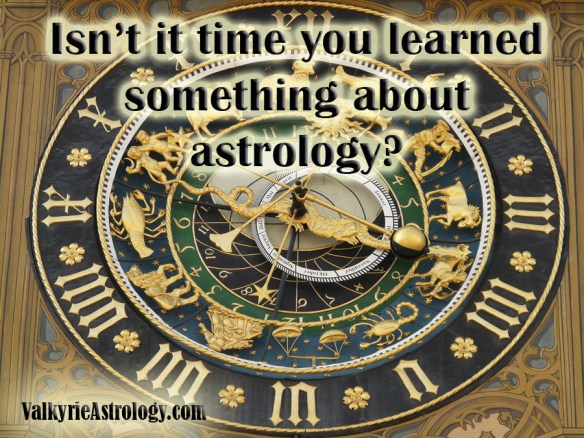
Enjoy this entertaining article contributed by James Hirlehey that introduces the Greek gods as they relate to the 12 zodiac signs.

Greek Myths and Your Zodiac Sign

There is evidence for the practice of Astrology as far back as 3,000 BC in Mesopotamia. From here the practice was exported to Greece, and later adopted by the Romans and used throughout their empire. The Greek version of Astrology is the foundation of the system used in the West today. It used the paradigm of the Greek mythology in order to describe the aspects of the different astrological signs.

Which Greek myth is associated with your sign and what characteristics might you share?

Aries – Ares, God of War

Ares was the Greek god of war, son of Zeus and Hera and brother to Athena. The Greeks used Ares and Athena to represent the two sides of war: Athena strategy and discipline, Ares chaos and destruction. Ares was thought as spontaneous and daring, but also impatient and blood thirsty, often leaving pain and destruction in his wake.

Are you bold and impulsive, often acting without thinking of the consequences of your actions on others?

Taurus – Cerus the Bull

According to the myth there was a mighty bull named Cerus that caused havoc and destruction around some villages. Cerus allowed his emotions to decide how he behaved, which left him uncontrollable. One day Cerus met Persephone, goddess of Spring and the Underworld, who was able to communicate with him and taught Cerus how to calm his emotions and use his strength for good.

Do you have strong emotions that you find difficult to control?

Gemini – Castor and Pollux

Castor and Pollux are the famous twins of Greek myth. While the twins had the same mother, Leda, they had different fathers, Castor’s father being the kind of Sparta, and Pollux’s Zeus, king of the gods. Both heroic figures, they had many adventures together, but eventually they came up against a foe they could not defeat, and while Pollux survived since as the son of Zeus he was immortal, Castor died. Devastated by the loss of his twin Pollux asked Zeus to kill him, but instead Zeus made Castor immortal so that they could continue their adventures together.

Are bravery and loyalty some of the qualities you hold in high esteem?

Cancer – Crios, Guardian of the Sea Nymphs

Crios was a giant crab responsible for guarding the sea nymphs in Poseidon’s kingdom. He was large and strong, and blessed by Poseidon with the gift of immortality. When Poseidon went into hiding because of Typhoid’s attack on the Olympians, he asked Crios to look after his daughters as well. But Crios did his job too well and Poseidon’s daughters became restless with their lack of freedom and escaped. Unable to abandon his other charges he asked a giant squid for help locating the daughters – the Squid located them, but then ate them. The Squid lied to Crios and said that he could not find the daughters, but Crios knew immediately that he was lying, and a battle ensued. Crios won, but was severely crippled, a pain he had to live for forever as an immortal.

Are you protective to a fault and can you spot a liar?

Leo – The Nemean Lion of Hercules

As one of his 12 trials Hercules was charged with bringing the skin of the Nemean Lion to King Eurystheus. The lion was large and strong with an impenetrable pelt, and it took Hercules many attempts to slay the Lion, eventually killing it by clubbing it on the head and then strangling it. He still needed to remove the pelt, which again took many attempts because the pelt was impenetrable. Hercules eventually realised that the only way to remove the pelt was with the Lion’s own claws.

Are you thick skinned, and is the person in your life that hurts you the most you?

Virgo – Persephone, Goddess of the Harvest and the Underworld

When the goddess Persephone was kidnapped by Hades and taken to the underworld, her mother was so sad that she deliberately caused the harvest to fail. As a consequence, Persephone was allowed to return to the Earth for six months each year to help her mother with the harvest – from March to August, the same months that her constellation is visible. Persephone has two distinct sides, she is both nurturing, bringing the harvest to fruition, but also has a more serious side as queen of the underworld. It was thought that this serious side helped Persephone to nurture, as by being contained and self-sufficient, she was fulfilled within herself, which allowed her to nurture others.

Are you individualistic and self-sufficient, but still nurturing and caring?

Libra – Astraea, Star Goddess

Astraea was known as a virgin goddess of justice that served as a caretaker of humanity, hence the scales of justice found within Libra. Astraea is also known as the last immortal and is said to have lived among humans before eventually leaving because she was disgusted by humanity’s wickedness and brutality. As such Astraea represented both the light of justice and the darkness of chaos.

Can you keep the light and darkness within yourself in balance and not give in to the chaos around you?

Scorpio – Scorpio, Slayer of Orion

According to myth Orion, son of Poseidon, was a great hunter, but also extremely boastful, in a way that irritated the other gods. Apollo and Gaia got so annoyed that they made a giant scorpion called Scorpio that would hunt the hunter. Hearing about this plan Orion fled, but Scorpio pursued him relentlessly and eventually killed Orion.

Do you tenaciously pursue your goals?

Sagittarius – Crotus the Musical Satyr

Son of Eupheme and Pan, Crotus lived with the muses on Mount Helicon. He had the legs and horns of a goat and the torso and head of a human and was a skilled hunter and musician. He is credited with inventing both the bow and applause as a means of showing appreciation. Crotus was devoted to the art of the muses.

Art you a creative person who also knows how to show gratitude?

Capricorn – Pricus the Sea Goat

Pricus was the father of all sea goats, which have the head of a goat and the tail of a fish and are extremely intelligent and can think and speak. He was created by Kronus, god of time, and is both immortal and had the ability to control time. The children of Pricus were drawn to the land and would crawl onto shore where they would eventually lose their fish tales as well as the ability to think and speak. This upset Pricus, who continually turned back time in an attempt to convince his children not to venture onto land, only to fail each time. Eventually he despaired and asked Kronus to grant him death rather than live without his children. Instead Kronus placed him in the stars where he could continue to watch over his children.

Are you always trying to control the world around you?

Aquarius – Ganymede, Consort of Zeus

Ganymede was regarded as the most handsome young man in Troy. A shepherd, one day he was tending his sheep and Zeus saw the young man and thought him so attractive that he decided to take him as his lover (a normal practice at the time). Taking the form of an eagle Zeus snatched Ganymede and took him to Mount Olympus where he becomes the god’s lover and cup bearer, essentially Zeus’ slave. Unhappy with the situation Ganymede decides to pour out all the ambrosia, wine and water of the gods, causing immense storms and a great flood on Earth. Initially angry, Zeus soon realised that this was a result of his treatment of Ganymede and made him immortal as the constellation Aquarius.

Do you often react without considering the consequences of your actions?

Pisces – Pisces, Aphrodite’s fish guides

The monster Typhon threatens the Greek gods on Mount Olympus, causing them to abandon their home. As Typhon approaches their home, Aphrodite and her son Eros decide that they needed to escape. At this time they meet two fish, so the two gods turn themselves into fish and followed the other two fish to safety.

Are you a generous person who often counsels others?

Today’s Writing Tip

desk- copy

What is the worst book you ever read? Did you finish it or give up part way through? Why was it horrible? Take a few moments to learn from it, even if it’s something uncomfortable about yourself or your own work.

One book I read was so bad on so many levels, I’m surprised I bothered to shove myself through to the end, hoping it would get better–it didn’t. Sadly, the premise was a good one and certain parts, at least of the plot, were well-done. However, it was riddled with my pet peeves, including, first and foremost, violation of the laws of physics and/or aerodynamic flight. That offended my inner scientist.

As I remember in addition, the author misused just about every homonym in the English language. Okay, we’ve all goofed up from time to time with your, you’re, and maybe even yore or there, their, and they’re, but this included so many it became laughable and definitely offended my inner grammarian.

But you know what the irony is? That for all the well-written and nicely edited stories I’ve read, which are many, I’ve forgotten the title of most of them while this one will probably live on, forever tattooed on my memory.

I guess the question is whether that is how you’d like to be remembered?

Today’s Writing Tip

design-space-copy

We all have our favorite genres, which we lean toward, especially when reading time is limited. However, reading something different can highlight other techniques to use in your own writing. If this is too big of a step, then consider reading one that’s a cross-over. These combine more than one classic genre, giving you the opportunity to find one that’s only a slight shift from your first preference.

I suspect that the advent of cross-overs can be credited to indie writers, who pursued their creative instinct with no regard to established “norms” for the conventional book categories. While this was undoubtedly a cause of dismay for publishers, literature professors, and librarians, it has brought a delightful potpourri to readers.

If you do muster the courage to step outside your usual reading fare, just make sure that it’s well-written and edited. Otherwise, it could simply provide you with an excuse to avoid such excursions in the future.

Today’s Writing Tip

coffee- copy

Similar to yesterday’s exercise, when you’re reading a novel and come across something that tosses you out of “the zone”, take a moment to consider whether you’ve ever made that same mistake. Was it a glaring typo? A missing word? The protagonist acting entirely out of character? A plot hole? Something that violates the laws of physics? (That last one is my personal favorite, or I suppose I should say pet peeve.)

Note how distracting it is when this happens and use that energy to make a solemn vow to never knowingly do the same thing to one of your readers. This is what careful editing is all about.

Today’s Writing Tip

blank copy

Don’t worry about those pesky adverbs during your first draft, when such concerns can interrupt your creative flow. When you’re following your muse capturing your story for the first time, don’t fuss over such things.  However, this is one area to attack on your first edit. This is accomplished easily by using  your word processor’s “Search” function to find all words ending in “ly”. At that time you can put on your thinking cap and replace it with a strong verb. (Thanks to author Jeanne Foguth for this great tip!)

Today’s Writing Tip

alphabets-copy

When you refer to something that happened in the past, be sure to transition properly so your readers don’t get confused. This is done by using past perfect tense, i.e. “He HAD wondered years ago, whether blah blah blah.”

After that, switch back to simple past so you don’t create a different distraction by having too many “had” whatevers.  Then be sure to close the flashback by using perfect past again, cluing your reader that it’s now back to the present story action. Otherwise, your reader can get lost in time. In some books I’ve encountered I’ve had to read a few paragraphs over several times before I figured out what was past and what was present.

As always, throwing a reader out of the story is a huge faux pas!