A Trip Down Memory Lane to a Galaxy Far, Far Away

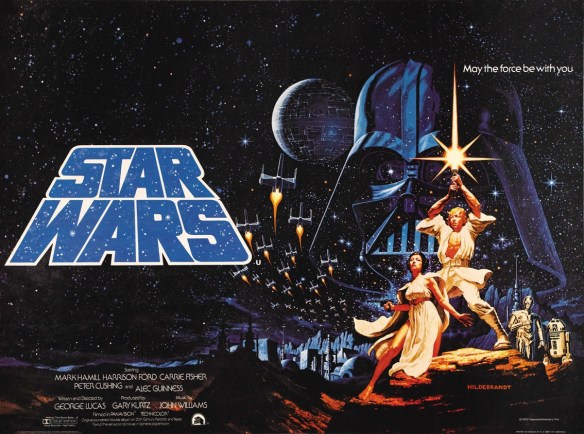
star-wars-episode-4-advance-poster

I don’t know if it was the Force, but something definitely awakened this past week when I FINALLY went to see the latest Star Wars episode, “The Force Awakens.” I’ve been a Star Wars fan since seeing the very first one back in May of 1977. I find it incredibly amusing that George Lucas was worried that it would be a flop and kept a low profile for its release, fearing humiliation if it did. Right. A flop that has spanned four generations, at least in my family.

I saw this latest one with my 42 year old daughter, who was three years old when the first one came out. Way back then, I was 29. Now she could take her three year old grandson to see it. That does something to me on so many levels that I’m not sure I can even describe it.

First of all, on an intellectual level, I marvel at anything that maintains its popularity for that long. Of course if you like old movies, you can find them, whether it’s on Netflix, the cheap video bin at Walmart or Turner Classic Movies. But few single titles can sustain that kind of audience. The only one I can think of that might even begin to compete would be “Gone With the Wind” which my mother saw when it was released in the 30s, then I enjoyed and subsequently my children. But it comes and goes, waning and waxing in popularity, whereas Star Wars has NEVER being invisible. In 39 years. Give that some thought.

I’ve always wanted to be a novelist, but I seriously wonder if I’d be writing science fiction if it weren’t for Star Wars. My initial idea for “Beyond the Hidden Sky” came from the opening scenes of that first flick, where R2D2 and C3PO blast off in an escape pod. The first step toward any story is “What if?” and for me that comprised “What if a rebellious teen-aged girl moving from one planet to another with her family got blasted off accidentally in an escape pod?” The result of that premise launched my Star Trails Tetralogy of four novels and a companion volume which number over 1500 pages. I know other authors similarly inspired.

I really enjoyed this latest episode, which was reminiscent in style and energy to the original trilogy. I really liked the new characters, at least the good guys, particularly Rey and Finn. My all-time favorite from the series was “The Empire Strikes Back” and, quite honestly, I wasn’t quite as enchanted by the more recent three. “The Phantom Menace” put me to sleep, actually, and the two after that were so-so, in my opinion. But this latest one resonated, right from the blasting of that iconic theme introducing the now-classic opening crawl. Instantaneously, I was back in 1977.

My eyes tend to water in places like the grocery store and Walmart, plus it’s allergy season here in Central Texas, so it may have only been that effect, which had me wiping my eyes from that point on. I’ve mentioned in a previous blog (see “RIP Columbia: Picking up the Pieces”) how memories are stored in both your head and heart with those that reside in the latter coming back full-force, replete with a physical reaction, when stimulated. Clearly, that’s where my memory of Star Wars resides.

That feeling of being taken back in time, coupled with lightspeed flashes of all that has transpired in my life since 1977, had a profound effect.

Not to digress, though I tend to do that a lot, but I remember reading about a study several years ago where they investigated the effects, if any, on rest home residents when they were exposed to music that was popular when they were young. Interestingly enough, the oldsters figuratively got younger! They acted younger and the physiological indicators such as blood pressure and such improved as well. It’s like when all those old feelings come back, your body responds and reverts to that place in space and time.

Time certainly is an illusion, something I may understand slightly better that some folks since I have a physics degree. I’ve had a tremendous amount of fun playing with such possibilities in my novels. But here on planet Earth, so far we haven’t conquered time. I may have been 29 when Star Wars was first released, but now I’m a great-grandmother. Believe me, I don’t feel that old, and I certainly didn’t feel that old watching Episode VII earlier this week.

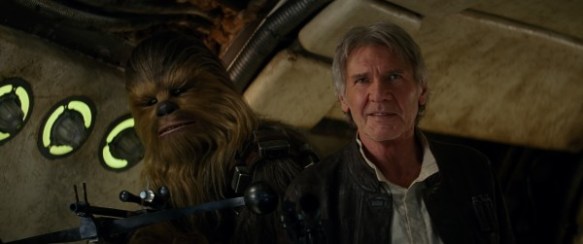
At least I didn’t until Han and Leia came on screen. Seeing them OLD reminded me that I, too, was OLD! How could that be? I was jolted back to the present and that rush of nostalgia slammed through me like decelerating from lightspeed. I tend to be pretty hard on myself, expecting to look and have the energy I did when I was say, well, to be reasonable here, even 50. After all, I don’t feel that old inside my head. But I am. I look it, no matter how much I try to deny it, and my body feels it, particularly my right knee which functions similar to an odometer.
hanandchewie

Yes, something happened when I saw Han and Leia in all their 60s glory. Time marches on and waits for no one.

Will this movie have a similarly profound effect on me like the first one? Maybe. It’s made me acutely aware that time is not standing still. If there’s anything I want to do before I die, then I’d better figure out what that is and get to it. I’ve already been reminded of that a few times recently when contemporaries of mine have passed on, which is starting to happen with increasing frequency. It’s time to forget about the things I didn’t do in the past 39 years and concentrate on what I want (or could) to accomplish in the years I have left.

They say that your life flashes before your mind’s eye when you die. Perhaps compressing 39 years into a nanosecond was a freebie from the Universe, reminding me that time, indeed, does not stand still. I remember a similar feeling the first time I heard “Sunrise, Sunset”, that sentimental song from “Fiddler on the Roof,” back when my children were still young. Now they’re all grown and even their children are grown or will be soon. It’s incomprehensible that I have a grandson in the U.S. Marines with two others married and having children of their own.
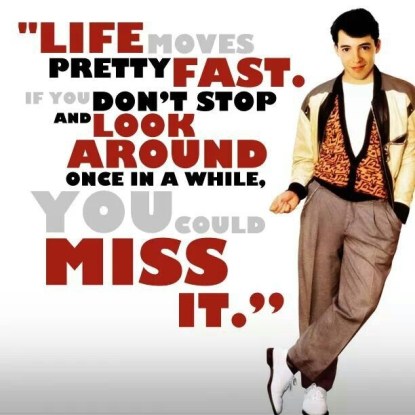
buellerquotePerhaps Ferris Bueller said it best when he declared “Time moves pretty fast. If you don’t stop and look around once in a while, you could miss it.” That was in 1986, a mere 30 years ago. Matthew Broderick is no spring chicken these days, either.

OMG, where has all that time gone?
 

Challenges of Space Exploration: NASA as a Government Bureaucracy

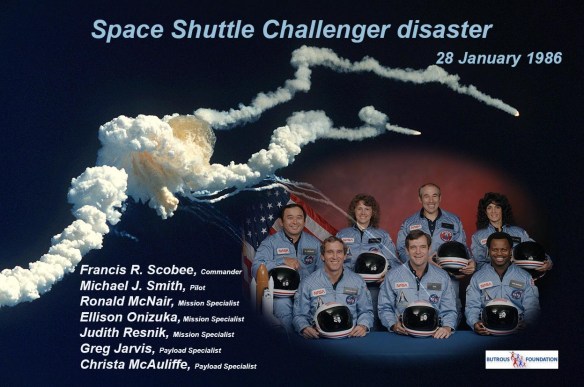
Space Shuttle Challenger disaster

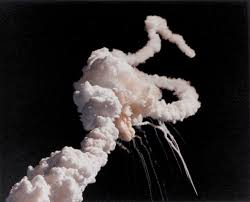
On January 28, 1986, the U.S.A. experienced a tragedy that has since faded into history. If you weren’t yet born at that time, you may not have even heard of it. I remember talking about the space shuttle to a classroom full of junior high students in the late 90s where I was blindsided by a young man who asked whether one had ever blown up. That something indelibly imprinted on my memory could be unknown to someone, even an adolescent, was incredible. Until I realized the simple fact that the kid hadn’t been born yet.

Wow. To me it felt as if it had occurred the day before.

I was a physics major in college with aspirations to work in the aerospace industry. The day we lost the space shuttle, Challenger, for me was a very bad day. Ironically, that’s exactly what NASA calls such an event, a “bad day.” Well, no shit.

Sorry, I usually avoid naughty words in my blogs, but in that context my expansive vocabulary entirely fails me. Somehow nothing defines NASA’s understatement of tragedy as well as an expletive. And much of why I feel that way is because, subsequent to the Challenger accident, I went to work at NASA as a contractor, ultimately winding up in their Safety Division, which meant I was privy to all sorts of dirty little secrets.

When I arrived at Johnson Space Center in Houston in April 1988, the agency was deep into what they referred to as “return to flight”; RTF in NASAspeak, given their propensity for acronyms. RTF comprised the time while they finished investigating the cause and put together design fixes to avoid a similar occurrence in the future, eventually getting back to what NASA did, i.e., send men and women into space. It’s interesting to consider that we didn’t even refer to it as Challenger; it was 51-L, the ill-fated flight’s official designation, which was less emotionally charged than calling it by name.

When I went to work in the Safety Division at Johnson Space Center in 1990, “The Report of the Presidential Commission on the Space Shuttle Challenger Accident” was required reading. This well-written document covered the technical details in a way that even my teen-aged son at the time could understand. I remember him reading it in the backseat of the car during a road trip. That same copy still resides on a shelf in my home office, bristling with numerous sticky notes and highlights marking the parts that struck me the most. But those are but tips of the proverbial iceberg.

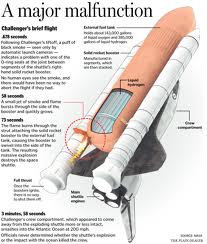
51Lexplosion2As anyone who’s actually familiar with the accident knows, its official cause related to the o-rings in the solid rocket booster which didn’t seal, allowing hot gasses to strike and penetrate the external fuel tank, which resulted in a deadly explosion. A major contributor to o-ring failure was the fact the launch took place when the temperature at Cape Canaveral in Florida was a mere 28 degrees F. This had never before been attempted, Floridian temperatures usually far above that range, even in January. This factor was illustrated dramatically by physicist Richard P. Feynman, a member of the investigation committee, by dropping an o-ring in a glass of ice water to demonstrate how they became brittle and incapable of performing their function at low temperatures.

51Licicles

I lived in Northern Utah at the time of the accident, the manufacturer of the solid rocket boosters (a.k.a. SRBs), Morton Thiokol, located a few dozen miles away. Anyone who lives in such a climate is more than aware of the effects of cold weather. As I recall, the SRBs had never been tested in that temperature range, either.

On the surface, it appears that this tragic accident that claimed the lives of seven astronauts, including teacher Christa McAuliffe, took everyone by surprise. But in reality, as I learned working in Safety for nearly 20 years, it was processes and politics every bit as much as faulty design. They knew; they just ignored it. The true cause was as elusive as missing shuttle pieces still on the bottom of the Atlantic Ocean. [NOTE:–If you’re interested in more sordid details about the Dark Side of NASA, I recommend “Challenger: A Major Malfunction” by Malcolm McConnell or “Prescription for Disaster” by Joseph Trento.]

Anything that can cause a problem, either critical or catastrophic, is documented on a Hazard Report, with o-ring leakage no exception. Hazard Reports (HRs) contain causes along with controls, though some hazards are simply classified as an “accepted risk” if there’s nothing that can be done to prevent them. Space flight is risky and there are some things you simply can’t avoid or control; bird strikes and meteorites come to mind.

51LMalfunctionO-ring failure was a catastrophic hazard and documented as such. That the design was faulty was likewise known. Engineers had seen leakage on previous flights. Let that sink in for a moment. O-ring failure had happened before. However, earlier instances had not caused an accident. This resulted in a very dangerous and ultimately fatal thought pattern that led them to believe that perhaps it wasn’t as serious as they thought. Previous failures had been investigated, the leakage referred to as “blow-by” and eventually accepted as not a safety issue.
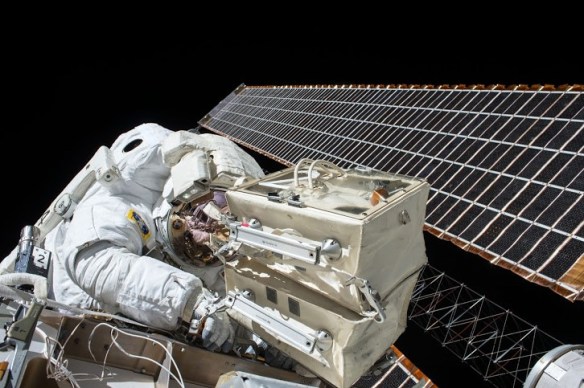
How wrong they were. In reality, they were playing Russian Roulette. Just because they got away with it a few times did not mean it wasn’t a hazard, only that they’d dodged a bullet. A Thiokol engineer named Roger Boisjoly had written a memo before the accident pointing out the seriousness of the problem. It was essentially ignored, most likely for budget and scheduling reasons. Unfortunately, his sordid prophecy of impending disaster was fulfilled almost exactly six months later. Later, to cover their sins, Morton Thiokol and NASA decimated Mr. Boisjoly, typical behavior employed to discredit whistleblowers.

I’d like to point out that for many accidents the public sees Safety as the culprit. Wasn’t it safety’s job to prevent such a horrific occurrence? Yes, it certainly was. And I must say that we did everything possible to assure safety of flight. We were the ones who made sure all risks and hazards were properly controlled and documented. This more refined process, however, was instituted after and because of the Challenger accident. The full rigor of the safety process recommended post 51L by the Presidential Commission was never fully instituted, however. A plethora of subsequent reorgs were supposed to make safety more of a priority, yet somehow eroded, as proven by the Columbia disaster 17 years later. An accident which has a strikingly similar administrative postmortem.

If you remember the movie, “Deep Impact,” you might recall the line where the female member of the crew on that fictitious shuttle flight, charged with protecting our planet from a collision with an approaching asteroid, noted that if they died in service to their country that all they’d probably get was a high school named after them, which is more truth than poetry. So let’s take a moment to remember those seven brave individuals by name who died so needlessly 30 years ago. They represented different genders, races and ethnicities, some professional astronauts, others not.

51LPatch

Francis R. (Dick) Scobee (Commander)

Michael John Smith (Pilot)

Ronald Erwin McNair (Mission Specialist)

Ellison S. Onizuka (Mission Specialist)

Judith Arlene Resnik (Mission Specialist)

Christa McAuliffe (Payload Specialist & school teacher, winner of the “Teacher in Space” competition)

Gregory Bruce Jarvis (Payload Specialist & aerospace engineer, bumped to this flight by a U.S. Senator who took Greg’s original spot)

As they say, those who fail to learn from history are doomed to repeat it. And repeat it they did, within four days of being exactly 17 years later on February 1, 2003 when we lost Columbia.

Watch for more on that tragedy on the 13th anniversary of that disaster.

Do You Want to Work for NASA?

EVA-SA

A while back National Geographic featured a blog declaring that NASA was recruiting astronaut candidates. The astronaut corps is obviously an exclusive bunch with strict requirements and grueling competition. Even if you want to join their ranks it’s not going to be easy. At the least, military experience and graduate degrees are usually minimum requirements.

But just because you can’t make muster for the astronaut corps doesn’t mean all is lost. There are literally thousands and thousands of people who work for or support NASA without such demanding qualifications. You can find a list of them here. Having worked at NASA’s Johnson Space Center for over twenty years I can tell you that there is every job imaginable represented in addition to the obvious ones in a technical field. Whether you’re an accountant or public affairs wizard NASA will need people with those skills somewhere in their organization.

If you’re really interested in a NASA career and haven’t checked out their website, then you need to do so. Yesterday. If you haven’t, here are a few highlights.

One thing you need to realize is that NASA is only located in some very specific locations. They have centers in California, Texas, Mississippi, Ohio, Florida and various other places including their headquarters in Washington, DC. Unless you live near one or are willing to relocate, it will be more difficult. There is one caveat I’ll get to later, but if you want to be an actual NASA employee, living in close proximity to one of their centers is required. You can see where these centers are by going here.

If you want to work more directly with the technical side, which comprises 60% of their employees, then you need to have at least a bachelor’s degree in one of the fields noted on their website. Obtaining a position as an intern as part of your education will give you a considerable advantage later for becoming a permanent employee. More information about the various programs available can be found here.

Okay, now I’m going to talk about some things you won’t find on their website.

Getting a job with NASA is not easy. First of all, there are only so many positions available for which there will probably be hundreds if not thousands of applicants. There are three factors that can help you have a slight advantage. One you either have or you don’t with nothing you can do to change it, another may be related to your birth but not necessarily, and the last one you may be able to achieve if you plan early enough as mentioned above.

The first way to get your foot in the door is to be a minority. As a government agency, NASA takes pride in maintaining a high percentage of those in the affirmative action category as an example to industry in general. This is not to say that these folks don’t need to meet the technical requirements of the job at hand. They still need to possess a technical degree and the better their grade point average and/or experience, the better, but these individuals will usually make it to the top of the heap more easily than others. Minority women with a technical degree have an even bigger advantage.

The next potential advantage is to be disabled. Again, this doesn’t mean you don’t need to have the needed qualifications. If you do and you get hired NASA will actually help accommodate your disability. For example, I knew a NASA engineer who was a quadriplegic due to an unfortunate accident when he was a youth. His mind was not affected and he obtained an engineering degree after which he was hired by NASA. He was confined to a wheelchair and clearly had major physical limitations. To compensate, NASA hired an assistant who helped him by entering what he told her on the computer, taking him to meetings, and so forth. In other words, Stephen Hawking could get a job based on his abilities, not refused for his disabilities.

If none of these fit your situation, then it’s going to be a lot more difficult to get onboard, but not impossible. At least not as far as working with NASA’s space program. There are literally thousands of jobs in the aerospace industry, some of which are directly associated with NASA and others that are not. These are mostly available through numerous companies, big and small, that are known as NASA Contractors. In fact, the 21 years I spent at Johnson Space Center were as a contractor employee. There are pros and cons to being a contractor I’ll get into another time, but if you really want to work for NASA it’s a step in the right direction.

After you decide which NASA center you want to work for your next step is to identify which contractors are in that area and start applying. If you don’t want to or can’t move near one, all is not lost. And here’s the caveat I alluded to earlier: There are other options. In order to get their budget passed by Congress each year, NASA requires support throughout the United States. What this boils down to is that there are NASA contractors in just about every state. That way, to protect job interests in their home state, Congressmen will be more inclined to vote favorably for NASA interests. It might be a challenge to find a NASA contractor in your area, but that’s what the Internet is for. If you’re hired by one, depending on the position you hold, you’ll probably get to travel to NASA centers from time to time. You’ll not only get to see some very cool stuff but feel as if you’re part of the program. Perhaps all without moving, at least out of your state.

Like NASA, contractors often have intern programs, especially during the summer. They aren’t always easy to get into, either, but it’s worth a shot. Again, you’ll be competing against a lot of other applicants. And there’s only one way to get around that.

You’ve probably heard the saying “It’s not what you know but who you know.” In other words, if you know someone “on the inside” who can vouch for you, it will give you a much better chance of being considered for a position. In fact, that is why those intern positions are often difficult to obtain, because they’re usually given to the kids whose parents work there first. That may seem unfair depending on your point of view, but it’s the way the world works.

But all is not yet lost.

The next best thing you can do is make personal contact with someone inside your organization of choice. Better yet, lots of them. Trade shows related to aerospace and job fairs at universities are one place you may be able to make such a contact. Always treat such encounters as the equivalent of an interview. It’s critical that the impression you make be favorable as well as memorable. And no, looking like a cast member of “The Big Bang Theory” is not what I mean. Maintain contact with the person afterwards as well, but not to the point of being annoying. Touching base with him or her every few months will be sufficient.

It’s not easy but it can be done. Working with NASA had been my dream since I first watched the Apollo 11 Moon Landing back in 1969, before most of you were born. I didn’t graduate from college until 1987, at the age of 39, yet through determination and the right connections I was able to land a job supporting NASA’s Johnson Space Center in Houston within a year of graduating. I worked my way up through the ranks, eventually managing a cadre of engineers, and finally retired with the satisfaction of knowing I’d gone after something, no matter how elusive, and attained it. There’s no reason you can’t, too.

[Originally published 11/7/2015 at https://medium.com/@marchafox/do-you-want-to-work-for-nasa-f1a64db05292%5D


Comma, give me a break!

booksinbox

I think we all realize that whether or not a person likes a book is highly subjective. I’ve read (or tried to read) books with numerous five-star reviews that I didn’t like and couldn’t get through. Some were well-written, just boring or populated with unappealing characters, while others were poorly written and/or edited. I’m a bit of a grammar/typo Nazi myself so I hide my head in shame that someone put one of my books in that category.

I’ve heard that no literary agent or publisher takes an indie book seriously until it has a few three-star reviews. Thus, when I got my first one as an untimely present for my Christmas birthday, I had mixed feelings. I now had the obligatory mediocre review and, to be perfectly honest, the reason had been noted by a previous reviewer, i.e. the lack of commas. I acknowledge this as a valid complaint and have it on my to-do list to rectify. Sadly, at one point I’d actually taken several of them out because they seemed to slow the story down! How ironic is that?

Okay, you may have already guessed that I have a couple confessions to make. First of all, I edited my own books, which I realize is a major no-no, but let me explain. First of all, there were various times when this particular book, which was admittedly my first novel, was set aside for years. When I would get back to it, I could read it like it wasn’t my own and, for the most part, edit effectively. Like I said, I’ve been accused of being a grammar Nazi with other people’s work, and I definitely fixed a lot over time.

Another factor was finding an editor I could trust to do the job. I mean, really do the job. I’ve seen too many acknowledgements in various novels where authors extol and thank their editor while I, nonetheless, find a plethora of things they missed when I read the work in question. Call it pride, if you must, but it was hard not to feel I could do as good or better of a job than some of the supposed pros out there.

And the coup de grace was that I was on a budget. While I don’t mind paying for services that are done correctly, cost combined with not being sure I could find a competent editor resulted in doing it myself. Oh, well, my bad.

The second one is that, even though I have a minor in English, I am not that well-versed in grammar. Seriously. Most of what I know has been learned through my mother correcting me as a child, reading, and, heaven forbid, intuition. I’ve been an avid reader all my life and been writing since I could hold a pencil, yet never liked English classes or understood some of the rules. Diagramming sentences to me was worse than algebra, which made more sense. I really don’t like to point fingers, but in this case I’m going to point one at a prof I had in college who taught the obligatory grammar class for those majoring or minoring in English. That class was, like we say here in Texas, as useless as teats on a boar hog.

The prof, who is probably now dead and gone, couldn’t find a textbook that he liked so we had none. He would lecture, but with no logical order or continuity that I could recognize. All we did the entire term was–you guessed it–diagram sentences. Punctuation was rarely mentioned. One thing I remember him (or perhaps someone else) saying was that English, unlike Latin, was a living language that evolved, that such things as punctuation styles changed over time, and things like comma usage was becoming somewhat optional. You can bet I jumped on that like a duck on a June bug!

judgeongrammar

But for purists who were more astute at learning the rules than I was, it was a major faux pas. And apparently the person who left this three-star lambasting was one of them.  I must say that the reviewer was generous in giving it three-stars since s/he didn’t even finish reading it.

Back to the subjectivity of what we like, science fiction is certainly one of those genres that everyone doesn’t care for. (Oops, ended that sentence with a preposition! OMG! Let’s correct that to “one of those genres for which everyone does not care.” Right? Right.) Even with proper punctuation it’s likely s/he wouldn’t have liked it. That I understand. And I do admit s/he has a point and I will fix the problem because, believe it or not, I really am a bit of a perfectionist, but that doesn’t mean that I know everything by a long shot. I’m teachable but, as noted earlier, I never had a decent English teacher or at least one I could follow. Math is much simpler to me with its concrete, easy to follow rules and black and white answers. Equations make a lot more sense.

pageheart

So what have I learned that I can pass on to other writers? If I had this to do over, it would be to do a beta reader exchange with someone who has equal editing skills to my own. Fortunately, for subsequent books I was able to find such individuals. And that is what saddens me the most, the other books in the series are in much better shape. I’ve actually received compliments on the editing of at least one of the others. This was my first book and I’ve heard it said that everyone’s first novel should go in the trash bin labeled “tuition.” My problem was that it was the start of a series with so much more to tell! The characters evolved and so did the plot to the point that it took four full-length novels to complete the story. I’m a much better writer now, as all of us become, the more we write.

So, bottom line, I’ll go back eventually and correct the comma situation. I don’t know all the rules, but at this point I’m reasonably confident that I’ll be able to do so in a competent manner. The worst part, as most indie authors know, is that there are so many different formats to deal with, i.e., both print and electronic versions, which complicates the process considerably. Nonetheless, I’ll have the satisfaction of debunking that uncomplimentary review when it’s corrected, unless, of course, those who would appreciate a properly copy edited work are turned off by that seething diatribe, which is actually so excessive that it’s downright amusing. Fortunately, most geeks and nerds, who are my primary audience, anyway, aren’t quite so concerned, though there are exceptions, of course, many of whom I met at NASA.

<Sigh.>

Rant over.

Thanks for listening.

P.S. If you’d like an ecopy of the book in question, “Beyond the Hidden Sky,” for free, join my mailing list, which qualifies you for a free download. You can do so here.

Astrological Archetypes & The History Channel

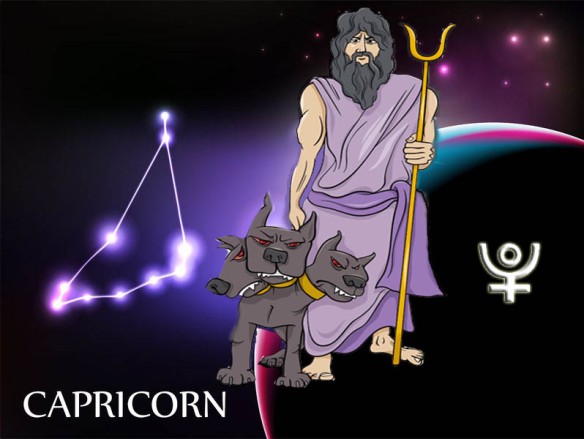
plutocap2 copy

Astrology is so much more than a person’s sun sign. Yet that’s usually about all the average person knows about it. Some may have a vague idea of the basic personality traits of those born under theirs and perhaps other signs. As a professional astrologer, I see the influence of this ancient art all around me. The ancients declared “As above, so below” with good reason. Astrology is much more than the placement of the Sun; it includes the sign each planet occupies as well, and when you really get into it, the stars, constellations and asteroids as well. It’s mind-boggling to say the least, yet fascinating, as you see influences that fit like the proverbial glove.

One that has recently stood out for me is the influence of the planet, Pluto, while he transits through the sign of Capricorn. This began January 27, 2008, though there were a few times after that when Pluto returned to Sagittarius due to retrograde motion. This occurred between June 15 and November 27 of that same year. Since then he’s been there to stay, at least until March 24, 2023 when he’ll first set foot in Aquarius.

At this point you’re probably wondering “So what?” Patience, dear reader, I’m getting to that. In order to notice, much less appreciate, these effects, you first need to understand the underlying meaning of both Pluto and his current sign of residence, Capricorn. As you probably know, Pluto is the Roman god of the Underworld, known by numerous other names, depending on which culture’s mythology you favor. Most mythological characters represent an archetype, defined by The American Heritage Dictionary as “an original model or type after which other similar things are patterned.”

To get a general idea of what this means, read the myth about Pluto (Greek Hades); Proserpina (Greek Persephone); and Ceres (Greek Demeter) where, through intrigue, Pluto kidnapped Cere’s daughter, Proserpina, and took her into the Underworld to be his queen. Using this myth as a model, some of the things Pluto represents astrologically are derived, e.g., power, control, corruption, the Underworld, anything buried beneath the surface, intrigue, and abductions. His domain also includes atrocities, death, catacombs, dictators, pirates, vampires, devastation, holocausts, and oddly enough, transformations such as rebirth (e.g., resurrection or the Phoenix arising from the ashes). Forensics and anything that exposes and eliminates corruption such as that required for purification and healing are included as well. These are but a few examples of the type of energy that Pluto emanates.

The zodiac sign in which a planet resides provides it with a specific environment where this energy is expressed and thus directed toward certain areas influenced by that sign. For example, Capricorn is considered the ruler of governments and their officials, politicians, building foundations, cemeteries, bones, excavations, administrators, anything old, order, time (think of the decrepit old man who represents the outgoing year at New Year’s Eve which just happens to be when the Sun is in Capricorn), and responsibility, to name a few. Also note that “history” is ruled by Saturn, Capricorn’s ruler, and is obviously something old. Neptune rules secrets and mysteries, and he’s involved, too, as he hangs out in Pisces, the sign he rules, so solving old mysteries that touch upon history through excavations is another thing to look for.

So what do you think Pluto will be up to during his trek through Capricorn? One way to see it manifested would be power grabs and control efforts by governments and administrators. All you have to do is pay attention to the news to see evidence of that. Exposure of corruption and those things that lie beneath the surface, literally and figuratively, is another expression of this energy. Think there’s any of that going on? Let’s take a look at some of the most popular televisions shows for clues.

The following examples just happen to be on The History Channel or its high definition version known simply as H2. Most are viewable online. I realize this blog is turning into a plug for The History Channel, which wasn’t my initial intent.  Nonetheless, it’s one of my favorite channels due to its content and I’m familiar with most of these shows, which fit the Pluto in Capricorn archetype so nicely. Indeed, they were so obvious that they inspired this blog in the first place.

The Curse of Oak Island – Two brothers investing a significant amount of resources in trying to find the various treasures supposedly hidden by everyone from pirates to the Knights Templar on this island off the coast of Nova Scotia.

Hunting Hitler – Investigates claims made by formerly classified FBI files which indicate Adolf Hitler did not commit suicide in his bunker at the conclusion of World War II but followed a carefully constructed plan supported by an alliance with Spain to escape to South America.

Pirate Treasure of the Knights Templar – Explores possible connections between what you would expect would be very diverse groups.

America Unearthed – A forensic geologist investigates various North American sites that provide evidence of pre-Columbian presence from the Great Lakes to Arizona and various other locations inbetween.

Brad Meltzer’s Decoded – Author, Brad Meltzer, assembled a team comprising an historian, attorney and engineer to investigate any number of mysteries ranging from Secret Societies to UFOs at Area 51.

Engineering Disasters – Investigates the cause of various disasters that involved engineering. Some may have had unknown causes or been suppressed from public knowledge.

Cities of the Underworld – Little known, less-than-charming facts about underground features of various cities around the world.

A broad scope of documentaries that prompt and/or investigate archaeological digs worldwide are out there as well on PBS channels and various others. See how many you can find that fit the mold. Give some thought, also, to the renewed fascination with vampires, which just doesn’t seem to go away, as well as the zombie frenzy.

In case you’re wondering what happened the last time Pluto was in Capricorn, that was over two hundred years ago. With an orbital period of 246 years he’s a bit of a slow mover. The last time the God of the Underworld entered Capricorn was on January 8, 1762, to be exact. The American Revolution occurred during that passage. No telling what this one will bring.

For more about Pluto’s astrological influences through the signs, visit my astrological website http://www.valkyrieastrology.com/Makeover/Planets/Pluto.htm.

P.S. I confess that the illustration above is not astrologically correct. The first person to tell me why can have a free download of “Whobeda’s Guide to Basic Astrology.”

Stock images copyright 123RF.com

Babyboomer Ponderings on Electronic Dependencies

As I’ve noted before, I live in the boonies. This is by choice. When I retired I moved to my lakehouse, not only because it was a place where I could relax and enjoy nature but also so I could afford to retire a little early. Over the past six years I’ve done a lot of remodeling to make it into a home versus a cabin. I have a few things left to do but I’ve made great progress. (Or rather my contractors have, to give credit where credit is due.)

retirement

There are a few problems with this lifestyle, however. One is that, contrary to what many believe, it is NOT cheaper to live in the country. For example, you spend more on gasoline. The grocery store is 15 miles away and the nearest Wal-Mart is 25 miles, likewise for stores like Home Depot and Office Max. Utility costs are not only high but often undependable. Services such as internet and television providers are WAY more expensive. There’s no cable out here, at least now, the one in existence several years ago now defunct. The main choice for both is satellite, which is expensive as well as undependable, especially during inclement weather.

10470644_s

Thus, it’s not particularly unusual for me to turn on the computer like I did yesterday morning and have no internet. This is only annoying since so much of my life as a writer and astrologer depends on it, to say nothing of keeping in touch with family and friends. Let’s just say I have three websites, three Facebook pages, two Twitter accounts, blogs on WordPress, Tumblr and Medium, and a password list that comprises a seven-page Excel file with another page or two worth of additions handwritten in the margins. Someday I’ll update it. Hahaha, yeah right.

But annoying is synonymous with modern life. They’re everywhere, whether it’s traffic jams, long lines (which I generally avoid in the boonies), bad weather, junk mail of the snail and electronic varieties, hoaxes, scams, phone solicitors and erratic cell phone signals (another constant up here). I must say, however, that when my internet goes out I feel a momentary surge of panic.

What if it doesn’t come back up?

What, if like the preppers say, TSHTF?

Then what?

To date my internet has always come back up, whether on its own, unassisted, or through intervention of some sort that typically involves a protracted wait listening to annoying messages or bad music until the next available customer service representative answers.

But what if the day comes when it doesn’t?

Just think of how vulnerable you are if you’re one of those “bundle” people who has your TV, internet and telephone all dependent on your internet connection. Cell phones aren’t much better. Where I live I can barely get a signal most the time. Some providers have good coverage but others don’t. I have to go in one place in my house to even send a text message. But what if it wouldn’t go at all?

Since this is “business as usual” here in the boonies, every time it happens serves as a reminder that these services may not always be there. If you live in an area where they seldom go out then you’re even more inclined to take them for granted. That may not be a good thing.

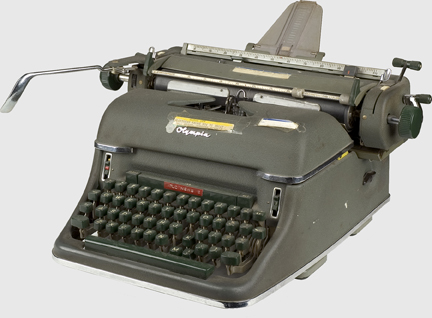
typewriterI’m old enough that I grew up without all these electronic gadgets. We babyboomers wrote letters with a pen or possibly a typewriter. My first two novels were written on a typewriter! Phones were landlines, long-distance calls expensive and rarely made except for emergencies. TV reception was via antenna to local stations with network affiliations. I remember when the idea of “pay TV” first came up and how controversial it was. My father refused to own a car with an automatic transmission, power steering or power brakes because they were beyond his skills as a mechanic to repair. Today’s new cars have electronic systems to rival a 747!
Communications have definitely improved, perhaps too much so, considering how much time social media can consume. It’s how we connect with others around the world. That’s really pretty cool. I have friends, fans and clients worldwide whom I’ve never met, some of whom I know better than certain family members or neighbors. This is great.

But considering the precarious state of the world these days, this also makes us particularly vulnerable should the unthinkable happen. What if not only the internet and cell phones went out but electricity as well? While people may have lived without it for millennia, we have not. Those who have been through a catastrophic storm that has left them without power for days or weeks have quickly discovered what it’s like. I’ll bet those who have experienced it are much more prepared if it happens again. They know what it’s like to go into a grocery store with empty shelves.

My refrigerator went out one time and I lived out of an ice chest for a few weeks, which was no fun. I’ll explain it by saying that as an astrologer I know there are certain times you are ill-advised to buy a major appliance and I was waiting it out or I would have had another lemon. Trust me on that one. Anyway, I had to drive into town (15 miles away, remember?) to get ice every few days. There’s another assumption, being able to drive into town much less buy ice!

6160185_sIt doesn’t hurt to give it some thought once in a while and put your lifestyle in the proper perspective, especially if you spend a large part of your life on the computer or watching television. If nothing else, it helps you appreciate those everyday luxuries a little bit more. All it would take is a huge solar flare or an EMP (electro-magnetic pulse) courtesy of some hostile country or group and it’s over. Ka-boom! China, North Korea, Russia, ISIS…

What if?

Think about it.

28506812_s

Images copyright 123RF.com


Another One Bites the Dust

2015over copy

Year, that is.

I suppose that title gives some clue to my age, at least to those who remember its context. They go by faster and faster. I’ve always liked the analogy comparing life to a roll of toilet paper, i.e. it goes faster toward the end. Scary but true.

Every December I always look back at the list of goals I made the previous year to see how I did. I usually achieve most of them, which is a testimony for writing them down so you don’t forget what they are. Of course that works both ways. If you don’t record it then you may forget to pursue it in the first place but on the other hand, if you finished something without listing it then it could slip into the past unnoticed, meaning you don’t take credit for it. I don’t know about you, but sometimes I need all the credit I can get.

Fortunately, I have tangible proof of at least some of the things I accomplished. Some have been hanging over my head for years. For example, finishing up my science fiction series, the Star Trails Tetralogy. I think I originally said the final volume would be coming out back in 2013. Hahahaha! That sure didn’t happen. But this year it finally did. Refractions of Frozen Time came out in March, about the same time my contractor, Tracy, finished up remodeling my sunroom into a guest room. I could have quit right there and taken pride in my achievements, with due credit to Tracy, of course. Both those goals had been on my list for years so those were biggies.

But once all four books were complete, then I set to work putting together the box set I’d envisioned ever since I realized my story would require more than one book to complete. I had some extra incentive to get that one accomplished when I agreed to share a book fair booth with three other authors. It took a lot more work than expected, but somehow I finished that one, too. Yay!

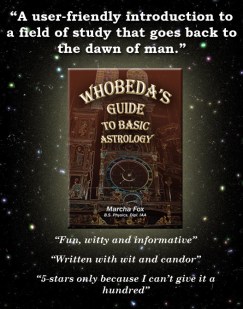
Then I had a couple nonfiction ebooks I wanted to get in print. Particularly Whobeda’s Guide to Basic Astrology and The Family History Fun Factor. Done! I still have one more to go but plan to get that out by the first of 2016.

So I’m celebrating and invite you to join me.

GIVEAWAYS!

GRGivestars copy

I’m giving away 3 copies of the Star Trails Tetralogy Deluxe Box Set here.  All books are autographed by yours truly and it includes a fun swag pack of goodies, too.

WGTA-userfriendly

If you’re interested in astrology, sign up to win one of three autographed copies of Whobeda’s Guide to Basic Astrology here.

Both giveaways end December 13 which will hopefully allow enough time for the winners to receive them by Christmas. (Sorry, USA only)


Here are some other deals you might like. If you have any sci-fi fans on your holiday gift list, remember you can always “gift” them a copy.

Pageflex Persona [document: PRS0000039_00005]


THE SAPPHIRAN AGENDA

The Sapphiran Agenda, backstory of Thyron, the telepathic walking plant everyone loves in Star Trails, is now FREE on Smashwords here.

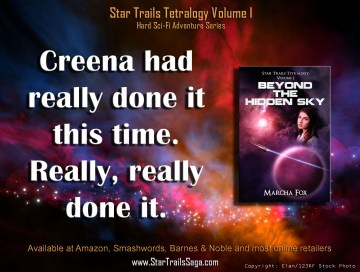
bthsreallydoneit copy

BEYOND THE HIDDEN SKY

Star Trails Volume 1, Beyond the Hidden Sky, is free if you join my Preferred Readers here.

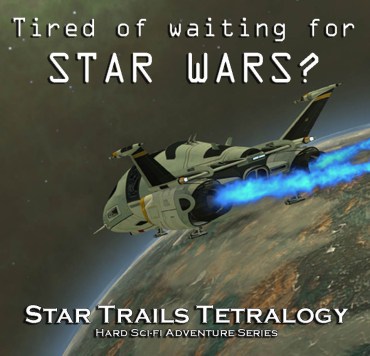
STTtiredofwait150ppi copy

STAR TRAILS TETRALOGY EBOOK BOX SET

Get the entire Star Trails Tetralogy box set electronically for half-price on Smashwords here.

Promotional price: $2.99
Use Coupon Code: VP22Z
Expires: January 5, 2016

WGTAFrontCoverHC150ppi


WHOBEDA’S GUIDE TO BASIC ASTROLOGY

Get Whobeda’s Guide ebook for 75% off here.

Promotional price: $0.99
Use Coupon Code: QD49E
Expires: January 5, 2016

If you’d like a paperback copy you can get one for 20% off at Create Space here.   Use Discount Code 4KCHSKEW

Merry Christmas, Happy Holidays and may you have a prosperous New Year!  Meanwhile, I’m going to go back and work on that list for 2016.  After I take a nap.  I’m pretty tired after realizing how much I actually got done this year…


Life is life…

lifeislife

My neighbor, Heike, and I had planned the night before to leave at noon for Costco about 60 miles away. The morning had been fraught with frustrations including spending over an hour on hold with Yahoo customer service. Two minutes before the appointed hour I hung up, hoping the issue was sufficiently solved as I grabbed my purse and headed across the street. I didn’t even want to think about what my blood pressure probably was.

Before we got to the main highway we were startled by what appeared to be a very large black cat crossing our country road about an hundred yards up ahead. This was not a domestic cat, it was substantially bigger. There are cougars in our area but they’re not black. It had disappeared into the brush by the time we got closer so didn’t get a chance to identify it but definitely wondered what it could be. We’ll probably never know.

We arrived without incident at our destination a little over an hour later where we each grabbed one of Costco’s massive shopping carts and proceeded inside. I think those carts are designed to make your purchase look relatively small, at least until you get to the checkout and see what that buggy full of goodies costs. Undoubtedly the store’s name derived from “cost cooperative” but “cost coercement” seems more appropriate. The store itself can best be described as humongous, Wal-Mart on steroids.

So after about an hour and a half of shopping, we arrived outside with our bounty, wallets substantially lighter, and headed past the huge ocean of shopping carts toward Heike’s car. When I say “ocean” I’m talking about approximately ten rows, each fifty feet or so long, of stacked king-sized shopping carts, bordered on the side by several flat pallet-sized ones like you see at Home Depot. You know, the ones designed to carry case lots or huge purchases like wide screen TVs.

As we walked past this metallic jungle what do we see but a kitten, standing by the outside row of carts and gazing out into the parking lot as if it intended to head in that direction. Those of you who know me are aware that I’m a cat lover. I have four ferals I care for, two Bengals I keep in the house plus my “grandkitty” who belongs to my daughter who’s staying here for a while. Heike has a total of eight, most of which are her own plus a neighbor’s cat who hangs out at her place and a recent new arrival. And a Chihuahua named Chica, who was waiting for us in the car.

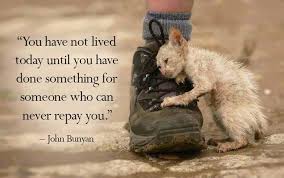
neverrepay

Needless to say, our hearts stopped when we saw this furry tragedy about to happen. Calling to the little fur ball at least temporarily deterred her foray into the parking lot, but then she hunkered down beneath the first row of flat carts. At least at this point we got a fairly good look at her, innocent green eyes peering up at us through a maze of metal.

cateyes

She was a beautiful little thing, mostly white long hair with a few random brown spots of various hues. Not surprisingly, we had 75 pounds of dry cat food between us, so it didn’t take long to put some of that out in a box one of the employees provided, informing us the kitten had arrived the day before. Obviously hungry, the kitten cautiously approached the box and started eating. I grabbed a new bath towel I’d just purchased, hoping to throw it over kitty and the box to catch her. After a few unsuccessful attempts, Heike took our purchases to her car and loaded them up, undoubtedly risking a hernia in the process, and while she was there allowed Chica to have a potty break.

animalhellNumerous shoppers saw the drama in progress, some trying to help (but didn’t), others voicing our own thoughts of what kind of a horrible person would drop off a kitten in such a hazardous place. There are numerous no-kill shelters in the area making this strategy for getting rid of an unwanted animal entirely unacceptable.
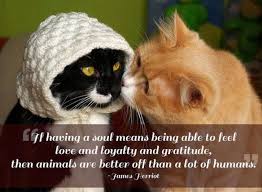
By the time I’d spent about an hour unsuccessfully trying to lure the little fur ball close enough to grab, Heike and I exchanged a forlorn look. At what point should we give up and abandon this precious little creature to what would undoubtedly be a horrific fate?

About that time a beautiful young woman arrived on the scene. Tall, athletic, nicely dressed in a white blouse and black slacks, a single heavy blond braid snaking down her back.

“What’s going on?” she asked, so we told her. “Oh,” she replied matter-of-factly. “I’ll get it.”

kindness

Heike and I exchanged another look, part hope, part skepticism, as the girl threw her carkeys and wallet on the ground, got down on her belly and inched toward the kitten’s shopping cart sanctuary. The kitten moved back, deeper into the buggy maze, by now about three rows in. The girl got up and shoved them out of her way, row by row. Clearly nothing was going to stop her. Again she was down on the ground, reaching toward the elusive feline.

I snuck a peek at her driver’s license, her name obstructed but I could see she was 19 years old and a Leo based on her August birth date. As an astrologer, I smiled. Taking charge with total confidence and her graceful, athletic movements were true to her sign. The fact that Leo the Lion is also a feline, albeit a massive one, chimed in as well.

kittyhatIt didn’t take long before our young heroine stood up triumphantly, kitten in hand. She cuddled it to her bosom and joined us, allowing us finally to pet the little kitty who had caused such a stir. She looked like she was probably about three months old. It was November. The kitten was probably also a Leo. Coincidence? Of course not. There’s no such thing.

animalscharacterHeike asked her if she would keep it and she assured us she would, that their cat had recently disappeared and her mother would know what to do to take care of it. With heartfelt gratitude we praised her efforts and compassion then at long last headed home, knowing one discarded kitten would have a warm bed that night.


As we left the parking lot and turned onto the access road to the highway I saw the heart-wrenching remains of what was probably one of her siblings who would not be so lucky. I closed my eyes and didn’t mention it to Heike whose heart is more tender than mine. Yet I’ll be forever unable to forget it myself.

The question still lingers: How can people be so cruel? Is it any wonder the world is in the state it is?

greatnation


Ponderings on Veterans’ Day

luxmonument2

For most people Veterans’ Day is just another day where the banks are closed and the U.S. Postal Service doesn’t deliver mail. If you work for the government, a financial institution or a few other employers you probably get the day off and might get an early start on your holiday shopping or simply relax. Most schools don’t take it off, probably don’t even mention its significance. You might remember to fly the flag, provided you’re not one who now finds it offensive. Numerous shows on TV such as the History Channel broadcast documentaries related to various wars, which you may or may not watch. If you know a veteran from a past or present war it probably means a little more. What does this day mean to you?

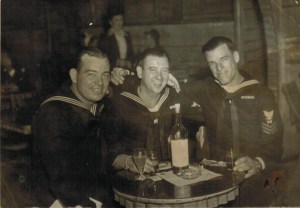
For me it’s a time to remember those I know who have served or are serving in the U.S. Military. I usually remember to put out my flag. My father was in the U.S. Navy during World War II. He’s pictured below, the one in the center, with two buddies in a restaurant in dad02081944Oakland, California on February 8, 1944.
Rather than being onboard a battle ship, however, he was in the Seabees, a name easily derived from the acronym, CB, which stood for “construction battalion.” Their function was to build infrastructure throughout the South Sea islands of the Pacific in preparation for military operations. My first geography lessons comprised my father using a globe to point out the numerous islands he’d served on in the South Pacific. American Samoa. New Hebrides. Hawaii.  Okinawa. As a child I never appreciated those stories as much as I do now.

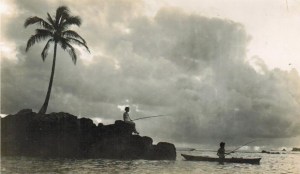
He took these pictures while overseas which give some idea of the cultures that were nativesfishingimpacted by the war with Japan. Islands populated by those embracing a primitive life style who probably had no comprehension of why their peaceful lives were suddenly disrupted by the U.S. military. The little boy with the pig, the children with the old woman holding a baby, all tell a story.


boywithpigislandersMy father came home from the war alive and in one piece, which was more than thousands could say. I don’t know which island the cemetery below happens to be but it, too, tells a story. How anonymous all those white crosses seem, yet each represents a son, husband and/or father who never made it home.


cemetery

My father’s military service was the highlight of his life. For years following the war he made it a point to attend Seabee reunions, wherever they might be. After he died, my mother received condolences from those still living. As a child I remember attending a reunion in Pittsburgh, not quite understanding who those people were or why they were so important to my father. Now I do.

Years later, on Veterans’ Day in 2004, I would visit the U.S. Military Cemetery in Luxembourg, one of many in Europe where American soldiers are buried. All we ever asked of the countries we defended was for enough land to bury our dead. The picture at the top of this post is of the inside of the Luxembourg memorial building, the outside of which you can see at the end. It was a sobering experience to see more white crosses representing so many lives lost.  Row upon row upon row.

PattongraveIt was touching to see how much the Europeans appreciated our service. Every year on Veteran’s Day the government of Luxembourg honors General George S. Patton by placing flowers on his grave. There were several monuments of thanks erected to the U.S. Military as well, such as the one shown below, also in Luxembourg.
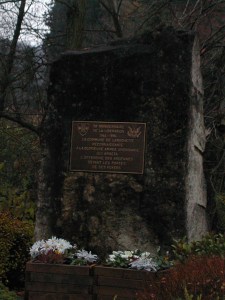
I’d never heard that much about the war in Europe since my father served in the South Pacific. I find it ridiculous looking back that we never studied WWII in school. Somehow the American history books for that time stopped before World War I. Certainly nothing about LarochetteMonumentWWII, nothing about Korea, even as we were stepping into the Vietnam conflict.  No wonder everyone thought history was boring.  It had no relevance to our lives.  No wonder Baby Boomers rebelled.
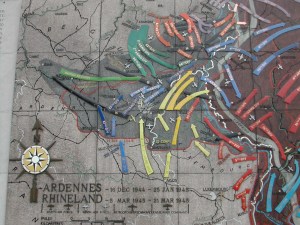
They say that those who fail to learn from history are doomed to repeat it. How ironic that more recent wars, much less current events, are not explained and taught to those growing up in the aftermath. The most relevant conflicts are ignored rather than explaining how they developed. How stupid is that? No wonder we continue to fight.  Or are we ashamed to admit what some wars were really all about?

I suppose there’s enough commonality in all conflicts that the details at a certain level don’t matter. All wars are about dominion, power and control. Some despot decides that his view of the BigWarMap2world needs to be imposed on others. In some cases resources or land plays a part, another symptom of greed that demonstrates a total lack of regard or respect for others. People will obviously fight for what they believe in or if someone else wants to take something away that they value. No one wants to be forced to believe something with which they don’t agree. And I must admit that though I like to consider myself a pacifist, if Headstones4someone suggested eliminating all those who want to take away my freedom, property or anything else, I’d be cheering them on. Like Bill Pullman said so eloquently in the movie Independence Day, “Nuke the bastards!” I believe we should live and let live, but ironically that only applies to those who share that belief. So I suppose I’m not that much different than anyone else.

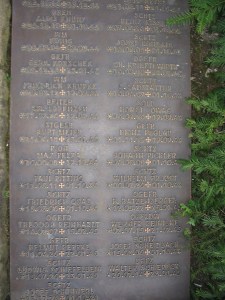
One thing worth noting is that in astrology politics and religion fall within the same house along with all other belief systems. Other cultures and faraway places are also included in the 9th house as well as academia and various other things. Spirituality is covered by an entirely different house, which says a lot about so many so-called “religious” people. I always liked the thought that “Going to church doesn’t make you a Christian any more than standing in the garage makes you a car.” But I digress.

Who really benefits from war? Do the spoils really go to the victors?  Both sides lose precious lives and suffer deathgermanwardead and destruction. On that Veterans’ Day in 2004 that I spent in Europe we also visited German cemeteries. bitbergwarcemHitler’s obsession didn’t only kill those he murdered in concentration camps. Untold numbers of his own people also died. Soldiers fighting for what they were forced to believe in or die as well.  Were they any less victims of a tyrant?


I have a neighbor who was born in Berlin, Germany in 1943, around the time they were being bombed heavily by the allies, a.k.a. the U.S. She grew up playing on piles of rubble, the remains of bombed out buildings. Her father fought in the war, was a prisoner in Russia for several years until he escaped and eventually made his way home. He’d been gone for seven years.  I find it entirely incomprehensible what they must have gone through.

Monument1I suppose my generation’s war was Vietnam. There have been several since, mostly in the Middle East.  While both World Wars focused on political ideologies, too many since have born shades of President Dwight D. Eisenhower’s warning regarding the military-industrial complex. Wars are expensive which means they’re profitable to certain industries.  Bullets, rifles, uniforms, airplanes, tanks and so forth cost money.  Big money, which benefits those who have no regard for their fellow citizens, particularly the upcoming generation who are inducted into the military and sacrificed on the altar of greed. Fighting to defend one’s freedom is one thing; getting involved in a foreign war to make money for a chosen few is quite another.
The Europeans appreciated what the U.S. did for them while other conflicts in which we’ve become involved have not resulted in anything but hatred for Americans.  Is it any wonder some countries see us as intrusive and violent?  A self-appointed world police force?  Mercenaries at the beckon-call of the elite?  Our soldiers were willing to sacrifice their lives based on the pretense of fighting for others’ freedom.  My personal opinion is that in most cases we should mind our own business. Defend our borders, but live and let live. Or die, as the case may be.

Yet we live in an increasingly hostile world where it’s unbelievable how many cultures indoctrinate their youth to be warriors at an early age. Need I remind you that’s what Hitler did, too?  Many of us do the same thing, starting with G.I. Joe. Teaching the principle of defending your own freedom is one thing; taking it away from others is quite another.  For some cultures, that’s what it’s all about.  And you know exactly who I mean.  No matter how much they have it’s never enough.

It’s too bad there’s no day in sight when we’ll live on a peaceful world other than that mentioned in post-apocalyptic scripture. In such a future time and place Veterans’ Day would honor those who fought only in the past. Until that day comes, there are veterans, past, present and future, all around you. Make it a point to thank as many as possible for their service today.

You Can’t Make This Stuff Up

Some things are too weird to explain. Now before I step into territory that’s way, way out there, let me preface it with the fact it takes a lot for something to be so off-the-scale that I can’t even explain it in a fictitious manner. After all, among other things I AM a science fiction writer who has come up with all sorts of things. But this is real. At least if you believe in stuff like astrology.

You may or may not know that I’m a professional astrologer, another hat that I wear when I’m not writing science fiction. Yes, I have a physics degree, and yes, I worked at NASA for over twenty years and yes, there actually is a thread albeit a tenuous one, holding those three things together in that they all involve space in one form or another.

8489944_sIn college I was “taught” that astrology was nothing more than myth and superstition and I believed them. I believed them so much that when I was writing a novel several years ago that had a physicist protagonist I decided to make his ex-wife into astrology to make her as annoying as humanly possible. Wanting my book to have the details correct meant I had to learn a little bit about astrology, so I found a used paperback copy of “Sun Signs” by Linda Goodman as a start. And much to my shock, I discovered that it worked!

It was several years before I got into astrology more seriously but a year or so before I retired I started studying with the International Academy of Astrology, eventually graduated from their professional training program and started practicing via my website, ValkyrieAstrology.com. This course of study took years and felt equivalent to a bachelor’s degree. I was astounded (and still am) about how much there was to learn and how much I didn’t know (and still don’t).

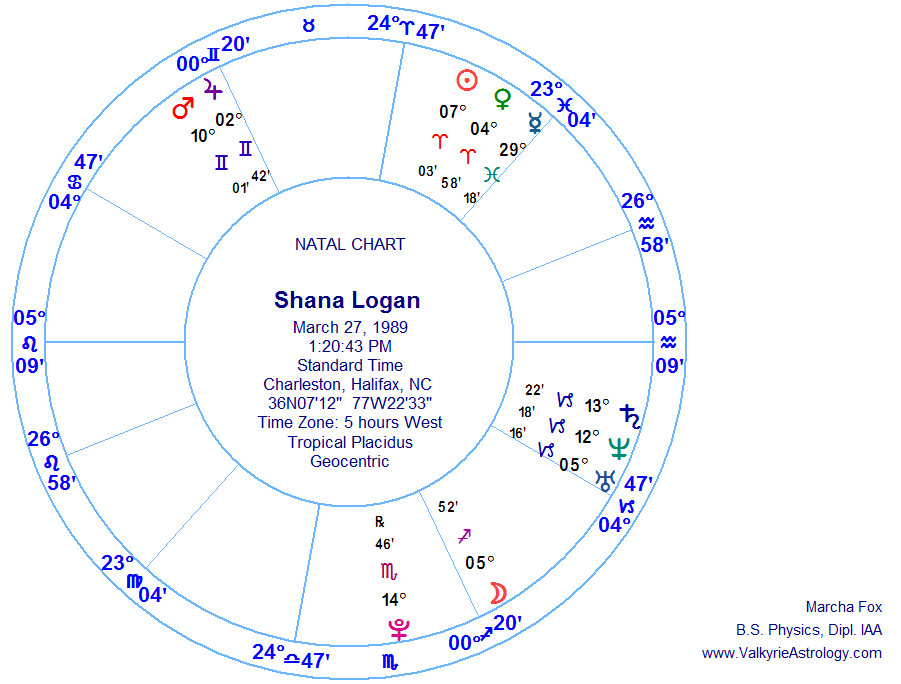
As a writer, I immediately recognized that knowing the characteristics of the different sun signs can come in very handy for developing characters. I even have a blog about it called “Creating Star Characters.” Then I did a character interview for Susanne Leist’s “The Dead Game” character, Shana Logan. I created the astrological chart from scratch based on how Shana acted in the book. It was apparent she was an Aries due to her impulsive sense of adventure and her bright, flashy manner of dressing threw some Leo in there, too. She was creative and multi-faceted in a way that hinted at a Sagittarius Moon. I plugged the data into my report software and a complete description came out that was very much as expected and surprised Susanne.

shanaloganNCSince the chart was fabricated entirely by me including selecting a birth date and tweaking the timing to fit, this wasn’t that much of a surprise.

Sometime later, however, in working with fellow author, Elle, Klass, it inadvertently went to the next level. Elle had given her characters an actual birth date and place as part of her character development process. First, I must explain that Elle is not an astrologer. She didn’t specifically decide that Eilida would have the traits of an Aries when she chose April 5 as her character’s date of birth. Having read the book (“Eilida’s Tragedy: Eye of the Storm Book 1”), however, I had already pegged her as one so had to smile when Elle told me the date. The character’s penchant for detail implied Virgo so I arranged her time of birth to provide a Virgo ascendant. I ran another natal report. Not only was the character’s backstory implied but it also included allusions to events to come in the next book in the series. We were both astounded

Having had that work so well, we decided to run a report for her antagonist, Evan O’Connor, as well. I gotta say he’s one of the nastiest villains ever to grace a fictitious page and I’m glad he’s not real. And lo and behold, the results fit him just as well, right down to his attachment to his mother.

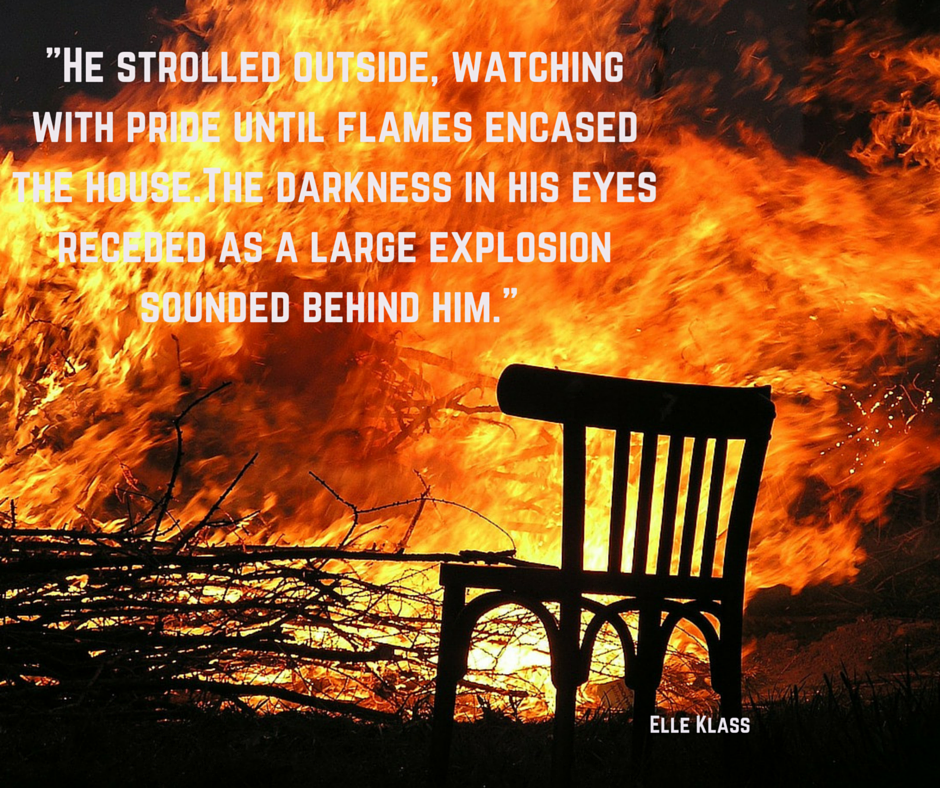
CBS teaser 2Like I said earlier, Elle loves details, which is one thing that makes her such a superb writer, so she had dates of key events in her book as well so I ran what is called a transit chart and compared it to the character’s natal charts. (For those of you unfamiliar with astrology, a transit chart is the position of the planets at a given time and place. These interact with the horoscope of the person and create certain energies which fit the archetypes of events and situations around them.) Again, the fit was so accurate that it was downright creepy.

How could it be?

These were fictitious characters involved with fictitious events fabricated by a very human author yet they fit as well as if they were real.  Huh???

That certainly introduces some extremely interesting philosophical and metaphysical speculations. As an author myself, I know how characters take on a life of their own. After you’ve been writing for a while you learn to let them be born as opposed to created and watch them spring to life endowed with a personality that often brings surprises as you turn them loose within the framework of your plot. But how could these characters have a natal chart that then proceeds to fit the transits of subsequent events in a novel?

Frankly, I have no idea. I do maintain that whether real or not each moment contains a certain unique energy. As a physicist I believe that astrology’s mechanism resides in the mysterious world of quantum mechanics and the concept of quantum entanglement. When a baby takes its first breath, leaving his or her previous home in another dimension to be joined with a physical body, s/he takes the cosmic energy of that moment with him or her. Then, as the planets move through their cycles those changes are felt by the original imprint. I know that is probably a stretch but hopefully someday we’ll know for sure. Until someone comes up with something better it seems to fit.

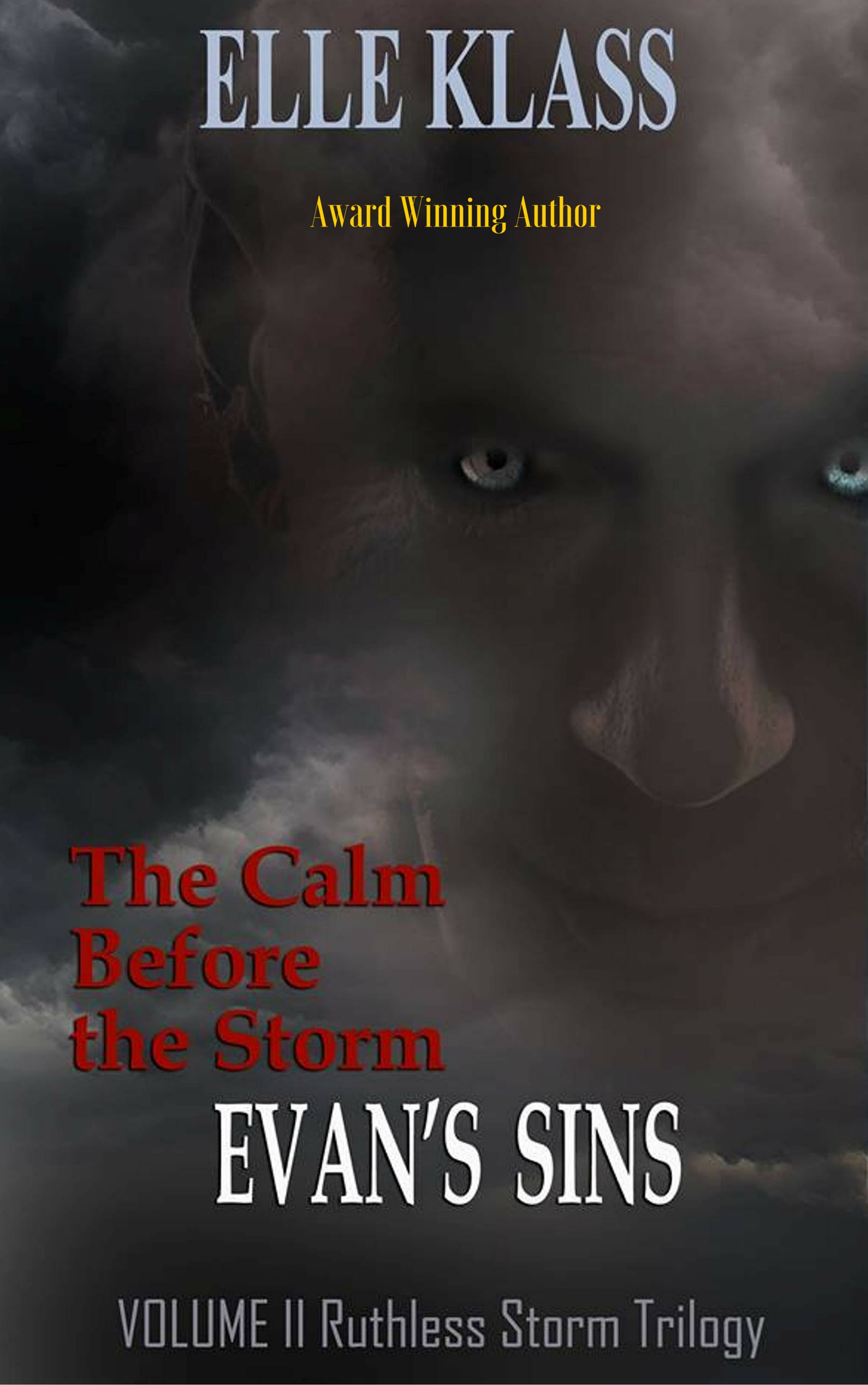
To make a long story short, my astrologer persona, Whobeda, eventually became a character in Elle’s upcoming book, “Calm Before the Storm: Evan’s Sins,” to be released next week along with some of the astrology we pursued along the course of the story. You can find her interview with Whobeda on here blog here. The beauty of it is if any of her readers are into astrology they’ll recognize it as accurate, even if they go so far as to check the charts.

CBS award ebookWhile I may not be able to explain why it works, nonetheless it does. As a fiction writer myself I definitely plan to use this to my advantage in upcoming works. You can find “The Calm Before the Storm” via links below.

VIDEO TRAILER:

https://youtu.be/fVZG22ydbM0

Amazon – http://amzn.to/1FECDEx

Amazon.co.uk – http://www.amazon.co.uk/Calm-Before-Storm-Ruthless-Trilogy-ebook-x/dp/B015VD6856/

Amazon.ca – http://www.amazon.ca/Calm-Before-Storm-Ruthless-Trilogy-ebook/dp/B015VD6856/

Amazon.com.au – http://www.amazon.com.au/Calm-Before-Storm-Ruthless-Trilogy-ebook/dp/B015VD6856/

Smashwords – https://www.smashwords.com/books/view/571520

Google Play – https://play.google.com/store/books/details/Elle_Klass_The_Calm_Before_the_Storm?id=JlufCgAAQBAJ

Kobo – https://store.kobobooks.com/en-us/ebook/the-calm-before-the-storm-evan-s-sins

Barnes and Noble – http://www.barnesandnoble.com/w/the-calm-before-the-storm-evans-sins-elle-klass/1122731283

iBooks – https://itunes.apple.com/us/book/calm-before-storm-evans-sins/id1045083502