Is your inner Einstein looking for some brain candy?

paradox

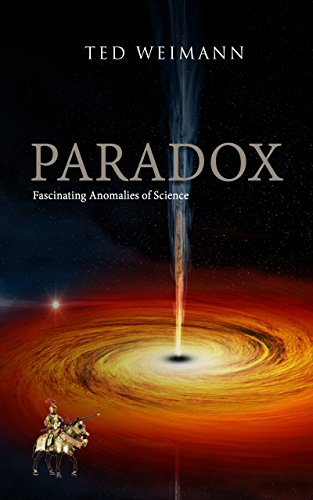
This deliciously meaty and heavily researched book should be on everyone’s shelf. Of course, I’m prejudiced as a scientist myself. I thrive on nonfiction books like this, because they clear the dust from those remote corners of my brain, many of which haven’t been used in a long, long time.  In many ways, the content reminds me of the popular physics books Isaac Azimov wrote years ago, which I thrived upon, prior to actually obtaining a physics degree myself.

Probably what I liked most is its focus on the numerous paradoxes that exist in just about every field of study. The author includes sections on medicine, neurology, and psychology; astronomy, cosmology, and physics; and geosciences and math. He points out through a host of examples that there is still so much we don’t understand and thus so much to learn and explore. On the other hand, research is often subjective and highly biased, conducted to prove a point that financially benefits someone or, more likely, a corporation or industry.

So can you trust research results? Maybe, maybe not, making scientific findings paradoxes in and of themselves.  Science should represent facts, but does it? If someone you don’t trust tells you one thing, scientific data notwithstanding, do you automatically assume the opposite to be true? Do you trust everything the pharmaceutical industry tells you? The tobacco industry? Monsanto? The government? How many times has USDA’s official “food pyramid” changed? How many drugs or food additives have been declared “safe” by the FDA only to be proven otherwise at a later date? is it a paradox we can’t believe so much of what we’re told in the name of science?

You’ve probably heard the quote “Lies, damn lies, and statistics”. The section on mathematical manipulation was particularly fascinating, especially pointing out a statistical flaw (or method, depending on whom you ask) known as HARKing, “hypothesizing after the results are known.” Sometimes, remarkable discoveries are found that way; but, on the other hand, it can be used deceptively.

Weimann notes how correlations are often implicated as causes, when there’s no solid evidence to substantiate it. Along similar lines, in some cases, I would have liked to have seen a specific source as opposed to the massive bibliography at the end. While I understand that footnoting every fact would have been a Herculean task, I definitely raised a eyebrow from time to time wondering, and would have appreciated more substantiation. Ironically, the author himself points out how so much of published scientific findings are suspect, yet other times presents them as gospel. I find this somewhat ironic, perhaps a subtle play on the title, perceivable only at the subconscious level, or maybe it’s the author’s way of messing with us.

What can we believe these days? Sometimes, it’s hard to tell. In some ways, the entire book is a paradox, where facts are provided on one hand, yet the overall theme is that contradictions lie all around us. It’s as if it the book’s underlying message is something like, “This is all the cool stuff science is discovering these days, but don’t believe everything you hear.”

Maybe you need to be a scientist to see the humor in that. We nerds do tend to have a weird sense of humor, a trait that’s occasionally, but not always, captured on the popular TV show, “The Big Bang Theory.” It’s a matter of laughing with versus at someone and, more often than not, the humor in that show is directed at mocking those who are different. Personally, as a physics major myself, I find it marginally offensive, and if I were of certain political persuasions, I’d be out there protesting and demanding it be removed from the airwaves. Not that scientists can’t laugh at themselves. They just do it at a level the average person doesn’t grok.

Digression aside, Paradox contains a wealth of science, much of it unknown or cutting edge; the beauty of it lies in pointing out–sometimes clearly, sometimes, not–the various contradictions afoot. A favorite saying among physicists and mathematicians is that something is “intuitively obvious.” That tends to show our arrogant side, since so much isn’t, such as his expose of the number one in the math section.

One human behavior paradox I particularly enjoyed in Weimann’s book was in the section that addresses psychology. As humans, we want choices, even demand them, but too many options are overwhelming and tend to result in a person not selecting any of them. I know I’ve experienced this in the grocery store, where there is so much to choose from (especially in the ice cream cooler) that walking away and thus doing without is a far simpler decision, and probably healthier. Another example would be the plethora of political ideologies (some of which are idiotologies) where people scream for freedom to express their own views, then want the entire world to conform to their beliefs, a primary reason why democracies fail.

Some sections are more controversial than others, including the age of the Earth, as well as whether global warming is attributable to a natural climate cycle, which the Earth has endured for millennia, or being contributed to by fossil fuels. I must say, that section tended to convince me of the latter, though I previously leaned toward natural cycles. I found the section fascinating that addresses how our brains have evolved and actually become smaller. The author states that scientific evidence indicates that once daily environmental threats are removed by a “civilized” society, brains shrink, while disease increases. Apparently, “Survival of the fittest” conditions refine a species to top efficiency, whereas survival for everyone, including the drones, downgrades the species, generally. Who woulda thunk it?

The contradictions paradoxes represent keep us honest and humble. They remind us that all may not be as it seems, that our sense of reason may be flawed, implying we’re not as smart as we’d like to think we are. What we believe is impossible is limited only by our knowledge of natural law. Perhaps the only individuals from centuries past who wouldn’t be surprised by what we’ve achieved would be Nostradamus and other visionaries who were considered crazy in their own time.

While this book serves as brain candy if you’re a scientist, you don’t have to have a physics degree to appreciate or understand this information. Rest assured, it’s presented for a lay audience, but won’t be palatable for everyone. For those who find science boring, it’ll serve best as bedtime reading for insomniacs.

On the other hand, this is a must read if you’re a science aficionado or entirely immersed in it by degree or profession. Stretch your synapses to fields outside your own! If you love science, yet aren’t formally educated in its tenets, Paradox is a wonderful primer that will keep you informed of some of the most interesting subjects under investigation today. If you’re surrounded by scientists or engineers, but aren’t one yourself, yet want to participate in conversations at work or social gatherings and show you’re smarter than they think you are, this handy volume will provide a wealth of the latest information on what’s going on out there in the world of research, both in the cosmos and on planet Earth.

Those heading for college to obtain a technical degree can benefit greatly as well. If you’re not sure which field you want to go into, you may find something that grabs you. Furthermore, this material will help grease the skids, so to speak, introducing concepts that will make them easier to understand later. Our brains require synaptic connections to work properly, and if a concept is entirely new, it’s harder to grasp than one with some level of familiarity where a niche has already been prepared in your grey matter, if you will. Anyone home schooling their kids will also find this an excellent resource. If you’re a science fiction author, you definitely need this book, not only to keep your writing credible, but to likewise trigger a wealth of new ideas.

As you can tell, if nothing else, this book made me think and possibly stimulated my neurons a bit too much. All that aside, even if you’re not interested yourself, pick up a copy of this five-star book and give it to your favorite nerd. They’ll be forever grateful.

You can pick up your copy on Amazon here.
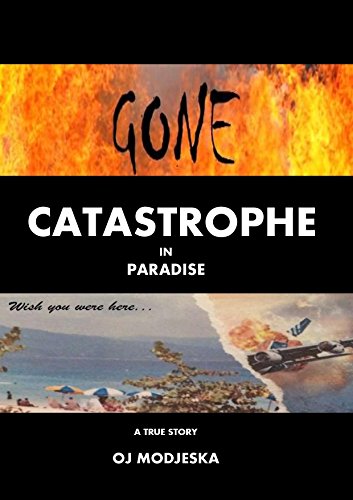
“Gone: Catastrophe in Paradise” by O.J. Modjeska

gonecatastrophe

This book reminds me of the movie, “Titanic” in that you know from the start it’s not going to end well, yet up until that horrible moment, there’s nail-biting suspense as you wish that, somehow, it isn’t true and never happened. And like the Titanic, this incident is also horrifyingly true.

I blew through this gripping, yet heart rending book in a single day. I can’t name a single novel at which I’ve shed more tears. It recounts in incredible detail what went on behind the scenes of the catastrophic plane crash that occurred March 27, 1977 on Tenerife, one of the Canary Islands, when two jumbo jet Boeing 747s collided on the ground, killing 583 people.  I remember that accident well and how horrified I was that something so terrible could happen. I’d never even heard of Tenerife until that time, and unfortunately, every time I’ve heard it since, this tragedy is the first thing that comes to mind.

The author takes you, step by step, through all the events that led up to it, again showing that every disaster has multiple causes, an unfortunate chain that could have been broken at any number of points, yet never was, resulting in the unthinkable. Incredibly, it started way before that, with the placement of the airport at a horrible location where banks of fog were known to roll in from the adjacent mountains. Folklore has it that the “X” on the map was originally to indicate the place NOT to place the airport, yet later that rationale was lost, Murphy’s Law prevailed, and that was exactly where it was placed. How ironic and how human.

Having worked at NASA for over 20 years, including during the time immediately following the Challenger accident as well as when Columbia broke up over Texas skies in 2003, I’d already seen that pattern. It’s never one, single thing, one single mistake, that causes a major disaster, but an unfortunate chain that is seemingly cursed by fate.

It made my blood boil that it actually started with a terrorist attack on Las Palmas, another airport in the Canary Islands. While I’m sure there’s a special place in hell for the insidious individual perpetuating that scourge, it’s horrible the damage and loss of life their barbaric beliefs have caused. In this case, their actions of detonating a bomb in the Las Palmas terminal forced numerous aircraft to be rerouted to Los Rodeos, an airport far too small to accommodate such an influx of unexpected flights, especially wide-body, jumbo jets like the Boeing 747.

Truly, this situation was an accident waiting to happen from the start as two tower controllers near the end of their shift attempted to manage the unexpected situation with antiquated equipment; they didn’t even have ground radar. These critical circumstances were further exacerbated by cultural issues and the quirks of human nature, always a factor in such a tragedy, yet so often far from deliberate. Someone makes a bad decision, never dreaming in their worst nightmare what the result will be. And the coup de grace was the fog.

I’m not sure it would constitute a spoiler to say more, given the unfortunate end result is well known and documented. To say I enjoyed the book is a bit of a misnomer, given it was far from pleasant, yet a very emotional experience, which to me is the hallmark of an outstanding book.  This one is skillfully written and represents meticulously detailed research, which provides a three or even four dimensional view of the happenings of that day.

I’m probably not the “average reader” since I worked in shuttle and payload safety at NASA, I where I personally participated in accident investigations, had classes in such, and was involved in the post-mortem of the Columbia accident. I’ve read NTSB reports of other airline accidents with interest and had the privilege of attending Aerospace Medical Association Conferences a few times where such things were discussed, including TWA Flight 800, which went down in flames July 17, 1996 after taking off from JFK airport in New York.  Some pretty interesting theories exist related to that one, too, which were not included in the official accident report.

The author did a spectacular job of leaving no stone unturned, reporting the situations, circumstances, and results in an objective, yet thoughtful manner, demonstrating once again that accidents don’t just “happen,” at least not of this scope.

The message, of course, for us all, is to recognize that nothing in life is guaranteed. There’s no telling when what appears to be a benign decision might be the fatal link that takes a normal day into the realm of tragedy. For the human factors involved alone, this book deserves attention, especially for those who work in any industry that has the potential for a similar disaster.

I particularly appreciated mention at the end of various individuals reporting paranormal and ghostly apparitions appearing from time to time on the runway. This is the case of various locations where horrific loss of life has occurred. As a professional astrologer, upon finishing the book, I immediately cast the event chart for the accident and could see that there were definitely very sordid aspects in play at the time, all of which reflected much of what was included in the book.

Whether or not you believe in astrology, disaster charts tend to include details that fall into the category “you can’t make this stuff up.” For example, for this disaster it showed fog and unclear communications, power trips, rebellion against authority and regulations to one’s own self-undoing, death and separation from loved ones, and a tremendous amount of activity in the 8th house of death, including the asteroid Icarus, namesake of the mythological individual who tried to fly but went down in flames, on the cusp of the 8th house. It shows the compassionate action of those on the ground, and even that Tenerife would ultimately bear the stigma of being remembered for this horrific event. No, you can’t make this stuff up.

Read this book. It’s outstanding, albeit heartbreaking. And never take anything for granted again. I give this nonfiction thriller 5 stars for content, even though there were a few grammatical issues here and there. The research more than compensates.

You can pick up your copy on Amazon here.

Don’t miss “The Great American Eclipse” 21 August 2017

eclipse08212017

Path of Totality for August 21, 2017 Eclipse

A special event is coming up August 21, the scope of which hasn’t occurred for 99 years! If you had grandparents at that time in Portland, Oregon; Denver, Colorado; Oklahoma City, Oklahoma; or Orlando, Florida, to name a few, they would have most likely seen it, or at least heard about it.

As you’ve probably figured out, I’m talking about the Great American Eclipse, so called because it crosses the entire USA from Oregon to South Carolina, and is only visible in the Continental USA. Last time we had one that stretched from “sea to shining sea” was June 8, 1918. That one started in Washington State and struck a diagonal path across the US, clear down to Florida and slightly beyond.  When I gave this talk at my Toastmasters meeting recently, one of the members recalled her mother, who lived in Oklahoma, seeing it, and being amused when the chickens were confused and went to roost when it got dark.

Eclipse 101

Total solar eclipses are relatively rare. First of all, they only occur with a New Moon. Why? Because that’s when the Moon is between Earth and the Sun, allowing its shadow under the right conditions to reach the ground. But we have a New Moon every month! Why don’t we have a solar eclipse every month?

Easy–it’s a matter of alignment. Remember, both the Sun and Moon are moving! More correctly, the Earth is rotating, making the Sun appear to move across the sky in a path called the ecliptic, which changes as far as its elevation above the horizon is concerned, based on the seasons, which are caused by the Earth’s axial tilt. The ecliptic is highest for the summer solstice. This maximizes the Sun’s path and explains why the days are longer. The opposite is true in winter. So, the Sun is not only “moving” across the sky, but changing it’s elevation above the horizon. I knew someone once who loved to describe unpredictable people by saying that for them “The Sun always comes up in a different place.” Ironically, this is true. If you’ve never noticed, it’s never too late to start.

The Moon orbits the Earth, but where its orbit crosses the ecliptic is not static, but moves a few degrees each month. Thus, the Moon’s location is also constantly changing, though it does so in a predictable manner. For an eclipse to happen, both the Sun and Moon need to be in the location where their paths cross, placing the Moon exactly between Earth and the Sun, casting its shadow on the ground directly below. You can see how predicting when and where eclipses will occur is not a simple matter. Nonetheless, the antikythera device was able to predict eclipses and so were the Mayans, because as their precise calendar indicates, they understood solar and lunar cycles.

You may be surprised to find out that there are two solar eclipses every year, but they’ll be visible in different locations. With two-thirds of the Earth’s surface oceans, many occur there and go unnoticed, save for physicists dedicated to solar research, especially those trying to determine why the Sun’s corona is several millions of degrees, while its surface, known as the photosphere, is a mere 10,000 degrees Fahrenheit. A total eclipse is the only time when the magnificent corona is visible. Researchers suspect the corona’s temperature is related to the Sun’s magnetic field, but they’re still trying to figure out why.

Types of Eclipses

Not all eclipses are total. There are also partial and annular. Partial is when the Sun and Moon don’t line up exactly, so only a portion of the Sun is obscured. In this case, a total eclipse is not seen anywhere. However, note that a partial eclipse is also what those located outside the narrow band of totality will see on August 21, again because the alignment is not perfect.

annulareclipse

Annular Eclipse

An annular eclipse occurs when the Moon is farther away from the Earth and therefore smaller, such that it doesn’t entirely cover the Sun. Then, instead of the magnificent corona visible during a Total Eclipse, you see a ring. In some of these less than ideal cases, the Moon’s shadow doesn’t even reach the Earth.

Eclipse Path of Totality

To see the upcoming event as a total eclipse, you’ll have to be somewhere along the red stripe shown on the map. The location where totality will be longest (2 minutes 41.6 seconds) is in the vicinity of Carbondale, Illinois. Oddly enough, another total eclipse in 2024 also crosses that location.  It’s very unusual for this to happen; often centuries pass before a total eclipse is visible again from the same place.

2US-eclipses2017-2024

Paths of 2017 and 2024 Eclipses. “X marks the spot” over Carbondale, Illinois.

Unfortunately, the eclipse will not be total where I live, here in Texas. Rather, it will be a partial eclipse that covers 65-70% of the Sun. It will start here around 11:35 am, be at its maximum around 1:10 pm, and end around 2:40 pm. However, space cadet that I am, I’ll be traveling somewhere that it’s total.

Safe Viewing Tips

To safely view the eclipse, you need to protect your eyes with special glasses or some other sort of filter. Ordinarily sunglasses are insufficient, so don’t even think about using them alone if you value your eyes. A pinhole camera will show it, too, or look at the shadows of leaves beneath a tree to see thousands of tiny Sun crescents.

You can get special ISO Certified glasses, but hurry since they’re selling out fast. Sources are listed below. Note that glasses suitable for you to watch the eclipse are NOT sufficient if you’re using a camera or telescope! In that case you need a solar filter for the lens!  Solar filters are available for most regular cameras. If you value your cell phone, don’t plan on taking pictures of the eclipse with it because it’ll burn it up. Remember starting a fire with a magnifying glass when you were a kid? Same idea. Another option to special eclipse glasses is #14 welder’s glass, which could also work to protect your cell phone.

The only time it’s safe to look at a solar eclipse without eye protection (for you or your camera) is during totality, i.e. when the Sun is entirely covered by the Moon. That is preceded by a final glint from the Sun they call the “Diamond Ring”, which also occurs as the eclipse ends, but that flare could be enough to zap your camera or cell phone, so bear that in mind. Totality doesn’t last long, usually between 1 – 2 minutes. Nonetheless, you should enjoy it with your natural eyes while it lasts to enjoy it’s full impact and beauty.

Many people go throughout their lives without ever witnessing a total eclipse. I’ve seen partials, but never a total, so I’m flying to Utah to visit my daughter and her family, then we’ll drive into Idaho to the band of totality. I’m sure it will be a get-together we’ll never forget. It’ll be worth watching, even from here in Texas. If nothing else, you can see firsthand why the ancients were frightened when it appeared something was consuming their life-giving Sun.

Another Eclipse is coming!

If you live somewhere outside the band of totality and can’t travel to see the total eclipse this time, then you can look forward to the one in 2024, when there will be another one.  (You can see the path as the second band that forms the “X” in the map above.) For me, here in Central Texas, it will be right on our doorstep! In fact, the center of the path of totality goes right over Lake Buchanan, northwest of Austin, meaning I’ll be able to watch it from my front yard! Come April 2024, there will be a lot of people around here praying for clear weather.

eclipse2024Texas

RESOURCES

Eclipse Information

www.greatamericaneclipse.com

www.earthsky.org

http://eclipse.gsfc.nasa.gov/eclipse.html

http://www.valkyrieastrology.com/Makeover/Planets/Eclipses.htm (my astrology website)

Eye Protection

www.rainbowsymphonystore.com (bulk orders)

https://www.teachersource.com/product/1892/nyeglasses

https://www.space.com/36941-solar-eclipse-eye-protection-guide.html

https://www.eclipseglasses.com/products/

https://weldingsupply.com/

Photo Tips

http://www.eclipse2017.org/2017/photographing.HTM

http://www.whas11.com/news/experts-warn-not-to-use-cell-phone-camera-for-2017-solar-eclipse/457560482


Attention, Authors & Readers!

faulknerquote

If there’s a story in you that’s not coming out, then you need to register NOW for RRBC’s 2017 Writers’ Conference and Book Expo!

Whether you’re an author or an avid reader, don’t miss out on this exciting event sponsored by Rave Reviews Book Club. The general public is invited, so whether or not you’re a member, right now, before you forget, mark your calendar for October 22-28.

THIS EVENT WILL HELP YOU:
*Get inspired and get to writing
*Market your work to avid readers
*Strengthen your craft of writing
*Network with like-minded individuals

It doesn’t matter if you’re a stark beginner or seasoned professional, there’s something for you! Get inspired, learn new writing skills, how to manage your time or social media, create a press kit, or dozens of other juicy topics. Enjoy browsing the Author Booths for books written by RRBC members as well as the many services available through the Vendor Booths. I’ll be attending several conference sessions, presenting one of my own explaining how you can use astrology to bring your characters to life, and also have an Author Booth to showcase my Star Trails Tetralogy and my latest release, “The Terra Debacle: Prisoners at Area 51.”

If you want a booth to showcase your own book(s), you need to be a member. So, if that’s what’s in it for you, now’s the time to join. (If you do sign up, be sure to mention my name  since we get brownie points for recruiting new members!)  Club services are vast, everything from a radio show and online magazine to a means to support fellow members through social media, reading, and reviewing. You can join here.

General Conference Info

Registration Info

Registration Packages & Pricing

Registration Page

Check it out! I’ll see you there!

#RRBC #RWISA #RaveReviewsBookclub #writers #amwriting

N.J. Tanger’s “Ascension”: Masterfully Written Science Fiction

ascension

This intriguing and suspense-filled tale intricately describes what it might take to reach an interstellar destination, both in the way of motivation as well as technology, to say nothing of the type of individuals who would assume such a feat.

Nathan Beauchamp, a member of the writing team known as N.J. Tanger, is the sole author of this episode in the Universe Eventual series which expands upon the workings of the interstellar vehicle, Chimera. The ship is designed to support a population comparable to a small city for years to come through hydroponics and other self-sufficiency techniques. It provides holographic scenery reminiscent of Earth; possesses a sophisticated power system; and includes a political structure drenched in intrigue.

The conspiratorial reason for leaving Earth is fascinating and smolders with much of what is seen in today’s corporatism-saturated world. Colonization is motivated by their destination’s rich deposits of ecomire, which I assume to be the next generation of uranium, i.e., it represents a powerful energy source rarely found elsewhere and motivates a power hungry (both literally and figuratively) corporation to finance the venture. Furthermore, they intend to maintain their tentacles in those making the journey through whatever means necessary. Some colonization efforts are about survival, others about profits, this one possessing elements of both.

New but intuitively familiar terminology provided a unique and convincing environment. For example, referring to the enforcement arm as “regulators” was cold and effective. The personal agenda of various characters provided plot complexity, but without over-populating the story. Yet, the massive dimensions of the ship, the number of those onboard, and their evolving culture and social strata were conveyed effectively. The main character, Ashley Samuelson, was credible and relatable, personalized further by the first person narrative point of view and the intimate details of his personal life and relationships, including a romantic one.

One of the most clever sci-fi elements serves as the mainstay of the plot and that is the means by which the Chimera is guided by its navigator with the support of a few assistants, one of which is Ashley. To travel through the esoteric, paranormal dimension described as “fractal space”, “stitches” are laid to form a connection between Earth and their ultimate destination through “The Everything”. Once this pathway is laid, other ships will traverse it more quickly, so the implication is that they are creating a wormhole. This is accomplished through the combined efforts of the navigator, who’s enclosed in a mysterious spherical work station, where he or she is psychically entangled with the ship’s artificial intelligence. This combination of thought energy provides the creative power to chart its course, stitch by stitch, an interesting play on the apparent consciousness/matter interface implied by quantum theory. Navigator assistants deal with resolving any paradoxes encountered along the way.

Not just anyone can perform this critical navigating function, so when their existing navigator dies unexpectedly of mysterious causes, it presents a significant threat, not only to their mission, but their very survival. The quest to find a new navigator combined with investigation into the death of the original one provides various provocative insights into the risks of AI as well as allowing it to interact with a human.

This complex tale is presented via a masterful style that demonstrates some of the most delicious prose I’ve seen. As a writer myself, I savored numerous vivid descriptions, such as a look of “distilled hatred”; “her angry, beautiful, treacherous eyes”; “stumbling my way into the truth”; “fear masqueraded as anger”; as well as several others.  I suppose the fact such jewels jumped out at me as exceptional descriptions could be considered throwing me out of the story, but for me it was in a good way. Some of the imagery was nearly blinding, which is not easily achieved without slowing down the story. However, the literary precision was such that the descriptions integrated with the action and increased the suspense, which made various scenes play out like a movie in my mind. The author’s skill itself made this tale a joy to read.

This story is part of the Universal Eventual series, yet stands alone. However, if you’ve read any of the other stories, it helps fill in a few of the gaps. It has been a while since I read Chimera and this makes me want to read it again. If you enjoy meaty hard science fiction with plenty of advanced technology and intrigue while maintaining a strong human element with philosophical implications as deep as you care to go, all of which is packaged with strong, skillful writing, I highly recommend this story.

You can pick up your copy on Amazon here.

“Stxeamtown” by John Reinhard Dizon is an Uproarious Steampunk Classic

stxeamtownfront 3copy

“Stxeamtown” by John Reinhold Dizon operates on so many levels that it can only be compared to such works as “The Wizard of Oz,” “Alice in Wonderland” and Orwell’s “Animal Farm.” To say it is brilliant is totally inadequate. Readers of all ages can enjoy its genius, though if you choose to read it as a bedtime story your young children may not understand why you laugh uproariously from time to time.

This brilliant satire creates a vivid post-apocalyptic world in which the few survivors following the “Big Bang” form a variety of societies. This was my first experience with the “steampunk” genre and I must say I thoroughly enjoyed this unusual twist on a post-apocalyptic world. The teenage protagonist is Trip Nortel, short for Amitriptylene, his name credited to the custom of finding baby’s names in pre-Big Bang formulary volumes. Trip is an Abovegrounder, a subculture that lives on the rooftops unbeknownst to the Grounders below due to a perpetual cloud of water vapor that obscures visibility; steam is the primary power source, having been rediscovered following the Big Bang. Abovegrounders are held to strict rules, including the need to be obsequious toward tyrannical “young-uns” by meeting their every demand. Those who don’t follow the rules are “crossed-out,” i.e. given a lobotomy, and sent to the ground below. Those who don’t make trouble don’t fare much better since upon reaching the ripe old age of 30 they, too, are banished. The rules are enforced by Big Boys who maintain limited contact with Traders below.

Trip falls in love with Lyrica, another Abovegrounder who lives on a different rooftop. She’s not only beautiful but wears stitched clothing rather than the wraps worn by most of the others. The two exchange Morse code messages in which they express their affection and finally the day comes that Trip finds his way to Lyrica and the pair makes a precarious escape to the ground, some rooftop friends subsequently joining them.

Once amongst the Grounders, Trip immediately connects with influential people who advise, “He who moves the most paper is the one who goes farthest ahead.” He’s quickly dressed in stitched clothing like the others in styles reminiscent of Dr. Seuss’ world of fantasy. Eager to learn, he soon finds himself elevated to the upper echelons of society. The hero and his girl are instrumental in instituting numerous changes, including starting a school system to educate the Idiots, i.e. those “crossed-out” and cast from the rooftops, so they can reach their full potential. Things get more complicated as their Abovegrounder friends lament receiving unequal benefit from Trip’s influence and stir up trouble by associating with the Traders Guild and the Society of Black Beards who enjoy strong drink. The complications of the culture clash that follows are ultimately solved and of course everyone lives happily ever after.

While this tale is presented in a style similar to the best of fairy tales (which I assume is typical of steampunk), more sophisticated readers will be greatly entertained by recognizing the allegorical themes running throughout the surprisingly intricate plot, colorful characters and their societal predicaments. Dizon’s dry wit is only matched by his genius in creating this must-read allegorical tale that bears a striking resemblance to the world in which we live. If I could give it more than 5 stars, I would.

Don’t miss it! You can pick up your copy on Amazon here.

Amazon’s Review Policy Explained

jacksparrowattitude

Most indie authors have encountered, either personally or vicariously, some of Amazon’s gestapo review policies. When reviews are so important to a book’s ranking, it’s no wonder that restrictions are frustrating and often confusing. More than anything, I simply wondered what was behind it? Clearly Amazon’s goal is to sell product, so why would they institute rules that compromise sales? It seems that “fake reviews” should be recognizable to any intelligent person and be discounted with an eye-roll as opposed to throwing out the baby with the bath water and tossing legitimate ones.

Well, I attended a free webinar the other day entitled “3 Catastrophic Marketing Landmines That Can Get You Into Serious Hot Water With The FTC Today: And What You Need To Know… ” that provided a classic “Aha!” moment that explained what’s more than likely behind Amazon’s review policy.  If you hurry, you can listen to it until June 4, 2017 here. [NOTE: If you should join their program, note that I am NOT an affiliate and will NOT receive any compensation. Rather, I’m sharing it because I feel it’s information that others can benefit from as I did.]

So what’s the deal? Why is Amazon being so ornery about reviews? Not surprisingly, it’s none other than our friend (?) the US Government, more specifically the Federal Trade Commission, a.k.a. FTC. Like the IRS, this is another government agency you don’t want to tangle with. They have strict rules regarding deceptive testimonials, which includes whether there was any material compensation involved; in other words, a paid affiliate needs to be disclosed, with what constitutes payment a somewhat grey area. Deceptive testimonials, another no-no, can obviously include reviews from friends and associates who may claim something is the best thing since the cell phone when in reality it’s not. We’ve all read books from time to time that had multiple 5-star ratings that were clearly undeserved. So, being compensated for a review in some manner or an inflated testimonial that is unlikely to represent the opinion of others are to be avoided.

In other words, the bottom line is Amazon is covering their butt against consumer complaints to the FTC, which is the prudent thing for a business to do. If you have a website where you offer products to consumers, there are various alligators in the water regarding disclosure with which you, also, should be aware. As with any government regulation, ignorance of the law is no excuse and failure to comply can get you into serious trouble. All authors need to be aware of such regulations, especially if they have a website where they have affiliate links or sell their own books.

But my main point here is that Amazon is not doing this to make our lives difficult, but to protect their interests and comply with government regulations. It’s no wonder they ignore our complaints since we certainly don’t wield the punch of Uncle Sam.

That said, I can’t help but wonder what the FTC would do if authors complained about the way Amazon handles trolls?  Undoubtedly it’s covered in our contract to their benefit, but as our sales agent, if they allow trolls to jeopardize our sales, it would make for an interesting conversation….

FREE Family History Tips and Tricks!

FHFFStars copy

If you’re into genealogy, family history, memoirs, family folklore, or scrapbooking, don’t miss out on these tips and tricks available for FREE for a limited time. But hurry, this offer is only good until May 17, 2017.

You already know that memories worth keeping should be preserved. Here’s how! In most cases, all it takes is your smart phone! If you’re not sure what to include, are short on ideas, or think family history is limited to a bunch of boring pedigree charts, then you really need this book! Download your copy today!

FREE! It doesn’t get any better than that!

Still not convinced? Check out these excerpts on Bublish.

Download for FREE from Amazon US

Prefer a print version?

$4.95 Amazon Print Version 

or get 15% off with Discount Code CVJXJUUC at Create Space


Tips for Indie Writers: How to Create Your Own Book Trailer with Power Point

Okay, just made another book trailer and thought I’d reblog this. I’ve also updated the original links since the original videos were updated and thus removed. My latest and greatest is here: https://youtu.be/G3xRKqmz7qw . [NOTE:–My friends at Fresh Ink Group helped touch it up, but the bulk was done on Power Point. You can find the original on my YouTube Channel here https://youtu.be/jPryRDll9ZQ.]

One thing I learned making this video that wasn’t necessary for the others was the need for transitions from slide to slide. If you use the same background for the entire video, it’s not necessary. But if you change the pictures, you need a transition. It’s a whole lot of fun to do and exercises another part of your creative side. These are very basic, but tremendous fun. Give it a try!

Marcha's Two-Cents Worth's avatarMarcha's Two-Cents Worth

booksinboxBook trailers have become a popular means to draw attention to your book. The main advantage they have over other types of promotional material is their ability to include sound, specifically music. As I’m sure you’re aware, music can set a mood quicker than anything else and reaching a person at the emotional level helps prepare them to receive and accept your message. You can hire a professional to create a trailer for you or you can put one together yourself. If you have Microsoft Office then you should have Power Point which is the only software you need to create a simple but effective video trailer. Besides that you only need three things:

  1. Background picture
  2. Music
  3. Catchy phrase, quote or other hook

Yes, it really is that simple to get started. Don’t worry, I’m going to take you through the process, step by step.

Background Picture

This should be…

View original post 2,877 more words

A Right or a Privilege?

statueofliberty1

Since when did coming to America, more specifically the USA, become a right instead of a privilege? When did the beckon-call of the Statue of Liberty, “Give me your tired, your poor, your huddled masses yearning to breathe free, the wretched refuse of your teeming shore. Send these, the homeless, tempest-tossed to me, I lift my lamp beside the golden door!” become license to come here to promote violence or expect to be taken care of without maintaining certain standards of behavior? Coming here to make demands is not how it was intended to work.

America was once known as a grand melting pot, a nation of immigrants, many fleeing tyranny, others seeking the “American Dream.” Unless you’re a Native American, your ancestors at some point were immigrants. A melting pot, however, implies blending in, becoming part of the whole in a harmonious way. A country is founded on common standards of behavior and beliefs enforced by the rule of law. A common language is another important feature.

Democracies fail due to too much diversity. Too many people demanding that everyone else bow to their demands. Too much criticism and intolerance on the part of many coming here. Too many expectations to be taken care of at the expense of the government which, of course, is funded by the taxpayers. This entitlement attitude has gotten out of hand and will destroy us morally and economically. The melting pot and American Dream were never intended to tolerate destructive, radical behavior. Today we are no longer a melting pot, but a lumpy, unappetizing stew of flavors that clash instead of blend.

Back in 1907 Theodore Roosevelt said: “In the first place, we should insist that if the immigrant who comes here in good faith becomes an American and assimilates himself to us, he shall be treated on an exact equality with everyone else, for it is an outrage to discriminate against any such man because of creed, or birthplace, or origin. But this is predicated upon the person’s becoming in every facet an American, and nothing but an American…There can be no divided allegiance here. Any man who says he is an American, but something else also, isn’t an American at all. We have room for but one flag, the American flag… We have room for but one language here, and that is the English language… and we have room for but one sole loyalty and that is a loyalty to the American people.”

This is the essence of the “melting pot” concept and in the early 20th century it worked. But it has been abandoned, resulting in the pigs’ breakfast we see in our society today. Sometimes to gain something, you need to let something go. Becoming a true American isn’t compatible with clinging to old beliefs that are probably why you left your homeland in the first place.

ellisisland

Ellis Island

I am growing very weary of President Trump being criticized for his recent action stopping the inflow of refugees. Place the blame where it belongs: On terrorists and radical Islam, not the President trying to protect the USA from the chaos we see in Europe. Maybe “Making America Great Again” involves returning to the melting pot concept. Maybe those seeking refuge in the USA need to leave some of their beliefs and expectations behind.

Freedom of religion doesn’t mean imposing it, often violently, on everyone else. Tolerance and peaceful coexistence is required, two qualities antithetical to Islam. If the USA yields to their demands, it fits the old analogy of letting the head of the camel into the tent. As long as there’s a risk that those who wish to destroy us are among the refugees, as has been demonstrated in Europe, calling a time-out to assure such are not included is the logical thing to do. It only makes sense to learn from others’ mistakes. Unfortunately, many innocent people are caught in a snare intended for others. But when change is required, that isn’t unusual. It’s not easy to stop a train. Sometimes you just have to slam on the brakes, even though sometimes it results in derailment. How many have been students pursuing a college degree when the requirements change midway or farther through their coursework? Such is life.

Cities generally have clusters of communities where those who share a common heritage or ethnicity gather to live. It’s natural for human beings to want to socialize with those who share common beliefs and cultural roots. However, as these communities grow, they can lose touch with the fact they are just one faction in a nation of many. They develop views contrary to the well-being of the nation as a whole. Tolerance dissipates and arrogance takes it place, wanting to impose their will on others. They want to destroy the very principle of freedom that allowed them to come here in the first place and mold America into the nation they left behind. Rather than contribute to America’s strength, they contribute to her potential downfall.

I’m not saying there’s nothing wrong with America. There are many policies I don’t agree with, including many President Trump is promoting. I believe we should protect the environment and wildlife. I believe that corporations such as Big Oil, Monsanto, and Big Pharma have too much power and control, that the healthcare industry is horribly broken. Gutting regulatory agencies is definitely not the way to fix these out-of-control industries. I believe we should take care of our own working poor, military veterans, and Native Americans before those who would seek to destroy us. As a nation we are beset by a multitude of problems, but ignoring one does not solve the others.

I believe in common sense which, as has been said before, is not all that common. Rather, selfishness reigns. But we have to start somewhere and get on the same page. Those who believe coming to America is a right and not a privilege are the ones who have created the immigration crisis we see today. We need to return to the “melting pot” concept, which is what made America great in the first place. Diversity without cooperation is a recipe for disaster, thus that lumpy, unappetizing stew that will surely cause heartburn.

It’s been said that democracies don’t work in families or prisons. They also tend to fail when a nation becomes a mass of screaming children, all wanting their own way. Unless someone steps up and draws the line, enforcing the law, history has taught us that what follows is usually a dictatorship. Common sense and compromise are required to save us. Tantrums and making unreasonable demands will eventually lead to an even less fortunate situation as the government is forced to restore order and safety to the populace at large, as is its responsibility.

Pardon another cliché, but those who fail to learn from history are doomed to repeat it.