“Watch RWISA Write Showcase Tour” — Day 12

DENTON’S DEBBY DOLLS

by Laura Libricz

The lunch bell rings and I set my brush aside, returning the unpainted porcelain Debby Doll head to the tray. A kettle whistles. Sarah runs to make the lunchtime tea.

“Thirty minutes and that’s all!” Mr. Denton barks at her as he hurries towards his production office, whacking his elbow on the filing cabinet as he slams the glass door shut.

The shocked moment of quiet is replaced by the delicate clinking of brushes against glass jars, chairs scraping on the concrete floor, and the idle chatter of the doll painters on their way to the break room.

Laura Libricz

Laura Libricz

Do you remember Denton’s Debby Dolls? The ones from the 1947 film “Ten Days Till my Birthday,” where Tammy James plays a little girl who got one for her birthday? Denton’s Debby Dolls Inc. make the dolls the same ever since. Tammy is well into her 80’s but is still loved and remembered for that tearful scene where she unwrapped the Debby Doll on her tenth birthday and said, “Well, gee, Mother, all I ever wanted was a Debby Doll!”

All I ever wanted was a Debby Doll but I didn’t get one on my tenth birthday. That year I moved from the city to Krumville, to Aunt Fay’s, and she said I was too old for dolls. She was a recovering heroin addict who hung photos of herself dressed as a vampire on all the walls. I was not allowed in the kitchen and had to eat my meals in my bedroom decorated with Aunt Fay photos. She said if I wanted a Debby Doll, I should petition the goddess Diana. I thought she was being funny.

Aunt Fay’s house was in the oak forest. She made oak dolls with hair from deer. The deer hair was arranged to look like human hair. She said these were petitions to Diana. Under an oak tree, Aunt Fay had an altar where she buried the dolls. Sometimes she burned them.

There were always gunshots in the oak forest. I never went outside that fall. In the city, there was shooting every Saturday night in our neighborhood and I was never allowed out. I don’t remember my city house much. One day Aunt Fay went outside and never came back in. Child Services came and took me away. I was now a ward of the State of New York.

What luck, I ended up in the same city as Denton’s Debby Dolls. When I turned eighteen, I went to work in the factory and I still do.

“Aren’t you coming to lunch?” Sarah asks.

“I’m working on my doll,” I whisper.

“Don’t let Mr. Denton see you doing that,” Sarah says. “He’s in a bad way today. I heard we’re 500K down this year. We have orders but there’s no stock. We can’t work fast enough.”

“I can tell Mr. Denton that I’m experimenting with new colors on my lunch break, which I am doing.” I stroke my Debby’s porcelain cheek with my pinky. “Look at her complexion. It’s lavender oil and China Pink pigment.”

“She’s not real, you know,” Sarah says. “I’ll bring you some tea.”

“Tea. Thank you.”

A year has passed since I’d first started working on my own Debby. I’d modeled what was to be the hollow shell of her head. Each hand painted layer and each firing was personally carried out by me. Today, I am ready to add the final details and fill her empty eyes. It’s ten days before Christmas. She’ll be my daughter, mine all mine. Mommy loves you, Debby.

There had been a man once, just once. He left a few hairs on my gingham pillowcase. And a legacy. My body changed in ways it had never before; swellings in places that had been unripe. Rosy cheeks, like a Debby Doll. I so wanted the child. Although I could not yet feel the child, I could. The growing presence of another life made me feel otherworldly.

But I was unmarried, alone, and I would lose my job when the baby came. Panic set in. It must have been eight weeks into the pregnancy when the fever came, followed by some mild cramping. During the night the cramping pulsed and intensified until I finally passed out. The next morning, the otherworldly feeling was gone. My unformed child had been born, its life over before it even began.

I forced myself up and out of the house, not wanting to be alone. I was working in the molding department that week and I would bear my child. From Denton’s secret mixture of minerals, bone ash, and alabaster, I poured the liquid clay. Before the first firing, I’d made a small imperfection on her cheek, like a chickenpox scar, so the other workers would reject her. I would always recognize my child. During lunch breaks, I stole moments to paint her face and sneak her head back to the kiln.

You’re here with me now, Debby, forever.

The lavender oil calms me as I blend your complexion to a natural sheen. I can almost feel your heartbeat. Light brown eye brows are added one hair at a time, your sense of humor. Would you like brown eyes like mine? Each brush stroke to your iris gives you another fleck of depth. Two dots of white on the left side of the iris ascertain your personality. I cover your eyes with high-gloss tears and now you have emotions. The creation process is almost finished.

See? I’ve made you a soft pellet body, into which I stitched your preserved mortal remains, hair from your Daddy, and oak bark—my petition to Diana. Your body lies hidden inside the top drawer of my workbench, along with your new gingham dress made from the pillowcase Daddy rested his head on. I forged a certificate from a midwife confirming your birthday, today, and your name, Debby.

Mommy’s here, Debby, don’t worry…

“What are you working on?” barks Mr. Denton. “Ten days before Christmas and you’re messing around with that B-stock? Those get smashed.”

I never saw him come up to my workbench. Debby, don’t cry, I’ll sort Mr. Denton out.

“You have a whole tray with these new dolls that have to be painted!” Mr. Denton’s face ran red. “You’ve been messing with that one since I came in!”

“Sorry, sir, it’s lunch,” I whispered.

Now Debby, be a good girl and get in my top drawer.

“You want to hide the thing as well! Is that a pellet body in there? Are you the one out selling B-stock on the weekends?”

“No, sir, I…experiment.” We may have to make a run for it, Debby.

“So, it is you! I’ve been told there’s a woman on the flea market every weekend with B-Stock Debby Dolls for real cheap. Give me that!”

“No, sir, don’t, you don’t understand…”

“Tea!” Sarah plunks my unicorn mug onto my workbench, brushes my Debby’s head into my top drawer, and slides it shut with her hip.  She grabs my hand and pulls me up. “Come on, we got pizza and it’s getting cold.”


Thank you for supporting this member along the WATCH RWISAWRITE Showcase Tour today!  We ask that if you have enjoyed this member’s writing, to please visit their Author Page on the RWISA site, where you can find more of their writing, along with their contact and social media links, if they’ve turned you into a fan.  WE ask that you also check out their books in the RWISA or RRBC catalogs.  Thanks, again for your support and we hope that you will follow each member along this amazing tour of talent!  Don’t forget to click the link below to learn more about this author:

Laura Libricz’s RWISA Author Page

“Watch RWISA Write Showcase Tour” — Day 10

RWISA TOUR (1)

Last Night

by John W. Howell

John W. Howell

John W. Howell

So, with nothing better to do, I figure I’ll stop at Jerry’s place and grab a couple of drinks and a burger. Usually, I don’t go there on Saturday night since there’s a crapload of amateurs taking up what would be considered prime space. I figure since this is a Friday and close to Saturday, it may be packed, but not as crazy as Saturday. It’s the kind of place where everyone minds their business. They’re there for a good time and will likely not notice me. Even so, I go through the door, stop, and have a look around, trying not to make eye contact. I hope that the ball cap and large coat will keep me from getting noticed.  The bar holds a weekday crowd, hanging on each other like they never had a date before. I tighten my eyelids against the smoke and make out four guys near the pool table, and what looks like a couple of girls fetching drinks. I search for a seat beyond the table in the back, but it seems like they’re all taken.

A guy bumps into me as I stand here. I say excuse me, and he looks me in the face. “Hey, don’t I know you?” he says.

“I don’t think so.” I make to turn away.

“Yeah, you’re the sports hero who lost all his money. I saw you on TV.”

“Naw, people always say stuff like that. I’m not him, buddy; trust me.”

He gives me a puzzled look but doesn’t want to push it, in case he has it wrong. I turn away and continue to look for a seat.

Straight ahead lies the bar, and it has a place right in the middle. I move in the direction of the empty place and look over to the other side of the room. The tables look full of happy drunks. Buckets of empties line the bar top, and the barmaid’s trying to sell more. She doesn’t have much luck since most of these people just spent their last five bucks on this outing. Upon making it to the stool, I hoist myself up and lean on the bar.

“Hey, Greg,” Jerry says. “Whadda you have?”

“Evening, Jerry. I’ll have a Gin on the rocks with a water back.”

“Comin’ up.”

I like Jerry’s no-nonsense way of handling things. He doesn’t like small talk and gets right to business. My eyes smart from the smoke, and I wonder how Jerry gets away with letting people kill themselves, when clearly, it’s not supposed to be allowed in this kind of establishment.

“Here you go. Want me to run a tab?”

“Yeah, I would appreciate that. I intend to have another drink and then a burger.”

The guy who thinks he knows me grabs my shoulder from behind. I almost fall off the stool.

“You’re Greg Petros, the big fund manager. I knew I’d seen you on TV. You took a beautiful career in football and ran it into the ground.”

Jerry leans over the bar and lays his hand on the guy’s shoulder. “Move on, my friend. You made a mistake. This guy is nobody. Go sit down and let me buy you a drink.”

“You sure? You called him Greg.”

“Yeah, I’m sure. Go get a table, and I’ll send someone over.”

The guy looks at me one more time but does as Jerry suggests. He believes Jerry’s wrong, but the idea of a free drink lets him get away without losing face.

“Thanks. I didn’t mean for you to have to jump in.”

“No problem. Gimme the high sign when you’re ready for another drink.”

“Will do. Thanks.”

“For you buddy, anything.”

I should mention that Jerry and I go back aways. When I fell on hard times, he became the only one that seemed to give a shit. I take a sip of my drink and wait for the burn in my throat, which signals the good stuff. Here it comes. I take a swig of the water and almost believe life is good. The Gin needs to get to the brain before making any honest judgment.

While I wait for the warmth to go from my stomach to my head, I check out the folks seated on either side of me. They both have their backs turned to me and sit engrossed in some discussion with their neighbor. I figure it’s just as well since I don’t want to go through that old “don’t I know you?” bullshit again. Also, I don’t figure on staying the night, so no use in getting into any long discussions about life.

I look down at my drink and wonder what will happen tomorrow. My daughter Constance wants to come and visit. She lives in New York, and before all hell broke loose, we didn’t see each other often. I missed her so much, and it seemed I had to beg her even to talk on the phone. Now, it’s like she wants to be here every weekend. It’s only an hour’s flight by the shuttle or three by train, so she can come when she wants. I just can’t figure out why she got so clingy. I have my troubles, but it doesn’t have anything to do with her. No use in asking her husband, either. Though a nice enough guy, I always wonder if he has someplace important to go when I visit. He never sits still, and stays busy on the phone or at the computer. He makes a good living, but it seems a person could take an hour to sit and talk. I’d looked forward to some kind of relationship when he and Constance got married. It’ll never happen with him.

When I take another pull at my drink, I notice the burn feels less. It happens every time. First sip initiation, I call it. It’s like the first puff of a cigarette, hits hard then, after, nothing. I decide to let Constance pretty much have the agenda tomorrow. She and I have not had a chance to talk about anything deep for a while. It could just be that she blames me for her mother running off with that guy with the house on the Hudson. He has a title, and the old gal couldn’t resist, but, I think the daughter always felt I should have done something. Her mother’s sleeping with another guy and what the hell can I do about that?

I’ll just go with the flow. If she wants to go out, we will. If she wants to stay in, we can do that, too. I better think about getting some food in the house. Of course, we can always order take out. I need to move on to my drink and let this go. Tomorrow will be what it is. I remember the day she was born. I looked down at her in my arms and promised I would do anything for her. I love her more than life itself, and I hope we can somehow get to the root of whatever’s wrong. She sounded strange on the phone this morning, and I feel helpless to do anything about it. I hope she opens up when she gets here.

For some reason, I feel tired. Perhaps I’ll go ahead and finish my drink. Maybe I’ll just go home and forget the burger. First, though, I’ll just shut my eyes for a minute. My hands feel good when I put my head down.

“Hey, Greg,” Jerry says. I barely hear him. “What’s the matter? You taking a nap? Greg?” I can feel him shake me, but I have no interest in waking up. His voice gets further away, and I think he says, “Oh my God, Sophie, call 911, quick.”

Now the room goes silent.

END

© 2017 by John W. Howell


Thank you for supporting this member along the WATCH “RWISAWRITE Showcase Tour today!  We ask that if you have enjoyed this member’s writing, to please visit their Author Page on the RWISA site, where you can find more of their writing, along with their contact and social media links, if they’ve turned you into a fan.  WE ask that you also check out their books in the RWISA or RRBC catalogs.  Thanks, again for your support and we hope that you will follow each member along this amazing tour of talent!  Don’t forget to click the link below to learn more about this author:

John W. Howell’s RWISA Author Page


“Watch RWISA Write Showcase Tour” — Day 9

RWISA TOUR (1)

THE LEGEND OF TOKYO ROSE

By Ronald E. Yates

INTRODUCTION

During a 27-year career with the Chicago Tribune, much of it as a foreign correspondent in Asia and Latin America, I encountered my share of remarkable and unforgettable stories.

Some came out of the horrendous suffering I witnessed while covering the wars in Vietnam, Cambodia, and Afghanistan. Others were generated by the bloody revolutions in Guatemala and El Salvador. Still others sprang from the wrenching political upheavals I reported on in places like The Philippines, Brazil, China and South Korea.

Ron Yates

Ron Yates

But there is one story in my journalistic career that I treasure above all the others. That is the story of a Japanese-American woman named Iva Toguri. You probably don’t recognize the name and if you don’t, that is perfectly understandable.

You and millions of other Americans know her by another name: “Tokyo Rose.”

That’s right, “Tokyo Rose.” The so-called “Siren of the Pacific” who sat before a microphone in Tokyo and told GIs on a 25-minute show called “The Zero Hour” that their homes, their girl-friends and even apple pie weren’t worth fighting for. Tokyo Rose, the legendary “seductress of the short wave,” whose broadcasts between 1943 and 1945 for Radio Tokyo were meant to demoralize the American fighting man and undermine his will to fight.

Remember all those World War II era movies with GIs gathered around short wave radios listening to a sultry “Tokyo Rose” intone such phrases as: “Come on boys, give up. You haven’t got a chance against the Imperial Japanese Army. Why throw your lives away?”

There’s just one problem. There was no “Tokyo Rose.” Nor were there ever any treasonous broadcasts like the ones described above. At least not by Iva Toguri.

Following is her remarkable and poignant story and my involvement in it.


It was the summer of 1941 and for a young California woman named Iva Toguri it was a time filled with promise and endless possibilities.

The previous June Iva had graduated from UCLA with a bachelor’s degree in zoology, she had a shiny Chrysler, and she was planning on attending graduate school in the fall so she could begin a career as a medical researcher or perhaps even a doctor.

The daughter of hardworking Japanese immigrants, Iva had been brought up to be a confident, optimistic American. And why not? After all, she was born in Los Angeles on the 4th of July–and you can’t get more American than that.

But in the summer of 1941 the world was not a place that could easily match the hopes and expectations of a 25-year-old UCLA graduate.

In Europe, a war was raging and the forces of Adolf Hitler’s Third Reich occupied or controlled most of the continent. In Asia, Imperial Japan, under the leadership of a clique of hardcore militarists, was in control of China, the Korean Peninsula, Taiwan and a segment of the South Seas ceded to it after World War I.

Conflict and discord were the prevailing truths of the day, and as Iva Toguri stood on the brink of her future an ominous cloud of world war hung in the warm summer air.

Thus it was not without some trepidation that Toguri’s ailing mother asked Iva to represent the American side of the Toguri family at the bedside of a dying aunt in Tokyo. It was a bit risky, but someone had to go; and on July 5, 1941, one day after her 25th birthday, Iva was on a slow boat to Japan. She spoke no Japanese, had never been to Japan and had never met her aunt.

It would be a fateful journey, one that would alter Iva Toguri’s life forever and eventually introduce to the world one of its most enduring and erroneous myths: The Legend of “Tokyo Rose.”

Less than five months after arriving in Japan and not long after her sick aunt had recovered, Japanese warplanes swooped down on a place called Pearl Harbor. For Iva Toguri and millions of others, the future went from bright to black in a matter of moments. And the lights would not come back on until August 1945, when Japan surrendered.

But for Iva Toguri, the war did not end in 1945 as it did for so many others. Four years later Iva Toguri would stand in a San Francisco courtroom, one of only a few American women ever convicted of treason. In the minds of millions of Americans Iva Toguri was the one and only “Tokyo Rose,” the name American GIs in the Pacific had given to several women radio announcers who played scratchy Glenn Miller and Benny Goodman records during propaganda radio shows broadcast in English from Tokyo and elsewhere in Asia.

Iva’s conviction on just one of eight counts of treason came despite the testimony of G.I.s who called the Radio Tokyo “Zero Hour” broadcasts she made morale boosters and despite evidence which showed she was just one of 13 English-speaking women announcers broadcasting from Tokyo at the time. Another 14 women had broadcast from cities throughout Asia and the Pacific that were occupied by the Imperial Japanese Army.  Interestingly, not one of them called herself “Tokyo Rose.”  (The only radio alias Iva Toguri ever used during her 15-minute segment of popular music was the name “Orphan Ann” because, as she often said during her broadcasts, she was an announcer who had been orphaned in Tokyo by the war.)

Not even the absence of a written record or an electronic recording of the single “treasonous” broadcast she was supposed to have made stopped her conviction. That broadcast came after a crushing U.S. Naval victory in Leyte Gulf of the Philippines in which she allegedly said:

“Orphans of the Pacific, you really are orphans now. How will you get home now that all your ships are sunk?”

Most Americans listening to that would have seen through the facetious tone of those words, no matter who said them, and understood that it was a broadcast meant more for members of the defeated Imperial Japanese Navy than for the victorious U.S. Navy. Even more important, however, was the fact that Iva never said those words.

Nevertheless, in 1949 in a San Francisco Federal courtroom as she, her family and her corps of defense attorneys led by the late Wayne Mortimer Collins looked on, Iva was sentenced to 10 years in prison and a $10,000 fine. She served six years and two months of her sentence in the Alderson Federal Reformatory in West Virginia which would much later house Martha Stewart. But more importantly her conviction sentenced Iva Toguri to a life of disgrace and deep inner pain that only those falsely accused and convicted can ever understand.

Some vindication came in a series of exclusive stories I reported and wrote in 1976 while serving as the Chicago Tribune’s Tokyo Bureau Chief and Chief Asia Correspondent.

Two key prosecution witnesses, after 27 years of silence, wanted to ease their consciences. They admitted to me that they were forced by U.S. Justice Department and FBI officials to lie, tell half-truths and withhold vital information at the trial. It was on the basis of their coerced and false testimony that the jury had found Iva guilty. (Article 3 of the Constitution states that treason shall consist only in levying war against the United States or in giving aid and comfort to its enemies and that conviction may be had only on the testimony of two witnesses to the same overt act or on confession in open court).

The two witnesses, Kenkichi Oki and George Mitsushio—both California-born Japanese-Americans—were Iva’s superiors on Radio Tokyo’s “Zero Hour” radio program. Oki was the show’s production manager and Mitsushio was program director. Oki and Mitsushio testified they had heard Iva make the so-called “Orphans of the Pacific” broadcast about Leyte Gulf in October 1944 when in fact she never did.

The “Zero Hour” was produced under coercion by Allied prisoners of war, and while the Imperial Japanese government saw it as a way to broadcast propaganda to American GIs fighting in the Pacific, the POWs and Iva saw it as a way to sabotage the Japanese war effort.

That’s the way the occupation forces of Gen. Douglas MacArthur saw it too when on April 17, 1946, following 11 months of Iva’s incarceration in Tokyo’s Sugamo prison along with such Class A Japanese war criminals as former Prime Minister Hideki Tojo, the U.S. Army Legal Section issued the following report:

“There is no evidence that Iva Toguri ever broadcast greetings to units by name and location, or predicted military movements or attacks, indicating access to secret military information and plans.”

Then, in October 1946 a U.S. Justice Department investigation of Iva concluded:

“Iva Toguri’s activities, particularly in view of the innocuous nature of her broadcasts, are not sufficient to warrant prosecution for treason.”

It was obvious that the U.S. authorities in Tokyo were willing to let bygones be bygones. And they were willing to accept the reasons for Iva Toguri’s voluntary participation in the Zero Hour show: that like most of the 10,000 Japanese-Americans stranded in Tokyo during the war, she had taken the job to sustain herself while she was basically a hostage in a hostile environment.

Furthermore, she had been assured by the American and Australian POWs who wrote the scripts she read, that she was doing nothing unpatriotic–and indeed that what they were doing might even help the allied war effort.

That was especially important to Iva, because unlike all the other Japanese-Americans who participated in the Zero Hour broadcasts, she had steadfastly refused to give up her American citizenship, despite being threatened and pushed to do so by Imperial Japan’s dreaded “kempeitai” secret police. In fact, her pro-American sentiments often got her into arguments with Japanese members of the Zero Hour staff. On several occasions she risked arrest and even death to smuggle food and medical supplies to Allied POW’s in Tokyo.

In 1948, Iva petitioned to return to the United States and Chicago, where her family had resettled following the war.

When word leaked out that the notorious “Tokyo Rose” was trying to reenter the United States, much of the U.S. press took exception. Radio columnist Walter Winchell unleashed a series of broadcasts attacking then U.S. Atty. Gen. Tom Clark for “laxness” in dealing with “Tokyo Rose.” Pressure steadily built on the Truman administration to “make an example” of somebody. That “somebody” was to be Iva Toguri.

It made no difference that Iva Toguri bore no resemblance in appearance or deed to the fictitious and seductive Oriental woman American G.I.s fantasized about while sitting in their jungle foxholes. Nor did the fact that U.S. Occupation forces already had investigated Iva and cleared her of any activity that could be construed as treasonous.

It was an election year and the administration of President Harry S Truman could not afford to be seen as being soft on alleged wartime spies and turncoats. Atty. Gen. Clark dispatched investigators to Tokyo to look into the Tokyo Rose case. They found that Iva Toguri was the only person associated with the “Zero Hour” show who was still an American citizen and hence, still subject to U.S. law. So Clark began to build a case against Iva and told justice department attorney Tom de Wolfe to “prosecute it vigorously.”

In 1945 Iva had married Filipe J. d’Aquino, who was born in Yokohama of a Portuguese father and a Japanese mother. In 1948 the couple’s child, who Iva desperately wanted to be born in the United States, died at birth. The two remained together until her conviction and then, following decades of forced separation, they divorced in 1980. After Iva’s release from prison, she could not get a U.S. passport to travel and d’Aquino, while in San Francisco for the trial, had been told by the FBI never to return to the United States, “or else.”

The case against Iva Toguri was flimsy at best. Something had to be done to strengthen it. So FBI agents in Tokyo rounded up all of those involved in the “Zero Hour” broadcasts and applied the kind of pressure that most any Japanese-American at the time could understand.

“We had no choice,” Oki told me in 1976 after I had convinced him and Mitsushio to meet me in Tokyo. “The FBI and U.S. Occupation police told us we would have to testify against Iva or else they said Uncle Sam might arrange a trial for us too—or worse.  We were flown to San Francisco from Tokyo and along with other government witnesses, we were told what to say and what not to say two hours every morning for a month before the trial started.

“Even though I was a government witness against her, I can say today that Iva Toguri was innocent: she never did anything treasonable…she never said the words that got her convicted,” Oki said. “It was all a lie. Iva never had a chance. And all I can say now is that I am truly sorry for my part in her conviction. I hope she can find it in her heart to forgive us.”

My stories containing details of Oki and Mitsushio’s confession of perjury, as well as interviews with her former husband Phil d’Aquino and others who had worked with Iva on the Zero Hour, appeared in March 1976 and were carried around the world.

On January 19, 1977, President Gerald Ford, in his last official act in office, granted Iva Toguri a full and unconditional pardon. While the historic pardon was an attempt to correct the injustice done to Iva Toguri, the individual, it also served to raise awareness of the unfair treatment Japanese-Americans received at the time from the federal and some state governments.

The fact Iva Toguri became the first person in American history to be pardoned following a treason conviction, speaks volumes about her own indomitable spirit and the determination of those who supported her crusade for justice, say leaders in the Japanese-American community.

Others say the pardon also says something about the deeply-ingrained sense of fair play that permeates American society and which manifests itself, albeit sometimes belatedly, in the media, the courts and, in Toguri’s case, the White House.

July 4, 2006 marked Iva Toguri’s 90th birthday and for almost 65 of those 90 years she had to live with the myth that she was “Tokyo Rose.”

Some vindication came in January 2006 in a quiet, private ceremony held in a restaurant on Chicago’s north side when Iva received the Edward J. Herlihy Citizenship Award from the World War II Veterans Committee. (Herlihy was a radio broadcaster who was known as the “Voice of WW II” for his narration of Universal Newsreels). It was a twist of irony not lost on those in attendance.

I was privileged to be one of those invited to the ceremony, along with members of Iva’s family and a handful of close friends like former CBS news anchor Bill Kurtis, who has known Iva since the late 1960s, and Hollywood producer Barbara Trembley, who is working to produce a major feature film about Iva and her struggles.

Iva pushed back tears as she accepted the award.

“This is such a great honor,” she said. “For so many years I wanted to be positive about this whole thing. I wanted to honor my father and my family. They believed in me through all the things that happened to me. I thank the World War II Veterans Committee for making this the most memorable day of my life.”

In 1991 Iva and I met in the same restaurant. She had invited me to dinner to thank me for the series of stories I had written that resulted in the Presidential pardon. Incredibly, even though Iva and I were linked by the stories I had written we had never met face to face.

“You know, if it hadn’t been for your stories I never would have received my pardon,” Iva told me. “I would still be a criminal. You started the ball rolling. And now, after all this time, I just want to say thank you. It’s long overdue.”

I hadn’t come to dinner in search of any recognition or thanks. I just wanted to meet the woman whose story had fascinated me years before and sent me on a search for the truth. I wanted finally to separate the woman from the myth; to detach Iva Toguri the person from “Tokyo Rose” the World War II caricature. I wanted to meet the woman that fertile G.I. imaginations had turned into some torrid kimono-clad Mata Hari.

The woman sitting across from me was certainly no Mata Hari. Here was a woman with kind eyes, a gracious smile and an admirable ability to put things into perspective.

“I’ve put all that behind me now,” Iva said, speaking of her ordeals in wartime Tokyo, in San Francisco’s federal court, and in prison.

“I’m only sorry that my father never lived to see me pardoned. He died in 1972. But he believed in me until the end.

“‘I’m proud of you Iva,’ he used to tell me. You were like a tiger…you never changed your stripes…you stayed American through and through.’”

“Am I bitter? No, what good does it do to be bitter?” Iva said. Then she thought for a moment. There were exceptions to that blanket forgiveness.

“In your stories Oki and Mitsushio asked for my forgiveness. But how could I ever forgive them for what they did to me?”

Both Oki and Mitsushio are dead now, as is Iva, who passed away in 2006 at the age of 90.

During one of our many meetings, Iva told me that her biggest wish was to have her story told accurately someday in a film or play. There have been a few books written—most of them unauthorized—about Iva’s ordeal, but they have done little to set the record straight.

“People tend to remember a story when it is dramatized and told in a theatrical way,” she said. “As for a book, I would like to tell my story in my own words.”

Iva may finally get her wish. A play about the Legend of Tokyo Rose is currently in the works and I plan to write a book using Iva’s first person narrative based on hundreds of hours of recorded interviews and my personal notes.

Finally, after years of disappointment and heartbreak, Iva’s story will be told the way she wanted it told—truthfully and conscientiously.

But most important, the Legend of Tokyo Rose will finally be put to rest along with other historical myths and deceptions such as Big Foot, the Piltdown man, and the Loch Ness Monster.

My only regret is that Iva will not be here to experience her vindication.


Thank you for supporting this member along the WATCH “RWISAWRITE Showcase Tour today!  We ask that if you have enjoyed this member’s writing, to please visit their Author Page on the RWISA site, where you can find more of their writing, along with their contact and social media links, if they’ve turned you into a fan.  WE ask that you also check out their books in the RWISA or RRBC catalogs.  Thanks, again for your support and we hope that you will follow each member along this amazing tour of talent!  Don’t forget to click the link below to learn more about this author:

Ron Yates’ RWISA Author Page
 

“Watch RWISA Write Showcase Tour” – Day 8

RWISA TOUR (1)

The 136

I can do this. I can make it. Wet hair plastered to my head, gasping, I propel myself toward my target. The 136 bus. My heel catches on a crack in the pavement. My ankle twists sideways, sending a sharp pain up my leg. Wincing, I hobble towards the stop, just as the bus closes its doors and pulls away.

“Ahhh,” I scream in frustration.

“Here, use my umbrella.”

His voice startles me. I was so focused on catching the bus, I never noticed him until now. I must have had a serious case of tunnel vision, because he stands out a mile with his cornflower blue, spiky hair. He holds a large, black umbrella out to me.

Leaning against the post of the bus stop, to take the pressure off my throbbing ankle, I shake my head.

“Thank you, but you keep it.  I’m already wet, and it would be a shame to ruin your hair.”

He shrugs.  “It’s only hair. My umbrella is big enough for two.”

I get a sinking feeling in my stomach. Is he hitting on me? What’s wrong with the man? He looks twenty-five if he’s a day. I’m twice his age. Old enough to be his mother.

Mother.

I pick tendrils of damp hair from my forehead.

“I know what you must be thinking, but I’m just trying to do a good turn. You have nothing to fear from me, I promise.” He shelters us both with his umbrella. “You look like you’re having a bad day.”

As I listen to the rain split splat, I lean down to rub my sore ankle.

“Please let me help you.” He slips his arm through mine. “We can sit on that bench. We’ll be able to see the bus coming from there.”

With his assistance, I limp across to the empty, wooden bench that faces the road. “I just missed my bus; the next one won’t be along for an hour.” I sit down, past caring whether I get a wet spot on my skirt. “Are you waiting for a bus?”

He looks so calm, and serene.

“Yes, the 136.”

“Oh no. You didn’t miss it because of me, did you?” I frown.

“I wasn’t running for it.” He gives me a kind smile. “I have all the time in the world.”

A car drives through a puddle, splashing dirty water onto the pavement.

“I’ve got no one to rush home to either.” Maybe it’s his kind smile, maybe I just need to off load. “My husband moved out last week, left me for a woman your age.”

I hope he feels every bit his fifty-four years every second he’s with her.

“I’m sorry.”

What has it come to when I’m sitting in a downpour, telling my sob story to a stranger with blue hair? “She’s all form and no substance. If his head was turned that easily, he’s no loss.” I hold out my hand. If I’m telling the poor man my life story, the least I should do is introduce myself. “My name’s Carol.” I look into his ice blue eyes, surprised by the wisdom I see there.

“Do you have children together, Carol?”

Babies.

I stare at my feet. My heel is scuffed, and my stockings are damp. “Two daughters, they’re both grown-up.”

“Nothing beats a mother’s love for her children.” He reaches into the pocket of his long black coat, and pulls out a pack of mints. “Would you like one?”

We sit in silence, sucking on mints. The sky turns orange as the sun sets. I pull my jacket around me to keep out the chill. Behind us, a shop owner pulls down the metal security shutters of his store.

I’m curious to know more about this man, who claims he has all the time in the world. “It will be late when you get home. Do you have someone, or do you live alone?”

The street lamps come on. I watch the reflection of the light in the puddles.

“I have a loving family.”

Family.

In this moment, I feel so alone. Tears mingle with the raindrops on my cheeks. “I’m pregnant.”

The events of last week replay in my mind. Me, feeling sick every morning. Me, looking at the blue line on the pregnancy test. Me, buying a second test that gave me the same result.

“How does something like this happen to a woman my age? I’m going through the menopause; I haven’t had a period in a year. How can I be pregnant? How? Why? Why did this happen when my husband has left me?”

“What doesn’t kill us makes us stronger.” He rests his hand on my shoulder.

Michelle Abbott

Michelle Abbott

“That was my mother’s favourite saying.” I wipe my cheeks. “She passed away five years ago.”

He hands me a tissue. “I’m certain she’s watching over you, and that you make her proud.”

“Pregnant at fifty-one.” I blow into the tissue. “I’m sure she’s delighted.” I let out a hollow laugh.

“How old were you when you had your daughters?”

“I was twenty-two when I had Patricia. Diane came along when I was twenty-five.”

“You learn as you go with your first, don’t you?”

For the first time I smile. “Yes, I was clueless. None of the classes prepare you for being a mother. You hold the life of your child in your hands. It’s so much responsibility.” I turn to face him. “Do you have children?”

He shakes his head. “I’m sure you know more about parenting now, than you did then.”

“Yes I do.”

“It’s hard when you’re young isn’t it? You’re trying to make your way up the career ladder. Struggling to save for a home.”

I nod.

“Those things get easier as you get older, don’t they?”

“Yes they do.” I’m on a good wage. I own a spacious home in a good area.

“You have more time, more understanding, and more patience.”

I nod.

“And you’re wiser. You know what really matters.”

I let out a laugh. “You make being old sound wonderful.” He really does.

He raises an eyebrow. “Isn’t it?”

I recall my childhood, how I hated having to do as I was told. How I would get upset at the smallest things. I remember my angst filled teenage years, being unhappy with my appearance. The heartbreak when the boys I thought I loved dumped me. I have a vivid memory of how stressful early parenthood was.

I study him. “You’re wise for someone so young.”

“Am I?”

The rain has stopped. He collapses his umbrella.

“Nothing is ever as bad as it seems, Carol. A child is a gift. A new start. Someone to love.”

Someone to love. A new start.

I sit up straighter. He’s right. I can do this. I have a nice home, money, and a heart full of love.

“Oh look, here’s your bus.”

Already? Have we been talking for an hour? I glance at my watch. Only twenty minutes have passed. The brakes of the bus screech as it pulls up.

As I root in my purse for my fare, I hear him say, “I’m glad I could help.”

“Let’s sit together.” I glance behind me. “I want to thank…” The words die in my throat. No one is there. I look left and right, but the street is empty. Goosebumps spread across my skin.

“Are you getting on love?” the driver calls.


Thank you for supporting this member along the WATCH “RWISAWRITE Showcase Tour today!  We ask that if you have enjoyed this member’s writing, to please visit their Author Page on the RWISA site, where you can find more of their writing, along with their contact and social media links, if they’ve turned you into a fan.  WE ask that you also check out their books in the RWISA or RRBC catalogs.  Thanks, again for your support and we hope that you will follow each member along this amazing tour of talent!  Don’t forget to click the link below to learn more about this author:

Michelle Abbott’s RWISA Author Page

WATCH “RWISA” WRITE Showcase Tour – Day 7

RWISA TOUR (1)

jan

R-E-S-P-E-C-T

By Jan Sikes

Henry Jacobsen ran gnarled fingers through 84 years of living and swatted at a fly that buzzed around his head. The sun warmed his old bones and he turned to face his longtime friend. “You know, Aaron, what the world needs now, is for people to show a little more respect to each other. Back in my day, if I acted or talked disrespectful, I got my hide tanned.”

The wooden boards underneath Aaron’s rocker creaked in syncopated rhythm with his movement. “Yep, Henry. Times are different nowadays.”

Henry timed his chair rhythm with Aaron’s. “Before I came to stay here, I had a house over on Boulder Street. There was a family a few doors down that was always borrowing things from me, but somehow they never remembered to return any of them.”

Aaron nodded. “I’ve had it happen to me many times.”

“I pulled into the driveway one day just in time to see the oldest kid unscrewing my water hose. By the time I parked the car and got out, he had it slung over his shoulder.” Henry’s frown deepened. “It’s frustrating when you can’t move like you used to.”

He gazed across the green manicured lawn of the Post Oaks Retirement Center as if viewing some long-ago forgotten scene.

“Well?” Aaron prodded. “What did you do?”

“I hollered at him and asked what in the world he thought he was doing. And you know what he had the nerve to say to me?” Henry screwed up his face.

“Nope.”

“He said that he was taking my water hose so he could wash his motorcycle.”

“Don’t that beat all? Aaron clicked his tongue. “Didn’t even bother to ask you.”

“I saw red. I lit into him like nobody’s business,” he growled. “The nerve. Take a man’s things like they meant nothing.”

Aaron shifted to take the weight off his bad hip. “There was a day when I would’ve jumped a guy for pulling a stunt like that. But those times are over for me. At this point, I’m doin’ good just to make it from the bed to the bathroom without embarrassing myself.”

“Yeah, me too. But, I tell you, I didn’t take it lying down. I told him what a rotten, no good, worthless human being he was and that he’d better put the water hose down or I’d call the cops and turn him in for stealing.”

“What did he do then?”

“He laughed in my face…told me I was too old to use the damn water hose anyway and he needed it.”

“Why, the nerve!”

“I marched myself inside and called the cops. When they came, I gave them a list of everything they had so-called borrowed and said I wanted it all back.”

“Did you get it?”

“Yeah. In pieces. The weed eater was battered and wouldn’t start. My shovel was broken in half. The water hose was split in two pieces. All of it was in shambles. Just no respect. That’s what the world has come to.”

Silence spun a web between the two old-timers who’d seen more than a lifetime of battles.

“I remember when I was in the Army. Nobody ever pilfered in someone else’s belongings. I did two tours overseas, fighting for this country and now I have to wonder what for.” Henry’s voice trembled. “The way folks carry on is a shame. Just no regard for one another.”

Aaron halted the rocker and leaned forward. “You’re right, Henry. The mess things are in is downright disgraceful. Take for instance the presidential election. Now, I can’t say I agree with the candidate who won, but for people to go out and tear stuff up, turn on friends and family who voted for him, and get consumed with hatred is ridiculous. No one is willing to bend.”

“Never saw anything like it,” Henry agreed. “I remember when John F. Kennedy won the election in 1960. People spoke out against him because he was catholic. But, they weren’t filled with the kind of hatred they are today. It pains me to think about what kind of society our grandkids are growing up in. For old geezers like ourselves, it don’t really matter all that much. We’re on our way out.”

“Dinosaurs. Men like us with backbone and decency are disappearing just like those prehistoric creatures did. I’d sure like to see something that would give me hope for the future. Hope for our country.” Aaron’s rheumy eyes glistened.

Henry pushed up from the rocker and stretched. It troubled him more than he could say that his grandchildren were growing up in these unstable times. A tired old man needs salve for his weary soul.

Just as he was about to shuffle inside, he saw his grandson, Micah, bounding across the lawn.

Micah waved. “Hi, Grandpa.”

Henry waved back.

Breathless, Micah reached the two men. “Hey, Gramps, look at this beautiful spring day. How about I bust you out of here and we go fishing?”

Henry chuckled. “That’s the best idea I’ve heard in a long time.” He turned to Aaron and winked. “There’s our hope. This young man knows how to respect his elders.”

With that, he joined his grandson. It didn’t escape his notice that Micah slowed his steps to match his grandfather’s or that he held the door while they went inside.

Respect. That’s what Micah demonstrated.

And, it’s precisely the healing the world now needs.

~~~

Thank you for supporting this member along the WATCH RWISA WRITE Showcase Tour today!  We ask that if you have enjoyed this member’s writing, to please visit their Author Page on the RWISA site, where you can find more of their writing, along with their contact and social media links, if they’ve turned you into a fan.  WE ask that you also check out their books in the RWISA or RRBC catalogs.  Thanks, again for your support and we hope that you will follow each member along this amazing tour of talent!  Don’t forget to click the link below to learn more about this author:

Jan Sike’s RWISA Author Page

WATCH “RWISA” WRITE Showcase Tour – Day 4

RWISA TOUR (1)

Beem Weeks

Wordless

“What’s that word say?”

“That’s an easy one, Daddy. Just sound it out.”

Levi Bacchus can’t read. 36 years old, and he’d never learned the meaning of a single sentence.

“I just ain’t cut out for this, Jamie Lynn.”

The girl’s countenance dropped in disagreement—just like her mother, that one.

“So, you’re a quitter now?” she bellowed, sounding too much like the woman who’d walked out of their lives two years earlier.

Levi took offense. “Mind your manners, Missy. I ain’t never been called no quitter.”

“Reading is something everybody should be able to do, is all I’m saying.”

“It’s easy for you,” Levi argued. “You’re just a kid, still in school. You have teachers telling you what to do and how to do it. I’m just too old for learning.”

The girl narrowed her gaze, jabbed a finger into the open book. “From the beginning,” she demanded.

His heaving huff meant he’d do it again—if only for her sake.

Words formed in his head before finding place on his tongue. Some came through in broken bits and pieces, while others arrived fully formed and ready for sound.

Jamie’s excitement in the matter is why he kept trying. Well, that and the fact he’d long desired the ability to pick up the morning paper and offer complaint or praise for the direction of the nation. All those people in the break room at the plant held their own opinions on everything from the president to the latest championship season enjoyed by the local high school football team.

“That’s good, Daddy,” Jamie said, patting her father on the arm. “That’s really good. You’ll be reading books before too long.”

A smile worked at the edges of his lips, refusing to go unnoticed.

“I’d like that, Sweet Pea.” That’s all he’d say of the matter. If it came to that, well then, he’d have accomplished something worth appreciating.

Levi harbored bigger notions than merely reading books. When a man can read, he can do or be anything he wants to be. His own father often said a man who can’t read is forever in bondage. How can a man truly be free if he cannot read the document spelling out the very rights bestowed upon him by simple virtue of birth? No sir; being illiterate no longer appealed to him.

Of his immediate family—father, mother, two older brothers—only Levi failed to attend college. Oh, he graduated from high school. Being a star quarterback will afford that sort of luxury. But when those coaches from the universities came calling, low test scores couldn’t open doors that promised more than a life spent in auto factories.

He’d seen a show on TV about a man who’d been sent to prison for five years for armed robbery. While there, this man learned to read, took a course on the law, and became a legal secretary upon his release. Eight years later, he’d earned a law degree and opened his very own practice.

Levi didn’t see himself arguing cases in a court of law—defending criminals most likely to be guilty just didn’t appeal to his sense of right and wrong. What he did see, however, is the need for a good and honest person to run the city he’d forever called home.

“Think I could be mayor?” he asked his daughter.

Jamie Lynn always grinned over such talk. “Everybody has to have a dream, Daddy.”

It’s what she always says.

Everything begins with a dream.

She gets that part of her from her mother.

“Once I can read without stopping to ask questions,” he mused, “maybe I’ll throw my hat into the ring, huh?”

“There’s nothing wrong with asking questions,” she answered, weaving wisdom between her words.

*      *      *

She’d been a girl scout, his daughter—daisies and brownies before that. It’s the other girls who bullied her out of the joy that sort of thing once offered. Straight A’s have a way of making others feel inferior, even threatened.

But Jamie Lynn isn’t the type to pine or fret. She chose to tutor—and not just her father, either. Kids come to the house needing to know this and that among mathematics or English or science. Her dream? To be a teacher one day.

And she’ll accomplish that much and more.

Her mother had that very same sense about her as well. She knew what she wanted in life, and cleared the path upon which she traveled.

High school sweethearts they’d been, Jamie Lynn’s mother and father. She’d been the pretty cheerleader, he’d been the All-American boy with a cannon for an arm. She went to college, he didn’t.

But she returned to him, joyfully accepting his proposal for a life together. Her degree carried her back to the high school from which they’d both graduated. This time, rather than student, she became teacher—American History.

Levi went to work building Cadillacs in the local plant. It paid well, offered medical benefits and paid vacation time. Life settled into routines.

Then came their little bundle. This didn’t sit well with the newly-minted history teacher. No sir. It’s as if Levi had intentionally sabotaged his own wife’s career in some fiendish plot to keep her home.

Words of love became “stupid” and “ignorant” and “illiterate ass.” She walked out one evening and never came back to the home they’d built together.

A former student, he’d heard—five years her junior. They’d ran off together, supposedly making a new home somewhere out west.

Levi didn’t challenge it. He received the house and the kid in exchange for his signature on those papers he couldn’t even read.

Jamie Lynn, she’s the light that shined in his darkness, showed him there’s still so much more living to be done. And learning to read, well, that just added to the adventure.

*      *      *

The night came when he read an entire chapter from one of Jamie Lynn’s old middle school books—straight through, unpunctuated by all those starts and stops and nervous questions. By the end of the month, Levi had managed the entire story—all 207 pages.

“We have to celebrate, Daddy,” she insisted.

It’d been the silly draw of embarrassment that twisted his head left and right, his voice saying, “No need to make a fuss, Sweet Pea.”

But fuss is only the beginning. “Dinner and a movie,” she ordered. “Then we’ll stop off at the mall and pick out a few books that you might like.”

There were stories he recalled from his boyhood; books other kids clutched under their arms and took for granted. Stories that stirred so much excitement in those young lives.

They’d belong to him now.

“You’re finally blooming, Daddy—just like a flower.”

And so was his daughter.

A teacher in the making.

~~~

Thank you for supporting this member along the WATCH RWISA WRITE Showcase Tour today!  We ask that if you have enjoyed this member’s writing, to please visit their Author Page on the RWISA site, where you can find more of their writing, along with their contact and social media links, if they’ve turned you into a fan.  WE ask that you also check out their books in the RWISA or RRBC catalogs.  Thanks, again for your support and we hope that you will follow each member along this amazing tour of talent!  Don’t forget to click the link below to learn more about this author:

Beem Weeks’ RWISA Author Page

Interview with Ted Weimann, Author of “Paradox: Fascinating Anomalies of Science”

webTedTed Weimann is obsessed with science and shares what he learns generously in his recent book, Paradox: Fascinating Anomalies of Science from Quest Publications. If you want a crash course on the hottest topics in science today, I highly recommend this book, as you can tell from my recent review. Ted’s enthusiasm and love of learning comes through in his writing, thanks to his ability to synthesize the information and then explain it in a way a person of average intelligence can understand.

Ted was gracious enough to grant me an interview, which gives us further insights into his brilliant mind and his ongoing quest for knowledge, fueled by his “Question Everything” attitude.


MF: What motivated you to compile Paradox’s rich collection of modern research?

TW: The thrill of learning about these fascinating topics.  I so thoroughly enjoyed the dark energy / center of the universe enigma over the years, that I began noticing other paradoxes.  They’re interesting.  For instance, who would have thought that France will experience a higher sea level rise than Iceland when the Greenland Ice cap melts?  But with the reduced gravitational attraction upon the North Atlantic Ocean because all Greenland’s ice mass is gone, and with the resulting glacial rebound, France actually will.

Something else I didn’t include in that section because I didn’t think about it at the time, is when that part of the North American Plate glacially rebounds, Iceland’s continental rift will likely increase.  As you know, Iceland is practically split in half because it straddles two tectonic plates that are moving apart from each other.  Its western half will experience some glacial rebounding when Greenland does.  Since its eastern half is on the Eurasian plate, that part of Iceland likely won’t, or if it does, will to a far lesser degree.  An increase in Iceland earthquakes may be in their future, perhaps even their volcanic activity will increase. We could talk all night about this one topic and all its implications.  Scientists could research it for years.  I find that pretty cool.


MF: Which part of Paradox is your favorite section?

TW: It’s changed over time.  First it was the section on dark energy.  And then it was black holes.  When I calculated the compression of a neutron star down to a black hole, I made mistakes.  Catching those mistakes was fun, and humbling.  And then I realized that the neutron star would start rotating faster than the speed of light.  Since I knew that this could never happen, I started researching the ways in which this violation of physics was avoided.  One of those ways is the decoupling of the magnetic field-lines when they cross the light cylinder.  I had never heard of a light cylinder.  That was another cool concept I got to research.

Plate tectonics made a run for the number one spot, but I’d have to say the chapters on the evolution and devolution of the human brain are my favorites.  So many questions remain unanswered.  Like how will our intelligence change in the future?


paradox

MF: Tell us about the research/facts presented in your book that surprised you the most.

TW: Probably the agricultural paradox.  I knew farmers produced more calories, yet had poorer nutrition than hunter gatherers, but I didn’t realize how much poorer their diets were.  I had always been led to believe that hunter gatherers lead such difficult lives compared to farmers.  And that’s not necessarily the case.

I also didn’t know that farmers used to live with their livestock.  Living in these cramped, filthy conditions is how their diseases evolved and became our diseases.  That was interesting.


MF: Do you have a particular source you trust more than others?

TW: The source I use the most, not necessarily for writing books, but for medical research, is pubmed.org.  I’ve been researching medical studies on their site since practically day 1.  But, as discussed in my chapter on the obesity paradox, the reliability of medical studies is far lower than it should be.  So, they’re not my answer to your question.

I’m sorry but, I don’t have any one source to hold up for you.  My thanks go to the majority of the experts that take the time to answer questions from me and I’m sure many other people.  Sometimes it was research for this book, but often I simply read about their research and had a question about it or its implications.  And most of these experts took the time to help me.  So, thank you to them.


MF: What do you think the next major technological breakthrough will be (that’s revealed to the public)?

TW: I might have to go with batteries.  I’ll be surprised if we don’t have vastly superior batteries 10 or 15 years from now.  And that simple advance will have profound changes upon the planet.  Think transportation, renewable energy, climate, and the lives of people around the world currently without power.  We’ll all benefit with that one, seemingly simple advance.


MF: If you were the one controlling the purse strings to a big chunk of grant money, which branch of science would you reward it to? Why?

TW: Renewable energy.  We’re making good progress and I believe we’ll get to where we need to be, but the sooner we get the cost of renewable energy lower than fossil fuels, the better off our climate, and everything tied to it, will be.

Where my passion lies however, is the likely extinction many large mammals will face, regardless of climate change.  Because of greed, religion and superstitions, the mega fauna that we all love are in serious danger.  I’d like to get Bill Gates, Ted Turner, Jeff Bezos and others together with the purpose of talking them into purchasing a huge track of land in the US and turning it into an African savanna.  I believe that’s the only chance elephants, giraffes, rhinos, cheetahs, and others, will have in the long term.  It might even turn a profit someday.


MF:  What percentage of critical medical knowledge do you think is being withheld from the public?

TW: Nearly 50% of all medical studies go unpublished.  To answer your question though, we’d have to define critical.  To me, all well conducted studies are critical, because they contain knowledge we need.


MF: Do you have any particular method for recognizing “fake science?”

TW: For me, I’d say it’s a combination of intuition and reason.  For example, I just had lunch with a friend who’s an avid hunter.  He was showing me photos and telling stories of his wild hog hunting trip, when he said the local experts he was hunting with told him that he should dodge a charging pig to the right, because they can’t turn to the left very well.  I told him I didn’t believe that.  Rationally, it didn’t make sense to me on an evolutionary basis.

If your gut feelings send you signals, or if the media headline seems a little too dramatic, question it.  Do your research.


MF:  What do you like to read in your spare time? Strictly nonfiction or do you ever take a break with fiction? If so, which genre?

TW: I was in my 30s when I read my 3rd fiction book, Jurassic Park.  The first two were The Little Engine that Could, and Bugs Bunny adventures, or something like that.  My 4th was Jurassic Park in Spanish, Parque Jurasico.  I started reading The Destroyer, a comedy/ adventure series during my recoveries from my spinal surgeries.  I’ve now read about 100 of them.  I also enjoy some comedies like The Hitch Hiker’s Guide to the Galaxy, and A Dirty Job.  In that book, the author has a hilarious comparison of an alpha male versus a beta male.  When I’m healthy though, it’s pretty much non-fiction for me.  I like to learn about the world around me.


MF: Do you have any other books planned or in-work at this time?

TW: I did have one I would love to write, but I knew I’d never pull it off.  I wrote all the living presidents, requesting interviews with them and their spouses, as well as access to the medical records of the presidents.  Of course, none granted me such access. My idea was to conduct a small sample study on the effects of the extreme stress of the presidency on health and aging.

Imagine how much I would have learned in the process.  That, would have been fun.


Yes, learning should be fun. I know it is for me, but far too many find it an unpleasant chore. Just think what the world would be like if we could find a panacea for this crippling attitude. Thanks to people like Ted, however, who shares these delicious brain candy tidbits so generously, hopefully others will find the intellectual stimulation as fun and interesting as the next computer game. -MF

You can pick up a copy of Paradox: Fascinating Anomalies of Science from Amazon or the publisher.



A Cool New Way for Authors to Package Their Books

STTTDPA51-USB copy

What you’re looking at are photos of the latest and greatest way to share your books! As an author I think this is the coolest thing I’ve seen in a long time. Its actual size and dimensions are the same as a credit card, but the awesome part is that it contains a USB drive loaded with my Star Trails Box Set and latest novel, “The Terra Debacle: Prisoners at Area 51”.

These work great for book signing parties, especially for those who prefer an ebook, as well as for giveaways, drawings, and anything else you can think of.  They have a variety of styles, but I thought this particular one was best suited to show my books on one side and have the website and QR Code on the other. Just think how much easier it is to haul a box of these around versus print copies!

I got mine from https://www.usbmemorydirect.com. Check it out!

Is your inner Einstein looking for some brain candy?

paradox

This deliciously meaty and heavily researched book should be on everyone’s shelf. Of course, I’m prejudiced as a scientist myself. I thrive on nonfiction books like this, because they clear the dust from those remote corners of my brain, many of which haven’t been used in a long, long time.  In many ways, the content reminds me of the popular physics books Isaac Azimov wrote years ago, which I thrived upon, prior to actually obtaining a physics degree myself.

Probably what I liked most is its focus on the numerous paradoxes that exist in just about every field of study. The author includes sections on medicine, neurology, and psychology; astronomy, cosmology, and physics; and geosciences and math. He points out through a host of examples that there is still so much we don’t understand and thus so much to learn and explore. On the other hand, research is often subjective and highly biased, conducted to prove a point that financially benefits someone or, more likely, a corporation or industry.

So can you trust research results? Maybe, maybe not, making scientific findings paradoxes in and of themselves.  Science should represent facts, but does it? If someone you don’t trust tells you one thing, scientific data notwithstanding, do you automatically assume the opposite to be true? Do you trust everything the pharmaceutical industry tells you? The tobacco industry? Monsanto? The government? How many times has USDA’s official “food pyramid” changed? How many drugs or food additives have been declared “safe” by the FDA only to be proven otherwise at a later date? is it a paradox we can’t believe so much of what we’re told in the name of science?

You’ve probably heard the quote “Lies, damn lies, and statistics”. The section on mathematical manipulation was particularly fascinating, especially pointing out a statistical flaw (or method, depending on whom you ask) known as HARKing, “hypothesizing after the results are known.” Sometimes, remarkable discoveries are found that way; but, on the other hand, it can be used deceptively.

Weimann notes how correlations are often implicated as causes, when there’s no solid evidence to substantiate it. Along similar lines, in some cases, I would have liked to have seen a specific source as opposed to the massive bibliography at the end. While I understand that footnoting every fact would have been a Herculean task, I definitely raised a eyebrow from time to time wondering, and would have appreciated more substantiation. Ironically, the author himself points out how so much of published scientific findings are suspect, yet other times presents them as gospel. I find this somewhat ironic, perhaps a subtle play on the title, perceivable only at the subconscious level, or maybe it’s the author’s way of messing with us.

What can we believe these days? Sometimes, it’s hard to tell. In some ways, the entire book is a paradox, where facts are provided on one hand, yet the overall theme is that contradictions lie all around us. It’s as if it the book’s underlying message is something like, “This is all the cool stuff science is discovering these days, but don’t believe everything you hear.”

Maybe you need to be a scientist to see the humor in that. We nerds do tend to have a weird sense of humor, a trait that’s occasionally, but not always, captured on the popular TV show, “The Big Bang Theory.” It’s a matter of laughing with versus at someone and, more often than not, the humor in that show is directed at mocking those who are different. Personally, as a physics major myself, I find it marginally offensive, and if I were of certain political persuasions, I’d be out there protesting and demanding it be removed from the airwaves. Not that scientists can’t laugh at themselves. They just do it at a level the average person doesn’t grok.

Digression aside, Paradox contains a wealth of science, much of it unknown or cutting edge; the beauty of it lies in pointing out–sometimes clearly, sometimes, not–the various contradictions afoot. A favorite saying among physicists and mathematicians is that something is “intuitively obvious.” That tends to show our arrogant side, since so much isn’t, such as his expose of the number one in the math section.

One human behavior paradox I particularly enjoyed in Weimann’s book was in the section that addresses psychology. As humans, we want choices, even demand them, but too many options are overwhelming and tend to result in a person not selecting any of them. I know I’ve experienced this in the grocery store, where there is so much to choose from (especially in the ice cream cooler) that walking away and thus doing without is a far simpler decision, and probably healthier. Another example would be the plethora of political ideologies (some of which are idiotologies) where people scream for freedom to express their own views, then want the entire world to conform to their beliefs, a primary reason why democracies fail.

Some sections are more controversial than others, including the age of the Earth, as well as whether global warming is attributable to a natural climate cycle, which the Earth has endured for millennia, or being contributed to by fossil fuels. I must say, that section tended to convince me of the latter, though I previously leaned toward natural cycles. I found the section fascinating that addresses how our brains have evolved and actually become smaller. The author states that scientific evidence indicates that once daily environmental threats are removed by a “civilized” society, brains shrink, while disease increases. Apparently, “Survival of the fittest” conditions refine a species to top efficiency, whereas survival for everyone, including the drones, downgrades the species, generally. Who woulda thunk it?

The contradictions paradoxes represent keep us honest and humble. They remind us that all may not be as it seems, that our sense of reason may be flawed, implying we’re not as smart as we’d like to think we are. What we believe is impossible is limited only by our knowledge of natural law. Perhaps the only individuals from centuries past who wouldn’t be surprised by what we’ve achieved would be Nostradamus and other visionaries who were considered crazy in their own time.

While this book serves as brain candy if you’re a scientist, you don’t have to have a physics degree to appreciate or understand this information. Rest assured, it’s presented for a lay audience, but won’t be palatable for everyone. For those who find science boring, it’ll serve best as bedtime reading for insomniacs.

On the other hand, this is a must read if you’re a science aficionado or entirely immersed in it by degree or profession. Stretch your synapses to fields outside your own! If you love science, yet aren’t formally educated in its tenets, Paradox is a wonderful primer that will keep you informed of some of the most interesting subjects under investigation today. If you’re surrounded by scientists or engineers, but aren’t one yourself, yet want to participate in conversations at work or social gatherings and show you’re smarter than they think you are, this handy volume will provide a wealth of the latest information on what’s going on out there in the world of research, both in the cosmos and on planet Earth.

Those heading for college to obtain a technical degree can benefit greatly as well. If you’re not sure which field you want to go into, you may find something that grabs you. Furthermore, this material will help grease the skids, so to speak, introducing concepts that will make them easier to understand later. Our brains require synaptic connections to work properly, and if a concept is entirely new, it’s harder to grasp than one with some level of familiarity where a niche has already been prepared in your grey matter, if you will. Anyone home schooling their kids will also find this an excellent resource. If you’re a science fiction author, you definitely need this book, not only to keep your writing credible, but to likewise trigger a wealth of new ideas.

As you can tell, if nothing else, this book made me think and possibly stimulated my neurons a bit too much. All that aside, even if you’re not interested yourself, pick up a copy of this five-star book and give it to your favorite nerd. They’ll be forever grateful.

You can pick up your copy on Amazon here.

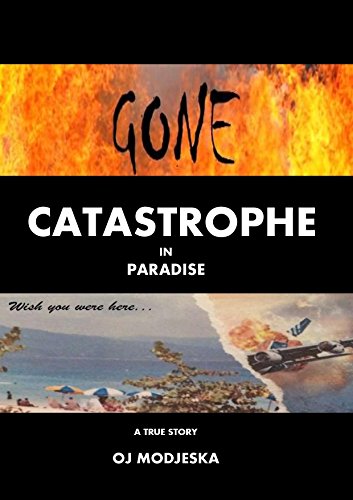
“Gone: Catastrophe in Paradise” by O.J. Modjeska

gonecatastrophe

This book reminds me of the movie, “Titanic” in that you know from the start it’s not going to end well, yet up until that horrible moment, there’s nail-biting suspense as you wish that, somehow, it isn’t true and never happened. And like the Titanic, this incident is also horrifyingly true.

I blew through this gripping, yet heart rending book in a single day. I can’t name a single novel at which I’ve shed more tears. It recounts in incredible detail what went on behind the scenes of the catastrophic plane crash that occurred March 27, 1977 on Tenerife, one of the Canary Islands, when two jumbo jet Boeing 747s collided on the ground, killing 583 people.  I remember that accident well and how horrified I was that something so terrible could happen. I’d never even heard of Tenerife until that time, and unfortunately, every time I’ve heard it since, this tragedy is the first thing that comes to mind.

The author takes you, step by step, through all the events that led up to it, again showing that every disaster has multiple causes, an unfortunate chain that could have been broken at any number of points, yet never was, resulting in the unthinkable. Incredibly, it started way before that, with the placement of the airport at a horrible location where banks of fog were known to roll in from the adjacent mountains. Folklore has it that the “X” on the map was originally to indicate the place NOT to place the airport, yet later that rationale was lost, Murphy’s Law prevailed, and that was exactly where it was placed. How ironic and how human.

Having worked at NASA for over 20 years, including during the time immediately following the Challenger accident as well as when Columbia broke up over Texas skies in 2003, I’d already seen that pattern. It’s never one, single thing, one single mistake, that causes a major disaster, but an unfortunate chain that is seemingly cursed by fate.

It made my blood boil that it actually started with a terrorist attack on Las Palmas, another airport in the Canary Islands. While I’m sure there’s a special place in hell for the insidious individual perpetuating that scourge, it’s horrible the damage and loss of life their barbaric beliefs have caused. In this case, their actions of detonating a bomb in the Las Palmas terminal forced numerous aircraft to be rerouted to Los Rodeos, an airport far too small to accommodate such an influx of unexpected flights, especially wide-body, jumbo jets like the Boeing 747.

Truly, this situation was an accident waiting to happen from the start as two tower controllers near the end of their shift attempted to manage the unexpected situation with antiquated equipment; they didn’t even have ground radar. These critical circumstances were further exacerbated by cultural issues and the quirks of human nature, always a factor in such a tragedy, yet so often far from deliberate. Someone makes a bad decision, never dreaming in their worst nightmare what the result will be. And the coup de grace was the fog.

I’m not sure it would constitute a spoiler to say more, given the unfortunate end result is well known and documented. To say I enjoyed the book is a bit of a misnomer, given it was far from pleasant, yet a very emotional experience, which to me is the hallmark of an outstanding book.  This one is skillfully written and represents meticulously detailed research, which provides a three or even four dimensional view of the happenings of that day.

I’m probably not the “average reader” since I worked in shuttle and payload safety at NASA, I where I personally participated in accident investigations, had classes in such, and was involved in the post-mortem of the Columbia accident. I’ve read NTSB reports of other airline accidents with interest and had the privilege of attending Aerospace Medical Association Conferences a few times where such things were discussed, including TWA Flight 800, which went down in flames July 17, 1996 after taking off from JFK airport in New York.  Some pretty interesting theories exist related to that one, too, which were not included in the official accident report.

The author did a spectacular job of leaving no stone unturned, reporting the situations, circumstances, and results in an objective, yet thoughtful manner, demonstrating once again that accidents don’t just “happen,” at least not of this scope.

The message, of course, for us all, is to recognize that nothing in life is guaranteed. There’s no telling when what appears to be a benign decision might be the fatal link that takes a normal day into the realm of tragedy. For the human factors involved alone, this book deserves attention, especially for those who work in any industry that has the potential for a similar disaster.

I particularly appreciated mention at the end of various individuals reporting paranormal and ghostly apparitions appearing from time to time on the runway. This is the case of various locations where horrific loss of life has occurred. As a professional astrologer, upon finishing the book, I immediately cast the event chart for the accident and could see that there were definitely very sordid aspects in play at the time, all of which reflected much of what was included in the book.

Whether or not you believe in astrology, disaster charts tend to include details that fall into the category “you can’t make this stuff up.” For example, for this disaster it showed fog and unclear communications, power trips, rebellion against authority and regulations to one’s own self-undoing, death and separation from loved ones, and a tremendous amount of activity in the 8th house of death, including the asteroid Icarus, namesake of the mythological individual who tried to fly but went down in flames, on the cusp of the 8th house. It shows the compassionate action of those on the ground, and even that Tenerife would ultimately bear the stigma of being remembered for this horrific event. No, you can’t make this stuff up.

Read this book. It’s outstanding, albeit heartbreaking. And never take anything for granted again. I give this nonfiction thriller 5 stars for content, even though there were a few grammatical issues here and there. The research more than compensates.

You can pick up your copy on Amazon here.