
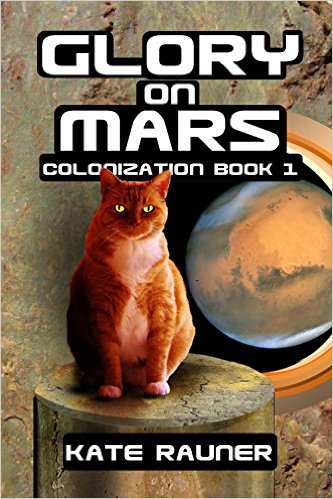
If you’re a fan of hard science fiction, and I mean really HARD, then you will love this book. In fact, I’m inclined to say that it’s only on the borderline of sci-fi, that it’s more what I would call science faction, i.e. so close to being reality that it’s not even that futuristic. Indeed, many people reading this book are likely to live to see a Mars colony in their lifetime. If you loved the movie “The Martian” then this story is a great follow-up to keep your imagination well-grounded on the Red Planet.
The Mars base the author designed is brilliant. She has thought of just about everything imaginable and described it at a technical level detailed enough to make you feel as if you’re there. She has hab modules, jumpships, walkabouts, surface suits and any number of other goodies. At the least, you know she’s not just making this up because her engineering background truly shows. Since I worked as a NASA contractor for over 20 years, I found many familiar things in this story, from the space technological presence in Noordwick, The Netherlands, since I’d been there more than once, and other terminology such as “frangible nuts” used with explosives to release their hold in various spacecraft applications.
By the time you finish this story, you feel as if you’ve completed a tour of duty on Mars. Anyone who may aspire to go there someday can get a very sound idea of what it would be like, from eating worms to the various hazards that abound on a planet that is not fit for human habitation without serious, high-tech intervention. There are radiation issues, maintaining an appropriate pressurized volume with the correct oxygen mixture, psychological challenges, vehicles for getting around on the surface, sometimes at a great distance, and so forth. In this respect it is exceptionally well-done. The author’s knowledge and undoubtedly a whole lot of research is evident and available for readers to enjoy. The side stories were excellent as well, adding additional detail and background which I highly recommend readers take the time to enjoy. They’re not required, but add to its richness. Thus, as an outstanding science fiction novel, I give this book a strong five stars.
However, if you want a bit more than engineering and science in a story, there are a few things I would have recommended be included, had I been a beta reader for this book. I realize that all reviews have a high degree of subjectivity, and the comments that follow are strictly my opinion and may not be shared in the slightest by other readers, especially if all you want is hard sci-fi. Nonetheless, that’s part of the point of a review, to share one’s opinion, and why over all I give this story four stars, so here we go.
While the numerous characters clearly had different personalities, to me they were faceless. Their physical descriptions were lean at best and missing at worst. She did a great job giving them very diverse and memorable names, many of which implied the individuals’ international heritage, but I never was able to “see” them in my mind, other than perhaps Yin and Yang, which were handled in a very clever manner that worked. I like to be able to picture the characters in a story and didn’t feel I had enough description of the others to do so.
The point of view (POV) was limited to one member in particular named Emma, with whom I connected somewhat. One thing to be said about the single POV is that it does lend the feeling that you were Emma and experiencing what she did. Nonetheless, with so many characters, it would have been interesting to get into their heads and viewpoint as well. The first half of the book contained a lot of description about the base and getting things set up along with the challenges involved, which could have been handled through other crew member’s POV so the reader got to know them as well. This would have rounded out the other characters a bit more and provided an opportunity to describe their appearance.
A little more conflict among the crew members would have added a bit more realism as well. This was touched on a little, but it’s highly likely that roughly a dozen people confined as they were under stressful and sometimes life-threatening conditions would have had a few clashes along the way. There was some tension, but people simply aren’t that mature and logical all the time, even if they’re engineers. This I know, given I’ve managed them in my previous life.
Another thing that bothered me was the cat. As a cat owner and lover, I expected the cat to have a more significant role, perhaps along the lines of Pete in Heinlein’s “The Door Into Summer.” I couldn’t believe it that when this kitten was taken onboard as they began their journey that he was not immediately given a name! Maybe I’m just a crazy animal lover, but I can’t imagine that someone in that group wouldn’t have done so. At the least, when they arrived on Mars, someone already there would have done the honors, since it was that group who’d requested the cat in the first place.
The cat could have been worked into the plot more as well. The base’s AI even recognized the cat as a team member! Cats are curious, (Curiosity would have been a great name, in honor of a previous Mars mission) they get bored just like people, and he would have undoubtedly had some interesting experiences in the zero-gravity environment during the journey as well as once they arrived on the base. Mine get into trouble all the time in a regular earthbound house. Owning a pet isn’t simple and it certainly wouldn’t be on Mars. He could have caused any number of problems and conversely, even provided ways to solve others.
Why did the previous crew request a cat in the first place? Pets add warmth, affection, and a new dimension of “home” to say nothing of comic relief. He could have contributed an additional touch of reality to an unreal situation. I probably wouldn’t harp on the cat issue so much other than the fact the cat is so prominently displayed on the cover. I found this very misleading, since the cat played essentially no role in the story, whatsoever, other than a few cameo appearances, where he could have easily become an endearing and potentially major character.
That precious piece of visual real estate known as a book cover would have been much better used to fill other gaps in the story. It would have been very helpful to have a drawing of the base, for example, with all its modules and such, which was well-described in the text, but not always easy to picture. Any artist would have had a blast with that. It also would have benefited by some people as well, which could have compensated for the lack of description in the text. A newly designed book cover would be a great investment for this story and thus represent its content more accurately. Potential readers for this book include hard sci-fi fans, preppers into self-sufficiency, and cat lovers, based on the cover. The cat on the cover could actually turn off some readers who would enjoy it the most.
Speaking of preppers, a bit more of the self-sufficiency side of growing food, raising fish and so forth would have been great as well. The use of heritage seeds, saving some of the potato harvest to plant for the next generation, or even the use of aquaponics could have further enhanced the story and also fit nicely with switching viewpoints.
In spite of all my grumbling above, I truly did enjoy and appreciate this book and what it took to write it. As a physicist and former “rocket scientist” myself, I found very few things I wondered about on the technical side. There were a few places where I thought about making a few calculations, then reminded myself it was only a novel and to lighten up! It provides a realistic view and excellent vicarious experience of what it would be like to be a space pioneer. For that, I highly recommend it. Just don’t expect much from the cat.
You can pickup your copy on Amazon here.
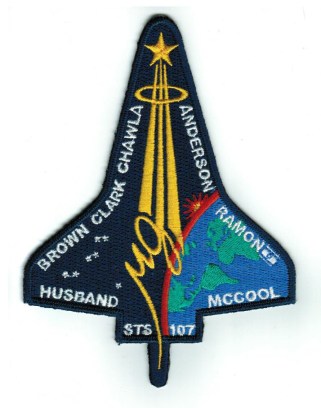
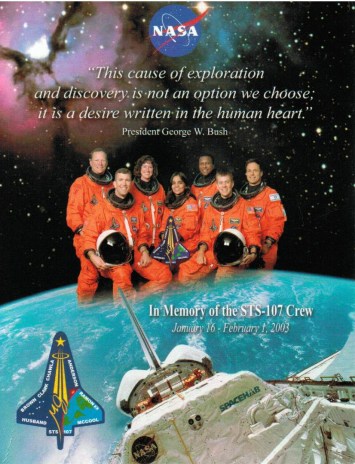
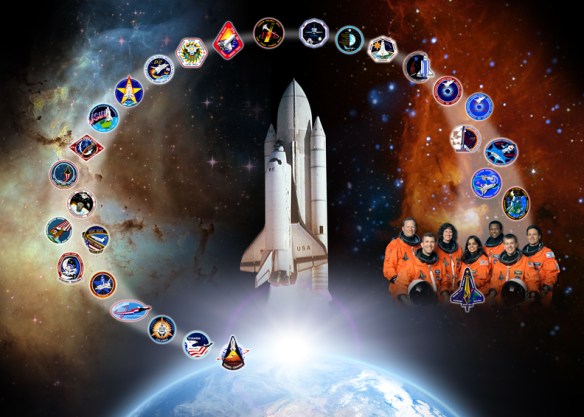 It was Saturday and I was home in the midst of a cleaning frenzy. Since it was my grandson’s tenth birthday, my plans for the day included joining family members to celebrate that occasion. I was wearing ratty workout clothes, planning to get on my stair-stepper after I finished vacuuming. Periodically, I’d pause to look out my north-facing French doors that led to my patio to check for Columbia’s plasma trail, which was supposed to be visible from where I lived in Houston. I’d seen entry emissions from previous shuttle flights which were truly spectacular, contrails on steroids, that split the sky and sparkled in the Sun.
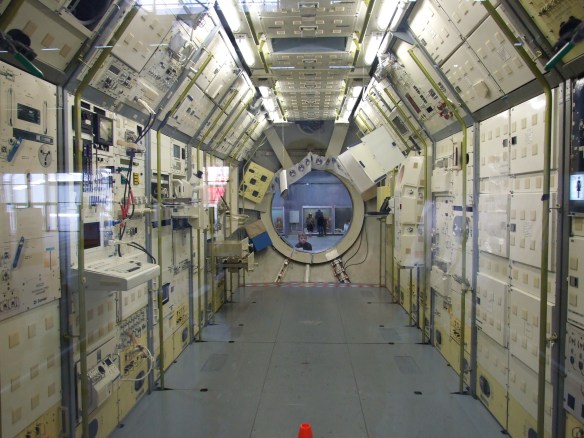
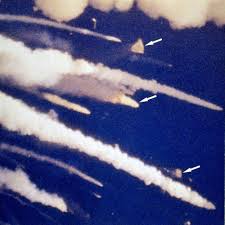 I managed the Payload Safety Section at NASA’s Johnson Space Center. Our responsibilities included making sure that anything that flew onboard the shuttle didn’t present a safety hazard, mostly through the institution of various controls. Whatever had caused the accident, we were reasonably sure that it wasn’t one of our payloads. It was a Spacehab flight, a module secured in the cargo bay that was a habitable area where astronauts conducted entire suites of life science experiments. That meant there were no satellites onboard with potentially dangerous inertial upper stages, a.k.a. booster rockets to take them to their proper orbit, which could have possibly been the problem.
 Not everyone came in, some simply called in to make sure they weren’t needed, but I’ll always remember those who did. These were the ones whose hearts were in their jobs and dedicated to their place in the space program. It wasn’t just a job, it was their life. I was a contractor as were the engineers who worked for me, but there were a few who were actual NASA civil service employees who reported to a NASA lead, to whom I also reported. This particular individual, who professed to be an expert on NASA history and lived only a few miles away, didn’t bother to come in that day. He was home painting a room inside his house, which he apparently deemed more important. I called him several times, reporting our actions, appalled at his flippant attitude as well as his absence. How could someone who was supposedly a history aficionado stay away on such an occasion? I wonder how he feels about that decision today.
 One of the chemicals used to create the foam insulation had recently been banned by the EPA. While NASA could have applied for a waiver, they wanted to be compliant, which is certainly honorable enough. However, they couldn’t find a substitute that resulted in the same integrity of the material. Thus, the new formula resulted in losing chunks of foam. This substance was light, yet needed to be extremely durable. While you may wonder how being hit by something even lighter than the memory foam most of us now enjoy in one form or another, when it was going at launch ascent speeds of approximately 500 mph, the impact was considerable and enough to damage the wing’s composite structure.
 WTF? We were appalled. I suppose he wanted to show optimism and faith in NASA’s ability to recover. But for those of us at NASA, who were already stressed enough trying to fix the shuttle program and maintain the International Space Station (ISS), which was now totally dependent on our Russian and European partners for transportation, this was the last thing we needed. Then, of course, years later came an administration change and Moon/Mars was zapped, much as Reagan’s Space Station Freedom was initially cancelled by Bill Clinton, only to be resurrected some years later as the ISS. Some things never change. Most of us remember John F. Kennedy’s declaration to go to the Moon. Clearly subsequent presidents wanted a similar legacy. At this point, Reagan’s is the Challenger and Bush’s, Columbia. No wonder Reagan wanted Space Station Freedom and Bush wanted Mars!
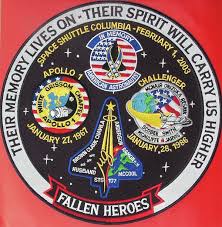 There are no easy answers. A plethora of international political implications exist for space exploration, many of which relate to countries and individuals we can’t even trust to share our neighborhoods, much less our planet or low earth orbit. Space weapons have an incredible advantage with tremendous destructive capability. This implies government involvement coupled with diplomacy are indeed necessary. Budgets and safety will inevitably clash. “Rocket science” technology based on propulsion remains quite primitive, something that’s been around for thousands of years. Whether or not you believe in UFOs, there simply has to be a better way. Seriously. Yet, on the other hand, Earth herself is vulnerable to attack from a rogue asteroid or comet. Space weapons could offer protection from cosmic annihilation as well as threats from our fellow humans.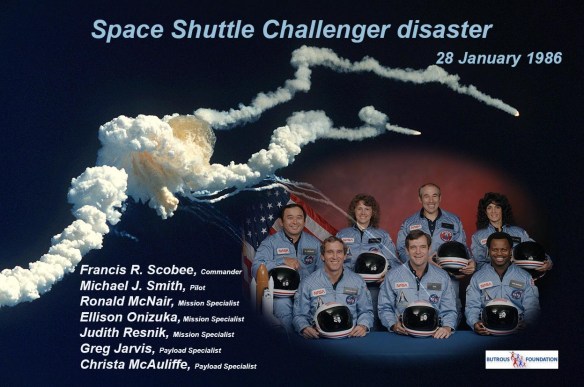
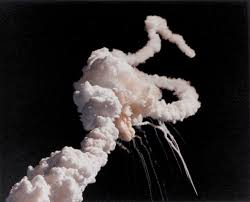 As anyone who’s actually familiar with the accident knows, its official cause related to the o-rings in the solid rocket booster which didn’t seal, allowing hot gasses to strike and penetrate the external fuel tank, which resulted in a deadly explosion. A major contributor to o-ring failure was the fact the launch took place when the temperature at Cape Canaveral in Florida was a mere 28 degrees F. This had never before been attempted, Floridian temperatures usually far above that range, even in January. This factor was illustrated dramatically by physicist Richard P. Feynman, a member of the investigation committee, by dropping an o-ring in a glass of ice water to demonstrate how they became brittle and incapable of performing their function at low temperatures.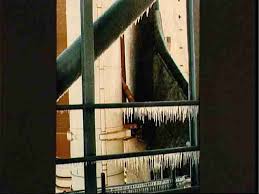
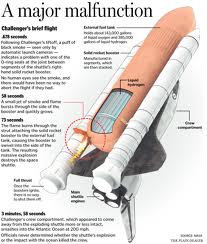 O-ring failure was a catastrophic hazard and documented as such. That the design was faulty was likewise known. Engineers had seen leakage on previous flights. Let that sink in for a moment. O-ring failure had happened before. However, earlier instances had not caused an accident. This resulted in a very dangerous and ultimately fatal thought pattern that led them to believe that perhaps it wasn’t as serious as they thought. Previous failures had been investigated, the leakage referred to as “blow-by” and eventually accepted as not a safety issue.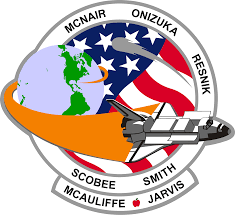
 Marcha's Two-Cents Worth