
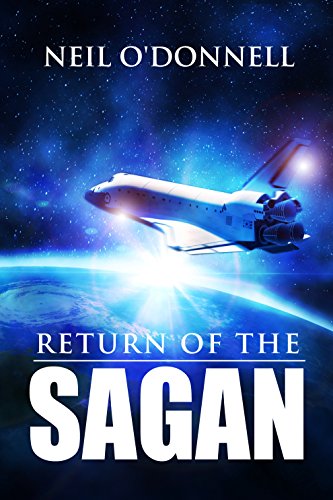
** Review of “Return of the Sagan” by Neil Patrick O’Donnell
I don’t enjoy giving a book a bad review. As an author myself, I know it hurts, unless someone has such an iron-clad ego that they don’t believe it and thus fail to heed what it’s saying. Thus, when I do so, I try to stick to the facts of what a book’s deficiencies are so the author knows what to fix. Of course any review will always have a high level of subjectivity, but I try to judge a book as fairly as possible, based on its merits.
This story got off to a good start and has tremendous potential to become an epic saga of a starship gone for 300 years and now returning to Earth, only to find the human population extinct. That’s a big story. The main character, anthropologist, Francis Burns (no relation to Frank Burns of M*A*S*H fame), is believable and endearing with his OCD and quirky obsession with Star Wars, Battlestar Galactica and Tolkein’s Lord of the Rings trilogy. It was a nice affirmation for gender equality that men and women shared high military rank in the story. The names of the vessels were well-chosen and credible. Authors are always advised to “write what you know” and O’Donnell did a great job with OCD and the geography of the Niagara region as well as military jargon and protocol. Generally, I believe that the world of “fandom” would particularly enjoy this story and would make a good target audience.
However, there are numerous things that need to be fixed before this story can be taken seriously by true science fiction fans. It’s important to note that “fandom” comprises individuals who are very well-versed on details and to earn their loyalty and respect you’d better get the particulars right. Unfortunately, I would give an “F-“ to some elements in this story, which I’ll explain farther down.
I must say that I truly hope the author can take my comments as constructive criticism as opposed to bashing, which is not my intent. I believe this story deserves serious editing at the line, copy and content levels so it can become the great saga for which it holds promise. If I were its editor, here are some of the things I would suggest to bring it to its potential glory.
1. It’s best to open a story with the main character, not someone who will largely disappear or be absorbed. Furthermore, there were too many characters, especially in the beginning. They weren’t all faceless, but most didn’t have a distinct personality. Due to the scope of the story, several characters are justified, but they need to be humanized and developed to hold the reader’s interest.
2. The author’s writing style is reasonably good, almost to the point of what I would call “strong.” However, there are few relatively easy to fix stylistic issues that would result in considerable improvement. Probably the most noticeable would be to eliminate the repeated use of the POV character’s name. Interestingly enough, this didn’t occur until later in the story. It’s distracting for a name to be repeated a half-dozen times or more in a single paragraph, especially in places where the person in question is the only one involved. That’s why we have pronouns. If there are two people of the same gender involved in a scene, a reminder of who’s talking or doing what from time to time is useful, but effective pronoun use is essential to readability. You don’t want the reader thinking, “Yeah, yeah, I know it’s him already!” or, conversely, having to stop and reread a section to figure out who’s speaking or prevailing in a fight scene.
3. Typos are almost inevitable in any novel, my personal favorite in this tome being “zero-gravy” which would probably slip past a spell-checker, but some were grating such as the consistent use of the wrong homonym. One or two I can handle, but this was excessive. I’ve never seen so many. I suspect a good grammar checker would catch these since in most cases they represent an entirely different part of speech. For example:
solar flares, not flairs
waver in the limited light, not waiver
reigned in magnificence, not reined
soul was allowed to leave his care, not sole
waved Francis to take his seat, not waived
pour out of the satchel, not poor
higher branches, not hire branches
fell from the satchel right past Francis, not passed
4. The military jargon and procedures were convincing and came across with an air of authenticity. Good job there. However, the technical aspects were so far beyond feasible that it detracted from the rest of the story. One minor example is the use of paper onboard a starcruiser, which is beyond doubtful.
5. And speaking of a starcruiser, no matter how much of a conspiracy buff you might be with regard to UFOs, it would be more credible for the ET’s from Zeta-Reticuli to provide Earth with a ship with interstellar capability with the volume of three aircraft carriers than for us to suddenly acquire one, much less populate it with F-15E Strike Eagles. I would think that most people, particularly sci-fi fans, would know that these aircraft could not possibly fly in space. Just out of curiosity and as a detail-oriented person myself, I asked a friend who’s a former pilot about that. Here is what he said:
“The F-15 could not be controlled outside the atmosphere as the airplane’s control surfaces depend on air flow to cause changes in roll, pitch, and yaw. Thrusters are required to maneuver in space. If it had thrusters, I suspect that the structure would overheat and breakup during reentry. Initial reentry mach is far higher and would generate far more heat than the F-15 materials could withstand. The engines are air breathers and can’t burn the kerosene without oxygen. Then there’s the little issue of gravity. The fuel tanks, lubricating oil tanks, and hydraulic reservoirs depend on gravity to operate. The pickup points are in the bottom of the tanks. The fuel tanks have baffles to keep a small amount of fuel available for negative-G use. The engines are okay with the oil on them for a short time and there is pressurized hydraulic fluid in the system.
“The fighters and trainers that I flew were limited to 30 seconds negative-G or inverted flight. Zero-G is not negative-G, I’m not sure if there would be any difference. The F-15 cabin is pressurized to 5 psi above ambient at altitude. (It is unpressurized to 8,000 feet, maintains 8,000 feet until it requires 5 psi, then maintains 5 psid.) There should not be any issues with DCS if the pressurization were functioning but it won’t be because it uses bleed air off the jets and the jets won’t work in a vacuum. Therefore, the crew is exposed to vacuum with probable deleterious results. Another issue: the generators are driven by the engines and if the engines aren’t turning you are down to battery power which will only power essential systems for a short duration. The longer I think about this the more reasons I come with as to why the F-15 isn’t a spacecraft.”
Yes, there are readers who are acutely aware of such facts and inaccuracies of this magnitude detract from the story as a whole. It would be more credible to make up an entirely new craft (think X-wing or Tie fighters) than use one inappropriately. Even a mention of the aircraft being retrofitted would have helped, even though that would be extremely unlikely due to what it would entail.
6. Some plot angles, such as the potential for a conspiracy on the part of political figures, were dropped. If this will be developed in a sequel then that should be implied more clearly.
If I were to deduct one star for each of the above points, the book book have a negative rating. Of course all the work the author put into it is worth something and it did have some redeeming value, even though reading much of this book was downright painful. Nonetheless, I persisted to see how it would end, which was handled reasonably well and provided fertile ground for a sequel.
As noted earlier, the premise is interesting and has tremendous potential, but the execution left far too many shortcomings if you’re picky about the science being accurate and expect proper grammar and style that doesn’t keep tossing you out of the story, shaking your head. These issues require attention to pass muster with the ranks of true science fiction fans. Besides some good editing, a cadre of good beta readers are a valuable asset that I highly recommend.
If you’re so inclined, you can pick up a copy on Amazon here: https://www.amazon.com/Return-Sagan-Neil-Patrick-ODonnell-ebook/dp/B00SP4BOZS/
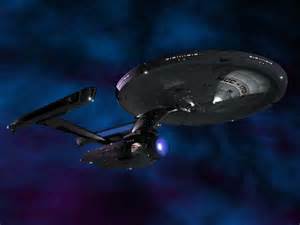

 To wit, considering that a person consists of approximately 10^28 atoms (ten followed by 28 zeros, for those of you who don’t recognize that notation), turning a 50 kilogram person into pure energy according to Einstein’s E=mc^2 would release more energy than that of a thousand 1-megaton hydrogen bombs. To do so would require heating him/her to a temperature a million times the temperature at the center of the Sun. Accelerating the resulting plasma soup to near the speed of light is another feat, to say nothing of also transferring around 10^28 kilobytes of data to the “pattern buffer” to reassemble it. On top of that, there’s Heisenberg’s Uncertainty Principle and various other quantum mechanical difficulties.
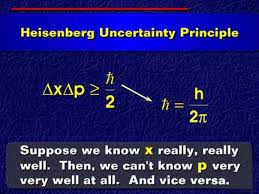 Remember, however, that this was written back in the 90s and science has made vast advances since then as has our computational capacity. Personally, I would bet it could be done using the principles of quantum entanglement, but Krauss’ points are nonetheless well-taken. After all, he’s a professor of physics in his own right, at Case Western University when he wrote that particular book.
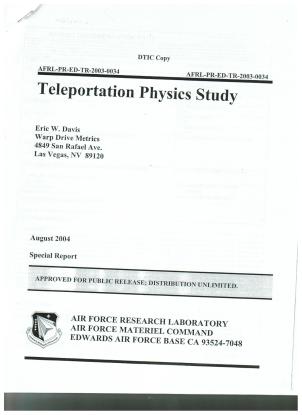 Seriously. I swear I’m not making this up.
 He goes on to say, “There are also a small number of credible reports of individuals who reported being teleported to/from UFOs during a UFO close encounter, which were scientifically investigated….” Plus: “There is a wealth of factual scientific research data from around the world attesting to the physical reality of p-Teleportation and related anomalous psi phenomena. The skeptical reader should not be so quick to dismiss the subject matter in this chapter, because one must remain open-minded about this subject and consider p-Teleportation as worthy of further scientific exploration.” He even mentions my favorite psi researcher, Dean Radin, PhD, of whom I’m a tremendous fan.
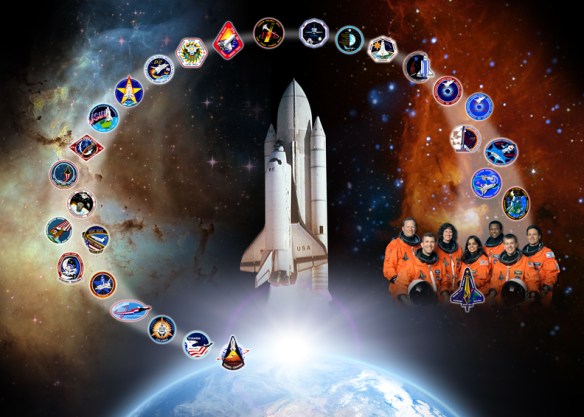 It was Saturday and I was home in the midst of a cleaning frenzy. Since it was my grandson’s tenth birthday, my plans for the day included joining family members to celebrate that occasion. I was wearing ratty workout clothes, planning to get on my stair-stepper after I finished vacuuming. Periodically, I’d pause to look out my north-facing French doors that led to my patio to check for Columbia’s plasma trail, which was supposed to be visible from where I lived in Houston. I’d seen entry emissions from previous shuttle flights which were truly spectacular, contrails on steroids, that split the sky and sparkled in the Sun.
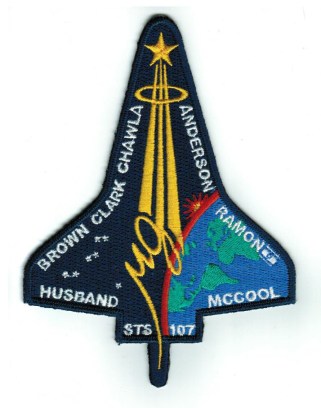
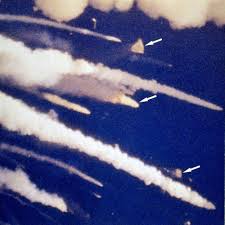 I managed the Payload Safety Section at NASA’s Johnson Space Center. Our responsibilities included making sure that anything that flew onboard the shuttle didn’t present a safety hazard, mostly through the institution of various controls. Whatever had caused the accident, we were reasonably sure that it wasn’t one of our payloads. It was a Spacehab flight, a module secured in the cargo bay that was a habitable area where astronauts conducted entire suites of life science experiments. That meant there were no satellites onboard with potentially dangerous inertial upper stages, a.k.a. booster rockets to take them to their proper orbit, which could have possibly been the problem.
 Not everyone came in, some simply called in to make sure they weren’t needed, but I’ll always remember those who did. These were the ones whose hearts were in their jobs and dedicated to their place in the space program. It wasn’t just a job, it was their life. I was a contractor as were the engineers who worked for me, but there were a few who were actual NASA civil service employees who reported to a NASA lead, to whom I also reported. This particular individual, who professed to be an expert on NASA history and lived only a few miles away, didn’t bother to come in that day. He was home painting a room inside his house, which he apparently deemed more important. I called him several times, reporting our actions, appalled at his flippant attitude as well as his absence. How could someone who was supposedly a history aficionado stay away on such an occasion? I wonder how he feels about that decision today.
 One of the chemicals used to create the foam insulation had recently been banned by the EPA. While NASA could have applied for a waiver, they wanted to be compliant, which is certainly honorable enough. However, they couldn’t find a substitute that resulted in the same integrity of the material. Thus, the new formula resulted in losing chunks of foam. This substance was light, yet needed to be extremely durable. While you may wonder how being hit by something even lighter than the memory foam most of us now enjoy in one form or another, when it was going at launch ascent speeds of approximately 500 mph, the impact was considerable and enough to damage the wing’s composite structure.
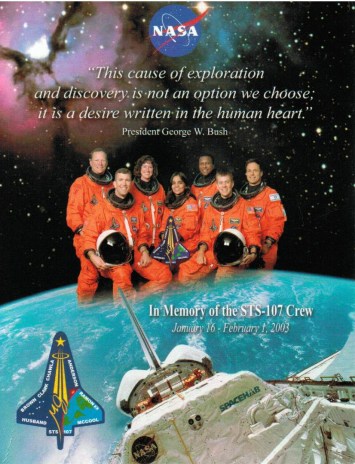 WTF? We were appalled. I suppose he wanted to show optimism and faith in NASA’s ability to recover. But for those of us at NASA, who were already stressed enough trying to fix the shuttle program and maintain the International Space Station (ISS), which was now totally dependent on our Russian and European partners for transportation, this was the last thing we needed. Then, of course, years later came an administration change and Moon/Mars was zapped, much as Reagan’s Space Station Freedom was initially cancelled by Bill Clinton, only to be resurrected some years later as the ISS. Some things never change. Most of us remember John F. Kennedy’s declaration to go to the Moon. Clearly subsequent presidents wanted a similar legacy. At this point, Reagan’s is the Challenger and Bush’s, Columbia. No wonder Reagan wanted Space Station Freedom and Bush wanted Mars!
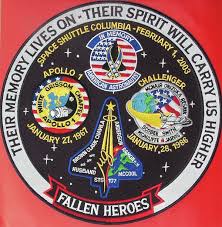 There are no easy answers. A plethora of international political implications exist for space exploration, many of which relate to countries and individuals we can’t even trust to share our neighborhoods, much less our planet or low earth orbit. Space weapons have an incredible advantage with tremendous destructive capability. This implies government involvement coupled with diplomacy are indeed necessary. Budgets and safety will inevitably clash. “Rocket science” technology based on propulsion remains quite primitive, something that’s been around for thousands of years. Whether or not you believe in UFOs, there simply has to be a better way. Seriously. Yet, on the other hand, Earth herself is vulnerable to attack from a rogue asteroid or comet. Space weapons could offer protection from cosmic annihilation as well as threats from our fellow humans.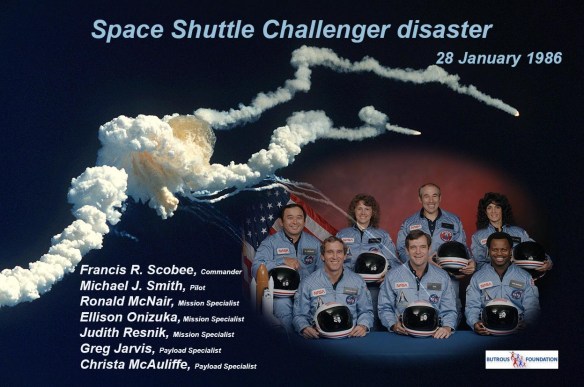
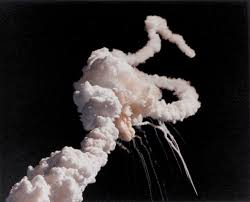 As anyone who’s actually familiar with the accident knows, its official cause related to the o-rings in the solid rocket booster which didn’t seal, allowing hot gasses to strike and penetrate the external fuel tank, which resulted in a deadly explosion. A major contributor to o-ring failure was the fact the launch took place when the temperature at Cape Canaveral in Florida was a mere 28 degrees F. This had never before been attempted, Floridian temperatures usually far above that range, even in January. This factor was illustrated dramatically by physicist Richard P. Feynman, a member of the investigation committee, by dropping an o-ring in a glass of ice water to demonstrate how they became brittle and incapable of performing their function at low temperatures.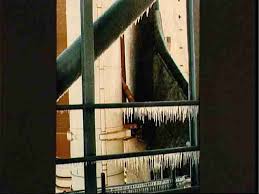
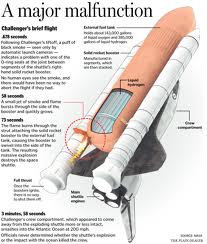 O-ring failure was a catastrophic hazard and documented as such. That the design was faulty was likewise known. Engineers had seen leakage on previous flights. Let that sink in for a moment. O-ring failure had happened before. However, earlier instances had not caused an accident. This resulted in a very dangerous and ultimately fatal thought pattern that led them to believe that perhaps it wasn’t as serious as they thought. Previous failures had been investigated, the leakage referred to as “blow-by” and eventually accepted as not a safety issue.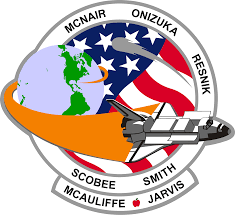

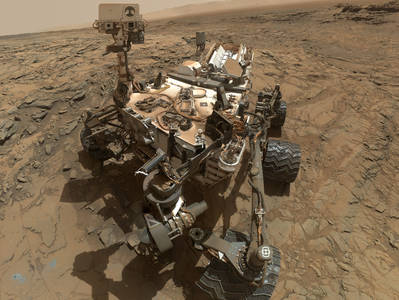 4. NASA has definitely been known to blow up rockets, not only in the early days of the initial space race with Russia to get to the Moon in the late 50s and 60s, but even more recently as many of you may recall with the Space Shuttle Challenger accident on January 28, 1986. Private rocket companies more recently are having a similar problem. Rocket fuel is highly volatile, systems complex, and problems are inevitable. Thus, when the rocket they put together in record time to send supplies blew up it wasn’t much of a stretch. Anyone who didn’t see that one coming hasn’t been paying attention to the space industry and its explosive history (pun intended).
 Marcha's Two-Cents Worth