“Fire Island” (Chatterre Trilogy Vol. 3): Sci-Fa at its Best

fireislandcover

This well-written novel is the worthy third book in the Sci-Fa Chatterre Trilogy. The author does an excellent job of melding science fiction and fantasy together in another convincing story of another world. This particular world is similar enough to what ours was a century or two ago to be vaguely familiar then mixed with high technology imported via a spaceship wreck you can learn about in the first book, “Star Bridge.” Having not read the second book, “Thunder Moon,” I was a bit lost on the full context of this one, but the immediate action and suspense were enough to grab my interest without knowing the full story of how Tem Aki got into her precarious situation.

Tem Aki is on a quest to find her brother, Larwin, whom you meet in “Star Bridge.” Her journey is substantially complicated when she finds herself on the other side of the planet via an encounter with a time/space anomaly. Fortunately, there’s a settlement nearby where once again you are treated to Jeanne Foguth’s outstanding ability to depict major culture clashes when Tem Aki meets Cameron, the somewhat reluctant leader of a tribe-like culture. Since she emerged from the ocean, albeit in a spacesuit, he thinks that she’s a goddess who has arrived to help him celebrate an upcoming religious ceremony as well as deal with some troublesome individuals who are losing their religious faith as well as trying to undermine Cameron as their leader.

Cameron’s culture is well-developed as is their traditional belief in the madrox dragons, specifically the great dragon-mother, Shaka-uma. The problem lies in that fact that no one has seen her in a long time so a few troublesome doubters are declaring that they never existed. Meanwhile, Cameron is trying to prepare for their annual pilgrimage to honor Shaka-uma, which his adversaries are trying to sabotage. Tem Aki is thrown into this controversy which is further complicated by the fact that there are no other females around in the immediate environment which can best be compared to a monastery.

The misunderstandings between them are at times hilarious and if nothing else demonstrate how easily such confusion can develop when two cultures collide. Tem Aki’s technology, which includes my favorite android, GEA-4 (whom you can also meet in earlier volumes), of course convinces Cameron of her godhood. His fascination when GEA-4 stares into the sun to recharge is classic. Tem Aki’s revulsion toward the primitive, chauvinistic culture is certainly convincing as is the rationale Cameron maintains that she’s some form of divinity.

Cameron’s challenges alone would make a fascinating read but adding Tem Aki into the mix is the coup de grace for a great story. I don’t want to delve any further into the plot because I don’t want to throw any spoilers out there, but believe me when I say that there are plenty of complications, surprises, believable characters, Kazza is joined by another delightful mystic cat, and a satisfying ending. I recommend reading the books in sequence, though this one can stand on its own if you’ve at least read “Star Bridge.”

Pick up your copy on Amazon here.

jeanne

Connect with the author, Jeanne Foguth:

Visit Webhome Jeanne Foguth

Follow on Twitter @JeanneFoguth

Get Pet tips, etc. http://foguth.wordpress.com

Hard Sci-Fi in Western Disguise

idyllcover

I must say that this story started out a bit slow and even got to the point I consider monotonous. However, the fact it was so well written, nicely edited and rich with beautifully rendered descriptions coupled with enough suspense to make me wonder what was going on, I kept reading and was not disappointed.

The author did an excellent job of creating a new world to which Earthlings are immigrating to escape their own as it loses viability. The colonists have agreed to live a simpler lifestyle, similar to that of the pioneers who settled the American West in the 19th century. Settling a new planet is not a simple, matter, however, with a variety of new hazards including byproducts of terraforming including a marginally sentient species known as owylls, which are predatory yet seem to act at the command of a tall, mysterious bearded man. Colonists are being afflicted by an epidemic of a malady known as “The Lullaby” which renders its victims comatose while muttering a mantra that spreads the disease to anyone who hears or perceives it, e.g. in writing.

The characters aren’t particularly endearing and I thought any emotional or romantic development between them fell flat. Nonetheless, they were interesting enough that I’d like to know more about them and why they’re the way they are. The main protagonists comprise two brothers, Walter and Samuel Starboard, who are transporting their Lullaby-afflicted mother, Alma, to Marathon, the site where their transport ship is located. Rumor has it that a cure is available there plus they also hope to find their missing father. Bear in mind that this journey is essentially a trail ride through dangerous unknown and uncharted territory which involves horses for transportation, tethered mules, and a wagon carrying Alma.

Along the way they encounter the Bridge sisters, Virginia and Miriam, who join them. There’s a considerable amount of tension between them, particularly from Miriam who is clearly a bitter, angry woman with a reputation for using men. She does prove useful helping Walt care for his comatose mother, however. Hopefully in the next volume the author will reveal more about her, whom I suspect is a very wounded soul with an interesting past beyond what was revealed in this volume. The part that really bogged down the first half of this book was their tedious journey which provided graphic descriptions of the planet and a strong sense of place yet in my opinion dragged on longer than necessary; some readers may not make it to the best part.

But once things started to move, then move they did. I don’t want to get into spoiler territory so won’t go into it other than to say all the questions that arose during the story to that point were answered and the plot, premise and details of the society of which the characters are a part was exceptionally well-developed, intriguing and enough to make me want to read the next volume of this trilogy. The irony of the title comes through amid numerous clever twists and turns, cool technology, most of which is environmentally friendly, and all sorts of other technological and societal goodies hard sci-fi fans like myself want and expect in a good read. As a former rocket scientist I’m always critical of the feasibility of the science in such novels and there was only one thing in there that seemed a bit of a stretch, so the author did well on that score as well.

World building is not an easy feat and getting all the details in place presents a challenge for any author. Derry has done an outstanding job doing so, established an interesting world with a variety of fascinating possibilities reminiscent of other sci-fi classics in print as well as film I wish I could mention but they would undoubtedly constitute spoilers.

If you like sci-fi adventure stories populated by ordinary people in an evolving off-world environment backed up by great imagery and detail, you will probably enjoy this story. It moves slowly at first (thus I only gave it 4 stars) but I admit that I stayed up way past my usual bedtime to finish it once it started to roll.

You can pick up your copy at Amazon here.

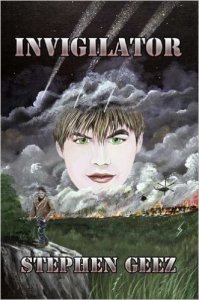
“Invigilator” by Stephen Geez

invigilatorcover

I thoroughly enjoyed “Papala Skies” by Stephen Geez and was very happy when I won “Invigilator” as part of a blog tour. It sounded like the kind of story I’d enjoy, i.e., laden with conspiracy theories and fun stuff like that. As soon as I started reading I was awed by the level of detail. Clearly the author knows his stuff. He definitely pulls you in with outstanding imagery and action, right down to the model of the various weapons and ammunition. I live in Texas and so much of what he said was familiar, since I’ve been to several of the locations he mentioned. The Southern mentality was on-target and made me feel as if I were a part of the militia depicted. The characters were convincing and real as well as their respective attitudes and motivations. The dialog was appropriately drawn with bad grammar sprinkled with slang such that I could almost “hear” the conversations, which sounded like something I might overhear in the local Walmart. For all these reasons, all of which are related to the skilled writing style of the author, I initially gave this book 5 stars. But at this point, after thinking about it, I have dropped it to 4 stars.

Without getting into spoiler territory, I will say I was greatly disappointed in the ending. Considering the level of detail throughout the story, one of the most important plot elements was never explained as I expected. There also seemed to be a few contradictions, e.g., in one place it said something didn’t or couldn’t happen then later it did without explanation of how that occurred. There were too many matters that were dealt with using implications that were a little too foggy and undefined for my reading tastes. I’m a hard sci-fi fan who likes to know the how and why of things, which weren’t ever included. This might not bother someone who doesn’t care about those type of details and is happy to draw their own conclusions. For me it was lacking. If all you’re looking for is lots of guns and ammo and explosive descriptions packaged in a prepper attitude, then you’ll probably be perfectly happy.

I assume this book will ultimately become the first volume of a series. If that was always the intent, it should have been stated as such. That way I would not have expected a satisfying ending with adequate closure and explanation of the various mysteries presented. There is certainly plenty of room for a sequel where all these things could be explained. The way it stands left me disappointed and frustrated that I’d plowed through the book expecting answers that were never delivered.

One last thing. I also think the book deserves a better cover. While the existing one captures the essence of the story at the technical level as far as the action and basic plot are concerned, it really doesn’t do it justice.

You can pick up a copy from Amazon here.

Another Winner from the Queen of Adult Bedtime Stories

iwillbreathecover

I consider Regina Puckett the absolute queen of adult bedtime stories. But I better qualify that so you don’t get the wrong impression. When I say “adult” I don’t mean erotic or “R” rated, since the ones I’ve read are clean enough to read to a child. Rather, a child probably would not get the relationship and societal subtleties, though of course most of us who grew up with the Brothers Grimm or Hans Christian Anderson never understood the underlying themes, either.

All that aside, I almost always read before I go to sleep and while I enjoy a wide variety of genres, including the pulse-pounding variety, there’s nothing better than one of Ms. Puckett’s after a stressful day when all you want to do is slip into a fantasy world prior to drifting off. (Clearly this might not apply to those she’s done in the horror genre which may not be so appropriate at that time.) So far the characters I’ve encountered are endearing and even though her stories tend to be relatively short, the people and plot are well-developed. There’s outstanding imagery and just enough detail to make the story come to life. Truly she’s a master storyteller, and I’m not an easy reader to please. It’s no surprise she’s won so many awards.

This particular steampunk tale as well as those in that genre I’ve read by other authors reminds me of hitting Earth’s reset button and taking us back to a simpler time with only mysterious remnants remaining of high technology. It’s a post-apocalyptic world where the few survivors are gradually rebuilding society. In this one, the main character, Liberty, travels extensively in her airship to different locales where she gathers goods to trade in other locations.

On the philosophical side, this is an interesting reminder that most merchandise and commodities (especially food) used to originate relatively close to home as opposed to coming from just about anywhere on the globe. In simpler times there was more accountability, similar to buying produce in a farmers’ market, as opposed to some of the questionable products from places like China found in modern grocery stores which I wouldn’t feed to a stray dog. Indeed, a few years back, products from that country were killing our dogs and cats, yet we persist in allowing these questionable consumables into our country. As one of her characters savored an apple I pondered the importance of everyday products we take for granted that could disappear given some sort of global disaster. Maybe it’s just me, but I found plenty to think about in this relatively simple story, giving it considerably more thought-provoking depth than you might expect.

The process of rebuilding society, one person at a time, is typically explored in this genre. Human nature being what it is, individuals would react differently to global disaster. The opportunity to take advantage of and exploit others is always there for those who are selfish while those who are more highly evolved would be concerned with the human species as a whole. Under such circumstances, society will rebuild sooner or later and most likely be entirely foreign to what we know. It’s nice to think that mankind would learn his lesson and try to get along with his fellow species better than we see today, but there are no guarantees. There’s just such a mix in Liberty’s world and she’s suspicious of everyone, which helps her survive. As you would expect, she has a rather jaded view of love as well which begins to change when she’s given a small robot named Boy. Before she knows it she’s developing a warm relationship with this wise and philosophical little being from which the tale’s title derives. Soon after that another trader like herself comes along as well and Liberty learns more about friendship and trust.

I thoroughly enjoyed this story and definitely look forward to reading the next one in the series which promises to provide more information about Liberty’s background. If you’re looking for a mildly suspenseful tale saturated with charm and character to say nothing of a few philosophical considerations, I highly recommend this one.  You can pick up your copy on Amazon here.

Creepy & Too Believable: “Daimones Trilogy” Volume I

daimonescover

I usually don’t have that much trouble putting a book down. Most of the time I have a pretty good idea what’s going to happen next and even if I don’t, it takes a lot of suspense to keep me reading beyond my usual half-hour morning session on my stationary bike or in the evening before I go to sleep. I’m not impressed by either vampires or zombies. This book, however, was another story, literally and figuratively.

Not only was the suspense palpable, it sucked me into a world that in some ways was too familiar. All quality fiction transports the reader to another place and/or time, but it’s usually relatively easy (at least for me) to separate the story from reality. Not so with this one.

Apocalyptic/dystopian fiction has been extremely popular the last few years, which isn’t surprising given the state of the world. Things have gone crazy and have been heading that way for several decades. There are end-of-world prophecies from various religions and cultures with the signs that they are near clearly upon us. The world has ended before and will again. It’s just a matter of time. Things can change dramatically overnight, as we witnessed with the events of September 11, 2001. As pervasive as that influence was, however, life did manage to go on, at least for those who weren’t directly affected. I think most of us suspect that we’ll have some warning, if no more than a bad feeling, before, as the preppers say, when TSHTF.

But will we?

This story begins in the here and now. A somewhat normal but bad day for the protagonist, Dan, who loses his job. The next day a predawn windstorm comes through, doing what amounts to moderate damage. Except for the fact that as far as Dan can tell, he, his wife and daughter are the only ones left alive. Vehicles of all descriptions are askew on the roadways, their drivers dead. The neighbors are dead in their bed. Animals mysteriously seem to have been spared. Unlike most apocalyptic stories, the world itself is unharmed. The power is still on as well as the internet but there’s nothing to be found in any media source that even hints at anyone else on the entire planet being alive. Unlike other apocalyptic stories where some sort of natural or man-made catastrophe sets things off, in this case there is no known cause.

So now what?

Dan and his family live in Switzerland on what could most easily be described as a comfortable homestead. They have a large home with a guesthouse surrounded by a well cared for yard and a garden. He and his wife are educated people with some idea how to take care of themselves. Since there is no massive destruction other than the pervasive loss of life, they can go to the store and get whatever they need, which they do. Their actions under the circumstances reflect what most of us would do and reflect today’s world. For example, he ran a Facebook ad looking for others.

The story depicts how the world changes with the people gone. The skies are clear and blue, wildlife, packs of dogs, and vegetation start to take over. After a while they get paranoid as they wonder if any other survivors might be hostile. Dan’s young daughter goes into a depression as she realizes she will never share her life with anyone besides her parents. The realism and level of detail in this first person account are chilling and too easy to imagine. But why has everyone died? Or conversely, why has Dan and his family survived?

I don’t want to get into spoiler territory so will leave it at that. There are numerous interesting plot developments and a few more surprises. I will say that the majority of questions are answered by the conclusion and the explanations are not as far-fetched as you might expect, again adding to the rather alarming message underlying this brilliant novel.

The human species remains barbaric in spite of our technological achievements. We are not taking care of our planet as we should. Wars are everywhere and violence in the name of religion has got to be the ultimate travesty. Different animal species care for each other better than too many humans. They have evolved more than we have.

If you had the power to do something about the status quo what would you do? “Daimones” describes one scenario that’s real enough to give considerable pause to the next predawn windstorm. The next volumes in this trilogy are definitely on my list and are bound to be extremely gripping as well.  You can get your copy at Amazon here.

Quantum Mechanics for Dummies: Review of “Quantum Enigma” by Bruce Rosenblum and Fred Kuttner

quantumenigmacover

Since I have a bachelor’s degree in physics, I’m reasonably familiar with quantum theory and the mystery it presents with regard to the influence of an observer. I’ve even written a few blogs on the subject you can find here. I keep reading about quantum theory hoping for a deeper understanding but all I seem to discover is that no one really knows what’s going on, even several decades after its first discovery. However, this well-written book did explain numerous other things that helped my understanding of the various interpretations and the differences between them.

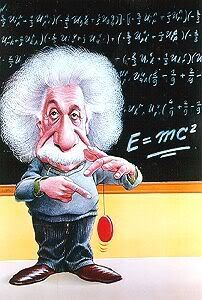
albertAnyone who’s studied quantum mechanics in the slightest has probably read about Albert Einstein’s comment that he believed the Moon was there whether he was looking at it or not. This has never made sense to me since my understanding of “collapsing the wave function” is that if any conscious entity observes a quantum event it collapses into reality for everyone. Einstein’s primary objection was that a physical reality separate from observation had to exist, yet this was never proven to be the case. Think about that for a moment.

This book does an excellent job of explaining the different interpretations, e.g. the Copenhagen interpretation, Schrodinger’s cat, Einstein’s view, Niels Bohr’s opinion and various others, in a way that anyone interested in the subject can understand. What stands out the most is that even today the experts don’t agree. In other words, they simply do not know. I loved it when the authors noted “Eight decades after the Schrodinger equation, the meaning of physics’ encounter with consciousness is increasingly in contention. When experts can’t agree, you can choose your expert. Or speculate on your own.” (page 220)

Which is exactly what I’ve done.

Since I’m not a PhD worried about tenure, funding or the future of my career, I can tread the line between physics and metaphysics and enjoy every step. The authors made it clear that the realm of physics deals only with the physical world. They are even annoyed when people introduce such things as human consciousness into their supposed realm. Yet the authors admit that the two remaining great mysteries today are quantum mechanics and what constitutes consciousness.

How ironic.

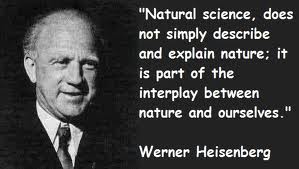
heisenbergquoteWerner Heisenberg summed it up nicely when he said “It is probably true quite generally that in the history of human thinking the most fruitful developments frequently take place at those points where two different lines of thought meet.”

The fact they don’t is the problem.

deanw-bookSpeaking of other disciplines, scientist Dean Radin has done numerous statistical studies on psi phenomena. While proving it exists in a physical sense cannot be done (yet), statistically he’s shown experimentally that its incidence exceeds probability. Another scientist, Roger Nelson, has shown the influence that can only be explained as the Universal Consciousness with his network of random number generators.

I continue to marvel that physicists can propose the existence of parallel universes, multiverses, and thirteen or more dimensions while dismissing and even disparaging anything that relates to consciousness. Give me a break. Without consciousness they couldn’t even consider the meaning of the physical world.

Just because they purposely exclude it from the material world doesn’t mean it doesn’t exist or that they should dismiss it. To do so is the height of arrogance. I encounter this all the time since I’m also a professional astrologer. Of course I was indoctrinated against astrology while in college but my own study and experience taught me that it works. Those who dismiss it without personal study have been sucked into the mentality for which the only remedy is the admonition to “Question Everything.”

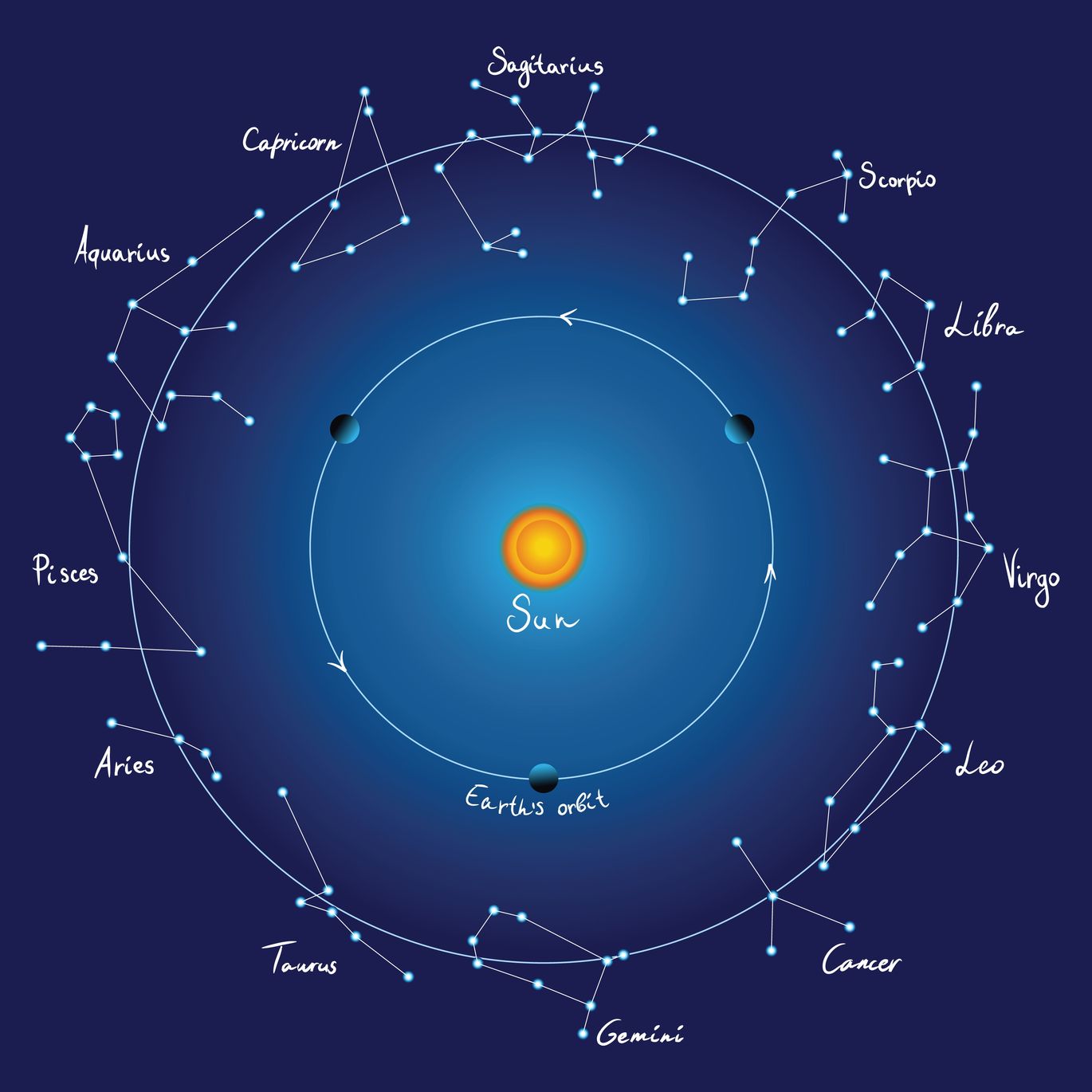
10101220_mlIt doesn’t matter whether or not we know how it works, only that it does. However, physicists and scientists in general dismiss astrology as myth and superstition, even though early scientists such as Kepler, Galileo and Newton were astrologers seeking knowledge about the heavens to increase the accuracy of their astrological work. My own opinion is that quantum entanglement plays a role in these cosmic influences. As stated by the authors:

“Any two objects that interact become entangled. After that, whatever happens to one instantaneously influences the other no matter how far apart they are. This has been extensively demonstrated with pairs of microscopic particles, and even with almost macroscopic devices. As entangled objects entangle with yet other objects, the entanglement becomes complex.” (p. 199-200)

Note the use of the word “instantaneously.” Supposedly no information can travel faster than the speed of light, yet this is the case with entanglement. Radin has shown psi to be instantaneous as well. My personal opinion is that when a person is born, the configuration of the cosmos is imprinted upon them in the form of entanglement which is represented in their birth horoscope or natal chart. They then respond as changes, i.e., movement of the stars and planets, affect their psyche. Truly this is a stretch, but there’s nothing in quantum theory that can prove this is not the case. Nonetheless, scientists are typically offended when someone such as myself even speculates on such possibilities. Fortunately, as a science fiction writer, I can have all sorts of fun with such things there as do various other scientists to avoid compromising their position in their highfalutin community.

78px-Single_and_double_slit_4I thoroughly enjoyed the fact that there was nothing in this book that negated my opinion. If anything, I obtained even more scientific theory to support it. I understand more thoroughly as well that physicists fear to tread outside their domain of the material world and to touch on anything that borders on parapsychology because it can result in professional suicide. How sad that science has become so specialized and compartmentalized that professional tunnel vision precludes solving some of life’s greatest mysteries while those of us who think outside the box are ostracized by their peers and even looked upon as ignorant fools.

Which side best fits that description only time will tell.

You can pick up a copy on Amazon using this link.

Katy Huth Jones’ “Mercy’s Prince”: A Truly Believable Fantasy World Saturated with Suspense

mercysprincecover

This story was nothing short of a joy to read. It’s always refreshing to get totally immersed in a story without being jarred back to reality by misspellings, grammar goofs and other writing faux pas. As a self-declared grammar Nazi, I truly appreciated a book that has been so well-written and meticulously edited. But this is certainly not the only thing I loved about this book.

The characters jump right into your heart, at least the good ones. I love the cover, which captures the spirit of Prince Valerian so beautifully. He as well as sweet Mercy and many other supporting characters are not only convincing but very human with dreams, aspirations and hopes beset with tremendous obstacles, making it easy to connect with them emotionally. Their struggles are at times heart-rending as these genuinely goodhearted, god-fearing individuals are forced to confront situations where they’re forced to make a decision that runs against their beliefs, vows and principles. Moral dilemmas make any story more interesting while providing plenty of internal conflict and philosophical fodder as well. Nothing draws reader sympathy like making your characters suffer and suffer they truly do, through no fault of their own.

Not all of the characters are good, of course, and this one includes a villain who’s ruthless and beyond evil. His actions and intent sets your hair on end as you wonder what this devious slimeball is going to do next to make the hero and heroine miserable, up to and including making attempts on their respectively lives, as he furthers his own agenda.

Which brings me to the suspense, an element that’s superbly sustained throughout. This is reinforced by the fact that the good guys are not spared hardships, injuries or in some cases, death, making it more true to life than some where the protagonist and his cronies border on omniscient super-heroes who miraculous escape any sort of physical threat. This is a dangerous world where sedition is but part of a brutal war being waged against an enemy that reminded me more of the creatures in the “Alien” movies that starred Sigourney Weaver than a species of dragon. But there are dragons as well, some good, some not.

Fantasy fans will find a familiar world, one with a medieval flavor that includes royalty, castles, knights, ladies and dragons. The main characters have some magical traits, but nothing beyond what some possess in real life such as the ability to heal or communicate via telepathy. There are no magic swords beyond their significance as a connection to the past, which is richly represented in the well-developed culture. Their language is familiar, reminiscent of Olde English with a few variations that bring additional personality and color to the characters.

This story has enough elements to satisfy fantasy buffs, but they’re low key and realistic enough for those who simply enjoy a good tale with plenty of suspense and, of course, romance. The ending is satisfying but certainly leaves room for a sequel as new challenges await, throwing a few shadows into the “happily ever after” conclusion. I highly recommend this story to anyone seeking a journey back in time to a fantasy world that’s truly believable along with plenty of action and suspense. Pick up your copy in Kindle or print format at the link below.

http://amzn.to/1hAvPNp

Science Fiction and Fantasy Converge in Jeanne Foguth’s “Star Bridge”

starbridgecover

This delightful tale bespeaks another scenario where a spacefighter jock from a world annihilated by war and greed is shipwrecked on a lush world where its occupants are in tune with nature, superstitious and possess psychic as well as mystical abilities. While this is not a new theme as anyone who has seen “Avatar” or “Dances with Wolves” can attest, the characters are unique and refreshing, their interactions convincing and the descriptions vivid from the massive sequoia trees in which their dwellings are built to the vast array of herbs that the heroine, Nimri, uses in her role as a healer. Some themes never wear out in spite of repeated use when skillfully adapted to new characters facing age-old dilemmas.

Nimri’s peaceful life has been disrupted by the death of her harsh great-grandfather who was their tribe’s former leader, placing her in the role in which she’s expected to take up the Staff of Protection and assume the role of Keeper of the Peace between her tribe, the Chosen, and their nemesis, the Lost, who reside on the other side of the river.

Her great-grandfather has done a sorry job of preparing her, however, having bombarded her with constant criticism and demeaning comments which have left her devoid of confidence in her nascent abilities. Before she can even consider her new responsibilities, however, she must deliver his ashes to Sacred Mountain and scatter them at The Guardians’ feet, a journey from which no one has ever returned. Nonetheless, she swore an oath that she would do so and being a woman of her word, Nemri sets out on the hazardous path to her destination, joined along the way by her 600 pound feline companion, Kazza. Upon finding the sacred spot, she release’s her progenitor’s ashes. A moment later a disturbance shakes the ground and a tree falls, shoving her into the mysterious dark space between the looming stone Guardians.

Meanwhile, Colonel Larwin Atano, a Guerreterre Shadow Warrior, crashes unexpectedly on what he believes to be an uncharted planetoid. He blames the accident on software faults in the sexy-voiced android, GEA-4, which he is beta testing. As they exit their ship to seek shelter on what appears to be a lifeless rock, they find a tunnel which they follow. Eventually they encounter a beautiful, unconscious woman amidst the rubble in the cavern and the fun begins.

The misunderstandings resulting from Nimri and Larwin’s vast cultural differences are at times downright hilarious. Once he sets eyes upon a verdant world covered with vegetation, he envisions the vast wealth that will be his when he somehow gets back to Guerreterre where only the richest of the rich can afford house plants much less trees. Nimri, of course, thinks he’s the personification of one of the Guardians. Fortunately, GEA-4 facilitates the language barrier but while some understanding follows, the often humorous cultural barriers persist. Kazza adds yet another dimension, tying it all together with that wisdom seen in the eyes of his many feline cousins, large and small.

There is much more substance as well as plot intricacies in this enjoyable story than I can go into here to say nothing of avoiding spoiler territory as well. The imagery and details of this distant world are vivid and convincing, particularly Nimri’s gardens and tree-based abode. The culture with its myths, superstitions and traditions is well-developed, providing a strong basis for a trilogy of which this is the first volume. This charming crossover between science fiction and fantasy has elements that should satisfy fans of both genres. The main characters are complex and engaging while the supporting cast lends additional color and conflict. There are plenty of surprises along the way, especially in the finale, which brings a satisfying ending while leaving plenty of room for sequels that I look forward to reading. If you’re looking for an entertaining read with great characters and just the right amount of suspense highlighted by some great culture-clash humor, “Star Bridge” should fit the bill. You can pick up your copy at the Amazon link below.

Star Bridge on Amazon

A Beautifully Rendered Novel that Operates on Multiple Levels: Papala Skies by Stephen Geez

papalaskiescoverI’ve always wanted to visit Hawaii and I must say this book was like having a personalized grand tour. The descriptions were vivid and conjured up outstanding imagery that virtually took you there, the prose as refreshing as a frozen pina colada on a hot afternoon. Don’t let the somewhat enigmatic title and cover fool you. This story was beautifully rendered as implied, but it comprises far more than lush tropical scenery.  Thus I can easily grant it 5-stars.

This complex and compelling story is as unique as its setting. While it has numerous elements of a coming of age story and dealing with tragedy, it went much deeper and at times much darker. The main character, Rochelle, has a troubling secret which she’s carried since she was thirteen when her mother died. She blames herself for her mother’s death, something children are prone to do whether justified or not when there’s a divorce, illness or other trouble that descends upon a family. While some teens might turn to drugs or alcohol, Rochelle instead becomes an over-achiever.

Many cultures and locales come into play in this multi-faceted novel. Her deceased mother is from France, which she longs to visit; she lives in Chicago, which she loves; and her father’s business interests are centered in Hilo, Hawaii. After her mother’s death her father brings her to Hawaii where she’s introduced to her soon to be Hawaiian step-mother, Lalani, and her children, one her natural-born son, Pocamea, and another blond boy, Mikalu, from San Diego who was abandoned to Lalani’s care by his father when his mother died giving birth to him. These kids live with Lalani’s father in an ancient stone house occupied by their ancestors for centuries. Running water is provided by a stream beset with waterfalls, the beach is within view below an inviting cliff with the orange glow of a volcano completing the picture. But the tropical, idyllic beauty is not without its shadows.

Native burial traditions by which the children of the land are returned to Pele are described in fascinating detail as their earthly remains are taken into the bowels of the land referred to as lava tubes. Rochelle, while so much an ambitious city girl, bonds with her step-brothers and falls in love with Coulee Makai as their homestead is called. But just as one major story element is resolved and you think the story is about to end, a swell of intrigue bursts upon the scene like a tsunami, pushing the story in an entirely different direction. Even in this primitive, idyllic land there are those who conspire to destroy it through development and commercialization through whatever means necessary. Death and crippling diseases fall upon some of the characters, Rochelle at the center where her loyalties are put on virtual trial in such a way that her life is on the line when she chooses sides.

Far more is confronted in this brilliant novel than the challenge of overcoming the death of a loved one, the complexities of family loyalty, or friendships stronger than blood ties. There is a well-sustained sense of mystery throughout as Rochelle’s life unfolds amid an initially alien culture of which she gradually becomes a part, driving choices which eventually deliver her to the last place she expected to be. Not only are the characters real but their lives and interactions as well. The level of detail makes you feel as if you know these individuals personally. You cry when they pass on and and will miss the others as you would a close friend when the story ends.

The one thing I found a bit disconcerting at first was how in the first third or so of the story it kept jumping back and forth between when Rochelle was in her teens to when she was a young college graduate from MIT with an engineering degree. Eventually, however, it all fit together like a Chinese puzzle, somehow “working” very effectively in a literary sense by creating a sense of depth reminiscent of how one might remember parts of his or her life as they had relevance, which rendered an entirely different texture than if the story had proceeded in linear fashion chronologically.

This story was chock full of themes, subplots, human nature and complicated relationships that bordered on being epic or perhaps one huge chunk of a family saga. The ending was satisfying enough to serve as a conclusion but there’s a tremendous amount of material begging for prequels and delving into the backgrounds of the different characters. I highly recommend this story as a great read to anyone looking for an intriguing, well-written story that will undoubtedly take you places you’ve never been before, even if you’ve been to Hawaii.

You can pick up a copy on Amazon here.

“I don’t understand it. Nobody does.” A Review of “QED” by Richard P. Feynman

150px-feynman3This book is the edited transcription of a lecture series given by renowned physicist, Richard P. Feynman, at UCLA in 1983. These lectures were designed for an audience of intelligent individuals who are interested in physics but only the good stuff, not the dirty work of slogging through all the math. That said, unless you are a physicist, masochist or perhaps need something to put you to sleep at night this book is not for you.

Feynman in my opinion is one of the greatest physicists of all times, mostly because of his ability to explain just about anything at a level lay people, or at least those like myself with a lowly bachelor’s degree in physics, could understand. When I was in college pursuing such I relied heavily on my three volume set of “Feynman’s Lectures on Physics” to help me understand certain theories where my college texts failed to explain them sufficiently. Thus, when I obtained this book I expected it to provide a better understanding of quantum electrodynamics than I had previously, which of course was essentially null so it could only increase. That did, indeed, happen, but not to the level I’d hoped for.

Feynman warns his readers right up front in the Introduction on page 9 when he says, “It is my task to convince you not to turn away because you don’t understand it. You see, my physics students don’t understand it either. That is because I don’t understand it. Nobody does.”

Bohr Atom Electron & Photon Interaction

QED is way beyond this diagram of a photon increasing the quantum level of an electron or reducing it when released.

Great. It was considerate to point out right up front that I would feel either lost or stupid throughout, which certainly proved to be the case. For me even the various diagrams he uses to explain these phenomena (which ultimately became known as Feynman diagrams) were more confusing than not. He did note that it took his graduate student three years to grasp them which was somewhat comforting. Nonetheless, toward the end they reminded me more of Abbott and Costello’s famous skit we know as “Who’s on first?” than the interaction of fundamental particles. However, Feynman’s humor and witty style kept me reading for such jewels as “I have delighted in showing you that the price of gaining such an accurate theory has been the erosion of our common sense.”

Nonetheless, as I lay this book to rest on my shelf I will admit that it does contain numerous dog-eared pages and lots of highlighting. I’m fascinated by the fact that some particles at the quantum level go backward in time. I mean, seriously, how cool is that? I now understand that QED is about the mysterious interaction between photons and electrons, which of course makes sense with a title of “quantum electrodynamics.” Duh. I now also understand more fully what a Feynman diagram comprises. Thus, even though he was correct in assuming that I wouldn’t understand it, I do know more than I did when I started reading so the experience was not a total loss.

One thing to bear in mind if you should decide to take on this book is that since 1983 when these lectures were delivered (and just happens to be the year I started college) much more has been discovered in the field of particle physics. This is explained beautifully by the proofreading notes at the end of this book, the first dated November 1984 which states, “Since these lectures were given, suspicious events observed in experiments made it appear possible that some other particle or phenomenon, new and unexpected (and therefore not mentioned in these lectures), may soon be discovered.” The second proofreading note dated April 1985 stated, “At this moment the “suspicious events” mentioned above appear to be a false alarm. The situation no doubt will have changed again by the time you read this book. Things change faster in physics than in the book publishing business.”

Probably the biggest news in this field to come in the past few years was the discovery of the “God particle” or Higgs boson. This book certainly prepares you for the existence of new particles and provides some understanding of what is involved in that process and why it’s not an easy matter. It you really want to get into this stuff this book is a good primer.

In conclusion, it’s worth noting that “Q.E.D.” is a term also used in mathematics at the end of a proof as an abbreviation for the Latin saying “quod erat demonstrandum,” i.e., “which was to be demonstrated.” If nothing else, Feynman truly demonstrated that this stuff really is beyond human understanding even for those who can do the math. In other words, they may be able to determine what is going on but certainly not the why, which lies in another realm. Thus, it is my sincerest hope that since this great man now resides in that very place that he can at last fully understand it. I sure don’t.

You can pick up your copy if you’re so inclined at the link below.

QED: The Strange Theory of Light and Matter (Princeton Science Library)