Unknown's avatar

About Marcha's Two-Cents Worth

I'm a science fiction author of the Star Trails Tetralogy, retired after two decades working at NASA, defected from my physics training to become a professional astrologer, and various other acts of rebellion. More recently, I've teamed with Pete Risingsun in writing "The Curse of Dead Horse Canyon: Cheyenne Spirits" which was released in July 2020 with more to come.

Leo? Here’s your constellation | EarthSky.org

If you’ve never seen Leo, here’s your chance and directions for finding it. Leo is one constellation that is so true to its name you can usually figure it out, anyway. You can actually “see” it’s a lion.  🙂

Late March, April and May are superb months for identifying Leo the Lion. How to spot it, its history, and the telescopic wonders in this region of the sky.

Source: Leo? Here’s your constellation | EarthSky.org

EWG’s 2016 Shopper’s Guide to Pesticides in Produce

Great guide for which produce items are the best and worst for pesticides, etc.

Check out EWG’s ‘Dirty Dozen’ and ‘Clean 15’ lists to help decided when you should splurge for organic and when you can save money by buying conventional fruits and vegetables.

Source: EWG’s 2016 Shopper’s Guide to Pesticides in Produce

Moon in Winter Circle on April 12 | EarthSky.org

This is an excellent way to identify these major stars and the constellations they’re associated with.

You can notice a circular pattern of bright stars around tonight’s moon. In the Northern Hemisphere, we call these stars the Winter Circle.

Source: Moon in Winter Circle on April 12 | EarthSky.org

Diet Can Treat Most Common Cat Ailments | petMD

Pet diseases as well as human diseases can often be controlled or even prevented with proper nutrition!

Pets Best insurance Services recently published a list of the ten most common diseases in their insured cats for the last ten years. The best part, with a little creative thinking all ten can be treated with diet. Learn more.

Source: Diet Can Treat Most Common Cat Ailments | petMD

Some Benefits of Backstories

26572416_s

As an author you’re probably already familiar with backstories.  These may reside nowhere but inside your head, but in order to develop authentic characters and plots, they need to exist.  Even if a character has amnesia, such as Jane Doe in the popular TV program Blindspot, he or she needs to have a past.  Life experiences, even for fictitious characters, are what make people interesting, provide motivation and bring out their personality.  As an author, if you don’t know this about your character, it’s going to make it more difficult to tell his story.  Dialog and action may be stilted or artificial without knowing what makes him tick.

If you’re having difficulty getting into a character, talk to him or her to find out more about their background.  You might be surprised what you’ll discover.  Character interviews are common these days in blogs, which further demonstrate this principle.  Talking about a character with other writers or your beta readers can bring out all sorts of great ideas as well.  If you get stuck, try this out.  I can have as much fun brainstorming with other writers about their current WIP as I can with my own, whether it involves character motivation or plot development.  Backstories are also great practice for new authors not only to develop their cast but their writing style as well.

It’s worth noting, however, that you shouldn’t confuse your readers by giving unimportant characters a name.  If you do, they’ll wonder later what happened to so and so.  The general rule is that any character who doesn’t contribute to the plot doesn’t need to be there, anyway, except in the case of certain group situations, like extras in a movie.  If they’re important enough to deserve a name, then they should have a backstory, no matter how simple.

For main characters, these backstories tend to come out in the course of the story to a greater or lesser degree, but not always so much for minor characters.  However, if you find a detailed backstory developing for a minor character, chances are he/she/it has something interesting to say.  You’ve undoubtedly noticed how various sit-coms have had spinoffs over the years, typically when a minor character becomes interesting enough to have his or her own program.  One that comes to mind is Frasier, which evolved from Cheers.  Another example would be the ewok stories that evolved from Star Wars.

It used to be that backstories were useful to the writer, but often sat in a file that never saw the light of day.  Now that ebooks are so popular and relatively easy to produce, they can serve a useful purpose for keeping readers and fans engaged, either as your full-length novel develops, between books in a series or even to add additional depth to a story that’s already out there.  Who knows?  It could evolve into another full-length story as you dive into what makes a character tick.  This is often how series and trilogies are born, when there’s a lot more to tell.  Fans who become attached to a character love to hear more about them.  And these are not always limited to the main ones.  How many movies have you seen where one of the supporting actors grabs your attention?  You never know who another person will connect with or for what reason.

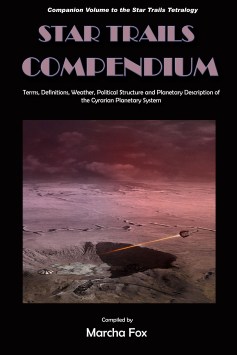
Since this background information is often already written up, or could be relatively easily if it’s parked in your brain, it’s worth it to do some editing and get it into ebook form.  Print form works, too, since these books are usually short and make great giveaways or ultra-inexpensive samples.  As expected, the cover is the most expensive element of a book, so they might not be as cheap as you’d expect, but usually your cost will be around $2.  For example, my Star Trails Compendium, which is 135 pages long, costs me $2.48 while The Sapphiran Agenda is only 29 pages but $2.15.

Backstories work well for giveaways and teasers, both before and after a book is released.  My Star Trails Tetralogy series has two, which are free on Smashwords and its outlets and 99c on Amazon.  The Star Trails Compendium comprises all the terms, definitions and cultural background information for the series while The Sapphiran Agenda is a true backstory for a minor character, Thyron, who’s a flora peda telepathis, i.e. telepathic walking plant.  Many readers noted he was their favorite, though at least one found him annoying, demonstrating how you never know how they’ll be accepted.  Thyron has at least one more story to tell which I hope to have out soon.

Put backstories to work for you to gain new fans, retain old ones, and provide short samples of your writing style.  Short reads are popular these days as well, even having their own category on Amazon, which further increases their appeal and potential for finding new readers.  Whether you’re in the middle of a lengthy novel, between books or perhaps stuck with a case of writer’s block, these gems can be fun and easy to write and provide a means to maintain contact with your existing fan base.  If you need ideas or examples, feel free (literally and figuratively) to check mine out at the links below.

StarTrailsCompendium copy

The Star Trails Compendium

Pageflex Persona [document: PRS0000039_00005]

The Sapphiran Agenda

Top image copyright 123RF


Cat That Swallowed More Than a Dozen Hair Ties Saved After Emergency Sugery | petMD

This is so true!  My cat, Ophelia, nearly died after eating a piece of a leather shoelace.

Hair ties always seem to have a way of disappearing.

Source: Cat That Swallowed More Than a Dozen Hair Ties Saved After Emergency Sugery | petMD

Laser cloaking to hide Earth from aliens? | EarthSky.org

Actually, I think this is too little, too late.  LOL.

—-

If we wanted to hide Earth from alien civilizations, could we do it? Apparently, we could, according to new work by two scientists at Columbia University.

Source: Laser cloaking to hide Earth from aliens? | EarthSky.org

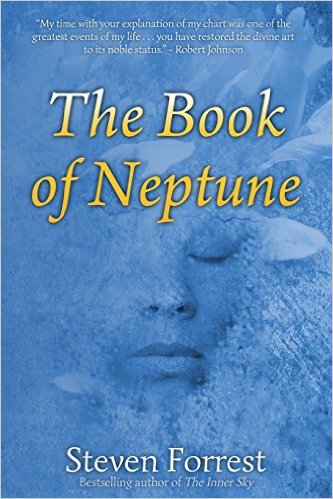
Review of “The Book of Neptune” by Steven Forrest

bookofneptunecover

[NOTE:–To get the most out of this book requires at least a rudimentary knowledge of astrology.  This need not be extensive, but should include knowing Neptune’s sign and house position in your natal chart, any aspects between Neptune and the other planets as well as where he currently resides in sign and house placement by transit.  A transit, for those of you unfamiliar with the term, refers to the current zodiacal location of a planet or other cosmic entity, including any aspects it forms to a planet in your natal or some other astrological chart, of which there are too many to get into here.  You can obtain this information for free from astro.com.  Once you have that, you’re all set to apply the information Forrest has provided in this outstanding book.  If you’d like to learn astrology’s basics, I recommend my own book, “Whobeda’s Guide to Basic Astrology”, which contains what I would have liked to have found when I was first learning about this ancient discipline.]

Even though I’m a professional astrologer myself, I’d been struggling with a Neptune transit for three years as this bad boy aspected first my ascendant, then Mars, then my Moon.  Neptune’s influences are often elusive while contributing to a foggy, lazy, dreamy, ungrounded feeling.  This was entirely foreign to me, though I must say it has certainly lent me a tremendous dose of understanding for those who are programmed that way.

As someone with a Capricorn Sun, Virgo ascendant, and Gemini Moon, everything about it was contrary to my basic cosmic imprint.  For those of you out there who are fellow astrologers, I’ll point out that my progressed Sun has been in Pisces for over a decade, which has been uncomfortable as well, but these Neptune transits have been like weathering a tsunami in a leaky boat whereas before it was simply a matter of being afloat in a swimming pool on an air mattress.

Needless to say, I was very uncomfortable with it, and some of my fellow astrologer friends, who are more familiar with these energies, tried to help, but the main thing they accomplished was only to convince me I wasn’t losing my mind.  Which reminds me, delusions and numerous forms of insanity are in Neptune’s domain along with drugs, alcohol and all forms of escapism.  Fortunately, one of those peers, who is also a close friend, was aware of this book, told me about it and I immediately bought a copy.  It’s a considerable understatement to say that I’m glad that I did.

Prior to Neptune swamping me with other-worldly, space cadet ditziness, I’d been an organized, disciplined, responsible, hardworking person.  Now I couldn’t stay focused to the point that if I hadn’t realized it was Neptune, I would have been deeply concerned that I was developing Alzheimer’s.  I kid you not.  As the cosmic surfactant, Neptune tends to dissolve what he touches, and I believe that includes your brain.  Not surprisingly, the god of the deep is associated with loss, disappearances, deception, psychic phenomena and abilities, spiritual experiences such as enlightenment and so forth.

To sum it up, Neptune left me in a state best described by WTF?  I advise my clients that there’s always a positive side to any transit, no matter how grueling, but I was having serious difficulty finding anything about this one that was useful.  The usual approach with a transit is to identify it, then direct that energy to something productive, yet I had never been less productive, more confused and generally feeling as if I were adrift in the ocean with no land in sight.  I had never felt so lost.

Then I was fortunate enough to get a copy of Forrest’s book and I must say that he nailed it.  He starts out by explaining Neptune’s realm, on the edge of the solar system, beyond which lie Pluto, Eris and possibly other planets or minor planets, the domain of comets and then interstellar space.  It’s an area filled with mystery and the unknown, so it’s no wonder it’s unfamiliar to someone who’s practical, logical and responsible by nature.

In describing Neptune’s effect when connected with the other planets, Forrest provides both the “Light Side” and the “Dark Side.”  This is tremendously helpful because sometimes with Neptune it’s not easy to tell which is which.  For the twelve houses, he provides snapshots which include an overview, significant quote and a sentence or two regarding “Leaking Energy” as a preface to several pages of in-depth explanation.  This is particularly helpful if you’re desperate, as I was, so you can grab the highlights before diving into the book as a whole.  He discusses loss, often experienced during a Neptune transit, as well as navigating those murky waters in a positive way.  He talks about synchronicity, which is typically ramped up during this time, both of a favorable and less favorable nature.  His section on how the zodiac sign Neptune resided in influenced the music for different eras is fascinating, as is his journey through history, recounting key events that occurred when Neptune was previously in his home sign of Pisces, as he is now.

As an astrologer, Forrest’s books have provided me with a much deeper understanding of Neptune’s influence than I had before.  It helped me understand numerous things which have occurred during this period and provided excellent ideas for dealing with them and channeling that energy that will contribute to my personal evolution in a positive way.  I feel as if he has thrown me a life-jacket when I needed it most, the fact this book came into my hands at this time an example of the synchronicity he describes.  It also makes sense that in the past few months I’ve become involved with a local astronomy group that conducts star parties every month where I’ve had the opportunity to look into Neptune’s realm, now understanding why this experience has felt so profound.  Somehow gazing out into space helped me feel more grounded.  Now I understand why.

If you feel as if you’ve lost your footing, are sinking in quicksand or adrift on a large body of water with no land in sight, there’s a good chance that Neptune is involved.  If that’s the case, I can’t recommend this book highly enough.  The price is a far cry less than a psychologist, especially one who doesn’t augment his or her practice with astrology.  It has not only provided me with the answers I was looking for, but made me a better astrologer who can be more helpful to any of my clients going through Neptune’s often dark and mysterious waters.

You can pick up a copy of Steven Forrest’s “The Book of Neptune” on Amazon here.

After 350 Years, Researchers Prove Huygens was Right

I suppose in some way I’m not sure what the point of this was, but it does show that Huygens was on to something.

In 1665 Christiaan Huygens discovered that two pendulum clocks, hung from the same wooden structure, will always oscillate in synchronicity. Today, researchers present the most accurate and detailed description of this ‘Huygens synchronization’ to date.

Source: After 350 Years, Researchers Prove Huygens was Right

Give me five minutes and I’ll give you Saturn in 2016 | EarthSky.org

Saturn looks absolutely amazing through a backyard telescope!  This summer would be a great time to find out where your nearest astronomy club is located and whether they have star parties for the public.  In a few months five planets will be visible at once in the night sky, which will be an awesome experience for young and old alike.

Learn how to identify Saturn for the rest of 2016.

Source: Give me five minutes and I’ll give you Saturn in 2016 | EarthSky.org