Here’s another sky watching hint, this one for finding the hare and dove at Orion’s feet.
—
Two meek animals seem to cower at the feet of the constellation Orion the Hunter. They are Lepus the Hare and Columba the Dove.


Here’s another sky watching hint, this one for finding the hare and dove at Orion’s feet.
—
Two meek animals seem to cower at the feet of the constellation Orion the Hunter. They are Lepus the Hare and Columba the Dove.
I have recently returned to my first love, astronomy, and am doing some sky watching. Here’s some useful information for finding Gemini. Where I live there are so many stars that it’s difficult to find some constellations! This should help if you can find Orion, which is usually pretty easy.
—
Several ways to find the constellation Gemini, plus some of the sky lore and mythology associated with this constellation.
What a totally irresponsible person much less doctor.
—
A doctor convicted of murder for prescribing ‘crazy, outrageous amounts’ of painkillers that left three patients dead could get life in prison at her sentencing scheduled for Friday.
Source: Doctor Faces Life Sentence for Over-Prescribing Painkillers
Moving toward practical applications for quantum entanglement!
—
For the first time, scientists have entangled four photons in their orbital angular momentum. Leiden physicists sent a laser through a crystal, thereby creating four photons with coupled rotation. So far, this has only been done for two photons. The discovery makes uncrackable secret communication of complex information possible between multiple parties.
Amazing what you can do when you understand certain principles and laws of physics!
—
Of all of Saturn’s rings, the B-ring is the most opaque and most massive. In fact, it’s the most opaque ring in the solar system, according to NASA. But it’s not well understood. Researchers reported their results from “weighing” the B-ring’s opaque center for the first time. They achieved the feat by analyzing the ring’s spiral density waves, which are created by the gravitational forces from both Saturn’s moons and the planet itself.
Source: Stepping on the Scale: Scientists “Weigh” Saturn’s Most Massive Ring
Especially for you X-Files fans!
—
Last month, the CIA highlighted 10 documents that “The X-Files” characters Agent Fox Mulder and Agent Dana Scully would find particularly interesting.
Source: CIA Highlights UFO Documents “The X-Files” Characters Would Love
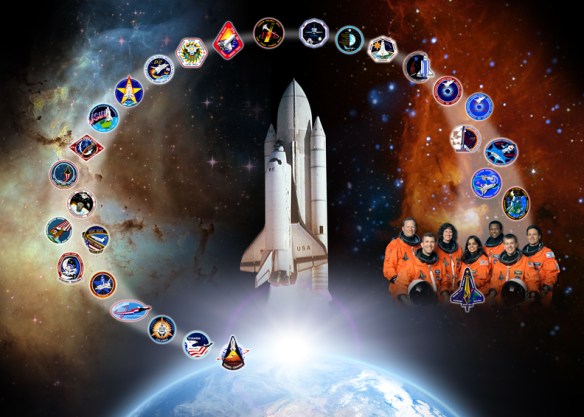 It was Saturday and I was home in the midst of a cleaning frenzy. Since it was my grandson’s tenth birthday, my plans for the day included joining family members to celebrate that occasion. I was wearing ratty workout clothes, planning to get on my stair-stepper after I finished vacuuming. Periodically, I’d pause to look out my north-facing French doors that led to my patio to check for Columbia’s plasma trail, which was supposed to be visible from where I lived in Houston. I’d seen entry emissions from previous shuttle flights which were truly spectacular, contrails on steroids, that split the sky and sparkled in the Sun.
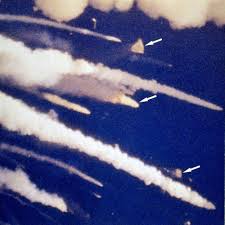
Seeing nothing and blaming the various buildings obstructing the view, my vacuuming continued, which prevented me from hearing the telephone. Needless to say, the person called back, I believe three times, until she reached me. It was our database manager, letting me know what had happened, and that she was on her way into the office to lock down the files, a critical part of our contingency plan. In shock, I quickly followed, bag lady attire notwithstanding, arriving at my office on the sixth floor of JSC’s building 45 to find a very somber group of coworkers, likewise stunned by the events that February morning in 2003 when Columbia broke up on entry over Texas skies.
 I managed the Payload Safety Section at NASA’s Johnson Space Center. Our responsibilities included making sure that anything that flew onboard the shuttle didn’t present a safety hazard, mostly through the institution of various controls. Whatever had caused the accident, we were reasonably sure that it wasn’t one of our payloads. It was a Spacehab flight, a module secured in the cargo bay that was a habitable area where astronauts conducted entire suites of life science experiments. That meant there were no satellites onboard with potentially dangerous inertial upper stages, a.k.a. booster rockets to take them to their proper orbit, which could have possibly been the problem.
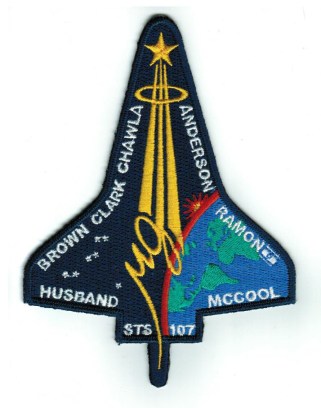
Nonetheless, the recovery team needed to know what was on the manifest that could be toxic and present a hazard in any possible way, not only for those conducting the initial search, but civilians who lived in the debris field as well. Thus, those members of my team of engineers who had payloads for which they were responsible on that flight, which was designated as STS-107, needed to come in to compile a list of such items including batteries, pressure vessels, and radioactive or toxic materials. What surprised me was that it wasn’t only those engineers who came into work, some from considerable distances. Each wanted to know what they could do to help, which, as it turned out, wasn’t much at that point, other than to be together in our shared grief.
 Not everyone came in, some simply called in to make sure they weren’t needed, but I’ll always remember those who did. These were the ones whose hearts were in their jobs and dedicated to their place in the space program. It wasn’t just a job, it was their life. I was a contractor as were the engineers who worked for me, but there were a few who were actual NASA civil service employees who reported to a NASA lead, to whom I also reported. This particular individual, who professed to be an expert on NASA history and lived only a few miles away, didn’t bother to come in that day. He was home painting a room inside his house, which he apparently deemed more important. I called him several times, reporting our actions, appalled at his flippant attitude as well as his absence. How could someone who was supposedly a history aficionado stay away on such an occasion? I wonder how he feels about that decision today.
Since the shuttle had broken up over Texas, it left a huge debris field that covered 2,400 square miles which stretched from eastern Texas to western Louisiana. I eventually joined the recovery team in Hemphill, Texas, an experience I recounted a year ago which you can find here. What I’m going to talk about this time is what caused this tragedy, which sadly enough, began with the Environmental Protection Agency (EPA).
The cause of the accident was caught on various technical films of the launch, when a suitcase-sized piece of foam insulation covering the huge external tank broke loose, damaging the leading edge of one of Columbia’s wings. The force and extreme heat generated by atmospheric entry thus was able to penetrate the structure and ultimately cause the entire vehicle to break up. So how does this relate to the EPA?
 One of the chemicals used to create the foam insulation had recently been banned by the EPA. While NASA could have applied for a waiver, they wanted to be compliant, which is certainly honorable enough. However, they couldn’t find a substitute that resulted in the same integrity of the material. Thus, the new formula resulted in losing chunks of foam. This substance was light, yet needed to be extremely durable. While you may wonder how being hit by something even lighter than the memory foam most of us now enjoy in one form or another, when it was going at launch ascent speeds of approximately 500 mph, the impact was considerable and enough to damage the wing’s composite structure.
But that’s only part of the story.
The shuttle program had always known, even before the formula change, that foam loss presented a catastrophic hazard, which was documented as such. Yet, this had occurred numerous times prior to the Columbia accident, resulting in no serious problems. Thus, the issue was largely dismissed as a non-safety problem, provided the chunks were below a certain size. But there was no guarantee that would forever be the case.
If you read my blog a few days ago about Challenger, this should sound familiar, a game of aerospace Russian Roulette, where a hazard with lethal potential had been dismissed because it had not yet reached its catastrophic potential.
Needless to say, anyone in the space business can’t obsess on it being 100% safe. Driving to work each day can’t be given such a guarantee. Life, by its very nature, is a risk. It’s not a simple matter. While NASA addresses safety, it’s not always the top priority. Money is a big consideration as well for NASA, who has to compete with numerous other federal programs for a mere pittance compared to the budgets of other agencies.
Nothing is simple. It didn’t help at that time that Bush appointee, Sean O’Keefe, who was the NASA administrator at the time of this accident, had absolutely no technical background but was indeed a high level bean counter who prioritized budget issues. Furthermore, while we were still in what is known as “return to flight” mode or RTF, which is the time when an accident is fully investigated and fixes proposed to preclude a recurrence, President George W. Bush announced we would return to the Moon and eventually go to Mars!
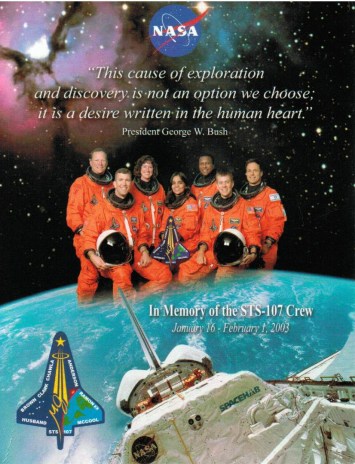 WTF? We were appalled. I suppose he wanted to show optimism and faith in NASA’s ability to recover. But for those of us at NASA, who were already stressed enough trying to fix the shuttle program and maintain the International Space Station (ISS), which was now totally dependent on our Russian and European partners for transportation, this was the last thing we needed. Then, of course, years later came an administration change and Moon/Mars was zapped, much as Reagan’s Space Station Freedom was initially cancelled by Bill Clinton, only to be resurrected some years later as the ISS. Some things never change. Most of us remember John F. Kennedy’s declaration to go to the Moon. Clearly subsequent presidents wanted a similar legacy. At this point, Reagan’s is the Challenger and Bush’s, Columbia. No wonder Reagan wanted Space Station Freedom and Bush wanted Mars!
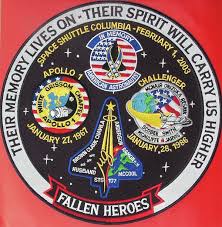
Space and politics is as volatile as the hydrogen and oxygen mix used as rocket fuel. As a safety insider, it’s easy to see how the system failed, not only in the worst case scenario of “loss of life and vehicle”, but in principle as well. It was well established that the most dangerous times of a shuttle flight were takeoff and landing. At this point, NASA had lost a vehicle during both of these critical mission phases. Safety processes which involved requirements, inspections and rigorous reviews at multiple levels were in place, yet the unspeakable still happened. Twice. Each taking the lives of seven brave, intelligent and courageous men and women. And now, with the space shuttle retired, the USA no longer has an independent manned space program. We’re entirely dependent on Russia to transport our astronauts to the ISS. Is this good or bad? International cooperation or another game of Russian Roulette?
 There are no easy answers. A plethora of international political implications exist for space exploration, many of which relate to countries and individuals we can’t even trust to share our neighborhoods, much less our planet or low earth orbit. Space weapons have an incredible advantage with tremendous destructive capability. This implies government involvement coupled with diplomacy are indeed necessary. Budgets and safety will inevitably clash. “Rocket science” technology based on propulsion remains quite primitive, something that’s been around for thousands of years. Whether or not you believe in UFOs, there simply has to be a better way. Seriously. Yet, on the other hand, Earth herself is vulnerable to attack from a rogue asteroid or comet. Space weapons could offer protection from cosmic annihilation as well as threats from our fellow humans.
Nonetheless, we have enough problems here on planet Earth. Big problems, including the irrational and often deadly behavior of numerous factions who make Darth Vader look like Mahatma Gandhi. We’re inspired by films such as Star Wars, The Martian, Interstellar and numerous others, but getting there is another story. I’ve been a space nut my entire life, involved with the stars and planets in multiple, diverse venues. My goal as a science fiction writer is to inspire today’s youth to pursue careers in physics, engineering and math. But in today’s world is that really the right direction?
At this point I wonder if maybe we need to fix Earth’s problems first, before transporting them into space. Maybe the nature of man simply isn’t ready to leave our planet, much less our solar system. There are no easy answers. Only questions.
More info on that massive planet that might be out there.
—
Claims about new planets that turned out to be wrong – and why ‘Planet Nine’ may be different.
Your astronomy lesson for the day: Red Giant Stars
—
Someday, the star Betelgeuse will run out of fuel, collapse under its own weight, and then rebound in a spectacular supernova explosion. Someday … but probably not soon.
Source: Star of the week: Betelgeuse will explode someday | EarthSky.org
One of my favorite subjects–time!
—
New research from Griffith University’s Centre for Quantum Dynamics is broadening perspectives on time and space. Associate Professor Joan Vaccaro challenges the long-held presumption that time evolution — the incessant unfolding of the universe over time — is an elemental part of Nature. She suggests there may be a deeper origin due to a difference between the two directions of time: to the future and to the past.
Source: Bringing time, space together for universal symmetry
 Marcha's Two-Cents Worth