Unknown's avatar

About Marcha's Two-Cents Worth

I'm a science fiction author of the Star Trails Tetralogy, retired after two decades working at NASA, defected from my physics training to become a professional astrologer, and various other acts of rebellion. More recently, I've teamed with Pete Risingsun in writing "The Curse of Dead Horse Canyon: Cheyenne Spirits" which was released in July 2020 with more to come.

6 More Tips for Serial Writers

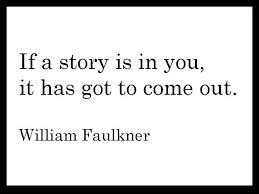
faulknerquote

Most of the tips in my previous post for serial writers were picked up from reading and beta reading the works of others. Afterwards, I realized that I’d learned quite a few things that were also worth passing along from writing my own tetralogy. These comprise either things I did that helped the process or I wish I’d known as opposed to figuring out the hard way. So, without further ado, here are a few more tips for those of you working on a story that refuses to end.

1. Read any previous volume(s) to assure consistency. Some details such as the color of a minor character’s hair or eyes can easily be missed, yet picked up by an astute reader. Trying to explain that Edith’s eyes are blue in certain light and green in others is somewhat lame, so it’s best to avoid it by being accurate. If you keep a file on your characters that includes such details it will simplify things later. Quite frankly, I don’t, but believe me, I will next time because it can be time-consuming and a real pain to hunt down later. Of course, while you’re reading, you can note these things, too, which is part of the point.

The best part of rereading the stories that precede you current work is you can usually find some seemingly small details that you can tie in. This is especially true when you’re wrapping everything up at the end. Fans in particular love this sort of thing and it may even drive them to go back and reread the earlier stories as well. Some of them may actually function like an inside joke. If you know anything about fandom you know how dedicated fans thrive on such things.

Assuming you have print copies of your book(s), using sticky notes or page markers works best. If you want to get fancy, you can even color-code them for different types of information. I was amazed and delighted at how some of the seemingly simple details in previous episodes related to the grand finale.

Also note how your style may have changed as your story unfolded, especially if the first one was your debut novel. (See the section in my first “Tips for Serial Writers” blog entitled “First the Worst, Second the Same…” for more on that.)

2. Use flashbacks, albeit brief, to tie in past events from previous books. Important events that ripple over into subsequent volumes should be recapped to refresh the memory of those who read previous works but did so long enough in the past to need reminders. It also puts things in context for new readers who may be reading the episodes out of sequence. These don’t have to be long and drawn out, which will bore your fans, but enough to get them back on track. Prologues can sometimes be used in this way as well.

father3

Flashbacks add depth as well as context.

In some cases, if your serial is complete, readers may start with volume one and blow straight through, especially if it’s a box set, but there’s a good chance that other books may have intervened or perhaps time, dimming their memory. If it’s not yet complete, it’s even more important. If a reader feels lost, it pulls them out of the story and they’re likely to be frustrated, which is one of the last things you want to do. If they wind up scratching their head or digging through previous books to find the event in question, unless they’re madly in love with your story they may toss it aside and pick up something else. Once they stop reading there’s always the chance they won’t be back. Confuse ’em, you lose ’em. Not good.

3. Timing is Everything. Serials are usually sufficiently complex to involve numerous characters who grab the spotlight from time to time and thus the point of view (POV). Keeping the timing correct can be a challenge, especially if coincident scenes are not written in sequence and have to be integrated later. I tend to write a scene when the idea arrives so I have all sorts of things to pull together as I attempt to wrap up a single volume, much less the entire serial. If you maintain a detailed outline, it helps, since you can insert POV excursions accordingly.

Mapping out key events visually is helpful, using project management software the ideal, but often unfamiliar or unavailable. The last thing any author needs is a stiff learning curve on a software package when they’re writing a novel. Using Excel is the next best option, the timeline broken down to suitable increments, whether hours, days, months or years. These go across the top with each column representing a unit of time. Events are listed in the rows below with the proper time element highlighted. You can do this by hand if you prefer; graph paper makes it a little easier.
typewriter

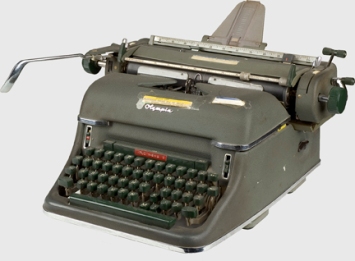
My first two novels were written on a typewriter that looked a lot like this one.

This can be done out of sequence if that’s how you write, either by inserting a row if everything is in order or organized later based on event timing, which is shown where time marks overlap. Including a column that contains the chapter number right after the first one with the scene description can be used to sort them as well, which also reveals any that need to be adjusted.

I remember seeing a comment from an author one time regarding how difficult it was to keep track of plot action occurring in different time zones. I laughed. My tetralogy involved coordinating events on different planets, spacecraft affected by Einstein’s theory of special and general relativity, and even time travel itself as my story shifted amongst the various characters. Keeping everything in the proper sequence to maintain story continuity was definitely a challenge. Again, Confuse ’em, you lose ’em. Remember that. Not all readers have the patience to read on with literally millions of other books begging to join their TBR list.

4. Insights regarding how your characters have evolved. How a character changes in a story is important, a key element, in fact, to good fiction. In a serial this may be a gradual process, perhaps so much so that the reader doesn’t notice. It doesn’t hurt to remind them using internal dialog on the part of the character(s), as an observation by another character in thought or dialog, or even in the narrative. For example, something as simple as “Before arriving in New York, Patsy was afraid of crowds, but now she navigated 5th Avenue with confidence” does the job.

5. Include the fate of all characters, not just your protagonist. You never know who’ll be a reader’s favorite character. I was surprised how many of my readers favored Thryon, my telepathic walking plant. Thus, you need to make sure everyone’s exit, whenever or however it occurs, provides closure. Don’t simply leave them behind. Characters who ride off into the sunset can also provide fodder for spinoffs.

6. Expect to miss your characters, who by now have become old friends. You may want to consider leaving things open enough at the conclusion to allow for spin-offs. Fully developed characters are just begging for another appearance. You know them as well, maybe even better than your own children or best friend, so if they’ve earned fans along the way, consider using them again. On the other hand, if you’re bored with them, readers may be, too, so this is not something that’s required or should be forced. Back stories are often at least partially written and can be put together for a quick short story that you can use as a giveaway enticement in your marketing efforts. Back stories are also great for holding readers’ interest until the next episode is released if it’s taking you a while to get the next one together.

Pageflex Persona [document: PRS0000039_00005]

It was fun writing this back story to my tetralogy which kept fans engaged and also served as a hook for new ones.

I’ve found that my short stories evolve into novels and my novels apparently evolve into a serial. Go figure. I simply get bombarded by ideas too good to leave out, especially once my characters come to life and take over the story. Other writers can crank out a single novel or novella in a few weeks or less whereas mine, for various life-related reasons, took years.

Fortunately, readers have a variety of preferences as well, whether it’s a quick “beach read” or something they can get their teeth into. Note that back stories can provide fans with both! My next one will be a spin-off from one of my Star Trails characters, which will hopefully prevent it from likewise expanding. But only time will tell.
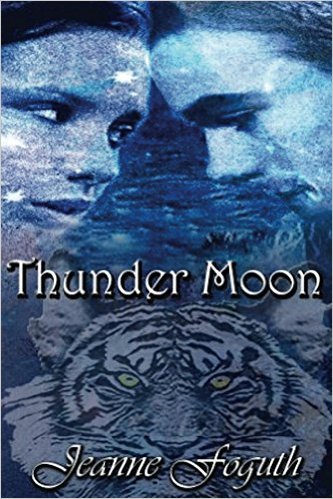
Sci-Fa Epic Adventure: Review of “Thunder Moon” by Jeanne Foguth

thundermooncover

The second volume in Jeanne Foguth’s Chatterre Trilogy, “Thunder Moon”, picks up where “Star Bridge” ends. As someone who’s read all three volumes, but not in order, I highly recommend that they be read in sequence so that the complex plots and character relationships are easier to follow. Each builds upon the other, weaving a fascinating and intricate Sci-fa saga.

In this episode, Nimri’s brother, Thunder Cartwright, is worried the madrox will invade his world unless the star bridge is closed. He borrows his brother-in-law, Larwin’s, environmental suit, and sets out to do so with the assistance of GEA-4, Larwin’s androtic assistant. Meanwhile, Larwin’s sister, Tem-Aki, is looking for her brother, who’s been missing from his world long enough that she’s concerned that he’s dead. (Background on Larwin’s arrival on Chatterre can be found in volume I, “Star Bridge”.)

As you’d expect from any misbehaving and unstable Star Bridge/wormhole, Thunder winds up on yet another world, Kalamar, which is covered with what he fears most–water. Furthermore, he’s severely injured, but fortunately, rescued by Raine, a dragon shepherd, who’s on patrol in her ship, Nambaba, trying to recover a rogue dragon calf.

And thus the fun begins.

As always, the science fiction/fantasy elements of these stories are masterfully integrated as simple matters of planetary diversity. Dragons, a.k.a. madrox, are Chatterre’s mortal enemy, threatening to reduce it to ashes. However, on Raine’s planet, Kalamar, they’re carefully managed, a seeming paradox that further drives the story’s plot and suspense.

Mistaken identities, culture clashes, alien creatures, and a variety of interpersonal conflicts, including sibling rivalry and political intrigue, ultimately explode in this fast-moving, complex tale. The world building is exceptional, particularly with regard to how a human culture would operate on a world comprised mostly of water. Not only are the mundane details addressed, but other intelligent species introduced as well as a convincing and convoluted political structure.

If you like an intricate plot, lots of action and continual suspense with all sorts of surprises you can get your teeth into, then this trilogy is for you. But don’t forget to read “Star Bridge” first and then this one before move on to the satisfying conclusion in “Fire Island.” (Note that all three volumes are “clean reads” suitable for all ages.)

You can pick up a copy on Amazon here.

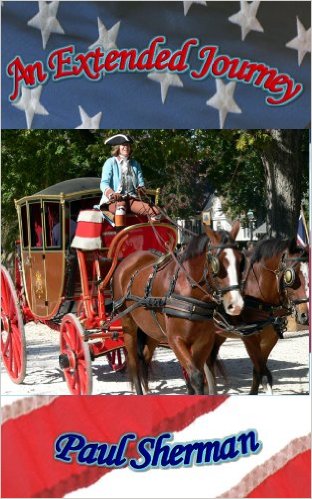
Review of “An Extended Journey” by Paul Sherman

extendedjourneycover2

This exceptionally well-written and flawlessly edited story has everything a good time travel story demands. Note, however, that it’s more fantasy than science fiction since the means of delivery to the past is in the realms of the paranormal. Thus, don’t expect some exotic high tech means to remove the characters from the present time. This detail, indeed, is but a moot point given the tremendous message of this meticulously researched historical novel, but I wanted to throw it out there just in case you’re expecting sci-fi.

More often than not, time travel stories have more of a philosophical theme as they tread the line between fantasy, history and “what if” speculations. I recommend this story to those interested in American History, particularly the period around the Revolutionary War. The author’s research is apparent in the convincing details that take the reader back to another but not necessarily simpler time.

This story features David Dearns and his family which comprises his wife, Monica, and two young daughters, Jane and Katelyn, who are unexpectedly transported from modern times back to Colonial Williamsburg in 1781. The transition is great, given they’re visiting that location in modern times and thus surrounded by numerous individuals dressed in period costumes and buildings that date back to the time of the American Revolution, which is in progress. You can sense their confusion, particularly when they suddenly realize not only where but when they are.

This event was not simply coincidence, however, but clearly a matter of being chosen to accomplish a specific mission at the behest of a mysterious black woman they know only as Aunt Harriet. Their task is to intervene with Thomas Jefferson in a manner that convinces him to end slavery as part of the yet-to-be-written American Constitution. Since I want to avoid spoilers, that’s all I’ll say about plot details so future readers can fully enjoy the story as it unfolds.

There were some areas where the story seemed to drag, but it was so well-written that the slow pace was forgivable. It also served a purpose in establishing the time, place and mood of the times as this 21st Century family gradually acclimates to life in the late 1700s. If you’re a history buff, you’re likely to thoroughly enjoy it. A bit more culture shock would have added to the realism and perhaps picked up the pace in those pages capturing the details of life at that time. The plot action definitely accelerated toward the middle and took off from there with well-sustained suspense.

Historical details were plentiful and expertly integrated. The matter of changing history and the various paradoxes introduced by the family’s presence were addressed in a clever and sometimes unexpected manner, such as the premature albeit inadvertent introduction of modern technology. There were numerous places where I laughed out loud at some of the main character’s witticisms and sarcastic thoughts though his propensity for profanity was a bit troubling and could turn off certain potential readers. Many religious folks have a keen interest in American History and are often more forgiving of an expletive here and there, which is all too common today, than profanity. It wasn’t excessive by any means, and was mainly in the first part of the book, but would have earned a few cringes from various folks I know who would otherwise love the story.

Matters of free choice were suitably addressed and demonstrated the “butterfly effect”, i.e., where one small event institutes major change. On a personal as well as collective level, I’m sure all of us could point to various decisions that could have been made in a more constructive manner given 20:20 hindsight. The decisions of those who run countries certainly affect thousands and even millions and the consequences of bad ones splash on all concerned, many of whom suffer far more than the perpetrator.

As physicist Michio Kaku and various others have noted, parallel dimensions are a possibility included in quantum theory. Some have even speculated that every possible outcome of every decision ever made is represented somewhere, which I frankly don’t buy into. Nonetheless, starting a new track as a solution to time travel stories, e.g., Spielberg’s “Back to the Future” trilogy, works here for the sake of reader satisfaction. I’m not a big fan of historical novels, but the author’s strong writing skills kept me immersed in the story. More often than not, I find my inner editor slipping out while reading which, to his credit, did not occur. Such exceptional writing alone makes this book worth reading.

You can pick up your copy at Amazon here.

Chelyabinsk meteor mystery 3 years later | EarthSky.org

Who knows how many more of these meteors are out there?

It’s been 3 years since the dazzling fireball over Chelyabinsk, Russia, and its aftereffects in 6 Russian cities. Yet scientists still don’t know its origin.

Source: Chelyabinsk meteor mystery 3 years later | EarthSky.org

This date in science: Galileo’s birthday | EarthSky.org

And did he ever stir up a few things or not with his discoveries?  Do you know why he got in so much trouble with the Roman church?

—-

Happy 452nd birthday to one of the first modern scientists, Galileo. With the aid of an early telescope, he helped remove Earth from the center of the universe.

Source: This date in science: Galileo’s birthday | EarthSky.org

6 Tips for Serial Writers

writingprocess

Or maybe, for clarity’s sake, I should say “Writers of Serials”. A “serial writer” could simply be someone who can’t stop writing, regardless of what it is, which fits more authors than I could begin to name. The folks I’m addressing are those of us who love our characters so much and get so enmeshed in our plot that it goes on and on, far beyond the binding of a single book. I admit to this freely, since my supposed single novel quickly evolved into at least a trilogy and ultimately a four volume tetralogy. An argument could be made that this is sheer laziness or ego, but for me there was just so much more story that needed to be told.

Just for the record, there’s a difference between a serial and a series. A serial is one where the basic plot line and story continues, often preceded by a cliffhanger in the previous book. Trilogies are often a serial, as is my Star Trails Tetralogy. Think of them as an epic story told in installments.

A series, on the other hand, may include the same characters, but not necessarily. Each will depict an independent plot or story line, such as the Nancy Drew series. Some series may even be thematic in nature, revolving around similar plots such as romance, romantic suspense, mystery or just about any other imaginable genre, but featuring an entirely different cast.

KONICA MINOLTA DIGITAL CAMERA

Now that we have that out of the way, let’s talk about writing a serial.

If your novel refuses to end because more plot twists, back stories and characters bombard you relentlessly, then you may as well recognize that you’re destined to be a serial writer. Be warned, however, that once you indulge yourself in that manner, you’ll probably never be able to produce a stand-alone story again. This is certainly not a bad thing, but there are a few things that are useful to know coming right out of the gate with that first book. So here are some tips I’ve developed from my own writing as well as numerous others I’ve read.

1. Don’t assume your readers are already familiar with your plot and characters. As an author it’s easy to just plunge forward with your story line, but there’s no guarantee that all readers will be familiar with what has transpired so far. Even if they read the previous book or books, time and numerous other stories may have separated them from yours, so a few quick reminders are always in order. This includes key plot elements leading up to the current problem as well as details such as what your characters look like. You may have them permanently ingrained in your head, but more than likely your readers won’t. In fact, it never hurts to have an occasional reminder throughout any book regarding their appearance. It’s always helpful to give them a certain habit you can throw in here and there that triggers an image as well as makes them more real.

Past events don’t require a long, boring summary. They can usually be worked in easily through character dialog such as a “Remember when?” conversation or short reference to something that occurred in a previous volume. These references can be humorous as well. Readers who remember that particular scene will enjoy the “inside joke” and new readers will feel as if they missed something good and be enticed to go back and read it. It adds depth and life to the characters and their relationships. How often do you reminisce with friends or relatives about important events? Allow your characters the same experience.

If you have an extremely complex plot it can be more difficult to bring new readers up to speed. I have jumped into a serial midstream before and had no problem figuring out what was happening while in others I was entirely lost and never made it through the book. In rare cases, if I was truly hooked, I’d go back and read the initial volumes, but I usually just quit reading and moved on to something else. Others, I read out of order but know I would have enjoyed it more in sequence.

This problem is particularly applicable to fantasy and science fiction stories where a new world or culture is involved. The more complicated the story’s context, the more important it is to fill in the reader and continue to remind them. Again, recaps don’t have to be long and distracting, only sufficient to make what’s going on make sense. Balance is required, of course. Too many reminders or redundancy are frustrating, too. This is where it’s great to have input from beta readers, including some who have not read the initial volumes.

2. “First the worst, second the same, last the best of any game.” I remember my kids chanting that little ditty as rebuttal when they would come in last in a competition, but ironically it can apply to serial writers. All skills improve with practice, which certainly includes everything we put into words, whether it’s another book, a blog, an article, website content or even something as dry as technical writing. The craft of assembling words together continually evolves. Thus, there’s a good chance that subsequent books will demonstrate your improved skills.

This is all well and good, but doesn’t mean that your first one shouldn’t be the best possible product. If it’s not, readers are less likely to continue on with the story. If you’re a new writer, this requires extra effort to make sure that first tome is in the best possible shape. This is likely to involve some investment on your part in a good editor as well as a professional book interior and cover designer. In some cases, you may even want to go back to that first one at some point and refine it, using your improved skills. I will be doing that for the first book in my tetralogy which has garnered a couple bad reviews due to missing commas. I felt a whole lot better about this when a friend and fellow author admitted she was also re-editing volume one of her series.

3. Avoid over-populating your story with extraneous characters. If they don’t move the plot along, then they don’t belong and usually shouldn’t be named. Too many people milling around in a book can be as confusing as going to a party where you don’t know anyone and are trying to learn plus remember everyone’s name much less what they do for a living. Red herrings may require a few people who pass quietly into oblivion, which is an entirely different situation. If you’re going to have a cast of thousands, then at least introduce them gradually and give the reader a chance to connect with each one individually before bringing in too many others. Once they’re all established, then it’s okay to have a massive group scene or discussion.

Which reminds me of another thing to avoid, names that sound or appear too similar, such as starting with the same letter of the alphabet and/or having the same number of letters. You want names that are distinctly different as well as fit the character, which is a subject in and of itself. Being visually distinct applies particularly to making life easier for speed readers. For example, don’t have one person named Horace and another named Hector. Names that are unique also make your character more memorable.

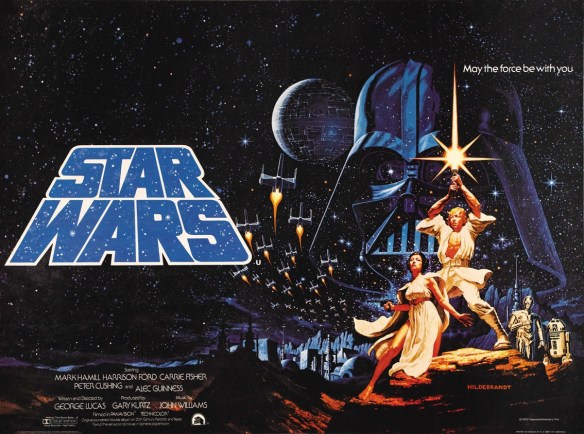
pageheart4. Don’t forsake minor characters from the previous work. Many times the hero or heroine is not the one a reader favors most. Thus, they may be disappointed or downright angry when a subsequent volume excludes him, her or even it. The character may have less emphasis that in the previous episode, but at least allow him/her/it a cameo appearance from time to time or explain their absence. For example, consider R2D2 and C3PO from Star Wars. They were part of the team and you expected them to hang around. In some cases, minor characters can provide a bridge to new major characters as well.

5. Cliffhangers: Pros and Cons. The ideal cliffhanger will make your reader want desperately to know what happens next and thus immediately buy the next book. On the other hand, they might be annoyed, feel cheated, and move on to more self-contained novels. Readers’ tastes vary tremendously, not only with regard to genre, but length. Some may be too ADHD to make it through a full length novel much less trilogy while others thrive on something they can get their teeth into. If you’re writing a serial, then you can always hope for fans like those who loved Harry Potter so much they’d stand in long lines at book stores awaiting the release of the next episode.

A cliffhanger that leaves one or more characters in dire straits with no obvious way out can be particularly annoying, especially if the sequel isn’t written yet! If the reader has to wait for months or longer for the sequel, you run a huge risk of losing them along the way. No matter how much they loved your story, once that time has passed there’s a good chance they will have all but forgotten it. Of course this is why you want to engage your readers, get them on your mailing list, tease them with excerpts on your Facebook page and so forth. If you have a great following, this may not be that much of a problem, but if you’re a new author it could be.

angry_girl_reading_bookHowever, for reader satisfaction, it’s often a good idea to at least provide some semblance of closure for the book at hand while leaving enough unanswered questions to entice them to continue on. Don’t drop them like a bad habit in the middle of an adrenaline rush. Put yourself in the reader’s place for a moment and consider how you react to such an ending. I think doing so may be fun for the author but painful for the reader. Maybe evoking an emotional reaction will make your book more memorable, but if it’s anger they may not come back. I always rank a book that can make me laugh or cry higher than those that don’t elicit a reaction. Emotional reactions stay in your heart (literally) as opposed to your head and thus will make your story more memorable, but it’s better to do this via lovable characters than irritating endings. I can still remember books I read decades ago that made me cry or laugh.
I’ve read the first volume of numerous stories, yet never made it to the sequel for several. Sometimes it’s simply a matter of time. As an author I do a lot of reading, editing and beta-reading for my peers which means I often don’t have the time to read something just because I want to know what happens. I have time for very little of what I would call “recreational reading.” How much I care about the characters is a big driver on whether I make it back for a sequel, but I have to admit if the plot is intriguing enough, I’ll want to know what happens even if I’m not thoroughly attached to the people involved. Another factor is length. If the episodes are more in the novella range as opposed to making “Gone With the Wind” look like a beach read, I’m more likely to make the time to read on.

6. When your serial is complete, consider making it a box set. Once my tetralogy was complete, I made it into a box set for both the print and electronic versions. This can have grand appeal to those who favor lengthy stories and of course minimizes the cliffhanger dilemma. It also gives you another opportunity for a big release party! I’ve been more than pleased with how well Star Trails has done as a set compared to the individual books.

In conclusion, I must say there’s tremendous satisfaction in writing a serial. Your characters continue to flesh out and assume a life of their own, often to the point where they virtually write the story for you. Mine got themselves into a variety of fixes, many of which I had no idea how they could possibly be resolved, until my characters themselves came up with the answers on their own. I must say that wrapping it all up was bitter-sweet, yet satisfying.

blackboard_writer2If you’re headed in the serial direction, or even just starting your first story, I highly recommend being a beta reader for other authors, which has taught me so much. We’re often blind to our own weaknesses until they glare at us from another’s work. I can’t begin to count how many times something has jumped out at me in someone else’s story, only to realize that I was guilty of the same faux pas.
Authors tend to be voracious readers, which is highly advised since it provides a wealth of information, if you but tune into it. This may take some of the enjoyment out of reading, but the writing lessons are worth it. One of my favorite sayings, No life is never wasted, you can always serve as a bad example, also applies to numerous works of fiction we’ve all encountered, especially in the Indie world where competent editing may be lacking. Needless to say, you don’t want your baby to be in that category.  Ironically, there’s more to be learned from bad writing than that which is so well-written you’re entirely immersed in the story.  Nonetheless, when you find yourself enjoying a book to that level, study it afterwards to determine why it worked so well.

I hope these tips garnered from my experience writing as well as reading the works of others will make your journey as a serial writer a little smoother.

‘The Universe Has Spoken to Us’, Gravitational Waves Discovered

More information on the discovery of gravitational waves.

The National Science Foundation announced that scientists have officially detected ripples in spacetime, 100 years after Albert Einstein predicted the existence of such phenomena.

Source: ‘The Universe Has Spoken to Us’, Gravitational Waves Discovered

A Trip Down Memory Lane to a Galaxy Far, Far Away

star-wars-episode-4-advance-poster

I don’t know if it was the Force, but something definitely awakened this past week when I FINALLY went to see the latest Star Wars episode, “The Force Awakens.” I’ve been a Star Wars fan since seeing the very first one back in May of 1977. I find it incredibly amusing that George Lucas was worried that it would be a flop and kept a low profile for its release, fearing humiliation if it did. Right. A flop that has spanned four generations, at least in my family.

I saw this latest one with my 42 year old daughter, who was three years old when the first one came out. Way back then, I was 29. Now she could take her three year old grandson to see it. That does something to me on so many levels that I’m not sure I can even describe it.

First of all, on an intellectual level, I marvel at anything that maintains its popularity for that long. Of course if you like old movies, you can find them, whether it’s on Netflix, the cheap video bin at Walmart or Turner Classic Movies. But few single titles can sustain that kind of audience. The only one I can think of that might even begin to compete would be “Gone With the Wind” which my mother saw when it was released in the 30s, then I enjoyed and subsequently my children. But it comes and goes, waning and waxing in popularity, whereas Star Wars has NEVER being invisible. In 39 years. Give that some thought.

I’ve always wanted to be a novelist, but I seriously wonder if I’d be writing science fiction if it weren’t for Star Wars. My initial idea for “Beyond the Hidden Sky” came from the opening scenes of that first flick, where R2D2 and C3PO blast off in an escape pod. The first step toward any story is “What if?” and for me that comprised “What if a rebellious teen-aged girl moving from one planet to another with her family got blasted off accidentally in an escape pod?” The result of that premise launched my Star Trails Tetralogy of four novels and a companion volume which number over 1500 pages. I know other authors similarly inspired.

I really enjoyed this latest episode, which was reminiscent in style and energy to the original trilogy. I really liked the new characters, at least the good guys, particularly Rey and Finn. My all-time favorite from the series was “The Empire Strikes Back” and, quite honestly, I wasn’t quite as enchanted by the more recent three. “The Phantom Menace” put me to sleep, actually, and the two after that were so-so, in my opinion. But this latest one resonated, right from the blasting of that iconic theme introducing the now-classic opening crawl. Instantaneously, I was back in 1977.

My eyes tend to water in places like the grocery store and Walmart, plus it’s allergy season here in Central Texas, so it may have only been that effect, which had me wiping my eyes from that point on. I’ve mentioned in a previous blog (see “RIP Columbia: Picking up the Pieces”) how memories are stored in both your head and heart with those that reside in the latter coming back full-force, replete with a physical reaction, when stimulated. Clearly, that’s where my memory of Star Wars resides.

That feeling of being taken back in time, coupled with lightspeed flashes of all that has transpired in my life since 1977, had a profound effect.

Not to digress, though I tend to do that a lot, but I remember reading about a study several years ago where they investigated the effects, if any, on rest home residents when they were exposed to music that was popular when they were young. Interestingly enough, the oldsters figuratively got younger! They acted younger and the physiological indicators such as blood pressure and such improved as well. It’s like when all those old feelings come back, your body responds and reverts to that place in space and time.

Time certainly is an illusion, something I may understand slightly better that some folks since I have a physics degree. I’ve had a tremendous amount of fun playing with such possibilities in my novels. But here on planet Earth, so far we haven’t conquered time. I may have been 29 when Star Wars was first released, but now I’m a great-grandmother. Believe me, I don’t feel that old, and I certainly didn’t feel that old watching Episode VII earlier this week.

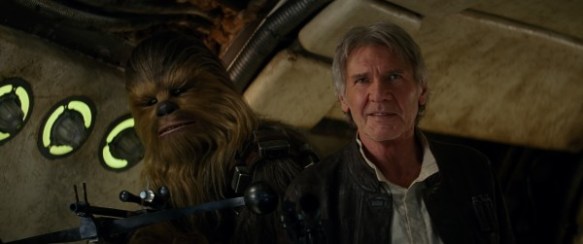
At least I didn’t until Han and Leia came on screen. Seeing them OLD reminded me that I, too, was OLD! How could that be? I was jolted back to the present and that rush of nostalgia slammed through me like decelerating from lightspeed. I tend to be pretty hard on myself, expecting to look and have the energy I did when I was say, well, to be reasonable here, even 50. After all, I don’t feel that old inside my head. But I am. I look it, no matter how much I try to deny it, and my body feels it, particularly my right knee which functions similar to an odometer.

hanandchewie

Yes, something happened when I saw Han and Leia in all their 60s glory. Time marches on and waits for no one.

Will this movie have a similarly profound effect on me like the first one? Maybe. It’s made me acutely aware that time is not standing still. If there’s anything I want to do before I die, then I’d better figure out what that is and get to it. I’ve already been reminded of that a few times recently when contemporaries of mine have passed on, which is starting to happen with increasing frequency. It’s time to forget about the things I didn’t do in the past 39 years and concentrate on what I want (or could) to accomplish in the years I have left.

They say that your life flashes before your mind’s eye when you die. Perhaps compressing 39 years into a nanosecond was a freebie from the Universe, reminding me that time, indeed, does not stand still. I remember a similar feeling the first time I heard “Sunrise, Sunset”, that sentimental song from “Fiddler on the Roof,” back when my children were still young. Now they’re all grown and even their children are grown or will be soon. It’s incomprehensible that I have a grandson in the U.S. Marines with two others married and having children of their own.

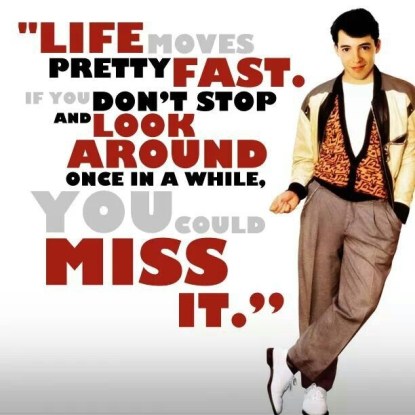
buellerquotePerhaps Ferris Bueller said it best when he declared “Time moves pretty fast. If you don’t stop and look around once in a while, you could miss it.” That was in 1986, a mere 30 years ago. Matthew Broderick is no spring chicken these days, either.

OMG, where has all that time gone?


Gravitational waves detected! | EarthSky.org

It’s so cool that this is the 100th anniversary of Einstein’s theory of general relativity, which predicted these waves.  The technological advancements this will open up are mind-blowing!

We can now detect gravitational waves, says LIGO. Unanticipated discoveries, unexpected marvels, ahead.

Source: Gravitational waves detected! | EarthSky.org

U.S. Southwest is drying | EarthSky.org

So far in the past six months or so it looks as if the drought here in Central Texas is easing but it doesn’t look so good for these other areas.

Researchers identified 12 weather patterns across the region. Over the past 30 years, the 3 patterns bringing rain to the U.S. Southwest became less frequent.

Source: U.S. Southwest is drying | EarthSky.org