Today’s Writing Tip

blank copy

Think for a moment which stories you’ve read that are the most memorable. If you had to pick a favorite for the last year what would it be? What was your favorite story as a child? Now take it a step farther: Why?

A well-written story takes you to another world, into “the zone” if you will, where you can at least temporarily escape the mundane. It may be somewhere in the past, in a world that only exists in the imagination, or full of thrills and excitement. Your favorite genre will provide you with a clue regarding what you crave to experience, albeit vicariously. Think about that old advertisement from years past that left you with the words, “Take me away, Calgon!”  Where would that be?

The next time you’re loving a story, one you hate to put down, when you step back to reality think about why you find it so appealing. Which part of you does it strike with a responsive chord? Understanding what you like in a story can help you enhance your own with similar traits. Is it strong characters? Exotic settings? A complex plot? Excitement your own life lacks? Details that make it come alive as opposed to strictly action and dialog?

The next step is to apply similar characteristics to your own writing.

Welcome to the WATCH “#RWISA” WRITE Showcase Tour! #RRBC #RRBCWRW

Blog Tour Banners

Welcome to our tour! Each day this month I’ll feature a writing sample from some of the incredible authors who are members of this elite writing group. To learn more about them and their work, follow the link at the bottom of the page. Today’s featured author is Laura Libricz.

laura-libricz

The Protective Plague

By Laura Libricz

From the Overlord’s house came a quiet but vicious argument. I walked past the stately, tiered structure, decorated with wooden carvings. The other houses circling the town square stood quietly: the midwife’s red wooden house built up on stilts; the ironworkers’ blue housing complex and their adjoining workshop also built on stilts; the dark-brown community building, windows tightly shuttered.

I set my basket down in the middle of the square. The fountain marking the village center bubbled behind me as a mouse scurried around its stone base. The door of the Overlord’s house slammed open and he appeared on the top step. A woman’s sobs came from inside the house. He raised his nose to the sky and sniffed at the air, his black, wiry hair standing on end. He approached the fountain, his black woolen cape fluttering behind him.

“The weather has changed,” the Overlord said.

“You notice such things, Master?” I asked. “Today is the Turn of the Season; coupled with the full moon.”

“Yes, that is why you tie those wreaths of herbs,” he said. “Silly old traditions.”

“We will burn them at sunset on the Field of Fruition. These old traditions give the people comfort.”

“Your traditions have no power,” he said. “This year we initiate my new ritual. The One True Deity is not appeased with burning herbs.”

“What will appease your Deity then, Master? Burning flesh?”

The door of the red house squeaked open. The midwife flurried towards the fountain carrying a spray of reeds. Two red-haired daughters followed behind her. They carried baskets overloaded with sage and wormwood.

“Good day, Master,” she said, dropping her reeds at my feet.

Her black hair, not colored carefully enough, showed red roots at her scalp. I moved between her and the master, hoping he had not seen her hair, and gathered three reeds in my hands. I braided their stalks. Her daughters set the baskets down on the stone steps of the fountain and the midwife pulled both girls to her side.

“The workshop is quiet this morning,” I mentioned.

“The men have crossed the ford to the settlement beyond the Never-Dying Forest. They’ve taken our surplus of food and hope to trade. Years ago, the forest villagers made fabrics.”

The Overlord chuckled. “Foolish men. No one lives beyond the water and the forest but barbarians. They don’t trade, they take.”

I held my braided reeds aloft. “Our petition tonight at the bonfire is to ask for the safety of all villagers involved, whether they come from Forest Village or Field Village.”

“There will be no bonfire tonight,” he said.

As if by the Master’s silent command, the double doors on the community building slid open. Five leather-clad men, adorned with weapons of glinting steel, took two steps forward. Five young women draped with dirty white shifts, hands and mouths bound, knelt behind their ranks. I recognized the midwife’s eldest daughter and the barrel maker’s granddaughter.

“My new Turn of the Season tradition starts today.” The Overlord nodded to the troop. The men grabbed each of the young women under the arms and dragged them into the square. They were forced to kneel on the stone steps by the fountain. The overlord’s daughter was also among them.

“These women will be taken against their will on the Field of Fruition. The One True Deity will come to accept the eggs as soon as they are fertilized. I will summon him. The women and their fruits belong to him. He will exalt them and admit them into his glorious mountain realm.”

I threw my reeds aside. “Our traditions and petitions are based on protecting our villagers, not sacrificing them.”

“These women are ripe. We have prodded them all. The One True Deity will have this offering.”

“Men cannot enter the Field of Fruition at the Turn of the Season. It will bring us harm so close to the coming winter.”

“Your foolish traditions cannot keep the furies of winter at bay. Harm will only come if one of these women becomes pregnant. That would prove her self-seeking nature, her desire to retain the fruits for herself. She will be executed.”

The midwife let out a shriek. The overlord stroked his daughter’s matted hair.

“If she becomes pregnant,” he said, “we will also know she enjoyed the act. She will have defied The One True Deity. Women cannot become pregnant when taken against their will.”

He took two steps forward, his face a breath away from mine. “These women can be saved. Here they are. Save them. Save them now but know this: four others will take their places. You shall be the fifth.”

He turned with a swish of his cape and, followed by his armed mob, disappeared into the community house.

The midwife and I unbound the women. Together we gathered the wreaths, all our herbs and reeds, and walked out of the square towards the Field of Fruition. The sky was overcast. Rains threatened. Two women and their children stood at the edge of the green field, bundling straw. They piled it neatly on a cart. Two other women whacked the lazy ox and the cart jerked into movement.

In the middle of the Field of Fruition, wooden planks stood in support of one another, forming an inverted cone. Mice scurried under my feet and under the cone. The planks were once an old barn. In its place, we built a new one. Since the great flood, our village had prospered. We had practiced our Traditions of Gratitude ever since. I gave silent thanks for the abundance of grain that allowed even the mice to multiply.

“The moon is coming up over the trees,” I said. “We will start the fire now.”

The midwife scraped her knife on her stone and sparks flew into a pile of straw. She convinced the fire to burn and we fed the flames until the dried planks ignited. I raised my wreath of braided reeds over my head as mice scurried out from under the burning planks.

Our peaceful but preventive petition resonated between our practiced voices. We’d recited the verses many times and shuddered with the energy they held. I threw the wreath on the fire; sparks flew into the low storm clouds. More mice scurried over my feet. I looked down and the Field of Fruition was no longer autumn-green, but mouse-grey. A layer of mice had gathered, completely covering the Field–a protective plague ensuring the fulfillment of our petitions of peace and gratitude. Well, this was not what I had in mind, but it would do. No ill-wisher would enter this field tonight.


Thank you for supporting this member along the WATCH “RWISA” WRITE Showcase Tour today!  We ask that if you have enjoyed this member’s writing, please visit their Author Page on the RWISA site, where you can find more of their writing, along with their contact and social media links, if they’ve turned you into a fan.

We ask that you also check out their books in the RWISA or RRBC catalogs.  Thanks, again for your support and we hope that you will follow each member along this amazing tour of talent!  Don’t forget to click the link below to learn more about this author:

Laura Libricz’s RWISA Author Page

How would you like to become a RWISA Member so that you’re able to receive this same awesome FREE support? Simply click HERE to make application!
Today’s Writing Tip

coffee- copy

We perceive our world through the five senses and sometimes a 6th. Be sure to use them all in your stories. Sight, hearing, smell, taste, touch, and intuition each provide different types of information. If you’ve ever had any of them compromised or perhaps even lost, then you realize how important they are. For example, if you have a head cold and can’t taste or smell anything, that definitely adds to the discomfort. Those who have had sinus surgery often have their sense of smell and taste altered, sometimes for years, others permanently. How would you like it if suddenly your favorite food tasted horrible?

Some people are visual learners, others auditory or kinesthetic, i.e. “hands-on.” Think about which one fits you the best. Then consider that readers who favor a certain type of learning or channel their perception of the world through preferred sense will want to do so in a similar way through fiction. One example that comes to mind are the novels that include recipes. What does that tell you about using the sense of taste and most likely smell?

Once you decide which one fits a particular scene, then you get to figure out how to “show, not tell.” Simply saying “the bread baking in the oven smelled really good” really doesn’t do it. A slight improvement would be “the aroma wafting through the kitchen transported her back to coming home from school to a loaf of home-baked bread with strawberry jam.”

How would you describe it?

Today’s Writing Tip

typewriter-2 copy

A while back I saw a blog that named the main reasons that a book’s reviews were less than 5-stars. These were a great condensation of writers tips. When you’re doing your final edit, keep 1, 2, 3, and 9 in mind. When you’re constructing and writing your first draft, keep 4, 5, 6, 7, and 8 in the forefront. As a reviewer, these are great suggestions of issues you can point out to help the author improve future works.

1. Spelling errors

2. Too many he said/she said

3. Overuse of person’s name

4. Characters all the same

5. Too many characters

6. Main character forgotten

7. Similar names

8. No challenge

9. Too many adverbs

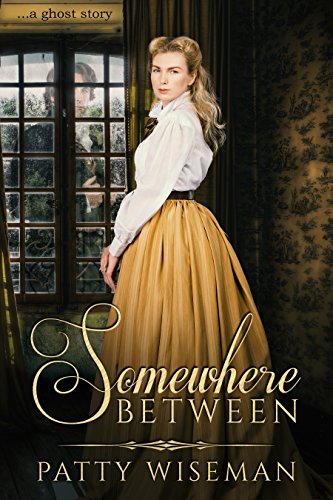
“Somewhere Between” by Patty Wiseman: Historical Novel with a Paranormal Twist

somewherebetween

This historical novel with a paranormal-whodunnit twist was well-written and had numerous fascinating plot entanglements. The characters were well-drawn and vivid with enough suspense in the story action to keep you turning the pages, wondering who did what and how it would turn out.  I loved the gutsy protagonist, Phebe, whose curiosity was insatiable and tended to get her into trouble as she tried to figure out the secrets behind the Powell family, by whom she’d been hired as a governess for their three lively children.

The “ghost in the attic” was great, eerie enough to be convincing as a ghost and duly mysterious as well. The other household staff members–the cook, butler, and ever the stable boy–were key to the story as some tried to protect the family’s many secrets and how Edmund’s ghost fit into it all. I don’t like creepy, scary type books, but this one was a comfortable bedtime read with it’s suspense directed more at the mystery of how the various characters were connected. All families have their share of secrets, and this one had a plethora of them, many of which were scandalous in the time in which the story takes place but less so, perhaps even considered normal, today.

This is a pleasant, easy read and glimpse of a different time. The cover is fabulous and fits the story perfectly.

Pick up your copy on Amazon here.

Today’s Writing Tip

laptop-4 copy

Including other cultures and their respective norms in your story provides additional texture. Just make sure you get it correct, either through research or, better yet, consulting with someone who knows it well.

One of the best examples I’ve seen where this is done beautifully is the movie “My Big Fat Greek Wedding.” You may be part of such a culture and not even be aware of it.

Many years ago when I worked for NASA I attended a class that addressed getting along with people from other cultures. This was essential because we were working with Japan, Russia, Italy, and various other countries with the International Space Station. One thing they told us that I’ve never forgotten is that right and wrong can have entirely different definitions in different cultures. They are what they are, having evolved separately and under different circumstances.

Cultural microcosms are all around you, whether you notice them or not. If you’re an author, you should pay attention to such things. Every city, even section of a city, has its own personality and culture. This is perhaps more noticeable among the different states of the USA and certainly between other nations. Cultural clashes surround you on any given day. If you don’t believe me, just watch the news. Remember that conflict is essential in fiction and this is another area where you can work it into your story.

Pay attention to such things as an essential ingredient to life and therefore has a bearing on fiction. Capture it properly and you can become an outstanding author.

Today’s Writing Tip

home-office copy

Avoid blatant stereotype characters, especially for the good guys or bad guys. This is especially advisable for those that carry a racist spin. Challenge your own prejudices and you’ll do the same for your readers. There are good guys and bad guys of all races, religions, nationalities, and so forth, so be fair. Furthermore, if you character has overcome the negativity associated with a particular group and thus invited the rejection and possibly the ire of his peers, you have some built-in conflict to work into your story.

I’m not saying that you should always be politically correct. Like Steve Jobs supposedly said, “If you never want to make anyone mad, then sell ice cream.” Some of the funniest books I’ve read have been quite politically incorrect, but they have done so under the guise of satire, which can get away with a lot of blatant rudeness. Satire is a very special case and not always easy to handle. More on that some other time.

Today’s Writing Tip

typewriter-2 copy

The more you know about human behavior and psychology and incorporate it into your writing, the more convincing your characters will be. These are things you should pick up from the people around you and your life experience. If personality types like Myers-Briggs (I’m an INTJ, by the way) and various other behavioral descriptions absolutely aren’t your thing, then a viable alternative that I’ve mentioned before is using the characteristics of the various astrological signs as a character template.

If you’ve paid the slightest attention to those around you, you’ll undoubtedly recognize the characteristics that fit the various signs. Then, if you find out which ones do and don’t get along, you have a ready-made formula to introduce conflict.

WGTA216x324If you read these tips on a regular basis, then you know I don’t usually use them for self-promotional purposes. However, since I have actually written a book about astrology that describes the signs, I feel it’s my duty to mention it here. You can pick up a copy on Amazon or just about any other retail sales channel here. For a quick overview of how different signs get along, you can find that for free on my website here.
Marcha Fox in “WHO’S ON THE SHELF” w/@Nonnie Jules – #RRBC #RWISA @StartrailsIV

Check out my latest interview with Nonnie Jules, President of Rave Reviews Book Club!

Today’s Writing Tip

technology-3 copy

Reviewer’s opinions of your book are not only subjective, but their rating systems are often inconsistent as well. I can’t believe how many 3-star reviews I’ve seen where the person goes on to say how good the book was. I don’t know about you, but when a reviewer awards less than 4-stars I expect to see some explanation for why the book rated such a mediocre review.

I suppose you can associate the 5-star system with academic grades. In other words:

***** = A

**** = B

*** = C

** = D

*=F

In that context, I suppose a 3-star review thus equates to a C, which supposedly is average.  But I still find it confusing, if that’s the case, how a reviewer will then go on to compliment the book and say good things about it without saying how it could be improved.

As an author, you want reviews and should thus be reviewing books yourself. Bear this in mind when you do so: If you give a book a poor rating, do the author and readers of the review a favor and tell them why, even if it’s purely subjective, such as you didn’t like the main character or the writing style. That will give them a better idea what you’re trying to say.