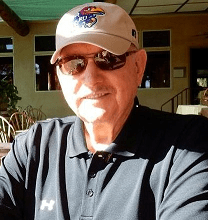
Today I have the pleasure of introducing you to Ronald E. Yates, former foreign correspondent, professor emeritus, and author of the highly acclaimed Finding Billy Battles series. If you haven’t experienced his work, you are missing out on some of the finest novels I’ve had the pleasure of reading. Not only do his characters jump off the page, but you’ll find yourself transported back in time to historical events of which I, for one, had little knowledge or understanding. His stories brought me to an entirely new comprehension of the Spanish-American and Vietnam Wars, as well as how and why the USA is often viewed in a negative light. You can find more regarding my thoughts on “The Improbable Journeys of Billy Battles”, second volume in his series, in my review HERE. I am now an avid fan and hooked on properly researched and objective historical fiction.
Meanwhile, here’s a glimpse of the person behind these landmark works, demonstrating that personal experience contributes greatly to the stuff of which an outstanding writer is made.
MF: You had a long and interesting career as a journalist, not unlike your protagonist, Billy Battles. Does any one particular correspondent assignment stand out above the others? If so, why?
RY: Hmmm. Let me count the assignments. There are several but I would say covering the end of the war in Vietnam between Jan 1974 and April 30 1975. The last day was chaos incarnate. Russian made 122mm rockets were slamming into buildings, 130mm mortars were hitting Tan Son Nhut airport, and the U.S. Embassy was surrounded by frantic South Vietnamese desperate to get out of the country because they had worked for the American military or some U.S. agency. The city was in full panic mode. Several of us made our way to the sprawling Defense Attaché Office building at Tan Son Nhut and we were finally evacuated by a U.S. Marine CH-53 Sea Stallion helicopter. It was a relief until the door gunner told me later aboard the U.S.S. Okinawa that the pilot apparently had to drop flares to misdirect a SAM-7 (surface to air missile) that had been fired at our chopper.
Every year I post a story detailing the last 24 hours in the fall of Saigon. People can find it on my blog. I could add a few more such as the Tiananmen Square massacre in 1989 and the time I was taken prisoner in El Salvador by anti-government guerillas, but that would take up the entire interview.

MF: One thing that impressed me the most about the Billy Battles stories is how well you maintained his objectivity. I learned so much about historical events that have colored other country’s opinion of America. It seems the old standards of journalistic objectivity have gone the way of landlines and 20 megabyte hard drives. How do you feel about today’s highly biased reporting?
RY: As someone who spent 25 years as a journalist practicing it at the highest levels and then another 13 years as a professor and Dean at the University of Illinois where I taught journalism, I am terribly disappointed and disgusted by the lack of fairness and accuracy I am seeing—especially in Washington. It seems to me that too many journalists today see themselves as subjective opinion leaders rather than impartial purveyors of information that is fair and accurate. Coming as I did as a neophyte into the cavernous news room of the Chicago Tribune back in 1969 right out of college, I had editors who made sure that I didn’t stray from accurate, evenhanded and unbiased reporting into opinion and rumor. When I did, I heard about it from some crabby City Editor.
An even worse sin at the Tribune was the sin of omission. That occurred if you took it upon yourself NOT to report something because doing so might not coincide with YOUR interpretation of the event or your political predilection. Good journalism, somebody once said, is a nation talking to itself. Sadly, it is the public that suffers when journalists become advocates for one party or cause at the expense of providing unbiased news. Some say journalism in America is dead. I won’t go that far. But I believe it is in a coma.
 MF: Billy is one of the most memorable and realistic characters I’ve encountered in fiction. Did he just spring to life or is he mostly you time-traveling to historical settings?
RY: That is very perceptive of you, Marcha. Aren’t all novels (or trilogies in my case) supposed to be autobiographical in some way? I guess if I’m honest I would agree that Billy is me time-traveling to the past. There are parallels in Billy’s life and mine. For example, both of us grew up in Kansas and we both attended the University of Kansas. Of course I graduated and Billy didn’t. We both spent a lot of time in Asia and Latin America in places like Saigon, Manila, Hong Kong, Mexico City, Veracruz, etc. We both lived in Chicago and we both worked for newspapers there. Even though my wife is German she is not a baroness as Billy’s second wife was. I only had two daughters, not three like Billy. We both owned guns. That’s where the similarities end. Unlike Billy, as far as I know, I never killed anybody.
MF: If you had access to a time machine, which period of history would you go to first?
RY: There are two periods that I have always been fascinated with. One is the 19th Century during the period my trilogy begins. I grew up in Kansas and I was always fascinated by what life was like there in the 19th Century when the state was still quite wild. One of my passions during my time in Kansas was the state’s past, with its cow towns, gun slingers, law dogs, and other assorted characters. I spent a lot of time learning about some of the people whose reputations were made in Kansas—Wyatt Earp, Doc Holiday, Bat Masterson, Wild Bill Hickok, etc.
One of my forefathers from that time knew some of these people and I used that fact in having Billy rub shoulders with them. The other is the period between 100 BC and 200 AD during the height of the Roman Empire. I would love to be able to walk through ancient Rome now that I have walked through it in the 21st Century.

MF: How much harder would it have been to write your Billy Battles stories without the research capabilities of the internet?
RY: Let me see, how much more difficult? How about 10 times more difficult. The internet has opened up myriad avenues for conducting research. I have a fairly substantial library containing lots of reference books countless subjects, as well as books on Asia and Latin America, etc. because of my time as a foreign correspondent. I use those a lot—especially if I need to double check something I find on the internet that seems a bit off. Believe me, there is plenty of misinformation on the internet—even in Wikipedia, which I support annually with a modest contribution. I had a lot of books on Asia’s colonial period and those were invaluable. Same with books about 19th century and early 20th century Mexico, but I still found myself surfing the internet almost every day. For a writer the internet is an invaluable tool.
MF: Do you (or have you) physically travel to the locations where your stories take place or do you do so vicariously? If the former, what new insights and inspiration came from any of them that made a significant difference in the story? Did any new plot twists come as a result?
RY: Because I was a foreign correspondent posted to Asia and Latin America I spent years in the places I write about in the Finding Billy Battles Trilogy. I actually lived in the same hotel (The Continental Palace) in Saigon that Billy lives in when he is there in 1894-96. In fact, I had him stay in the same room I lived in, so I could describe the scene outside his window quite accurately. I think it is really important for any author to have visited, if not lived for a while, in the places he or she writes about. There is a ring of truth that you simply cannot achieve by visiting these places virtually on the internet or in travel books, etc. For one thing, you can’t effectively describe the heat, the smells, the way a place can envelope you unless you have been there.
As for plot twists, there are a few in each of the three books. Probably the most significant one in Book 1 is when Billy encounters the Bledsoe clan for the first time and winds up accidentally shooting the matriarch of that family of outlaws. It changes his life and sets him on a path that borders on criminality. In Book 2, it has to be the way Billy and Katharina grow together despite their many differences. I hadn’t originally planned to have the two of them fall in love, but somehow they forced me to do it! In Book 3, I would have to say it is tragedy that sends Billy very definitely on a lawless path along with his cousin Charley Higgins. I won’t say any more. I don’t want to spoil the book for those who haven’t read it yet.
MF: Did you always aspire to become a novelist some day or did it simply evolve over time?
RY: I knew when I went into journalism that I wanted to write novels. But I also knew, that like Ernest Hemingway, George Orwell, Edna Buchanan, Graham Greene, and the late Tom Wolfe who started as journalists, I needed to learn the craft of writing. I needed to develop a style and I needed to develop confidence in my writing. I didn’t want to write fiction while I was still working as a foreign correspondent, but doing that job allowed me to collect scores of characters for the books I knew I would write someday. My experiences as a journalist have been priceless and vital as I transitioned from journalism to fiction. I think any author who started as a journalist will tell you that. Hemingway once said, “everything I ever learned about writing I learned from the Kansas City Star style sheet and covering the streets of Kansas City.” I could say the same about my 25 years with the Chicago Tribune.
MF: What’s your favorite part of being an author? Your least favorite?
RY: I really enjoy telling stories. It’s what I have done all my life. Journalism is essentially storytelling, but in a different format. Of course, writing fiction is quite different. In fact, I think being an author is both a curse and a gift. It is a wonderful gift if you allow the process to come to you and don’t force it. However, don’t let anybody tell you it is not damned hard work. It is. As I said, the joy of writing for me is telling a good story. I don’t care about imparting a “message.” Nor do I care about creating any hidden “meanings” that some literature professor will hold forth about in a writing class when I am no longer around to rebut him/her. I just want to tell a good story. That, to me, is the ultimate goal of writing.
The curse is that writing can take over your life, isolate you from family and friends, and turn you into a kind of inscrutable recluse if you are not careful. Writers need to take breaks from working. If they don’t I believe they run the risk of becoming stale, self-absorbed, and misanthropic.
MF: Besides Billy, who’s your favorite character in the series and why?
RY: There are a few, but if I had to single out two they would be Charley Higgins, Billy’s shadow rider cousin who has spent part of his life south of the law. Charley is a tough hombre who never shrinks from a good scrap. He is a man-killer and were it not for him, Billy might not have lived to reach old age. Then there is the Baroness Katharina von Schreiber whom Billy meets on the SS China in 1894 on the way to Asia. At first Billy is not attracted to Katharina. She seems aloof and caustic and Billy avoids her until one night she knocks on his cabin door and his life is forever changed.
MF: What’s the most fascinating historical fact you uncovered doing your research?
RY: French Indochina was home to lots of rubber plantations and I was planning on having Billy become involved with them in some way. Then I learned that there were no rubber plantations in French Indochina until after the turn of the century. So between 1894-96, when Billy is there I discovered that coffee and black pepper plantations were the main crops. I was fascinated by the black pepper plantations, how pepper is grown and harvested, etc. so I had him involved in those. I learned a lot.
MF: What are you working on now?
RY: I am beginning a book on a woman named Iva Toguri, AKA “Tokyo Rose.” I wrote a series of stories back in the late 1970s that resulted in President Ford giving her an unconditional pardon. Iva was convicted in 1949 on one of eight counts of treason—one of only 11 Americans ever convicted of treason in American history. However, that one count was based on the testimony of two men who confessed to me that they had been forced to lie at her trial. “Iva never did anything treasonous,” one of the men told me. “Just the opposite. She was fiercely pro-American.” The two men asked for Iva’s forgiveness. They never got it. And with good reason. As a result of their lies Iva spent 6-1/2 years in Alderson Federal Women’s Prison, was fined $10,000 and essentially lost the rights of American citizenship. Those convicted of treason can never vote, never be certified for any profession, never get a passport. My stories went all over the world and, as his last act as president, Ford pardoned her. Iva and I got to be good friends. She lived on the North side of Chicago while I was with the Tribune. We had planned a book together, but in 2002 she suffered a minor stroke and we never got the book off the ground. She died in 2006, but she always told me she wanted to tell her story in her own words. That’s what I plan to do in this book.
 Billy Battles: The Lost Years, third and final volume of the trilogy, is now available as an ebook; the print version will take a few more days. If you haven’t already enjoyed the other books in the series, you probably should start with them so you can travel alongside Billy, witness his progression as a character, and chronologically experience history through his eyes.
Link to Finding Billy Battles (Volume I)
The Improbable Journeys of Billy Battles (Volume II)
Billy Battles: The Lost Years (Volume III)

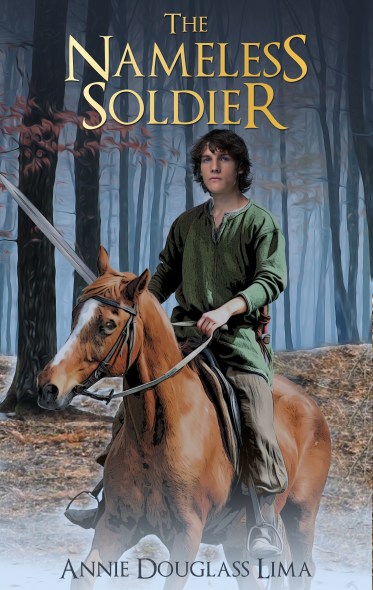
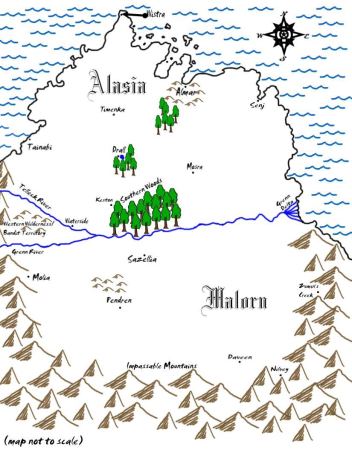 He saw fewer people on foot now, more obstacles in the mud. Was it cowardly to flee from a battle you couldn’t win? Nothing in Tarvic’s eight months in the military had prepared him for this. Not counting occasional minor border skirmishes, the kingdom of Alasia hadn’t seen an actual war in six generations. Besides routine patrols, city peacekeeping, and the frequent drills and training, the military’s primary duties involved escorting merchant wagons through robber-frequented stretches of rural highway and keeping an eye on the sections of coastline where seafaring raiders were known to attack. Tarvic had never fought in a battle that involved more than a handful of opponents at a time, and none of those opponents had been anywhere near this organized — or this deadly.
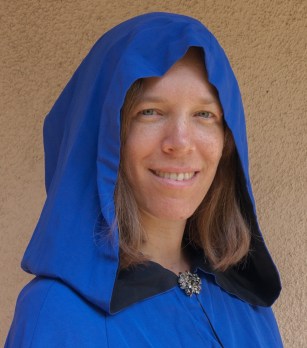 About the Author:


 Marcha's Two-Cents Worth