Today’s Writing Tip

paper-copy

There are dozens of ways to say “said!” Here are 154 of them!

A long time ago, in a galaxy far, far away–in other words, back in 1977–my mom gave me a copy of the Readers Digest “Family Word Finder.” As you’ve probably figured out from its title, it’s a thesaurus and its age certainly a witness to how long I’ve been writing. I recently had that book out and discovered a typewritten (yes, typed, like in manual typewriter) list. It contained alternatives (but not quite synonyms) for using “said” in dialog. (BTW, I wrote my first novel on a manual typewriter.)

I remember having a lot of fun creating this list. However, there’s a caveat, especially if you’re addicted to words like myself. Granted, using these appropriately can contribute to imagery, emotion, and clarity. However, using them too frequently can be as grating as having “he said” or “she said” on every line.

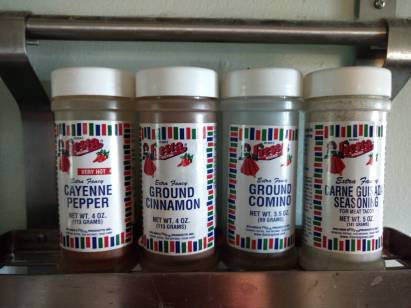
In other words, like adding herbs and spices to a soup kettle, use them sparingly, as spicesflavor enhancers, if you will. Be subtle, not glaring, which makes them all the more powerful. Used improperly or excessively, you could wind up with the literary equivalent of adding cinnamon instead of cumin to your chili. Properly administered, they’ll help create dynamic and convincing dialog, a critical component of outstanding fiction.
Without further ado, here we go. Feel free to add any I missed in the comments!

  1. accused
  2. acknowledged
  3. added
  4. admitted
  5. advised
  6. affirmed
  7. agreed
  8. announced
  9. answered
  10. apologized
  11. argued
  12. asked
  13. asserted
  14. assured
  15. avowed
  16. babbled
  17. barked
  18. bellowed
  19. begged
  20. blubbered
  21. blurted out
  22. bragged
  23. breathed
  24. burst out
  25. cackled
  26. called
  27. cautioned
  28. challenged
  29. chattered
  30. chirped
  31. choked
  32. claimed
  33. chortled
  34. clipped
  35. coerced
  36. complained
  37. conceded
  38. concluded
  39. confessed
  40. confided
  41. consoled
  42. continued
  43. cooed
  44. corrected
  45. cried
  46. croaked
  47. decided
  48. declared
  49. demanded
  50. denied
  51. disclosed
  52. divulged
  53. drawled
  54. echoed
  55. emphasized
  56. estimated
  57. explained
  58. exploded
  59. figured
  60. gasped
  61. greeted
  62. groaned
  63. groused
  64. growled
  65. grumbled
  66. grunted
  67. guessed
  68. gulped
  69. hissed
  70. hinted
  71. hollered
  72. implied
  73. inquired
  74. intimated
  75. insisted
  76. instructed
  77. interjected
  78. interrupted
  79. iterated
  80. joked
  81. laughed
  82. lied
  83. maintained
  84. mentioned
  85. mimicked
  86. moaned
  87. mumbled
  88. murmured
  89. mused
  90. muttered
  91. offered
  92. ordered
  93. panted
  94. parroted
  95. pleaded
  96. pointed out
  97. pouted
  98. prayed
  99. probed
  100. proclaimed
  101. prodded
  102. promised
  103. proposed
  104. protested
  105. purred
  106. quipped
  107. rambled
  108. ranted
  109. recounted
  110. reiterated
  111. related
  112. relented
  113. retorted
  114. reminded
  115. repeated
  116. replied
  117. reported
  118. resolved
  119. returned
  120. revealed
  121. scoffed
  122. scowled
  123. screeched
  124. shouted
  125. shrugged
  126. sighed
  127. smirked
  128. snapped
  129. sneered
  130. sniffed
  131. snittered
  132. snorted
  133. sobbed
  134. speculated
  135. sputtered
  136. squeaked
  137. stammered
  138. stated
  139. stipulated
  140. suggested
  141. teased
  142. theorized
  143. threatened
  144. uttered
  145. vocalized
  146. volunteered
  147. vowed
  148. wailed
  149. warned
  150. whimpered
  151. whispered
  152. wished
  153. wondered
  154. yelled

Today’s Writing Tip

write-2 copy

Make it easier for potential readers to find your book by making sure its BISAC code is correct. There are several which include numerous sub-categories as well. They’re not always easy to search since they’re often not in any discernible order.

BISAC stands for “Book Industry Standards and Communications” which are subject headings developed by the Book Industry Study Group (BISG).  To quote from Wikipedia, “BISG has been involved with technological advances such as bar codes and electronic business communications formats. It developed BISAC (Book Industry Subject and Category) Subject Headings, which are a mainstay in the industry and required for participation in many databases.”

These categories have numbers followed by tiers of description that look something like this:

FIC027130 Fiction / Romance / Science Fiction

FIC028000 Fiction: Science Fiction – General

CGN004190 Comics & Graphic Novels: Manga – Science Fiction

If you’ve listed your story with a distributor or sales site, you’ve most likely been asked for its BISAC. The question is whether or not you selected the correct one? With hundreds to choose from, it’s possible you didn’t bother to scrutinize the listing carefully enough to find the best fit for your work. I have found, much to my frustration, that when they’re listed as a pull-down menu, such as on sites like Google Play, ironically they don’t appear to be in any order! Thus, the temptation is to pick the first one that sounds even remotely like you story. It doesn’t really matter, does it?  Wrong!

Considering that there are millions of books out there, it doesn’t take a rocket scientist to figure out there needs to be a way to classify and organize them. Librarians have been doing this for years through Library of Congress designations and/or the Dewey Decimal System for non-fiction. However, if the BISAC Subject Headings are “making inroads into library classification” as suggested by Wikipedia, then it’s important that you recognize what they are and why they’re important.

Still wondering why should you care? Here’s why: Because if you’re an author, the proper classification of your story can make the difference of whether or not your readers find it.

There are hundreds of categories for fiction alone. You can find a complete listing of codes on the BISG website. Note that this organization has been around since the 1970s and is located in the heart of the traditional publishing industry in New York City. This is an organization you should take seriously.

Being an Indie author means having to learn how to navigate the particulars of the publishing industry, often with less than even a crash course. BISAC subject headings are one aspect of it that’s a mystery to most Indies, yet could have a direct bearing on your sales. For example, if a book store or library wants to purchase a specific genre based on patron requests, if your books fits like the proverbial glove, won’t you want them to find it?

I rest my case.

Today’s Writing Tip

typewriter-2 copy

Point of view is all about staying inside the mind of a specific character. This means that all descriptions, vocabulary, speech, and level of understanding should be within the scope of what that person knows.

For example, if your protagonist or other POV character is a teenager or child, they are going to see the world through that filter. Thus their comprehension and word choice should be appropriate for someone of that age. The came principle goes for an adult who is deemed highly intelligent. They will see the world according to their assumed education and experience and use more sophisticated speech patterns.

Today’s Writing Tip

laptop-2 copy

Remember that the basic conflicts in fiction as well as life are man vs. man; man vs. nature; and man vs. self. The more of each that you bring into your plot, the more vehicles you have for building plot as well as suspense.

Your protagonist has to work for what he wants and the harder the struggle, the stronger your reader’s engagement will be. In most plots, there will be an overlap of at least two. Be sure to recognize them for what they are.

Today’s Writing Tip

alphabets-copy

If your plot gets stuck, research often helps to get it moving again. Details add credibility to your story and can also provide new plot angles. It never hurts if your reader learns something along the way, whether it’s about the setting or the protagonist’s job.

For example, if you’re writing a mystery, knowledge of police procedure is important, particularly forensics. Getting it wrong will throw readers who know better out of the story and your credibility is lost. The same goes for any other profession. This is where writing what you know works best, unless you’re willing to learn about others through talking to someone or research.

Today’s Writing Tip

coffee- copy

Once a story gets rolling, writer’s block is rare. If you get stuck, perhaps you took a wrong turn somewhere with either the character or plot. Forcing a character to do something s/he resists can be a good sign that the character has come alive. In this case, you can often turn him or her loose to see what s/he wants to do. New plot twists can come out that will surprise even you! If you don’t know what’s going to happen next, you can bet your readers probably won’t, either!

If your plot hits a wall, taking a break to do some research will often open things up again.

Today’s Writing Tip

home-office-3 copy

It’s essential to understand the concept of point of view (POV), which is the character through whom the story is being told. This can be one of the most difficult concepts for new writers to grasp.

The basic categories are single, multiple, and omniscient. Single is used for a first person narrative, but not always. It can also be used for a third person story that only goes into the protagonist’s head. Multiple will get into more than one person’s POV, but in separate sections or chapters. Omniscient gets into everyone’s throughout the story. This can be confusing and is also least effective in connecting your reader with your characters.

Today’s Writing Tip

notes-copy

Want to write memorable fiction? Then CAP it! Influencing three areas of the brain will do just that. C=Cognitive (facts) A=Affective (emotions) P=Perception (senses) In this case, 3 strikes and you’re remembered!

Facts, even if they’re about the setting, add depth and imagery to your story. If there’s a particular profession involved, learning about what it entails is also beneficial and adds credibility to your character as well as potential plot twists.

For a story to “stick” with your reader, emotional involvement is essential! Which stories can you name that brought you to tears, either due to compassion, sadness, or even laughter? How many can you name that didn’t?

Employing the five senses is also recommended. We live in a world where all of them are used and define our environment. The sense of smell is particularly powerful, whether it’s the aroma of food cooking, autumn leaves, or vehicle exhaust in a crowded city.

This also applies when you’re giving a talk. In fact, I got this idea from a Toastmasters magazine that addressed how to make your speeches memorable.

Today’s Writing Tip

computer- copy

Using speech to text features can be a great boom to some storytellers or bloggers, especially if you can say it far faster than you can type it. However, be aware that proofreading the result is essential. If you don’t, you may find various unsavory mistakes, such as heroine reduced to heroin as well as various other nasties due to the profusion of homonyms in the English language.

This, of course, requires that you be familiar with them yourself so you recognize when the wrong one is used. One of the most popular ones I’ve seen misused, even from experienced writers, is shutter (noun, outdoor window protection devices) instead of shudder (verb, to quake or quiver).

Today’s Writing Tip

laptop-3 copy

Spellcheckers are great, but have several limitations. In most cases, if what it encounters is a real word, but in the wrong context, it won’t pick it up. For example, it’s a common typo to write “then” instead of “than” or “you” instead of “your” (one of my personal favorites). Since both are legitimate words, they’ll be missed.

If you know what your most common typos are, search on those words and make sure they’re used correctly. If you do this each day as you finish writing, you won’t be overwhelmed.