Today’s Writing Tip

technology-3 copy

Reviewer’s opinions of your book are not only subjective, but their rating systems are often inconsistent as well. I can’t believe how many 3-star reviews I’ve seen where the person goes on to say how good the book was. I don’t know about you, but when a reviewer awards less than 4-stars I expect to see some explanation for why the book rated such a mediocre review.

I suppose you can associate the 5-star system with academic grades. In other words:

***** = A

**** = B

*** = C

** = D

*=F

In that context, I suppose a 3-star review thus equates to a C, which supposedly is average.  But I still find it confusing, if that’s the case, how a reviewer will then go on to compliment the book and say good things about it without saying how it could be improved.

As an author, you want reviews and should thus be reviewing books yourself. Bear this in mind when you do so: If you give a book a poor rating, do the author and readers of the review a favor and tell them why, even if it’s purely subjective, such as you didn’t like the main character or the writing style. That will give them a better idea what you’re trying to say.

Today’s Writing Tip

coffee- copy

Holiday themes work well for plotting a story. They provide a familiar backdrop to build upon and are likely to be popular around that time of year. Not so much at other times, however, so bear that in mind.

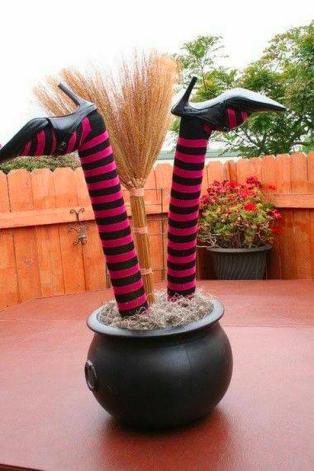
halloween5Nonetheless, if you write a best-seller, that’s another story (pun intended). I remember years ago someone wrote a short story called “The Christmas Box” and it was a best seller. Write something like that and you might make enough money off that one story a few weeks of the year to finance your other less lucrative endeavors.  Counting on that, however, is a bit of a long shot.

If there’s anything about your story that you can exploit in connection with holidays, do so. Halloween is obviously good for zombie, vampire, and paranormal stories. Don’t forget those lesser known holidays such as Global Cat Day (October 16), World Vegan Day (November 1), and STEM Day (November 8) and be sure to use their specific #hashtags. You can find more holiday ideas here.

Today’s Writing Tip

desktop- copy

If you plan to include an “Acknowledgements” section to thank those with whom you’ve consulted while writing your book, start a file early where you can list each person and what they did. That way you won’t forget someone when you finally finish up.

People to mention include your editors, proofreaders, book interior designers, cover designers and artists, technical consultants, beta readers, and anyone else who has helped along the way. I remember years ago before I had any of my own books in print it meant a lot to at least see my name in a book for helping out.

Today’s Writing Tip

technology-3 copy

Interruptions are often the author’s worst enemy. The real question, however, is how many do you invite or cause through poor planning? The next time you’re distracted from your writing schedule, figure out how you allowed it to happen, either by checking your email or phone too often or some other disturbance.

You have more control over these things than you may realize. It’s a matter of setting priorities and then sticking to them. Most emails aren’t emergencies that require immediate attention, the same with phone calls.

Today’s Writing Tip

paper-2 copy

There are as many styles of putting together a novel as there are for writing it. Some authors will do so methodically from a carefully designed outline, others piece by piece as their muse directs. There’s no right or wrong way as long as your finished product is seamless. Creativity comes to each author in a different way. Don’t stifle it by trying to force yourself into a methodology that isn’t comfortable. Go with the flow.

Today’s Writing Tip

notes-copy

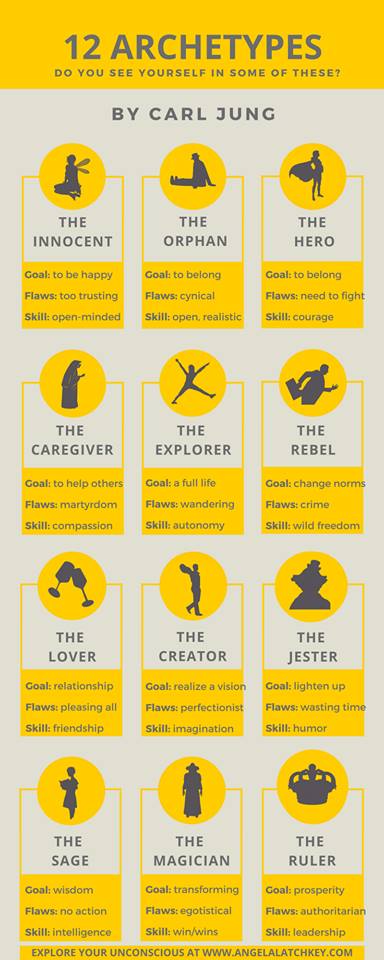
It’s not always easy to come up with a fatal flaw for your characters, especially your protagonist if s/he’s a genuine hero type. This illustration may be helpful, providing ideas based on Jung’s archetypes. Remember, a fatal flaw is not necessarily some inclination to evil, but rather a self-defeating behavior or some other characteristic that undermines what s/he wants.

jungarchetypes

Today’s Writing Tip

laptop-copy

Words are an author’s tools of the trade. Expanding your vocabulary is important for mastering your skill.

If you’ve ever watched the popular TV show, “The Big Bang Theory”, you have probably seen one of Sheldon and Amy’s episodes of “Fun with Flags.” Well, here’s an author’s variation on that I’ll call “Fun with Words.”

I do have an ulterior motive, however. An expansive vocabulary opens up a world unseen; one that’s inaccessible without the words to express it. I’m one of those crazy people who will occasionally read the dictionary. I swear I’m not making this up. Besides, if I look up a word, I always read several other definitions while I’m in there. My dictionary is within arm’s reach whenever I’m on the computer, notwithstanding the availability of a spellchecker. Old habits die hard.

Another book of words that I found charming, as it brought me numerous laughs as well, is “The Superior Person’s Book of Words” by Peter Bowler. This book contains many words that have been dropped from the conventional dictionary for lack of use or no longer applicable. However, if you’re an Anglophile, you can have a tremendous amount of fun discovering words you didn’t know existed, many of which have hilarious definitions.

Bowler’s premise is that baffling people with unfamiliar words makes you superior, reinforcing the idea of vocabulary and intelligence being related. Furthermore it’s useful for insulting people in such a way they don’t recognize a slam for what it is and will often even thank you. There’s even a name for that:

Charientism n., An elegantly veiled insult.

Words are the tools of my trade. I value them, but also find them entertaining. Here are a few more from Bowler’s book:

hebetate v. To grow dull or stupid.

rejectamenta n. Things that have been rejected.

lucripetous a. Money-hungry.

acerebral a. Without a brain.

gerontocracy n. Government by old men.

virago n. A fierce, bad-tempered woman.

You have to admit, if you were in 5th grade and given such words to use in a sentence that it would be tremendous fun. Even as an adult, I’m sure you can think of numerous circumstances where having such words on the tip of your tongue would have come in handy.

Finding humor in words not only makes expanding your own vocabulary a blast, but is a way to encourage youth to do so as well. Even kids in elementary school can have fun in this way, a discovery that could make a difference in their appreciation of language for the rest of their life.

Try it–you’ll like it.

Today’s Writing Tip

nobody-copy

As an author, it’s in your best interest to encourage reading. Literacy is critical, not only to find readers, but for the betterment of our world. What are you doing to encourage it other than writing?

As a serious writer and author, it concerns me that written expression is not being encouraged as it was for my “Baby Boomer” generation. Sure, we passed notes to each other in class while today kids text, but what else has changed since then? What about the mixed (and often humorous) blessings of Autocorrect and text to speech? Is there any incentive to learn how to spell? Are dictionaries now passé? And what about emoji’s? And memes? How handy is it to find one that expresses what you’re feeling versus using actual words?

Related to this is the fact various studies have shown correlations between intelligence and vocabulary. It follows that the more expansive a person’s vocabulary, the more “literate” they will be. While some statistics claim the US has a literacy rate of 99%, others state that 50% of adults cannot read a book written at the 8th grade level. Technically, being able to read at the 8th grade level may be literate, but what does that say about intelligence? The illiteracy rate of the prison population is such that 70% of inmates can only read at the 4th grade level. Clearly, literacy is a game-changer. As an author and word aficionado, I find this rather alarming. Here are a few more statistics courtesy of the nonprofit organization Literacy Inc.’s website:

  • Literacy is learned. Illiteracy is passed along by parents who cannot read or write.
  • One child in four grows up not knowing how to read.
  • 43% of adults at level I literacy skills live in poverty compared to only 4% of those at level V.
  • Three out of four food stamp recipients perform in the lowest two literacy levels.
  • 90% of welfare recipients are high school dropouts.
  • 16 to 19-year-old girls at the poverty level and below, with below average reading skills, are 6 times more likely to have out – of – wedlock children, who in turn will have below average reading skills or none at all.

There are no simple answers to why or what to do about it. However, since literacy remains a huge problem, it further implicates the failure of the current education system, much of which is aimed at getting pupils to pass standardized tests. Many kids are bored out of their minds in school. Why? Because they’re not taught to think, reason, or discover the joy of learning, which has traditionally been done through reading.

Yet, some kids today are smarter than ever. What makes the difference? Is electronic media helping or hindering learning? My opinion is that it relates to content, whether a child spends mindless hours playing video games or watching TV versus using electronic media to expand their knowledge. Parents, are you listening?

When I was growing up as an only child, books were my greatest joy. Most of my grown children still love to read, something they brought with them from their respective childhoods. The majority of my young grandchildren have Kindles, so I gift them books on a regular basis. One of my granddaughters had a full-length novel she wrote on her phone and published on Wattpad when she was in middle school. Is that cool or what? Proud grandma? You betcha!

That begs the question, is a love of reading and its side effect, literacy, genetic? Much has been speculated about genetic memory and what is passed on to our progeny. It’s easy to see both a nature and nurture side to this, since children of readers are more likely to have been read to as a child and encouraged to read.

As authors trying to sell books, the more readers we have out there, the better. But the bottom line is what can authors do to help this situation? How can you encourage reading and literacy? Think about it. There are literally millions of books on Amazon. The impact if every author did something, no matter how small, to encourage literacy the effects would be awesome.

What can YOU do? Literacy Inc’s website has numerous ideas. Find something you can do to help. Then, to quote Yoda, “Try not–do. Or do not. There is not try.”
Today’s Writing Tip

home-office-3 copy

Man vs. Nature is one of fiction’s basic conflicts. This is taken to an extreme when it involves a natural disaster. Which ones occur in your area? Few areas don’t have some geological, meteorological, or regional disposition to such events. How much have you studied the details so you could use such an event in one of your stories? Earthquakes, volcanoes, floods, tornadoes, hurricanes, wildfires, and droughts can all add drama to your story as a backdrop to other plot action.

Each one has its own characteristics, warning window, emergency response, preparedness, and aftermath. Knowing the details is what brings them to life in your story whether it’s the sound of wind and raging water, the smell of an approaching wildfire, evacuation shelter logistics, or gridlocked escape routes. If you experience one, yet don’t have a place for it in your fiction, write up the experience for practice as well as inclusion in your personal history for your children and grandchildren. And you may actually use it eventually and be glad you preserved those details that bring it to life.

P.S. If you know me, you can probably guess that as I write this, my area of Central Texas is undergoing record-breaking floods. I’m safe but waterlogged, my septic tank on strike, if you know what I mean. 🙂

Today’s Writing Tip

woman- copy

If you’re writing a series, be sure to remind your readers what your characters look like. This also pertains to any key plot elements that happened in the previous episode(s). To you as the author, it’s all one story. To the reader, however, weeks, months, or even years may have passed since they read the first book. Thus, they may have forgotten numerous details, like what the characters look like, or other important details.

Furthermore, it’s also possible that someone will start reading in the middle of your series. These new fans definitely need this information! If they’re lost, then what? Best case, they’ll buy the previous book(s) and read them in order. Worst case, they put it aside and you’ve lost a potential reader.

It’s best if each book in a series has it’s own independent plot, even if it’s part of a larger picture. Flashbacks or character dialog covering previous events are ways to sneak in information they missed. Descriptions of their appearance and perhaps the setting itself should include reminders at least. Your readers will thank you for it.