Today’s Writing Tip

computer- copy

Beta readers are essential to authors. These are the folks, usually fellow authors or existing fans, who read what you THINK is your final draft and point out why it’s not. Of course you need to brace yourself for some criticism. One way to deal with that if it really bothers you is to see your beta readers as team members, pre-editors if you will, who will help you perfect your product.

You may not agree with all their suggestions, but they’re worth considering. It’s always interesting to see if your readers are going to get any point you’re trying to make or not. They can also help find typos and other grammatical issues, like misused homonyms.

If you’ve never been a beta reader, offer to do so for an author friend or favorite author. Besides being a great way to network and make new friends, you’ll be surprised what you learn along the way. When you find something that really sticks in your craw as a reader, be honest about whether you may be guilty of the same faux pas.

Today’s Writing Tip

woman- copy

When you were a child, what did you want to be when you grew up? Is that what you are doing now or did you take a different turn somewhere along the line and wind up something else? I have found that those childhood dreams may get buried, but never entirely go away.  They are deeply programmed in your psyche and aren’t happy when they’re suppressed.

Any career that interests you is fun to research and thus a great one to use for your protagonist. Even if you never got to be what you originally hoped to be, you can do it vicariously through one of your characters.

Who knows what you might discover in the process. It may even motivate you to finally pursue your original dream or perhaps decide it was best left behind. Either way, your subconscious will thank you.

Today’s Writing Tip

laptop-copy

Adverbs get a lot of well-deserved bad press with regard to writing. More often than not they’re a symptom of lazy writing. These verb modifiers can more often than not be eliminated by using a verb that incorporates the feeling or action you want to express. This is where having a good Thesaurus is essential. Every author should have one within arm’s reach of where they do most their writing.

Whenever you start to use a word ending in “ly” challenge yourself to replace it with a better verb. This is something you should pay close attention to while editing your first draft.

Today’s Writing Tip

design-space-copy

Another remedy for “writer’s block” is to read a book about writing. I recently read “Emotional Beats” by author Nicholas Rossis. While it didn’t necessarily help move my story forward, it gave me a plethora of ideas for polishing what I already had. In the process of doing that, I got back my momentum and was able to move forward with the story.

This book particularly focuses on capturing emotion. This is where “showing” and not “telling” really counts. If you have trouble with this, which can be particularly challenging for new writers, I highly recommend Rossis’ book. There’s also an excellent section on analogies as well as a few parts that are loaded with useful synonyms for over-used words like walking.

You can find it on Amazon here.

Today’s Writing Tip

home-office copy

If you get stuck, a.k.a. “writer’s block”, there are numerous ways to get out. One way I’ve found is to let my characters take over the story. Just start writing and see what they do. Even if it’s something you edit out later, at least it keeps the ball rolling.

I had this happen to me recently in my WIP. I really didn’t know what was going to happen next, so I just let my characters have a conversation. The next thing I knew, they had figured it out.

This probably sounds weird, unless you’re an author, in which case you can probably relate. Writing a novel is a cooperative venture between you and your characters. If you get stuck, call a meeting with them and find out what they think. You’ll be surprised what they can come up with. Just don’t tell your non-author friends because they might think you’re ready for the funny farm. However, if they know you well enough, they probably already have that opinion. 🙂

Today’s Writing Tip

technology-3 copy

They say to “write what you know.” What life experiences do you have that are worth sharing? Even if you think you’ve lived a pretty boring life, there are undoubtedly lessons you can share and/or help you with character development. Don’t be afraid to let who you are peek through in your stories.

Have you ever thought about sharing your memoirs? If you’re between novels it may be a good time to start writing them up. If you’ve done something unusual in your career, traveled extensively, or have a particular hobby or interest that has brought you some interesting experiences, this is one way to share them. However, you can also use them for your characters, too. Don’t let your life’s lessons and what you’ve learned go to waste.

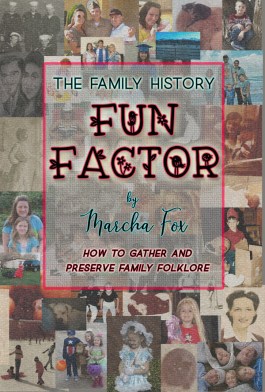
I’m going to sneak in a plug for one of my nonfiction books here simply because it fits the subject. FHFF06082018frontsm300Family folklore is something that many have never heard of, yet we all have it. What are your family’s traditions for holidays? Favorite stories and recipes? Ethnic origins? Vacation adventures? For more ideas, check out “The Family History Fun Factor”. It’s free on Kindle Unlimited. You can pick up your copy on Amazon here.
 

Today’s Writing Tip

desktop- copy

As noted previously, literacy is important and should be one of any author’s favorite causes. One way you can help, which doesn’t cost you a thing other than a few seconds each day is to click on the Literacy Site. Check it out here. This is an easy way to help this important cause which will ultimately have a bearing on your success as an author. Without readers, what’s the point of writing?

Today’s Writing Tip

paper-copy

Literacy is important. Without readers, authors have no audience. With the explosion of visual media all around us, reading runs the risk of going out of style. Those with learning disabilities are especially prone to not liking to read. How many kids these days prefer playing a video game to reading a book? Since literacy has a very strong bearing on a person’s success and independence there are strong economic and societal implications as well. What can you do as an author to encourage literacy?

Check out my previous blog on this important subject here.

Today’s Writing Tip

home-office-3 copy

I recently read a book that was a good story that I enjoyed and felt that, generally, it was well-edited, except for one thing: There were a handful of instances of using the wrong homonym. These are usage errors as well as technically a spelling error. Alert readers will notice and roll their eyes, not a reaction you usually want directed toward your work.

Bear and bare are often misused! My first thought is that bear is the animal and bare is a synonym for naked. So far so good. But what about to bear arms, meaning wielding a weapon, versus bare arms, like in a sleeveless dress?

I dare you to look up bear in the dictionary. What about to bear a child? What about its past participle, born? Then there’s bearing. How many different definitions does that have, from bearing a burden to the component in your car?

Then there’s another slant on bare, being the adverb barely.

There are dozens of homonyms in the English language just waiting to trip you up. I’ve harped on this before and will continue to do so as long as I find them, especially in otherwise well-written books. These nasty alligators in the water aren’t caught by your garden variety spellchecker, so it’s up to you as an author to distinguish between them and use them correctly.

I can barely bear it when people misuse homonyms!

Today’s Writing Tip

notes-copy

One thing you can do as an author is to start a book club in your neighborhood. However, don’t focus on promoting your own books! People will see through that in a heartbeat and be turned off. Rather, make new friends and share your love of reading. As an author, you should be reading as well. Being part of a book club is a natural place to be.

Personal interaction is the best way to attract fans. If people like you and/or find you interesting, they will be curious about your books. It’s okay to let them know you write, but be humble about it. If your books are free somewhere, you can certainly point that out. There’s no telling what networking and connections can result from interacting with your community. Many writers, myself included, are introverts. If you’re not up to starting one, think about joining one. People who love books are what you’re looking for.