As a person who worked in a technical environment for two decades, I have to admit one of my pet peeves is when details relevant to a novel are ignored or inaccurate, particularly when they relate to the protagonist’s or key characters’ livelihoods. If you’re going to place him or her in a particular career or situation such as a police investigation or military setting, then you should know something about their SOPs (Standard Operating Procedures). Otherwise, especially if one of your readers is familiar with such an environment, they’re going to be put off by inaccuracies or glaring errors regarding how that particular field operates. Do you really want someone from one of those professions to pick up your book and laugh themselves silly? Probably not. Not only will you lose a potential fan but may garner a scathing review which will discourage other readers.
Understand that people in most professions including big business, the military, aerospace, law enforcement and most other fields, even including those who labor in fast food establishments, tend to speak their own unique language, often replete with various acronyms. If you want your story to sound authentic then you need to reflect those details in your story. In other words, if you’re going to write a medical thriller then you’d do well to learn some physiology so those gory scenes are accurate and be familiar with emergency room procedures and jargon. In case you haven’t noticed, novels that make it to “Best Seller” status tend to meet these standards of accuracy.
If you’ve followed this blog from the beginning you’re probably getting tired of hearing this, but if you’re going to do something, freakin’ do it right! If nothing else, realize that failing to reflect appropriate details to bring a character, profession or even location to life is a classic example of why authors are continually advised to “Write what you know!” The good news, particularly as far as authenticating a location is concerned, is that as a writer you can vacation in such places of interest and then write off at least part of it as an expense on your income tax. It doesn’t get any better than that. Just be sure to take notes, keep your receipts and not expect immediate book sales to pay off your credit cards from such a jaunt.
If you don’t already know the necessary details through life experience, then you need to do some research. This doesn’t have to be onerous or boring. You can always talk to someone who does that for a living and pick their brain. Most people enjoy talking about what they do and are even flattered that you asked. Use them later as a beta reader to make sure you captured it correctly. You’d be surprised how much more interesting your story becomes when you’ve done your homework. Often new plot twists surface as a result and your finished product will be more convincing and deserving of praise, including by those within or without that particular occupation. If they like it they’ll tell their coworkers and bring more readers and fans your way. You may even inspire someone to go into that line of work as they get a bird’s eye view of what it involves.
The world these days is filled with too much mediocrity. Please don’t contribute to it with your writing. Standards have plunged now that literally anyone who possesses a little computer and internet knowledge (or perhaps sufficient money) can get their novel published in ebook or even printcopy format. No writer today is forced to deal with rejects and a plethora of revisions to get their work published so the incentive to edit and in some cases even run the spellchecker have been lost. Doesn’t anyone own a good dictionary anymore? Okay, okay, I’m one of those weird people who would actually read the dictionary from time to time. I’m not a perfect speller but I can usually tell when a word “looks” wrong and know where to look to find out. My grammar isn’t always correct and one thing I’ve never mastered was punctuation, especially the use of commas. I admit it, I’m far from perfect. But I’m closer than I was 30 years ago.
Please. If you must produce sloppy work, keep it far away from me. If sufficiently provoked by bad writing I can become “The Reviewer from Hell.” Of course that depends on your attitude. Regardless of which stage you’re in as a writer from stark beginner to already published, if you’re a true professional and want to know the truth, then I may be able to either help you move in that direction or validate your efforts as on-track.
That said, before I close what has turned out to be a rather lengthy blog/rant I have one more thing to say: All I’m really trying to do is make this a slightly better world for readers of Indie authors, one sentence at a time.
Namaste.
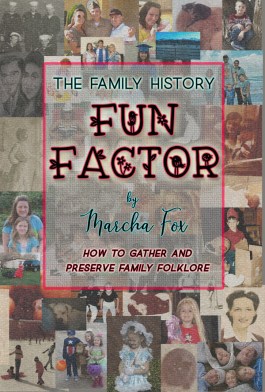 Family folklore is something that many have never heard of, yet we all have it. What are your family’s traditions for holidays? Favorite stories and recipes? Ethnic origins? Vacation adventures? For more ideas, check out “The Family History Fun Factor”. It’s free on Kindle Unlimited. You can pick up your copy on Amazon
 Marcha's Two-Cents Worth