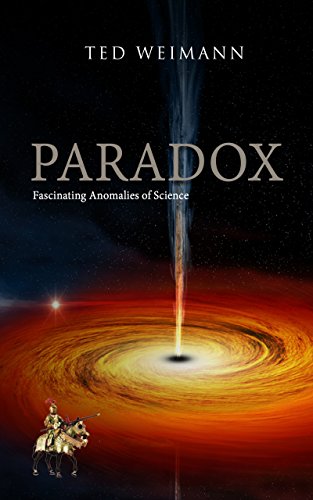
This deliciously meaty and heavily researched book should be on everyone’s shelf. Of course, I’m prejudiced as a scientist myself. I thrive on nonfiction books like this, because they clear the dust from those remote corners of my brain, many of which haven’t been used in a long, long time. In many ways, the content reminds me of the popular physics books Isaac Azimov wrote years ago, which I thrived upon, prior to actually obtaining a physics degree myself.
Probably what I liked most is its focus on the numerous paradoxes that exist in just about every field of study. The author includes sections on medicine, neurology, and psychology; astronomy, cosmology, and physics; and geosciences and math. He points out through a host of examples that there is still so much we don’t understand and thus so much to learn and explore. On the other hand, research is often subjective and highly biased, conducted to prove a point that financially benefits someone or, more likely, a corporation or industry.
So can you trust research results? Maybe, maybe not, making scientific findings paradoxes in and of themselves. Science should represent facts, but does it? If someone you don’t trust tells you one thing, scientific data notwithstanding, do you automatically assume the opposite to be true? Do you trust everything the pharmaceutical industry tells you? The tobacco industry? Monsanto? The government? How many times has USDA’s official “food pyramid” changed? How many drugs or food additives have been declared “safe” by the FDA only to be proven otherwise at a later date? is it a paradox we can’t believe so much of what we’re told in the name of science?
You’ve probably heard the quote “Lies, damn lies, and statistics”. The section on mathematical manipulation was particularly fascinating, especially pointing out a statistical flaw (or method, depending on whom you ask) known as HARKing, “hypothesizing after the results are known.” Sometimes, remarkable discoveries are found that way; but, on the other hand, it can be used deceptively.
Weimann notes how correlations are often implicated as causes, when there’s no solid evidence to substantiate it. Along similar lines, in some cases, I would have liked to have seen a specific source as opposed to the massive bibliography at the end. While I understand that footnoting every fact would have been a Herculean task, I definitely raised a eyebrow from time to time wondering, and would have appreciated more substantiation. Ironically, the author himself points out how so much of published scientific findings are suspect, yet other times presents them as gospel. I find this somewhat ironic, perhaps a subtle play on the title, perceivable only at the subconscious level, or maybe it’s the author’s way of messing with us.
What can we believe these days? Sometimes, it’s hard to tell. In some ways, the entire book is a paradox, where facts are provided on one hand, yet the overall theme is that contradictions lie all around us. It’s as if it the book’s underlying message is something like, “This is all the cool stuff science is discovering these days, but don’t believe everything you hear.”
Maybe you need to be a scientist to see the humor in that. We nerds do tend to have a weird sense of humor, a trait that’s occasionally, but not always, captured on the popular TV show, “The Big Bang Theory.” It’s a matter of laughing with versus at someone and, more often than not, the humor in that show is directed at mocking those who are different. Personally, as a physics major myself, I find it marginally offensive, and if I were of certain political persuasions, I’d be out there protesting and demanding it be removed from the airwaves. Not that scientists can’t laugh at themselves. They just do it at a level the average person doesn’t grok.
Digression aside, Paradox contains a wealth of science, much of it unknown or cutting edge; the beauty of it lies in pointing out–sometimes clearly, sometimes, not–the various contradictions afoot. A favorite saying among physicists and mathematicians is that something is “intuitively obvious.” That tends to show our arrogant side, since so much isn’t, such as his expose of the number one in the math section.
One human behavior paradox I particularly enjoyed in Weimann’s book was in the section that addresses psychology. As humans, we want choices, even demand them, but too many options are overwhelming and tend to result in a person not selecting any of them. I know I’ve experienced this in the grocery store, where there is so much to choose from (especially in the ice cream cooler) that walking away and thus doing without is a far simpler decision, and probably healthier. Another example would be the plethora of political ideologies (some of which are idiotologies) where people scream for freedom to express their own views, then want the entire world to conform to their beliefs, a primary reason why democracies fail.
Some sections are more controversial than others, including the age of the Earth, as well as whether global warming is attributable to a natural climate cycle, which the Earth has endured for millennia, or being contributed to by fossil fuels. I must say, that section tended to convince me of the latter, though I previously leaned toward natural cycles. I found the section fascinating that addresses how our brains have evolved and actually become smaller. The author states that scientific evidence indicates that once daily environmental threats are removed by a “civilized” society, brains shrink, while disease increases. Apparently, “Survival of the fittest” conditions refine a species to top efficiency, whereas survival for everyone, including the drones, downgrades the species, generally. Who woulda thunk it?
The contradictions paradoxes represent keep us honest and humble. They remind us that all may not be as it seems, that our sense of reason may be flawed, implying we’re not as smart as we’d like to think we are. What we believe is impossible is limited only by our knowledge of natural law. Perhaps the only individuals from centuries past who wouldn’t be surprised by what we’ve achieved would be Nostradamus and other visionaries who were considered crazy in their own time.
While this book serves as brain candy if you’re a scientist, you don’t have to have a physics degree to appreciate or understand this information. Rest assured, it’s presented for a lay audience, but won’t be palatable for everyone. For those who find science boring, it’ll serve best as bedtime reading for insomniacs.
On the other hand, this is a must read if you’re a science aficionado or entirely immersed in it by degree or profession. Stretch your synapses to fields outside your own! If you love science, yet aren’t formally educated in its tenets, Paradox is a wonderful primer that will keep you informed of some of the most interesting subjects under investigation today. If you’re surrounded by scientists or engineers, but aren’t one yourself, yet want to participate in conversations at work or social gatherings and show you’re smarter than they think you are, this handy volume will provide a wealth of the latest information on what’s going on out there in the world of research, both in the cosmos and on planet Earth.
Those heading for college to obtain a technical degree can benefit greatly as well. If you’re not sure which field you want to go into, you may find something that grabs you. Furthermore, this material will help grease the skids, so to speak, introducing concepts that will make them easier to understand later. Our brains require synaptic connections to work properly, and if a concept is entirely new, it’s harder to grasp than one with some level of familiarity where a niche has already been prepared in your grey matter, if you will. Anyone home schooling their kids will also find this an excellent resource. If you’re a science fiction author, you definitely need this book, not only to keep your writing credible, but to likewise trigger a wealth of new ideas.
As you can tell, if nothing else, this book made me think and possibly stimulated my neurons a bit too much. All that aside, even if you’re not interested yourself, pick up a copy of this five-star book and give it to your favorite nerd. They’ll be forever grateful.
You can pick up your copy on Amazon here.

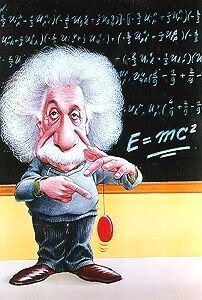 If you’re a fan of the popular TV show, “The Big Bang Theory” you probably think you know what constitutes a geek. However, like most depictions of stereotypes, they’re often inaccurate. As a physics major, I’m qualified to define geekism. I can relate to what they’re trying to say, but it’s not on my favorites list. We had moments in college that were similar, but in most cases, like they say, you had to be there. True geeks aren’t impressed by “The Big Bang Theory.” They live it. I, personally, think it’s boring. I much rather watch “Ancient Aliens” or something on PBS.
 We had a professor who was so nervous lecturing that he not only would be visibly sweating, but he had a nervous habit of clearing his throat, after which he would always say “Pardon me.” This particular prof was a perfect fit for the very intelligent yet introverted nerd. So what did I do one quarter? Kept a tally, day by day, for an entire quarter, of how many times he said “Pardon me”. Then I graphed it by magnitude versus date, then analyzed the data with my fellow students. We discovered the rate went up right after he returned an exam, perhaps anticipating grading arguments. I still have the file labeled “Pardon Me Curves” in my file cabinet. I kid you not. It’s a college memory from the 80s that still makes me laugh.
 Star parties typically start while the Sun is still up so, with a proper solar filter, you can look at the Sun and its various sunspots. While it’s still daylight the geeks are pretty quiet, compared to the hobbyists. Unless they know you, they probably won’t say a word, preferring to busy themselves setting up their equipment or perhaps talking to someone they already know. Then it gets dark.
 Which brings me to what this blog is really all about. At last night’s star party I met a young woman whom I believe was still in high school. She had her niece with her, a young girl, probably around ten. She’d driven an hour to pick up her niece, then drove another three hours (for a total of four) to come to a star party. Her telescope, which she’d purchased herself with money she’d earned babysitting, was twice the size of the borrowed one I was using. She got it on sale for just under $1000. That’s a lot of babysitting.
 I would like to nominate that young woman as “Geek of the Year.” Someone who is enamored with our Universe, so much so, that she spent her hard-earned money on an eight-inch telescope instead of designer clothes or, heaven forbid, tattoos, then shares her passion with a younger family member; I think I was about ten when I discovered the stars. I would have given blood and paid money for an auntie like that. Maybe you find that behavior laughable; I find it admirable. And you know what? The world needs more people like that.
 THOUGHT was still science fiction is the c-com device my hero uses for any number of functions. C-com stands for “cerebral companion” and was like a smart phone on steroids driven by psi-waves, a.k.a. telepathy. But EVEN AS I WAS WRITING THIS BLOG, an email came in from Futurism that stated you can now send text messages via your brainwaves! You can find the article
 To quote a conversation from my sci-fi novel,
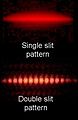 Some researchers indicated a new physics, which combined human consciousness with quantum and spacetime physics, was required to fully explain PK phenomena, a concept with which I heartily agree. After all, early quantum physics experiments such as the double slit experiment indicated the affect of an observer from the git-go, but of course “rational” scientists have made every possible effort to explain this away.
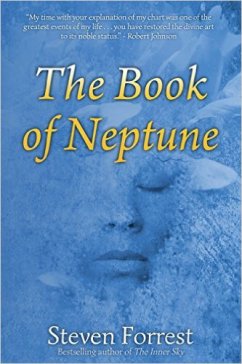 Looking at things from the astrological side, weird, woo-woo phenomena like P-Teleportation resides largely within the domain of the planet, Neptune. Steven Forrest is renowned worldwide as astrologer who has recently released a book entitled, “The Book of Neptune.” Forrest explains that currently Neptune is in the sign of its astrological dignity, i.e. Pisces, in which Neptune’s energy is not only particularly strong but has historically delivered a huge shift in spiritual paradigms. Forrest explains:
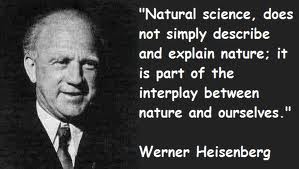 This brings to mind forward thinkers like Fritjof Capra, author of The Tao of Physics, published initially clear back in 1976. This book definitely served as a prelude to a melding of science and mysticism. He begins this fascinating work with one of my all-time favorite quotes from Werner Heisenberg, which states, “It is probably true quite generally that in the history of human thinking the most fruitful developments frequently take place at those points where two different lines of thought meet. These lines may have their roots in quite different times or different cultural environments or different religious traditions: hence if they actually meet, that is, if they are at least so much related to each other that a real interaction can take place, then one may hope that new and interesting developments may follow.”
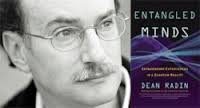 Perhaps Neptune’s subtle influences will facilitate the removal of the stigma associated with metaphysical phenomena sufficiently to allow such collaboration. I suspect researchers such as
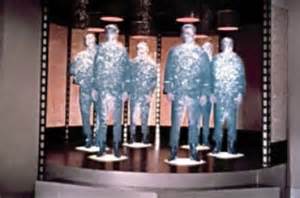
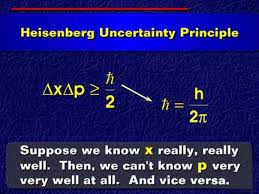 Remember, however, that this was written back in the 90s and science has made vast advances since then as has our computational capacity. Personally, I would bet it could be done using the principles of quantum entanglement, but Krauss’ points are nonetheless well-taken. After all, he’s a professor of physics in his own right, at Case Western University when he wrote that particular book.
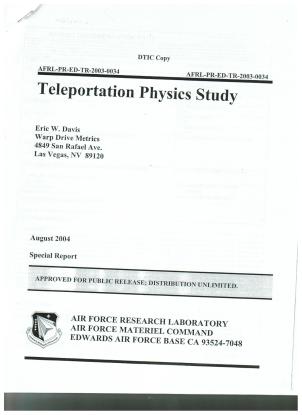 Seriously. I swear I’m not making this up.
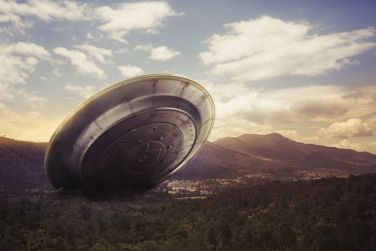 He goes on to say, “There are also a small number of credible reports of individuals who reported being teleported to/from UFOs during a UFO close encounter, which were scientifically investigated….” Plus: “There is a wealth of factual scientific research data from around the world attesting to the physical reality of p-Teleportation and related anomalous psi phenomena. The skeptical reader should not be so quick to dismiss the subject matter in this chapter, because one must remain open-minded about this subject and consider p-Teleportation as worthy of further scientific exploration.” He even mentions my favorite psi researcher, Dean Radin, PhD, of whom I’m a tremendous fan.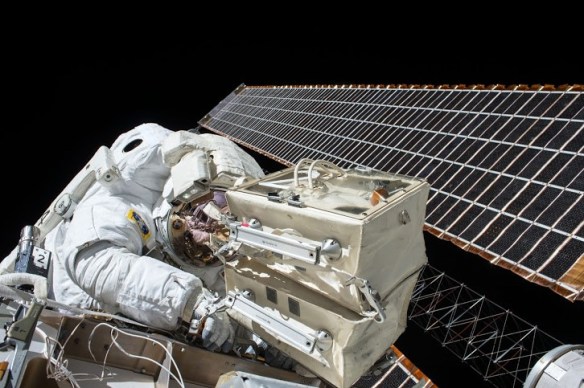


 Marcha's Two-Cents Worth