Watch for proper subject-verb agreement. “Writing skill IS important” vs. “Writing skill and grammar ARE important.” As a writer or author, knowing proper grammar is part of your job; even more so if you’re an editor.
Watch for proper subject-verb agreement. “Writing skill IS important” vs. “Writing skill and grammar ARE important.” As a writer or author, knowing proper grammar is part of your job; even more so if you’re an editor.
 Watch for mixed metaphors! “Her eyes flew across the room” is a classic example. This can also happen with misplaced prepositional phrases. Make sure they’re in the most logical order or they can have a similar effect. I saw one the other day that said “Wanna Clone Your Dog Like Barbra Streisand?” So, are they suggesting that your dog is like Barbra Streisand? I don’t think so, but it could be read that way. Adding “did” to the end of the sentence fixes it grammatically. Most would know what was meant, but it’s still best to avoid statements which can often be hilarious, but throw your reader out of your story while they have a good laugh.
Use active voice as much as possible. “The boy threw the ball”, not “The ball was thrown by the boy.” Note it also eliminates a preposition. This is another way that tighter writing is better writing. There are exceptions, but use them consciously. For example, a statement such as “The board approved the new proposal” is often simply stated “The new proposal was approved.” Watch for needing a prepositional phrase following the verb, in which case you may be slipping into passive voice.
Learn to use commas correctly. Comma usage is too complicated to explain here, but be aware that they not only affect readability, but reflect your skill as a writer. Read your work out loud, if necessary, to help you figure out where they’re needed. Their primary purpose is to separate sentence elements with a slight pause to provide clarity. Hint: You’ll often need one before “but” or “which”. Oxford commas, where you include a comma before the “and” in a series of items, is often used as well. For example, “Her favorite foods included pizza, spaghetti, chocolate, enchiladas, and fajitas.” Without the Oxford comma, “enchiladas and fajitas” could be considered to be a reference to a combination plate as opposed to separate items.
Use possessives to avoid prepositional phrases, e.g. notice how I changed the header from “Writing Tip of the Day”. You wouldn’t say “the collar of the dog”, would you? Tighter Writing is Better Writing. #amwriting #RRBC #amediting
Use pronouns and possessive pronouns effectively to avoid redundancy. For example, say “He took her hand in his and kissed it”, not: “He took her hand in his hand and kissed her hand.” Tighter writing is better writing. #amwriting #amediting
Know your homonyms! There, their, and they’re sound alike, but have entirely different meanings. Windows have shutters, a scared person shudders. Get it right! #ASMSG #RRBC #amwriting
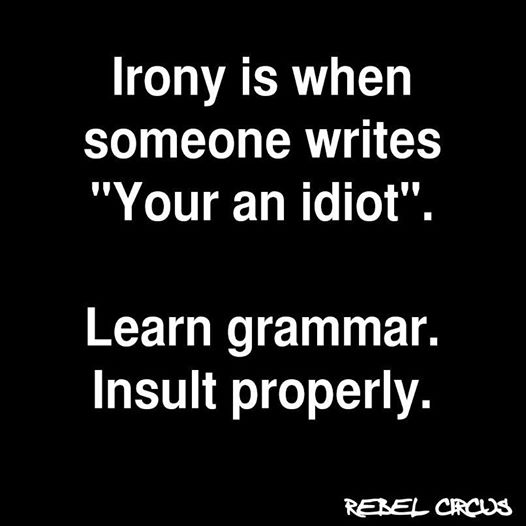

I think we all realize that whether or not a person likes a book is highly subjective. I’ve read (or tried to read) books with numerous five-star reviews that I didn’t like and couldn’t get through. Some were well-written, just boring or populated with unappealing characters, while others were poorly written and/or edited. I’m a bit of a grammar/typo Nazi myself so I hide my head in shame that someone put one of my books in that category.
I’ve heard that no literary agent or publisher takes an indie book seriously until it has a few three-star reviews. Thus, when I got my first one as an untimely present for my Christmas birthday, I had mixed feelings. I now had the obligatory mediocre review and, to be perfectly honest, the reason had been noted by a previous reviewer, i.e. the lack of commas. I acknowledge this as a valid complaint and have it on my to-do list to rectify. Sadly, at one point I’d actually taken several of them out because they seemed to slow the story down! How ironic is that?
Okay, you may have already guessed that I have a couple confessions to make. First of all, I edited my own books, which I realize is a major no-no, but let me explain. First of all, there were various times when this particular book, which was admittedly my first novel, was set aside for years. When I would get back to it, I could read it like it wasn’t my own and, for the most part, edit effectively. Like I said, I’ve been accused of being a grammar Nazi with other people’s work, and I definitely fixed a lot over time.
Another factor was finding an editor I could trust to do the job. I mean, really do the job. I’ve seen too many acknowledgements in various novels where authors extol and thank their editor while I, nonetheless, find a plethora of things they missed when I read the work in question. Call it pride, if you must, but it was hard not to feel I could do as good or better of a job than some of the supposed pros out there.
And the coup de grace was that I was on a budget. While I don’t mind paying for services that are done correctly, cost combined with not being sure I could find a competent editor resulted in doing it myself. Oh, well, my bad.
The second one is that, even though I have a minor in English, I am not that well-versed in grammar. Seriously. Most of what I know has been learned through my mother correcting me as a child, reading, and, heaven forbid, intuition. I’ve been an avid reader all my life and been writing since I could hold a pencil, yet never liked English classes or understood some of the rules. Diagramming sentences to me was worse than algebra, which made more sense. I really don’t like to point fingers, but in this case I’m going to point one at a prof I had in college who taught the obligatory grammar class for those majoring or minoring in English. That class was, like we say here in Texas, as useless as teats on a boar hog.
The prof, who is probably now dead and gone, couldn’t find a textbook that he liked so we had none. He would lecture, but with no logical order or continuity that I could recognize. All we did the entire term was–you guessed it–diagram sentences. Punctuation was rarely mentioned. One thing I remember him (or perhaps someone else) saying was that English, unlike Latin, was a living language that evolved, that such things as punctuation styles changed over time, and things like comma usage was becoming somewhat optional. You can bet I jumped on that like a duck on a June bug!

But for purists who were more astute at learning the rules than I was, it was a major faux pas. And apparently the person who left this three-star lambasting was one of them. I must say that the reviewer was generous in giving it three-stars since s/he didn’t even finish reading it.
Back to the subjectivity of what we like, science fiction is certainly one of those genres that everyone doesn’t care for. (Oops, ended that sentence with a preposition! OMG! Let’s correct that to “one of those genres for which everyone does not care.” Right? Right.) Even with proper punctuation it’s likely s/he wouldn’t have liked it. That I understand. And I do admit s/he has a point and I will fix the problem because, believe it or not, I really am a bit of a perfectionist, but that doesn’t mean that I know everything by a long shot. I’m teachable but, as noted earlier, I never had a decent English teacher or at least one I could follow. Math is much simpler to me with its concrete, easy to follow rules and black and white answers. Equations make a lot more sense.

So what have I learned that I can pass on to other writers? If I had this to do over, it would be to do a beta reader exchange with someone who has equal editing skills to my own. Fortunately, for subsequent books I was able to find such individuals. And that is what saddens me the most, the other books in the series are in much better shape. I’ve actually received compliments on the editing of at least one of the others. This was my first book and I’ve heard it said that everyone’s first novel should go in the trash bin labeled “tuition.” My problem was that it was the start of a series with so much more to tell! The characters evolved and so did the plot to the point that it took four full-length novels to complete the story. I’m a much better writer now, as all of us become, the more we write.
So, bottom line, I’ll go back eventually and correct the comma situation. I don’t know all the rules, but at this point I’m reasonably confident that I’ll be able to do so in a competent manner. The worst part, as most indie authors know, is that there are so many different formats to deal with, i.e., both print and electronic versions, which complicates the process considerably. Nonetheless, I’ll have the satisfaction of debunking that uncomplimentary review when it’s corrected, unless, of course, those who would appreciate a properly copy edited work are turned off by that seething diatribe, which is actually so excessive that it’s downright amusing. Fortunately, most geeks and nerds, who are my primary audience, anyway, aren’t quite so concerned, though there are exceptions, of course, many of whom I met at NASA.
<Sigh.>
Rant over.
Thanks for listening.
P.S. If you’d like an ecopy of the book in question, “Beyond the Hidden Sky,” for free, join my mailing list, which qualifies you for a free download. You can do so here.
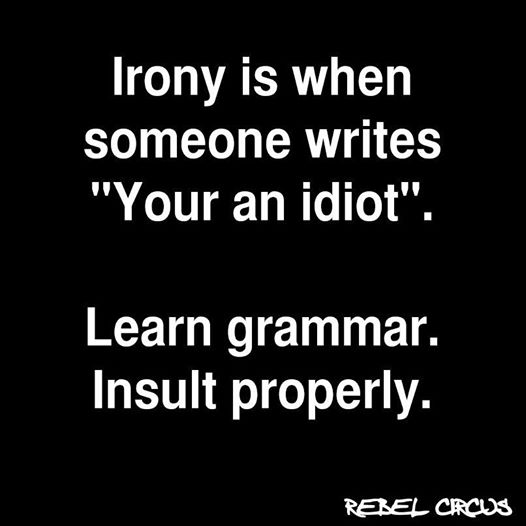
In the past few weeks I have seen the word shudder used incorrectly in two different books. The meaning of this word is to shake or vibrate; it is not the word for those planks designed to cover or sometimes decorate windows; that word is shutter like in shut. Another one I’ve seen misused in an otherwise excellent book is the word reign. This word relates to authority, such as “the queen’s reign.” To restrain or limit is the word rein, like the straps used with a bit to control a horse. The most common seem to be your (possessive) and you’re (contraction for you are) and they’re (contraction for they are), there (a place) and their (plural possessive.)
Conclusion
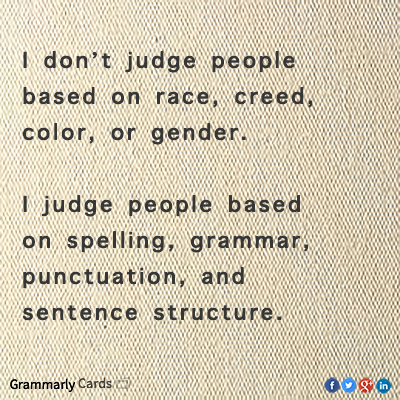
Nothing shows your ignorance as a writer faster than getting these different words mixed up. Many readers won’t know the different, I’m sure, but it’s really our responsibility as writers to provide correct usage and set the example for what appears to be an increasingly semi-literate world.
Of course now that we have autocorrect messing with our best intentions sometimes it’s not entirely your fault if they show up. Furthermore, if your keyboarding skills are advanced your fingers may tend to spell incorrectly from time to time. I have that problem where I know (not no) better but when I really get on a roll (not role) they often turn up (not turnip). That said, you’re (not your) going to have to pay attention and do your (not you’re) best to at least know (not no) the difference between them so you can correct them when you see (not sea) them. If you tend to read over your own mistakes then please, by all means, hire a good editor. Readers who know the difference will appreciate it.
Even though you’ve read dozens or even hundreds of novels, when you sit down to start writing one yourself you’ll occasionally hit a wall and wonder how it’s done. Here are a few common areas related to capturing thoughts and dialog that writers may not find intuitively obvious:
 Marcha's Two-Cents Worth