6 More Tips for Serial Writers

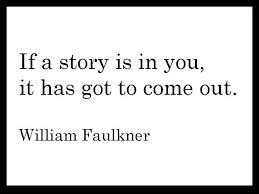
faulknerquote

Most of the tips in my previous post for serial writers were picked up from reading and beta reading the works of others. Afterwards, I realized that I’d learned quite a few things that were also worth passing along from writing my own tetralogy. These comprise either things I did that helped the process or I wish I’d known as opposed to figuring out the hard way. So, without further ado, here are a few more tips for those of you working on a story that refuses to end.

1. Read any previous volume(s) to assure consistency. Some details such as the color of a minor character’s hair or eyes can easily be missed, yet picked up by an astute reader. Trying to explain that Edith’s eyes are blue in certain light and green in others is somewhat lame, so it’s best to avoid it by being accurate. If you keep a file on your characters that includes such details it will simplify things later. Quite frankly, I don’t, but believe me, I will next time because it can be time-consuming and a real pain to hunt down later. Of course, while you’re reading, you can note these things, too, which is part of the point.

The best part of rereading the stories that precede you current work is you can usually find some seemingly small details that you can tie in. This is especially true when you’re wrapping everything up at the end. Fans in particular love this sort of thing and it may even drive them to go back and reread the earlier stories as well. Some of them may actually function like an inside joke. If you know anything about fandom you know how dedicated fans thrive on such things.

Assuming you have print copies of your book(s), using sticky notes or page markers works best. If you want to get fancy, you can even color-code them for different types of information. I was amazed and delighted at how some of the seemingly simple details in previous episodes related to the grand finale.

Also note how your style may have changed as your story unfolded, especially if the first one was your debut novel. (See the section in my first “Tips for Serial Writers” blog entitled “First the Worst, Second the Same…” for more on that.)

2. Use flashbacks, albeit brief, to tie in past events from previous books. Important events that ripple over into subsequent volumes should be recapped to refresh the memory of those who read previous works but did so long enough in the past to need reminders. It also puts things in context for new readers who may be reading the episodes out of sequence. These don’t have to be long and drawn out, which will bore your fans, but enough to get them back on track. Prologues can sometimes be used in this way as well.

father3

Flashbacks add depth as well as context.

In some cases, if your serial is complete, readers may start with volume one and blow straight through, especially if it’s a box set, but there’s a good chance that other books may have intervened or perhaps time, dimming their memory. If it’s not yet complete, it’s even more important. If a reader feels lost, it pulls them out of the story and they’re likely to be frustrated, which is one of the last things you want to do. If they wind up scratching their head or digging through previous books to find the event in question, unless they’re madly in love with your story they may toss it aside and pick up something else. Once they stop reading there’s always the chance they won’t be back. Confuse ’em, you lose ’em. Not good.

3. Timing is Everything. Serials are usually sufficiently complex to involve numerous characters who grab the spotlight from time to time and thus the point of view (POV). Keeping the timing correct can be a challenge, especially if coincident scenes are not written in sequence and have to be integrated later. I tend to write a scene when the idea arrives so I have all sorts of things to pull together as I attempt to wrap up a single volume, much less the entire serial. If you maintain a detailed outline, it helps, since you can insert POV excursions accordingly.

Mapping out key events visually is helpful, using project management software the ideal, but often unfamiliar or unavailable. The last thing any author needs is a stiff learning curve on a software package when they’re writing a novel. Using Excel is the next best option, the timeline broken down to suitable increments, whether hours, days, months or years. These go across the top with each column representing a unit of time. Events are listed in the rows below with the proper time element highlighted. You can do this by hand if you prefer; graph paper makes it a little easier.
typewriter

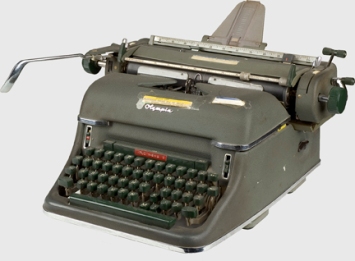
My first two novels were written on a typewriter that looked a lot like this one.

This can be done out of sequence if that’s how you write, either by inserting a row if everything is in order or organized later based on event timing, which is shown where time marks overlap. Including a column that contains the chapter number right after the first one with the scene description can be used to sort them as well, which also reveals any that need to be adjusted.

I remember seeing a comment from an author one time regarding how difficult it was to keep track of plot action occurring in different time zones. I laughed. My tetralogy involved coordinating events on different planets, spacecraft affected by Einstein’s theory of special and general relativity, and even time travel itself as my story shifted amongst the various characters. Keeping everything in the proper sequence to maintain story continuity was definitely a challenge. Again, Confuse ’em, you lose ’em. Remember that. Not all readers have the patience to read on with literally millions of other books begging to join their TBR list.

4. Insights regarding how your characters have evolved. How a character changes in a story is important, a key element, in fact, to good fiction. In a serial this may be a gradual process, perhaps so much so that the reader doesn’t notice. It doesn’t hurt to remind them using internal dialog on the part of the character(s), as an observation by another character in thought or dialog, or even in the narrative. For example, something as simple as “Before arriving in New York, Patsy was afraid of crowds, but now she navigated 5th Avenue with confidence” does the job.

5. Include the fate of all characters, not just your protagonist. You never know who’ll be a reader’s favorite character. I was surprised how many of my readers favored Thryon, my telepathic walking plant. Thus, you need to make sure everyone’s exit, whenever or however it occurs, provides closure. Don’t simply leave them behind. Characters who ride off into the sunset can also provide fodder for spinoffs.

6. Expect to miss your characters, who by now have become old friends. You may want to consider leaving things open enough at the conclusion to allow for spin-offs. Fully developed characters are just begging for another appearance. You know them as well, maybe even better than your own children or best friend, so if they’ve earned fans along the way, consider using them again. On the other hand, if you’re bored with them, readers may be, too, so this is not something that’s required or should be forced. Back stories are often at least partially written and can be put together for a quick short story that you can use as a giveaway enticement in your marketing efforts. Back stories are also great for holding readers’ interest until the next episode is released if it’s taking you a while to get the next one together.

Pageflex Persona [document: PRS0000039_00005]

It was fun writing this back story to my tetralogy which kept fans engaged and also served as a hook for new ones.

I’ve found that my short stories evolve into novels and my novels apparently evolve into a serial. Go figure. I simply get bombarded by ideas too good to leave out, especially once my characters come to life and take over the story. Other writers can crank out a single novel or novella in a few weeks or less whereas mine, for various life-related reasons, took years.

Fortunately, readers have a variety of preferences as well, whether it’s a quick “beach read” or something they can get their teeth into. Note that back stories can provide fans with both! My next one will be a spin-off from one of my Star Trails characters, which will hopefully prevent it from likewise expanding. But only time will tell.

6 Tips for Serial Writers

writingprocess

Or maybe, for clarity’s sake, I should say “Writers of Serials”. A “serial writer” could simply be someone who can’t stop writing, regardless of what it is, which fits more authors than I could begin to name. The folks I’m addressing are those of us who love our characters so much and get so enmeshed in our plot that it goes on and on, far beyond the binding of a single book. I admit to this freely, since my supposed single novel quickly evolved into at least a trilogy and ultimately a four volume tetralogy. An argument could be made that this is sheer laziness or ego, but for me there was just so much more story that needed to be told.

Just for the record, there’s a difference between a serial and a series. A serial is one where the basic plot line and story continues, often preceded by a cliffhanger in the previous book. Trilogies are often a serial, as is my Star Trails Tetralogy. Think of them as an epic story told in installments.

A series, on the other hand, may include the same characters, but not necessarily. Each will depict an independent plot or story line, such as the Nancy Drew series. Some series may even be thematic in nature, revolving around similar plots such as romance, romantic suspense, mystery or just about any other imaginable genre, but featuring an entirely different cast.

KONICA MINOLTA DIGITAL CAMERA

Now that we have that out of the way, let’s talk about writing a serial.

If your novel refuses to end because more plot twists, back stories and characters bombard you relentlessly, then you may as well recognize that you’re destined to be a serial writer. Be warned, however, that once you indulge yourself in that manner, you’ll probably never be able to produce a stand-alone story again. This is certainly not a bad thing, but there are a few things that are useful to know coming right out of the gate with that first book. So here are some tips I’ve developed from my own writing as well as numerous others I’ve read.

1. Don’t assume your readers are already familiar with your plot and characters. As an author it’s easy to just plunge forward with your story line, but there’s no guarantee that all readers will be familiar with what has transpired so far. Even if they read the previous book or books, time and numerous other stories may have separated them from yours, so a few quick reminders are always in order. This includes key plot elements leading up to the current problem as well as details such as what your characters look like. You may have them permanently ingrained in your head, but more than likely your readers won’t. In fact, it never hurts to have an occasional reminder throughout any book regarding their appearance. It’s always helpful to give them a certain habit you can throw in here and there that triggers an image as well as makes them more real.

Past events don’t require a long, boring summary. They can usually be worked in easily through character dialog such as a “Remember when?” conversation or short reference to something that occurred in a previous volume. These references can be humorous as well. Readers who remember that particular scene will enjoy the “inside joke” and new readers will feel as if they missed something good and be enticed to go back and read it. It adds depth and life to the characters and their relationships. How often do you reminisce with friends or relatives about important events? Allow your characters the same experience.

If you have an extremely complex plot it can be more difficult to bring new readers up to speed. I have jumped into a serial midstream before and had no problem figuring out what was happening while in others I was entirely lost and never made it through the book. In rare cases, if I was truly hooked, I’d go back and read the initial volumes, but I usually just quit reading and moved on to something else. Others, I read out of order but know I would have enjoyed it more in sequence.

This problem is particularly applicable to fantasy and science fiction stories where a new world or culture is involved. The more complicated the story’s context, the more important it is to fill in the reader and continue to remind them. Again, recaps don’t have to be long and distracting, only sufficient to make what’s going on make sense. Balance is required, of course. Too many reminders or redundancy are frustrating, too. This is where it’s great to have input from beta readers, including some who have not read the initial volumes.

2. “First the worst, second the same, last the best of any game.” I remember my kids chanting that little ditty as rebuttal when they would come in last in a competition, but ironically it can apply to serial writers. All skills improve with practice, which certainly includes everything we put into words, whether it’s another book, a blog, an article, website content or even something as dry as technical writing. The craft of assembling words together continually evolves. Thus, there’s a good chance that subsequent books will demonstrate your improved skills.

This is all well and good, but doesn’t mean that your first one shouldn’t be the best possible product. If it’s not, readers are less likely to continue on with the story. If you’re a new writer, this requires extra effort to make sure that first tome is in the best possible shape. This is likely to involve some investment on your part in a good editor as well as a professional book interior and cover designer. In some cases, you may even want to go back to that first one at some point and refine it, using your improved skills. I will be doing that for the first book in my tetralogy which has garnered a couple bad reviews due to missing commas. I felt a whole lot better about this when a friend and fellow author admitted she was also re-editing volume one of her series.

3. Avoid over-populating your story with extraneous characters. If they don’t move the plot along, then they don’t belong and usually shouldn’t be named. Too many people milling around in a book can be as confusing as going to a party where you don’t know anyone and are trying to learn plus remember everyone’s name much less what they do for a living. Red herrings may require a few people who pass quietly into oblivion, which is an entirely different situation. If you’re going to have a cast of thousands, then at least introduce them gradually and give the reader a chance to connect with each one individually before bringing in too many others. Once they’re all established, then it’s okay to have a massive group scene or discussion.

Which reminds me of another thing to avoid, names that sound or appear too similar, such as starting with the same letter of the alphabet and/or having the same number of letters. You want names that are distinctly different as well as fit the character, which is a subject in and of itself. Being visually distinct applies particularly to making life easier for speed readers. For example, don’t have one person named Horace and another named Hector. Names that are unique also make your character more memorable.

pageheart4. Don’t forsake minor characters from the previous work. Many times the hero or heroine is not the one a reader favors most. Thus, they may be disappointed or downright angry when a subsequent volume excludes him, her or even it. The character may have less emphasis that in the previous episode, but at least allow him/her/it a cameo appearance from time to time or explain their absence. For example, consider R2D2 and C3PO from Star Wars. They were part of the team and you expected them to hang around. In some cases, minor characters can provide a bridge to new major characters as well.

5. Cliffhangers: Pros and Cons. The ideal cliffhanger will make your reader want desperately to know what happens next and thus immediately buy the next book. On the other hand, they might be annoyed, feel cheated, and move on to more self-contained novels. Readers’ tastes vary tremendously, not only with regard to genre, but length. Some may be too ADHD to make it through a full length novel much less trilogy while others thrive on something they can get their teeth into. If you’re writing a serial, then you can always hope for fans like those who loved Harry Potter so much they’d stand in long lines at book stores awaiting the release of the next episode.

A cliffhanger that leaves one or more characters in dire straits with no obvious way out can be particularly annoying, especially if the sequel isn’t written yet! If the reader has to wait for months or longer for the sequel, you run a huge risk of losing them along the way. No matter how much they loved your story, once that time has passed there’s a good chance they will have all but forgotten it. Of course this is why you want to engage your readers, get them on your mailing list, tease them with excerpts on your Facebook page and so forth. If you have a great following, this may not be that much of a problem, but if you’re a new author it could be.

angry_girl_reading_bookHowever, for reader satisfaction, it’s often a good idea to at least provide some semblance of closure for the book at hand while leaving enough unanswered questions to entice them to continue on. Don’t drop them like a bad habit in the middle of an adrenaline rush. Put yourself in the reader’s place for a moment and consider how you react to such an ending. I think doing so may be fun for the author but painful for the reader. Maybe evoking an emotional reaction will make your book more memorable, but if it’s anger they may not come back. I always rank a book that can make me laugh or cry higher than those that don’t elicit a reaction. Emotional reactions stay in your heart (literally) as opposed to your head and thus will make your story more memorable, but it’s better to do this via lovable characters than irritating endings. I can still remember books I read decades ago that made me cry or laugh.
I’ve read the first volume of numerous stories, yet never made it to the sequel for several. Sometimes it’s simply a matter of time. As an author I do a lot of reading, editing and beta-reading for my peers which means I often don’t have the time to read something just because I want to know what happens. I have time for very little of what I would call “recreational reading.” How much I care about the characters is a big driver on whether I make it back for a sequel, but I have to admit if the plot is intriguing enough, I’ll want to know what happens even if I’m not thoroughly attached to the people involved. Another factor is length. If the episodes are more in the novella range as opposed to making “Gone With the Wind” look like a beach read, I’m more likely to make the time to read on.

6. When your serial is complete, consider making it a box set. Once my tetralogy was complete, I made it into a box set for both the print and electronic versions. This can have grand appeal to those who favor lengthy stories and of course minimizes the cliffhanger dilemma. It also gives you another opportunity for a big release party! I’ve been more than pleased with how well Star Trails has done as a set compared to the individual books.

In conclusion, I must say there’s tremendous satisfaction in writing a serial. Your characters continue to flesh out and assume a life of their own, often to the point where they virtually write the story for you. Mine got themselves into a variety of fixes, many of which I had no idea how they could possibly be resolved, until my characters themselves came up with the answers on their own. I must say that wrapping it all up was bitter-sweet, yet satisfying.

blackboard_writer2If you’re headed in the serial direction, or even just starting your first story, I highly recommend being a beta reader for other authors, which has taught me so much. We’re often blind to our own weaknesses until they glare at us from another’s work. I can’t begin to count how many times something has jumped out at me in someone else’s story, only to realize that I was guilty of the same faux pas.
Authors tend to be voracious readers, which is highly advised since it provides a wealth of information, if you but tune into it. This may take some of the enjoyment out of reading, but the writing lessons are worth it. One of my favorite sayings, No life is never wasted, you can always serve as a bad example, also applies to numerous works of fiction we’ve all encountered, especially in the Indie world where competent editing may be lacking. Needless to say, you don’t want your baby to be in that category.  Ironically, there’s more to be learned from bad writing than that which is so well-written you’re entirely immersed in the story.  Nonetheless, when you find yourself enjoying a book to that level, study it afterwards to determine why it worked so well.

I hope these tips garnered from my experience writing as well as reading the works of others will make your journey as a serial writer a little smoother.

It’s that Time Again: The Cosmic Season for Editing and Revising

strasclock

If you’re a writer it would be to your advantage to know a little astrology. Not only can it help you develop your characters as noted in a previous blog but there are actually three times a year when the cosmic climate is particularly conducive to editing and revising. If you don’t believe in astrology, that’s fine, I didn’t used to either. But you might want to give it a try because most writers, myself included, can use all the help we can get. So what exactly is this spell and why is it helpful? Stay tuned, I’m about to tell you.

It starts with the planet Mercury. In mythology Mercury a.k.a. Hermes was the messenger and the only one who could come and go to the Underworld. In astrology he rules communications or all varieties including your thoughts, ideas, writing and paperwork in general. In this day and age he also rules electronic communication devices such as cells phones, computers, television and the internet to name a few, plus anything mechanical, i.e. with moving parts, such as your lawnmower, small appliances, automobile and so forth.

If you’re already familiar with some astrology you’ve probably heard of Mercury Retrograde. While it’s intuitively obvious (or should be) that the planet Mercury does not reverse the direction of its orbit, as a rule three times a years he appears to move backwards in the sky compared to his usual direction. The reason for this is easily explained as similar to when you pass a car on the highway. You’re going faster so it appears the other is moving backwards, even though it’s not. Thus, when the Earth passes Mercury in its orbit you get the same effect.

So what? Hang on, I’m getting to that.

As I write, Mercury is currently in this state which started on 5 January 2016 and will last until 25 January. Astrologically when a planet is retrograde (yes, they all do the backstroke from time to time) it internalizes its energy. During this spell you may notice more computer problems than usual, things may break down more often, traffic is often worse and so forth. Anything ruled by Mercury bogs down during this time. If you buy something ruled by Mercury during a retrograde period it’s likely to be a lemon. Furthermore, anything initiated during Mercury retrograde seldom comes to pass. For example if you interview for a job you’re less likely to get it with one possible caveat, that being if it’s a second interview with the same person. It’s also not a favorable time to sign a contract or lease.

Why? Because during Mercury retrograde it’s a time to rethink, redo, reconsider, revise, refine, repair and so forth. This is a time to slow down, stop, and look over past work, thoughts and decisions. For a writer this is an awesome time for editing and revising. This is when you go back and see your work through different eyes, giving you the ability to make positive changes. It’s not uncommon for writers to dislike this phase because you may feel stuck, your brain may not work as efficiently and your computer may be on strike. Any new endeavors started at this time are likely to bomb out and relate to yet another “re” word, i.e. regret. This is because you’re resisting the cosmic flow. Reviewing, revising and editing your work from time to time is essential if you want to produce professional quality work.

redlines

If you’re suffering from writer’s block, this is the ideal time to look over what you have and see if it’s on the right track. You’ll be surprised at how much you’ll be able to improve it, perhaps even make some critical changes you didn’t think of before. Don’t expect to make much progress with new endeavors which are likely to be an exercise in futility. Submitting work at this time is not likely to bring results or, if it does, they’ll be delayed. Rather, use this time to rework and refine.

Will you be out of the woods for new projects come 25 January? Possibly not. Until Mercury gets back to the zodiacal position where he stationed retrograde he’s in his “shadow period” when things are still stalled. This lasts until February 15, at which time once again it will be “all systems go.”

Even if you think that astrology is a bunch of myth and superstition, give this some thought. Observing the world around you and how people behave is part of your job as a writer. See how many events and situations you can find which reflect this internalized energy, the cosmic climate designed to rethink, reconsider and revise. Few of us get it exactly right the first time and the Universe is well aware of our human frailties. Use these spells as they’re intended by the Universe and you’ll find they can become some of your favorite times when you can polish your work to perfection. Use this one to your advantage.

As previously noted, Mercury does this approximately three times each year. Here are the other times he’ll be doing the backstroke. Mark your calendar now!

28 April – 22 May 2016 (Shadow until 8 June 2016)

30 August – 22 September 2016 (Shadow until 8 October 2016)

19 December 2016 – 8 January 2017 (Shadow until 28 January 2017)

If you’d like to learn more about such things you’d probably enjoy my astrology website www.valkyrieastrology.com.  Which reminds me I have some updating to do on the retrograde planets page, perfect for Mercury RX.  Timing is everything.

Comma, give me a break!

booksinbox

I think we all realize that whether or not a person likes a book is highly subjective. I’ve read (or tried to read) books with numerous five-star reviews that I didn’t like and couldn’t get through. Some were well-written, just boring or populated with unappealing characters, while others were poorly written and/or edited. I’m a bit of a grammar/typo Nazi myself so I hide my head in shame that someone put one of my books in that category.

I’ve heard that no literary agent or publisher takes an indie book seriously until it has a few three-star reviews. Thus, when I got my first one as an untimely present for my Christmas birthday, I had mixed feelings. I now had the obligatory mediocre review and, to be perfectly honest, the reason had been noted by a previous reviewer, i.e. the lack of commas. I acknowledge this as a valid complaint and have it on my to-do list to rectify. Sadly, at one point I’d actually taken several of them out because they seemed to slow the story down! How ironic is that?

Okay, you may have already guessed that I have a couple confessions to make. First of all, I edited my own books, which I realize is a major no-no, but let me explain. First of all, there were various times when this particular book, which was admittedly my first novel, was set aside for years. When I would get back to it, I could read it like it wasn’t my own and, for the most part, edit effectively. Like I said, I’ve been accused of being a grammar Nazi with other people’s work, and I definitely fixed a lot over time.

Another factor was finding an editor I could trust to do the job. I mean, really do the job. I’ve seen too many acknowledgements in various novels where authors extol and thank their editor while I, nonetheless, find a plethora of things they missed when I read the work in question. Call it pride, if you must, but it was hard not to feel I could do as good or better of a job than some of the supposed pros out there.

And the coup de grace was that I was on a budget. While I don’t mind paying for services that are done correctly, cost combined with not being sure I could find a competent editor resulted in doing it myself. Oh, well, my bad.

The second one is that, even though I have a minor in English, I am not that well-versed in grammar. Seriously. Most of what I know has been learned through my mother correcting me as a child, reading, and, heaven forbid, intuition. I’ve been an avid reader all my life and been writing since I could hold a pencil, yet never liked English classes or understood some of the rules. Diagramming sentences to me was worse than algebra, which made more sense. I really don’t like to point fingers, but in this case I’m going to point one at a prof I had in college who taught the obligatory grammar class for those majoring or minoring in English. That class was, like we say here in Texas, as useless as teats on a boar hog.

The prof, who is probably now dead and gone, couldn’t find a textbook that he liked so we had none. He would lecture, but with no logical order or continuity that I could recognize. All we did the entire term was–you guessed it–diagram sentences. Punctuation was rarely mentioned. One thing I remember him (or perhaps someone else) saying was that English, unlike Latin, was a living language that evolved, that such things as punctuation styles changed over time, and things like comma usage was becoming somewhat optional. You can bet I jumped on that like a duck on a June bug!

judgeongrammar

But for purists who were more astute at learning the rules than I was, it was a major faux pas. And apparently the person who left this three-star lambasting was one of them.  I must say that the reviewer was generous in giving it three-stars since s/he didn’t even finish reading it.

Back to the subjectivity of what we like, science fiction is certainly one of those genres that everyone doesn’t care for. (Oops, ended that sentence with a preposition! OMG! Let’s correct that to “one of those genres for which everyone does not care.” Right? Right.) Even with proper punctuation it’s likely s/he wouldn’t have liked it. That I understand. And I do admit s/he has a point and I will fix the problem because, believe it or not, I really am a bit of a perfectionist, but that doesn’t mean that I know everything by a long shot. I’m teachable but, as noted earlier, I never had a decent English teacher or at least one I could follow. Math is much simpler to me with its concrete, easy to follow rules and black and white answers. Equations make a lot more sense.

pageheart

So what have I learned that I can pass on to other writers? If I had this to do over, it would be to do a beta reader exchange with someone who has equal editing skills to my own. Fortunately, for subsequent books I was able to find such individuals. And that is what saddens me the most, the other books in the series are in much better shape. I’ve actually received compliments on the editing of at least one of the others. This was my first book and I’ve heard it said that everyone’s first novel should go in the trash bin labeled “tuition.” My problem was that it was the start of a series with so much more to tell! The characters evolved and so did the plot to the point that it took four full-length novels to complete the story. I’m a much better writer now, as all of us become, the more we write.

So, bottom line, I’ll go back eventually and correct the comma situation. I don’t know all the rules, but at this point I’m reasonably confident that I’ll be able to do so in a competent manner. The worst part, as most indie authors know, is that there are so many different formats to deal with, i.e., both print and electronic versions, which complicates the process considerably. Nonetheless, I’ll have the satisfaction of debunking that uncomplimentary review when it’s corrected, unless, of course, those who would appreciate a properly copy edited work are turned off by that seething diatribe, which is actually so excessive that it’s downright amusing. Fortunately, most geeks and nerds, who are my primary audience, anyway, aren’t quite so concerned, though there are exceptions, of course, many of whom I met at NASA.

<Sigh.>

Rant over.

Thanks for listening.

P.S. If you’d like an ecopy of the book in question, “Beyond the Hidden Sky,” for free, join my mailing list, which qualifies you for a free download. You can do so here.

The Cosmic Season for Editing and Revising

strasclock

If you’re a writer it would be to your advantage to know a little astrology. Not only can it help you develop your characters as noted in a previous blog but there are actually three times a year when the cosmic climate is particularly conducive to editing and revising.

If you don’t believe in astrology, that’s fine, I didn’t used to either. But you might want to give it a try because most writers, myself included, can use all the help we can get. So what exactly is this spell and why is it helpful? Stay tuned, I’m about to tell you.

It starts with the planet Mercury. In mythology Mercury a.k.a. Hermes was the messenger and the only one who could come and go to the Underworld. In astrology he rules communications of all varieties including your thoughts, ideas, writing and paperwork in general. In this day and age he also rules electronic communication devices such as cell phones, computers, television and the internet to name a few, plus anything mechanical, i.e. with moving parts, such as your lawnmower, small appliances, automobile and so forth.

If you’re already familiar with some astrology you’ve probably heard of Mercury Retrograde. While it’s intuitively obvious (or should be) that the planet Mercury does not reverse the direction of its orbit, as a rule three times a years he appears to move backwards in the sky compared to his usual direction. The reason for this is easily explained as similar to when you pass a car on the highway. You’re going faster so it appears the other is moving backwards, even though it’s not. Thus, when the Earth passes Mercury in its orbit you get the same effect.

So what? Hang on, I’m getting to that.

As I originally wrote this, Mercury was currently in that state which started on 4 October 2014 and lasted until 25 October. As noted earlier, this happens about three times a year so we are into it again between 21 January – 11 February 2015.  So far this current cycle looks like a doozy.  My computer is acting psycho and I’ve had numerous reports of misbehaving appliances and it’s only the first day.  Astrologically when a planet is retrograde (yes, they all do the backstroke from time to time) it internalizes its energy. During this spell you may notice more computer problems than usual, things may break down more often, traffic is often worse and so forth. Anything ruled by Mercury bogs down during this time. If you buy something ruled by Mercury during a retrograde period it’s likely to be a lemon. Furthermore, anything initiated during Mercury retrograde seldom comes to pass. For example if you interview for a job you’re less likely to get it with one possible caveat, that being if it’s a second interview with the same person. It’s also not a favorable time to sign a contract or lease.

Why? Because during Mercury retrograde it’s a time to rethink, redo, reconsider, revise, refine, repair and so forth. This is a time to slow down, stop, and look over past work, thoughts and decisions. For a writer this is an awesome time for editing and revising. This is when you go back and see your work through different eyes, giving you the ability to make positive changes. It’s not uncommon for writers to dislike this phase because you may feel stuck, your brain may not work as efficiently and your computer may be on strike. Any new endeavors started at this time are likely to bomb out and relate to yet another “re” word, i.e. regret. This is because you’re resisting the cosmic flow. Reviewing, revising and editing your work from time to time is essential if you want to produce professional quality work.

If you’re suffering from writer’s block this is the ideal time to look over what you have and see if it’s on the right track. You’ll be surprised at how much you’ll be able to improve it, perhaps even make some critical changes you didn’t think of before. Don’t expect to make much progress with new endeavors which are likely to be an exercise in futility. Use this time to rework and refine.

Will you be out of the woods for new projects come 25 October? Possibly not. Until Mercury gets back to the zodiacal position where he stationed retrograde he’s in his “shadow period” when things are still stalled. This lasts until November 11, at which time once again it will be “all systems go.”

Even if you think that astrology is a bunch of myth and superstition give this some thought. Observing the world around you and how people behave is part of your job as a writer. See how many events and situations you can find which reflect this internalized energy, the cosmic climate designed to rethink, reconsider and revise. Few of us get it exactly right the first time and the Universe is well aware of our human frailties. Use these spells as they’re intended and you’ll find they can become some of your favorite times when you can polish your work to perfection. Use this one to advantage, the next one will be January.

If you’d like to learn more about such things as retrograde planets or just about anything else related to astrology you’re invited to visit my website www.valkyrieastrology.com.

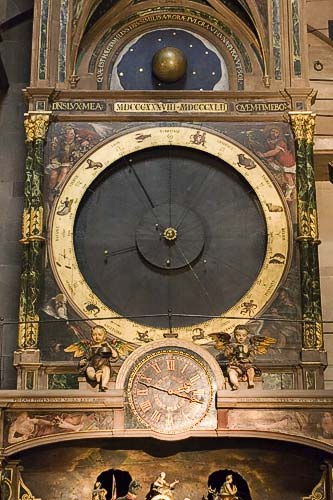
Picture: Astronomical Clock, Cathedrale de Notre Dame, Strasbourg, France

INDIE WRITING TIPS: The Final Edit – How are your IDEAS presented?

rules4writers

Most writers have a propensity toward one particular element of fiction writing more than others. Some can spew action and dialog effortlessly, others render amazing descriptions which create vivid, memorable mental pictures, while others possess a narrative style as smooth as silk. What comes naturally and easily, however, is not necessarily enough to round out your story. What you want to achieve for the best possible impact and reader satisfaction is balance.
I’m one of those who finds action and dialog the easiest to write. If I can get my characters talking they will often take over the story and leave me as the observer, essentially taking dictation. Piece of cake. But talk alone does not a novel make. While I don’t want to interrupt the flow when I’m on a roll (or perhaps in this case, role) at some point I need to go back and fill in the blanks, sometimes multiple times, as I review each chapter for the proper balance. What do I look for? I remember them with the acronym IDEAS.

I = Imagery
D = Dialog
E = Emotion
A = Action
S = Suspense

IMAGERY

Stories don’t take place in a vacuum. They need to be grounded with a sense of place whether it’s the distant past, present, faraway future or any geographical location you can think of. Furthermore, modern culture is visually oriented, making this a critical element. Drawing in your readers so they can see the story in their mind is essential.

Descriptions don’t need to be long; you don’t want to run the risk of being verbose and, heaven forbid, boring. If your story is set in a familiar place like a well-known city, mentioning specific landmarks is an easy way to create a sense of place. Historical novels require enough description to take the reader back in time. Include plenty of reminders to differentiate life then to now. For example, your character from 1840 can’t text via i-phone, it will need to go via Pony Express or private messenger which could take weeks or months to arrive. Emphasizing challenges we no longer face in modern times helps convey the reader to that time and place.

Remember that imagery includes all the senses, not just vision. Sounds, scents, touch and taste all bring strong impressions as well. Think of things which are familiar to most readers such as the sound or smell of rain, colors and smell of autumn leaves, the crisp chill of the first frost, the sounds of summer whether kids playing in a pool or cicadas, or even the din of city traffic. The more senses you can call upon the more memorable and vivid your description will be.

DIALOG

Dialog moves a story along quickly as long as the conversation is relevant. This applies to not only the story’s plot but character development as well. You can often fit other descriptions into your dialog such as the character’s expression, body language and so forth, even things like the color of their hair or eyes.

Straight dialog with no break can get tedious as well unless it’s an extremely intense conversation and even then some description can make it even stronger. Tone of voice, e.g. angry, sad, cheerful, etc., or how you would describe the actual sound of their voice contribute to your means of character development. A simple statement like “his voice cracked with emotion” sends auditory as well as emotional input.

EMOTION

If you don’t grab your readers emotionally they are less likely to remember your story. Like they say, people won’t remember what you say but they’ll remember how you make them feel. Without it your story is essentially lifeless. Life is all about emotions and if there aren’t any in your story then you may not have a story, at least not one that anyone will connect to and remember. You may have felt it when you wrote it but will your reader?

Of course you don’t want to get all sappy, sticky and sentimental, either. This is where showing as opposed to telling comes in. “She felt sad” is pretty shallow compared to “her heart ached with loneliness.” Think of the physical symptoms typical of the feeling you want to describe and start there. The heart is the center of emotion and is a good place to start. Memories are stored in the heart as well as your brain which has been proven through the experience of heart transplant patients who suddenly acquire habits and other characteristics of the donor, such as their favorite food. This further shows why making your readers feel something is important. Laughing and crying represent two reactions which will make you and your story memorable. As a reader myself if a book can make me do both it’s a definite winner. I remember books I read years ago because they made me laugh or cry, even if I can’t remember exactly why.

This can be something that’s not as easy to include as action and dialog. As you’re writing you’re no doubt thinking of the relevant emotion but don’t take it for granted your readers will feel it unless it’s pointed out, preferably in a smooth, integrated way that is informative but not distracting. Clearly if someone is yelling and saying harsh words then anger is obvious but throwing in a few physical effects drives it home.

If this is difficult for you I suggest you take each of your characters and list the emotions that he or she will experience during the course of your story. Then, one by one, make a few notes of how you can bring them to life.

ACTION

Action can occur on various levels. It can be physical, mental, psychological, or emotional. It’s what moves your story along its intended plot line(s) and keeps your readers engaged and turning the pages. What are your characters doing? What is going on around them causing them to make decisions and take action? Something needs to be happening. Similar to emotion, the more types of action you include the better. Some genres will emphasize one more than others but including the entire spectrum gives your story more layers and complexity. What are they doing, thinking and feeling?

Physical action sequences shouldn’t be interrupted with long periods of internal dialog. If your hero is in the middle of fighting the antagonist or a dragon the description of the battle itself is of prime importance but this includes what your character is experiencing such as straining muscles, the impact of a punch, fatigue, fury, fear, etc. Don’t forget to throw in the other senses as well for added emphasis, e.g. the smell of blood and sweat.

SUSPENSE

Some authors have a natural flair for suspense which is often the single most important factor in writing a real page-turner. If your readers don’t wonder much less care what’s going to happen next then they’ll probably never finish your story. You want to keep them wondering how your character is going to get out of his current dilemma.

Even stories which aren’t technically in the suspense genre need it. The type simply differs depending on whether it’s a romance novel, a psychological thriller, murder mystery or any other fiction genre you care to name. There needs to be some sort of danger hanging over your character’s head which could drop at any time.

Don’t keep your readers in the dark and spring something on them out of the blue. You can actually build more suspense by telling them more about the looming threat versus not enough. Sprinkle a generous portion of clues and red herrings throughout to keep them guessing, regardless of genre. Your goal should be to master the art of writing a book your readers can’t stand to put down.

CONCLUSION

The purpose of this blog is not to tell you how but rather provide a simple checklist for when you do that dreaded final edit. While every chapter may not include all of these elements, the more you can fit in the better. Improving your craft requires stretching beyond what comes naturally and polishing it to perfection.

[NOTE:– If you have a favorite author who does a particularly outstanding job in any of these categories feel free to mention them as well as their books as examples for us all to learn from.]

Confessions of a Reviewer from Hell – Part Four

As a person who worked in a technical environment for two decades, I have to admit one of my pet peeves is when details relevant to a novel are ignored or inaccurate, particularly when they relate to the protagonist’s or key characters’ livelihoods. If you’re going to place him or her in a particular career or situation such as a police investigation or military setting, then you should know something about their SOPs (Standard Operating Procedures). Otherwise, especially if one of your readers is familiar with such an environment, they’re going to be put off by inaccuracies or glaring errors regarding how that particular field operates. Do you really want someone from one of those professions to pick up your book and laugh themselves silly? Probably not. Not only will you lose a potential fan but may garner a scathing review which will discourage other readers.

Understand that people in most professions including big business, the military, aerospace, law enforcement and most other fields, even including those who labor in fast food establishments, tend to speak their own unique language, often replete with various acronyms. If you want your story to sound authentic then you need to reflect those details in your story. In other words, if you’re going to write a medical thriller then you’d do well to learn some physiology so those gory scenes are accurate and be familiar with emergency room procedures and jargon. In case you haven’t noticed, novels that make it to “Best Seller” status tend to meet these standards of accuracy.

If you’ve followed this blog from the beginning you’re probably getting tired of hearing this, but if you’re going to do something, freakin’ do it right! If nothing else, realize that failing to reflect appropriate details to bring a character, profession or even location to life is a classic example of why authors are continually advised to “Write what you know!” The good news, particularly as far as authenticating a location is concerned, is that as a writer you can vacation in such places of interest and then write off at least part of it as an expense on your income tax. It doesn’t get any better than that. Just be sure to take notes, keep your receipts and not expect immediate book sales to pay off your credit cards from such a jaunt.

If you don’t already know the necessary details through life experience, then you need to do some research. This doesn’t have to be onerous or boring. You can always talk to someone who does that for a living and pick their brain. Most people enjoy talking about what they do and are even flattered that you asked. Use them later as a beta reader to make sure you captured it correctly. You’d be surprised how much more interesting your story becomes when you’ve done your homework. Often new plot twists surface as a result and your finished product will be more convincing and deserving of praise, including by those within or without that particular occupation. If they like it they’ll tell their coworkers and bring more readers and fans your way. You may even inspire someone to go into that line of work as they get a bird’s eye view of what it involves.

The world these days is filled with too much mediocrity. Please don’t contribute to it with your writing. Standards have plunged now that literally anyone who possesses a little computer and internet knowledge (or perhaps sufficient money) can get their novel published in ebook or even printcopy format. No writer today is forced to deal with rejects and a plethora of revisions to get their work published so the incentive to edit and in some cases even run the spellchecker have been lost. Doesn’t anyone own a good dictionary anymore? Okay, okay, I’m one of those weird people who would actually read the dictionary from time to time. I’m not a perfect speller but I can usually tell when a word “looks” wrong and know where to look to find out. My grammar isn’t always correct and one thing I’ve never mastered was punctuation, especially the use of commas. I admit it, I’m far from perfect. But I’m closer than I was 30 years ago.

Please. If you must produce sloppy work, keep it far away from me. If sufficiently provoked by bad writing I can become “The Reviewer from Hell.” Of course that depends on your attitude. Regardless of which stage you’re in as a writer from stark beginner to already published, if you’re a true professional and want to know the truth, then I may be able to either help you move in that direction or validate your efforts as on-track.

That said, before I close what has turned out to be a rather lengthy blog/rant I have one more thing to say: All I’m really trying to do is make this a slightly better world for readers of Indie authors, one sentence at a time.

Namaste.

Confessions of a Reviewer from Hell – Part Three

Needless to say, as I learned these lessons in humility, many of which were difficult and ego-deflating, I became quite adept at editing, if I do say so myself. I’ve been an avid bibliophile my entire life, right back to those Little Golden Books my mother read to me, so I have developed a strong concept of character and plot development as it pertains to fiction writing as well.

I didn’t get it all through osmosis, however; I also read books on writing, attended classes which included obtaining an English minor in college, and went to various workshops dealing with writing technique. I point this out not to brag but to show how serious I was about learning how to do things correctly. It’s only when you can admit how little you know that you open yourself up to really learning something. Long before my own books were in print I helped several friends edit their books, two of which eventually got published and earned me a place in their “Acknowledgements” section up front. Seeing my name in print in their work gave me hope that maybe someday I could do the same.

I evolved into “The Reviewer from Hell” thanks to some God-given talent and experience. I was raised with the mantra “If you’re going to do something, then do it right,” as well as its complement, “If you want something done correctly, then do it yourself.” I’m still extremely self-critical but every now and then I’ll read something I wrote, usually far enough in the past that I’d forgotten about it, and realize it’s actually pretty good. At that point I have one of those Han Solo moments when “Sometimes I amaze even myself.”

So, when I read someone else’s work all of this experience comes to bear. If there are spelling errors they jump off the page and hit me between the eyes. Grammatical errors make my ears ring. Plot or character inconsistencies evoke a spoken comment toward the author, often not complimentary and along the lines of “WTF are you thinking?”

I do try to review in context. If something is intended to be an afternoon read at the beach I will not judge it based on standards that would make Hemingway sweat. I realize that all authors don’t obsess on research and accuracy like I do. (You should have picked that up from the fact I got a physics degree to write sci fi.) However, when I encounter something in a novel that just doesn’t ring true it makes me cringe. Kind of like my rant elsewhere in the blog world about the movie “Armageddon” which is entitled “A Roughneck and a Rocket Scientist Went to a Movie.” Do it right or not at all.

But do you know what this is really all about? It’s simpler than you may think. If you only remember one thing from this blog, remember this: A novel should take you to another place, immerse you in another world which may or may not include this planet, and involve you deeply in the lives of its characters. Agree? Good. Now listen up, writers! Bad writing, which includes anything that distracts the reader, breaks that magical spell! Whether it’s misspelled words, typos, incorrect grammar, choppy writing or plot inconsistencies, the reader loses connection with the story.

Thus, if a story makes me both laugh and cry it has an extremely good chance of earning a 5-star review (provided my reaction was motivated by the story and not the author’s lack of technique). Why? Easy. Because I got emotionally involved with the story which meant there were no distractions which meant it was well-written. If I didn’t laugh or cry but enjoyed the story without stumbling over a figurative garbage-strewn path of author carelessness, it may still get 5-stars, especially if it was a thriller or murder mystery which is usually not intended to elicit that kind of response. After that, my ranking goes downhill steadily, depending on how many whiplashes I suffered as I was jerked back into editor mode.

All reviews are subjective and authors can learn something from them all, even if it’s the simple fact that not everyone will love their work. It’s difficult to edit your own writing and another set of eyes can find all sorts of things which can do you a huge favor. In most cases when I find quite a few things that distract me from the story I simply pass on my observations to the author without putting some horrific review out on Amazon or Goodreads. I really don’t want to upset anyone, I want to help make their work better, just as those red pen wielding engineers helped me. I want to raise the bar, especially for Indie writers, so that no reader ever has to suffer through another novel that simply wasn’t ready to be made public.

Capiche?

(To be continued)

Confessions of a Reviewer from Hell – Part Two

When I finally got around to writing novels it was in the “old days” when you not only had to write it on a typewriter but also hoped to find a publisher. Self-publishing was available through various places known as “Vanity Presses” but they cost a lot of money I didn’t have. So I went the query-submission-reject route multiple times. This, of course, didn’t exactly help my confidence since I was certain it was because my work was not perfect enough. Thus, I’d go back to the manuscript with a critical eye, rewrite and retype.

Revising meant retyping with the most fun when the pagination changed. Then you had to retype everything up to that point or perhaps do some more editing so it fit correctly. I became a master at fitting it in the available space, a skill that came in handy later when I designed pamphlets and other promotional material to say nothing of Twitter. Today’s young authors have no idea what it was like prior to work processors! OMG, it gives me an anxiety attack just thinking about it!

Of course I didn’t realize, naïve as I was, that in most cases getting published was largely political and a matter of who you knew and schmoozed as opposed to genuine talent. My lack of confidence made self-promotion like that impossible as I hoped to be “discovered” and thereby validated. Thus, getting published was often more a matter of confidence as opposed to ability which of course explained why so many books that I considered inferior, or at least no better than mine, made it into print.

I was a late bloomer, which was also a confidence issue. I felt like I wasn’t good enough, mostly based on the number of rejects I’d collected, and was afraid that everyone else would figure that out.

But I wanted to be a science fiction writer and a good one so I figured that I needed to get the education required to do so. So at 35 I went back to college to get a bachelor’s degree in physics. No one was more surprised than I was when I actually graduated and eventually went to work at NASA where my writing skills were often the tie breaker between me and another candidate competing for the same job.

One particular job I held at the space agency was that of a technical writer. My duties were to take minutes at safety review panel meetings which entailed recording the proceedings and capturing action items, writing them up, then submitting them to the engineer for editing and eventual approval. And again I found out how very imperfect I was! It was really hard on my pride when the engineer would bleed all over my hard work with red ink. (Years later, when I was the editing engineer I would use green ink, which somehow seemed far less hostile.)

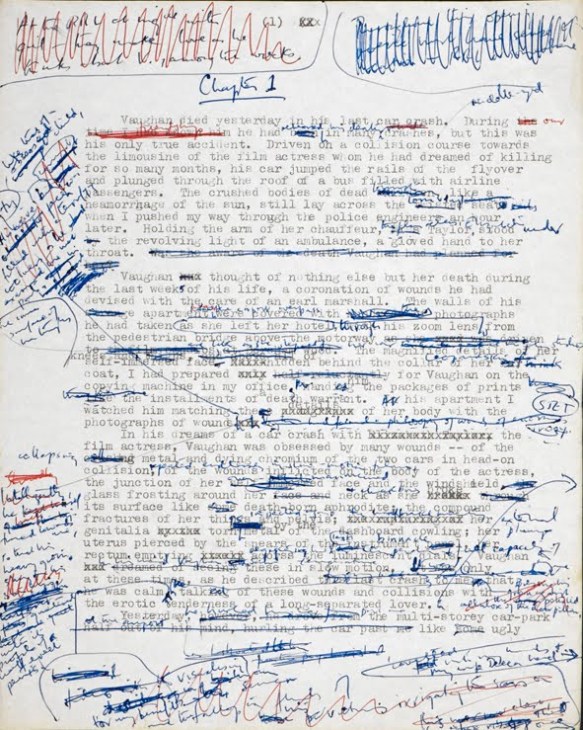
After limping through hundreds of pages splattered with red ink, however, something I could actually classify as transformational occurred. Eventually I became jaded to criticism and thus got past the shame of producing an inferior product. After overcoming that emotional milestone I could see more clearly and recognize that my writing was greatly improved by the joint effort. I learned to collaborate and eventually let go of my pride. My attitude changed. When people edited or criticized my work I saw it as helpful because it improved the product. I finally realized that I was actually a pretty good writer even though my work still came back with numerous edits sprawled all over the paper like blood-thirsty worms. Writing was subjective and there was probably no such thing as perfection once you got beyond “See Jack run.”

Little by little I had become a “professional” writer.

(To be continued)

Confessions of a Self-Admitted Reviewer from Hell

Part One

One does not achieve such an honor easily or overnight. As I think about it, I realize that it started when I was a baby. Even before I started to talk I must have been aware of proper speech because my mother told me that I would form the words silently and obviously be thinking about their meaning, yet didn’t say anything out loud until I was three. Since I was an only child it was easy for her to find time to read to me and I was reading myself by the time I went to kindergarten. I remember sitting in first grade wondering why the other kids didn’t know what the words were, probably the first rumbling of that internal editor coming to life.

I learned how to write thank you notes as soon as I could hold a pencil and started writing letters to my favorite aunt about that same time. My mother was a perfectionist (yes, a Virgo, for those of you who know anything about astrology) and thus always corrected my grammar. By the time I reached 6th grade I was writing stories for the enjoyment of my fellow students (science fiction stories, I might add, mostly related to the planet of origin of our teachers).

Around that same time my mother taught me how to use a typewriter. An old manual one that took some serious effort to command the keys. Years later after I graduated from high school I took a typing test at a job agency where I achieved 98 words per minute with two errors. Putting words on paper were obviously never a problem. While everyone else hated essay exams I loved them. Even if I didn’t really know the answer I could B.S. my way through because I’d write so much the teacher probably got tired reading it and would just give me an A. Many years later when I worked as a NASA contractor and did quite a bit of technical writing, one of my bosses nicknamed me “The Mistress of Bullsh*t.” I was flattered, of course.

But there was one catch to all this. I had no confidence, in my writing or anything else. My mother’s criticism permeated every aspect of my life, including the one thing I was good at. It inhibited my creativity for fear whatever I did was not perfect. If you’re a parent, give that some thought. This is not to say that a parent should tell their child that something is prize winning material when it’s clearly not but honesty cuts both ways. If it’s good, say so, and it doesn’t have to be perfect. There’s a difference between coaching and criticism. If you don’t know the difference, then figure it out. I mean it.

Nonetheless, I loved to write, mostly nonfiction and journalistic articles. I worked as a stringer for a small hometown newspaper for a while. I can’t even remember how many newsletters I’ve edited, many of which I created in the first place, back when they were written on a manual typewriter and duplicated on a mimeograph or ditto machine. Some of you probably don’t even know what they were, those early precursors to modern day copy machines. I’m talking about the days before Kinkos much less home laser printers.

If you’re a writer who doesn’t remember those days, give it some thought. Would you have had the patience and perseverance required to retype an entire manuscript? That was business as usual for us old-timers. Yet that is how it used to be. Could that possibly explain the quality of books available back then versus now, when you’re always at risk of purchasing a real dog of a story filled with typos, grammatical faux-pas’, cardboard characters and an inconsistent plot? Might someone consider your book a dog?

Think about it.

(To be continued)