Today’s Writing Tip

design-space-copy

You’ve probably heard it over and over to “Write what you know”, whether it relates to your hero’s job or where he lives.  This is all well and good, but depending on your education and experience, what do you do when you get an idea where you main character is an archeologist, but you know precious little about it?

If you don’t know first hand, then learn via research. I have found research to be some of the most satisfying and enjoyable part of writing. It always provides additional ideas for plot twists and story details far beyond what I originally conceived.

Accuracy is essential if you want to maintain credibility as an author. Fiction or not, there are limits to what you can make up off the top of your head. Believe me, anyone who knows something about that particular profession, location, or whatever, is going to be on you like a duck on a June bug if you get it wrong. When a reader is rolling their eyes at your story, don’t think they’ll give you a favorable review much less ever become a fan and be back to check out your future work.

Even if your story is well-written otherwise, huge inaccuracies are unforgivable. It’s better to be a little vague than to get it wrong. But getting details spot-on are a bonus that give you credibility and respect as an author.

“The Making of a Healer” by Russell FourEagles

makingofhealer

5stars

I hardly know where to start expressing my impressions of this book. Let’s just say that it is clearly in my list of the Top Ten Most Influential Books I’ve ever read. I was actually sad when I finished it, yet know this is one of the few books that I will read many times.

Probably the most powerful message I received was the highly spiritual nature of indigenous American teachings. Interestingly enough, it comprised everything included in my own beliefs, which I’ve collected from various sources. These include organized religions, my own experiences, scientific research, meditation, as well as the teachings of various yogis and motivational speakers. It was clearly a revelation to find my own belief system, which I’ve assembled over a lifetime, expressed in a single book.

The philosophies expressed are nothing short of profound and beautiful. The respect for Mother Earth and all her creatures, including those of other cultures, is such a powerful concept that has been blatantly ignored by western cultures. Living in harmony is essential to our health and well-being. The concept of the “heart box” where we store and build up the various hurts, disappointments, and traumas of our lifetime rang true. The Oneida Fire Ceremony used to clear those issues is one I’d heard variations of before and it works.

Bottom line, we must live with an attitude of love, not fear. The author’s personal experiences illustrate these principles in a humble and powerful way, from being taught these things by his grandmother, to being a soldier in Vietnam, to becoming an inspired healer.

If you’re looking for some genuine inspiration that dates back hundreds, possibly thousands of years, then read this book. If you need to know what actions you can take to rid yourself of old issues lurking in your subconscious that you want to release, then read this book. If you want a touch of wisdom that has been lost, yet is exactly what the world needs today, then read this book.

I can’t praise it highly enough. If you’re looking for answers, it’s highly likely you will find them here.

You can pick up your copy on Amazon here.


Today’s Writing Tip

computer- copy

Does your story take place somewhere you’ve never been? Of course if you have the budget, traveling there to check it out is the best case scenario. Furthermore, you can then write off the trip as a tax deduction as a business expense. However, since most authors don’t have that kind of income, there is a reasonably good alternative.

You can use Google Earth to visit vicariously! You’ll be surprised how well it will feed your imagination and enable more detailed descriptions that make a story come alive. It will feel as if you are there and thus convey that to your readers. When I was writing “The Terra Debacle: Prisoners at Area 51” you can bet that I have never been there, neither have I been to Brazil, where another part of the story takes place. However, I felt as if I had been there using Google Earth. I took a trip down the Amazon that really fueled my imagination writing those scenes.

Even if it’s some place you’ve been in the past, you can refresh your memory or bring it up to date in this way. Then be sure to use your imagination to add the other sensations such as what a place would smell like, the weather conditions, and so forth. It needs to feel real to you before it will to your readers.

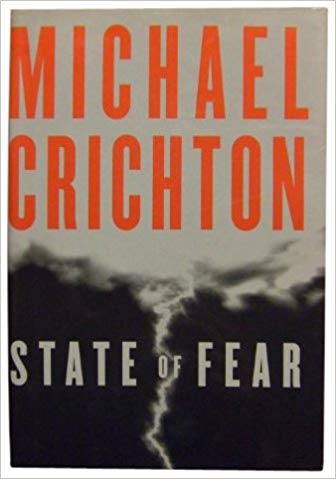
“State of Fear” by Michael Crichton

StateofFear

I always enjoy a good Michael Crichton book. While this one wasn’t my favorite, considering some of his other titles such as Jurassic Park or Timeline, it was nonetheless excellent. This hardback had been sitting on my shelf for literally years; given the book’s copyright is 2004, no telling how many. I live in a house that was once my family’s vacation home, so I have no idea who may have left it here. One day recently, its dust-covered binding caught my eye from its position on the bottom shelf and I decided to read it.

It’s rather amazing how the story and premise really haven’t gone out of date in fifteen years. Essentially, it’s an exposé of the science (or lack thereof) of global warming. We’re still obviously hearing about this today. It has changed names a few times, now currently referred to as “climate change”, but it’s one and the same. Clearly, Crichton was expressing strong, well-substantiated opinions regarding how science and politics are a very bad combination, which he presents in the form of a gripping, conspiracy techno-thriller.

One thing that really irritates me as a reader is when an author doesn’t do his or her homework as far as research is concerned. When I encounter scientific inaccuracies in a story they are a major turnoff. They throw me out of the story immediately and scream “amateur” on the part of the author, who clearly didn’t respect his readers enough to do the research. No one can ever accuse Crichton of this faux pas. This book took three years to research and, believe it or not, has twenty pages worth of bibliographic material as well as footnotes to scientific journals throughout that are real. I’m afraid that few readers appreciate that as much as I do, which is a shame.

Even though this book has been around for a decade and a half, it’s still worth reading. I suspect that little has changed scientifically. It should be read with an open mind, considering all sides. Crichton’s opinions regarding the volatile mix of science and politics are definitely worth noting; nothing has changed there, either. I, for one, have grown weary of everything being about money and corporate profits.

I want to point out that I am not “Red” or “Blue” in a political sense, but rather some shade of purple; there are elements of both platforms with which I agree. I don’t believe in blatant handouts at the expense of hardworking people, but I also believe in treating Mother Earth and all her creatures with respect. I also believe people’s health and well-being are more important than greedy corporate giants who place whomever they want in political office with their campaign contributions to assure maximum profits.

I love a novel that not only entertains, but informs and educates the reader, something Crichton did in spades. I am so sorry he is no longer with us, turning out these well-written, well-researched page-turners. I suppose in some ways this story is overshadowed by the issues it exposes, making some conversations a bit pedantic. However, 20 pages of bibliography deserves considerable respect. This is a very thought-provoking story that highlights an issue that is as relevant today as it was in 2004. Whichever side of the argument you may espouse, you should read it. The bibliographic material–count it, 20 pages worth–speaks for itself.
Today’s Writing Tip

coffee- copy

Yesterday I talked about the first type of analogy, metaphors. The other type is the simile. It’s easy to remember what a simile is since it is “similar” to something else where a metaphor compares two things that are entirely different.

Classic examples include: as white as snow; light as a feather; busy as a bee; as ugly as sin; hotter than hell; dark as night. Bear in mind these are only examples and blatant cliches. You can and must do better with some imagination. Resorting to these would not only mark you as an amateur but lazy and lacking creativity.

See how many you can come up with that are totally original, then record them in your writer’s journal.

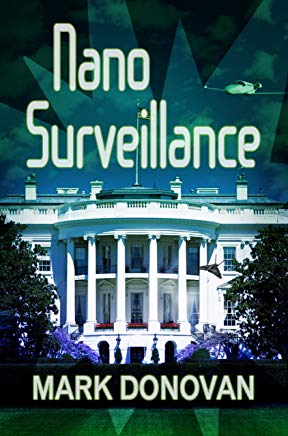
Nano Surveillance by Mark Donovan

nanosurveillance

This story was well-developed as far as the conspiracy thriller plot and technology were concerned. The author clearly knows his stuff about a variety of topics including flying and surveillance technology where the details enhanced the story’s credibility and imagery. While this expands into the realm of science fiction (at least for now) it was believable, which is required of good fiction–even fantasy needs to be believable to work.

The political intrigue was right out of the headlines and well developed as well, but leans heavily toward the conservative, so bear that in mind, too. In other words, if you lean to the left you probably won’t like it, period. The plot is loaded with suspense, kept moving, and would make an excellent action movie.

However, there were a few things that kept it from being great, primarily the desperate need for editing. The story demonstrated imagination and knowledge of technology,  but strong writing skills are necessary to engage the reader. I found the lack of flow made it awkward, even  painful to read. While, to the author’s credit, there were only one or two typos, there was far too much reliance on prepositional phrases. There were also numerous instances of homonym misuse and incorrect punctuation, particularly in the dialog. When the style (or lack thereof) throws the reader out of the story on a regular basis, it’s distracting as well as disappointing.

I want to stress there was nothing grammatically “wrong” with the writing. It simply didn’t employ the complex sentence structure that demonstrates strong writing skills. If it had, this thriller could have been a five-star read; as it stands, I’d give it three stars. In other words, by investing in editorial help or some advanced writing classes, this author could produce an outstanding story, perhaps even a best seller.

Today’s Writing Tip

blogging-copy

There are two types of analogies, metaphors and similes. Metaphors compare two entirely different things, such as comparing the stages of life to the four seasons. They make the reader think and provoke deeper, more philosophical insights that add depth to your story. They are often difficult to come up with, which is why they’re so valuable.

Often the best time to gather ideas is during times of meditation or contemplation, such as during a walk in the woods, visiting an awe-inspiring location such as a National Park, or somewhere you seldom go that stimulates your imagination.

This is when the advise noted a few days ago to keep a writer’s notebook is worth its weight in gold. You definitely want to have them on hand when you need them, which might not be for a while.

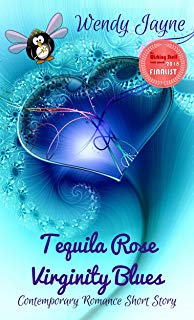
Tequila Rose Virginity Blues by Wendy Jayne

TequilaRoseVB

If you’re a regular here at my blog you’ve probably noticed my lack of book reviews for quite a while now. This is because I’ve been writing a novel with most of my reading research which has occupied my time and brain. However, it’s time for me to take care of a backlog of reviews, which you’ll see over the next few days.

This particular one is a short story that I finished in less than an hour. It was a total hoot that had the best descriptions of a hangover I’ve ever read. It practically gave me a headache, LOL. Not only is it an entertaining story of someone who had a few too many and can’t remember what happened, it’s also an outstanding study in the effective use of similes. Thus, if you read my Writer’s Tips, saw the one on similes, and need some help understanding what they are, then by all means read this cute story. Along with general outstanding writing, this author has similes down to a science.

Set in a small town in New Zealand, the pictures of this quaint place the author included in the back were a nice bonus. In fact, you might want to look at them before you read the story to further enhance the imagery. This is a great beach read or when you need a light, humorous dose of one woman’s experience with too much booze and meeting the mystery man of her dreams.

You can pick up a copy on Amazon here. If you have Kindle Unlimited, read for free.

Today’s Writing Tip

blank-3164721_1280 copy

Keep a notepad handy everywhere to jot down ideas, whether for a new story, plot twist, or vivid description. When inspiration strikes, don’t ignore it. You might think you’ll never forget it, but often such things are quite elusive. Don’t take a chance on losing a true gem–write it down!

These also come in very handy if you get stuck at some point and need an infusion of creativity. For example, short story contests or opportunities to contribute to an anthology come along on a fairly regular basis. If you already have a list of ideas, it won’t be as difficult to come up with one when the opportunity arises.

Today’s Writing Tip

woman- copy

Keep a notebook of descriptions you find that stand out because they stimulate your senses. This is especially helpful for new writers. Use them as inspiration as needed. There’s nothing like someone else’s creativity to spark your own.

It’s important to remember that the more senses you incorporate into your narrative the more vivid the imagery will be. As an exercise, spend a few minutes observing your environment with all five senses and note how you would describe it in writing. The tendency is to rely on sight and hearing, but that is not the only way you perceive the world around you. Smell and taste are powerful memory triggers. If you describe one that’s familiar to your reader, they are likely to remember your story as well.