Today’s Writing Tip

computer- copy

Does your story take place somewhere you’ve never been? Of course if you have the budget, traveling there to check it out is the best case scenario. Furthermore, you can then write off the trip as a tax deduction as a business expense. However, since most authors don’t have that kind of income, there is a reasonably good alternative.

You can use Google Earth to visit vicariously! You’ll be surprised how well it will feed your imagination and enable more detailed descriptions that make a story come alive. It will feel as if you are there and thus convey that to your readers. When I was writing “The Terra Debacle: Prisoners at Area 51” you can bet that I have never been there, neither have I been to Brazil, where another part of the story takes place. However, I felt as if I had been there using Google Earth. I took a trip down the Amazon that really fueled my imagination writing those scenes.

Even if it’s some place you’ve been in the past, you can refresh your memory or bring it up to date in this way. Then be sure to use your imagination to add the other sensations such as what a place would smell like, the weather conditions, and so forth. It needs to feel real to you before it will to your readers.
Today’s Writing Tip

coffee- copy

Yesterday I talked about the first type of analogy, metaphors. The other type is the simile. It’s easy to remember what a simile is since it is “similar” to something else where a metaphor compares two things that are entirely different.

Classic examples include: as white as snow; light as a feather; busy as a bee; as ugly as sin; hotter than hell; dark as night. Bear in mind these are only examples and blatant cliches. You can and must do better with some imagination. Resorting to these would not only mark you as an amateur but lazy and lacking creativity.

See how many you can come up with that are totally original, then record them in your writer’s journal.

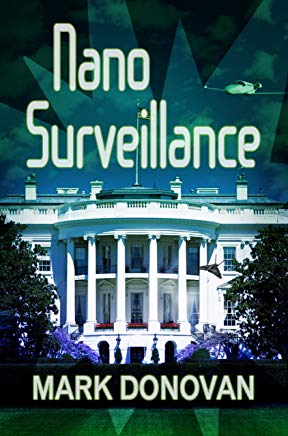
Nano Surveillance by Mark Donovan

nanosurveillance

This story was well-developed as far as the conspiracy thriller plot and technology were concerned. The author clearly knows his stuff about a variety of topics including flying and surveillance technology where the details enhanced the story’s credibility and imagery. While this expands into the realm of science fiction (at least for now) it was believable, which is required of good fiction–even fantasy needs to be believable to work.

The political intrigue was right out of the headlines and well developed as well, but leans heavily toward the conservative, so bear that in mind, too. In other words, if you lean to the left you probably won’t like it, period. The plot is loaded with suspense, kept moving, and would make an excellent action movie.

However, there were a few things that kept it from being great, primarily the desperate need for editing. The story demonstrated imagination and knowledge of technology,  but strong writing skills are necessary to engage the reader. I found the lack of flow made it awkward, even  painful to read. While, to the author’s credit, there were only one or two typos, there was far too much reliance on prepositional phrases. There were also numerous instances of homonym misuse and incorrect punctuation, particularly in the dialog. When the style (or lack thereof) throws the reader out of the story on a regular basis, it’s distracting as well as disappointing.

I want to stress there was nothing grammatically “wrong” with the writing. It simply didn’t employ the complex sentence structure that demonstrates strong writing skills. If it had, this thriller could have been a five-star read; as it stands, I’d give it three stars. In other words, by investing in editorial help or some advanced writing classes, this author could produce an outstanding story, perhaps even a best seller.

Today’s Writing Tip

blogging-copy

There are two types of analogies, metaphors and similes. Metaphors compare two entirely different things, such as comparing the stages of life to the four seasons. They make the reader think and provoke deeper, more philosophical insights that add depth to your story. They are often difficult to come up with, which is why they’re so valuable.

Often the best time to gather ideas is during times of meditation or contemplation, such as during a walk in the woods, visiting an awe-inspiring location such as a National Park, or somewhere you seldom go that stimulates your imagination.

This is when the advise noted a few days ago to keep a writer’s notebook is worth its weight in gold. You definitely want to have them on hand when you need them, which might not be for a while.

Today’s Writing Tip

blank-3164721_1280 copy

Keep a notepad handy everywhere to jot down ideas, whether for a new story, plot twist, or vivid description. When inspiration strikes, don’t ignore it. You might think you’ll never forget it, but often such things are quite elusive. Don’t take a chance on losing a true gem–write it down!

These also come in very handy if you get stuck at some point and need an infusion of creativity. For example, short story contests or opportunities to contribute to an anthology come along on a fairly regular basis. If you already have a list of ideas, it won’t be as difficult to come up with one when the opportunity arises.

Today’s Writing Tip

woman- copy

Keep a notebook of descriptions you find that stand out because they stimulate your senses. This is especially helpful for new writers. Use them as inspiration as needed. There’s nothing like someone else’s creativity to spark your own.

It’s important to remember that the more senses you incorporate into your narrative the more vivid the imagery will be. As an exercise, spend a few minutes observing your environment with all five senses and note how you would describe it in writing. The tendency is to rely on sight and hearing, but that is not the only way you perceive the world around you. Smell and taste are powerful memory triggers. If you describe one that’s familiar to your reader, they are likely to remember your story as well.

Today’s Writing Tip

alphabets-copy

Read a variety of books and genres, those written by those more skilled than yourself as well as those less skilled. You can learn something from both. Sometimes the glaring errors of most amateur writers call attention to some silly thing you do yourself, but have been blind to. It also allows you to see how far you’ve progressed. To paraphrase a favorite quote, “No book is ever wasted. You can always serve as a bad example.”

However, it’s important to read well-written stories as well. A steady diet of poorly written stories may help you identify pitfalls so you can eliminate them, but that alone won’t make you a better writer. If anything, it will make you a frustrated reader. Nothing takes the joy out of a good story faster than when it’s poorly written.

Believe it or not, you can pick up a certain amount of writing skill by osmosis, simply by repeatedly exposing your brain and subconscious to strong writing. However, a well-written story that flows well sucks you in, but you probably would have a hard time explaining why it worked. It’s a lot easier to see something that doesn’t work when you trip over it. But you’d be surprised how you can assimilate those skills.

As with so many things, variety is the spice of life.

Today’s Writing Tip

writing-pad-copy

You want your dialog to sound convincing. Think about how people actually talk. One thing most of us use on a regular basis is contractions. Not using them can make it sound stilted. For example, would you say “I am going to the store. Would you like to go along?” or “I’m going to the store. Want to go along?”

Saying it aloud helps. We don’t always pronounce all the letters in a word, either. Back to the previous example, how many would actually say, “I’m goin’ to the store. Wanna go along?” Using an apostrophe to indicate missing letters shows it’s not a misspelling.

If one or more characters have an accent, be sure to reflect that phonetically as well, even if your spell-checker gags a bit. This is another way to differentiate between speakers, if your characters have distinctive speech styles.

Today’s Writing Tip

writer- copy

In long conversations, remind the reader who’s speaking from time to time. It annoys readers when they have to go back and figure it out. This is even more frustrating when you’re reading an ebook since flipping back is not as easy as with a print book. This is another thing that throws a reader out of the story, which IMHO is the #1 faux pas.

This is not to say that you should say “he said” or “she said” with every line of dialog. When there is a clear flow to the conversation such that it’s obvious who is saying what, then there’s little need for it. However, I’ve seen a page or two of dialog that wasn’t  attributed and left me entirely lost.

Using a variety of synonyms for “said” such as stated, commented, noted, and so forth, or answered or replied, helps break the monotony. Another trick is to occasionally insert the person’s name into the dialog itself. If you say “Listen, John, I told you that before” it’s clear that John isn’t the speaker. You can also break it up with some action, such as saying “John rolled his eyes”, again indicating who’s doing what.

Today’s Writing Tip

write-2 copy

As you’ve probably figured out if you read these on a regular basis, one of my pet peeves is homonyms. This is one way to separate the amateur writers from the pros. It’s your job to know the difference between they’re, there, and their; your, you’re, and yore; flare and flair; bare and bear; alter and altar; hanger and hangar, just to name a few.

Words are a writer’s tools of the trade. Your vocabulary should be broad and expanding all the time. The other day I was in a group setting where I threw out what to me was a simple word, counter-intuitive. I was a bit surprised when someone was impressed. I just shrugged and said as a writer it was my job to know the right word for a given situation.

If you’re dyslexic, I’m sure this is a considerable challenge. I don’t know how I keep them separated. I do know that sometimes when I’m writing my first draft that I get the wrong word, but I definitely keep an eye out when I start editing. Don’t ever underestimate how smart and/or observant your readers might be. Messing such things up can often be all the justification an astute reader needs to give you a poor review.