6 More Tips for Serial Writers

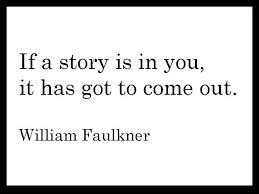
faulknerquote

Most of the tips in my previous post for serial writers were picked up from reading and beta reading the works of others. Afterwards, I realized that I’d learned quite a few things that were also worth passing along from writing my own tetralogy. These comprise either things I did that helped the process or I wish I’d known as opposed to figuring out the hard way. So, without further ado, here are a few more tips for those of you working on a story that refuses to end.

1. Read any previous volume(s) to assure consistency. Some details such as the color of a minor character’s hair or eyes can easily be missed, yet picked up by an astute reader. Trying to explain that Edith’s eyes are blue in certain light and green in others is somewhat lame, so it’s best to avoid it by being accurate. If you keep a file on your characters that includes such details it will simplify things later. Quite frankly, I don’t, but believe me, I will next time because it can be time-consuming and a real pain to hunt down later. Of course, while you’re reading, you can note these things, too, which is part of the point.

The best part of rereading the stories that precede you current work is you can usually find some seemingly small details that you can tie in. This is especially true when you’re wrapping everything up at the end. Fans in particular love this sort of thing and it may even drive them to go back and reread the earlier stories as well. Some of them may actually function like an inside joke. If you know anything about fandom you know how dedicated fans thrive on such things.

Assuming you have print copies of your book(s), using sticky notes or page markers works best. If you want to get fancy, you can even color-code them for different types of information. I was amazed and delighted at how some of the seemingly simple details in previous episodes related to the grand finale.

Also note how your style may have changed as your story unfolded, especially if the first one was your debut novel. (See the section in my first “Tips for Serial Writers” blog entitled “First the Worst, Second the Same…” for more on that.)

2. Use flashbacks, albeit brief, to tie in past events from previous books. Important events that ripple over into subsequent volumes should be recapped to refresh the memory of those who read previous works but did so long enough in the past to need reminders. It also puts things in context for new readers who may be reading the episodes out of sequence. These don’t have to be long and drawn out, which will bore your fans, but enough to get them back on track. Prologues can sometimes be used in this way as well.

father3

Flashbacks add depth as well as context.

In some cases, if your serial is complete, readers may start with volume one and blow straight through, especially if it’s a box set, but there’s a good chance that other books may have intervened or perhaps time, dimming their memory. If it’s not yet complete, it’s even more important. If a reader feels lost, it pulls them out of the story and they’re likely to be frustrated, which is one of the last things you want to do. If they wind up scratching their head or digging through previous books to find the event in question, unless they’re madly in love with your story they may toss it aside and pick up something else. Once they stop reading there’s always the chance they won’t be back. Confuse ’em, you lose ’em. Not good.

3. Timing is Everything. Serials are usually sufficiently complex to involve numerous characters who grab the spotlight from time to time and thus the point of view (POV). Keeping the timing correct can be a challenge, especially if coincident scenes are not written in sequence and have to be integrated later. I tend to write a scene when the idea arrives so I have all sorts of things to pull together as I attempt to wrap up a single volume, much less the entire serial. If you maintain a detailed outline, it helps, since you can insert POV excursions accordingly.

Mapping out key events visually is helpful, using project management software the ideal, but often unfamiliar or unavailable. The last thing any author needs is a stiff learning curve on a software package when they’re writing a novel. Using Excel is the next best option, the timeline broken down to suitable increments, whether hours, days, months or years. These go across the top with each column representing a unit of time. Events are listed in the rows below with the proper time element highlighted. You can do this by hand if you prefer; graph paper makes it a little easier.
typewriter

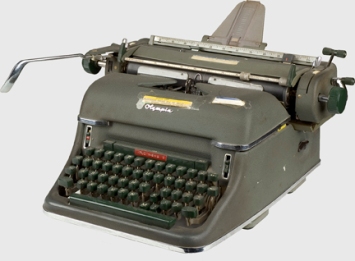
My first two novels were written on a typewriter that looked a lot like this one.

This can be done out of sequence if that’s how you write, either by inserting a row if everything is in order or organized later based on event timing, which is shown where time marks overlap. Including a column that contains the chapter number right after the first one with the scene description can be used to sort them as well, which also reveals any that need to be adjusted.

I remember seeing a comment from an author one time regarding how difficult it was to keep track of plot action occurring in different time zones. I laughed. My tetralogy involved coordinating events on different planets, spacecraft affected by Einstein’s theory of special and general relativity, and even time travel itself as my story shifted amongst the various characters. Keeping everything in the proper sequence to maintain story continuity was definitely a challenge. Again, Confuse ’em, you lose ’em. Remember that. Not all readers have the patience to read on with literally millions of other books begging to join their TBR list.

4. Insights regarding how your characters have evolved. How a character changes in a story is important, a key element, in fact, to good fiction. In a serial this may be a gradual process, perhaps so much so that the reader doesn’t notice. It doesn’t hurt to remind them using internal dialog on the part of the character(s), as an observation by another character in thought or dialog, or even in the narrative. For example, something as simple as “Before arriving in New York, Patsy was afraid of crowds, but now she navigated 5th Avenue with confidence” does the job.

5. Include the fate of all characters, not just your protagonist. You never know who’ll be a reader’s favorite character. I was surprised how many of my readers favored Thryon, my telepathic walking plant. Thus, you need to make sure everyone’s exit, whenever or however it occurs, provides closure. Don’t simply leave them behind. Characters who ride off into the sunset can also provide fodder for spinoffs.

6. Expect to miss your characters, who by now have become old friends. You may want to consider leaving things open enough at the conclusion to allow for spin-offs. Fully developed characters are just begging for another appearance. You know them as well, maybe even better than your own children or best friend, so if they’ve earned fans along the way, consider using them again. On the other hand, if you’re bored with them, readers may be, too, so this is not something that’s required or should be forced. Back stories are often at least partially written and can be put together for a quick short story that you can use as a giveaway enticement in your marketing efforts. Back stories are also great for holding readers’ interest until the next episode is released if it’s taking you a while to get the next one together.

Pageflex Persona [document: PRS0000039_00005]

It was fun writing this back story to my tetralogy which kept fans engaged and also served as a hook for new ones.

I’ve found that my short stories evolve into novels and my novels apparently evolve into a serial. Go figure. I simply get bombarded by ideas too good to leave out, especially once my characters come to life and take over the story. Other writers can crank out a single novel or novella in a few weeks or less whereas mine, for various life-related reasons, took years.

Fortunately, readers have a variety of preferences as well, whether it’s a quick “beach read” or something they can get their teeth into. Note that back stories can provide fans with both! My next one will be a spin-off from one of my Star Trails characters, which will hopefully prevent it from likewise expanding. But only time will tell.

6 Tips for Serial Writers

writingprocess

Or maybe, for clarity’s sake, I should say “Writers of Serials”. A “serial writer” could simply be someone who can’t stop writing, regardless of what it is, which fits more authors than I could begin to name. The folks I’m addressing are those of us who love our characters so much and get so enmeshed in our plot that it goes on and on, far beyond the binding of a single book. I admit to this freely, since my supposed single novel quickly evolved into at least a trilogy and ultimately a four volume tetralogy. An argument could be made that this is sheer laziness or ego, but for me there was just so much more story that needed to be told.

Just for the record, there’s a difference between a serial and a series. A serial is one where the basic plot line and story continues, often preceded by a cliffhanger in the previous book. Trilogies are often a serial, as is my Star Trails Tetralogy. Think of them as an epic story told in installments.

A series, on the other hand, may include the same characters, but not necessarily. Each will depict an independent plot or story line, such as the Nancy Drew series. Some series may even be thematic in nature, revolving around similar plots such as romance, romantic suspense, mystery or just about any other imaginable genre, but featuring an entirely different cast.

KONICA MINOLTA DIGITAL CAMERA

Now that we have that out of the way, let’s talk about writing a serial.

If your novel refuses to end because more plot twists, back stories and characters bombard you relentlessly, then you may as well recognize that you’re destined to be a serial writer. Be warned, however, that once you indulge yourself in that manner, you’ll probably never be able to produce a stand-alone story again. This is certainly not a bad thing, but there are a few things that are useful to know coming right out of the gate with that first book. So here are some tips I’ve developed from my own writing as well as numerous others I’ve read.

1. Don’t assume your readers are already familiar with your plot and characters. As an author it’s easy to just plunge forward with your story line, but there’s no guarantee that all readers will be familiar with what has transpired so far. Even if they read the previous book or books, time and numerous other stories may have separated them from yours, so a few quick reminders are always in order. This includes key plot elements leading up to the current problem as well as details such as what your characters look like. You may have them permanently ingrained in your head, but more than likely your readers won’t. In fact, it never hurts to have an occasional reminder throughout any book regarding their appearance. It’s always helpful to give them a certain habit you can throw in here and there that triggers an image as well as makes them more real.

Past events don’t require a long, boring summary. They can usually be worked in easily through character dialog such as a “Remember when?” conversation or short reference to something that occurred in a previous volume. These references can be humorous as well. Readers who remember that particular scene will enjoy the “inside joke” and new readers will feel as if they missed something good and be enticed to go back and read it. It adds depth and life to the characters and their relationships. How often do you reminisce with friends or relatives about important events? Allow your characters the same experience.

If you have an extremely complex plot it can be more difficult to bring new readers up to speed. I have jumped into a serial midstream before and had no problem figuring out what was happening while in others I was entirely lost and never made it through the book. In rare cases, if I was truly hooked, I’d go back and read the initial volumes, but I usually just quit reading and moved on to something else. Others, I read out of order but know I would have enjoyed it more in sequence.

This problem is particularly applicable to fantasy and science fiction stories where a new world or culture is involved. The more complicated the story’s context, the more important it is to fill in the reader and continue to remind them. Again, recaps don’t have to be long and distracting, only sufficient to make what’s going on make sense. Balance is required, of course. Too many reminders or redundancy are frustrating, too. This is where it’s great to have input from beta readers, including some who have not read the initial volumes.

2. “First the worst, second the same, last the best of any game.” I remember my kids chanting that little ditty as rebuttal when they would come in last in a competition, but ironically it can apply to serial writers. All skills improve with practice, which certainly includes everything we put into words, whether it’s another book, a blog, an article, website content or even something as dry as technical writing. The craft of assembling words together continually evolves. Thus, there’s a good chance that subsequent books will demonstrate your improved skills.

This is all well and good, but doesn’t mean that your first one shouldn’t be the best possible product. If it’s not, readers are less likely to continue on with the story. If you’re a new writer, this requires extra effort to make sure that first tome is in the best possible shape. This is likely to involve some investment on your part in a good editor as well as a professional book interior and cover designer. In some cases, you may even want to go back to that first one at some point and refine it, using your improved skills. I will be doing that for the first book in my tetralogy which has garnered a couple bad reviews due to missing commas. I felt a whole lot better about this when a friend and fellow author admitted she was also re-editing volume one of her series.

3. Avoid over-populating your story with extraneous characters. If they don’t move the plot along, then they don’t belong and usually shouldn’t be named. Too many people milling around in a book can be as confusing as going to a party where you don’t know anyone and are trying to learn plus remember everyone’s name much less what they do for a living. Red herrings may require a few people who pass quietly into oblivion, which is an entirely different situation. If you’re going to have a cast of thousands, then at least introduce them gradually and give the reader a chance to connect with each one individually before bringing in too many others. Once they’re all established, then it’s okay to have a massive group scene or discussion.

Which reminds me of another thing to avoid, names that sound or appear too similar, such as starting with the same letter of the alphabet and/or having the same number of letters. You want names that are distinctly different as well as fit the character, which is a subject in and of itself. Being visually distinct applies particularly to making life easier for speed readers. For example, don’t have one person named Horace and another named Hector. Names that are unique also make your character more memorable.

pageheart4. Don’t forsake minor characters from the previous work. Many times the hero or heroine is not the one a reader favors most. Thus, they may be disappointed or downright angry when a subsequent volume excludes him, her or even it. The character may have less emphasis that in the previous episode, but at least allow him/her/it a cameo appearance from time to time or explain their absence. For example, consider R2D2 and C3PO from Star Wars. They were part of the team and you expected them to hang around. In some cases, minor characters can provide a bridge to new major characters as well.

5. Cliffhangers: Pros and Cons. The ideal cliffhanger will make your reader want desperately to know what happens next and thus immediately buy the next book. On the other hand, they might be annoyed, feel cheated, and move on to more self-contained novels. Readers’ tastes vary tremendously, not only with regard to genre, but length. Some may be too ADHD to make it through a full length novel much less trilogy while others thrive on something they can get their teeth into. If you’re writing a serial, then you can always hope for fans like those who loved Harry Potter so much they’d stand in long lines at book stores awaiting the release of the next episode.

A cliffhanger that leaves one or more characters in dire straits with no obvious way out can be particularly annoying, especially if the sequel isn’t written yet! If the reader has to wait for months or longer for the sequel, you run a huge risk of losing them along the way. No matter how much they loved your story, once that time has passed there’s a good chance they will have all but forgotten it. Of course this is why you want to engage your readers, get them on your mailing list, tease them with excerpts on your Facebook page and so forth. If you have a great following, this may not be that much of a problem, but if you’re a new author it could be.

angry_girl_reading_bookHowever, for reader satisfaction, it’s often a good idea to at least provide some semblance of closure for the book at hand while leaving enough unanswered questions to entice them to continue on. Don’t drop them like a bad habit in the middle of an adrenaline rush. Put yourself in the reader’s place for a moment and consider how you react to such an ending. I think doing so may be fun for the author but painful for the reader. Maybe evoking an emotional reaction will make your book more memorable, but if it’s anger they may not come back. I always rank a book that can make me laugh or cry higher than those that don’t elicit a reaction. Emotional reactions stay in your heart (literally) as opposed to your head and thus will make your story more memorable, but it’s better to do this via lovable characters than irritating endings. I can still remember books I read decades ago that made me cry or laugh.
I’ve read the first volume of numerous stories, yet never made it to the sequel for several. Sometimes it’s simply a matter of time. As an author I do a lot of reading, editing and beta-reading for my peers which means I often don’t have the time to read something just because I want to know what happens. I have time for very little of what I would call “recreational reading.” How much I care about the characters is a big driver on whether I make it back for a sequel, but I have to admit if the plot is intriguing enough, I’ll want to know what happens even if I’m not thoroughly attached to the people involved. Another factor is length. If the episodes are more in the novella range as opposed to making “Gone With the Wind” look like a beach read, I’m more likely to make the time to read on.

6. When your serial is complete, consider making it a box set. Once my tetralogy was complete, I made it into a box set for both the print and electronic versions. This can have grand appeal to those who favor lengthy stories and of course minimizes the cliffhanger dilemma. It also gives you another opportunity for a big release party! I’ve been more than pleased with how well Star Trails has done as a set compared to the individual books.

In conclusion, I must say there’s tremendous satisfaction in writing a serial. Your characters continue to flesh out and assume a life of their own, often to the point where they virtually write the story for you. Mine got themselves into a variety of fixes, many of which I had no idea how they could possibly be resolved, until my characters themselves came up with the answers on their own. I must say that wrapping it all up was bitter-sweet, yet satisfying.

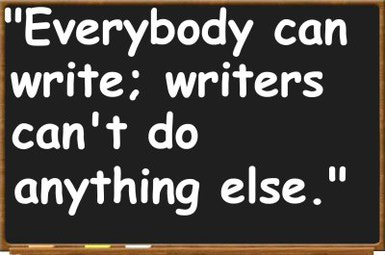
blackboard_writer2If you’re headed in the serial direction, or even just starting your first story, I highly recommend being a beta reader for other authors, which has taught me so much. We’re often blind to our own weaknesses until they glare at us from another’s work. I can’t begin to count how many times something has jumped out at me in someone else’s story, only to realize that I was guilty of the same faux pas.
Authors tend to be voracious readers, which is highly advised since it provides a wealth of information, if you but tune into it. This may take some of the enjoyment out of reading, but the writing lessons are worth it. One of my favorite sayings, No life is never wasted, you can always serve as a bad example, also applies to numerous works of fiction we’ve all encountered, especially in the Indie world where competent editing may be lacking. Needless to say, you don’t want your baby to be in that category.  Ironically, there’s more to be learned from bad writing than that which is so well-written you’re entirely immersed in the story.  Nonetheless, when you find yourself enjoying a book to that level, study it afterwards to determine why it worked so well.

I hope these tips garnered from my experience writing as well as reading the works of others will make your journey as a serial writer a little smoother.

It’s that Time Again: The Cosmic Season for Editing and Revising

strasclock

If you’re a writer it would be to your advantage to know a little astrology. Not only can it help you develop your characters as noted in a previous blog but there are actually three times a year when the cosmic climate is particularly conducive to editing and revising. If you don’t believe in astrology, that’s fine, I didn’t used to either. But you might want to give it a try because most writers, myself included, can use all the help we can get. So what exactly is this spell and why is it helpful? Stay tuned, I’m about to tell you.

It starts with the planet Mercury. In mythology Mercury a.k.a. Hermes was the messenger and the only one who could come and go to the Underworld. In astrology he rules communications or all varieties including your thoughts, ideas, writing and paperwork in general. In this day and age he also rules electronic communication devices such as cells phones, computers, television and the internet to name a few, plus anything mechanical, i.e. with moving parts, such as your lawnmower, small appliances, automobile and so forth.

If you’re already familiar with some astrology you’ve probably heard of Mercury Retrograde. While it’s intuitively obvious (or should be) that the planet Mercury does not reverse the direction of its orbit, as a rule three times a years he appears to move backwards in the sky compared to his usual direction. The reason for this is easily explained as similar to when you pass a car on the highway. You’re going faster so it appears the other is moving backwards, even though it’s not. Thus, when the Earth passes Mercury in its orbit you get the same effect.

So what? Hang on, I’m getting to that.

As I write, Mercury is currently in this state which started on 5 January 2016 and will last until 25 January. Astrologically when a planet is retrograde (yes, they all do the backstroke from time to time) it internalizes its energy. During this spell you may notice more computer problems than usual, things may break down more often, traffic is often worse and so forth. Anything ruled by Mercury bogs down during this time. If you buy something ruled by Mercury during a retrograde period it’s likely to be a lemon. Furthermore, anything initiated during Mercury retrograde seldom comes to pass. For example if you interview for a job you’re less likely to get it with one possible caveat, that being if it’s a second interview with the same person. It’s also not a favorable time to sign a contract or lease.

Why? Because during Mercury retrograde it’s a time to rethink, redo, reconsider, revise, refine, repair and so forth. This is a time to slow down, stop, and look over past work, thoughts and decisions. For a writer this is an awesome time for editing and revising. This is when you go back and see your work through different eyes, giving you the ability to make positive changes. It’s not uncommon for writers to dislike this phase because you may feel stuck, your brain may not work as efficiently and your computer may be on strike. Any new endeavors started at this time are likely to bomb out and relate to yet another “re” word, i.e. regret. This is because you’re resisting the cosmic flow. Reviewing, revising and editing your work from time to time is essential if you want to produce professional quality work.

redlines

If you’re suffering from writer’s block, this is the ideal time to look over what you have and see if it’s on the right track. You’ll be surprised at how much you’ll be able to improve it, perhaps even make some critical changes you didn’t think of before. Don’t expect to make much progress with new endeavors which are likely to be an exercise in futility. Submitting work at this time is not likely to bring results or, if it does, they’ll be delayed. Rather, use this time to rework and refine.

Will you be out of the woods for new projects come 25 January? Possibly not. Until Mercury gets back to the zodiacal position where he stationed retrograde he’s in his “shadow period” when things are still stalled. This lasts until February 15, at which time once again it will be “all systems go.”

Even if you think that astrology is a bunch of myth and superstition, give this some thought. Observing the world around you and how people behave is part of your job as a writer. See how many events and situations you can find which reflect this internalized energy, the cosmic climate designed to rethink, reconsider and revise. Few of us get it exactly right the first time and the Universe is well aware of our human frailties. Use these spells as they’re intended by the Universe and you’ll find they can become some of your favorite times when you can polish your work to perfection. Use this one to your advantage.

As previously noted, Mercury does this approximately three times each year. Here are the other times he’ll be doing the backstroke. Mark your calendar now!

28 April – 22 May 2016 (Shadow until 8 June 2016)

30 August – 22 September 2016 (Shadow until 8 October 2016)

19 December 2016 – 8 January 2017 (Shadow until 28 January 2017)

If you’d like to learn more about such things you’d probably enjoy my astrology website www.valkyrieastrology.com.  Which reminds me I have some updating to do on the retrograde planets page, perfect for Mercury RX.  Timing is everything.

Comma, give me a break!

booksinbox

I think we all realize that whether or not a person likes a book is highly subjective. I’ve read (or tried to read) books with numerous five-star reviews that I didn’t like and couldn’t get through. Some were well-written, just boring or populated with unappealing characters, while others were poorly written and/or edited. I’m a bit of a grammar/typo Nazi myself so I hide my head in shame that someone put one of my books in that category.

I’ve heard that no literary agent or publisher takes an indie book seriously until it has a few three-star reviews. Thus, when I got my first one as an untimely present for my Christmas birthday, I had mixed feelings. I now had the obligatory mediocre review and, to be perfectly honest, the reason had been noted by a previous reviewer, i.e. the lack of commas. I acknowledge this as a valid complaint and have it on my to-do list to rectify. Sadly, at one point I’d actually taken several of them out because they seemed to slow the story down! How ironic is that?

Okay, you may have already guessed that I have a couple confessions to make. First of all, I edited my own books, which I realize is a major no-no, but let me explain. First of all, there were various times when this particular book, which was admittedly my first novel, was set aside for years. When I would get back to it, I could read it like it wasn’t my own and, for the most part, edit effectively. Like I said, I’ve been accused of being a grammar Nazi with other people’s work, and I definitely fixed a lot over time.

Another factor was finding an editor I could trust to do the job. I mean, really do the job. I’ve seen too many acknowledgements in various novels where authors extol and thank their editor while I, nonetheless, find a plethora of things they missed when I read the work in question. Call it pride, if you must, but it was hard not to feel I could do as good or better of a job than some of the supposed pros out there.

And the coup de grace was that I was on a budget. While I don’t mind paying for services that are done correctly, cost combined with not being sure I could find a competent editor resulted in doing it myself. Oh, well, my bad.

The second one is that, even though I have a minor in English, I am not that well-versed in grammar. Seriously. Most of what I know has been learned through my mother correcting me as a child, reading, and, heaven forbid, intuition. I’ve been an avid reader all my life and been writing since I could hold a pencil, yet never liked English classes or understood some of the rules. Diagramming sentences to me was worse than algebra, which made more sense. I really don’t like to point fingers, but in this case I’m going to point one at a prof I had in college who taught the obligatory grammar class for those majoring or minoring in English. That class was, like we say here in Texas, as useless as teats on a boar hog.

The prof, who is probably now dead and gone, couldn’t find a textbook that he liked so we had none. He would lecture, but with no logical order or continuity that I could recognize. All we did the entire term was–you guessed it–diagram sentences. Punctuation was rarely mentioned. One thing I remember him (or perhaps someone else) saying was that English, unlike Latin, was a living language that evolved, that such things as punctuation styles changed over time, and things like comma usage was becoming somewhat optional. You can bet I jumped on that like a duck on a June bug!

judgeongrammar

But for purists who were more astute at learning the rules than I was, it was a major faux pas. And apparently the person who left this three-star lambasting was one of them.  I must say that the reviewer was generous in giving it three-stars since s/he didn’t even finish reading it.

Back to the subjectivity of what we like, science fiction is certainly one of those genres that everyone doesn’t care for. (Oops, ended that sentence with a preposition! OMG! Let’s correct that to “one of those genres for which everyone does not care.” Right? Right.) Even with proper punctuation it’s likely s/he wouldn’t have liked it. That I understand. And I do admit s/he has a point and I will fix the problem because, believe it or not, I really am a bit of a perfectionist, but that doesn’t mean that I know everything by a long shot. I’m teachable but, as noted earlier, I never had a decent English teacher or at least one I could follow. Math is much simpler to me with its concrete, easy to follow rules and black and white answers. Equations make a lot more sense.

pageheart

So what have I learned that I can pass on to other writers? If I had this to do over, it would be to do a beta reader exchange with someone who has equal editing skills to my own. Fortunately, for subsequent books I was able to find such individuals. And that is what saddens me the most, the other books in the series are in much better shape. I’ve actually received compliments on the editing of at least one of the others. This was my first book and I’ve heard it said that everyone’s first novel should go in the trash bin labeled “tuition.” My problem was that it was the start of a series with so much more to tell! The characters evolved and so did the plot to the point that it took four full-length novels to complete the story. I’m a much better writer now, as all of us become, the more we write.

So, bottom line, I’ll go back eventually and correct the comma situation. I don’t know all the rules, but at this point I’m reasonably confident that I’ll be able to do so in a competent manner. The worst part, as most indie authors know, is that there are so many different formats to deal with, i.e., both print and electronic versions, which complicates the process considerably. Nonetheless, I’ll have the satisfaction of debunking that uncomplimentary review when it’s corrected, unless, of course, those who would appreciate a properly copy edited work are turned off by that seething diatribe, which is actually so excessive that it’s downright amusing. Fortunately, most geeks and nerds, who are my primary audience, anyway, aren’t quite so concerned, though there are exceptions, of course, many of whom I met at NASA.

<Sigh.>

Rant over.

Thanks for listening.

P.S. If you’d like an ecopy of the book in question, “Beyond the Hidden Sky,” for free, join my mailing list, which qualifies you for a free download. You can do so here.

You Can’t Make This Stuff Up

Some things are too weird to explain. Now before I step into territory that’s way, way out there, let me preface it with the fact it takes a lot for something to be so off-the-scale that I can’t even explain it in a fictitious manner. After all, among other things I AM a science fiction writer who has come up with all sorts of things. But this is real. At least if you believe in stuff like astrology.

You may or may not know that I’m a professional astrologer, another hat that I wear when I’m not writing science fiction. Yes, I have a physics degree, and yes, I worked at NASA for over twenty years and yes, there actually is a thread albeit a tenuous one, holding those three things together in that they all involve space in one form or another.

8489944_sIn college I was “taught” that astrology was nothing more than myth and superstition and I believed them. I believed them so much that when I was writing a novel several years ago that had a physicist protagonist I decided to make his ex-wife into astrology to make her as annoying as humanly possible. Wanting my book to have the details correct meant I had to learn a little bit about astrology, so I found a used paperback copy of “Sun Signs” by Linda Goodman as a start. And much to my shock, I discovered that it worked!

It was several years before I got into astrology more seriously but a year or so before I retired I started studying with the International Academy of Astrology, eventually graduated from their professional training program and started practicing via my website, ValkyrieAstrology.com. This course of study took years and felt equivalent to a bachelor’s degree. I was astounded (and still am) about how much there was to learn and how much I didn’t know (and still don’t).

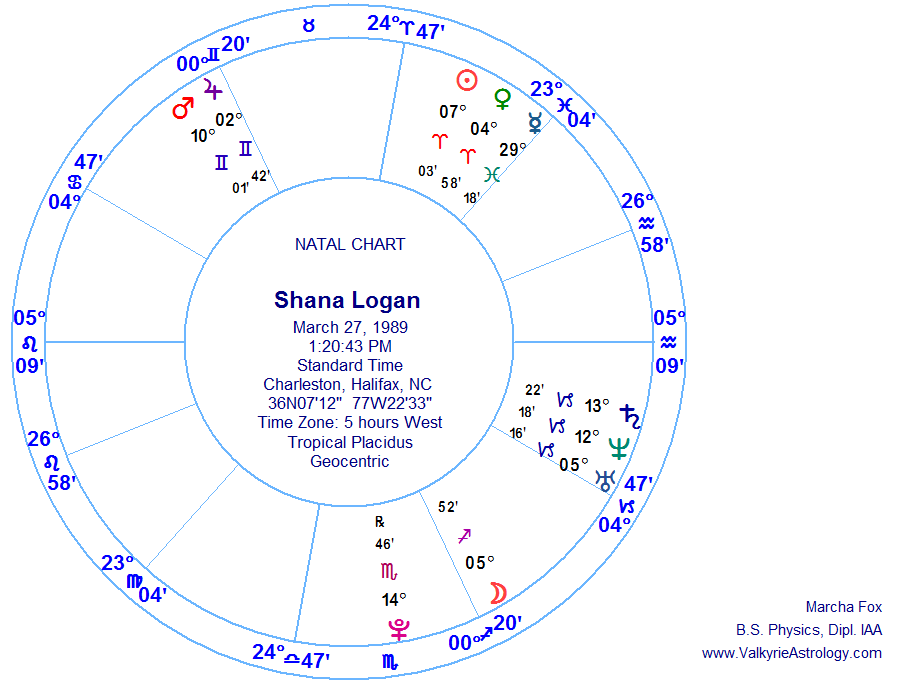
As a writer, I immediately recognized that knowing the characteristics of the different sun signs can come in very handy for developing characters. I even have a blog about it called “Creating Star Characters.” Then I did a character interview for Susanne Leist’s “The Dead Game” character, Shana Logan. I created the astrological chart from scratch based on how Shana acted in the book. It was apparent she was an Aries due to her impulsive sense of adventure and her bright, flashy manner of dressing threw some Leo in there, too. She was creative and multi-faceted in a way that hinted at a Sagittarius Moon. I plugged the data into my report software and a complete description came out that was very much as expected and surprised Susanne.

shanaloganNCSince the chart was fabricated entirely by me including selecting a birth date and tweaking the timing to fit, this wasn’t that much of a surprise.

Sometime later, however, in working with fellow author, Elle, Klass, it inadvertently went to the next level. Elle had given her characters an actual birth date and place as part of her character development process. First, I must explain that Elle is not an astrologer. She didn’t specifically decide that Eilida would have the traits of an Aries when she chose April 5 as her character’s date of birth. Having read the book (“Eilida’s Tragedy: Eye of the Storm Book 1”), however, I had already pegged her as one so had to smile when Elle told me the date. The character’s penchant for detail implied Virgo so I arranged her time of birth to provide a Virgo ascendant. I ran another natal report. Not only was the character’s backstory implied but it also included allusions to events to come in the next book in the series. We were both astounded

Having had that work so well, we decided to run a report for her antagonist, Evan O’Connor, as well. I gotta say he’s one of the nastiest villains ever to grace a fictitious page and I’m glad he’s not real. And lo and behold, the results fit him just as well, right down to his attachment to his mother.

CBS teaser 2Like I said earlier, Elle loves details, which is one thing that makes her such a superb writer, so she had dates of key events in her book as well so I ran what is called a transit chart and compared it to the character’s natal charts. (For those of you unfamiliar with astrology, a transit chart is the position of the planets at a given time and place. These interact with the horoscope of the person and create certain energies which fit the archetypes of events and situations around them.) Again, the fit was so accurate that it was downright creepy.

How could it be?

These were fictitious characters involved with fictitious events fabricated by a very human author yet they fit as well as if they were real.  Huh???

That certainly introduces some extremely interesting philosophical and metaphysical speculations. As an author myself, I know how characters take on a life of their own. After you’ve been writing for a while you learn to let them be born as opposed to created and watch them spring to life endowed with a personality that often brings surprises as you turn them loose within the framework of your plot. But how could these characters have a natal chart that then proceeds to fit the transits of subsequent events in a novel?

Frankly, I have no idea. I do maintain that whether real or not each moment contains a certain unique energy. As a physicist I believe that astrology’s mechanism resides in the mysterious world of quantum mechanics and the concept of quantum entanglement. When a baby takes its first breath, leaving his or her previous home in another dimension to be joined with a physical body, s/he takes the cosmic energy of that moment with him or her. Then, as the planets move through their cycles those changes are felt by the original imprint. I know that is probably a stretch but hopefully someday we’ll know for sure. Until someone comes up with something better it seems to fit.

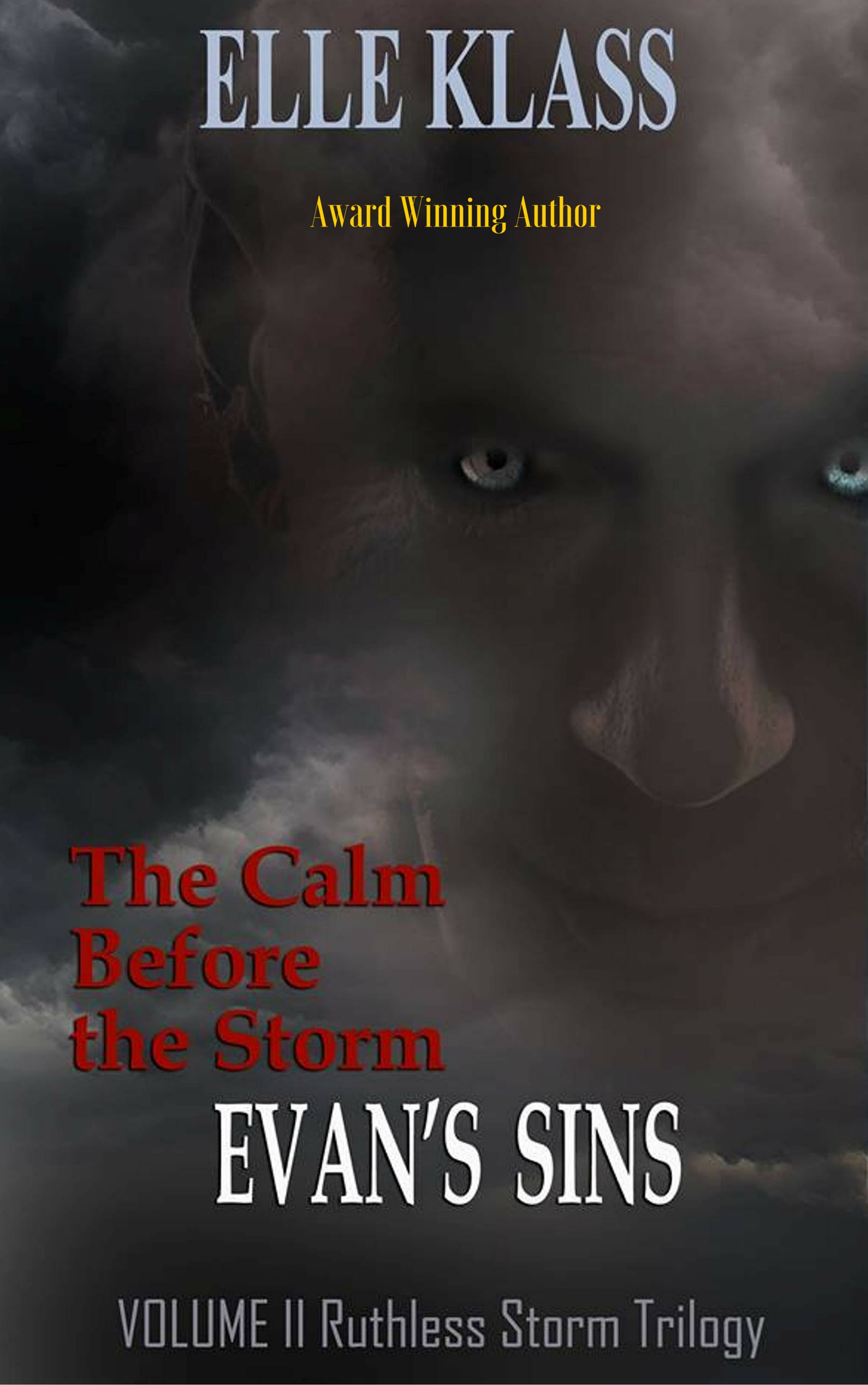
To make a long story short, my astrologer persona, Whobeda, eventually became a character in Elle’s upcoming book, “Calm Before the Storm: Evan’s Sins,” to be released next week along with some of the astrology we pursued along the course of the story. You can find her interview with Whobeda on here blog here. The beauty of it is if any of her readers are into astrology they’ll recognize it as accurate, even if they go so far as to check the charts.

CBS award ebookWhile I may not be able to explain why it works, nonetheless it does. As a fiction writer myself I definitely plan to use this to my advantage in upcoming works. You can find “The Calm Before the Storm” via links below.

VIDEO TRAILER:

https://youtu.be/fVZG22ydbM0

Amazon – http://amzn.to/1FECDEx

Amazon.co.uk – http://www.amazon.co.uk/Calm-Before-Storm-Ruthless-Trilogy-ebook-x/dp/B015VD6856/

Amazon.ca – http://www.amazon.ca/Calm-Before-Storm-Ruthless-Trilogy-ebook/dp/B015VD6856/

Amazon.com.au – http://www.amazon.com.au/Calm-Before-Storm-Ruthless-Trilogy-ebook/dp/B015VD6856/

Smashwords – https://www.smashwords.com/books/view/571520

Google Play – https://play.google.com/store/books/details/Elle_Klass_The_Calm_Before_the_Storm?id=JlufCgAAQBAJ

Kobo – https://store.kobobooks.com/en-us/ebook/the-calm-before-the-storm-evan-s-sins

Barnes and Noble – http://www.barnesandnoble.com/w/the-calm-before-the-storm-evans-sins-elle-klass/1122731283

iBooks – https://itunes.apple.com/us/book/calm-before-storm-evans-sins/id1045083502

The Cosmic Season for Editing and Revising

strasclock

If you’re a writer it would be to your advantage to know a little astrology. Not only can it help you develop your characters as noted in a previous blog but there are actually three times a year when the cosmic climate is particularly conducive to editing and revising.

If you don’t believe in astrology, that’s fine, I didn’t used to either. But you might want to give it a try because most writers, myself included, can use all the help we can get. So what exactly is this spell and why is it helpful? Stay tuned, I’m about to tell you.

It starts with the planet Mercury. In mythology Mercury a.k.a. Hermes was the messenger and the only one who could come and go to the Underworld. In astrology he rules communications of all varieties including your thoughts, ideas, writing and paperwork in general. In this day and age he also rules electronic communication devices such as cell phones, computers, television and the internet to name a few, plus anything mechanical, i.e. with moving parts, such as your lawnmower, small appliances, automobile and so forth.

If you’re already familiar with some astrology you’ve probably heard of Mercury Retrograde. While it’s intuitively obvious (or should be) that the planet Mercury does not reverse the direction of its orbit, as a rule three times a years he appears to move backwards in the sky compared to his usual direction. The reason for this is easily explained as similar to when you pass a car on the highway. You’re going faster so it appears the other is moving backwards, even though it’s not. Thus, when the Earth passes Mercury in its orbit you get the same effect.

So what? Hang on, I’m getting to that.

As I originally wrote this, Mercury was currently in that state which started on 4 October 2014 and lasted until 25 October. As noted earlier, this happens about three times a year so we are into it again between 21 January – 11 February 2015.  So far this current cycle looks like a doozy.  My computer is acting psycho and I’ve had numerous reports of misbehaving appliances and it’s only the first day.  Astrologically when a planet is retrograde (yes, they all do the backstroke from time to time) it internalizes its energy. During this spell you may notice more computer problems than usual, things may break down more often, traffic is often worse and so forth. Anything ruled by Mercury bogs down during this time. If you buy something ruled by Mercury during a retrograde period it’s likely to be a lemon. Furthermore, anything initiated during Mercury retrograde seldom comes to pass. For example if you interview for a job you’re less likely to get it with one possible caveat, that being if it’s a second interview with the same person. It’s also not a favorable time to sign a contract or lease.

Why? Because during Mercury retrograde it’s a time to rethink, redo, reconsider, revise, refine, repair and so forth. This is a time to slow down, stop, and look over past work, thoughts and decisions. For a writer this is an awesome time for editing and revising. This is when you go back and see your work through different eyes, giving you the ability to make positive changes. It’s not uncommon for writers to dislike this phase because you may feel stuck, your brain may not work as efficiently and your computer may be on strike. Any new endeavors started at this time are likely to bomb out and relate to yet another “re” word, i.e. regret. This is because you’re resisting the cosmic flow. Reviewing, revising and editing your work from time to time is essential if you want to produce professional quality work.

If you’re suffering from writer’s block this is the ideal time to look over what you have and see if it’s on the right track. You’ll be surprised at how much you’ll be able to improve it, perhaps even make some critical changes you didn’t think of before. Don’t expect to make much progress with new endeavors which are likely to be an exercise in futility. Use this time to rework and refine.

Will you be out of the woods for new projects come 25 October? Possibly not. Until Mercury gets back to the zodiacal position where he stationed retrograde he’s in his “shadow period” when things are still stalled. This lasts until November 11, at which time once again it will be “all systems go.”

Even if you think that astrology is a bunch of myth and superstition give this some thought. Observing the world around you and how people behave is part of your job as a writer. See how many events and situations you can find which reflect this internalized energy, the cosmic climate designed to rethink, reconsider and revise. Few of us get it exactly right the first time and the Universe is well aware of our human frailties. Use these spells as they’re intended and you’ll find they can become some of your favorite times when you can polish your work to perfection. Use this one to advantage, the next one will be January.

If you’d like to learn more about such things as retrograde planets or just about anything else related to astrology you’re invited to visit my website www.valkyrieastrology.com.

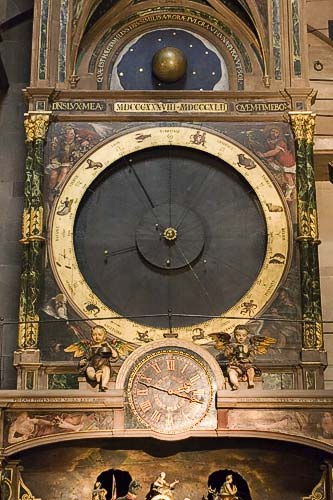
Picture: Astronomical Clock, Cathedrale de Notre Dame, Strasbourg, France

INDIE WRITING TIPS: The Final Edit – How are your IDEAS presented?

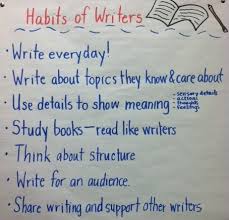
rules4writers

Most writers have a propensity toward one particular element of fiction writing more than others. Some can spew action and dialog effortlessly, others render amazing descriptions which create vivid, memorable mental pictures, while others possess a narrative style as smooth as silk. What comes naturally and easily, however, is not necessarily enough to round out your story. What you want to achieve for the best possible impact and reader satisfaction is balance.
I’m one of those who finds action and dialog the easiest to write. If I can get my characters talking they will often take over the story and leave me as the observer, essentially taking dictation. Piece of cake. But talk alone does not a novel make. While I don’t want to interrupt the flow when I’m on a roll (or perhaps in this case, role) at some point I need to go back and fill in the blanks, sometimes multiple times, as I review each chapter for the proper balance. What do I look for? I remember them with the acronym IDEAS.

I = Imagery
D = Dialog
E = Emotion
A = Action
S = Suspense

IMAGERY

Stories don’t take place in a vacuum. They need to be grounded with a sense of place whether it’s the distant past, present, faraway future or any geographical location you can think of. Furthermore, modern culture is visually oriented, making this a critical element. Drawing in your readers so they can see the story in their mind is essential.

Descriptions don’t need to be long; you don’t want to run the risk of being verbose and, heaven forbid, boring. If your story is set in a familiar place like a well-known city, mentioning specific landmarks is an easy way to create a sense of place. Historical novels require enough description to take the reader back in time. Include plenty of reminders to differentiate life then to now. For example, your character from 1840 can’t text via i-phone, it will need to go via Pony Express or private messenger which could take weeks or months to arrive. Emphasizing challenges we no longer face in modern times helps convey the reader to that time and place.

Remember that imagery includes all the senses, not just vision. Sounds, scents, touch and taste all bring strong impressions as well. Think of things which are familiar to most readers such as the sound or smell of rain, colors and smell of autumn leaves, the crisp chill of the first frost, the sounds of summer whether kids playing in a pool or cicadas, or even the din of city traffic. The more senses you can call upon the more memorable and vivid your description will be.

DIALOG

Dialog moves a story along quickly as long as the conversation is relevant. This applies to not only the story’s plot but character development as well. You can often fit other descriptions into your dialog such as the character’s expression, body language and so forth, even things like the color of their hair or eyes.

Straight dialog with no break can get tedious as well unless it’s an extremely intense conversation and even then some description can make it even stronger. Tone of voice, e.g. angry, sad, cheerful, etc., or how you would describe the actual sound of their voice contribute to your means of character development. A simple statement like “his voice cracked with emotion” sends auditory as well as emotional input.

EMOTION

If you don’t grab your readers emotionally they are less likely to remember your story. Like they say, people won’t remember what you say but they’ll remember how you make them feel. Without it your story is essentially lifeless. Life is all about emotions and if there aren’t any in your story then you may not have a story, at least not one that anyone will connect to and remember. You may have felt it when you wrote it but will your reader?

Of course you don’t want to get all sappy, sticky and sentimental, either. This is where showing as opposed to telling comes in. “She felt sad” is pretty shallow compared to “her heart ached with loneliness.” Think of the physical symptoms typical of the feeling you want to describe and start there. The heart is the center of emotion and is a good place to start. Memories are stored in the heart as well as your brain which has been proven through the experience of heart transplant patients who suddenly acquire habits and other characteristics of the donor, such as their favorite food. This further shows why making your readers feel something is important. Laughing and crying represent two reactions which will make you and your story memorable. As a reader myself if a book can make me do both it’s a definite winner. I remember books I read years ago because they made me laugh or cry, even if I can’t remember exactly why.

This can be something that’s not as easy to include as action and dialog. As you’re writing you’re no doubt thinking of the relevant emotion but don’t take it for granted your readers will feel it unless it’s pointed out, preferably in a smooth, integrated way that is informative but not distracting. Clearly if someone is yelling and saying harsh words then anger is obvious but throwing in a few physical effects drives it home.

If this is difficult for you I suggest you take each of your characters and list the emotions that he or she will experience during the course of your story. Then, one by one, make a few notes of how you can bring them to life.

ACTION

Action can occur on various levels. It can be physical, mental, psychological, or emotional. It’s what moves your story along its intended plot line(s) and keeps your readers engaged and turning the pages. What are your characters doing? What is going on around them causing them to make decisions and take action? Something needs to be happening. Similar to emotion, the more types of action you include the better. Some genres will emphasize one more than others but including the entire spectrum gives your story more layers and complexity. What are they doing, thinking and feeling?

Physical action sequences shouldn’t be interrupted with long periods of internal dialog. If your hero is in the middle of fighting the antagonist or a dragon the description of the battle itself is of prime importance but this includes what your character is experiencing such as straining muscles, the impact of a punch, fatigue, fury, fear, etc. Don’t forget to throw in the other senses as well for added emphasis, e.g. the smell of blood and sweat.

SUSPENSE

Some authors have a natural flair for suspense which is often the single most important factor in writing a real page-turner. If your readers don’t wonder much less care what’s going to happen next then they’ll probably never finish your story. You want to keep them wondering how your character is going to get out of his current dilemma.

Even stories which aren’t technically in the suspense genre need it. The type simply differs depending on whether it’s a romance novel, a psychological thriller, murder mystery or any other fiction genre you care to name. There needs to be some sort of danger hanging over your character’s head which could drop at any time.

Don’t keep your readers in the dark and spring something on them out of the blue. You can actually build more suspense by telling them more about the looming threat versus not enough. Sprinkle a generous portion of clues and red herrings throughout to keep them guessing, regardless of genre. Your goal should be to master the art of writing a book your readers can’t stand to put down.

CONCLUSION

The purpose of this blog is not to tell you how but rather provide a simple checklist for when you do that dreaded final edit. While every chapter may not include all of these elements, the more you can fit in the better. Improving your craft requires stretching beyond what comes naturally and polishing it to perfection.

[NOTE:– If you have a favorite author who does a particularly outstanding job in any of these categories feel free to mention them as well as their books as examples for us all to learn from.]

Tips for Indie Writers: Creating Star Characters

10101220_ml

Character development can be a challenge. No one wants to be accused of having “cardboard characters” in their story but if you’re a writer who is oriented toward action and dialog you run that risk more than others. If you’re writing a screenplay then of course the actor will add the personality factor but as a novelist you aren’t that lucky; it’s up to you. As one of those action/dialog types myself, oddly enough I discovered this technique somewhat by accident.

I was writing a science fiction novel with a physicist protagonist (of course) and wanted to make his ex-wife as annoying as possible so I made her obsessed with astrology. At the time I didn’t believe in it myself so needed to do some research in order to develop the character. I found a copy of Linda Goodman’s Sun Signs in a used bookstore for 25c and the rest is history.

Why? Because I discovered that astrology works, a revelation that ultimately led to me defying my physics training by becoming a professional astrologer. But I digress.

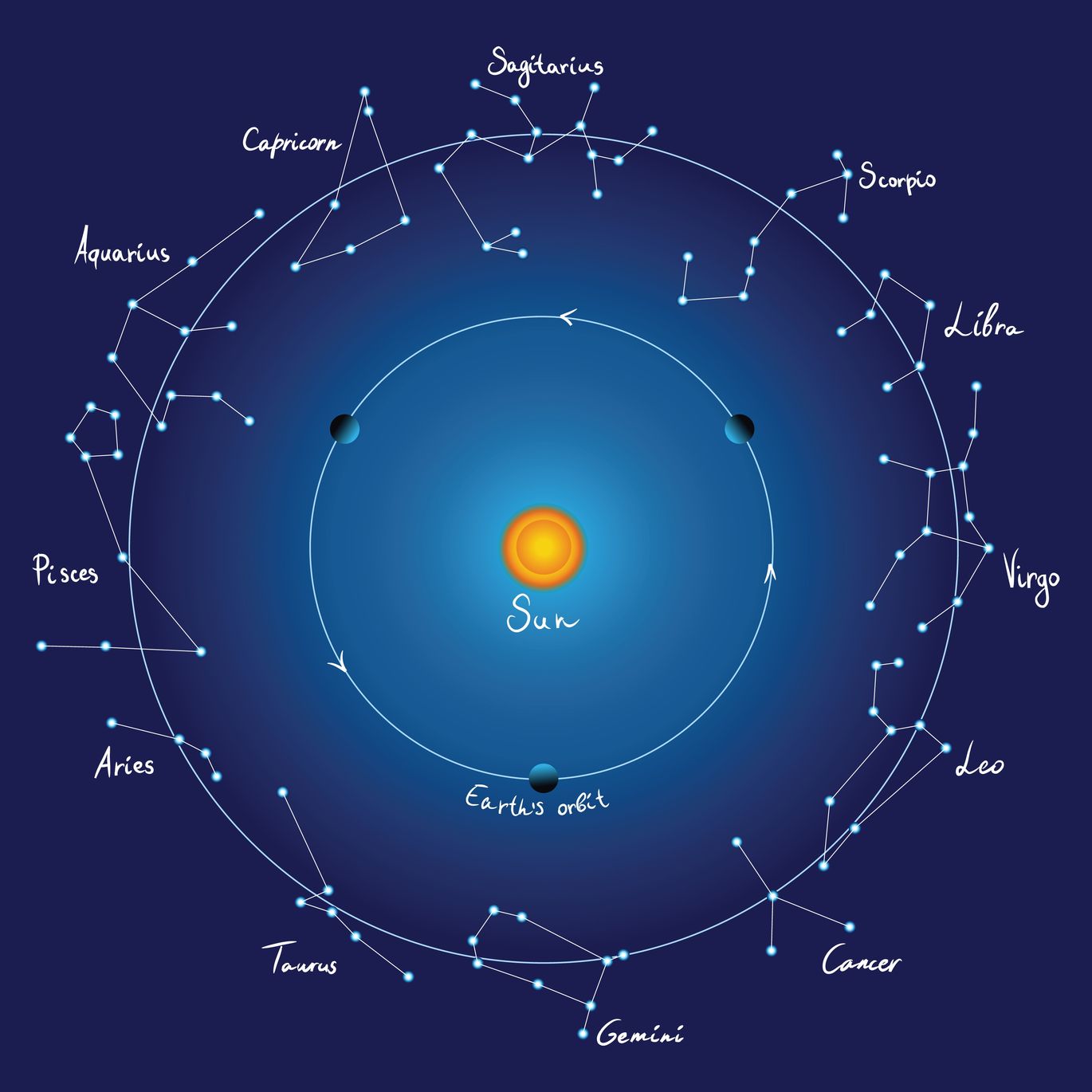
Astrology works for developing characters because it provides a template for twelve different personality types. You can break them down into various other categories as well which might make it easier to narrow down the sign you want. Before I forget, do pick up a copy of Linda Goodman’s Sun Signs if you can. There were literally millions in print so they’re still out there. Another resource is my website, www.valkyrieastrology.com, where you can find a short description of the signs as well. But if you’re new to astrology (other that possibly knowing your own), you can start with the elements, Fire, Earth, Air and Water.

The Elements

Fire

Fire signs are just that, fiery, and tend to draw attention to themselves, sometimes purposely, sometimes not. They represent the creative life force, have lots of energy, tend to be outgoing and be fully engaged in life. Fire signs include Aries, Leo and Sagittarius.

Earth

Earth signs are just that as well, down to Earth. They are realists, practical and responsible with a fair dose of common sense which can make them a bit judgmental and opinionated. Earth signs include Taurus, Virgo and Capricorn.

Air

Air signs are, you guessed it, full of air. These are the talkers. They’re excellent communicators and excel at conveying information. They’re mentally active and process data quickly. They’re likely to tell it like it is. Air signs include Gemini, Libra and Aquarius.

Water

Water signs are the most emotional. They feel things deeply, have long memories, and may ebb and flow according to what they’re feeling at the time. Water signs include Cancer, Scorpio and Pisces.

While with signs in the same element tend to get along, some elements are more compatible than others. Bear this in mind with character development if you want to factor in conflict. This is easy to remember because it no doubt originated as an analogy to nature.

Fire can’t burn without air; Fire and Air signs tend to get along. Earth stabilizes water and water nourishes the Earth. Conversely, Fire and Water aren’t a very good combination while Earth and Air isn’t, either. You might enjoy the section of my website where I had some fun in a figurative sense with these elemental interactions. You can find it here: http://www.valkyrieastrology.com/Makeover/Compatibility/elementalinteractions/figurativeelementalinteraction.htm

If you write romances then compatibility is particularly important. If you want a real short description of how two characters will interact at the most fundamental level you can check that out on my Compatibility Central page here: http://www.valkyrieastrology.com/Makeover/Compatibility/CompatibilityMain.htm

Just because signs are not compatible with one another at the elemental level does not mean they can’t fall in love! Quite the contrary! It gets far too complicated for me to go into here but as you’ve probably noticed attraction is not necessarily related to whether people naturally get along. And yes, opposites definitely can attract. If you already have a basic character profile for your hero or heroine and decide which Sun Sign he or she should be, they you could purposely choose one that is not compatible for the other to build the conflict any good story requires.

The Modalities

Another astrological division lies with whether a sign is considered Cardinal, Fixed or Mutable. Each of these categories will have a sign from each of the four elements. Cardinal signs are inclined to take action, the movers and shakers, though each sign has its own style. Fixed signs, as you can guess, don’t like change and are often opinionated; what you see is what you get. Mutable signs are more likely to accept change though it will probably be the Cardinal signs that initiate it. Cardinal signs, however, may not finish things up once they get them kicked off; leave it to a Fixed sign to secure it in place while a Mutable sign will tweak it, sometimes to the point that it starts the cycle all over again.

While like elements tend to get along, the modalities do not; they are more likely to either butt heads or perhaps be indecisive and all over the proverbial map. Thus, this is another means for building conflict. This is probably most familiar as two strong-willed people with two different styles but both want to be in charge and/or don’t want to be told what to do.

Here’s the sign breakdown of the modalities:

Cardinal: Aries, Cancer, Libra and Capricorn

Fixed: Taurus, Leo, Scorpio and Aquarius

Mutable: Gemini, Virgo, Sagittarius and Pisces

Sun Signs

Once you decide upon the basic traits, then you can refine it by taking it down to the Sun Sign level. Here’s a very brief description of each one. You can find a more detailed somewhat tongue-in-cheek description here: http://www.valkyrieastrology.com/Makeover/signsalutes/zodiacsigns.htm

ARIES (Cardinal Fire)

~March 21 – April 20

Impatient, loves new activities, aggressive, impulsive, often poor money managers. Temper, reddish cast to hair. Quick to start projects but unlikely to complete them, needs excitement, warrior, hero.

TAURUS (Fixed Earth)

~April 21 – May 21

Steadfast, material security, determined, follows through, like land, plants, gardening & nature. Opinionated, love food, often great chefs, value money and fine things. Can be frugal to the point of being stingy, can be stubborn.

GEMINI (Mutable Air)

~May 22 – June 21

Quick minded, tend to have two diverse ideas/drives in life. Many faceted or bored with life, good communicators, talkers, data gatherers. Love to learn and do so easily.

CANCER (Cardinal Water)

~June 22 – July 23

Sensitive, need emotional security, home is important, moody, need diversifications, creative.

LEO (Fixed Fire)

~July 24 – August 23

Promoters of the world; outgoing, generous, proud of families, home is often their base of operation. Need feedback, praise and attention, particularly enjoy applause; can be dramatic. Natural leaders. Temper, can be vicious if provoked.

VIRGO (Mutable Earth)

~August 24 – September 23

Perfectionists, detail and service-oriented, often go into a healthcare field. Color coordinators, worriers, clean, organized, nit-picky, often into health foods, vitamins, etc.

LIBRA (Cardinal Air)

~September 24 – October 23

Peacemakers, require fairness and justice, weigh both sides of an issue. They are drawn to beauty and harmony such as art and music. Don’t like to be alone; rather be in a bad relationship than none at all. Can be indecisive, change their mind, yet are generally logical.

SCORPIO (Fixed Water)

~October 24 – November 22

Intense, determined, need relaxation. Discriminating, jealous, magnetic, passionate, discerning, fascination with mysteries of life. No strong sense of morals unless instilled at an early age. Need strong direction; may soar or crawl in life. (Note: This sign rules sex, death obsession, power and control.)

SAGITTARIUS (Mutable Fire)

~November 23 – December 21

Happy, energetic, enthusiastic, limited goals. Tell it like it is, funny, non-conformists. Often philosophers, interested in education and religion, love foreign cultures and travel.

CAPRICORN (Cardinal Earth)

~December 22 – January 20

Serious about life, realistic, money managers/need financial security. Organizers, goal and status oriented, get things done. Traditional, conventional, can appear cold and hide emotions.

AQUARIUS (Fixed Air)

~January 21 – February 18

No mold, want to be different and usual are. Transmits ideas, often work in media. Can be impersonal, love world but no individuals. Often become politicians, ideas may be too soon for time, often don’t fit into family as the Bohemian type.

PISCES (Mutable Water)

~February 19 – March 20

Sensitive, artistic (dancers, musicians). Impressed with life, yet often seek to escape through transcending reality. Can fall into savior/martyr scenario. Strong imagination and intuition, may be a victim or victor in life. Dreamers, visionaries, live in another dimension. Can be prone to drug and alcohol as an escape mechanism as well as intense activities such as extreme sports. Living in the real world can be a challenge.

If your character is a combination then consider that besides a Sun Sign everyone also has a Moon Sign and what is called the ascendant which is the sign on the eastern horizon when they were born. The Sun represents your core; the Moon your emotional nature and the Ascendant the way you’re seen by others including your outward personality. Thus, these “big three” are the primary drivers within any individual. Thus, if a single sign doesn’t fill the bill you can go for three and create a more complex, realistic character, one who may have significant inner conflict as these influences war against one another.

Conclusion

This should give you something to work with if you ever get stuck defining a character. There are numerous templates out there where you fill in the person’s general likes and dislikes which often doesn’t round the character out sufficiently, particularly with regard to their motivation (or lack thereof). However, using what you have at that point can help you find their Sun Sign which will then provide a vast array of traits you can work with and exploit in your story. You can also take well-developed characters and figure out which combination they might be as practice. I have found this to be a valuable tool in character definition as well as an interesting and enjoyable profession.

In the context of this blog, yes, I have always had two careers which are currently writer and astrologer. I have to love what I do and feel it makes a difference. Where did that come from? My Moon Sign is Gemini. I have an eagle eye for editing (Virgo ascendant) and am goal-oriented (Capricorn Sun).

Content copyright © 2014 by Marcha Fox

Graphic Copyright: <a href=’http://www.123rf.com/profile_shooarts’>shooarts / 123RF Stock Photo</a>

Tips for Indie Writers: How to Create Your Own Book Trailer with Power Point

booksinboxBook trailers have become a popular means to draw attention to your book. The main advantage they have over other types of promotional material is their ability to include sound, specifically music. As I’m sure you’re aware, music can set a mood quicker than anything else and reaching a person at the emotional level helps prepare them to receive and accept your message. You can hire a professional to create a trailer for you or you can put one together yourself. If you have Microsoft Office then you should have Power Point which is the only software you need to create a simple but effective video trailer. Besides that you only need three things:

  1. Background picture
  2. Music
  3. Catchy phrase, quote or other hook

Yes, it really is that simple to get started. Don’t worry, I’m going to take you through the process, step by step.

Background Picture

This should be something that relates to your book. It shouldn’t be too busy, though, because that might distract from your written message. I would in most cases avoid people unless the focus is on that character alone. For your first one, keep it simple. If you try to get too fancy on your first try you’ll probably get frustrated and perhaps give up.

Using the background from your book cover is one option or even a generic photograph that relates to it in some way. For example, if your book is set in a specific city like New York, San Francisco, Chicago, St. Louis, Paris or some other easily recognizable skyline that will work. If it’s set in the country, a nice country landscape; near a beach, a nice oceanscape, etc. This is your first step toward creating a mood that fits the setting of your story. It should be a bit muted, however, so there is adequate contrast between it and your writing. Don’t worry if it’s not, however, because Power Point can help tone it down.

Music

For me this is the fun part. You’re probably thinking this would be a difficult, lengthy, daunting and potentially expensive task. WRONG! There is a website out there that is so perfect for this you’ll probably be as amazed as I was. Go to http://incompetech.com/music/ and click on the tab that says “Royalty Free Music.” Yes, it’s free! And it gets better. Click on the option “Full Search.“ What you find will blow your mind. On this page you can tell it exactly what you’re looking for by genre or even by “feel.” Make your choices, click “search” and it brings up a variety of choices which you can listen to there and download with a single click. If you like it, even if it doesn’t exactly fit the project you have in mind, save it for future use. I found so many I liked that it was actually difficult to choose which one to use.

If you love music like I do you may find yourself spending a whole lot of time on this page. Bear in mind the mood you want to set for your book and stick to that so you don’t get too overwhelmed. I would choose no more than a half dozen pieces to start with.

After you’ve downloaded your selections take the time to listen to them, start to finish. Take some notes on the timing of the song’s dynamics such as when it’s slow and quiet or loud and booming. More than likely the song is longer than your video is going to be so you’ll want to select the portion that drives your message home. Don’t worry about transitions, Power Point gives you options to fade in and out which I’ll get to later.

If you don’t feel like listening to it and taking notes that’s okay because there’s another option. When you get the song into Power Point you get a visual that gives you an idea what the music is doing. This little strip that looks like a graph gives you an idea where the quiet and loud places are so it can be used, too. And Power Point will also allow you to select a specific portion. You probably want to keep your video to around a minute long, not only due to people’s short attention spans but also to keep the file size under control.

Catchy Phrase, Quote or Other Hook

This could be the easiest or most difficult part. Some authors can spew out titles that have no story behind them while others can’t figure one out for their thousand page manuscript. As an author I have the most trouble with book blurbs. You know, those two or three paragraph descriptions you put out on Amazon describing your book. Some people are better at writing them than their novel, which may not meet the expectations set up in their blurb. Others are the opposite and can write a great book but a lousy blurb. Coming up with these zingers will thus be easier for some than others.

One place to start is the basic theme of your book. If you Tweet about your book many of those catch phrases are perfect! If you’re lost go to the Goodreads website which contains various little ads and trailers for ideas. If you’re an author then you’re creative by nature and these should provide enough fodder to get your creative juices flowing. Don’t worry if what you come up with sounds a little boring. When you combine it with the right music it will work!

Another thought to bear in mind is that, like poetry, you can leave words out for effect. Your message will be presented slowly with the help of all those other marvelous effects which allow the viewer to fill in the blanks. You don’t want it to be wordy. This is another case where less is more.

Putting it All Together

Okay, now you’re ready to roll and get to the fun part. I’m going to talk you through the process step by step so you don’t experience a learning curve akin to climbing Mount Everest.

1.  Open Power Point and select the first option, “Blank Presentation.”

2.  Go to the “Layout” drop arrow in the second box from the left and select “Blank.” I find it is easier to add a text box than mess with their standard layouts but you can use them if you like. Note that in that same little box with the “Layout” arrow is an option called “New Slide.” Remember that because that is how you add pages.

3.  Now click on the “Design” tab and go all the way to the right where it says “Format Background.” From the options that come up choose “Picture or Texture Fill.” You’ll see an option to choose a file. Go and find your background picture and add it. If it needs to be muted you can use the “Transparency” option on that same screen to tone it down. When you’re happy with it click the “Apply to All” button at the bottom, assuming you want the same background for the entire video. If not you will simply go through this same process to add the background to each slide.

4.  Click on the “Insert” tab in the menu bar and then the “Text Box” over toward the right. This is a click and drag feature to create a box where you will put, you guessed it, your text.

5.  Select your font next. Fonts are important and part of the “feel” of your video! Take some time to try out several until one simply grabs you. Avoid the fancy ones that distract from the message. This is another dimension of your message. If it’s bold and forceful, then choose an appropriate font. If it’s a soft and sweet message then use an appropriate font, perhaps one of the scripts. If it’s a horror or mystery story, see which one fits. Seriously, the font is important. It adds punch to your message. All of these elements combine to give the viewer more than information; you want it to be an experience! Choose the color just as carefully. Colors send messages as well with red forceful and aggressive, green a more relaxed impression, yellow demands attention and so forth. With a slightly dark background even white can be effective.

6.  Add your text. Don’t put too many words on each page. You want the words to sink in while the font and music further emphasize it. Make sure the font is big enough to read easily. In most cases the video is probably going to be viewed on Facebook or Goodreads which is not full screen so you need the letters to be big enough to still be readable when the video is shrunk down to a size not much bigger than a post-it note. There is probably some way to set a default font but I have not been able to find it. Thus, unless you can solve this mystery you’ll have to choose the font and size with each slide. If you figure this out I would love to hear back how to do it!

7.  A general guide for what to include is to say your piece, flash a picture of your book up there with the title, add another zinger, then conclude with where your book is available. If they remember your title they’ll be able to find it if you just mention Amazon, Barnes & Noble, Smashwords, CreateSpace or wherever. Links won’t work in a trailer.

8.  Now it’s time for the fun part, adding your music! To do that go back to your first slide, bring up the “Insert” box, then find where it says “Audio” all the way over to the right. Choose “Audio from my PC” in the dropdown and select your music file.

9.  Go to the top menu bar and select “Play in Background.” If you don’t you won’t be able to hear it.

10.  Select the “Fade Duration” menu box and add some time for the music to fade in and out. Start with around 5 seconds; you can always adjust it later.

11.  Estimate around 4 or 5 seconds for each slide to start, multiply that times your number of slides and figure out about how long your music clip needs to be. It’s good to start slowly and then speed it up as you get a better feel for the process.

12.  Now hit the “Trim Audio” button and that graph I mentioned earlier that represents the song’s dynamics will appear. You can now select where you want the music to begin and end. This is where your notes can come in handy but you can also adjust it by simply listening to it. If you like particular section that you want to loop and repeat it will do that. In fact, if your clip isn’t long enough for the timing to setup then the music will loop back to the beginning. Sometimes it takes quite a bit of practice to end the slideshow exactly when the music ends.

13.  Select “Slide Show” and then “Rehearse Timing.” Your slideshow will come up on the screen and you advance the slides with a click of the mouse. Try to click with the meter of the music. The stronger beat it has, the easier this is to accomplish. When you get to the end it will tell you how long the slideshow lasted and ask if you want to save it. If you do you can play it back with the button on the far left that says “From Beginning.” This will give you a feel for where you are so far. If you know you didn’t like it you can just go back to “Rehearse Timing” and do it again. You can start out slow as you get the hang of it but don’t want it to be so slow in the final version that it allows the viewer’s mind to wander. Right around a minute usually works.

14.  To go back and adjust the music, find the “Audio Tools” box highlighted along the top of the screen toward the right. “Playback” brings back the screen where you can adjust your fade in and out time as well as the clip itself with the “Trim” option. You want to time the crescendos with the statements you want to emphasize. The words need to bear some resemblance to the rhythm of the music. If the timbre of the music fits the words as if they are lyrics all the better. Don’t be surprised if this takes a substantial amount of tweaking until you’re satisfied. You may want to start out with a slow piece until you get the hang of things.  If the “Audio Tools” box at the top ever disappears you can bring it back by going to the first slide and clicking on the speaker icon.

15.  If you don’t like the audio and want to try another clip you need to delete the first one by highlighting and deleting the speaker icon with the “delete” key. Bear in mind you can add multiple soundtracks on top of each other if you want but that is once you become an expert. My point is if you don’t delete this one then both of them will play and it will sound weird to say the least. When you add another track you need to select “Play in Background” again. If you don’t hear anything, you forgot. During this stage you may come up with some editing ideas for your text as well. Note that after a heavy soundtrack silence is powerful as well for your ending. I suggest playing it back with a few different soundtracks and note how it changes the impact. Music with a good mixture of quiet and loud passages works well when you time them to add emphasis to key parts of the presentation. For example, when you show your book cover a big crescendo gives it extra punch.

16.  By this point you should have a very basic slide show. Now you get to have even more fun by adding special effects such as fading in the words and various other fun things. You can add multiple ones but they can also get confusing and mess up your timing when you rehearse since each effect will require a click of the mouse. Go to the first slide, highlight the words, and click “Animations.” Ignore all those symbols that pop up and go instead to the little box toward the right that says “Add Animation.” A big box will come up that shows all those cute symbols but now you can choose how the words come in, present, and leave. Toward the right on the menu bar you can decide how long each one should last. The one coming in will show in green and the exit effect will show in red. While you’re in editing mode the effects you add will show on the slides numbered in the order they occur. If you click on those little boxes it takes you to the screen where you can adjust the timing or change the effect.

17.  After you’ve added the effects you want for each statement, go back to “Slideshow” and rehearse your timing again. Note that you must click the mouse for each effect! For example, you will click to fade in, fade out and advance to the next slide, then click to initiate the first effect, etc. Be sure to allow each effect to finish before clicking. You may need to adjust the timing accordingly.

18.  During the slideshow rehearsal phase note the timer in the upper left-hand corner of the screen which tells you how long that slide has been up as well as the total time. Once you are happy with the timing you can use the total time to fine tune your music clip.

19.  I hope you’re familiar enough with working on a computer to realize you should have been saving along the way. Once it’s finished to your satisfaction you will not only save the final slideshow but you will also do a “Save As” which will convert it to a video. You can save it in either mp4 or wmv format. I do both since some applications prefer one or the other. It will ask you about embedding the music when you save it as a video. Be sure to do this or your sound won’t be there.

20.  Posting to Facebook is as simple as posting the YouTube link. To include your masterpiece on your Goodreads author site you first need to post it to YouTube. After you’ve accomplished that, you will click the “share” button, then the “Embed” option (check the box for the old code) and use that on Goodreads. YouTube will also give you a URL link to your video which you can use wherever you like. For your website you can either link directly to the file you created so it can be viewed there or link to YouTube. Browsers differ in their ability to display them so it’s a good idea to do both. YouTube allows you to choose which slide to show as the thumbnail. If you’re good at html programming or have a professional webmaster they can probably spiff it up.

Here are links to some of the ones I’ve created. I’m still learning as well and look forward to checking out the various other effects Power Point offers. As I get more experienced I’ll probably redo these but these will give you the idea.  I find this creative outlet a lot of fun as a break from writing and another wonderful way to showcase your work to the world. Since most of the authors I know are on a budget it can also save you a few promotional bucks to use somewhere else.

(These links were updated March 2017)

Beyond the Hidden Sky: https://youtu.be/zt7qgTWZFW4

A Dark of Endless Days: https://youtu.be/2xcJrWrJ_nU

A Psilent Place Below: https://youtu.be/-t4NYVBe6FM

Refractions of Frozen Time: https://youtu.be/DMuT0JZu7Os

Entire Tetralogy: https://youtu.be/MsTrKf_66ak

(Coming Spring 2017) The Terra Debacle: Prisoners at Area 51: https://youtu.be/Ti4l88V7Y58

Earthly Tips for Indie Writers (and Editors, too)

20110912_002

If you’re familiar with my blogs you already know that I’m a details freak. I believe that getting them right can make or break a story because as soon as something doesn’t ring true the spell you’re trying to cast is broken. When I see the same mistake in two different books by two different authors it sends up an alarm which implies that particular bit of knowledge may be missing at a more pervasive level than a simple oversight by one uninformed or possibly distracted author.

As I think about it, it’s very possible that the subject of my rant du jour was never specifically taught past grade school, if then, considering the current state of education. Ironically, most of these facts surround you on a daily basis if you’re paying attention. If you weren’t before, I hope this will motivate you to take note whether you’re an author or an editor. Maybe an author caught up in an inspired run of prose dictated by his or her personal muse can be excused for missing a few mundane details. Editors who let such things slip by should be ashamed of themselves.

Sunrise, Sunset

Most novels incorporate the magic of at least one sunrise or sunset. Not only is it something everyone can relate to and thus draw them into the story, it also operates at the subconscious level as an archetype for a new beginning or ending, respectively. If I’m reading your story and you’re describing watching a sunset over the Atlantic Ocean I sincerely hope that your protagonist is viewing it from Bermuda, perhaps somewhere in Europe or the west coast of Africa. Conversely, if he’s watching the sun rise over the Pacific, I truly hope he’s in Hawaii, a South Sea Island, Japan, Australia, etc.

Why?

Because for those of you who haven’t noticed, perhaps due to living in a city or mountainous region where the horizon is obstructed, the Sun rises in the East and sets in the West. Seriously. Every day, with some seasonal variations I’ll get into later. Thus, unless you do some serious geographic gymnastics with your setting (no pun intended) they are not going to be watching both a sunrise and a sunset over the same body of water, at least from the same location. People on an island could of course see both as well as those onboard a ship at sea but they would have to change locations, or at least the direction they’re facing. Get the picture?

Seasons

Seasons are another archetype used to emphasize a sense of timing or even a phase of life. Most locales have seasons which bring some weather variation (unless they’re along the equator) though many don’t conform to the stereotyped four, i.e., spring, summer, fall and winter. (As a baby-boomer I learned the names of the seasons from watching Howdy Doody which had a female Native American character named Princess Summer-Fall-Winter-Spring.)

I have only lived in one place in my life that actually had four which was the southern part of New York State; most have had three, at least judging by the weather. For example, in Utah I called what was considered spring on the calendar as winter simply because it was still snowing, sometimes as late as the end of May. In Central Texas where I currently live there really isn’t a winter, more like a protracted autumn, yet in many areas the stereotype display of autumn color is missing; the leaves turn brown and fall off without any eye-pleasing fanfare.  What’s my point? Make sure the weather in your story’s locale conforms to reality. You can use it to enhance your sense of place, an important story element, and also emphasize plot action or the passing of time. You should describe your setting with the same care with which you do your characters and that includes the season and perhaps even the weather.

I’m sure you know what I mean about using weather to set a mood, like in the classic opening, “It was a dark and stormy night.” In some cases the weather itself can be the major antagonist in the story. It can provide a backdrop that provides additional depth and feeling. Just get it right. A rainy day has entirely different implications in New England versus New Mexico. Rain is not “normal” in numerous places except at certain times of year. If you don’t know and have never lived there then look it up. Wikipedia probably has all the information you need and it will take you five or ten minutes of research to enhance your story’s credibility, particularly for any readers who live there. Readers rolling their eyes at your ignorance are less likely to become fans.

Seasons are marked by four events which relate to the relationship between the Earth and the Sun. These are known as the Vernal or Spring Equinox, Summer Solstice, Autumnal or Fall Equinox and Winter Solstice. The equinoxes mark the day when night and day are of equal length. The Summer Solstice is the longest day of the year and conversely, the Winter Solstice is the shortest. Winter and summer are reversed in different places on the planet, depending on whether you’re in the Northern or Southern Hemisphere. When it is summer in the USA and Europe, it is winter in South American, South Africa, Australia and New Zealand.

This variation in the length of days in the different seasons is because the path of the Sun across the sky, known as the ecliptic, changes. If you really want to get a handle on this find a place where you can note how the Sun’s location changes with time. This is most easily done from a place where you can watch an actual sunrise or sunset at the horizon, such as over a large body of water, a flat plain, or perhaps even an upper floor in a building, anywhere you can note how the Sun’s setting or rising location changes with time. Literally. You won’t be able to make this observation at the same time every day because, in case you haven’t noticed, that varies by a minute or so each day as well.

At the least try to do so at the equinoxes and the solstices. Take note that where the Sun rises and sets on the equinoxes is true East and West, respectively. The solstices will mark the extremes in the other directions, toward the northwest in summer and southwest in winter. During the winter the path of the Sun is shortened which is why the days are shorter. Conversely, in the summer, the path is longer, placing the Sun in the sky for more hours which lengthens the days and brings about the use of Daylight Savings Time. Speaking of which, if you have a difficult time remembering which is earlier, Eastern or Pacific Time, just remember the Sun rises in the East, thus hitting the East Coast first. Easy.

Accuracy in such details adds life to your story. Your readers will feel as if they’re there and may even learn something along the way. Authors are usually looked up to as amongst the upper echelons of society and expected to be smarter than the populace as a whole. Living up to those expectations begins with knowing your stuff. Now repeat after me: The Sun rises in the East and sets in the West. The Sun rises in the East and sets in the West. The Sun….

(Picture taken by the author on September 12, 2011 over Lake Buchanan in the Texas Hill Country.)