
Don’t slow down an action scene to describe the locale, whether it’s a room or city street. Do that in detail, long before the scene occurs, so the reader is already familiar with it. Then use a few keywords to trigger the image.
Don’t slow down an action scene to describe the locale, whether it’s a room or city street. Do that in detail, long before the scene occurs, so the reader is already familiar with it. Then use a few keywords to trigger the image.
Your book’s interior should be formatted for readability. Both Create Space and Smashwords have “How To” documents you should read and follow. Poorly formatted books lose readers and mark indie writers as unprofessional. Learn how to do it correctly or hire someone to do it for you. Your readers will appreciate it.
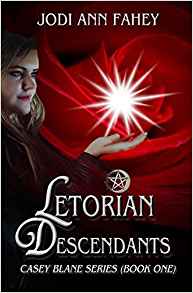
I’m not sure where to even start reviewing this book, because I’m having a very difficult time deciding how to rate it using the conventional 5-star system. I hate to leave a poor review, because I know they can be painful. They can be useful for new writers, however, when they are thus motivated to find ways to improve. It was a 3-star review that really got my attention and drove me to re-edit one of my books with regard to comma usage. Writers tend to be blind to their own work, making it difficult to improve unless specifics are pointed out for them to work on.
I do try to find the positive elements in a story and recognize the thought and effort that went into it. However, when I don’t particularly enjoy a book, even find it a chore to finish, I tend to break it down into what I expect from a 5-star story to see how it measured up and thus give it what will hopefully be a fair and somewhat objective rating.
I realize (and so should you) that all reviews are subjective. What one person loves, another abhors. I admit I’m not a big fan of vampires and zombies. I’m also a grammar Nazi and a long way from being a young adult, this story’s target audience. (Nonetheless, I’ve read some YA vampire and zombie stories that I’ve enjoyed and awarded 5 stars, largely because they were well-written, original, kept moving, and drew me into the characters. Therefore, my age and interests don’t mean I’ll automatically give a book a poor rating, but will compare it to others in that genre that I’ve read.) To its credit, this one was clean as far as language and sex are concerned. It’s definitely in the PG range, maybe even G.
Thus, in this case, I’m reverting to my scientific training and breaking it down to the many things I consider important when rating a book. That will help me understand my own reaction and its rationale as well.
So let’s see what the numbers say.
Plot: This story had a new twist on the somewhat worn-out vampire/paranormal themes as Casey, a young woman in her late teens, begins the physical transformation process into something that isn’t at first clear, to either the protagonist or the reader, since the story point of view is first person narrative. This was fairly well done. You could understand her concern and relate to her confusion and worry about what was happening to her. The sense of mystery and suspense started out well. Information about who the strange people surrounding her really were evolved naturally, as the novel progressed. The structure of the vampire culture was well-developed and it was interesting how certain individuals were linked in different ways. These were supposedly decided in previous lifetimes. So far, so good.
However, as the story progressed and by the time it ended, these original parameters were not always the case. I don’t feel as if there was adequate explanation for some of these diversions. There was also at least one major, unanswered question, that I won’t specify, because it would constitute a spoiler. Maybe it will be answered in the next book, but it seemed like a question that the main character should have been asking, too, since it related to her parents.
How the ending fit into the established cultural order was also vague. If there was as much predestination as implied early on, it seems the other characters would have been aware, even if the protagonist wasn’t.
Rating: 3.0
Character Development: Most of the characters had discernible personalities, though I never really connected emotionally with the protagonist, even with the book written in first person. I could sympathize with her, but only in a general way. Some of the others were annoying, the way they got so spun-up, specifically Takota, but given they were teenagers, this was in-character. Just because I didn’t particularly like all the characters is no fault of the author’s. We don’t like everyone we meet, and they are real enough.
The adults were pretty flat, which is forgivable in a young adult novel, but Dr. Avens was a major character and not fleshed out much better. However, through the eyes of a teenage girl, I suppose discerning where an adult may be coming from may be expecting too much. In that case, I would expect the main character to have more concerns that he was such an enigma. Getting back into Casey’s deepest feelings is the issue again, and the lack of rendering the depth of her emotions about what was happening to her.
Rating: 2.5
Cover, formatting and interior design: The cover is intriguing and well-designed, the interior nicely done with glyphs before each chapter. The appearance over all was pleasing and looked professional.
Rating: 5.0
Quality of Writing, i.e. editing, grammar, spelling, style, and word use: I was nearly overwhelmed with typos, grammar, missing words, and wrong words. With regard to the writing style in general, the story could have been told in a lot less pages. There was too much irrelevant detail, economy of words was lacking, and it needed some serious line and content editing. There were so many mistakes I was continually jolted out of the story, especially when the wrong word was used, such as canape (an appetizer) instead of canopy (such as over a bed) and shutter (window protection) used instead of shudder (shake with fear or emotion). The usage of adverbs and adjectives was overdone as well. This undoubtedly affected my entire reaction to the story because it was distracting and downright annoying. A simple spell-checker or grammar checker would have picked up the majority of these, which tells me such details were entirely off the author’s radar. As a reader, they are not off mine.
Rating: 1.5
To determine if a story is well-rounded, I look at five elements I remember by the acronym IDEAS, i.e. imagery, dialog, emotion, action, and suspense.
Imagery: Clearly the author has a very vivid imagination, such that she can describe scenes in vivid detail. However, in many cases it was too much physical detail which slowed down the story. I could have used a few reminders about what some of the characters looked like; some may have never been described. It was okay to describe a place or room in laborious detail once and then drop in a few reminders later, but in some cases it was reiterated too many times and slowed down the story.
Rating: 3.0
Dialog: For the most part, this was well-done and convincing. Conversations were authentic, though sometimes there was confusion with regard to which character was speaking. This can be done without constantly saying “he said” or “she said”, such as by using action such as pacing, or describing their expression or reaction. Including the other person’s name in the dialog itself, is another technique.
Rating: 3.5
Emotion: My ultimate judge of a book, which will earn a story a high ranking, is whether it makes me laugh, cry, or seriously worry about a character. I never became emotionally connected with any of the characters. While they displayed emotions, they were not rendered in an effective enough manner to draw me in. Feelings weren’t ignored completely, just described with a modifier as opposed to rendering what the character was really going through, which is what generates empathy or at least sympathy. There was a lot of anger, but no heart-wrenching emotion, which would have been appropriate in various situations.
Rating: 1.5
Action: There were some scenes that dragged on and on, such that I got so tired of them that I would actually put the book down until the following day, right in the middle of something that should have had me tearing my hair out with regard to what was going to happen. Instead, many times I found myself tearing my hair out with frustration, thinking, “Get on with it, for heaven sake!” It was actually painful to finish this book, between the typos and slow-motion action.
Rating: 2.0
Suspense: The suspense, as defined as wondering with some level of concern what was going to happen next, was moderate, but as noted under “Action”, not developed or sustained enough to drive me to read into the wee hours of the night. There were plenty of questions to be answered, some of which were, others that weren’t. The fact I even finished the book is testimony that there was enough suspense for me to wonder how it would end, so I’ll give it credit for that. The ending was moderately unexpected, but also lacked a certain level of credibility. However, since this is a series, I assume such things will be explained in subsequent volumes.
Rating: 3.0
SUMMARY
So, by rating the various story elements on a 1 to 5 scale as noted above, including plot (3.0); character development (2.5); packaging (5.0); quality of writing (1.5); imagery (3.0); dialog (3.5); emotional impact (1.5); action (2.0); and suspense (3.0), the average came out 2.78. or a weak 3.
This book has potential, but desperately needs copy, line, and content editing to pass muster and even possibly be viewed as a professional work. This is one instance where judging a book by its great cover is very misleading to what lies within.
Readers DO judge a book by its cover. Make sure yours looks professional. Put as much thought into your book’s appearance as you do your story. There are great books with awful covers and dreadful books with magnificent covers. Make sure your work is packaged the way it deserves.
(If you need a cover designer, I’m available. You can see samples of my work on my Pinterest site here.)
Write what you know, whether it relates to your hero’s job or where he lives. If you don’t, then learn the necessary details via research. Accuracy is essential if you want to maintain credibility as a writer. You’ll often be rewarded with new ideas and plot twists to enrich your story as well as have more confidence in its quality. Writing fiction is not about blindly making things up. It should ring with authenticity.
Does your story take place somewhere you’ve never been? Use Google Earth to visit vicariously. Detailed descriptions are what make a story come alive. Getting strong visuals help you write better descriptions and can even introduce various plot twists. Furthermore, it’s important to maintain accuracy if your story takes place in an actual location. People who live or have been there will be drawn to your story and if it’s accurate they’ll be impressed. If it’s totally wrong, you’ll lose credibility.

Analogies compare two things that are alike in some way, then extend it beyond that in either a literal or figurative way to achieve greater understanding. They break down eventually, so don’t go too far. For example, you could compare a dog to a loyal, forgiving friend or career choices to an expansive buffet.
Metaphors compare two entirely different things, such as comparing the stages of life to the seasons. This type of description can be powerful, but it can also be distracting if it doesn’t fit. If you write humor, it can be very effective. Otherwise, make sure you intend for it to be funny. Mixed metaphors can be hilarious, but also a major distraction when used inappropriately.
Keep a notepad handy everywhere to jot down ideas, whether for a new story, plot twist, or vivid description. The more convenient it is, the more likely you’ll do so. Like so many other things, it’s use it or lose it. How often have you thought of a clever way to describe something just before you fell asleep, thinking you’d remember, but it was long-gone in the morning? Don’t lose those previous literary jewels!
Keep a notebook of descriptions you find that stand out because they stimulated your senses. The more senses you incorporate into your narrative, the more vivid the imagery will be. Sight alone isn’t as effective. Remember, your sense of smell is one of the strongest memory triggers due to how it’s wired to your brain. What do you see when you think of the scent of the ocean or a spring rain? Scents familiar to your reader will bring your story alive.
 Marcha's Two-Cents Worth