Today’s Writing Tip

technology-3 copy

They say to “write what you know.” What life experiences do you have that are worth sharing? Even if you think you’ve lived a pretty boring life, there are undoubtedly lessons you can share and/or help you with character development. Don’t be afraid to let who you are peek through in your stories.

Have you ever thought about sharing your memoirs? If you’re between novels it may be a good time to start writing them up. If you’ve done something unusual in your career, traveled extensively, or have a particular hobby or interest that has brought you some interesting experiences, this is one way to share them. However, you can also use them for your characters, too. Don’t let your life’s lessons and what you’ve learned go to waste.

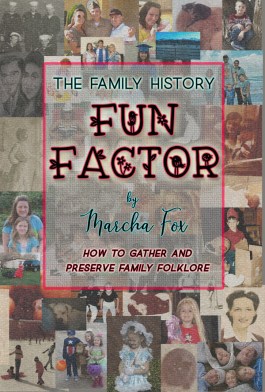
I’m going to sneak in a plug for one of my nonfiction books here simply because it fits the subject. FHFF06082018frontsm300Family folklore is something that many have never heard of, yet we all have it. What are your family’s traditions for holidays? Favorite stories and recipes? Ethnic origins? Vacation adventures? For more ideas, check out “The Family History Fun Factor”. It’s free on Kindle Unlimited. You can pick up your copy on Amazon here.
 

Today’s Writing Tip

desktop- copy

As noted previously, literacy is important and should be one of any author’s favorite causes. One way you can help, which doesn’t cost you a thing other than a few seconds each day is to click on the Literacy Site. Check it out here. This is an easy way to help this important cause which will ultimately have a bearing on your success as an author. Without readers, what’s the point of writing?

Today’s Writing Tip

paper-copy

Literacy is important. Without readers, authors have no audience. With the explosion of visual media all around us, reading runs the risk of going out of style. Those with learning disabilities are especially prone to not liking to read. How many kids these days prefer playing a video game to reading a book? Since literacy has a very strong bearing on a person’s success and independence there are strong economic and societal implications as well. What can you do as an author to encourage literacy?

Check out my previous blog on this important subject here.

Today’s Writing Tip

home-office-3 copy

I recently read a book that was a good story that I enjoyed and felt that, generally, it was well-edited, except for one thing: There were a handful of instances of using the wrong homonym. These are usage errors as well as technically a spelling error. Alert readers will notice and roll their eyes, not a reaction you usually want directed toward your work.

Bear and bare are often misused! My first thought is that bear is the animal and bare is a synonym for naked. So far so good. But what about to bear arms, meaning wielding a weapon, versus bare arms, like in a sleeveless dress?

I dare you to look up bear in the dictionary. What about to bear a child? What about its past participle, born? Then there’s bearing. How many different definitions does that have, from bearing a burden to the component in your car?

Then there’s another slant on bare, being the adverb barely.

There are dozens of homonyms in the English language just waiting to trip you up. I’ve harped on this before and will continue to do so as long as I find them, especially in otherwise well-written books. These nasty alligators in the water aren’t caught by your garden variety spellchecker, so it’s up to you as an author to distinguish between them and use them correctly.

I can barely bear it when people misuse homonyms!

Today’s Writing Tip

notes-copy

One thing you can do as an author is to start a book club in your neighborhood. However, don’t focus on promoting your own books! People will see through that in a heartbeat and be turned off. Rather, make new friends and share your love of reading. As an author, you should be reading as well. Being part of a book club is a natural place to be.

Personal interaction is the best way to attract fans. If people like you and/or find you interesting, they will be curious about your books. It’s okay to let them know you write, but be humble about it. If your books are free somewhere, you can certainly point that out. There’s no telling what networking and connections can result from interacting with your community. Many writers, myself included, are introverts. If you’re not up to starting one, think about joining one. People who love books are what you’re looking for.

Today’s Writing Tip

computer- copy

What kind of car does your protagonist drive? Use the make, style, and color to further define his or her personality. James Bond drove an Aston Martin, not a Volkswagon bus. Think about it.

Think about your friends and what they drive. What does it say about them as a person? Do they lease a new car every year or so or, conversely, drive one that’s over a decade old? Is it in good condition or beat up? Is it clean inside or littered up with fast food containers? What color is it? They say that red cars are targeted most often by police. Why do you think that’s true? If you’ve had a variety of different cars throughout your life, how did you feel driving each one? Was it simply a means to get from point A to point B, or did you feel omnipotent, or perhaps even vulnerable in it? I sure felt differently driving a Porsche than an aging Suburban.

One example from the TV show “The Big Bang Theory” is how Penny’s “check engine” light was on. What did that tell you about Penny? What about Sheldon, who didn’t drive at all (at least for the most part) and had his friends chauffeur him around? What about the Ferrari in “Ferris Buhler’s Day Off”?

You can tell readers a lot about your characters in so many ways. Their favored mode of transportation is definitely one of them. Even if you write historical fiction, horses and carriages can be used in a similar manner. Science fiction, likewise. Think of Luke’s land-speeder in the original Star Wars.

Today’s Writing Tip

desktop- copy

Little details like street names help bring a story to life, even if it’s purely fictitious, i.e. an imaginary street or restaurant in a nonexistent town. If it’s set in a big city, however, feel free to use the names of actual streets and other landmarks. Anyone familiar with that area will get a real kick out of it and relate more closely to the story. If they live there, they may even tell their friends about it, which is even better.

I remember years ago when I visited Chicago for a conference. When I got home, I made it a point to watch a few movies set in that city, such as “Ferris Buhler’s Day Off” and “The Fugitive.” I really got a kick out of the fact the climax of the latter took place in the hotel where I stayed.

Just make sure you do so correctly or this could backfire. Don’t say someone turned west on Broadway if in reality it only runs only north and south. Assuming your reader knows otherwise, this will commit that cardinal sin of throwing him or her out of the story. Do it right or not at all.

Today’s Writing Tip

alphabets-copy

One thing that makes a story more vivid is a 360 degree sense of place. This includes place, time, scenes, location, weather, and all those things that are apparent when you walk into a room or outside your front door.

This doesn’t mean that you should slow down action and dialog with constant description. One technique is to describe the setting earlier or you can essentially sneak in little bits throughout. If two characters are having a lively conversation, think about what else is going on. Are they just standing there, head to head, staring at each other? Or is one walking around, engaged in some activity, or pondering a bird outside the window? Such things not only add to the atmosphere you’re trying to create with the setting, but the mood as well.

It’s been said the we perceive more from visual clues during a conversation than the words alone. Anyone who has even found themselves in trouble because someone misread something they said in an email should know what I’m talking about. Details should be used to help round out the story to one that feels real, similar to how you perceive the world around you.

Today’s Writing Tip

paper-2 copy

The judicious use of pronouns is a skill every author must master. Knowing when and when not to use them to achieve clarity without undue repetition is essential. Use them too much and the reader gets confused, especially if there are several characters of the same gender interacting. Unless the action or dialog clearly fits a specific character, they may get lost as to who’s saying what. This throws them out of the story, usually to back up several paragraphs or even a page to sort things out.

On the other hand, using a character’s name too often is annoying as well. When that happens in something I’m reading, I tend to roll my eyes and think “Okay, okay, I know who it is already!”

In most cases, there’s no need to use a character’s name more than once in any given paragraph. If there’s interaction with someone else, then in some instances you may have to clarify. When a single character is the only one “on stage” at the moment, however, you can go for paragraphs and in some cases, even pages, without repeating their name, particularly if it’s written from their point-of-view. How often to you call yourself by your first name?

Today’s Writing Tip

blank copy

Think for a moment which stories you’ve read that are the most memorable. If you had to pick a favorite for the last year what would it be? What was your favorite story as a child? Now take it a step farther: Why?

A well-written story takes you to another world, into “the zone” if you will, where you can at least temporarily escape the mundane. It may be somewhere in the past, in a world that only exists in the imagination, or full of thrills and excitement. Your favorite genre will provide you with a clue regarding what you crave to experience, albeit vicariously. Think about that old advertisement from years past that left you with the words, “Take me away, Calgon!”  Where would that be?

The next time you’re loving a story, one you hate to put down, when you step back to reality think about why you find it so appealing. Which part of you does it strike with a responsive chord? Understanding what you like in a story can help you enhance your own with similar traits. Is it strong characters? Exotic settings? A complex plot? Excitement your own life lacks? Details that make it come alive as opposed to strictly action and dialog?

The next step is to apply similar characteristics to your own writing.