Today’s Writing Tip

technology-3167297_1280 copy

Avoiding Deus ex machina endings should go without saying. If you write sci-fi or fantasy, set up the possibility for a dramatic ending so you don’t spring it on the reader out of the blue. Miracles are fine, as long as you develop the possibility beforehand. If one of your characters is going to die or get killed, be sure the threat of such an outcome is well-defined or at least hinted at.

Review of “Non-Profit” by Larry Hyatt

non-profitcvr

The author is clearly a talented writer. The story flowed nicely and his characters were fairly well-developed. I think there may have been a few too many characters, but the story revolved around a conference held for those working for non-profit organizations in Louisiana, so a fair amount of people were required. Since I’m retired, in many ways the story reminded me too much of work, LOL. Those who work in the non-profit industry would probably enjoy it. I did laugh out loud several times at their antics. The politics, interaction between employees, dirty little secrets, and so forth were certainly credible and somewhat typical of any office environment, with the added flavor of the South.

One thing I found confusing and then annoying was the fact the author was inconsistent in how he spelled one of the main characters name–sometimes it was Rachael and others Rachel, which at first made be think it was two different people. Another character, Valerie, was also spelled Valarie. It’s also usually a good idea to keep character names different enough they don’t get confused. Having a Rebecca, Jacob, Josh, and the protagonist, Jay, didn’t help keep them separate.

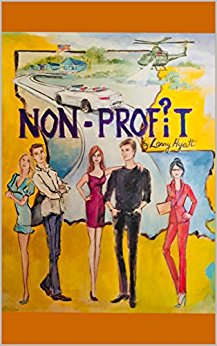
There was also minimal if any physical description regarding what the characters looked like. I realize some readers prefer to imagine what a character looks like themselves and not be told, so this is subjective and a moot point, but I prefer to have that included. I suppose the cover did some of this, which was clever and a great representation of the story. To the author’s credit, there was only one or two actual typos, which I always appreciate. As a grammar Nazi, I can really go on a rant when I’m continually thrown out of a story due to flaws that should have been caught by an editor, proofreader, or even a spellchecker. A few times I got lost regarding who was speaking with the group dialogs, but at least the conversations sounded real.

To me, this was primarily the story of a crazy week at a conference. While it was credible, it wasn’t that interesting to someone outside the industry, but I think the author has the talent to make a more interesting story, perhaps throwing a murder or some other mystery in there for his next work.

You can pick up your copy on Amazon here.

Today’s Writing Tip

typewriter-801921_1280 copy

Don’t shock your readers with something that hasn’t been alluded to in some way. It actually builds more suspense to hint at it, making them wonder what’s going to happen.  Providing threats, whether real or imagined, gives the reader more to worry about and anticipate trouble for your hero or heroine, which keeps them turning the pages.

Check Out My Blog on Today’s “Nerdy Book Club” Post!

via The Importance of Mentoring Young Writers by Marcha Fox

Today’s Writing Tip

typewriter-2939202_1280 copy

When using a foreign language that you do not speak, be cautious when using translation software because it often doesn’t reflect the correct syntax. If possible, find a native speaker to confirm whether or not it’s correct. Google does a fairly good job, but there are certain idioms that don’t translate literally and can tip off a knowledgeable reader to your ignorance.

Today’s Writing Tip

woman-2937207_1280 copy

Writing a crime novel? If you want to gain and maintain reader credibility, be sure to keep police and forensics protocol and procedures authentic. Research as much as required, including talking to experts, to make your scenes and conversations sound real. Accurate details bring a story to life.

Today’s Writing Tip

woman-2937216_1280 copy

Every occupation has its own jargon. Use enough in character dialog to sound authentic, but don’t boggle the reader’s mind with too much technical terminology or acronyms, which should always be defined the first time they’re used. If several pages or chapters separate their next use, remind the reader. This can be easily done via dialog. For example:

“The ARU went out again,” John said.

“That’s the second time this month the auxiliary refrigeration unit has gone on the fritz,” Bill grumbled in reply.

Today’s Writing Tip

write-593333_1280 copy

Know the difference between formatting for fiction vs. nonfiction. Fiction typically has indented paragraphs, nonfiction has block paragraphs. Follow industry standards if you want to be viewed as a professional.

Today’s Writing Tip

writer-1421099_1280 copy

Reading your story aloud is an excellent editing device. If nothing else, read the dialog out loud to make sure it’s authentic. Remember to use contractions. More often than not, a person will say “I’m going to the store” as opposed to “I am going to the store.”

Today’s Writing Tip

workstation-336369_1280 copy

Watch for proper subject-verb agreement. “Writing skill IS important” vs. “Writing skill and grammar ARE important.” As a writer or author, knowing proper grammar is part of your job; even more so if you’re an editor.