Today’s Writing Tip

writer-1421099_1280 copy

Comparing your story to an established one can help attract readers who will resonate with it. This can be another book or series, a popular movie, or TV show. This is shorter and more direct than describing your story and expecting potential readers to make the connection.

For example, if your book is about vampires, it could still span a huge variety of styles. Does it compare to “Twilight”, the original “Dracula”, or “The Adams Family”? See the difference?

Have aliens visited Earth? Question worthy of study, says physicist

Excellent objective article on the UFO phenomena. Check it out.

Source: Have aliens visited Earth? Question worthy of study, says physicist

Today’s Writing Tip

10470644_s

It’s hard not to respond when you get a bad review, especially when the person is either a troll or obviously didn’t “get” what you were trying to convey. Console yourself with this satisfying thought: A writer can kill you off with a few keystrokes. Don’t make us mad…

However, if the review is bad due to something such as typos, editing, grammar, or formatting, pay attention. Not liking the story is totally subjective, which most people recognize, but reviews that address sloppy writing can turn off potential readers faster than the speed of thought. It’s time to go back to the drawing board or hire an editor.

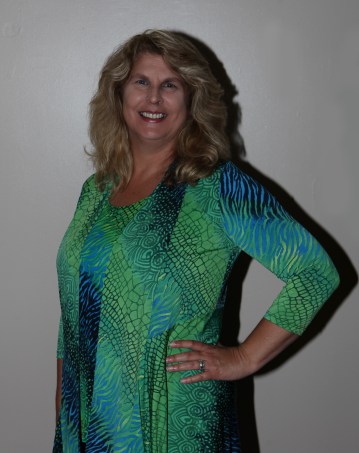
Meet Children’s Author, Wanda Luthman!

WandaLuthman

Wanda and I met in an interesting, serendipitous way. First we connected on LinkedIn, which really isn’t that unusual. After that, however, we discovered we were both going to the Space Coast Book Lovers Conference in Cocoa Beach, Florida. We were looking forward to meeting in person and then, better yet, our tables were next to one another! What are the odds? I call that something along the lines of “meant to be.”

I enjoyed visiting with her tremendously and was so impressed by her and her adorable books I wanted to pass that along. Her background in mental health and guidance counseling show through in these uplifting stories. If any of you have young children, grandchildren, great-grandchildren, nieces, nephews, are teachers, or whatever, take note! These colorful books will charm your socks off!


MF:  I grew up on Little Golden Books and fell in love with stories when I was a

preschooler. What was your favorite book as a young child and did it influence your writing?

WL:  My all-time favorite book was Charlotte’s Web. My third grade teacher read it to us at school over several days while we were waiting for the bus. I definitely believe this book inspires my writing today. While I had already started writing books by third grade, this book is one that I look to aspire to. I want children to feel something when they read my books, just like I did with Charlotte’s Web.

MF: What influenced you the most to decide to write and publish children’s stories?

WL: My daughter has been a source of inspiration for me to write. I saw the world through her eyes growing up and it got me back in touch with my inner child which is where I believe my creativity lives. But, what inspired me to actually publish was that my Pastor had written a book and something about knowing an actual person who published a book made me want to go for it. Plus, being 40 and finally over the fear of people saying ‘no.’

MF: How do you get your ideas? Are they based on experience or just come to you?

WL: My ideas bubble up from somewhere inside that I can’t really explain. However, when I look back on a story after I’ve written it, I can usually see that it came from a thought I had while riding my bike or enjoying the beauty of nature or sometimes from a song I hear.

MF: Which comes first? Visualizing the illustrations, creating the character, or the poetic rendition of the story?

WL: When I write a picture book, the words and rhyme come first. Sometimes when I’m

particularly stuck on a spot in the story/poem, that’s when a visualization will help. If I can see it, I can describe it. By seeing it, though, I mean in my mind’s eye.

MF: Do you ever do readings? If so, do you have any special experiences to share?

WL: Yes, I love to do readings. I have read at schools and libraries and once at a Barnes & Noble. What I love is looking at the children’s faces just listening intently. Afterwards, I usually take questions and I love the questions children come up with. Often they are the children that like to write themselves. I truly hope I inspire them to follow their dream of writing.

MF: Of your various characters, do you have one who’s your favorite? Why?

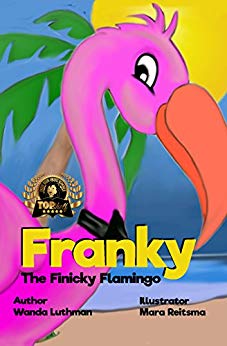
WL: I think my favorite character is Franky the finicky flamingo. He’s very colorful and wants to stay that way but doesn’t like any other birds’ food. He’s fun and unique. He also has a second book coming out where he’s trying to find his favorite drink. But, it’s not about what you think. This one has an earth-consciousness message.

MF: What’s your favorite part of writing? You least favorite?

WL: My favorite part of writing is the actual writing. When I have something inside that is pushing me to write it down and I sit down and it just flows out of me. It’s like I’m in a zone. It’s wonderful! My least favorite part is figuring out how to connect my books with readers. I love book fairs, craft shows, and school/library events but they are not always easy to find.

MF: If you could have dinner with any children’s author, living or not, who would it be?

WL: It would definitely be with Dr. Seuss. I love his writings. He is playful, yet has a message. I also love his rhyme and meter. He is my writing hero!

MF: What genre do you like to read for you? Do you have a favorite author?

WL: I read a lot of children’s books. I started reading them to keep my finger on the pulse of what was happening in the industry and then realized I liked them a lot. I guess it’s how my mind words so I connect with them. However, I read a lot of spiritual books. Ever since my Pastor’s book landed in my hands and it turns out it was a 28-day meditation book, I have become very interested in contemplative meditation which has an eastern feel to it. So, I read everything I can get my hands on about that. I find it so encouraging to meditate and soak in love and then I turn around and can give that away to help make the world a better place.

MF: Each of your books have a theme and a cleverly disguised lesson. Do you know what your next story will be about?

WL: I never know what my next story is going to be about. I have to wait for the idea to percolate inside me and then bubble up to the point I’m aware of it and have to write it down. I have already written three more picture books (one for Halloween, one for Christmas, and one for Easter). I have a full book written as the sequel to The Lilac Princess. I have an idea written as a sequel to Gloria and the Unicorn and an idea that’s been turning over in my mind for a sequel to A Turtle’s Magical Adventure. But, right now, I’m finishing up the sequel to Franky the Finicky Flamingo, the one that’s about Franky finding his favorite drink. I can’t decide between the title Franky Finds his Favorite Drink or Franky the Thirsty Flamingo. I love the alliteration of the first one but the second one sounds more like the first title. If any of your readers has input, I’d love to hear it!


Wanda’s books are available through Amazon and Barnes and Noble.

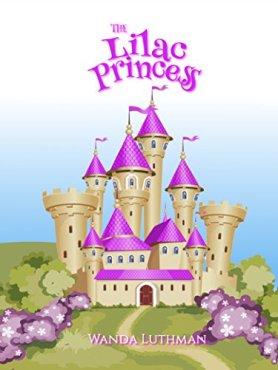
The Lilac Princess

A modern fairy tale of a young Princess with too much responsibility and not enough freedom. She is an only child to an elderly King and Queen of a Kingdom in turmoil. Upon her rests the responsibility to rescue her Kingdom one day, but for now, she is held within the castle walls for her safety. She longs to go outside just for a moment, to smell the sweet lilacs growing in the meadow. Come along on her adventure when she dares to escape the castle walls and meets a cursed dragon. Little does she know that while the dragon has an evil plan, her sweet spirit may just unravel it.

Franky the Finicky Flamingo

Franky is a finicky eater or so it seems. He tries food that the other birds like to eat but nothing appeals to him. Finally, a friend helps him discover the food that is right for him. The message is about accepting our “finickiness” while also understanding our need for the “right” (aka healthy) foods.

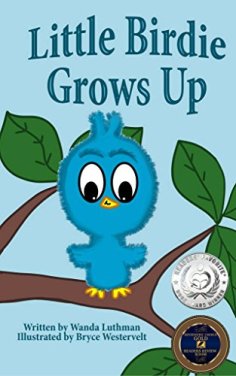
Little Birdie Grows Up

A precious story about a bird’s hatching to leaving the nest. Be warned, adults, have a tissue handy!

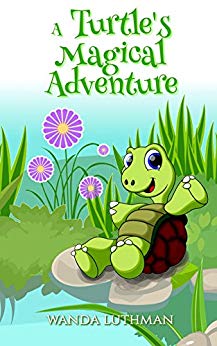
A Turtle’s Magical Adventure

A Turtle’s Magical Adventure is a charming, heart-warming story of a turtle who doesn’t like his shell because it makes him too slow. Tad asks other slow animals if they also mind being slow. Each one gives an answer that helps Tad feel better, but, still he wants to be fast. He happens upon a snake who tells him there is a wizard that can make him fast. He goes on an adventure into The Magical Timberwood Forest to meet the wizard and hopefully get his wish fulfilled. He encounters delightful, magical creatures along the way but also meets with danger and choices. Will Tad get his wish or will the wizard turn him into turtle soup?

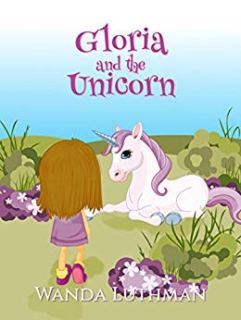
Gloria and the Unicorn

Gloria struggles with her facial disfigurement and wanting to fit in. Gloria’s mother died at birth and her father gave her to Miss Libby, the owner of a children’s home. Miss Libby loves the little girl and feels protective of her. But, it’s not until Sir Louie, the unicorn, shows up that Gloria starts to believe in herself. She has a conflict at school and never wants to go back and then she finds herself in an even worse situation; she encounters the evil Wizards of Malcadore who want to kill her. She must decide if she will face her fear of certain death to save her friend, Sir Louie, or lose him forever. Come along on Gloria’s marvelous journey with Sir Louie.

Connect with Wanda

Amazon Author Page

Website/blog

Facebook Fan Page

Twitter

YouTube

Instagram

LinkedIn

Google+

Goodreads
Today’s Writing Tip

blogging-336375_1280 copy

There are numerous awards you can apply for, which help give your book credibility. However, don’t waste your money if your book is riddled with typos or other problems. Judges are looking for clean copy as well as a good story. On the other hand, remember that everything is subjective and the person who looks at your submission may not be enchanted by it. This is frustrating, but the luck of the draw. If you really believe your story is a worthy one, try another venue.

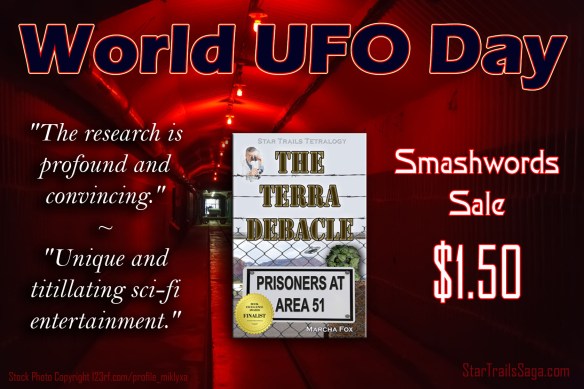
Perfect for WORLD UFO DAY!

71477749 - bunker from cold war, object an underground submarine base

What could be more perfect to celebrate World UFO Day than a great UFO story? And better yet, it’s on sale at Smashwords for half price!  If you’re an audio book fan and liked the old TV show, ALF, you’ll love Thyron. If you’re an Audible member and would like to listen for free, I still have a few promotional codes left, so give me a holler in the comments if you’re interested. If you’re not a member, you can get two free audible books when you join. Sign up here. Find out more about the story on the Star Trails Tetralogy website.

I believe. How about you?

Today’s Writing Tip

alphabets-2306479_1280 copy

Many authors are introverts who find it difficult to interact with fans face to face, yet this is usually the most effective connection. One way to help you overcome this is to join your local Toastmasters International club.

Being succinct when talking about your book is not always easy for authors who are used to using thousands of words to tell their story. Toastmasters will teach you to make your point directly and quickly as well as how to initiate conversations and sustain them. Check their website for the club nearest where you live.

An Author’s Lament on a Hot Summer Day

writeforreviews2

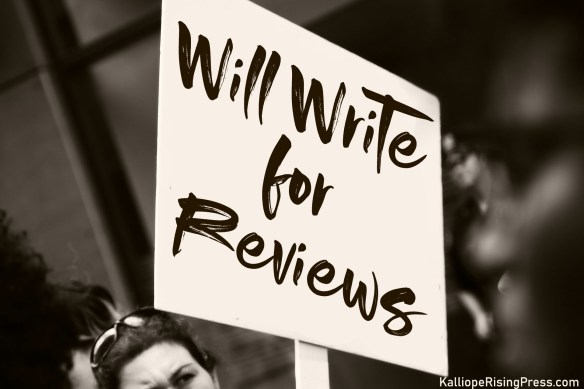
No doubt you’ve seen those unfortunate individuals on the side of the road with a sign that says “Will Work for Food.” Somehow I can relate, though I admit I’m not quite as destitute as those poor souls. Nonetheless, if you’re an author, unless you have a patient spouse who pays the bills or an alternate source of income such as a day job, retirement, or you have the good fortune to be a trust fund baby, chances are your income could be in a similar range, or possibly even less. Way less, like in negative numbers.

It seems no one these days wants to pay for anything, especially if it’s creative. The starving artist has been a familiar entity for eons. People want their music for free, their reading material for free, their games for free, and their artwork for free. This is what the electronic age has brought us. Now that books, music, pictures, and even movies are no longer on tangible media, they’re expected to be free. And of course, now that they’re teaching AI to create, in no time artists of all varieties could be out of business entirely. Muses today get no respect.

So tell me–who out there in any other profession, whether it’s accounting, engineering, administrating, or heaven forbid, even politics, is willing to work for free? To coin an apropos phrase from “Ferris Buehler’s Day Off,” Anyone? Anyone? When’s the last time you went into the grocery store and got your food for free?

Now that I’m retired, I can indulge in pursuing my work as an author. Unfortunately, lately that’s been directed more at marketing and promoting than creating. And the frustration some days is downright scream-inducing. The cash going out for services far outweighs what little comes in. If I were a logical person, I’d quit. If it were only about money, I’d quit. But do I? No. Because writing is in my blood (at least my astrological imprint, which features Kalliope, the muse of epic poetry on my ascendant). While I can make ends meet (barely) through other means, I’d love nothing more than to make a generous (or even adequate…okay, even meager) income from my writing. Tax write-offs are nice, but after a while it gets old. Just once I’d like to finish in the black.

The one thing authors appreciate (most the time, anyway) is a review, especially when we give away our books. And trust me, selling it for 99c is virtually the same as giving it away. Thinking about how long it took to write, edit, and publish it is verboten, because that’s downright depressing. I couldn’t even begin to calculate what I make per hour when selling a book for 99c, most likely less than a Mexican peso per hour, maybe even per day, if that. Yet people who are qualified to do no more than repeat the mantra, “Do you want fries with that?” want $15/hour. Right. And people in hell want ice water.

Reviews are important. Once you get a certain amount, vendors such as Amazon give your book a little more attention and help. If you want to look for an agent, be accepted by certain promoters (for a generous fee, mind you), or even expand into the audio book world, reviews are one measure of your popularity.

Thus, to me, it’s no more than common courtesy to leave a review, especially when you get a few hours entertainment and enjoyment out of a book that took someone a considerable amount of time and effort to produce. If you don’t like it or don’t finish it, fine. No review is better in most cases than a really bad one. Yet, some don’t take your book seriously until you have a few bad ones to show it wasn’t just your family and friends posting them (which isn’t as easy to achieve as you may think, unless you have some serious blackmail material). Granted, reviews are subjective and one man’s trash is another man’s treasure. I get that.

More than likely, unless you’re a fellow author you haven’t even made it this far in my rant du jour. But even fellow authors aren’t always diligent in leaving a review. It doesn’t have to be an essay worthy of a Pulitzer Prize; a few sentences will do.

We authors ask so little. Is it really that difficult to log into Amazon? You know it’s not. If you bought it there, they’ll even remind you and send a link. And the next time you get a book for free or less than you pay for a good cup of coffee, feel it’s your obligation.

I, for one, would rather work for royalties, but reviews, especially a good one, can make it seem at least marginally worthwhile.

So get off your lazy ass and leave one today for a starving author who, in return, will not only love you forever, but might even keep writing. Capisce?

Today’s Writing Tip

typewriter-801921_1280 copy

If your story has several unfamiliar terms, such as off-world science fiction or a medical thriller, consider including footnotes or a glossary. Always define such words at first use, a standard procedure in technical writing. This can be done drily, i.e., in parenthesis, or through a combination of dialog and narrative. For example, a character could mention the unfamiliar term, which is described in the following paragraph through the viewpoint of the protagonist. The same advice stands for acronyms.


Today’s Writing Tip

writing-pad-3229690_1280 copy

When you switch to a new point of view, make sure the reader knows how the new person fits into the story. If possible, introduce or foreshadow the new character in the preceding chapter. This provides better continuity.

On the other hand, sometimes it works for a story to be pieced together like a mosaic, particularly mysteries. Getting into the characters’ respective heads can show their motivation.