Today’s Writing Tip

blank copy

Know the difference between a serial and a series. If your story line & plot continue book to book and culminate in the last one, it’s a serial. This applies even if the stories can stand alone. A series comprises entirely independent stories but with the same characters. Examples include the Nancy Drew series (which were written by multiple authors under the pseudonym Carolyn Keene); Tom Clancy’s Jack Ryan series, or Robert Ludlum’s Jason Bourne series.

It’s too bad that these two terms are so similar, which makes them easier to confuse. Readers are often less than pleased to find out the book they’re reading doesn’t quite end, but carries on in another one, especially if it ends with a cliffhanger.
Today’s Writing Tip

alphabets-copy

Your writing will reflect what you read. If you read well-written books, it will register in your subconscious and raise your skill level. Conversely, reading mediocre work may help your confidence and not hurt your writing, but it won’t help it, either.

If you want to write a best-seller, then it makes sense to read best-sellers to see what they’re all about. The next time you sit down to write something, think about what you’re reading at the time and see if you’re assimilating its style without even being aware that you’re doing so. Reading quality material can be a very painless, yet effective, way to improve your writing.


Today’s Writing Tip

typewriter-2939202_1280 copy

Unless afflicted by writer’s block, authors have no trouble getting words down on paper or screen. However, some have more trouble than others getting those words in the proper order. Periodically study your sentences for correct structure. Especially make sure prepositional phrases are where they make the most sense. If misplaced, they can have hilarious implications that will commit the serious faux pas of throwing your reader out of the story. Place them as close as possible to what they modify for maximum clarity.

Today’s Writing Tip

technology-3167297_1280 copy

If one of your characters has a job description you’re unfamiliar with, make sure you find out enough about it to be convincing. Some years ago I was beta reading a book where the protagonist was a computer programmer. Having been one myself, I was familiar with what the job entailed and clearly the author was clueless. Find out as much as you can and then have someone familiar with that profession read it over for a sanity check. People usually love to talk about what they do and their knowledge, a resource you shouldn’t hesitate to tap.

Inaccuracies in this area suspend credibility for knowing readers and not only throw them out of the story but out of your fan base as well. There are some areas where your imagination shouldn’t be allowed free rein.

Today’s Writing Tip

paper-3172594_1280 copy

Knowing your competition is wise in any business with writing no exception. Reading other books in your genre helps keep you on top of trends and know where your work fits in. Authors more skilled than you will keep you humble, those less so show how you’ve progressed. Studying techniques used by other authors comes in handy and can improve your own writing. Especially savor sentences and paragraphs that are well-written as examples you’ll want to emulate.


Today’s Writing Tip

notes-514998_1280 copy

As an author you should go back and read your own work from time to time, preferably a year or more after you wrote it. After your work has “settled” for a while, you can see it more as your readers do, be more objective, identify areas where you need to improve, or in other cases amaze even yourself with your skill.

Don’t cringe if you find your former work far below what you now produce. Skills evolve with practice and time. This is true whether it involves playing a musical instrument, dancing, participating in sports, completing math problems, or expressing yourself in writing. Seeing progress should be encouraging, though in some cases you may want to go back and rewrite it to bring it up to your new standards. This is why some writing instructors advice throwing your first novel in the trash and considering it tuition.


Today’s Writing Tip

computer-3076956_1280 copy

If you don’t like research, then there are certain genres you should avoid writing, unless you’re an expert in the area. Stories with any sort of scientific, historical, geographical, or cultural theme need to be accurate. While many people expand their reading to unfamiliar areas because the enjoy learning, others may stick close to what they already know. If you don’t get it right, you’re cheating both types of readers. One will think you’re an idiot and the other may swallow false information.


#RWISA “RISING” WRITER – @MarchaFox #RRBC

Quote

Woohoo! I’m definitely excited about this honor!

via #RWISA “RISING” WRITER – @MarchaFox #RRBC

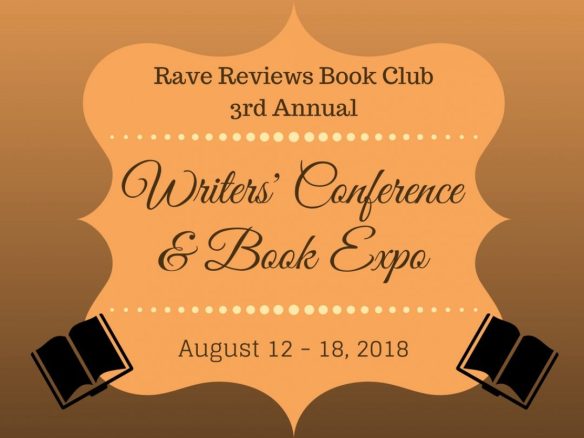
Are You an Author? Don’t Miss this Conference!

cropped-2018-wcbe-1

Whether you’re an aspiring novice or seasoned author, don’t miss this opportunity! Register NOW to get an early registration discount! Great information, tips, and networking for writers and authors, regardless of where you are in your journey!

*General Info – https://rrbcwritersconferencebookexpo18.wordpress.com/

*Registration Info – https://rrbcwritersconferencebookexpo18.wordpress.com/register-now/registration-general-info-rrbc-wcbe/

*Registration Packages & Pricing – https://rrbcwritersconferencebookexpo18.wordpress.com/register-now/registration-packages-pricing/

*Registration Page – https://rrbcwritersconferencebookexpo18.wordpress.com/register-now/

*Sponsorship Info – https://rrbcwritersconferencebookexpo18.wordpress.com/sponsors-rrbc-wcbe/

*Raffle Tickets Registration https://rrbcwritersconferencebookexpo18.wordpress.com/raffle-rrbc-rwisa/


Today’s Writing Tip

desk-2158142_1280 copy

Time travel stories can fall under at least two distinct genres: science fiction, if the emphasis is on technology or the future, or historical fiction, if the emphasis is on going back to the past. Make it clear in your book blurb which one fits since the two types tend to have entirely different audiences.

The mechanics of time travel and how it might be accomplished are definitely science fiction’s domain, along with speculations about the future and where the world is headed. On the other hand, if a character stumbles across a portal and is simply transported back in time, the emphasis will be on what he encounters. This could include culture shock as well as problems related to how he or she might be able to return to their own time.

A fan of hard science fiction is likely to be disappointed in the latter case whereas a history buff would love it, provided the historical details are accurate. Identifying the story strictly as “time travel” is not specific enough for a potential reader to know, making the book blurb critically important.