
Welcome to the WATCH “#RWISA” WRITE Showcase Tour! #RRBC #RRBCWRW

Blog Tour Banners

Welcome to our tour! Each day this month I’ll feature a writing sample from some of the incredible authors who are members of this elite writing group. To learn more about them and their work, follow the link at the bottom of the page. Today’s featured author is Karen Ingalls!


karen-ingalls


JUST ONE MORE

The bright neon lights of Las Vegas did nothing to improve Jack’s self-loathing. He walked the Vegas strip with head hung down and his shoulders slumped, ignoring the people rushing past him. He was desperate as he fingered the five coins in his pocket, knowing they were the last of his money

The hot, bright sun did nothing to lift Jack’s spirits. “What am I going to do? Where should I go?” His questions went unanswered. He did not know how long he had been walking, but he soon realized how hungry he was. He stopped at the intersection looking in all directions, not knowing where he was and not caring. The crosswalk signal changed, and the crowd of laughing and drunk people, pushed him out into the street. Jack looked down as he stepped onto the curb and saw a wallet. He picked it up and looked around. The people that had once surrounded him had dispersed in different directions moving far away from him.

Jack slipped the wallet into his coat pocket and walked into the nearest casino and entered the men’s room. He went into the first open stall and with shaking hands he opened the wallet revealing a large amount of one hundred-dollar bills. “This can’t be. I must return the wallet.” He searched further and found a driver’s license for a Stephen Richardson from New York City. There were credit cards plus a family photo of a man, woman, and two young girls. “I suppose this is his family.”

“I will get hold of Mr. Richardson and tell him I found his wallet.” Jack put the wallet back in his coat and left the stall. He stood in front of the mirror looking at the unshaven face and unkempt hair. He washed his face and ran his fingers through his hair. He pulled his tie up and tucked in his shirt. “Well, I look a little better. Maybe I could use one of these bills, get a shave and haircut and have enough left over for dinner and a room for the night.” Jack reasoned that Mr. Richardson will never miss one hundred dollars out of the thousands in the wallet.

The lights of the casino were less intrusive, and the noise lifted his spirits a little. Jack walked past the slot machines and gaming tables out into a hallway. He walked past clothing stores and gift shops until he came upon a barber shop. The shave with the hot fragrant towels followed by a shampoo and haircut were what Jack’s weathered appearance needed. He hardly recognized the face in the mirror looking back at him.

“Perhaps a new shirt, slacks, and jacket would not be too expensive.” Jack reasoned that he would pay Mr. Richardson back every penny once he gets back on his feet.

The memory of his gambling habits which caused the loss of his marriage, job, and friends had faded. “I will never become that person again. I will change for the better.”

The new clothes and filling steak dinner with all the trimmings, relaxed Jack, and he confidently made his way back through the casino. The slot machines were well occupied and occasionally Jack heard the screams from a winner while the lights and sirens of the winning machine blared. “I would rather play poker than throw my money down the one-armed bandit.” He stopped at a Texas Hold ‘Em table where there was one vacant seat. “A few hands won’t hurt anything. I can play with Mr. Richardson’s money and pay him back with my winnings.”

The free drinks, the smoke, the cocktail waitresses and the sound of the cards being shuffled were magic to his ears. With each hand dealt, Jack became more determined to win the big one. He eyed each of the players trying to read their body language. On the fourth deal he opened his hand to reveal two queens. The flop showed a queen, seven, and a five. Jack made a modest bet. The dealer placed another card up which was a ten. Jack called the bet made by a player across from him. They placed the final card up revealing a seven, which gave Jack a good hand of two pairs. He raised the bet from another player and watched as other players either folded or called.

“I must have a winning hand because no one is aggressively betting,” he reasoned. “I’m all in,” he announced as he pushed all $500.00 of his chips into the middle. Players folded one after another except for the man sitting across from him. Jack tried to remain calm and put his shaking hands in his lap. The noise in the casino seemed to become louder and perspiration ran down his face.

“I’ll call.” The man turned his cards over to reveal two sevens.

“That can’t be. I had you beat.” Jack felt weak and nauseous. “Hold my place. I’ll be back.” He knelt in front of the commode and vomited up his lunch. At the sink he washed his face, straightened his tie and took another $500.00 out of the wallet. At this point he did not care and had convinced himself it was his money. “I found it. Finders, keepers.”

The evening turned to long hours. There were no windows or clocks in the casino, so Jack had no awareness of the hours slipping by in the same way the money was slipping away.

Jack’s luck and poker skills did not change. He won a few small hands, but he never recouped what he lost. He took his last $100.00 bill out of the wallet. “All I need is one good hand. Just one more.”

The big winning hand never came. Jack threw the empty wallet into a trashcan and walked out into the bright, sunny and hot day. He could not adjust his eyes to the brightness as he staggered down the street. “What am I going to do? Where should I go?”

Jack did not have one more game to play. He was found on a park bench late that night, alone, penniless, and without any life force in his body, still dressed in the new clothes.


Thank you for supporting this author along the WATCH “RWISA” WRITE Showcase Tour today!  We ask that if you have enjoyed this member’s writing, please visit their Author Page on the RWISA site, where you can find more of their writing, along with their contact and social media links, if they’ve turned you into a fan.

We ask that you also check out their books in the RWISA or RRBC catalogs.  Thanks, again for your support and we hope that you will follow each member along this amazing tour of talent!  Don’t forget to click the link below to learn more about this author:


Karen Ingalls’ RWISA Author Page


How would you like to become a RWISA Member so that you’re able to receive this same awesome FREE support? Simply click HERE to make application!


Welcome to the WATCH “#RWISA” WRITE Showcase Tour! #RRBC #RRBCWRW

Blog Tour Banners

Welcome to our tour! Each day this month I’ll feature a writing sample from some of the incredible authors who are members of this elite writing group. To learn more about them and their work, follow the link at the bottom of the page. Today’s featured author is ME! Woo Hoo!

marcha-fox

The Curse of Dead Horse Canyon

by Marcha Fox

Charlie Whitehorse caressed the soft texture of the wool blanket as he gathered its folds around himself against the evening chill. He savored it’s earthy scent, unlocking an onslaught of memories. This wasn’t just any blanket. Over three decades before, he’d watched his ama’sa’ni create this one from scratch. Sitting cross-legged on the floor of his log cabin, gazing into the roaring fire, he recalled how he’d longed to hunt deer with his father and the other elders. But he was a child of seven yearsNavaho_spinning_and_weaving_page_928, his job to help his grandmother, one of the tribe’s weavers. The process of making blankets was long and tedious, one far too boring for a young Navajo boy who felt embarrassed and demeaned performing chores assigned to squaws.

Even now, he remembered every step. First, she’d shown him how to separate the shoulder sections of the fleece, which were the cleanest with the longest staple. After that, she’d instructed him how to prepare the raw wool for spinning. This involved teasing a few locks with his fingers to separate the fibers. Next came combing them with a pair of carders that looked like large, flat dog brushes, manmade imitations of the prickly teasel. Then he’d place the resulting bats in a reed basket, miniature clouds of fluff awaiting her skilled hand. Pure lanolin coated his fingers, making them squeak when rubbed together, its odor one he’d never forget. Nor how it softened callouses earned practicing with his bow. Often he couldn’t work fast enough to keep up with her spinning, accomplished using a spindle to twist the prepared fibers into yarn.

Fortunately, once she spun enough yarn, his part became more interesting. Then he no longer had to sit for hours on end, arms aching from carding. Now he could explore a bit as he gathered the materials she needed to dye the yarn into a variety of warm colors.

The collection process for some substances required a knife or ax, which contributed to the feeling of it being a worthy task for a young brave. Bloodroot, hickory twigs, pokeweed berries, and oak bark were some of the things she requested. Among the most challenging were cochineal beetles which, when dried and ground into powder, would yield crimson. It could take an entire day to gather enough bugs for a single batch, but to both him and his ama’sa’ni, it was a day well-spent.

In fall, goldenrod blossoms were gathered to produce vibrant yellow, though color and intensity depended on various factors. When ama’sa’ni was ready to start the dye process, he’d haul water from either the iron-rich spring to the north side of their village for reds, or the alum-rich one to the east for the yellows, the resident minerals necessary for the fiber to permanently retain its color.

When she’d prepared sufficient yarn, Charlie helped her warp the loom constructed from tree trunks, then wrap the different color yarns on separate sticks that served as shuttles. Then, the best part–weaving–began. He marveled as she’d skillfully alternated shuttles, colorful geometric patterns emerging with each row of weft, until at long last their collective labors produced a finished blanket that was not only functional but a work of art.

Only now, as a grown man, did the wisdom of that experience impress itself upon his mind. Not only the work itself, but what it taught him about nature, going full circle from the vegetation the sheep ate to dyeing the yarn with some of those same plants. Yes, the process was tedious and long; yet the result was well worth it. It taught him patience, perseverance, and appreciation. For simple things. Like a blanket that felt softer to the touch each year, improving with use, unlike so many things that didn’t last. Analogous to life itself. And old friends. A cherished cover that had kept him warm for what would soon be thirty winters, many of which were spent in the frigid Colorado Rockies.

His cultural roots demonstrated man was intended to be an integral part of nature; stewards, not conquerors. Unlike those who’d invaded their land, forced Indigenous population to settle in inferior regions, then even drive them from there, when a wealth of silver, gold, copper, and other minerals were discovered beneath what they considered sacred ground.

Rather than extracting and processing it in a way that honored the earth and showed gratitude for its abundance, they’d virtually raped the land, leaving gaping holes and tunnels behind. Some hundred-fifty years before, his people had sadly admitted defeat and had no choice but to tolerate such behavior.

Yet, their misfortune didn’t end there. It was harvest time in 1869 when a band of drunken Whitemen raided the village, waiting until the tribesmen were away for the final hunt in preparation for winter. The invaders not only ravaged the women and burned their homes, but stampeded the horses that remained in camp. A few young braves, not yet old enough to join the hunt, had attempted to save the steeds, only to be driven by a hoard of deranged miners over the edge of a cliff to be decimated in the ravine a hundred yards below. Charlie recalled when he’d first heard the story as a youth and how he’d imagined himself as one of them.

Was it any wonder that when the tribesmen returned and found the resulting devastation that their medicine man, likewise a shaman, cursed that canyon?  So far, however, the Whiteman had continued to benefit from exploiting and abusing the entire area. Perhaps the dawn of  the curse resided in the aftermath of the leaching and other processing methods used to extract the precious metals. These involved noxious substances such as arsenic and mercury. Their residue poisoned the ground and eventually migrated to nearby streams when abandoned mines filled with rain and snow melt. The toxic drainage eventually killed all aquatic creatures and drove away wildlife that depended upon such channels for drinking water.

The mines were mostly exhausted, yet water continued to accumulate in their cavities. The latest bitter irony that they were using the excavations’ polluted aftermath to further devastate the ground. The acid mine water was being used for hydraulic fracturing, commonly known as fracking, again dishonoring the earth while stealing from its depths.

It was easy for Charlie to question whether or not the curse was real. So far it was questionable, no apparent consequences answered upon those who had wreaked so much destruction for the sake of greed. Only the earth and local wildlife had suffered.

Local tradition dictated that the curse would manifest in its entirety when their actions reached the pinnacle of evil. After that, it would dissipate, but only when the Whiteman and his Indigenous brothers mended their ways; when they closed the persistent rift between them in friendship and cooperation. Unlike many, he was one of the few who had tasted of such sweetness with his friend, Bryan Reynolds. They’d met in their teens, when Charlie had moved north to live with his father in his male parent’s native Cheyenne country. Oddly enough, the two boys even shared the same birthday, spending dozens of adventurous summers together, exploring, hunting, fishing, and growing up in separate cultures, yet being of one heart.

But now Bryan was dead. His life terminated in that very ravine known to his people as Dead Horse Canyon. Charlie suspected his friend’s tragic accident had been orchestrated by those to whom the curse had been directed. Yet so far, no guilty party had been identified, much less suffered due consequences. It didn’t make sense. Seven generations has passed. Surely it was time. And intuition assured him fulfillment was in progress.

But why Bryan? Why now? And what, if anything, was Charlie’s role?

The blanket’s warmth enjoined him to patience. From that first bat of carded wool to its liberation from the loom, it had comforted and instructed him in the ways of life. Legend assured him that the curse would end. Soon. And in some way, currently unknown to him, he would be part of it.


P.S. This is a glimpse at my WIP of the same name. This one is a conspiracy thriller and quite a bit different than my usual genre, YA science fiction! Hopefully I’ll have it done by the first of the year. Stay tuned!


Thank you for supporting ME along the WATCH “RWISA” WRITE Showcase Tour today!  We ask that if you have enjoyed this member’s writing, please visit their Author Page on the RWISA site, where you can find more of their writing, along with their contact and social media links, if they’ve turned you into a fan.

We ask that you also check out their books in the RWISA or RRBC catalogs.  Thanks, again for your support and we hope that you will follow each member along this amazing tour of talent!  Don’t forget to click the link below to learn more about this author:

My RWISA Author Page


How would you like to become a RWISA Member so that you’re able to receive this same awesome FREE support? Simply click HERE to make application!


Welcome to the WATCH “#RWISA” WRITE Showcase Tour! #RRBC #RRBCWRW

Blog Tour Banners

Welcome to our tour! Each day this month I’ll feature a writing sample from some of the incredible authors who are members of this elite writing group. To learn more about them and their work, follow the link at the bottom of the page. Today’s featured author is Rhani D’Chai.

rhani-dchae

THE WEEK MY FATHER DIED

by Rhani D’Chai

I was at work when my mother called to tell me that dad had been rushed to the hospital the night before, suffering from excruciating pain in his abdomen.

Dad had been diagnosed with prostate cancer about fifteen years earlier and it had spread to other parts of his body, but he had been doing fairly well so there was no reason to anticipate something like this.

Mom told me that dad had spent quite a bit of time at the hospital while they ran numerous tests to discover the cause of his pain. Long story short, his kidneys were failing and there was nothing that could be done. He was sent home with a hospice nurse, so that he could be with his family in comfortable surroundings when the end came.

We rented a hospital bed and put it next to the front window so that he could see outside into the yard. We kept instrumental hymns playing on the stereo and moved mom’s chair closer to the bed so that she could be nearer to him.

And that’s when things started to get a little crazy.

James, my seeing eye son, was living with mom and dad at the time, and my sister, who I was living with at the time, drove out with me every day.  Gail, my other sister, also came out daily, as did her husband, her four children and their collection of young ones.

Gail’s grandkids were all under ten and did not really understand the severity of the situation. They knew that Papa was going home to see Jesus, but that was about as far as it went. Gail’s family had never lived close to mom and dad, so their kids only saw my parents three or four times a year. None of them had a close relationship with dad, so the thought of losing him did not rate overly high on their radar.

For five days, the kids ran through the house, slamming the doors and yelling to each other. Even when they were sent outside, the noise was loud enough to be heard everywhere in the house. Their respective parents would occasionally tell them to tone it down, but they were kids and that’s what kids do.

At one point, one of my nephews-in-law decided to commemorate the occasion by putting it on film. He videotaped everyone going to my father’s side and saying goodbye. Maybe it was the stress of the situation, but I didn’t like what he was doing. My father’s death was not a photo-op, and I resented anything that made it seem that way.

I remember being called into the living room and told to say something to dad. I had already spoken to him several times, telling him that I loved him and assuring him that mom would be taken care of. Having my niece’s husband dictate to me where to stand and how long to talk so that he could get it on film, was infuriating.

As six families moved through the house each day, my mother spent most of her time sitting with dad, reading the Bible to him and making the most of the time that remained. She loved having her family close, but as the days passed, I could see that the noise and constant disruption was getting to her. I did speak to my nieces individually on several occasions, asking if they could please keep the kids quiet, at least in the house. They always said they would, and I know that they meant it at the time, but it never happened. The noise, the chasing from room to room, and the constant interruptions into my parents’ private space, continued. I could see that it was upsetting my mother, and I finally decided to put my foot down.

I took my mom and Gail into the bedroom and asked mom what she wanted or needed. She thought about it for a long moment and then said, very simply, that she wanted to answer the phone. Either Gail or one of her daughters had been taking the phone calls and making a list of the callers. Mom wanted to speak to those people, most of them from her church, and was upset that she was not being allowed to do so. And she wanted the volume around her to be turned down to a much less disruptive level.

Gail said that she would take care of it, and she did. Within hours, her grandkids had been taken by their fathers to another location. I didn’t know where they went, and I didn’t much care. They were gone, the house was quiet, and that was all that mattered to me.

Later in the day, James, my other sister Sharon and I, took mom to Cold Stone for some ice cream. Dad was fairly unresponsive by then, so she felt that it was okay to take a little break.

We were gone for about an hour, and by the time we got back, everyone else was back as well. But at least mom had a few hours of uninterrupted time with dad, and I’m so grateful that the girls understood and were willing to do what was needed to give her that.

My father passed that night, surrounded by family and carried home on the sound of our voices singing his favorite hymns. Standing in a semi-circle around the bed, we held hands as we sang, while my brother-in-law, a minister, laid his hands on my father’s head and prayed him home.

As cancer deaths go, my father’s was fairly quick. He had been fully functional up until the night he went to the emergency room, enjoying his life without much discomfort. He avoided the long hospital stays and horrific pain that are so often a part of that kind of death. My aunt Gloria died of lung cancer when I was eighteen or so. I went to see her in the hospital, and I remember a shrunken figure in the bed, hooked up to monitors and numerous IV lines. Her time of dying took several long and torturous weeks, and I will always be thankful that my father was spared a similar end. I would have hated to have my last memory of this strong and vital man, be that of a wasted shadow of the man that he had always been.

I thank the Lord that it didn’t go that way.


Thank you for supporting this member along the WATCH “RWISA” WRITE Showcase Tour today!  We ask that if you have enjoyed this member’s writing, please visit their Author Page on the RWISA site, where you can find more of their writing, along with their contact and social media links, if they’ve turned you into a fan.

We ask that you also check out their books in the RWISA or RRBC catalogs.  Thanks, again for your support and we hope that you will follow each member along this amazing tour of talent!  Don’t forget to click the link below to learn more about this author:

Rhani D’Chai’s RWISA Author Page


 How would you like to become a RWISA Member so that you’re able to receive this same awesome FREE support? Simply click HERE to make application!

Welcome to the WATCH “#RWISA” WRITE Showcase Tour! #RRBC #RRBCWRW

Blog Tour Banners

Welcome to our tour! Each day this month I’ll feature a writing sample from some of the incredible authors who are members of this elite writing group. To learn more about them and their work, follow the link at the bottom of the page. Today’s featured author is Laura Libricz.

laura-libricz

The Protective Plague

By Laura Libricz

From the Overlord’s house came a quiet but vicious argument. I walked past the stately, tiered structure, decorated with wooden carvings. The other houses circling the town square stood quietly: the midwife’s red wooden house built up on stilts; the ironworkers’ blue housing complex and their adjoining workshop also built on stilts; the dark-brown community building, windows tightly shuttered.

I set my basket down in the middle of the square. The fountain marking the village center bubbled behind me as a mouse scurried around its stone base. The door of the Overlord’s house slammed open and he appeared on the top step. A woman’s sobs came from inside the house. He raised his nose to the sky and sniffed at the air, his black, wiry hair standing on end. He approached the fountain, his black woolen cape fluttering behind him.

“The weather has changed,” the Overlord said.

“You notice such things, Master?” I asked. “Today is the Turn of the Season; coupled with the full moon.”

“Yes, that is why you tie those wreaths of herbs,” he said. “Silly old traditions.”

“We will burn them at sunset on the Field of Fruition. These old traditions give the people comfort.”

“Your traditions have no power,” he said. “This year we initiate my new ritual. The One True Deity is not appeased with burning herbs.”

“What will appease your Deity then, Master? Burning flesh?”

The door of the red house squeaked open. The midwife flurried towards the fountain carrying a spray of reeds. Two red-haired daughters followed behind her. They carried baskets overloaded with sage and wormwood.

“Good day, Master,” she said, dropping her reeds at my feet.

Her black hair, not colored carefully enough, showed red roots at her scalp. I moved between her and the master, hoping he had not seen her hair, and gathered three reeds in my hands. I braided their stalks. Her daughters set the baskets down on the stone steps of the fountain and the midwife pulled both girls to her side.

“The workshop is quiet this morning,” I mentioned.

“The men have crossed the ford to the settlement beyond the Never-Dying Forest. They’ve taken our surplus of food and hope to trade. Years ago, the forest villagers made fabrics.”

The Overlord chuckled. “Foolish men. No one lives beyond the water and the forest but barbarians. They don’t trade, they take.”

I held my braided reeds aloft. “Our petition tonight at the bonfire is to ask for the safety of all villagers involved, whether they come from Forest Village or Field Village.”

“There will be no bonfire tonight,” he said.

As if by the Master’s silent command, the double doors on the community building slid open. Five leather-clad men, adorned with weapons of glinting steel, took two steps forward. Five young women draped with dirty white shifts, hands and mouths bound, knelt behind their ranks. I recognized the midwife’s eldest daughter and the barrel maker’s granddaughter.

“My new Turn of the Season tradition starts today.” The Overlord nodded to the troop. The men grabbed each of the young women under the arms and dragged them into the square. They were forced to kneel on the stone steps by the fountain. The overlord’s daughter was also among them.

“These women will be taken against their will on the Field of Fruition. The One True Deity will come to accept the eggs as soon as they are fertilized. I will summon him. The women and their fruits belong to him. He will exalt them and admit them into his glorious mountain realm.”

I threw my reeds aside. “Our traditions and petitions are based on protecting our villagers, not sacrificing them.”

“These women are ripe. We have prodded them all. The One True Deity will have this offering.”

“Men cannot enter the Field of Fruition at the Turn of the Season. It will bring us harm so close to the coming winter.”

“Your foolish traditions cannot keep the furies of winter at bay. Harm will only come if one of these women becomes pregnant. That would prove her self-seeking nature, her desire to retain the fruits for herself. She will be executed.”

The midwife let out a shriek. The overlord stroked his daughter’s matted hair.

“If she becomes pregnant,” he said, “we will also know she enjoyed the act. She will have defied The One True Deity. Women cannot become pregnant when taken against their will.”

He took two steps forward, his face a breath away from mine. “These women can be saved. Here they are. Save them. Save them now but know this: four others will take their places. You shall be the fifth.”

He turned with a swish of his cape and, followed by his armed mob, disappeared into the community house.

The midwife and I unbound the women. Together we gathered the wreaths, all our herbs and reeds, and walked out of the square towards the Field of Fruition. The sky was overcast. Rains threatened. Two women and their children stood at the edge of the green field, bundling straw. They piled it neatly on a cart. Two other women whacked the lazy ox and the cart jerked into movement.

In the middle of the Field of Fruition, wooden planks stood in support of one another, forming an inverted cone. Mice scurried under my feet and under the cone. The planks were once an old barn. In its place, we built a new one. Since the great flood, our village had prospered. We had practiced our Traditions of Gratitude ever since. I gave silent thanks for the abundance of grain that allowed even the mice to multiply.

“The moon is coming up over the trees,” I said. “We will start the fire now.”

The midwife scraped her knife on her stone and sparks flew into a pile of straw. She convinced the fire to burn and we fed the flames until the dried planks ignited. I raised my wreath of braided reeds over my head as mice scurried out from under the burning planks.

Our peaceful but preventive petition resonated between our practiced voices. We’d recited the verses many times and shuddered with the energy they held. I threw the wreath on the fire; sparks flew into the low storm clouds. More mice scurried over my feet. I looked down and the Field of Fruition was no longer autumn-green, but mouse-grey. A layer of mice had gathered, completely covering the Field–a protective plague ensuring the fulfillment of our petitions of peace and gratitude. Well, this was not what I had in mind, but it would do. No ill-wisher would enter this field tonight.


Thank you for supporting this member along the WATCH “RWISA” WRITE Showcase Tour today!  We ask that if you have enjoyed this member’s writing, please visit their Author Page on the RWISA site, where you can find more of their writing, along with their contact and social media links, if they’ve turned you into a fan.

We ask that you also check out their books in the RWISA or RRBC catalogs.  Thanks, again for your support and we hope that you will follow each member along this amazing tour of talent!  Don’t forget to click the link below to learn more about this author:

Laura Libricz’s RWISA Author Page

How would you like to become a RWISA Member so that you’re able to receive this same awesome FREE support? Simply click HERE to make application!

A Sexy, Entertaining Bedtime Story for Big Girls

guardianofthedeepcvr

I wasn’t sure what to expect, but this beach-read-length story kept me entertained from start to finish. As a professional astrologer, I love mythological characters, and it was a hoot to see them in action in a quasi-modern situation. Of course, if they’re immortal, they would interact with our times as well as their own realm, and the author obviously had fun speculating on what would happen.

This erotic tale involved the forbidden love between Samael, Guardian of the Deep, and Layla, a Succubus, who is not supposed to be monogamous. However, their magnetic attraction for one another is undeniable, albeit a problem, particularly to Layla’s superior, Lilith, and her henchmen. Nonetheless, Samael and Layla plan a getaway to mid-20th Century Montana, which encounters numerous complications, some of which I found downright hilarious.

If you’re looking for a light, sexy, quickie of a read that’s not burdened down by a bunch of detail or plot complications, I highly recommend this clever story.

You can pick up your copy of “Guardian of the Deep” on Amazon here.

[NOTE–If you’re interested in mythology, you might enjoy my two short books on a similar subject with an astrological slant, i.e. “Lilith: Dark Maid of the Sith” and “Asteroid Archetypes: A Primer”, the latter of which addresses Ceres, Pallas-Athene, Vesta, Juno, and Chiron. You might also enjoy my book, “Whobeda’s Guide to Basic Astrology”.]

A Beautifully Written Children’s Tale for All Ages

Tailscvr

5stars

While technically a children’s story, this beautifully written and touching tale by award-winning author, W. J. Scott, demonstrates that a great story works for all ages. In fact, some parts of it were so suspenseful and heart-rending, I felt it could be a little scary for some young children.

The main character, Kywah, is a silvertail, a unique species with subtle, magical powers. Much of these abilities lie in their tail, which acts similar to an antenna to pick up information around them. Unfortunately, poor Kywah’s tail was severed by an evil hunter named Samsa, stunting his physical progression to maturity.

To make things even worse, Tullius, the local wizard acquires the severed tail and discovers it has magical properties that will help boost his own failing magical powers.  This leads to a bounty being placed on silvertails for their tails as well as their pelts, which motivates the local hunters to seek them out.

A silvertail from a neighboring pack brings ominous news that hunters are closing in. Subsequently, Kywah embarks on a treacherous mission to visit Rotarn, their species’s “Wise One”, to obtain the deep magic needed to protect them.

This is an outstanding, suspense-filled story with a multitude of messages addressing courage, dealing with disabilities, the bonds of friendship, and commitment to one’s mission, whatever it takes. As an animal lover myself, the plight of these sweet creatures really touched me, in view of the many species bordering on extinction today due to being hunted by cold-hearted, selfish men. I recommend it highly as an outstanding example of a great story with an equally great message. Fortunately, it’s the first volume of a series, allowing me to look forward to the next book.

Pick up your copy on Amazon here.

A Very Elegant Conversation with a Vampire

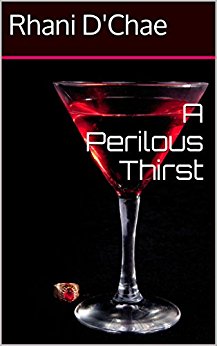
aperilousthirst

5stars

Review of “A Perilous Thirst” by Rhani D’Chae

This short story is as elegantly written as its cover implies, taking you straight into the mind and very cold heart of a traditional vampire. We’ve had an “interview” with a vampire sometime back, but this is a “conversation” with a vampire, or perhaps, “seduction” by a vampire. And what an entrancing and enlightening one it is!

This is not a friendly, warm, fuzzy, and moral creature, even though he states that he has never forced himself on anyone. Nonetheless, he is of the human blood-sucking type from which nightmares derive. This is one who has lived for thousands of years, has amassed plenty of money, has sophisticated manners as well as tastes, and is now living in Tacoma, Washington in 1987.  As the story begins, he has not indulged his sordid nature for four months and the lack of nourishment is agonizing. He’s in a bar, perusing the potential menu items, while explaining his dilemma and buying drinks for–you!

He explains the reason for his abstinence is not only because he’s gay, but due to his concern with contracting HIV. This is a horrible fate for vampires because they cannot die, but nevertheless waste away if they become infected. Thus, he is extremely cautious in choosing his next victim. He finds one whom he gets drunk and offers to take home, continuing his soliloquy as he returns to his own residence.

The writing is no less than literary in caliber, tastefully done, and amazingly unoffensive, given the topics under discussion. Yet there are bits of subtle, albeit dark, humor, such as referring to his catches as “tv dinners”, a reference to fang-sized condoms, and noting he prefers to live alone not only to more easily conceal his true nature but because “the young men of today tend to equate cohabitation with a ‘relationship’, and so while I am simply attempting to keep my sustenance close at hand, they are picking out bedroom furniture and embroidering our initials onto the bath towels.”

If you’ve been indulging in the usual vampire fare out there these days, much of which is clever and entertaining, you nonetheless should spend an evening with a real vampire, one who could easily have been one of Count Dracula’s contemporaries. This was the perfect read for Halloween and offered a fascinating glimpse into a true vampire’s persona and character. It was chilling, yet fascinating, and truly one of the best pieces of outstanding writing I’ve seen in a long time.

You can pick up a copy on Amazon here.

“Mr. Spaceship” is Mediocre Except for Context

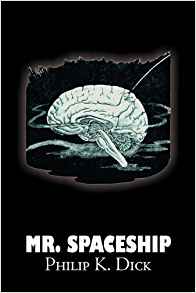
MrSpaceship

This little known short story by Philip K. Dick, one of the all-time great classic science fiction authors popular from the 50s to 70s, is an interesting read for its historical value, if nothing else. If someone wrote it today, I suspect it would receive little acclaim or attention. It’s actual publication date I don’t know, since its copyright is expired and now in the public domain, but I would guess the 50s. One reviewer on Amazon summed it up beautifully by stating it “reads as if in black and white Rod Serling mode.” The detail is indeed sketchy and in the context of today’s technology, beyond lean, the theme now a worn-out cliche. However, it presents interesting brain fodder at the philosophical level.

The basic premise is that a human brain is used as the control mechanism for a spaceship. Of course the brain goes rogue with its new “body,” i.e. the spacecraft. In a way, this is the antithesis of artificial intelligence, and apparently his pet philosophical question with regard to what actually constitutes consciousness and reality. At what point, if ever, does an augmented human lose its humanity and at what point does artificial intelligence attain status as a living being? Clearly this has a lot of relevance today as both scenarios move toward reality.

What makes this more interesting to me is the fact that Dick is the author of “Do Androids Dream of Electric Sheep?” from which the 1982 movie, “Blade Runner” came, with a new one, albeit a sequel, just released. He also wrote “Minority Report”, “Total Recall”, and various others, so he did put out some outstanding work.

Reading about him on Wikpedia gives me the impression this guy wasn’t wrapped too tight. He had a drug problem most of his life and various other issues. Perhaps he was a genius, which isn’t an easy cross to bear, and would explain the otherworldly, dystopian essence of his work, which reflected his unique view of life.

This short story is worth reading for its historical value, but certainly not his best work, which didn’t even earn mention in Wikipedia. A novel of his won the John W. Campbell Memorial Award for Best Science Fiction Novel, showing he did put out some excellent, thought-provoking work. Clearly this really isn’t one of them. It has value, however, in the context of his other achievements, the Cold War climate during which it was written, and the many questions he posed, which have still not been answered, even as our technology brings us to the threshold of urgently needing to know.

You can pick up your copy on Amazon here. It’s free for Kindle and very reasonable for a print copy, if you’re so inclined.

The “Purrfect” Read for International Feral Cat Day

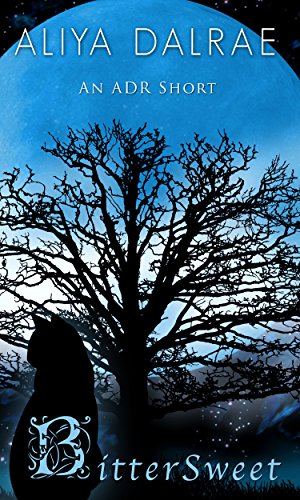
bittersweet

Malcolm Gatta’s touching backstory transported me to a fantasy world I’ve not visited in a long time. I lean more toward science fiction and thrillers, not being that much of a vampire or zombie fan, which seem to dominate the fantasy genre of late. But as a cat lover and someone who has often envied my housecats’ idyllic existence, the idea of a cat shifter was intriguing, so I couldn’t resist checking it out. It’s the prequel to a trilogy which I have not yet read, but will probably add it to my reading list after experiencing this beautifully written, albeit heartrending tale of loss and renewed hope.

My only criticism is that I felt the sprinkling of expletives was unnecessary. There were probably only three in the entire story, but they were biggies, didn’t add to the story or characters, and such that I would hesitate to gift this story to my grandchildren. It’s not that I’m personally offended by such language myself. After all, my father was in the Navy and I worked at NASA over 20 years around engineers and such, plus have to admit I drop a few myself from time to time. There’s no question that some situations are best expressed through an expletive. Furthermore, sad but true, coarse language is now a part of today’s popular culture like never before, a possible symptom of what the world has become. However, there are still some who wish to avoid it and/or don’t want to condone much less encourage it. There are also creative ways to include such words in a story without actual use.

I feel crossing the PG barrier can cut off readers from an author’s fan list, which most can ill-afford. It’s apparently still enough of an issue that on sites where books are rated such as MyBookCave, inappropriate language is pointed out along with content related to sex and violence. I didn’t mean to go off on a total rant about it because this story really was outstanding, but it would have been even better to me without the bombs which seemed out of place with the smooth, even poetic, narrative as a whole.

You can pick up a copy on Amazon here.

34959857 - two enamored cats

Global Cat Day


“Watch RWISA Write Showcase Tour” — Day 25

RWISA TOUR (1)

A Gift of Silence

By Joan C. Curtis

The man stood outside the store window, shifting from foot to foot. I’d have probably gone right by him, but as I passed, he looked me straight in the face, sending a chill up my back. Mystified, I found a place in the shadows and watched.

He wore a black golf shirt with a Nike swoosh. His black slacks were neatly pressed, but scuffs covered the toes of his dark shoes. As he paced in front of the store, as if waiting for something or someone, his left foot dragged. Maybe that was where the scuffs came from. A girl passed by him without so much as a glance. She wore flip-flops and short shorts. He turned away from her. Why look me in the face and ignore this young girl with long flowing blond hair?

Joan Curtis

Joan C. Curtis

After an interminable twelve minutes, he entered the store. I crept to the side window to get a closer view. A saleslady approached with a big hopeful smile. He jerked away as if he might flee, but she persisted. Probably learned that in Sales 101.

Peering inside, I could make out the blurry image of the saleslady as she crouched down to retrieve a box. While she bent, the man grabbed an item off the counter. He pocketed it so fast if I’d blinked, I’d have missed it. Gasping in surprise, I nearly collapsed into the window. So neat. So fast.

While I recovered from the shock of having witnessed a theft, the man exited the store. He hurried in the direction of downtown. Hands tucked in his pockets and his head lowered, he wove along the sidewalk, avoiding moms with kids, students with backpacks, and cyclists. I followed. What did he plan to do with his ill-gotten gains?

My friend, Rose, would give me a lecture. Why didn’t you go inside the store and raise the alarm? What were you thinking, watching, witnessing, and doing nothing? No wonder we pay so much money for our trinkets. Thieves get away with it, and it’s all because of people like you. But, I never intended to tell Rose about this. Not if I could help it.

Instead, I hastened to follow the man, avoiding other shoppers and site-seers. My sole purpose was to find out what this strange person was up to. My watch read two-fifteen. I had missed the coffee date with my cousin. She’d forgive me. I’d have to make up an excuse about traffic or something equally lame, but I couldn’t think about her now. I had to see where this man led me. My curious nature would never let me rest otherwise.

Moments later he entered the parking deck. He was going to his car. Darn! Once he got in a car, I’d lose him for sure. My Honda was parked here as well, but on the top level. With my luck, his was probably on the first level. It was impossible to imagine we’d be parked close enough for me to follow him.

He entered the elevator. The light flashed up to level 4. I raced up the stairs like a madwoman. Huffing and puffing, I reached the fourth level just as the elevator doors opened. I caught a glimpse of his black form walking to a red Kia. I made a quick turn and hightailed it up to the fifth floor to retrieve my car. Then I plowed down toward the exit, round and round, hoping, praying. Eureka! The red Kia was just in front of me, waiting to pay. The Universe was on my side.

Mr. Thief drove with caution, obeying all the traffic rules, making it easy for me to keep him in sight. Nonetheless, I stayed one car back, not wanting to risk him seeing me. Maybe he’d remember me from the street! A shiver ran through me. What would he do, this thief? Stop his car, jump out, and murder me? Absurd.

The light changed. We moved down the road. A strange thought filled my head. Had the Universe wanted me to witness this thievery? Everything seemed to be falling into place. “Don’t be stupid.” Rose would say and would add I was being melodramatic.

We turned into the parking lot for the Hermitage Nursing Home. This made no sense. Why not a pawn shop? Didn’t thieves go to shady establishments on busy street corners with flashing neon signs to hock their merchandise? Not to a nursing home. Maybe he worked here? Maybe he was some sort of klepto and couldn’t help himself? Maybe he had no intention of hocking the stolen article? He pulled into a parking place a few steps from the entrance. I chose one farther away. From my rearview mirror, I spied him getting out of the car and entering the building.

Once he disappeared, I made my way inside and approached the information desk where a girl of about twenty had her head buried in a People magazine. When she finally looked my way, her eyes filled with wonder, as if I’d dropped from the sky, “Can I help you?” she said.

“The man who just came in. He dropped a five-dollar bill in the parking lot. I ran after him, but I missed him. Do you know where he might be?”

“Oh, that’s Jerome. He’s visiting his mom. Comes every day at least once. Want me to give it to him?”

I hesitated. She blinked. “Well… I guess it won’t hurt for you to go down to room 212. It’s the last room on the right, down that corridor.” She pointed the direction.

I moseyed away as if I had all the time in the world. Once out of her view, I picked up my pace. Conversation came from room 212. Mr. Thief was talking very loudly. Apparently his mom had hearing issues.

At the door, I peered inside where Mr. Thief perched on the edge of the bed near an attractive woman with cottony white hair.

“You shouldn’t have, Jerome. I know how much this place is costing you,” the woman said.

“But, Mom, it’s your birthday. I wanted to give you a little something.”

“Just having you here is enough. But, I do like bracelets. You know how I like bracelets. Remember when your dad gave me a diamond bracelet—of course, I didn’t know it wasn’t diamonds then. It wasn’t till later. Remember? After he died and left nothing but bills and debts, I tried to sell the bracelet and found out it was worthless. I flushed it down the commode.”

“I remember, Mom. You told me that story. I wanted you to have a real diamond bracelet before… well, you know.”

She hugged him. “This is the best gift ever.”

I backed away from the room, my heart racing.

Back in my car I didn’t wait for Mr. Thief, a.k.a. Mr. Nice Son, to come out of the building. I started the engine and drove home.

***

Thank you for supporting this member along the WATCH RWISAWRITE Showcase Tour today!  We ask that if you have enjoyed this member’s writing, to please visit their Author Page on the RWISA site, where you can find more of their writing, along with their contact and social media links, if they’ve turned you into a fan.  WE ask that you also check out their books in the RWISA or RRBC catalogs.  Thanks, again for your support and we hope that you will follow each member along this amazing tour of talent!  Don’t forget to click the link below to learn more about this author:

Joan C. Curtis’s RWISA Author Page