If you write science fiction, don’t violate the known laws of physics without providing rationale for doing so. Invent new laws if you like, but make them believable. A lot of technical folks are likely to be in your audience and you’ll lose them forever if your science isn’t credible. Noises in the vacuum of space (like the explosions you hear in movies), earth-like gravity on a small asteroid, and unrealistic orbits are some of the things to look out for. If you don’t know something that relates to science, look it up or ask someone who does. Satires (such as “The Worst Man on Mars”) have a bit more latitude.
All fiction needs to be convincing and seem real. Create any possibility you want, just make sure the reader will be convinced. If you’re writing fantasy or science fiction, you need to build a world that your readers will believe is possible. Spend sufficient time creating your story’s environment to a high level of detail and it will pay off later, perhaps in even providing new plot twists.
If something throws you out of a story you’re reading, figure out why. Then make sure you’re not guilty of the same thing. You can learn from all writers, whether more or less skilled than you are. Typos are one thing that really jolt me out, though blatantly inaccurate science is a close second.
Read your work out loud as part of your editing process. If you find yourself saying something different than what’s written, consider rewording it accordingly. If it’s awkward when read aloud, it’s not the most natural wording. Even better, read it aloud into a recorder and then listen, especially if you’re an audio-type. This is very effective for catching redundancies.
Editing is essential, but it’s extremely difficult to edit your own work. Letting your work rest as long as possible before revising and/or editing helps view it more objectively. If you absolutely can’t afford an editor, arrange a beta exchange with another author, preferably one who’s seasoned, not just someone who will praise your work. Make sure both of you are skilled enough to do the job and clarify your expectations.
Know your genres and sub-genres so you can categorize your book properly. This helps you get them into the hands of your target readers.It’s a total waste of time and often money to promote your book in venues where your readers aren’t involved. If you’re not sure, read popular books similar to yours to see how they’re defined, then follow suit.
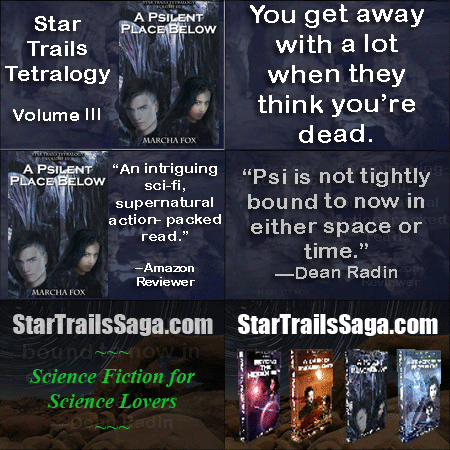
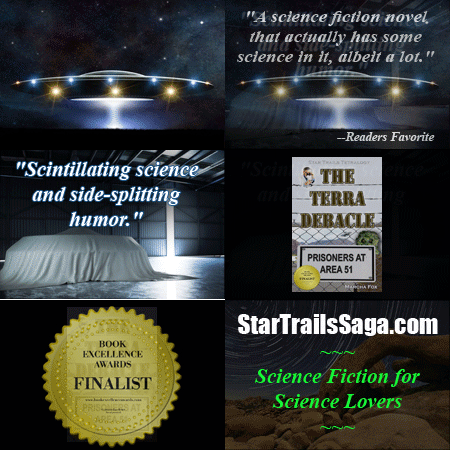
Giving promotional graphics a bit of “zing” helps them stand out and draw attention, which is always a challenge in today’s glutted market. If you have Photoshop, it’s a cinch to create automated gif files. I created the ones you see here when I purchased advertising on a site that had dozens of other ads, most in the postage stamp size you’re looking at. (Making them in a larger size is no problem–the final product is based on the size you start with. The dimensions of these are 225 x 150 pixels with 300 dpi resolution.) I wanted mine to stand out, videos weren’t allowed, so I decided to put together gif files.
I have an older version of Photoshop, not the new and improved version that now requires a subscription. That’s a bit rich for my current author income, so I make do just fine with my old-faithful version. The directions for creating a gif that I originally found were apparently for that newer version, but it was similar enough it didn’t take me long to accomplish it on mine. Rumor has it that you can achieve the same thing with Power Point, but I haven’t tried that. I suspect the process would be much the same.
You can include as many frames as you like. The only limit will be the file size of your final product. Each of these is around 450K, but they are quite small.
Here’s how it’s done:
Open all the jpg files you want to use and make them the correct size and resolution. It should be intuitively obvious that they all need to be the same size.
Open a new file and add each jpg as a separate layer. This is best done via a simple cut and paste.
Make sure the pictures are in the order you want; rearrange if necessary. If you put them in order first, it’s easier later. The one on the bottom of the layer window will be first, so you’re stacking them, bottom to top.
Open the Animate window from the pull-down menu at the top of the screen. This places a long, skinny window on the bottom of the screen. The “Animate” window has its own menu, which opens when you click on the tiny arrow on the top right.
From that menu, choose “Make frames for all layers”. Ka-boom! All of your pictures will now show up as frames in the Animate window. If they’re not in the order you want, fix it now using drag and drop.
Now you’re going to add transitions between each frame using the tween command. You can use the Animation window’s drop-down menu, or the glyph that looks like little dots under the frames to the left.
The next step is to adjust the timing for each frame. You do this by clicking on the time at the bottom of each picture. It’s easier if you do this when you’re done. If you do it before “tweening”, all the added transition frames will have the same time as the previous frame, which you may have to adjust by hand. I gave the pictures between 2 – 5 seconds, and the transition frames generated by tweening 0.2 seconds. Do as you like to achieve the effect you want.
Use the arrow in the Animate box to play the result, which will show up where your picture is on the screen. When you’re happy with it, use the option “Save to Web” in the main menu to save it as gif file. You must use this save feature for the animation to work! Using the normal “save” doesn’t capture it.
These are a natural for cover reveals and new releases to grab a little extra attention for your Facebook and Twitter posts. It also works well for highlighting reviews or excerpts, special deals, or upcoming events.
Indie authors on a budget like myself get to use their creativity in their marketing efforts as well. This is one way to do just that. Have fun!
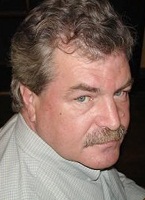
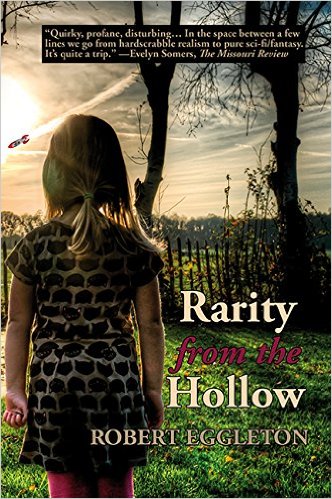
Child abuse is not only tragic, but complicated. It sullies all economic classes and cultures with no easy answers. Author Robert Eggleton, a child advocate of many years, has been in the trenches fighting this social ill for decades. His debut novel, a science fiction comedy entitled Rarity from the Hollow, evolved from his experiences, and he donates half of the sales proceeds to the West Virginia Children’s Home Society. I’ve read it and it’s not only outstanding but well-worth reading. You can find the review I wrote a while back here.
I’m honored that Robert agreed to an interview that will not only educate readers to the depth of the problem, but show this cultural warrior’s dedication to do whatever he can to combat this serious societal problem.
* * * * *
MF: Your career as a children’s advocate and counselor gave you first hand knowledge of the problems depicted in “Rarity from the Hollow.” At what point did you get the idea to incorporate your decades of experience into a story?
RE: The characters in Rarity from the Hollow are more real than not. They are based on people that I’ve met during over forty years in my role as a children’s advocate in an impoverished state. The concept of sensitizing people to the huge social problem of child maltreatment through a comical and satiric adventure demanded that I use realistic characters. During my career, most of my jobs required the production of written materials – service models, policy, research…. In 2002, I went to work as a children’s psychotherapist for our local mental health center. It was my first job that my longstanding need to write was not, in part, met by performing within my scope of employment. – nonfiction published by public and private agencies in the field of child welfare, much of which is now archived by the West Virginia Division of Culture and History.
Part of my job at the mental health center was to facilitate group therapy sessions. In 2006, I met the real-life Lacy Dawn, the protagonist of my stories during one of those group psychotherapy sessions. She was an eleven year old empowered survivor of extreme child abuse and spoke about her hopes and dreams for a bright future. Although I’m not sure that it was a conscious decision at the time, I incorporated my experiences as a children’s advocate in her story because that is what I know best about life – hopes and dreams for the future despite any adversity.
* * * * *
MF: Those of us who are horrified by child abuse usually don’t want to read about it. While it’s a necessary component of the story, it nonetheless may be preventing some from reading it. Is there anything you’d like to say to these folks?
RE: Yes. While I believe that readers of my novel will become increasingly sensitized to child maltreatment, it is a fun read with tragedy amplifying the comedy and satire, as stated by some of the book’s reviews:
“…a hillbilly version of Hitchhiker’s Guide to the Galaxy, only instead of the earth being destroyed to make way for a hyperspace bypass, Lacy Dawn must…The author has managed to do what I would have thought impossible; taken serious subjects like poverty, ignorance, abuse, and written about them with tongue-in-cheek humor without trivializing them…Eggleton sucks you into the Hollow, dunks you in the creek, rolls you in the mud, and splays you in the sun to dry off. Tucked between the folds of humor are some profound observations on human nature and modern society that you have to read to appreciate…it’s a funny book that most sci-fi fans will thoroughly enjoy.” http://awesomeindies.net/ai-approved-review-of-rarity-from-the-holly-by-robert-eggleton/
“…I usually do not read or review books that discuss child abuse or domestic violence; however, I was intrigued by the excerpt and decided to give it a shot. I am glad that I took a risk; otherwise, I would have missed out on a fantastic story with a bright, resourceful, and strong protagonist that grabbed my heart and did not let go…if it does not make you think, you are not really reading it….” http://www.onmykindle.net/2015/11/rarity-from-hollow.html
“…Full of cranky characters and crazy situations, Rarity From the Hollow sneaks up you and, before you know it, you are either laughing like crazy or crying in despair, but the one thing you won’t be is unmoved…” https://readersfavorite.com/book-review/rarity-from-the-hollow
* * * * *
MF: Your career must have been tremendously painful at times. How did you cope with it?
RE: I can’t remember a day since I entered the field in 1973 that I didn’t take work home with me, emotionally. For example, many tears were shed on one investigative report that I will never forget writing – “Daniel’s Death, West Virginia’s First Child Maltreatment Fatality Report.” I had to write that report at home because I didn’t want to become a mess at work – the West Virginia Supreme Court where everybody was dressed up as emotionally detached professionals. Despite the conviction of the parents, the term “murder” was edited out of my report, and I now agree that it became a more effective product because of the great editing. My state established a child fatality process, in part, as a result of this report.
A very short time after entering the field of child welfare, I focused on effectiveness of my work. This coping skill served me well as it increased over the years. All of the tears in the world will do little to help needful children, and my internalization of this fact kept me strong. That’s why I didn’t want Rarity from the Hollow to be a depressing or an emotionally draining story. I could have written another novel like Push by Sapphire, which I watched in 2009 as a movie backed by Oprah: Precious. But, I didn’t feel that this masterpiece was effective as a social change agent, so I wanted to produce a novel that people would enjoy reading, not just one that was merely meaningful.
* * * * *
MF: What do you think is the underlying cause of child abuse? Is there one thing that could greatly improve the situation?
RE: Rather than causation, let’s look at some of the correlates of child abuse:
undiagnosed or untreated mental health issues experienced by parents, such as Bipolar Disorder, Intermittent Explosive Disorder, or PTSD;
addiction or substance abuse by parents;
lack of economic opportunity within geographical areas, including when children are sold or traded by their parents as a source of income;
lack of support services for struggling families, especially including when children have mental or physical disabilities, such as ADHD, mental retardation, or demanding physical handicaps;
cultural or subcultural values, including sexism, within, as examples, religious cults or organizations that demean the value of women and children or which protect those who use extreme corporeal punishment or hide offensive behaviors of its members, such as sexual abuse;
insensitivity to the issue of child abuse, or failure to enforce existing laws, such as mandatory reporting by professionals involved with children;
failure to perform ethical duties by professionals, including intentional disregard by law enforcement, doctors, teachers, or religious leaders because they don’t want to get involved in potential child abuse cases;
parents who were abused as children and as a generational effect due to lack of treatment for the parent as victims;
parental stress related to bills and inadequate income – the parent simply losing self-control and later regretting and hiding the child abuse for fear of losing custody;
the natural mistrust felt by children when considering telling on adults who maltreat them, especially relatives or those adults in positions of authority.
This list is not exhaustive and I’m sure that you, Marcha, can come up with additional correlates. Several of these issues were addressed in Rarity from the Hollow. However, I do want to emphasize that there is nothing that blames or that is preachy in my story. Child abuse is not a simplistic good vs. evil issue, although the last item that I want to add to the list is PURE EVIL! During my career, I have met child abusers who have no identifiable redeeming quality and to qualify their abusive behaviors with a mental health diagnosis diminishes the significance of their evil.
The one thing that I think would help decrease child abuse is the belief that it is preventable. Being a parent is a tough job and “it takes a village” to raise a child. While some people might object to funding community-based supports for needful children and their parents, it costs a lot more in the long run if we close our eyes and ears to ignore this huge social problem.
* * * * *
MF: Dot Com’s artificial intelligence evolution was hilarious. Did you have an underlying message in mind with regard to where AI could possibly go?
RE: While I’ve appreciated compliments by book reviewers who have spoken about my wild imagination, I want to confess that the fantastical means employed by the alien in my story to treat the parents were based on today’s medical reality. Dwayne, the abusive father was a war damaged Vet experiencing anger outbursts and night terrors. The mother was a downtrodden victim of domestic violence who had lost hope of ever getting her G.E.D. or driver’s license, or of protecting her daughter. Diagnosis and treatment of these concerns affecting the parents, as representative of many similarly situated, was based on emerging technologies presented at the 2015 World Medical Innovation Forum: https://worldmedicalinnovation.org/ . Yes, in real life, like in my story, patients have been hooked up to computer technology for medial diagnosis and treatment.
Additional exciting research was presented at that Forum and may one day may revolutionize psychiatric treatment. Most relevant to my story were: (1) smart brain prosthetics, wireless devises being tested for potential to relieve depression, PTSD, Bipolar Disorder…neural engineering to manipulate brain signals; (2) sophisticated imaging systems that are minimally invasive to brain circuitry for diagnosis (3) and, healing the brain with neuromodulation and electroceuticals to treat depression and schizophrenia. http://hitconsultant.net/2015/04/30/tech-revolutionize-neurological-psychiatric-care/ I expect that medical science will continue to evolve and hope that it prioritizes treatment of those who most inflict injury on others.
* * * * *
MF: What drew you to writing? Is writing fiction something you’ve always aspired to or did it develop later?
RE: Writing is a compulsion for me. It doesn’t have to be fiction, but I couldn’t stop no matter how hard that I tried.
* * * * *
MF: Do you have any plans for a sequel to “Rarity from the Hollow”?
RE: The next Lacy Dawn Adventure is titled “Ivy.” It’s about an alien invasion of Earth, exploitation for mineral content, and the primary weapon used by the invaders is the addiction to a drug that causes narcissism or extreme ego centrism.
* * * * *
MF: You have a definite knack for dry humor. Any thoughts toward writing a book that lacks the darker elements?
RE: As a debut novelist, I’m still working on finding the compromise between aspiring to achieve literary excellence as avant garde and mainstream consumer expectations. Perhaps because this project is also an effort to raises funds to help abused children, yes, I have recurring thoughts about writing a book that lacks darker elements. I very much appreciate your finding that: “I can picture American Lit professors sometime in the distant future placing this masterpiece on their reading list.” But, some of these children will not live to see the future if more is not done to help them now, and I want to contribute.
* * * * *
MF: I suspect that most intelligent people at one time or another have thought that some people shouldn’t be allowed to reproduce. What are your thoughts on the matter?
RE: I try to stop myself from getting emotionally involved in should or should not type of issues. I’m sure that you noticed that the political parody in Rarity from the Hollow, unlike Animal Farm that you compared it to, was not preachy. I don’t know the answers to the most important questions that humans ask, and whether or not to reproduce given the totality of circumstances is one of life’s most important questions. If you remember, Lacy’s cousin in Rarity experienced a preteen pregnancy, an occurrence that may be correlated with human misery, but the baby became the pride and joy of the entire extended family.
I respect an individual’s right to self-determination, including about reproductive rights. For example, abortion is part of the animal kingdom and not unique to humanity. From rabbits living in overcrowded warrens, to orcas off the coast of the state of Washington aborting sixty percent of pregnancies, or Canadian caribou…while grief is impossible to measure, only humans seem to face such moral dilemmas about reproduction as you presented to me as a question.
As a notation about my personal values, although the National Organization for Women was established in 1966, I live in West Virginia and it wasn’t until 1969 or so that I participated in its first march in my state, one of the very few males to attend. I believe that this affiliation sums up my thoughts about reproduction and most humans.
Increasingly, medical sciences have presented findings that help us understand ourselves, including those of us who have mental illnesses, intellectual disabilities such as Downs Syndrome, and other, sometimes genetic, problems that could be passed on to offspring. Other fields have also presented information about cultural, religious, and sociological practices and beliefs that could be regarded as harmful to humanity if passed on to offspring. For example, Rarity presented the issues of immigration, extreme capitalism, and consumerism and its impact on the exploitation of one geographical area by members of a more aggressive geographic area – beliefs, values, and practices that could be passed on to offspring, as well.
I believe that for me to express that a person with Downs Syndrome, for example, should be prevented from getting pregnant would be the same as saying that a very wealthy, greedy, dishonest, and exploitive member of the “High Class” should be prevented from getting pregnant because both scenarios present risk to humanity. Plus, there are no absolutes in life. The baby born with Downs Syndrome might experience a wonderful life that fills others with meaning and happiness. The baby “destined” to become a spoiled rich kid might, instead, turn out to become a great philanthropist.
All that said, in answer to this highly philosophical question, I respect the opinion of anyone who takes the time to educate oneself about the issues and who doesn’t propagandize or lie to promote one side or another.
* * * * *
MF: If you were king of the world for a day, what message would you deliver to the people of the planet?
RE: As King of the World for a day, my message would be:
Life is short, the blink of a cosmic eye from one generation to the next. Keep your eyes on the road and your hands on the wheel so that it ends at your correct destination.
Thanks, Marcha, for providing me an opportunity to tell your readers a little about myself and my debut novel, Rarity from the Hollow.
MF: You’re certainly very welcome, Robert. I’m touched and impressed by your knowledge and dedication as you continue to do what you can to combat this horrific practice.
* * * * *
Here’s a short book trailer video:
Rarity from the Hollow is available at most sales channels, including K-Mart and Books-A-Million, and is also available electronically. Half of all proceeds are donated to the Children’s Home Society of West Virginia. You can pick up your copy on Amazon here.

 Giving promotional graphics a bit of “zing” helps them stand out and draw attention, which is always a challenge in today’s glutted market. If you have Photoshop, it’s a cinch to create automated gif files. I created the ones you see here when I purchased
  advertising on a site that had dozens of other ads, most in the postage stamp size you’re looking at. (Making them in a larger size is no problem–the final product is based on the size you start with. The dimensions of these are 225 x 150 pixels with 300 dpi resolution.) I wanted mine to stand out, videos weren’t allowed, so I decided to put together gif files.
 can achieve the same thing with Power Point, but I haven’t tried that. I suspect the process would be much the same.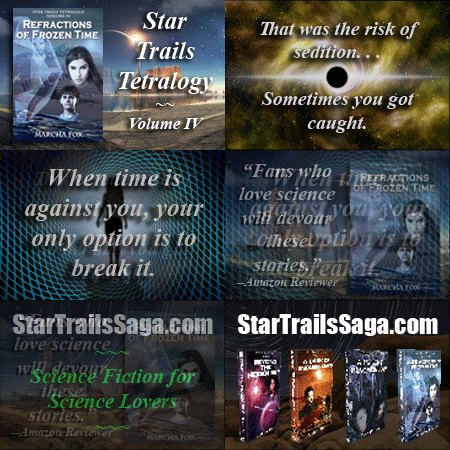
 Marcha's Two-Cents Worth