“The Empire”: Sci-Fi Thriller Extraordinaire from JRD

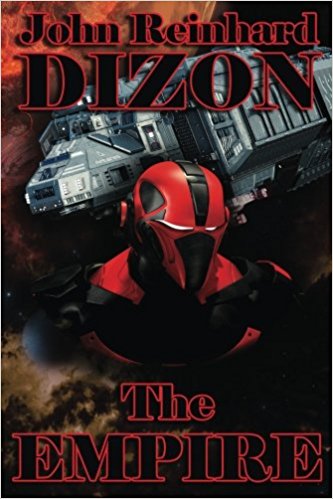
TheEmpirecover

This complex sci-fi thriller is loaded with twists, turns, and entanglements between worlds, cultures, and religions. Dizon has created a fascinating universe full of convincing conflicts which reflect those facing the world today, but elevated to spacefaring civilizations. While hard science fiction focuses on advanced technology and its applications, political science fiction looks at a future based on extrapolating Earth’s vices into a dystopian nightmare that encompasses entire planets as opposed to countries.  If there were ever a case against space colonization, that is certainly it. If we can’t even get along with our fellow earthlings, what business do we have venturing out into space? Allegedly, the ETs are against us attaining the ability for interstellar travel for that very reason and this novel certainly provides a case in point.

To sum things up, Styrena Stone, daughter of the president of what is an interstellar remnant of the USA, has been kidnapped by terrorists who have a devious political agenda. They want her mother to sign a non-aggression treaty so they can proceed unencumbered with their intent to conquer other worlds. There are two individuals determined to rescue Styrena, Von Kilgore, former member of the Global Intelligence Agency, and Grav Drachna, rogue starship captain and general bad boy. As you would expect, these two aren’t exactly on friendly terms. Intricate schemes are made by both sides, along with a host of political schemes and conspiracies which come together in a nail-biting climax that holds plenty of context for a sequel.

Dizon’s subtle humor had me in stitches from time to time, largely related to his character naming convention, which I won’t spoil by revealing. His writing style is crisp and moves at lightspeed. I would love for him to include a dramatis personae to help keep everyone straight, since there are so many characters involved, each with his or her own agenda, both political and personal. The author’s ability to create vivid characters, each with a strong personality and motivation is what adds depth and suspense to Dizon’s stories, adding the potential for plenty of surprises.

Setting all this intrigue against a futuristic interstellar backdrop will draw in science fiction fans as well as those who are already hooked on Dizon’s ability to create unforgettable characters immersed in suspenseful situations. I can’t wait to see where this potentially epic story goes next.

You can pickup a paperback on Amazon here or an ebook at Barnes & Noble here. The electronic version is also available on Smashwords and most online retailers.

Immortal: The Chosen

TheChosen

This fast-moving story gets this series off to a well-written, suspense-filled start. While I’m not that much of a vampire fan, I was nonetheless taken in by the strong characters and interesting plot that gives the vampire/werewolf/witch culture an interesting new twist. Great fiction begins with convincing characters with whom the reader can connect, and the author did a great job of populating her tale accordingly. This was achieved by getting inside each one’s head by switching the point of view for each chapter.

While such a technique can be confusing, this was done effectively and allowed the reader to get to know the thoughts and feelings of each important member of this intriguing story. This method was much more intimate than an omniscient view point, which often weakens the reader-character connection. This method worked very nicely and reminded me of piecing together a mystery by reading the journals of each character.

My only criticism, which is really quite minor but enough for me to give it four stars, is that toward the end there were quite a few names thrown around of late-breaking characters whose place in the story was a bit fuzzy. I suspect they will be more important in the next episode and this was simply an introduction. However, I tend to stick to the convention of minimizing reader confusion by not naming characters who do not relate directly to the plot (except in the case of red herrings, of course). This resulted in having to deal with a lot of faceless people with foggy identities as the story climaxed, a slight distraction that really didn’t add anything other than slowing things down as each new person was logged in, so to speak. Nonetheless, it did show the gathering of forces that would play an important part in the sequel, even though this could have been done without names.

While the ending was a cliffhanger, it was handled in such a way that it didn’t leave me gasping or frustrated, but could see the next volume coming together. I thoroughly enjoyed this story, liked the characters, and will definitely be reading the sequel.

Creative Fun for Halloween!

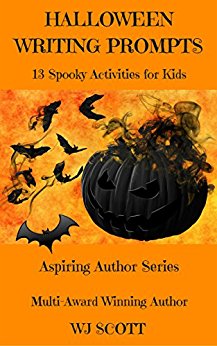
halloweenwriting

If you’re looking for ideas for a Halloween-related story, either for yourself as an author or as a parent or teacher, this book is for you. Loaded with fun and appropriately creepy premises, there’s no need to look any further for inspiration. Teachers could easily use this jewel to spawn a creative writing assignment that students would actually enjoy. Great fun, not only for Halloween, but for coming up with stories around the campfire. Fostering a child’s creativity and imagination is highly recommended by educators and these clever ideas provide plenty of brain fodder. Don’t miss it!

“Mr. Spaceship” is Mediocre Except for Context

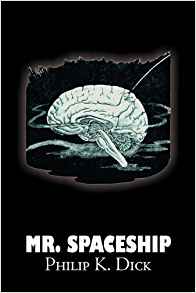
MrSpaceship

This little known short story by Philip K. Dick, one of the all-time great classic science fiction authors popular from the 50s to 70s, is an interesting read for its historical value, if nothing else. If someone wrote it today, I suspect it would receive little acclaim or attention. It’s actual publication date I don’t know, since its copyright is expired and now in the public domain, but I would guess the 50s. One reviewer on Amazon summed it up beautifully by stating it “reads as if in black and white Rod Serling mode.” The detail is indeed sketchy and in the context of today’s technology, beyond lean, the theme now a worn-out cliche. However, it presents interesting brain fodder at the philosophical level.

The basic premise is that a human brain is used as the control mechanism for a spaceship. Of course the brain goes rogue with its new “body,” i.e. the spacecraft. In a way, this is the antithesis of artificial intelligence, and apparently his pet philosophical question with regard to what actually constitutes consciousness and reality. At what point, if ever, does an augmented human lose its humanity and at what point does artificial intelligence attain status as a living being? Clearly this has a lot of relevance today as both scenarios move toward reality.

What makes this more interesting to me is the fact that Dick is the author of “Do Androids Dream of Electric Sheep?” from which the 1982 movie, “Blade Runner” came, with a new one, albeit a sequel, just released. He also wrote “Minority Report”, “Total Recall”, and various others, so he did put out some outstanding work.

Reading about him on Wikpedia gives me the impression this guy wasn’t wrapped too tight. He had a drug problem most of his life and various other issues. Perhaps he was a genius, which isn’t an easy cross to bear, and would explain the otherworldly, dystopian essence of his work, which reflected his unique view of life.

This short story is worth reading for its historical value, but certainly not his best work, which didn’t even earn mention in Wikipedia. A novel of his won the John W. Campbell Memorial Award for Best Science Fiction Novel, showing he did put out some excellent, thought-provoking work. Clearly this really isn’t one of them. It has value, however, in the context of his other achievements, the Cold War climate during which it was written, and the many questions he posed, which have still not been answered, even as our technology brings us to the threshold of urgently needing to know.

You can pick up your copy on Amazon here. It’s free for Kindle and very reasonable for a print copy, if you’re so inclined.
The “Purrfect” Read for International Feral Cat Day

bittersweet

Malcolm Gatta’s touching backstory transported me to a fantasy world I’ve not visited in a long time. I lean more toward science fiction and thrillers, not being that much of a vampire or zombie fan, which seem to dominate the fantasy genre of late. But as a cat lover and someone who has often envied my housecats’ idyllic existence, the idea of a cat shifter was intriguing, so I couldn’t resist checking it out. It’s the prequel to a trilogy which I have not yet read, but will probably add it to my reading list after experiencing this beautifully written, albeit heartrending tale of loss and renewed hope.

My only criticism is that I felt the sprinkling of expletives was unnecessary. There were probably only three in the entire story, but they were biggies, didn’t add to the story or characters, and such that I would hesitate to gift this story to my grandchildren. It’s not that I’m personally offended by such language myself. After all, my father was in the Navy and I worked at NASA over 20 years around engineers and such, plus have to admit I drop a few myself from time to time. There’s no question that some situations are best expressed through an expletive. Furthermore, sad but true, coarse language is now a part of today’s popular culture like never before, a possible symptom of what the world has become. However, there are still some who wish to avoid it and/or don’t want to condone much less encourage it. There are also creative ways to include such words in a story without actual use.

I feel crossing the PG barrier can cut off readers from an author’s fan list, which most can ill-afford. It’s apparently still enough of an issue that on sites where books are rated such as MyBookCave, inappropriate language is pointed out along with content related to sex and violence. I didn’t mean to go off on a total rant about it because this story really was outstanding, but it would have been even better to me without the bombs which seemed out of place with the smooth, even poetic, narrative as a whole.

You can pick up a copy on Amazon here.

34959857 - two enamored cats

Global Cat Day


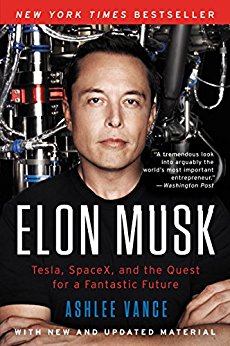
5 Stars for “Elon Musk: Tesla, Space-X, and the Quest for a Fantastic Future” by Ashlee Vance

elonmuskcover

I’ve been fascinated by Musk for quite a while. I even entertained thoughts he might be some sort of space alien hybrid, helping us develop new technologies. I wondered where this guy came from and where he got all that money. I wondered why his new technologies, which are a threat to industries which have been known to resort to rather nasty tactics to suppress such competition, seemed to have no power to do so in his case. This book certainly answered all my questions and then some. I had no idea he was one of those dot-com millionaires, starting with his connection with PayPal. Explaining where his money came from certainly clarified quite a lot. His personality explained the rest.

As someone who worked as a NASA contractor for over twenty years, I can especially appreciate what he has done with Space-X. While some accuse him, and rightfully so, of being a obsessive workaholic and expecting the same from his employees, you have to admit that his system of finding the best and brightest and luring them to work for him works. Musk doesn’t suffer fools. You disagree with him or goof up and you’re gone. In today’s world of tolerance and dumbing down the general population via our pathetic education system, this certainly goes against the grain. But it gets things done.

I saw so much mediocrity at NASA it was pathetic. But it was only part of the problem as far as technological advances were concerned. I remember seeing an invoice one time for small a metal plate with a part number on it costing thousands of dollars. I mean, really. How ridiculous is that? But that’s how government contracting works. Musk, on the other hand, emphasized efficiency. It was his money, so he pushed for keeping costs down. Rather than buy from a manufacturer on the other side of the world, he would develop the needed facilities and make it himself. He demanded perfection and refused to give up.

One philosophy I always liked and employed as a manager myself was “If you’re not part of the solution, you’re part of the problem.” Clearly he had the same attitude. His employees knew better than to simply complain about something being an obstacle. They needed to contribute to a solution or get slam-dunked.

There was so much about his management style that I admired. In most cases in today’s world, his tactics will either get you sued for harassment and/or fired. Which explains a lot. But if you want something considered impossible done correctly, that’s what it takes. The results of Musk’s methods speak for themselves.  He does what he says he’ll do and is a force to be reckoned with. He’s not been suppressed by existing industries since he has the money to proceed on his own, unlike most inventors who depend on selling their patents. In that case, they’re typically bought up by competitors, their ideas left to rot somewhere in a file cabinet to assure the status quo.

Along those lines, Tesla is another awesome success story, a venture that was more than once on the brink of failure. But Musk persevered, his vision and intentions a testimony to those who promote such tactics for manifesting what you want. I loved the part where Tesla acquired a former GM plant in Fremont, California (not too far from where I lived many years ago) virtually for free. Tesla is driving conventional car makers crazy. The cars are kicking butt in all areas from safety to speed to virtually “free” fuel as he builds recharging stations.  He’s out to change the world and making steady progress doing so, specifically in previously troubled industries collapsing under their own weight.

His personal life was certainly interesting as well. Did you realize he has 5 boys, i.e. a set of twins and a set of triplets from his first wife, Justine? Or that as a child he was bullied, in some cases brutally enough to land him in the hospital. His photographic memory has served him well, his intelligence and scientific understanding off the scale. If someone tells him something can’t be done, he usually fires them and does it himself. I find that inspiring, not obnoxious.

The author did a great job of providing a glimpse of what this guy is like, not only as a slave-driving manager, but as a person. I admire much of what he stands for and stands up for.  I loved the author’s candid writing style, often imbued with humor that had me laughing out loud. I don’t doubt that I will eventually read this book again. It’s inspirational to see what one determined man can accomplish when he sets his mind to what needs to be done, then commandeers the help and talent he needs to get there, leaving naysayers in the dust. His self-imposed mission is to save the world from itself and so far it looks as if he might do just that. It won’t surprise me one bit if he’s the one who gets us to Mars. If you have any doubts, then you should read this book. It made a believer out of me and restored my faith in old-fashioned hard work and ingenuity, which has somehow gotten lost in our crazy world.

This book convinced me, more than ever, that it’s people like Musk who should be considered heroes in today’s world. Not obnoxious sports figures, crooked politicians, and those who want to be taken care of at others’ expense. It’s time that we return a strong work ethic and intelligence to the status it deserves for making this a better world.

You can pick up a copy on Amazon here. I recommend it highly. I will warn you that it contains a multitude of f-bombs. If you want to share this awesome story with your kids, which I also recommend, there’s a cleaned up version you can get here.

“Dance of the Lights” by Stephen Geez

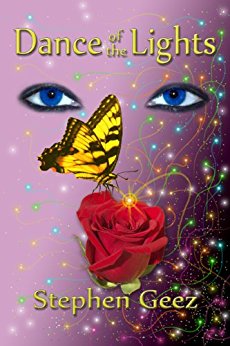
danceofthelightscvr

If you have any doubt regarding what life is all about, then you need to read this beautiful story, which will explain it to you. The ultimate love story, I definitely fell in love with most of the characters in this book. They were so real, you felt as if you knew them, that they were your own friends and neighbors, making their way through life and its struggles, including sometimes the painful loss of a loved one. It was an utterly convincing slice of life, where people work hard for what they have, interact with neighbors and loved ones, and most importantly, help one another when the need arises. It was about priorities, caring, and doing the right thing, but not in a flamboyant way. It was about the passage of time, how things change, including people, and the importance of friends.

A light paranormal touch permeated the story, a reminder that what we see is but a small part of what we know as reality. There are some things that simply can’t be explained. Anyone who has ever lost a loved one, yet felt their presence or heard them speaking inside their mind, will relate. Who and what are we? What about those with whom we share our lives, loves, and ambitions? Is it all random? Do certain people come into our lives by chance or design? What is the essence of life? Love? Our very existence?

Don’t expect specific answers to any of these questions because you won’t find them. Rather, there is plenty to ponder. On the one hand, it’s easy to note that those characters who made mistakes were beyond fortunate to find someone to stand behind them and help them get past their troubles. Finances were not a problem for the main characters, who generously shared their substance to help others. Most who fall upon hard times are not so lucky. Those who have had to dig their way out of a bad situation on their own could even feel a touch of bitterness. Yes, this story reflects the ideal, which life seldom is. However, I don’t believe it’s those in sorry circumstances to whom this story applies the most. Rather it would have the most powerful impact on those with the means to help others by expounding the deep satisfaction, friendship, and rewards that come from helping your fellow man.

The characters in this book were familiar in many respects; archetypes, if you will. No doubt you will relate to some more than others, recognize several, and with luck, even see yourself. There are parts that are heart-rending, yet that is a fact of life. Learning to deal with death and grief is part of living.  Learning not to take anything for granted, to appreciate each and every day, realizing that in a flash everything could change, is what enriches our existence.  Years pass a day at a time, yet in what can feel like an instant, they evaporate, leaving you in awe of their passing. Of course the older you are, the more obvious this is.

This cast who populated this story touched my heart in so many ways. In some respects, it was like a  soap opera, as diverse individuals entangled with one another through heredity or circumstance went about their lives, some days normal and predictable, others milestones, or marred by sudden tragedy. In many ways, stories like this are a measure of the reader’s capacity to love. If you don’t fall in love with these characters, feel as if you know them, and even wish you had some of them as friends or neighbors, perhaps you’ve lost touch with your own humanity and need for others in your life.

Author Stephen Geez renders characters you’ll never forget, who’ll live on within your heart forever.  If you could use a few new book-friends or book-neighbors, to say nothing of a nice dose of inspiration, then introduce yourself to these adorable souls over in Tarpon Springs. You’ll be glad you did.

Pick up your copy on Amazon here.
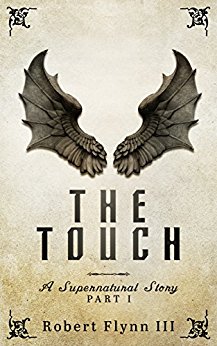
“The Touch: A Supernatural Story” by Robert Flynn III

thetouch

There were many things I enjoyed about this book. It was so original that I found it somewhat indescribable. At first the omniscient viewpoint threw me a bit, but it soon became obvious how appropriate it was as you ponder who is telling the tale. The author’s narrative voice is outstanding. It’s as if you can hear the narrator speaking in a somewhat archaic speech that totally works. The characters were real and engaging. I loved Alabama, Gabriel, and Josh as well as the others who joined in as the tale progressed. The premise and supernatural angle is unique and shows the author has a strong grasp on Biblical and Apocryphal descriptions of angels, yet adds a few interpretations of his own.

The plot is intriguing, suspenseful, and keeps you turning the pages. Clearly the world’s sorry situation is reflected and gives you pause what might be going on in other dimensions with regard to the host of wayward and evil humans at large on our planet.

I was somewhat disappointed by the ending, however. Not so much because the story is clearly part of a serial, but because the main characters were seemingly abandoned as new twists were introduced to the story line. I think the author could have handled it better, perhaps by including the characters in which I’d invested interest throughout the rest of the book more directly in the final chapters while still including teasers with regard to the next episode. It felt as if they simply dropped out of existence as a whole new story angle took shape, which would have been a great way to start the next volume as opposed to ending this one.  I was planning on giving this unique tale five stars until the ending, when I dropped it to four because I found its conclusion unsatisfying and not as skillfully rendered as the rest of the book.

You can pick up a copy on Amazon here.

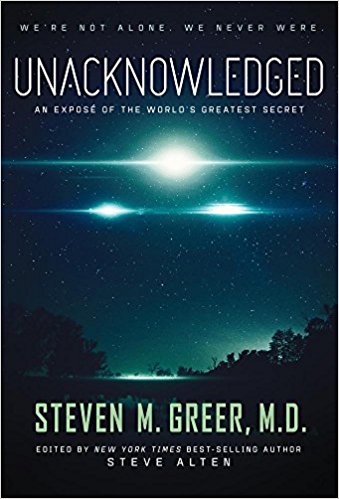
Review of “Unacknowledged: An Expose of the World’s Greatest Secret” by Dr. Steven M. Greer”

unacknowledgedcover

If you’re a follower of UFO lore, you’ve probably already heard much of what this fascinating book contains, given it mostly comprises eyewitness accounts of encounters with UFOs. However, what you may have heard on the numerous TV shows on the subject is but a very mild prelude to what is clearly “the rest of the story.” It takes quite a bit to surprise me, but I was definitely taken aback by much of what came out. For example, there’s a whole lot more to the Rendelsham Forest incident that has been covered in multiple documentaries. There is quite a bit of more information regarding good ol’ Roswell, as well as a considerable amount of information related to government involvement and the inevitable massive cover-ups.

Apparently, some of the UFOs seen are ETVs, i.e., extraterrestrial vehicles, while others are ARVs, alien reproduction vehicles, or those that have been built on Earth, based on back-engineering captured craft. ETVs have numerous capabilities our replicas lack, because some technologies have not yet been cracked sufficiently for us earthlings to duplicate. For example, the technology required to access other dimensions apparently still eludes us, in spite of all the mathematical antics of our best theoretical physicists. Then again, knowing something is there is a long ways from knowing how to access, much less use it, the job of which lies with engineers. That said, there is still a considerable amount of evidence that we are technologically far more advanced and our space exploration activities much more extensive than we’ve been led to believe.

Of course, this is where the conspiracy side of this subject comes to bear. In many respects, the alleged truth is so far-fetched, it’s no wonder numerous people refuse to believe such things exist. However, the fact remains that the number of credible witnesses coupled with the number of key people who have gone public on such things, including those who have mysteriously disappeared or turned up dead of suspicious causes, speaks volumes.

The real question unbelievers must ask themselves is why would anyone lie about such matters, knowing it could put their life at stake?

As a science fiction author I was quite astounded by the fact that much of the technology in my novels already exists. If you’ve ever heard the rumor that some of Steven Spielberg’s movies such as “ET: The Extraterrestrial” and “Close Encounters of the Third Kind” were planned leaks, this book seems to confirm that, as well as various other movies. Brace yourself, but I got the impression that just about anything I thought was too far out to be true, actually exists. Whoa!

The sad part is why this suppression has occurred. As you can probably guess, it’s all about money. If some of these technologies came out, such as those that can provide free energy, to say nothing of anti-gravity devices, some industries which defend their financial interests with a heavy albeit deadly hand would be forced out of business, such as power companies, the petrochemical and automobile industries, and most likely pharmaceutical manufacturers as well.

It’s indeed sad to think that there are people so full of greed that they think nothing of polluting our planet and forcing the populace as a whole to a lower standard of living than would be possible if these marvels were revealed. The corruption at governmental and corporate levels that sustain this travesty is so deep that eliminating it is next to impossible. With all due respect, such upsets in these industries would definitely impact the economy. There are enough people out of work as it is, much less if these disappeared. It’s these very tentacles that keeps these industries alive, beyond sheer greed.

However, I must say that I have my suspicions regarding Elon Musk, who seems to be walking the interface between them. Ever wonder exactly who he is and where he gets the money for his endeavors? Hmmmm….

What Greer suggests, and has founded an organization to support such an action, is for all those who have witnessed these things, at whatever level, from simply seeing a UFO to building an ARV, to come forward. This has happened to a small degree in the past, where former government officials, mostly from Canada and the United Kingdom, have admitted to this cover-up. Greer is proposing something much larger and more pervasive, a massive movement by the people to object and resist this heinous deception.

Perhaps, one of the most incredible things Greer suggests is that extraterrestrials, in addition to being among us in numbers which we can’t even conceive, are on our side and want to help us rid our planet of this despicable situation. Clearly, off-world civilizations with the engineering knowledge to build ETVs could surely annihilate us if they chose to do so. In fact, their concern is that we will ultimately destroy ourselves.

It’s more than interesting that the Roswell incident, that brought this situation out and remains its cornerstone, occurred in that location because that is where the USA began conducting nuclear testing back in the 40s. Assuming those on other planets had been observing these self-destructive antics on Earth, it’s no wonder they showed up here to warn us in no uncertain terms to quit this insanity, back during the Cold War days between Russia and NATO.

This begs the question of where are these concerned ETs now, and why aren’t they giving similar lectures and warnings to North Korea and the various other insane nations who are saber-rattling at this time? Or have they abandoned us to determine our own fate?

This book is but the tip of the iceberg of what is going on out there behind the scenes, entirely off the radar of the average person. We will be allowed to destroy ourselves and our planet if we so choose, but what kind of idiots would do such a thing? The answer to that lies on the news, fake and otherwise, where humanity has certainly demonstrated what a bloodthirsty and ruthless lot some of us are.

Whether or not you believe in UFOs, extraterrestrials, other dimensions or whatever, this book contains a boat load of information people need to have. Even if you read it with a grain of salt the size of Gibralter, and believe only a small fraction of what it contains, there is plenty to be concerned about. The future of the human race could easily depend on resistance from everyday individuals who have had enough. If nothing else, again ask yourself why anyone would lie about such things? Attention, fame, or fortune are out of the question.

There’s a lot of disturbing information in this book. It has all sorts of implications, some of which will definitely bother those with strong religious convictions. All I can say to that is that God works in mysterious ways. Maybe the beings reported as angels in holy writ were indeed extraterrestrials. When you think about it, God, by definition, is an extraterrestrial. At this point in time, considering the condition of life on Earth coupled with prophecy, maybe it’s time to pay attention. Maybe some of what Greer talks about has a bearing you wouldn’t expect from a secular source.

Truth is stranger than fiction, and this book definitely treads in that territory. Don’t miss it. If you do, you might miss your ride off this demented planet when the time comes to get out of Dodge. For the depth of research and sometimes unfathomable content I haven’t seen previously, I give it 5-stars.

You can pick up a copy on Amazon here. Yes, the truth IS out there.

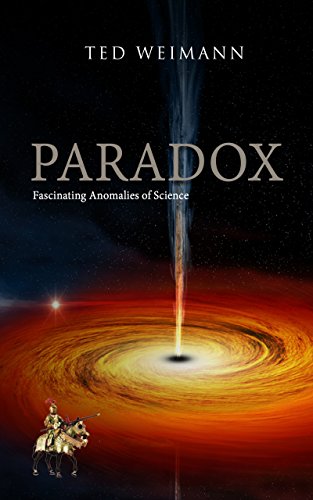
Is your inner Einstein looking for some brain candy?

paradox

This deliciously meaty and heavily researched book should be on everyone’s shelf. Of course, I’m prejudiced as a scientist myself. I thrive on nonfiction books like this, because they clear the dust from those remote corners of my brain, many of which haven’t been used in a long, long time.  In many ways, the content reminds me of the popular physics books Isaac Azimov wrote years ago, which I thrived upon, prior to actually obtaining a physics degree myself.

Probably what I liked most is its focus on the numerous paradoxes that exist in just about every field of study. The author includes sections on medicine, neurology, and psychology; astronomy, cosmology, and physics; and geosciences and math. He points out through a host of examples that there is still so much we don’t understand and thus so much to learn and explore. On the other hand, research is often subjective and highly biased, conducted to prove a point that financially benefits someone or, more likely, a corporation or industry.

So can you trust research results? Maybe, maybe not, making scientific findings paradoxes in and of themselves.  Science should represent facts, but does it? If someone you don’t trust tells you one thing, scientific data notwithstanding, do you automatically assume the opposite to be true? Do you trust everything the pharmaceutical industry tells you? The tobacco industry? Monsanto? The government? How many times has USDA’s official “food pyramid” changed? How many drugs or food additives have been declared “safe” by the FDA only to be proven otherwise at a later date? is it a paradox we can’t believe so much of what we’re told in the name of science?

You’ve probably heard the quote “Lies, damn lies, and statistics”. The section on mathematical manipulation was particularly fascinating, especially pointing out a statistical flaw (or method, depending on whom you ask) known as HARKing, “hypothesizing after the results are known.” Sometimes, remarkable discoveries are found that way; but, on the other hand, it can be used deceptively.

Weimann notes how correlations are often implicated as causes, when there’s no solid evidence to substantiate it. Along similar lines, in some cases, I would have liked to have seen a specific source as opposed to the massive bibliography at the end. While I understand that footnoting every fact would have been a Herculean task, I definitely raised a eyebrow from time to time wondering, and would have appreciated more substantiation. Ironically, the author himself points out how so much of published scientific findings are suspect, yet other times presents them as gospel. I find this somewhat ironic, perhaps a subtle play on the title, perceivable only at the subconscious level, or maybe it’s the author’s way of messing with us.

What can we believe these days? Sometimes, it’s hard to tell. In some ways, the entire book is a paradox, where facts are provided on one hand, yet the overall theme is that contradictions lie all around us. It’s as if it the book’s underlying message is something like, “This is all the cool stuff science is discovering these days, but don’t believe everything you hear.”

Maybe you need to be a scientist to see the humor in that. We nerds do tend to have a weird sense of humor, a trait that’s occasionally, but not always, captured on the popular TV show, “The Big Bang Theory.” It’s a matter of laughing with versus at someone and, more often than not, the humor in that show is directed at mocking those who are different. Personally, as a physics major myself, I find it marginally offensive, and if I were of certain political persuasions, I’d be out there protesting and demanding it be removed from the airwaves. Not that scientists can’t laugh at themselves. They just do it at a level the average person doesn’t grok.

Digression aside, Paradox contains a wealth of science, much of it unknown or cutting edge; the beauty of it lies in pointing out–sometimes clearly, sometimes, not–the various contradictions afoot. A favorite saying among physicists and mathematicians is that something is “intuitively obvious.” That tends to show our arrogant side, since so much isn’t, such as his expose of the number one in the math section.

One human behavior paradox I particularly enjoyed in Weimann’s book was in the section that addresses psychology. As humans, we want choices, even demand them, but too many options are overwhelming and tend to result in a person not selecting any of them. I know I’ve experienced this in the grocery store, where there is so much to choose from (especially in the ice cream cooler) that walking away and thus doing without is a far simpler decision, and probably healthier. Another example would be the plethora of political ideologies (some of which are idiotologies) where people scream for freedom to express their own views, then want the entire world to conform to their beliefs, a primary reason why democracies fail.

Some sections are more controversial than others, including the age of the Earth, as well as whether global warming is attributable to a natural climate cycle, which the Earth has endured for millennia, or being contributed to by fossil fuels. I must say, that section tended to convince me of the latter, though I previously leaned toward natural cycles. I found the section fascinating that addresses how our brains have evolved and actually become smaller. The author states that scientific evidence indicates that once daily environmental threats are removed by a “civilized” society, brains shrink, while disease increases. Apparently, “Survival of the fittest” conditions refine a species to top efficiency, whereas survival for everyone, including the drones, downgrades the species, generally. Who woulda thunk it?

The contradictions paradoxes represent keep us honest and humble. They remind us that all may not be as it seems, that our sense of reason may be flawed, implying we’re not as smart as we’d like to think we are. What we believe is impossible is limited only by our knowledge of natural law. Perhaps the only individuals from centuries past who wouldn’t be surprised by what we’ve achieved would be Nostradamus and other visionaries who were considered crazy in their own time.

While this book serves as brain candy if you’re a scientist, you don’t have to have a physics degree to appreciate or understand this information. Rest assured, it’s presented for a lay audience, but won’t be palatable for everyone. For those who find science boring, it’ll serve best as bedtime reading for insomniacs.

On the other hand, this is a must read if you’re a science aficionado or entirely immersed in it by degree or profession. Stretch your synapses to fields outside your own! If you love science, yet aren’t formally educated in its tenets, Paradox is a wonderful primer that will keep you informed of some of the most interesting subjects under investigation today. If you’re surrounded by scientists or engineers, but aren’t one yourself, yet want to participate in conversations at work or social gatherings and show you’re smarter than they think you are, this handy volume will provide a wealth of the latest information on what’s going on out there in the world of research, both in the cosmos and on planet Earth.

Those heading for college to obtain a technical degree can benefit greatly as well. If you’re not sure which field you want to go into, you may find something that grabs you. Furthermore, this material will help grease the skids, so to speak, introducing concepts that will make them easier to understand later. Our brains require synaptic connections to work properly, and if a concept is entirely new, it’s harder to grasp than one with some level of familiarity where a niche has already been prepared in your grey matter, if you will. Anyone home schooling their kids will also find this an excellent resource. If you’re a science fiction author, you definitely need this book, not only to keep your writing credible, but to likewise trigger a wealth of new ideas.

As you can tell, if nothing else, this book made me think and possibly stimulated my neurons a bit too much. All that aside, even if you’re not interested yourself, pick up a copy of this five-star book and give it to your favorite nerd. They’ll be forever grateful.

You can pick up your copy on Amazon here.